There is no single unlimited transportation pass covering every bus, subway and train in South Korea. For most international visitors, the best default is a Tmoney card: it works on local public transportation across much of the country and requires no Korean bank account. Choose a Climate Card instead if you will travel frequently within its Seoul service area, and consider a KORAIL Pass only if your itinerary includes several eligible intercity train journeys.
Prices, payment rules and service coverage in this guide were verified on June 9, 2026.
Quick answer
| Your trip | Best starting choice | Why |
|---|---|---|
| First visit covering several Korean cities | Tmoney | Simple, rechargeable and widely accepted on local transport |
| One to seven days mainly in Seoul | Climate Card Tourist Pass | Unlimited rides within a defined Seoul service area |
| Several long-distance KTX journeys | KORAIL Pass | May reduce rail costs, depending on the itinerary |
| Visitor wanting transit plus a prepaid payment card | WOWPASS or KORAIL PASS+ | Combines separate payment and transportation functions |
| Exchange student or registered foreign resident | Tmoney initially; investigate K-Pass | K-Pass requires registration, identity verification and an eligible Korean address |
| Occasional rides only | Tmoney or EZL | An unlimited pass may cost more than pay-as-you-go fares |
The practical recommendation: buy a Tmoney card on arrival unless you have already calculated that a Climate Card or KORAIL Pass fits your itinerary.
Tmoney: the best general-purpose card for most visitors
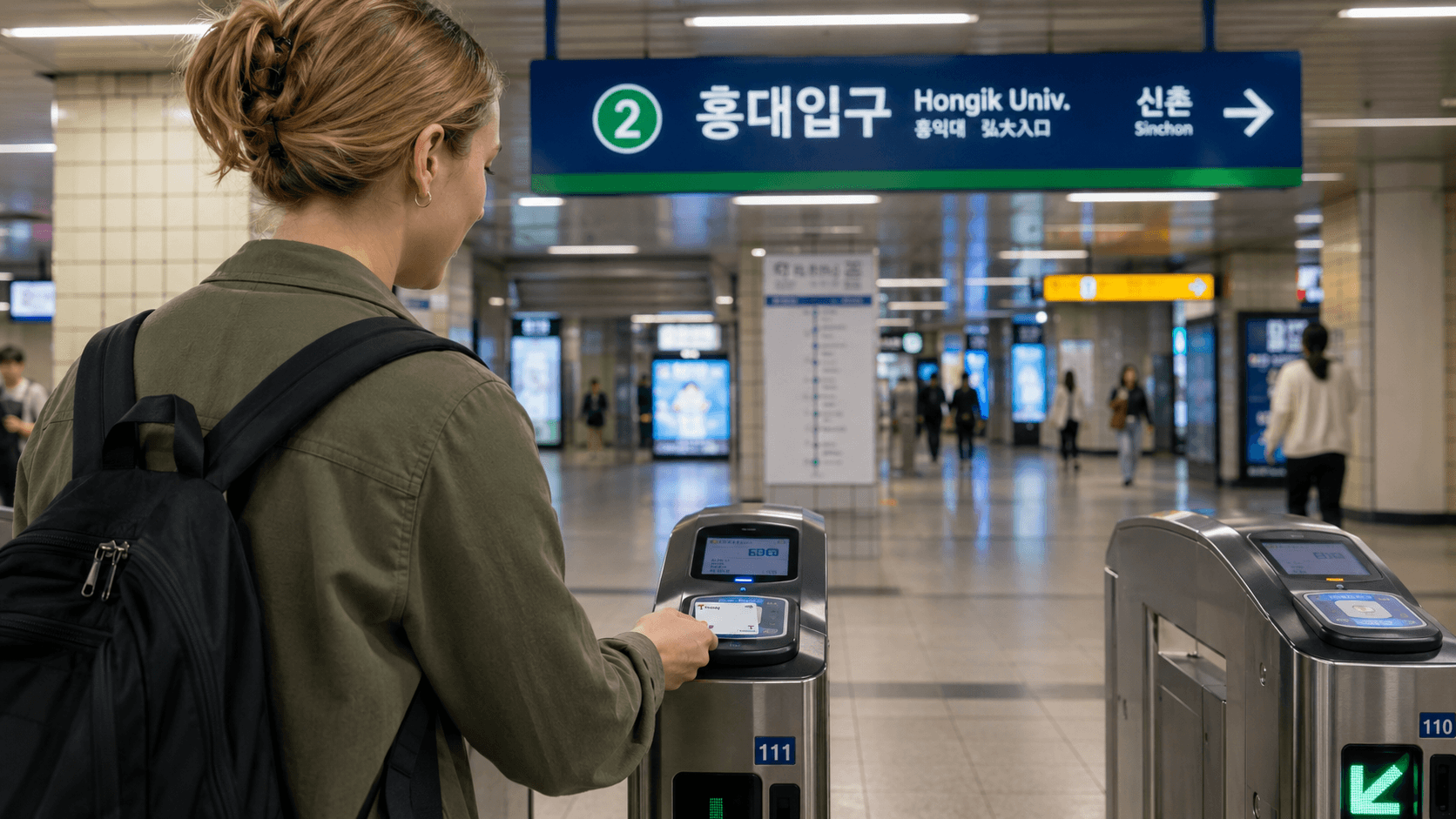
Tmoney (티머니) is a stored-value transportation card. You load money onto it and the fare is deducted whenever you tap. It is not an unlimited pass, but it is the easiest option for visitors moving between different cities.
According to the Korea Tourism Organization's transportation-card guide, Tmoney can be bought and recharged at convenience stores nationwide. It is accepted on participating buses, subways and other services displaying the Tmoney logo. Acceptance is extensive, but travelers should not interpret “nationwide” as meaning every rural bus, ferry or privately operated shuttle is guaranteed to accept it.
A standard card generally costs KRW 3,000 to KRW 5,000, excluding the money loaded for fares. Card designs and tourist versions may cost more.
Why Tmoney is usually the safest choice
- It works in Seoul, Busan, Daejeon, Daegu and many other cities.
- It can be used on eligible city buses and subway systems without buying a ticket for each journey.
- It automatically applies eligible transfer and card-fare rules.
- It remains useful after leaving Seoul, unlike the Seoul-focused Climate Card.
- It does not require a Korean bank account or long-term residency registration.
Tmoney is also accepted for some taxis and retail payments, but acceptance should be checked at the point of use. Do not rely on the card as your only payment method.
How to buy and recharge Tmoney
- Visit a convenience store displaying the Tmoney logo, such as CU, GS25, 7-Eleven or emart24.
- Ask for a Tmoney card: “Tmoney card juseyo” is sufficient if English is not understood.
- Pay for the card and request an initial balance. Around KRW 20,000 to KRW 30,000 is a reasonable starting amount for several days of local travel, although actual spending depends on distance and frequency.
- Recharge at participating convenience stores or compatible subway-station machines.
- Keep some Korean won in cash. The Korea Tourism Organization's May 2026 payment guide states that regular Tmoney purchases and top-ups are generally cash-only and do not accept foreign-issued cards.
How to use it correctly
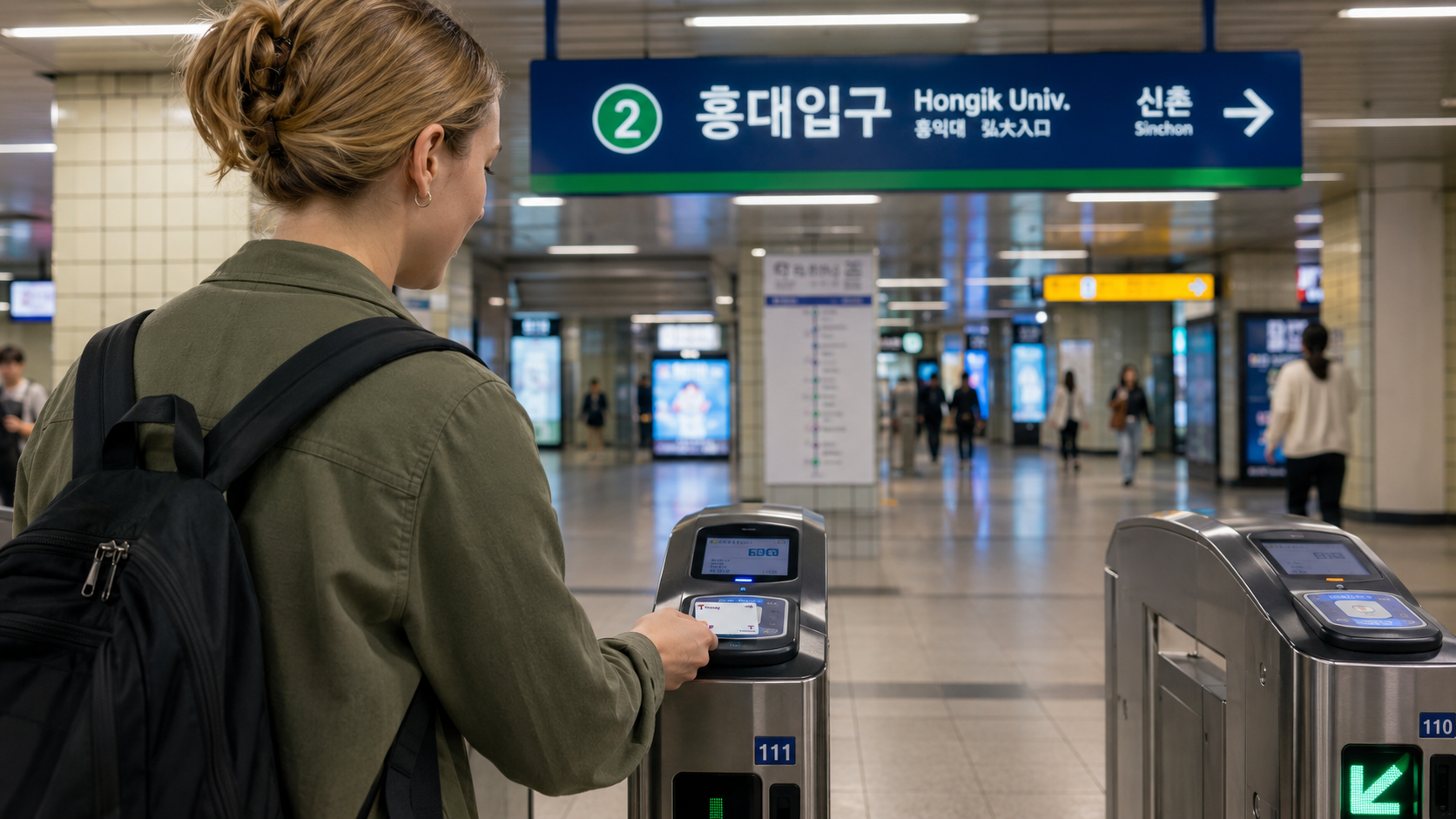
Tap the card when entering and leaving a subway station. On buses, tap when boarding and when getting off. The exit tap is important because it records distance and allows eligible transfer discounts.
In Seoul, transfers generally require the next boarding within 30 minutes, extended to 60 minutes between 9 p.m. and 7 a.m. The official Seoul transportation fare guide also notes that transfer benefits depend on tapping correctly at each stage.
Do not place Tmoney beside another contactless bank or transportation card when tapping. The reader may detect multiple cards and reject the transaction.
Climate Card: best for frequent travel within Seoul
The Climate Card (기후동행카드, Gihu Donghaeng Card) provides unlimited rides during its validity period, but only on participating services and routes. It is not a nationwide pass and does not cover every service in the Seoul metropolitan region.
The Seoul Metropolitan Government's Climate Card guide lists the following short-term Tourist Pass prices, verified June 9, 2026:
| Validity | Pass load | Physical card | Initial total |
|---|---|---|---|
| 1 day | KRW 5,000 | KRW 3,000 | KRW 8,000 |
| 2 days | KRW 8,000 | KRW 3,000 | KRW 11,000 |
| 3 days | KRW 10,000 | KRW 3,000 | KRW 13,000 |
| 5 days | KRW 15,000 | KRW 3,000 | KRW 18,000 |
| 7 days | KRW 20,000 | KRW 3,000 | KRW 23,000 |
The physical card can be reused, so the KRW 3,000 purchase cost does not apply again when loading another pass onto the same card.
Short-term passes begin on the day they are loaded and cannot be loaded in advance. Load the pass on the morning you intend to start using it, not the evening before. Short-term passes do not include Seoul's Ttareungi bicycle service.
When does the Climate Card save money?
Seoul's adult subway base fare paid by transportation card is KRW 1,550, effective since June 28, 2025 and still listed by the city on June 9, 2026. Using that base fare as a rough comparison, the pass load alone equals approximately:
- Four base-fare rides for the one-day pass
- Six rides for the two-day pass
- Seven rides for the three-day pass
- Ten rides for the five-day pass
- Thirteen rides for the seven-day pass
This calculation is only a planning shortcut. Actual pay-as-you-go fares depend on distance, bus type and transfers. The Climate Card becomes more attractive when you return to your accommodation during the day, make evening trips or expect to change plans frequently.
Where the Climate Card works
It covers participating Seoul subway sections, Seoul-licensed city and village buses, and certain extensions outside the administrative boundary of Seoul. Coverage includes the AREX all-stop section between Seoul Station and Gimpo International Airport.
Important exclusions include:
- AREX travel starting at Incheon International Airport
- The AREX Express train
- Shinbundang Line
- Buses licensed by cities or provinces outside Seoul
- Metropolitan express buses
- KTX, SRT and other intercity trains
- Airport limousine buses
The card may allow passengers who boarded within the valid area to exit at Incheon Airport Terminal 1 or Terminal 2, but it cannot be used to board there. For a trip from Incheon Airport into Seoul, use a regular Tmoney card on the AREX all-stop train or buy a separate AREX Express ticket.
Route boundaries matter. A subway line shown on a Seoul map is not automatically covered for its entire length. Check the official coverage list before using the card for destinations in Gyeonggi Province, including areas around Suwon, Yongin, Incheon and parts of Goyang or Seongnam.
Buying and loading the Climate Card
Physical cards are sold at designated Seoul Metro information centers and participating convenience stores near stations. Availability can vary, so a particular store may be sold out.
The Seoul government's 2026 visitor guide states that, from March 17, 2026, internationally issued credit and debit cards can be used directly for Climate Card purchases or recharges. Payment acceptance still depends on the sales point or machine: some Seoul Metro information centers remain cash-only, while convenience-store payment rules can differ. Carry Korean won as a backup.
KORAIL Pass: useful only for a train-heavy itinerary
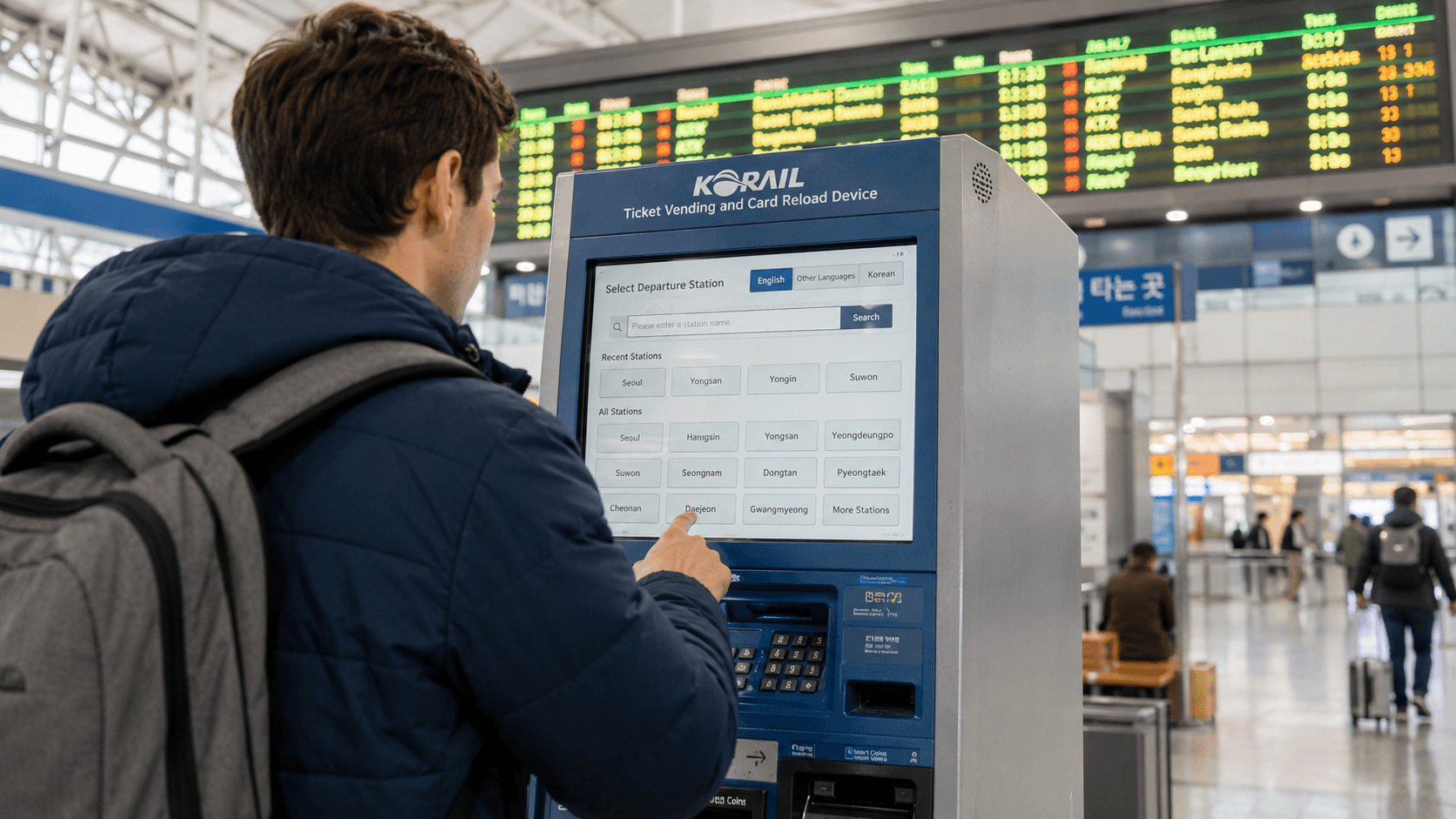
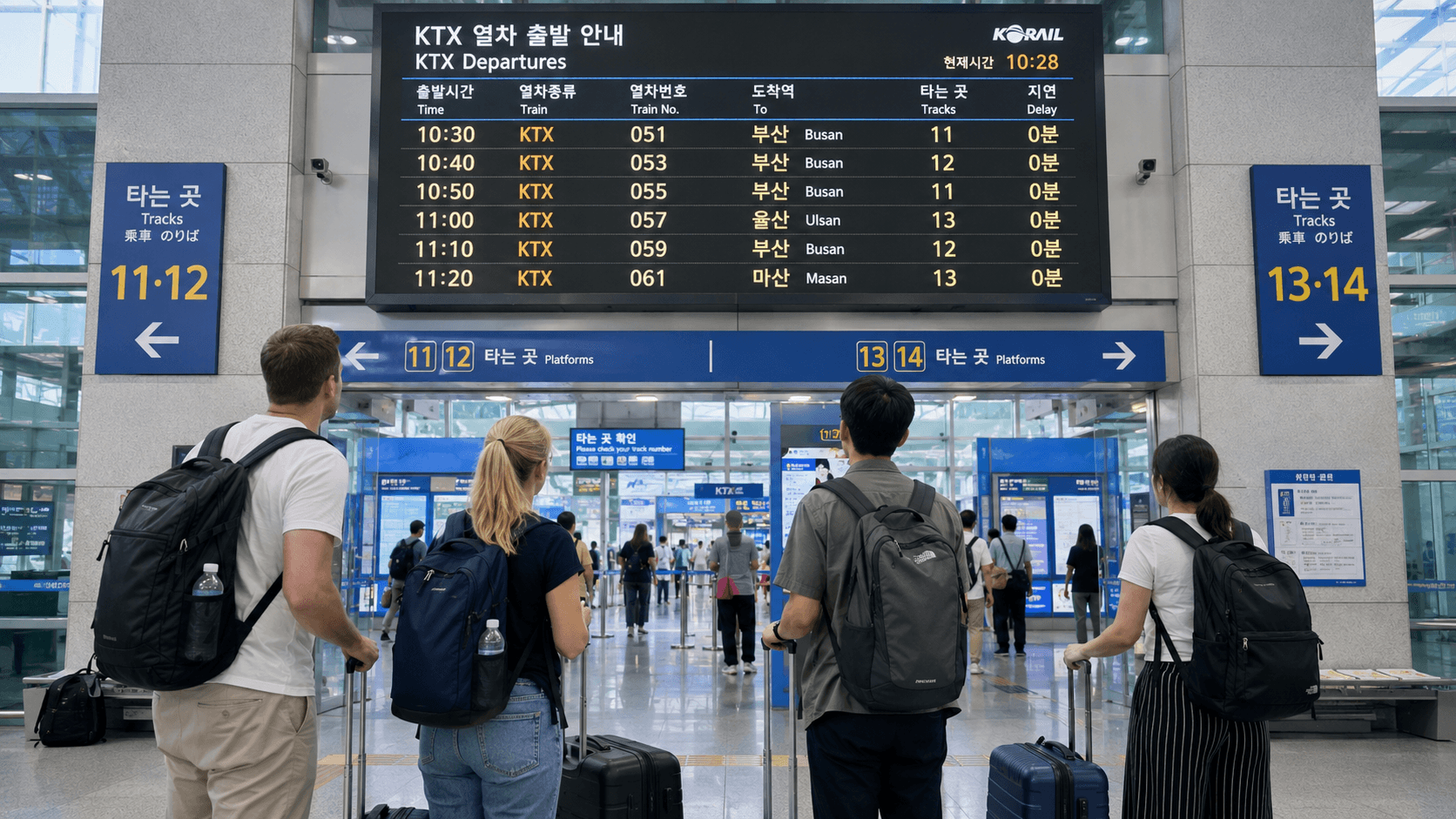
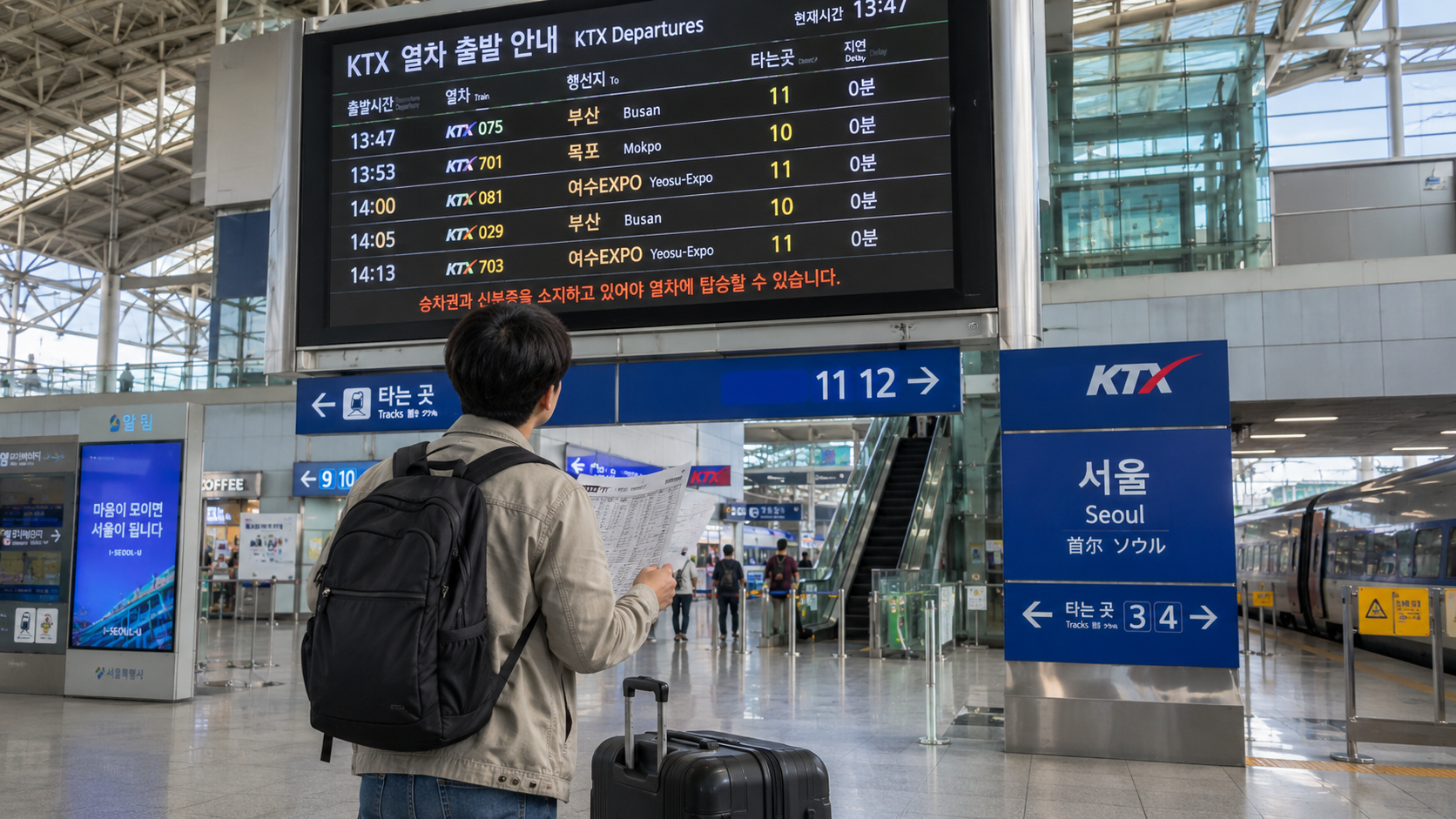
The KORAIL Pass is designed for eligible international travelers taking KORAIL-operated intercity trains, including KTX and other covered services. It is separate from Tmoney and does not automatically provide ordinary bus or subway travel.
A rail pass is not automatically cheaper. Compare its current price against the exact trains you plan to reserve. A simple Seoul-Busan return journey, for example, may cost less as individual tickets than a pass intended for several travel days.
The pass is most likely to be useful when you plan multiple long journeys within a short period, such as Seoul-Busan, Busan-Gyeongju and Gyeongju-Seoul. It is less compelling for one return trip or an itinerary dominated by local buses.
Seat reservations are still important. A pass does not guarantee space on a particular train, especially on Friday evenings, Sundays, public holidays and major holiday periods. Check live eligibility, prices, exclusions and seat availability through the official KORAIL international booking service before purchasing.
What is KORAIL PASS+?
KORAIL introduced KORAIL PASS+ for international travelers before 2026. According to the Korea Tourism Organization's January 2026 notice, travelers with an eligible KORAIL Pass can add a prepaid transportation-card function for KRW 8,000 and then load money for buses, subways and participating shops.
The local transportation balance is still pay-as-you-go; the KRW 8,000 charge does not provide unlimited subway or bus travel. Cards are issued through designated NAMANE kiosks at locations including Incheon International Airport and major KTX stations.
WOWPASS and EZL: useful alternatives, but not unlimited passes
WOWPASS
WOWPASS combines a prepaid payment card, currency-loading features and a transportation-card function. Its retail-payment balance and transportation balance are separate, so adding money for shopping does not necessarily add money for bus and subway fares.
It can be convenient for a visitor who wants a Korean prepaid payment option, but it is not inherently cheaper for transportation than ordinary Tmoney. Choose it for its broader payment features, not because it offers unlimited rides.
EZL
EZL, formerly associated with the Cashbee name, is another rechargeable transportation card accepted on participating public transport and at affiliated merchants. It can be a practical substitute when it is easier to buy than Tmoney.
For a first-time visitor, Tmoney remains the simpler default because its branding and support information are generally easier to recognize. There is no need to carry both unless a specific route or service requires one.
K-Pass: mainly for registered residents, not short-term tourists
K-Pass is a public-transport reimbursement program rather than a visitor pass. It is intended for residents aged 19 or older who are registered in a participating local government area.
The official K-Pass registration guide requires an issued partner card, identity verification, an eligible registered address and a resident registration number or foreign registration number. Foreign residents whose address cannot be verified automatically may need to submit proof of domestic residence.
K-Pass can therefore be relevant to exchange students, employees and other long-term foreign residents, but it is not a realistic option for ordinary tourists. Eligibility and reimbursement rules are administrative matters, so confirm your case through the official K-Pass service or your card issuer rather than relying on a school, employer or online forum.
K-Pass generally covers eligible local buses and urban or metropolitan rail. Separately ticketed transportation such as KTX, SRT, intercity buses, express buses and airport limousine buses is excluded.
Which card should you choose?
Choose Tmoney if:
- You are visiting more than one city.
- You want the least complicated option.
- You will use public transport only a few times each day.
- Your Seoul itinerary includes services excluded from the Climate Card.
- You need to travel from Incheon Airport on the AREX all-stop train.
Choose the Climate Card if:
- Most of your journeys are within the confirmed coverage area.
- You expect several bus or subway boardings per day.
- You want predictable local transportation spending.
- You understand that Incheon Airport boarding and several suburban services are excluded.
Compare a KORAIL Pass if:
- Your itinerary contains several expensive KTX journeys.
- The journeys fall within a compact pass period.
- Eligible seats are available on the trains you need.
- The pass costs less than the total of individual tickets.
Common mistakes
Assuming the Climate Card covers all of metropolitan Seoul: Gyeonggi Province and Incheon operate many buses and rail sections that are not included.
Trying to board at Incheon Airport with a Climate Card: Use Tmoney for the AREX all-stop train or purchase a separate express ticket.
Failing to tap when leaving a bus: This can affect distance calculations and transfer discounts.
Loading too much cash onto Tmoney: Refund locations, limits and fees vary. Add smaller amounts as needed near the end of your trip.
Confusing a payment balance with a transit balance: This is particularly important with multifunction cards such as WOWPASS and KORAIL PASS+.
Buying a rail pass without pricing the itinerary: Check each individual train fare and confirm reservation availability first.
What to check before you go
- Confirm Climate Card coverage for every destination outside central Seoul.
- Check whether your airport train or bus requires a separate ticket.
- Compare KORAIL Pass prices with individual KTX fares on your actual dates.
- Carry Korean won for ordinary Tmoney purchases and top-ups.
- Keep each traveler's transportation card separate; one Climate Card cannot be shared.
- Check the last subway, train or bus for the specific date. Last-service times vary by line, station and day.
- Allow extra reservation time around Seollal and Chuseok, when intercity tickets can sell quickly.
- Keep another payment method available in case a card reader, kiosk or foreign bank card does not work.
Sources
- Korea Tourism Organization: Transportation Cards
- Korea Tourism Organization: International Visitors' Transportation and Payment Guide, May 2026
- Seoul Metropolitan Government: Climate Card
- Seoul Metropolitan Government: Public Transportation Fares and Transfer Rules
- Official K-Pass Service
- Korea Tourism Organization: KORAIL PASS+ Announcement
- KORAIL International Reservation Service
For a typical first trip, purchase a modestly loaded Tmoney card on arrival. Replace or supplement it with a Climate Card only after checking your Seoul routes, and buy a KORAIL Pass only after comparing the live rail prices for your complete itinerary.