For most first-time travelers moving between Seoul and a major city such as Busan, Daegu, Daejeon, or Gwangju, KTX is the simpler choice: it is fast, avoids highway traffic, and usually arrives near the city center. An express bus can be better when the fare matters more than speed, your destination has no convenient KTX station, or the bus terminal is closer to your accommodation.
Fares, schedules, and booking conditions in this guide were checked on June 9, 2026. Always run a fresh search on the official booking service before traveling.
Quick answer
| Choose KTX when... | Choose an express bus when... |
|---|---|
| You have limited travel time | You want the lowest available fare |
| You are traveling between major KTX cities | Your destination is not on a useful rail route |
| Predictable arrival time matters | The bus terminal is closer to your hotel |
| You need an onboard toilet | You prefer premium reclining seats |
| You are traveling during normal weekday traffic | You want a late-night departure that trains do not offer |
For Seoul to Busan, KTX normally takes roughly 2 hours 15 minutes to 3 hours, depending on the number of stops. An express bus generally takes about 4 hours, but road congestion can make the trip considerably longer.
As a planning figure, expect a regular Seoul-Busan KTX seat to cost around KRW 60,000. Express-bus fares on the same city pair can range from roughly KRW 24,000 for a standard bus to more than KRW 50,000 for some premium or late-night services. These are not universal fares: the route, bus class, departure time, and operating company affect the amount shown.
Check the exact rail fare in KORAIL’s official reservation system and the exact express-bus fare through KOBUS, the integrated express-bus booking service.
What is KTX?
KTX, short for Korea Train eXpress, is KORAIL’s high-speed train service. It connects Seoul and other capital-region stations with major destinations including Busan, Daejeon, Dongdaegu, Gyeongju, Pohang, Gangneung, Jeonju, Yeosu, Gwangju, and Mokpo, although the departure station in Seoul depends on the route.
According to the Korea Tourism Organization’s train guide, KTX trains operate at speeds of up to 300 km/h. They have reserved seating, toilets, and space for luggage, although the amount of large-bag storage varies by train type and carriage.
Do not assume that every KTX leaves from Seoul Station. Honam and Jeolla line trains commonly use Yongsan Station, while eastbound services may leave from Cheongnyangni Station. Check the exact station name printed on the ticket.
KTX should also not be confused with SRT, another high-speed rail service. SRT traditionally centers its Seoul-area operations on Suseo Station and uses a separate booking system. If your search shows SRT rather than KTX, use the official SRT website and confirm the departure station carefully.
What is an express bus?
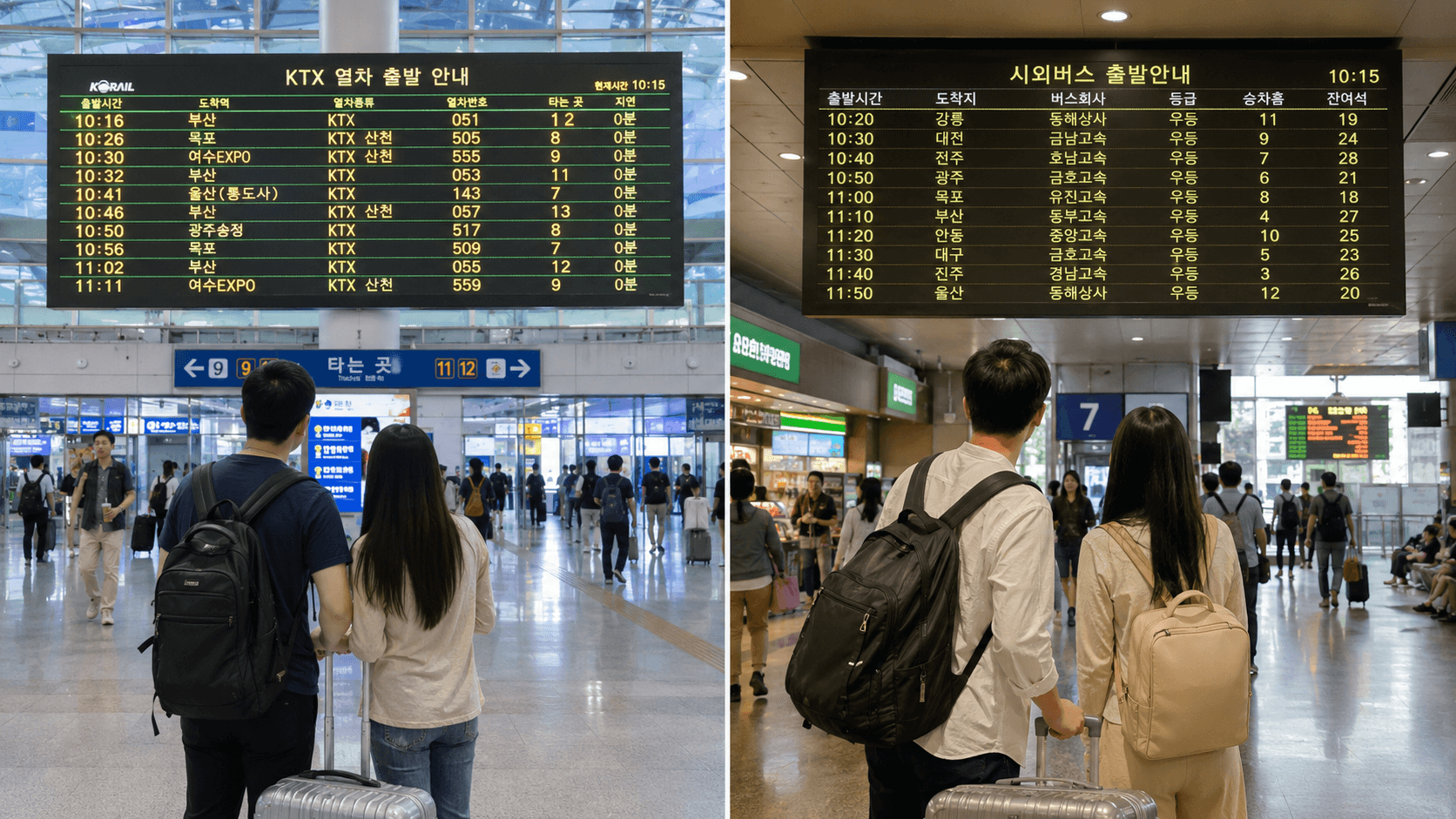
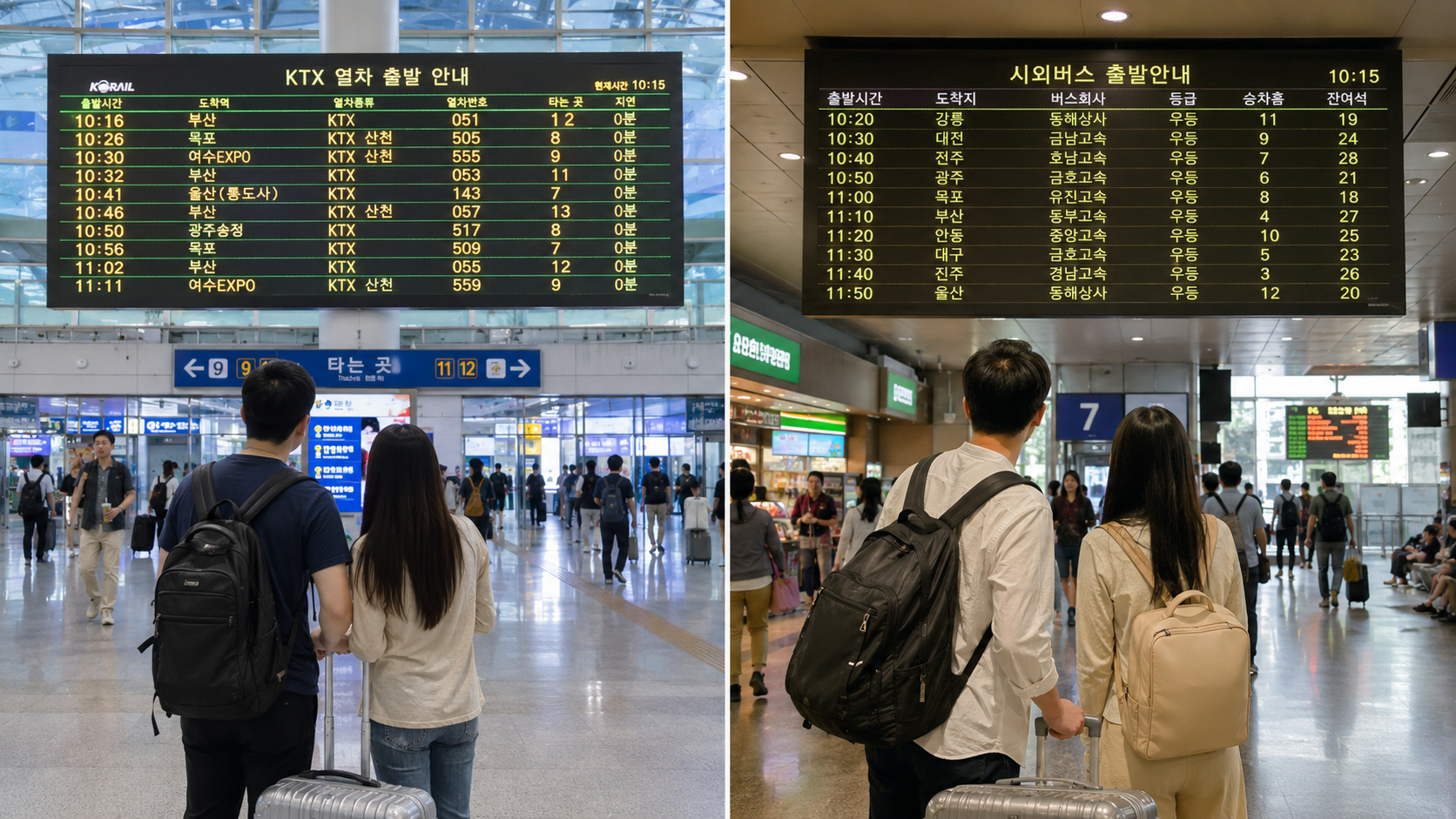
Korea distinguishes between express buses, or gosok bus (고속버스), and intercity buses, or sioe bus (시외버스).
Express buses generally use expressways and travel between major terminals with few or no intermediate stops. Intercity buses serve a larger number of towns and may stop along the route. The two services can use different terminals even when they serve the same city.
The Korea Tourism Organization’s express-bus guide lists KOBUS for express buses and TxBus and Bustago for intercity services.
This distinction matters when searching online. A route that does not appear on KOBUS may still exist as an intercity service, and a city can have separate express and intercity terminals.
KTX and express bus compared
Journey time and reliability
KTX has the clear advantage on long routes between major cities. Rail travel is not affected by expressway congestion, so the scheduled arrival time is generally more useful when planning a hotel check-in, tour, performance, or onward connection.
Express-bus journey times are estimates. Congestion can be severe on Friday evenings, Sunday afternoons, public holidays, and the beginning or end of major holiday periods. Weather, accidents, and construction can also delay buses.
On a short or medium-distance route, however, the difference may be small once local transfers are included. A two-hour bus that leaves near your accommodation can be more convenient than traveling across Seoul to a KTX station, waiting for the train, and taking another local bus at the destination.
Cost
Express buses are usually cheaper than KTX, particularly in the standard class. The saving becomes smaller when comparing KTX with premium or late-night buses.
Korean express buses commonly appear in these classes:
- Standard: More seats and the lowest fare.
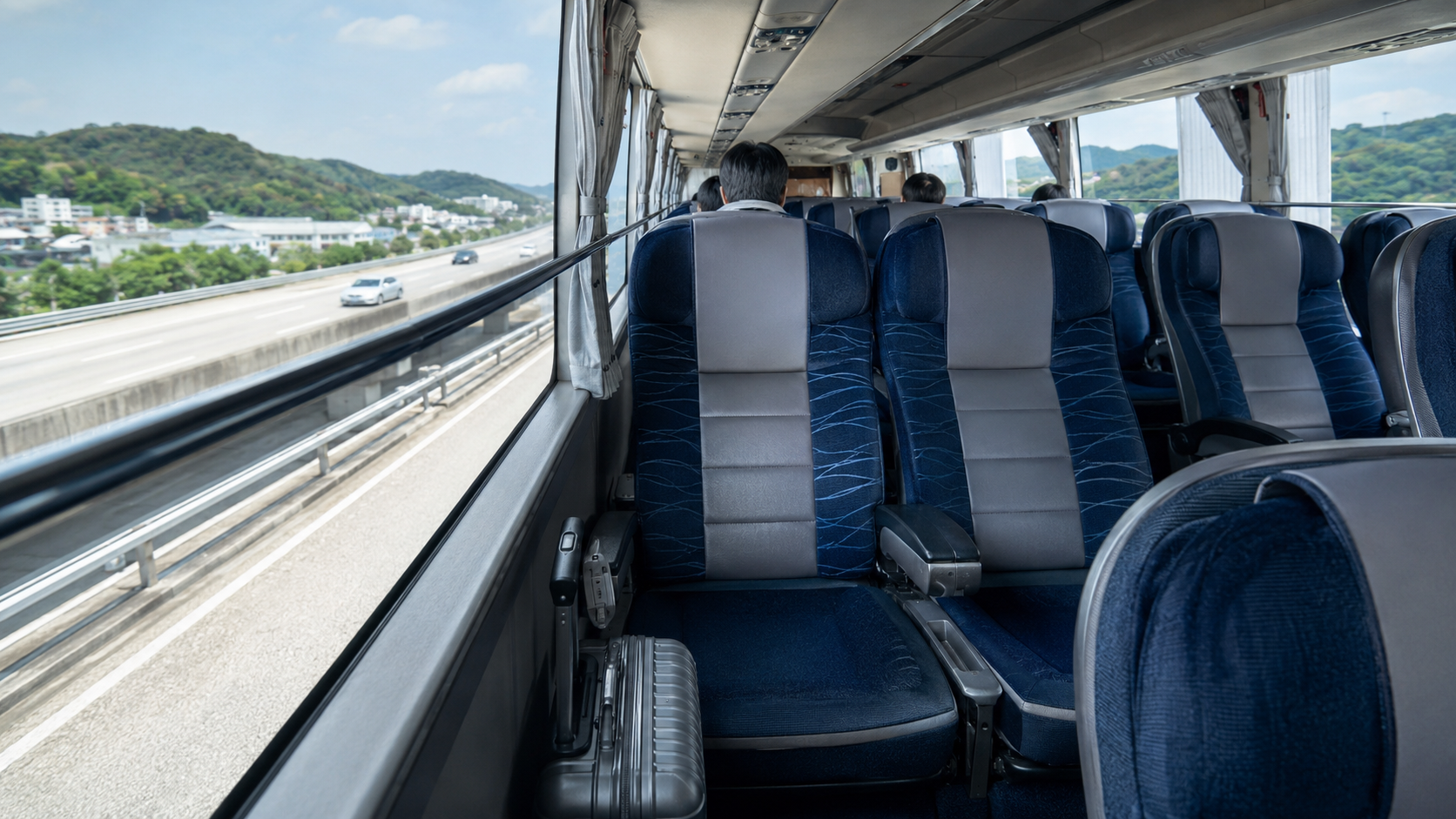
- Excellent or 우등, often translated as deluxe: Usually arranged with three seats per row, providing more width than a standard bus.
- Premium: Larger reclining seats and greater separation between passengers; availability depends on the route.
- Late-night: Services departing late at night may carry a surcharge.
KTX also has standard and first-class accommodation. A standard seat is adequate for most journeys, while first class provides additional space and service at a higher fare.
Do not buy a KORAIL Pass automatically. It is intended for eligible international visitors and can be worthwhile for multiple long-distance train journeys, but a regular ticket may cost less for one return trip. Compare the pass price with the actual trains you intend to reserve. A pass also does not guarantee a seat until you make the required seat reservation.
Terminal location
The correct comparison is door to door, not only the published travel time.
For example, Busan Station is in a central part of Busan with direct access to Busan Metro Line 1. By contrast, Busan Central Bus Terminal is at Nopo, near the northern end of Line 1. A traveler staying around Nampo, Seomyeon, or Haeundae may need substantial additional time after arriving at Nopo.
In Seoul, Seoul Station is convenient for central districts and connects with subway services and the Airport Railroad. Seoul Express Bus Terminal is in Seocho-gu and connects with Seoul Subway Lines 3, 7, and 9. It may be more convenient for accommodation in Gangnam than Seoul Station is.
Seoul also has Central City Terminal, Dong Seoul Terminal, and Seoul Nambu Terminal. Central City and Seoul Express Bus Terminal are adjacent but serve different route groups. Central City mainly handles routes toward the southwest, while the Gyeongbu terminal handles many routes toward cities such as Daejeon, Daegu, Gyeongju, and Busan.
Always enter the full terminal name in your map app. Searching only for “Seoul bus terminal” or “Busan bus terminal” can send you to the wrong place.
Comfort and toilets
KTX allows passengers to stand, walk through the train, and use an onboard toilet. This is useful for families, older travelers, and anyone uncomfortable sitting continuously for several hours.
Express buses generally do not have toilets. On a longer route, the driver normally stops at a highway service area called a hyugeso (휴게소). Stops are often short, so note the bus location, departure time, and vehicle number before walking away. Do not assume that the driver will wait beyond the announced break.
Premium buses can offer wider and more private seats than KTX standard class. However, passengers must remain seated while the bus is moving, and motion sickness may be a concern on winding routes.
Luggage
KTX passengers carry their own luggage aboard. Small bags fit on overhead racks, while larger suitcases must go in designated luggage areas or other available storage spaces. Capacity can fill quickly on busy trains. Arrive early enough to board when permitted, keep valuables with you, and avoid blocking doors or aisles.
Express buses usually carry large suitcases in the compartment underneath the passenger cabin. There is normally no airport-style checked-baggage receipt, so watch where your bag is loaded and retrieve it promptly at the destination. Keep passports, medication, electronics, money, and fragile items in your hand luggage.
Neither option is ideal for unusually large sports equipment or multiple oversized cases without advance confirmation. Contact the operator before travel if your luggage is outside normal suitcase dimensions.
How to book KTX tickets
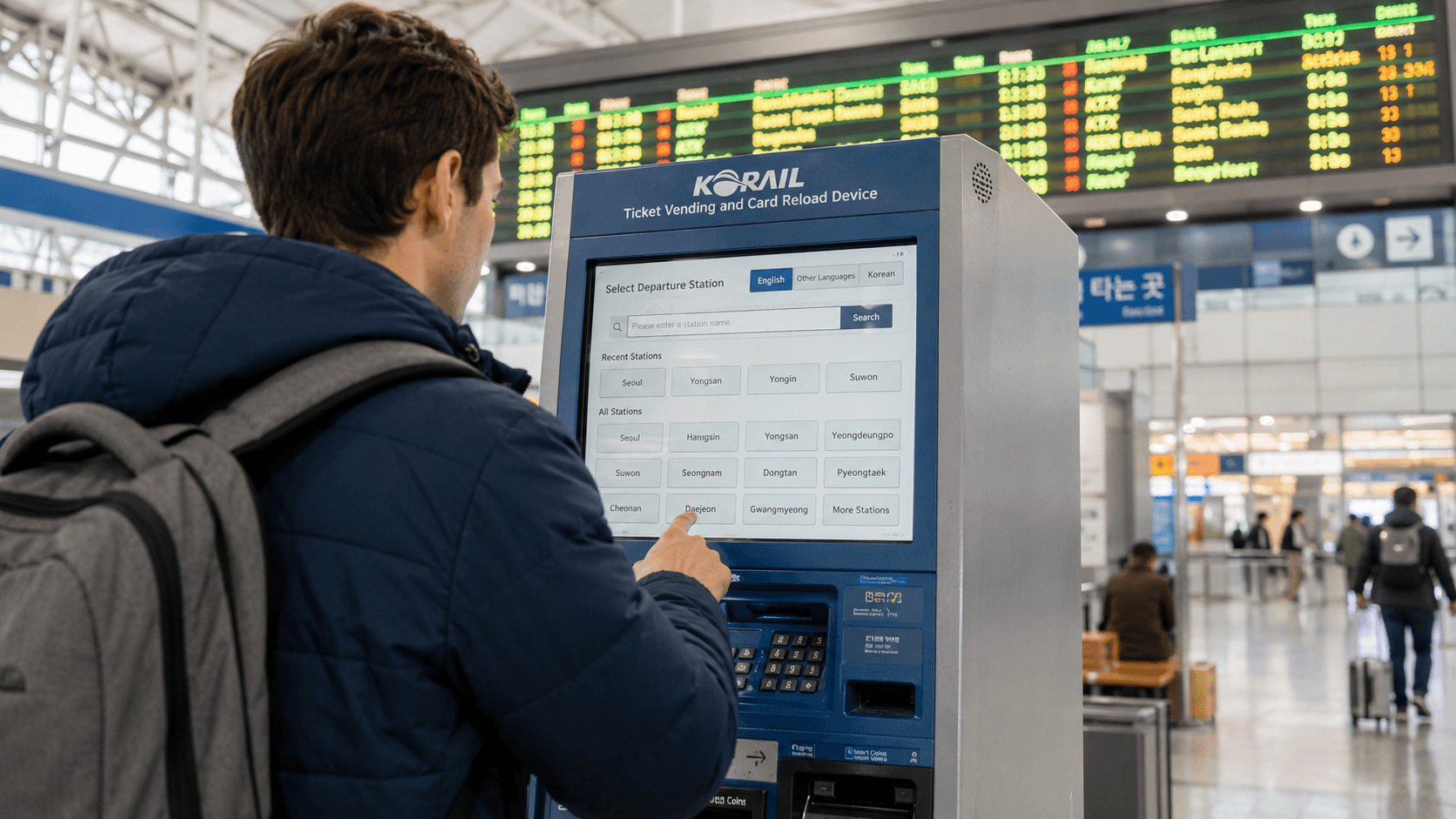
KORAIL states that regular tickets can be purchased from 07:00 one month before departure. The official English website sells tickets until 20 minutes before departure, subject to availability. Tickets are also available through the KORAIL Talk app, station ticket machines, and staffed KORAIL ticket offices. Subway ticket offices do not sell KTX tickets.
- Open the official KORAIL ticket reservation page.
- Select the exact departure and arrival stations.
- Choose the travel date and number of passengers.
- Review the train number, departure station, journey time, and arrival station.
- Select a seat and complete payment by credit card.
- Save the issued ticket, not only the payment confirmation.
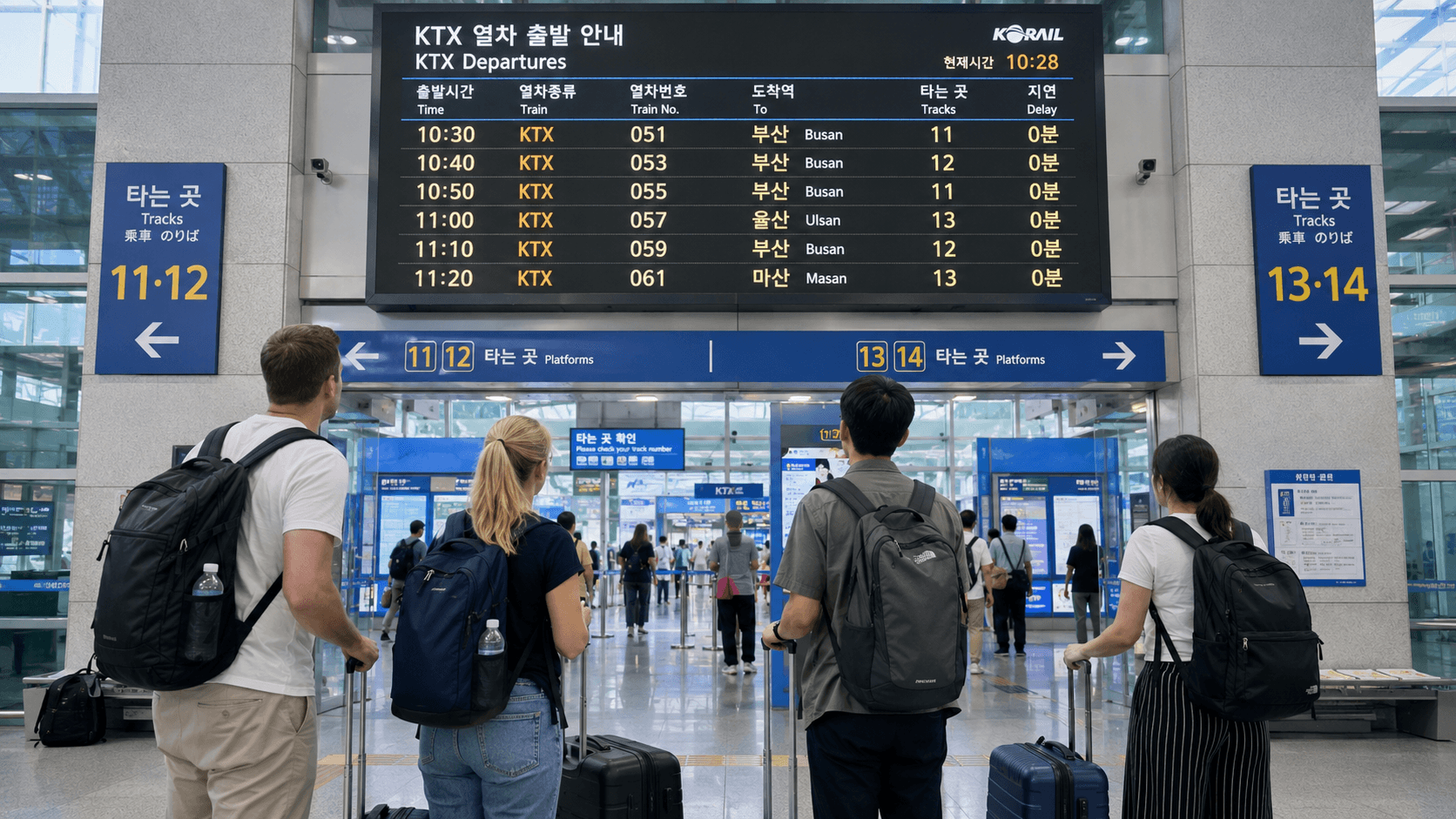
- Check the train number and platform display when you reach the station.
KORAIL’s 2026 visitor information indicates that foreign-issued credit cards are accepted at KTX ticket counters and compatible ticket machines. Online payment behavior can depend on the card issuer and authentication process, so use a station counter if a foreign card repeatedly fails.
KTX can sell out on Friday evenings, Sundays, public holidays, and during major events. Seollal, the Lunar New Year holiday, and Chuseok, the autumn harvest holiday, use special sales arrangements and are particularly difficult periods for last-minute travel.
How to book an express bus
- Search the route on KOBUS.
- If no route appears, try TxBus or Bustago in case it is classified as an intercity service.
- Confirm both the departure terminal and arrival terminal.
- Compare the bus class, fare, scheduled duration, and departure time.
- Check whether the reservation provides a mobile boarding code or requires ticket collection.
- Arrive at least 15 to 20 minutes early, especially at a large terminal.
- Find the platform on the terminal screen and check the destination displayed on the bus.
The Korea Tourism Organization’s May 2026 transportation guide confirms that foreign-issued credit cards are accepted at express- and intercity-bus terminal ticket machines and counters. It also lists Hanpass and Klook as online options accepting foreign-issued cards. Conditions can differ by route and platform, so the terminal counter remains a useful fallback.
You cannot normally pay for a reserved long-distance express-bus seat by tapping an ordinary Tmoney transit card as you board. Buy the appropriate intercity ticket first.
Which option works better by trip type?
Seoul to Busan, Daegu, or Daejeon
Choose KTX when speed matters. These cities are on major high-speed rail corridors, and the train generally saves enough time to justify the higher fare.
A bus may still make sense for a budget trip, a late-night departure, or accommodation close to the relevant terminal. For Busan, include the transfer from Nopo in your calculation.
Seoul to Gangneung
Compare both options. KTX is fast and avoids weekend road congestion, but express buses serve Gangneung from more than one Seoul terminal. Your starting neighborhood may determine the easier choice.
Seoul to Sokcho
Sokcho does not have a KTX station. A direct express or intercity bus is normally more practical than taking a train to another city and transferring.
Seoul to Jeonju, Gwangju, Mokpo, or Yeosu
KTX can be efficient, but many southwest-bound trains leave from Yongsan rather than Seoul Station. Express buses from Central City may be competitive if you are staying in southern Seoul or if the destination terminal is closer to your accommodation.
Smaller cities and rural destinations
The bus network usually provides better coverage. KTX stations can be outside traditional city centers, and some destinations require a local bus or taxi after the train. Search the complete journey before deciding.
Accessibility considerations
Major KTX stations generally have elevators, accessible toilets, and station assistance, but the route between the subway platform, concourse, and KTX platform can be long. Travelers needing assistance should contact KORAIL before departure and arrive with additional time.
Bus-terminal accessibility varies more. Premium buses may have high steps and narrow entrances, and standard coaches do not necessarily accommodate a passenger remaining in a wheelchair. Confirm boarding arrangements directly with the terminal or bus operator rather than assuming that an online seat reservation guarantees accessible boarding.
KORAIL’s English-language call center is listed as +82-1599-7777, operating daily from 08:00 to 20:00. Operating hours were verified on June 9, 2026 through the official KORAIL passenger information pages.
Common mistakes to avoid
- Going to Seoul Station when the ticket says Yongsan, Cheongnyangni, Suseo, or Gwangmyeong.
- Confusing Seoul Express Bus Terminal with Central City Terminal.
- Assuming an express bus and an intercity bus use the same terminal.
- Looking only at the onboard journey time and ignoring local transfers.
- Booking through an unofficial rail website that adds a large markup.
- Keeping only a card-payment notification instead of the actual ticket.
- Expecting a toilet on a long-distance bus.
- Leaving valuables in the bus luggage compartment.
- Arriving during a major Korean holiday without a confirmed reservation.
What to check before you go
- Exact departure station or terminal
- Exact destination station or terminal
- Train or bus number
- Departure date and time, including whether a late-night arrival falls on the following calendar day
- Current fare and seat class
- Mobile-ticket or printed-ticket requirement
- Local transport from the arrival point to your accommodation
- Last subway or local-bus connection after arrival
- Luggage size and storage arrangements
- Elevator access or boarding assistance if required
- Cancellation and refund rules shown during booking
KORAIL allows online cancellation before departure, with penalties depending on the time and day. Once the train has departed, refund requests must generally be handled at a KORAIL station counter, and no refund is available after the ticketed arrival time. Bus refund rules vary by booking platform and how close the cancellation is to departure. Read the conditions displayed for your specific ticket rather than relying on a general rule.
Final decision
Take KTX if you are traveling between major rail-connected cities and want the fastest, most predictable journey. Take an express bus if you want to spend less, need a route outside the high-speed rail network, or find a bus terminal that fits your itinerary better.
Before paying, compare the complete door-to-door trip in Naver Map or KakaoMap, then confirm the actual seat and fare through KORAIL, KOBUS, TxBus, or Bustago. That final check often matters more than the headline difference between train and bus.