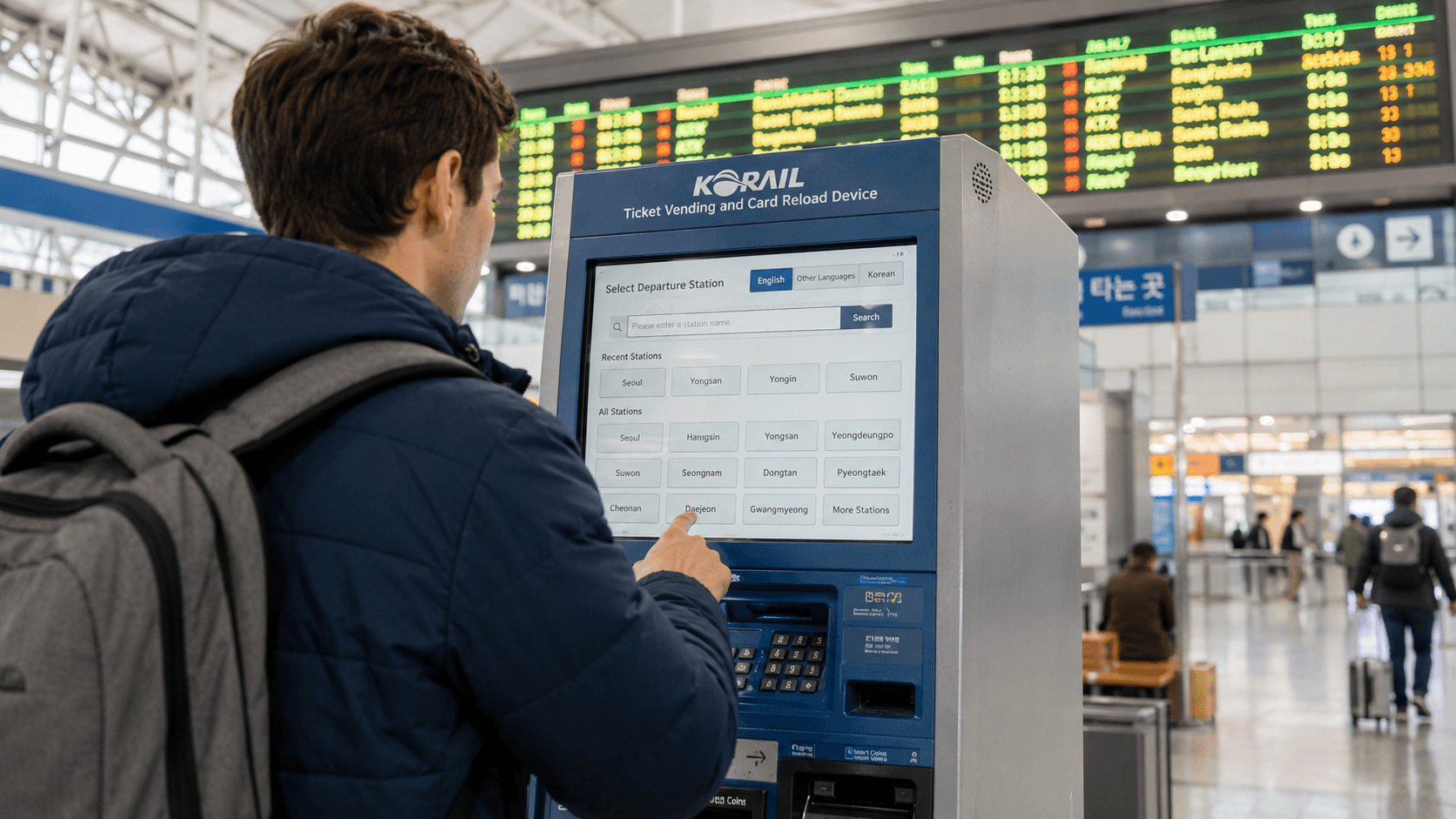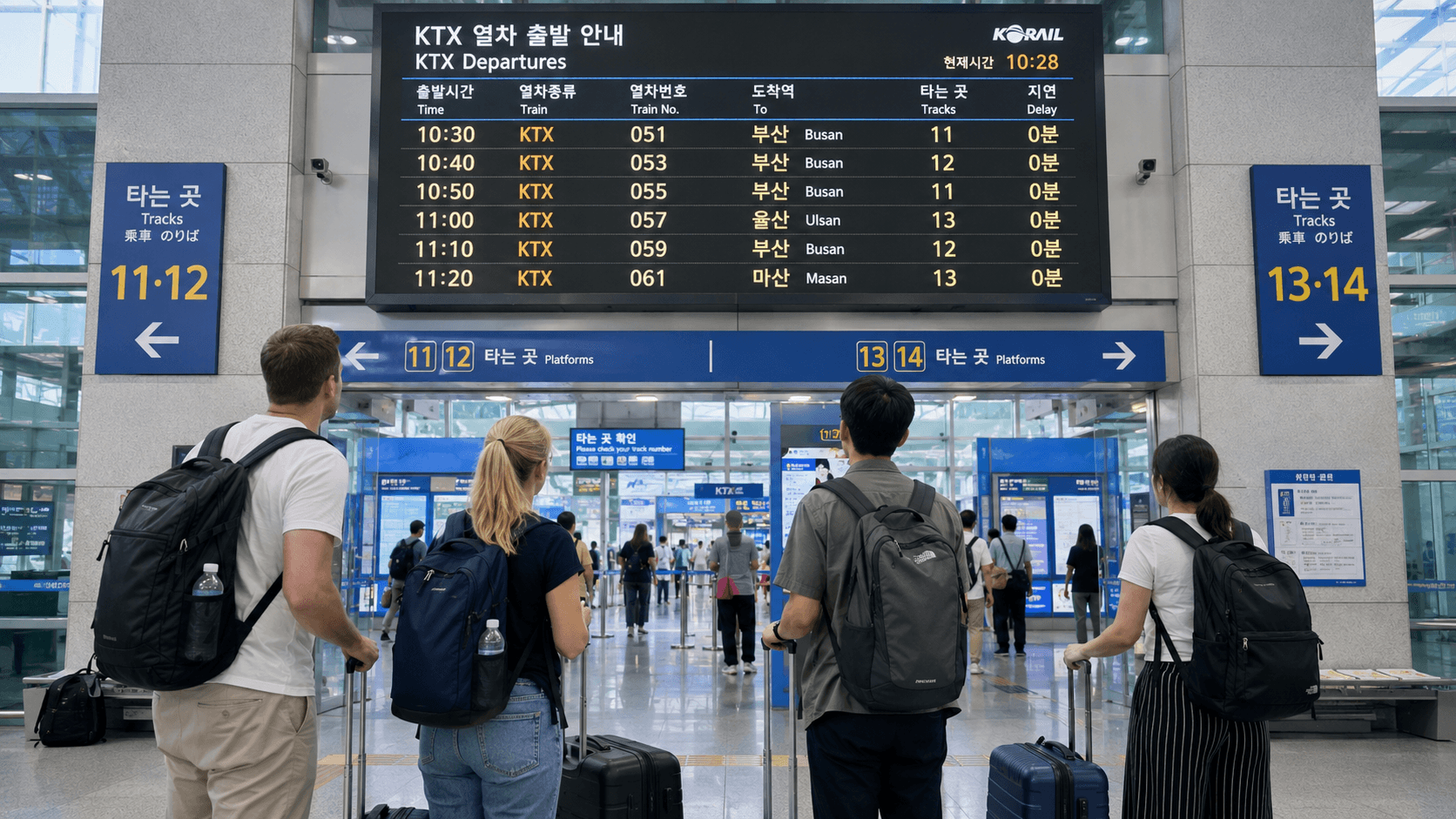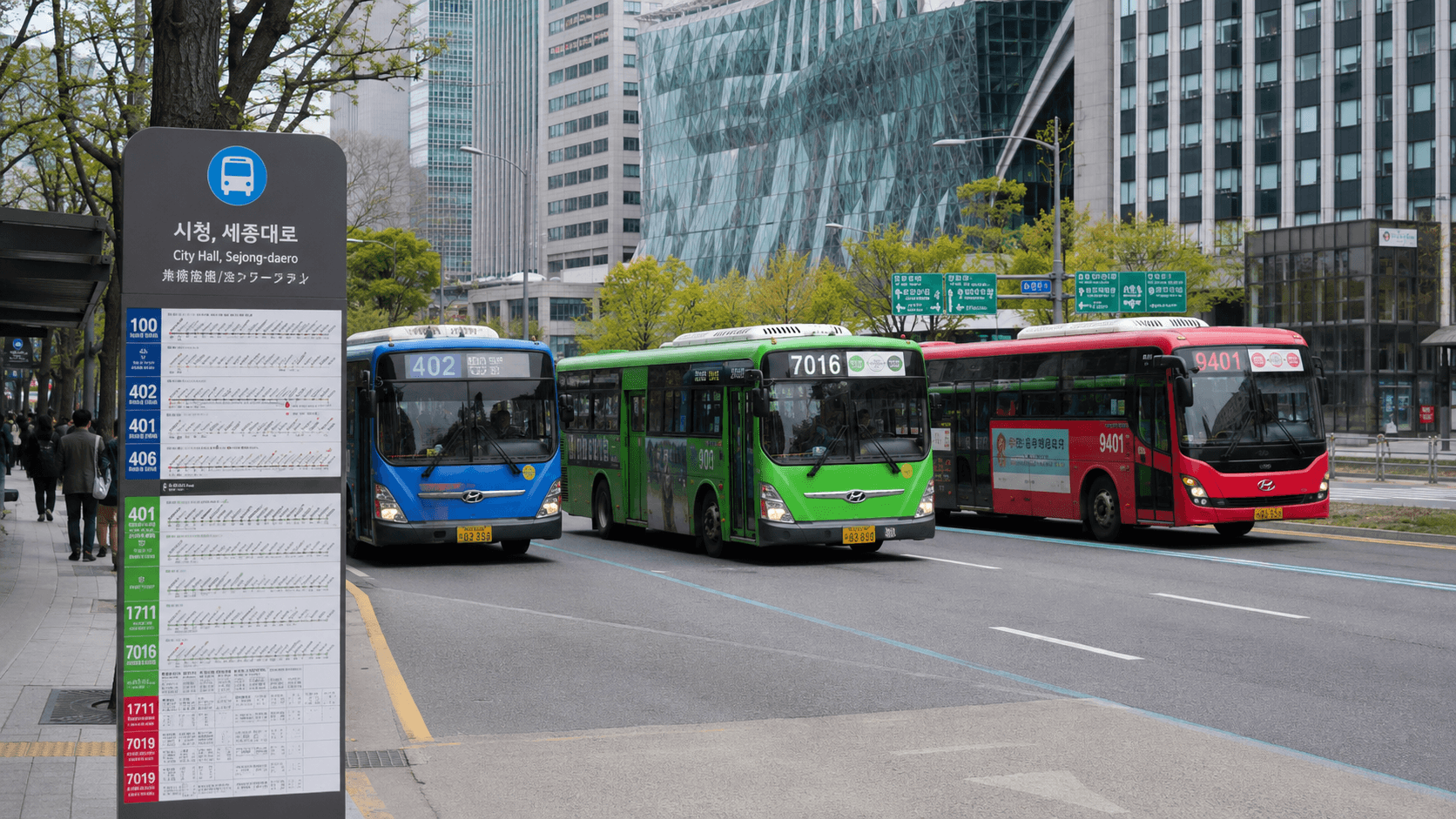
Seoul’s buses reach neighborhoods, hills, university districts, and residential streets that the subway does not always serve. For most visitors, the easiest method is to plan each journey in Naver Map or KakaoMap, pay with a rechargeable transport card, enter through the front door, and tap the card again before leaving through the rear door.
Fares and transport rules in this guide were verified on June 9, 2026. Individual routes, arrival times, and last buses can change, so check live information before traveling.
Quick answer
- Search for your destination in Naver Map or KakaoMap.
- Check the bus number, direction, boarding stop, and destination stop.
- Wait at the correct stop and signal clearly if necessary.
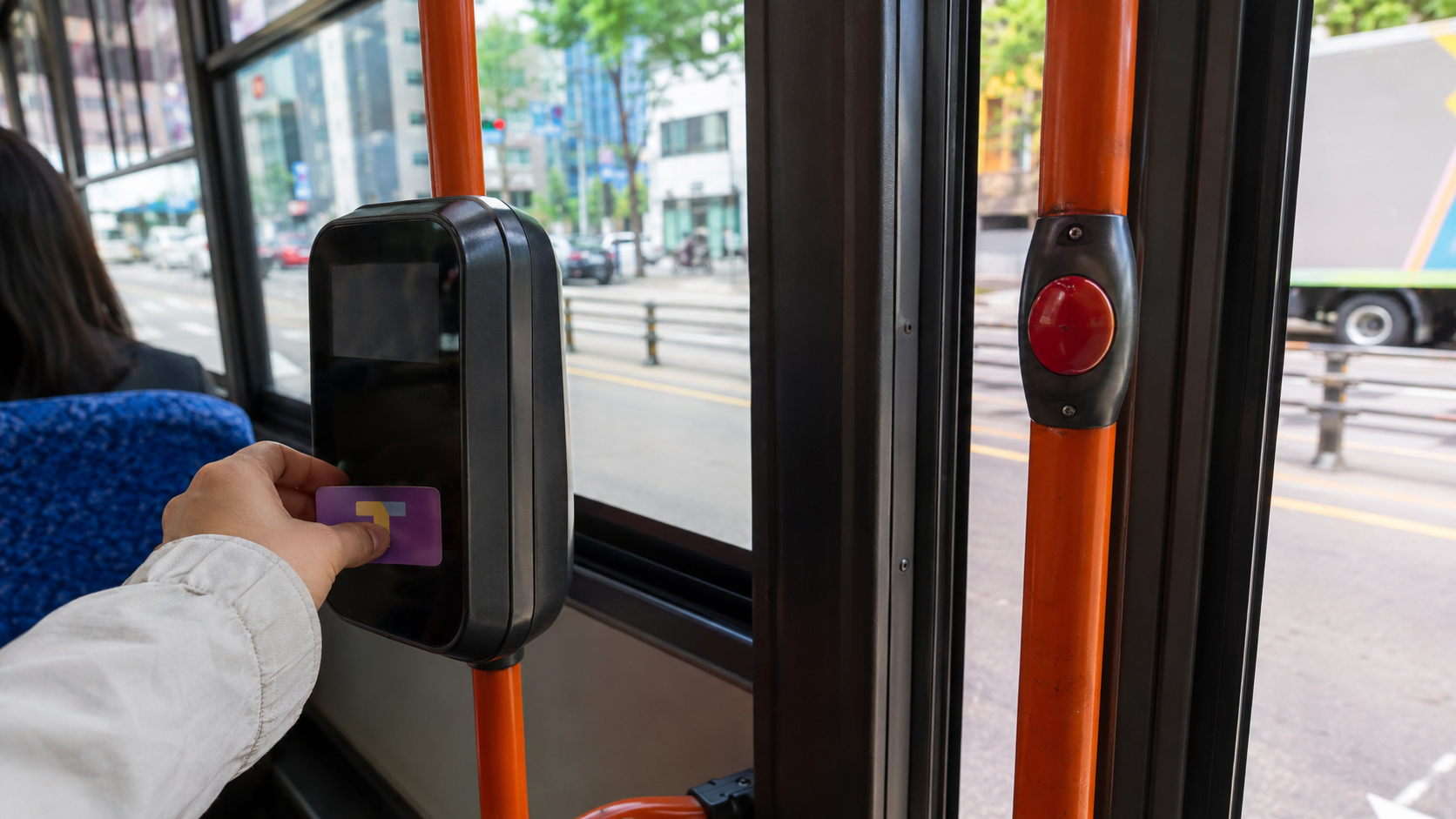
- Enter through the front door and tap a Tmoney or other compatible transport card.
- Follow your location in the app or watch the onboard display.
- Press a red stop button before your stop.
- Tap your card beside the rear door and exit.
Tapping when you leave is important even if you are not transferring. It records the completed journey and allows the integrated transfer fare to be calculated correctly.
Understanding Seoul’s bus colors
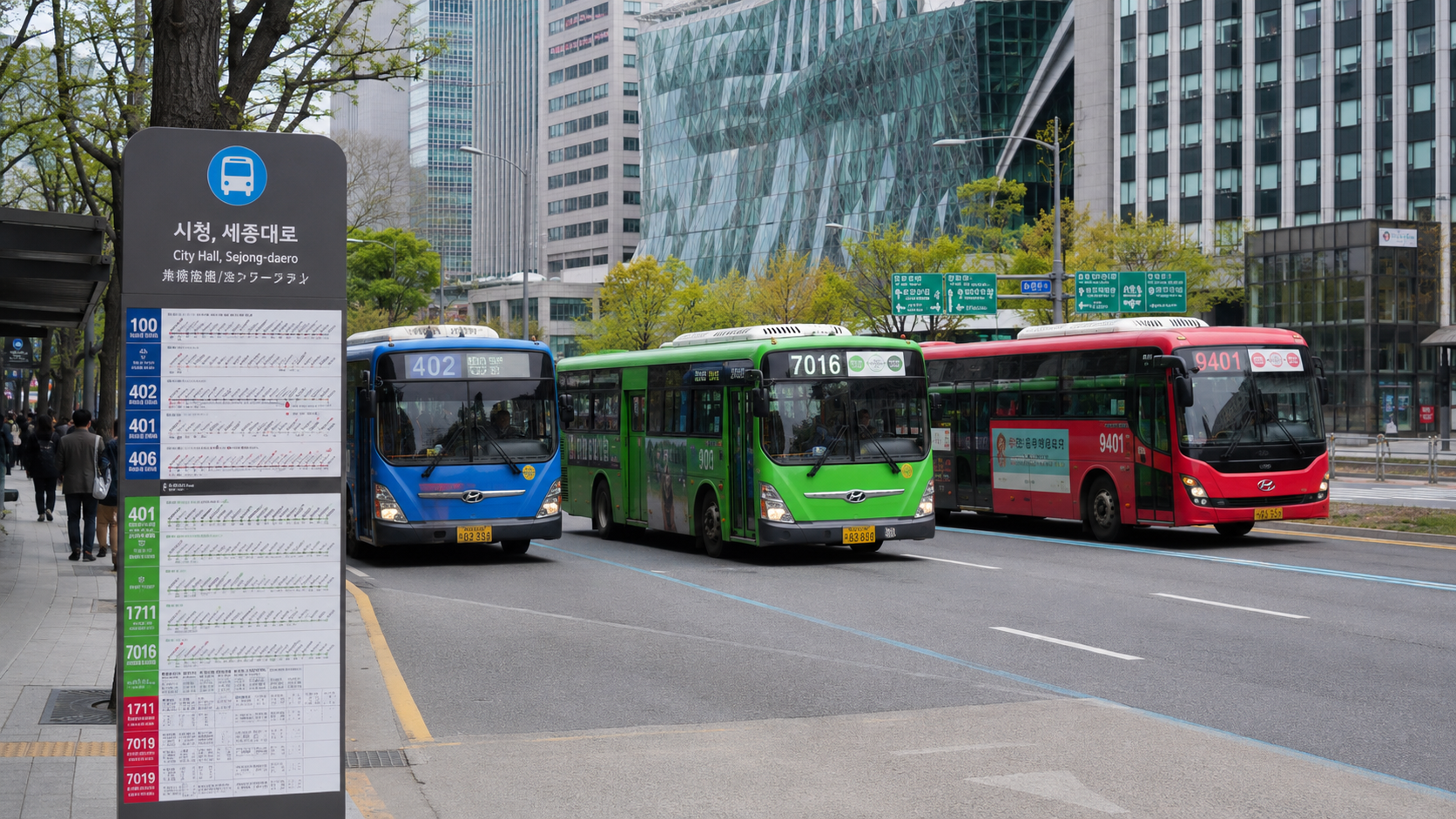
The color indicates the general role of a bus, although route-planning apps are more useful than memorizing the entire classification system. The Seoul Metropolitan Government’s bus guide divides the network into five main types.
| Color or name | Official classification | Typical use |
|---|---|---|
| Blue | Trunk bus | Longer routes connecting major districts, central Seoul, and transport hubs |
| Green | Branch bus | Local connections to subway stations and blue bus routes |
| Green village bus | Local bus, often called a maeul bus (마을버스) | Short neighborhood routes, including residential streets and hills |
| Yellow | Circulation bus | Circulation within central or sub-central districts |
| Red | Rapid bus | Longer metropolitan routes between Seoul and surrounding cities |
| N-prefixed bus | Night or Owl Bus | Late-night routes operating after much of the regular network has stopped |
Blue and green buses are the ones most visitors use for ordinary travel within Seoul. A green village bus may be useful for the final part of a journey from a subway station to accommodation on a hill.
Red buses require more attention. They generally connect Seoul with Gyeonggi Province or other parts of the metropolitan area, have a higher base fare, and may use different stops from ordinary city buses. Do not board a red bus merely because its route appears to follow the same road as a blue or green bus.
Bus numbers encode route areas and functions, but visitors rarely need to interpret them. Matching the exact number, direction, and stop shown in a navigation app is more reliable.
Seoul bus fares
The following fares are those published by the Seoul Metropolitan Government and were checked on June 9, 2026. The city’s fare table identifies the current rates as effective from August 12, 2023.
| Bus type | Adult transport-card fare | Adult cash fare |
|---|---|---|
| Blue trunk or standard green branch bus | KRW 1,500 | KRW 1,500 |
| Red rapid bus | KRW 3,000 | KRW 3,000 |
| Yellow circulation or differential-fare branch bus | KRW 1,400 | KRW 1,400 |
| Night or Owl Bus | KRW 2,500 | KRW 2,500 |
| Green village bus | KRW 1,200 | KRW 1,200 |
Discounted youth and child fares apply under Seoul’s official age categories. The city classifies passengers aged 19 or older as adults, ages 12–18 as teenagers, and ages 6–12 as children. Up to three children under six may ride free when accompanied by an adult guardian; additional children or children traveling alone are charged the child fare.
A 20% early-morning card discount applies before 6:30 a.m. on the listed regular services, excluding Owl Buses. Because fare categories and eligibility rules can change, families and long-term residents should confirm the current details on the official Seoul bus page.
How to pay
Tmoney and compatible transport cards
A rechargeable transport card is the simplest choice. Tmoney is the name visitors are most likely to see, although Seoul also lists compatible cards such as Cashbee and Rail+.
Cards are available from many convenience stores and transport-card sales points. The purchase price of the physical card is separate from the stored balance. Ask the cashier to add credit when buying it, or use a supported charging machine.
Do not assume that an ordinary foreign contactless bank card can be tapped directly on every bus reader. Seoul’s references to postpaid credit and debit cards concern cards equipped for Korea’s domestic transportation-payment system. A physical Tmoney or another clearly compatible transit card remains the safer option for most short-term visitors.
Cash is listed as an accepted payment method on the city’s official fare page. A transport card is still preferable because it enables integrated transfers and avoids payment difficulties. Keep enough balance for the full journey, particularly before taking a red metropolitan bus or traveling late at night.
Climate Card
The Climate Card is Seoul’s unlimited-use pass for participating transport. As verified on June 9, 2026, short-term passes cost:
| Validity | Price |
|---|---|
| 1 day | KRW 5,000 |
| 2 days | KRW 8,000 |
| 3 days | KRW 10,000 |
| 5 days | KRW 15,000 |
| 7 days | KRW 20,000 |
These short-term passes cover participating Seoul subway services and Seoul-licensed city, village, and night buses. They do not cover intercity buses, airport buses, non-Seoul-licensed buses, the Sinbundang Line, Ttareungi bicycle rental, or Hangang Bus service.
The validity period begins on the day a short-term pass is charged, not after 24 hours. For example, a one-day pass activated in the evening expires after the final eligible service that calendar day.
From March 17, 2026, new ticket machines at 273 stations on Seoul Subway Lines 1–8 began accepting internationally issued cards for purchasing physical Climate Cards and charging short-term passes. The city states that international card transactions carry an average service fee of approximately 3.7%. Coverage and purchase details are available on the official Climate Card page.
The Climate Card is not automatically the cheapest choice. Compare its price with the number of journeys you expect to make, and check whether any red, airport, or Gyeonggi-operated buses in your itinerary are excluded.
How transfers work
Seoul participates in the metropolitan integrated fare system. When you use a compatible transport card correctly, transfers between eligible buses and subway services are calculated as one connected journey rather than completely separate rides.
The basic transfer rules published by Seoul are:
- Tap your card when entering and leaving each bus.
- Begin the next eligible ride within 30 minutes of tapping out.
- The transfer window increases to 60 minutes from 9 p.m. to 7 a.m.
- Up to four transfers are permitted, creating a journey of up to five boardings.
- Reboarding the same bus or the same route does not qualify as a discounted transfer.
The integrated fare includes a base distance. Seoul states that transfer journeys generally include up to 10 kilometers, followed by an additional KRW 100 for each five kilometers. The highest applicable base fare among the services used is applied, so transferring to a more expensive red bus can increase the total.
A transfer is therefore not always completely free. It means you avoid paying a new full base fare for every eligible leg, subject to distance and service type.
Using one card for several people
On buses, the driver can sometimes charge several passengers to one transport card. Tell the driver the number of passengers before tapping. However, all passengers must board and leave together, and the same passenger count must continue during an eligible bus transfer.
Seoul states that subway transfer discounts do not apply to multi-passenger boarding on one card. Separate cards are much easier when a group plans to combine buses and subways or split up during the day.
Planning a bus journey
Naver Map and KakaoMap are generally more practical in Korea than international mapping services because they provide local route planning and live bus information. Search for the destination by its English or Korean name, then compare the suggested routes.
Before walking to the stop, check:
- The exact bus number and color
- The walking route to the correct stop
- The stop’s name and identification number
- The direction of travel
- The number of stops to your destination
- Live arrival estimates
- Whether the final service is approaching
Stops on opposite sides of a road may have similar names but serve different directions. At large intersections, several stops can also be spread along different sides or around a corner. Follow the app’s stop marker rather than waiting at the first shelter you see.
The official Seoul TOPIS bus information service explains route classifications and bus numbering. Seoul also links to its live public transport service at bus.go.kr, although Korean map apps may be easier for English-language point-to-point planning.
Boarding the bus step by step
1. Check the approaching bus
Confirm the route number on the front or side display. Several buses may arrive together, and the one you need may stop behind another vehicle.
Drivers may not stop if nobody appears to be waiting for their route and no passenger has requested the stop. Stand where you are visible and make your intention clear without stepping into the road.
2. Enter through the front door
Board through the front unless the driver directs otherwise. Let passengers leave and keep the doorway clear.
3. Tap once
Place the transport card flat against the reader near the driver. Wait for the confirmation sound and check the screen. A warning or different sound may indicate insufficient balance or an unread card.
4. Move inside promptly
Seoul buses can accelerate or brake sharply in traffic. Hold a rail or strap as soon as possible. Priority seats should be left available for older passengers, pregnant passengers, people with disabilities, and others who need them.
Large suitcases can block narrow aisles and doors. Airport limousine buses are usually more suitable for passengers carrying substantial luggage. On an ordinary city bus, keep smaller bags under control and avoid blocking the exit or wheelchair area.
5. Track your stop
Many buses provide Korean and English stop announcements, but the display or announcement may be difficult to follow on a crowded vehicle. Keep your route open in a navigation app and watch the bus’s progress.
6. Press the stop button early
Press one of the red stop buttons after the bus leaves the stop before yours or when your destination is announced. Do not wait until the bus has already reached the stop.
7. Tap out and leave through the rear door
Tap the reader beside the rear door before stepping off. Wait for confirmation, then exit carefully. If the rear door is unavailable, follow the driver’s instructions.
Night buses and last services
Regular bus operating hours vary by route. There is no single citywide first- or last-bus time, and the displayed time at a terminal does not necessarily indicate when the bus will reach a stop farther along the route.
Seoul’s late-night services are called Owl Buses and use route numbers beginning with N. A Seoul city notice for the 2026 Seollal holiday identified 14 night routes operating during their usual approximately 11 p.m.–6 a.m. service period, but exact times and intervals vary by route. Their adult fare is KRW 2,500, and the early-morning discount does not apply.
Check a live app shortly before travel. Night services can have long intervals, crowded sections, and stops that differ from daytime routes. If the final listed bus is essential, allow extra time rather than planning to reach the stop at the estimated arrival minute.
Accessibility, strollers, and mobility needs
Seoul is expanding low-floor buses, but vehicle accessibility can still vary by route and dispatch. The city’s current mobility policy says low-floor expansion is planned for routes where road conditions permit it. Real-time low-floor bus information and boarding support are available through the Seoul Inclusion Map system described by the Seoul Metropolitan Government’s mobility-support guide.
Wheelchair users should check the specific vehicle rather than assuming every arrival is accessible. Space may also be limited during busy periods. Travelers with a stroller should use the designated area when available, keep aisles clear, and be prepared for crowding during commuter hours.
For current assistance in Seoul, the city lists the Dasan Call Center at 02-120. From outside Korea, use +82-2-731-2120. The Korea Travel Hotline is available at 1330 within Korea or +82-2-1330 internationally.
Common mistakes to avoid
- Waiting on the wrong side of the road: Confirm the direction and stop number in your app.
- Matching only part of the bus number: Route numbers can look similar. Check every digit and any letter prefix.
- Forgetting to tap out: This can prevent a transfer discount and interfere with the correct fare calculation.
- Assuming every green bus is the same type: Standard green branch buses and small village buses have different roles and fares.
- Using one card for a group that will take the subway: Multi-passenger bus payment has transfer restrictions. Separate cards are simpler.
- Treating the Climate Card as universal: Airport buses, intercity buses, non-Seoul buses, and some rail services are excluded.
- Relying on a fixed timetable: Seoul traffic affects journey and arrival times. Use live tracking.
- Boarding with insufficient balance: Reload before a long or late journey, when finding a charging location may be inconvenient.
What to check before you go
- Install Naver Map or KakaoMap and confirm that place-name searches work.
- Obtain a compatible transport card and load enough credit.
- Compare ordinary fares with the Climate Card if staying several days.
- Confirm whether a red or green bus is operated by Seoul or another local authority.
- Check the exact boarding stop, direction, and final service.
- Allow more time during weekday commuting periods and in heavy traffic.
- Check low-floor vehicle information if step-free boarding is required.
- Use an airport limousine bus, train, or appropriately sized taxi when carrying luggage that cannot be safely stored on a city bus.
Sources
- Seoul Metropolitan Government: Bus routes, fares, payment methods, and transfer rules
- Seoul Metropolitan Government: Public transportation and how to use Seoul buses
- Seoul Metropolitan Government: Climate Card prices and service coverage
- Seoul Metropolitan Government: International card payments for Climate Card machines from March 17, 2026
- Seoul TOPIS: Bus types, numbering, and integrated fares
- Seoul Metropolitan Government: Mobility support and low-floor bus information
For your first journey, choose the route in a Korean map app before leaving Wi-Fi, take a screenshot showing the bus number and destination stop, and keep the live route open until you have tapped out.