Transportation in South Korea is relatively affordable if you use buses and subways. For most visitors, a reasonable city transportation budget is KRW 5,000–10,000 per person per day. Add more for airport transfers, taxis, or travel between cities.
Fares and rules in this guide were checked on June 9, 2026. Korea does not have one nationwide urban fare system: Seoul, Busan, and other cities set their own prices, and intercity fares depend on the route, operator, and vehicle class.
At a glance
| Transportation | Typical adult cost | Important detail |
|---|---|---|
| Seoul subway | From KRW 1,550 with a transit card | Distance charges may apply |
| Seoul city bus | KRW 1,500 with a transit card | Tap when boarding and leaving |
| Busan city bus | KRW 1,550 with a transit card | Cash costs KRW 1,700 |
| Seoul short-term Climate Card | KRW 5,000–20,000 | Unlimited eligible transport for 1–7 days |
| Seoul taxi | From KRW 4,800 in daytime | Time, distance, and surcharges increase the fare |
| Incheon Airport limousine bus | Usually KRW 16,000–17,000 to Seoul | Fare depends on the route |
| AREX Express standard tariff | KRW 18,100 to Terminal 1; KRW 18,700 to Terminal 2 | Promotional booking prices may be lower |
| Seoul–Busan KTX | KRW 59,800 in standard class | Check the exact train before payment |
| Intercity or express bus | Often about KRW 10,000–40,000+ | Planning estimate; route and seat class matter |
City buses and subways
Seoul fares
As of June 9, 2026, the adult base subway fare in Seoul is KRW 1,550 with a transportation card or KRW 1,650 for a single-journey ticket. The base fare covers the initial distance, after which additional distance charges apply. Seoul’s standard blue and green city buses charge adults KRW 1,500 by card.
The official Seoul Metropolitan Government fare guide lists the following common adult fares:
| Seoul service | Transportation card | Cash or single ticket |
|---|---|---|
| Subway base fare | KRW 1,550 | KRW 1,650 |
| Blue or green city bus | KRW 1,500 | KRW 1,500 |
| Red metropolitan bus | KRW 3,000 | KRW 3,000 |
A subway single-journey card requires an additional KRW 500 refundable deposit. After leaving the destination station, insert the card into a deposit refund machine to recover the KRW 500. Single-journey tickets do not provide the same convenient bus–subway transfer benefits as a reusable transportation card.
Card users taking their first eligible ride before 6:30 a.m. can receive Seoul’s 20% early-morning discount. This is mainly useful for commuters and travelers leaving for an early train or airport connection.
Busan fares
Busan’s adult city-bus fare is KRW 1,550 by transportation card or KRW 1,700 in cash, according to Busan Metropolitan City. An adult express bus costs KRW 2,100 by card, while night services cost more.
Busan metro fares are distance-based. Check the fare shown by the route planner or ticket machine before travel, particularly when using the Busan–Gimhae Light Rail or transferring to another operator’s line.
Other cities, including Daegu, Daejeon, Gwangju, and Jeju, have their own fare schedules. A base fare around KRW 1,400–1,700 is a useful planning estimate, but it should not be treated as a confirmed fare for every city.
How transfer discounts work
Seoul and several other metropolitan areas use an integrated fare system. Instead of paying a new full fare for every bus or subway, card users are charged according to the journey’s combined distance and the highest applicable base fare.
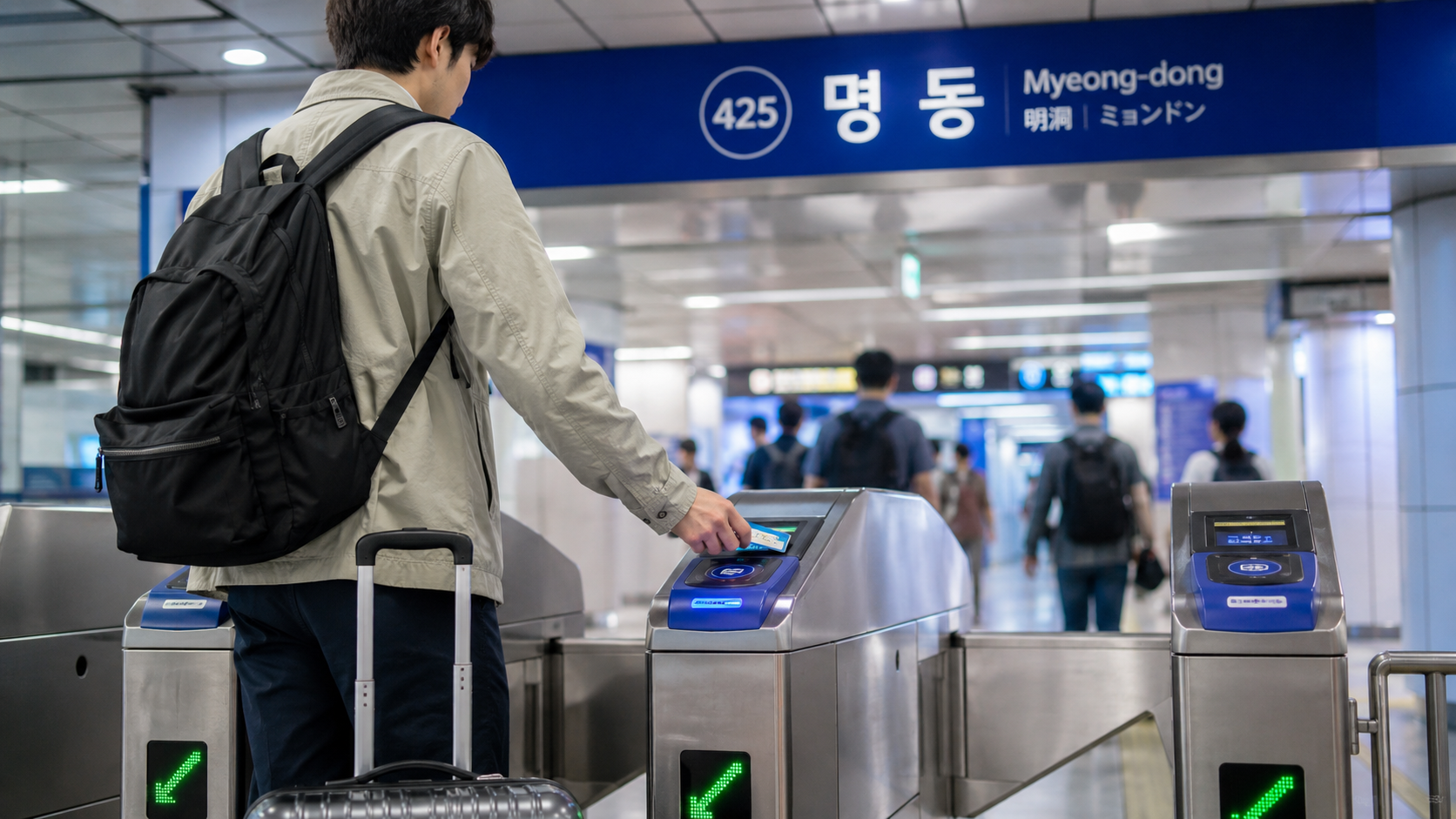
In Seoul, follow these steps:
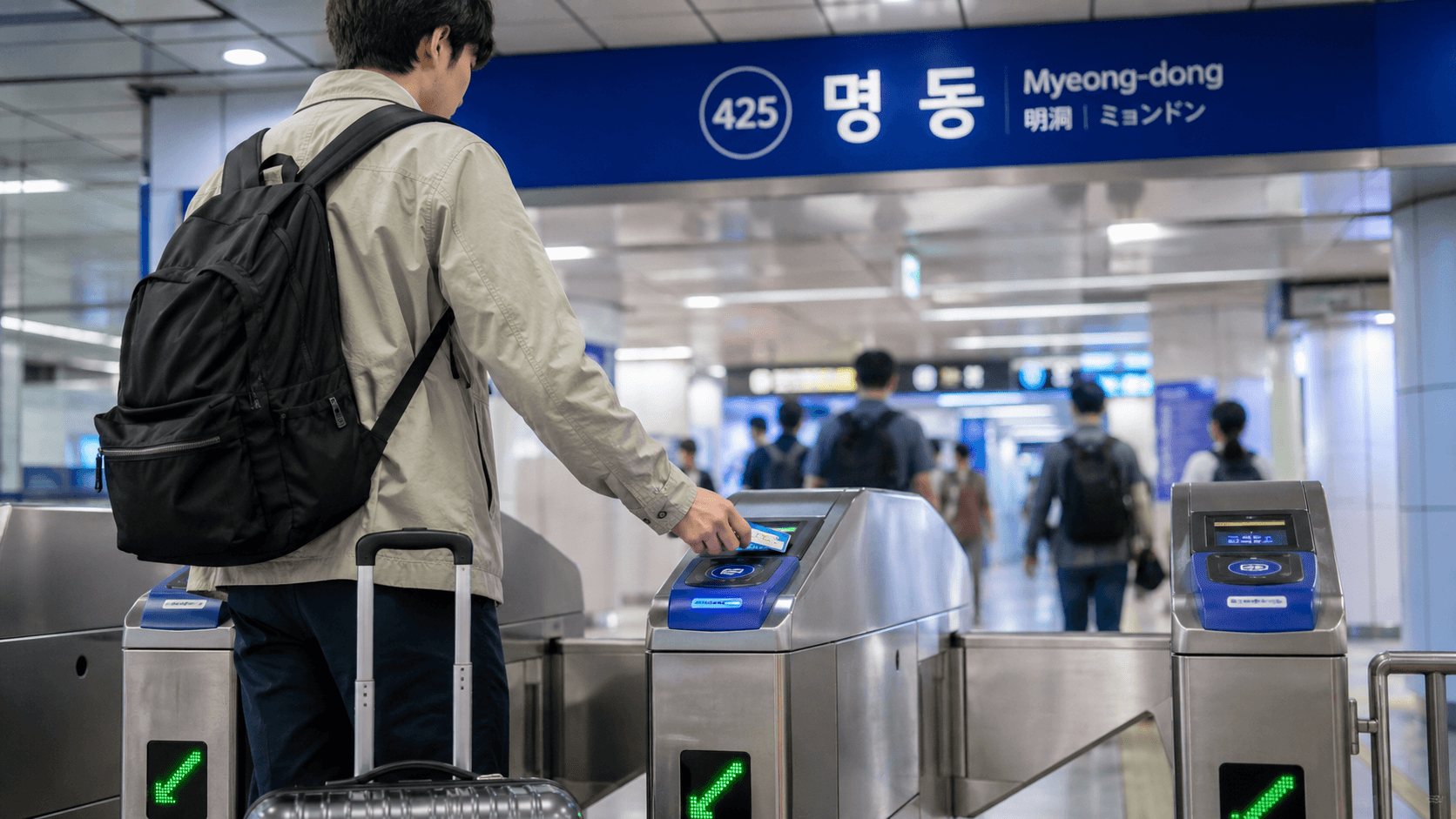
- Tap your transportation card when boarding a bus or entering the subway.
- Tap again when leaving the bus or passing through the subway exit gate.
- Begin the next ride within 30 minutes. The window is extended to 60 minutes between 9 p.m. and 7 a.m.
- Continue tapping on and off for every part of the trip.
Seoul permits up to four transfers, creating a journey of as many as five boardings. The same bus route cannot normally be used as a discounted transfer. Full conditions appear in the Seoul bus and subway guide.
The most common visitor mistake is forgetting to tap when leaving a bus. This can cancel the transfer discount or cause the system to calculate the next fare incorrectly.
Transportation cards and payment
A rechargeable transportation card such as Tmoney or EZL is the simplest option for most visitors. These cards work on a wide range of buses and urban rail systems and can usually be purchased at convenience stores or transportation facilities.
The card itself commonly costs a few thousand won and is normally non-refundable. Stored value is separate: purchasing a KRW 4,000 card does not mean it already contains KRW 4,000 of transport credit.
Important payment points
- Conventional transit-card recharging often requires cash, particularly at convenience stores and older subway machines.
- Since March 17, 2026, Seoul has accepted internationally issued cards and supported mobile payments at 440 newer vending machines in 273 stations on Lines 1–8 for single-journey tickets and short-term Climate Cards. See the Seoul Metropolitan Government announcement.
- Availability still depends on the machine and product. Carrying KRW 10,000–30,000 in cash is sensible when buying or recharging a standard transit card.
- One card per person is the easiest arrangement. Although a bus driver may process multiple passengers on one card in limited situations, this complicates transfers and does not work conveniently with subway gates.
Is the Seoul Climate Card cheaper?
The Climate Card is an unlimited-use pass for eligible Seoul public transportation. Short-term passes cost:
| Validity | Price |
|---|---|
| 1 day | KRW 5,000 |
| 2 days | KRW 8,000 |
| 3 days | KRW 10,000 |
| 5 days | KRW 15,000 |
| 7 days | KRW 20,000 |
A regular 30-day pass without bicycle access costs KRW 62,000. Other 30-day versions cost more when they include Seoul Bike, known as Ttareungi, or the Hangang Bus.
The pass can be good value if you take at least three or four eligible rides most days. However, coverage is more important than the break-even calculation. It excludes the Sinbundang Line, airport buses, intercity buses, and some rail sections or buses outside Seoul.
The Climate Card can be used to exit at Incheon Airport Terminals 1 and 2 after boarding within its eligible area, but it cannot be used to board at the airport terminals. Review the current coverage map on the official Seoul Climate Card page before relying on it.
Airport transportation costs
Incheon Airport to Seoul by train
The all-stop AREX Airport Railroad service connects Incheon Airport with Seoul and uses the metropolitan distance-based fare system. It is usually the lower-cost rail option, although the exact amount depends on the terminal and destination.
The reserved-seat AREX Express runs directly between the airport and Seoul Station. The operator’s published standard adult tariff is KRW 18,100 between Seoul Station and Terminal 1 and KRW 18,700 between Seoul Station and Terminal 2. Online or partner-channel promotions may offer lower prices, so check the final amount on the official AREX website before paying.
Incheon Airport limousine buses
Airport limousine buses are useful when they stop near your hotel or when stairs and train transfers would be difficult with luggage. Airport Limousine Co. lists adult fares of KRW 17,000 for direct Incheon Airport–central Seoul services and KRW 16,000 for routes operating via Gimpo Airport. Individual routes can differ; confirm yours on the operator’s official fare page.
Passengers traveling from Incheon Airport to Seoul should purchase a ticket at an airport ticket counter or vending machine. At Terminal 2, advance ticket purchase has been required for this operator’s buses since March 5, 2026. When traveling from Seoul to the airport, cash or Tmoney payment may be accepted on board, depending on the service.
Taxi from Incheon Airport
A taxi provides door-to-door travel but costs considerably more. Seoul’s official international-taxi zone fares between Incheon Airport and Seoul range from KRW 70,000 to KRW 95,000 for a sedan, depending on the district. Larger or deluxe vehicles cost more. Tolls or operator-specific conditions may also apply, so confirm whether the quoted price includes every charge.
For two or three people with heavy luggage, dividing a taxi fare may be reasonable. Solo travelers normally spend much less by train or limousine bus.
Taxi fares within cities
A standard Seoul sedan taxi starts at KRW 4,800 for the first 1.6 km during daytime. The meter then adds KRW 100 according to distance or slow-moving time. The current official structure is published in Seoul’s taxi fare guide.
Late-night base fares are higher:
| Time | Seoul base fare |
|---|---|
| 4 a.m.–10 p.m. | KRW 4,800 |
| 10–11 p.m. | KRW 5,800 |
| 11 p.m.–2 a.m. | KRW 6,700 |
| 2–4 a.m. | KRW 5,800 |
Distance and time charges also increase at night. Trips beyond Seoul’s city boundary can attract an additional surcharge.
Taxi apps may display a predicted or fixed fare, but premium categories and large vehicles can use different pricing. Check the vehicle type before confirming. A short urban journey commonly costs several thousand won; traffic congestion can make the final amount noticeably higher because the meter also charges for slow travel.
Traveling between Korean cities
KTX and other trains
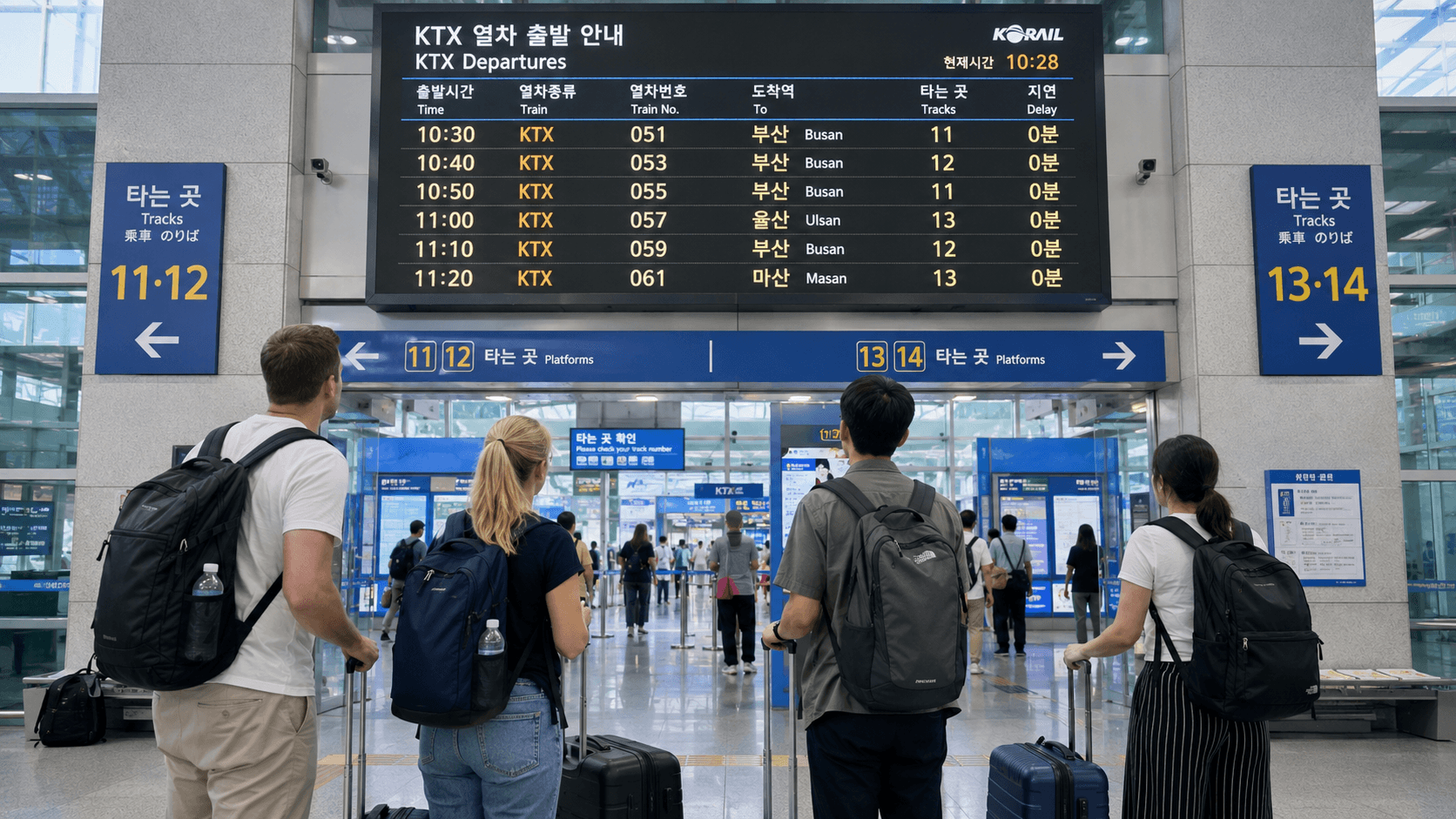
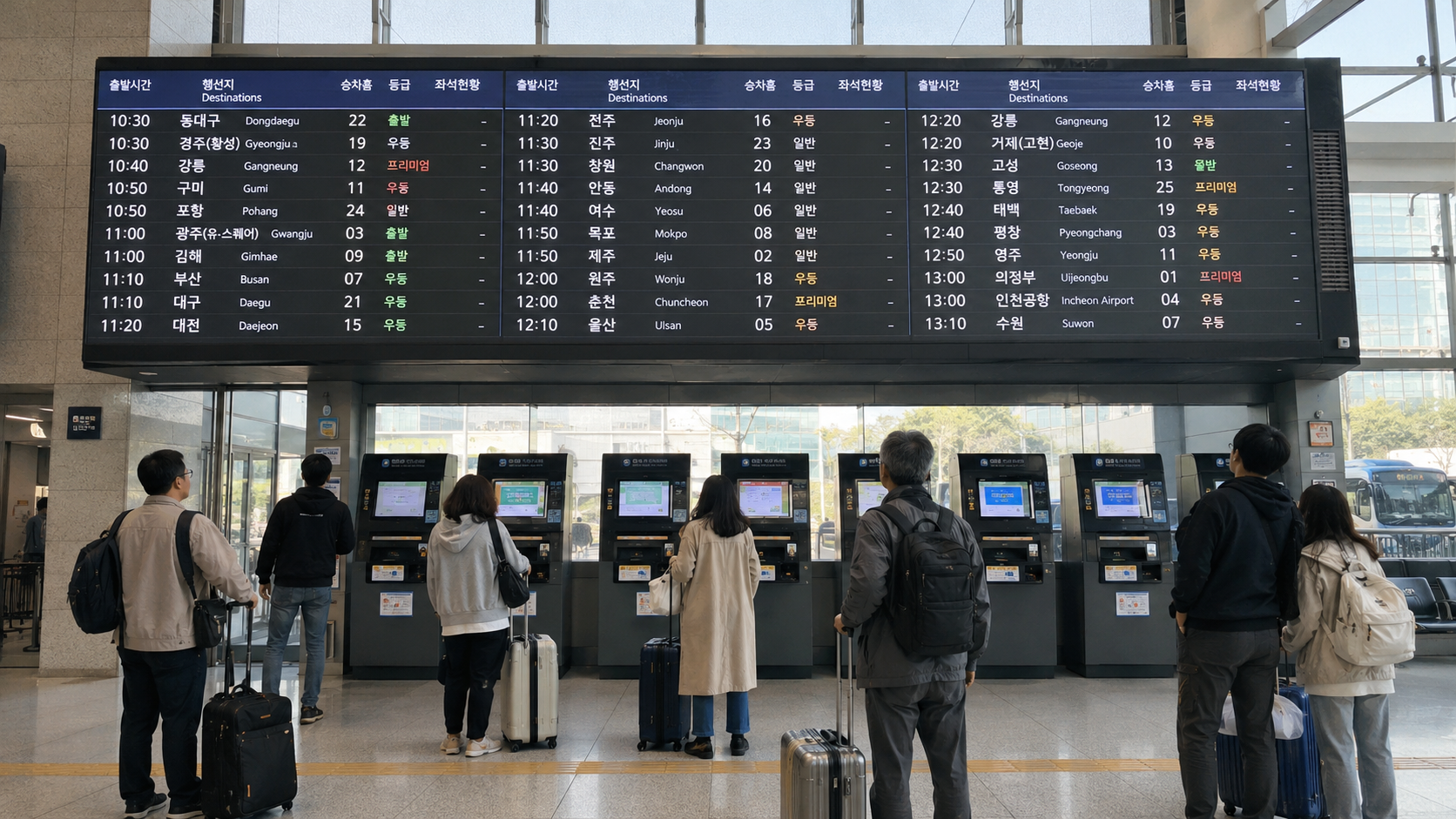
High-speed rail is usually the fastest way to travel between Seoul and major mainland cities. A standard-class adult KTX ticket from Seoul to Busan is KRW 59,800. Shorter journeys cost less, while first-class seats, different routes, or selected trains can change the total.
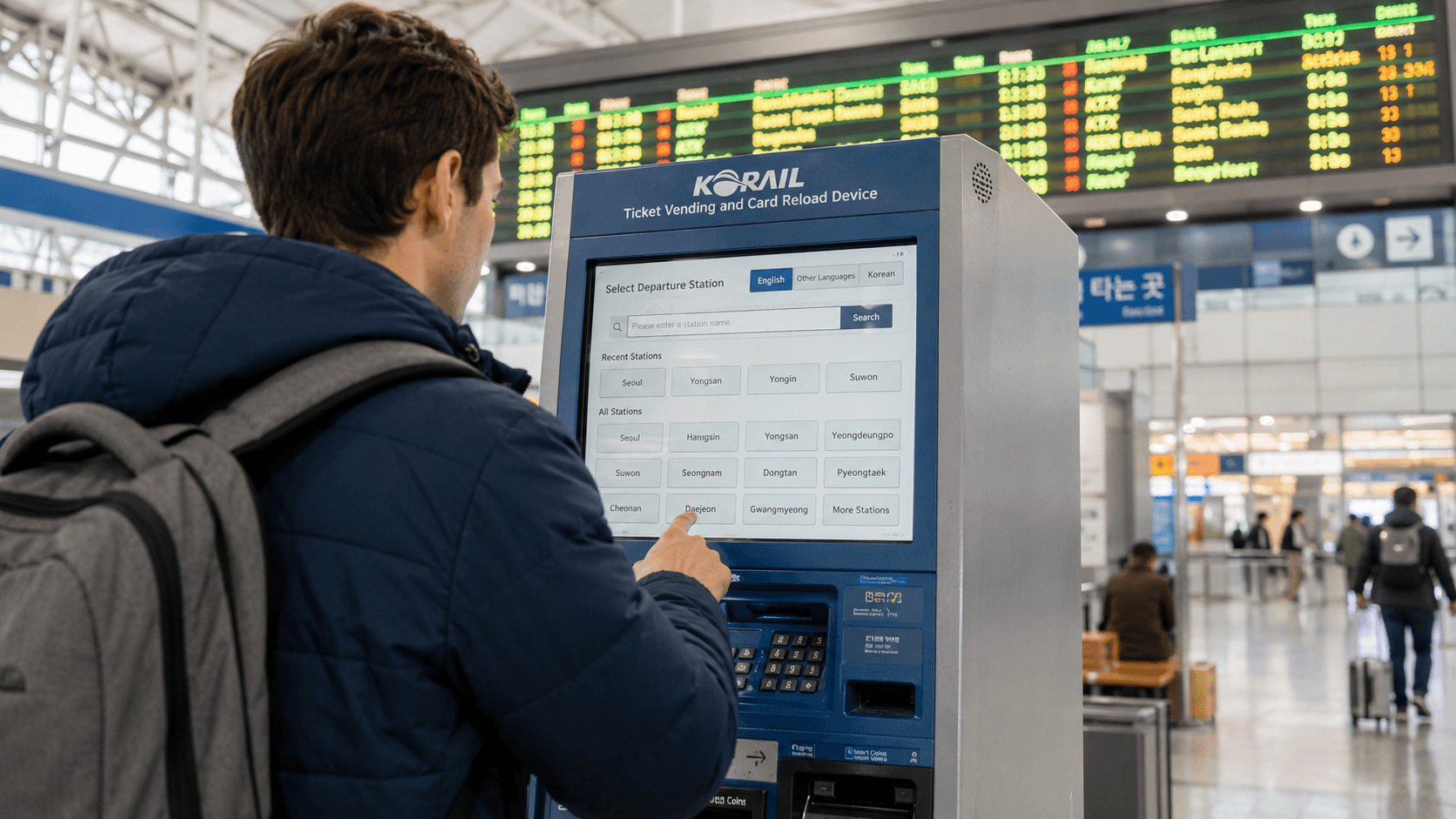
Use the official KORAIL reservation website to check the exact fare and availability. KTX tickets can sell out on Friday evenings, Sunday afternoons, and around national holidays, so early booking matters more than searching for a last-minute discount.
Slower ITX or Mugunghwa services may be cheaper, but they take longer and do not serve every route at a useful frequency.
Express and intercity buses
Bus fares vary by distance and by class, such as general, excellent, or premium. As a broad planning estimate, expect approximately KRW 10,000–40,000 or more for many intercity journeys. This is not a fixed national fare.
Check the actual journey through an official reservation service:
Terminals with similar names may be far apart. Confirm both the departure terminal and arrival terminal before purchasing. Bus tickets are normally tied to a specific departure, unlike local buses.
Realistic transportation budgets
These are planning estimates rather than guaranteed costs:
One day sightseeing in Seoul
- Three or four bus or subway rides: about KRW 4,500–7,000
- One short taxi ride: about KRW 6,000–15,000
- Practical daily total: KRW 5,000–10,000 using public transport, or KRW 15,000–30,000 with a taxi
Five days based in Seoul
- Pay-as-you-go transit: roughly KRW 25,000–50,000
- Five-day Climate Card: KRW 15,000, plus the cost of the physical card if required
- Airport travel: add the separate airport fare unless your chosen route is specifically covered
Seoul and Busan trip
- Seoul local transportation: KRW 20,000–40,000
- One-way Seoul–Busan KTX: KRW 59,800
- Busan local transportation: KRW 15,000–30,000
- Return KTX and city transport: roughly KRW 155,000–190,000 per person, before taxis and airport transfers
What to check before you go
- Confirm fares again on the operator’s website, especially for airport and intercity services.
- Check whether your accommodation is near a subway station, airport-bus stop, or mainline railway station.
- Carry some KRW cash for transit-card purchases and recharging.
- Tap your card when leaving buses so transfer discounts are calculated correctly.
- Check the last subway or bus rather than assuming late-night service is available.
- Reserve KTX and express buses early for weekends and Korean public holidays.
- Confirm the correct airport terminal before choosing a train or bus ticket.
- Allow extra money for taxi tolls, late-night surcharges, traffic delays, and travel outside city boundaries.
- Check elevator locations in advance if you have large luggage, a stroller, or limited mobility.
For a first trip, start with a rechargeable transportation card and load approximately KRW 20,000–30,000. Monitor the balance at station gates or convenience stores, then add only what you expect to use. Compare that plan with the Climate Card only after confirming that your routes are inside its coverage area.
Sources
- Seoul Metropolitan Government bus and subway fares
- Seoul Metropolitan Government Climate Card guide
- Seoul Metropolitan Government taxi fare guide
- Busan Metropolitan City public transportation guide
- Airport Railroad AREX
- Airport Limousine official fare guide
- KORAIL official reservations
- KOBUS express bus reservations