A 10-day trip is long enough to experience three distinct sides of South Korea without changing hotels every night. This route begins with four nights in Seoul, continues with two nights in Gyeongju and finishes with three nights in Busan before departure. It works especially well for first-time visitors using trains and local public transport.
Transport information and prices in this guide were verified on June 10, 2026. Train schedules, attraction hours and admission fees can change, so confirm them for your specific dates.
At a glance
| Day | Overnight base | Main plan |
|---|---|---|
| 1 | Seoul | Arrival and an easy neighborhood walk |
| 2 | Seoul | Gyeongbokgung, Bukchon and Insadong |
| 3 | Seoul | Market, city views and the Han River |
| 4 | Seoul | Choose a modern-Seoul day or a day trip |
| 5 | Gyeongju | Train south and explore the historic center |
| 6 | Gyeongju | Bulguksa, Bomun or a slower city day |
| 7 | Busan | Transfer to Busan and visit the central districts |
| 8 | Busan | Gamcheon, Jagalchi and Yeongdo |
| 9 | Busan | Haeundae, coastal scenery and Gwangalli |
| 10 | — | Departure or return to Seoul |
This schedule assumes arrival through Incheon International Airport and departure from either Busan or Seoul. If you have a round-trip flight from Incheon, return to Seoul on Day 9 and stay near Seoul Station or the airport.
Before the trip: choose the right transport setup
Airport to Seoul
The Airport Railroad, usually shown as AREX or 공항철도, connects both Incheon Airport terminals with Seoul. The Express Train runs directly to Seoul Station, while the All-Stop Train also serves stations such as Hongik University and Gongdeok.
At both airport terminals, follow signs to the transportation center on basement level B1. The Incheon International Airport railroad guide provides station locations and directs passengers to the official operator for current fares and timetables. Verify the last train if your flight lands late; immigration, baggage collection and the walk to the station can take longer than expected.
Choose the All-Stop Train if your accommodation is near Hongdae or Gongdeok. The Express Train is more convenient for Seoul Station, particularly with large luggage, but requires a separate reserved ticket.
Paying for city transport
A rechargeable transportation card is the simplest option across Seoul, Gyeongju and Busan. Buy one at a convenience store or station and maintain enough balance for buses and subways. Tap when boarding and when leaving; on buses, failing to tap out can affect transfers or charge the wrong fare.
For several busy sightseeing days in Seoul, compare ordinary pay-as-you-go fares with a short-term Climate Card. As verified on June 10, 2026, the Seoul Metropolitan Government’s Climate Card guide lists passes at KRW 5,000 for one day, KRW 8,000 for two days, KRW 10,000 for three days, KRW 15,000 for five days and KRW 20,000 for seven days. A physical card costs an additional KRW 3,000.
Short-term passes begin on the day they are charged, not at the first tap, and cannot be charged in advance. Their coverage does not include every railway, regional bus or airport service. In particular, do not assume that the card will cover a journey beginning at Incheon Airport.
Booking intercity trains
Reserve long-distance trains through the official KORAIL English booking service. For this route, search for:
- Seoul to Singyeongju on Day 5
- Singyeongju to Busan on Day 7
- Busan to Seoul on Day 9 or 10 if returning to the capital
Singyeongju Station, sometimes displayed as Gyeongju Station in newer booking interfaces, is outside central Gyeongju. Allow time for a local bus or taxi between the station and your accommodation. Confirm the exact station name on your ticket rather than relying only on a map search.
Book early for Friday evenings, Sundays, public holidays and major festival periods. Individual tickets may be better value than a rail pass when you are taking only two or three intercity trains.
Day 1: Arrive in Seoul and keep the evening flexible
Stay near Jongno, Euljiro, Myeongdong, Seoul Station or Hongdae. Jongno is convenient for historic sights, while Hongdae offers a straightforward All-Stop Airport Railroad journey.
After checking in, choose one compact area rather than crossing the city. A practical first evening could include Cheonggyecheon Stream, Myeongdong or the streets around Hongik University. Eat close to your hotel and finish early if you have crossed several time zones.
Do not place a timed palace visit or prepaid performance on your arrival day. Flight delays, airport queues and rush-hour travel can easily disrupt the schedule.
Day 2: Palaces, Bukchon and Insadong
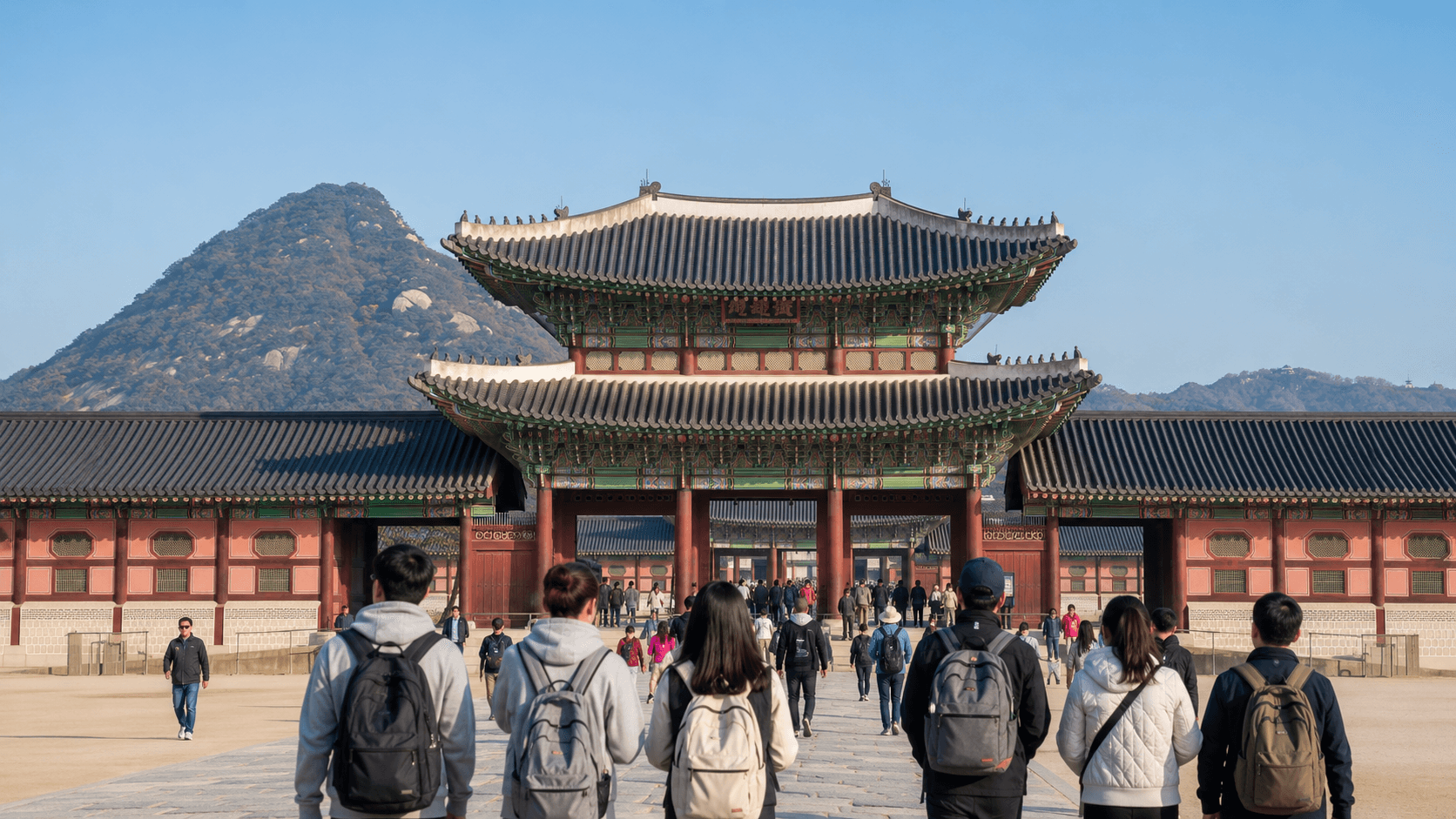
Begin at Gyeongbokgung Palace. Arriving near opening time usually makes the large grounds easier to navigate. Check the palace’s current closure day, admission rules and opening hours through the Korea Heritage Service’s Royal Palaces and Tombs Center before visiting.
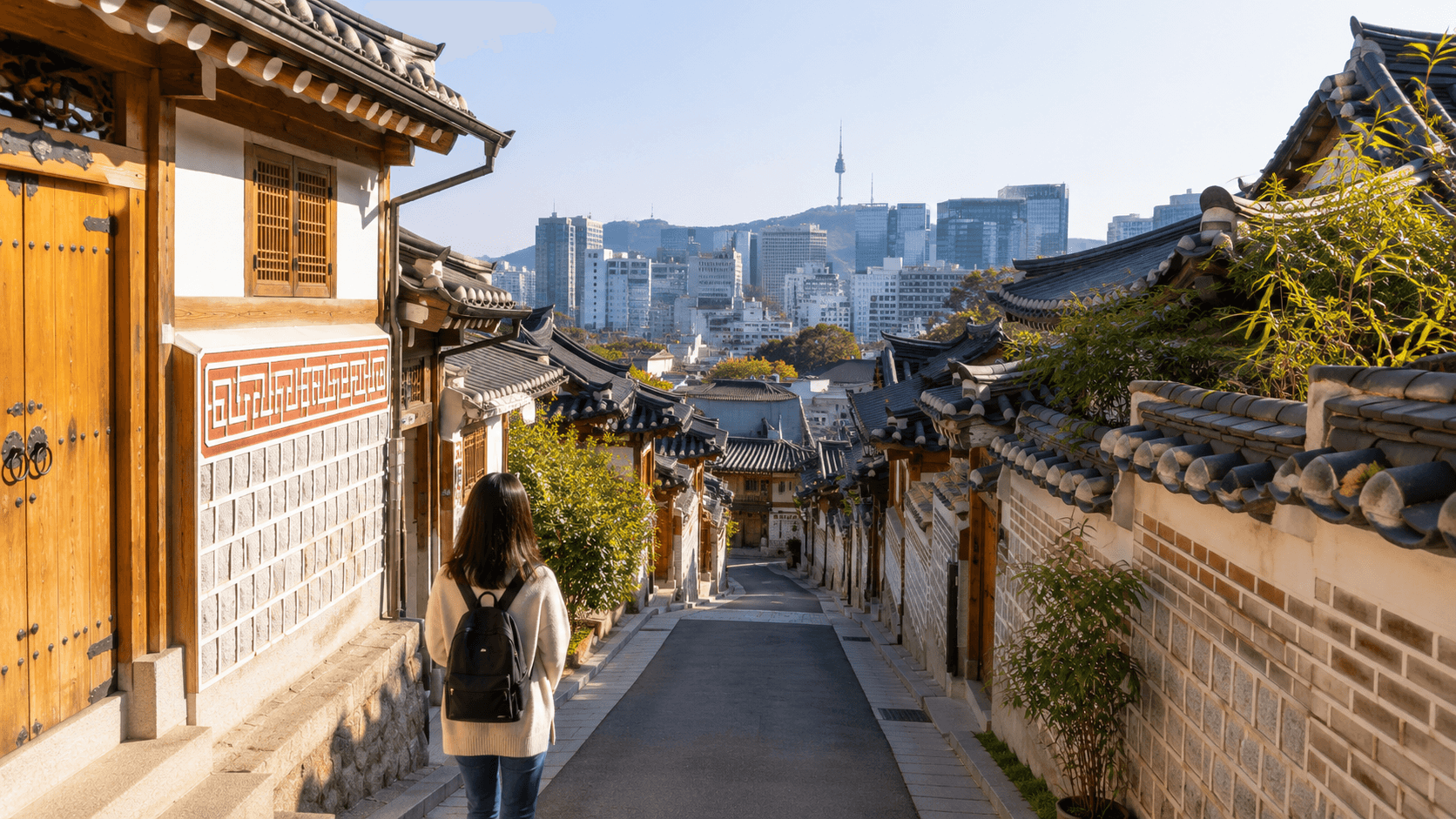
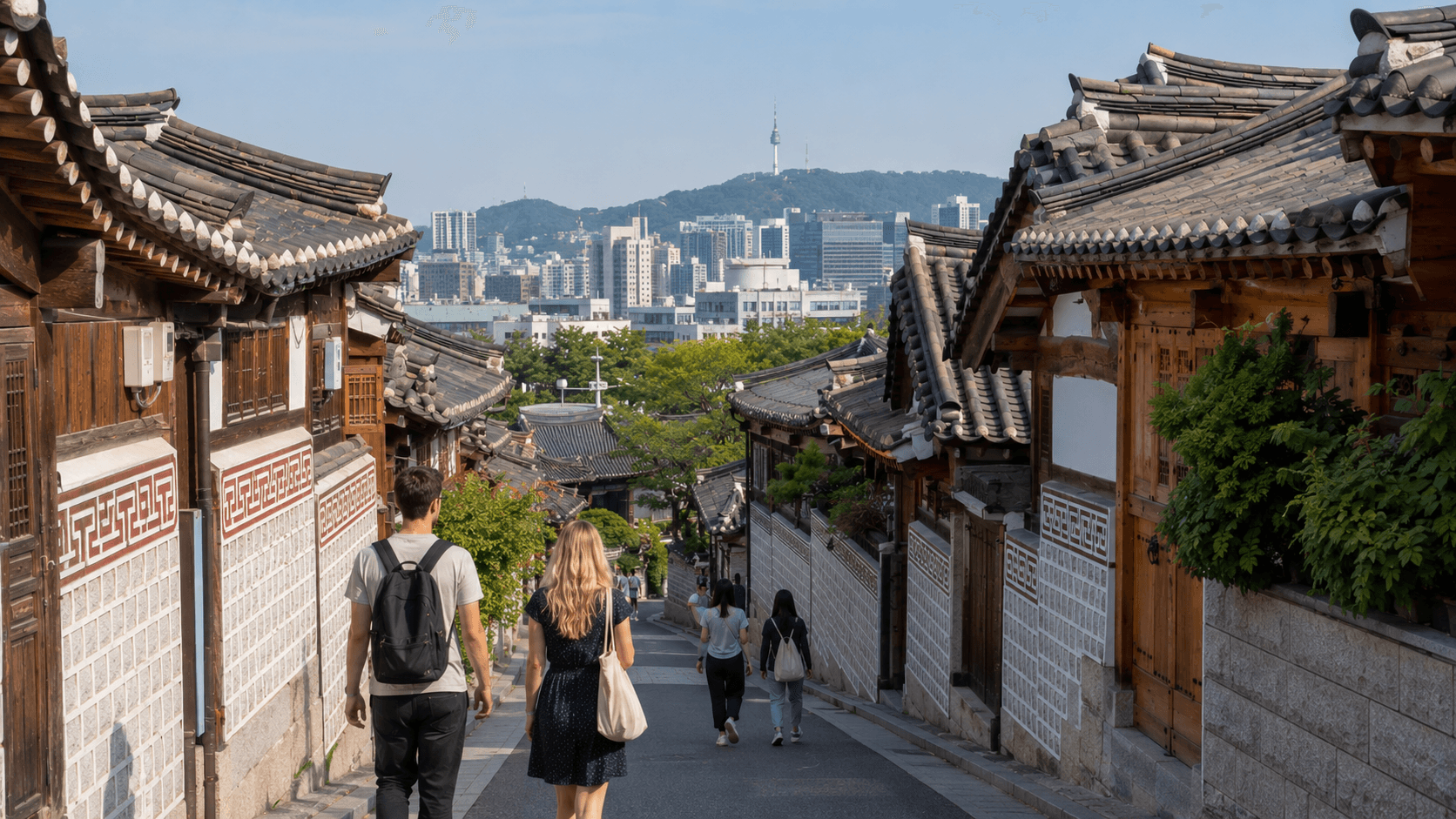
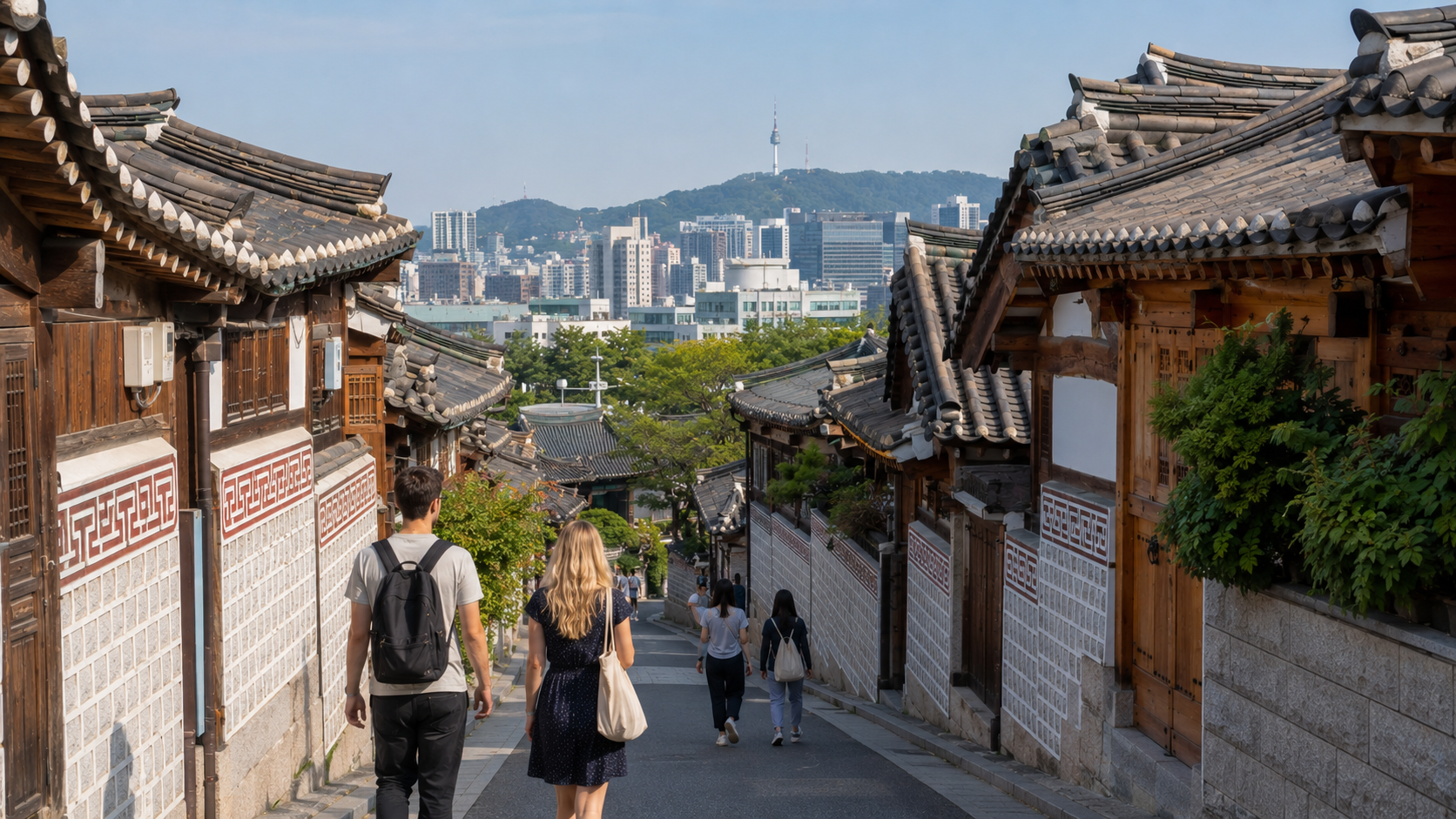
Continue to the National Folk Museum area if it interests you, then walk toward Bukchon Hanok Village. A hanok (한옥) is a traditional Korean house. Bukchon remains a residential neighborhood, so follow posted visitor-hour restrictions, keep voices low and do not photograph through gates or windows.
Spend the late afternoon around Insadong and Ikseon-dong. Both areas are walkable from the palace district, but their narrow streets become crowded at weekends. Insadong is more useful for traditional crafts and tea, while Ikseon-dong has converted hanok cafes and restaurants.
Practical route
- Gyeongbokgung Palace
- Bukchon Hanok Village
- Insadong
- Ikseon-dong or Cheonggyecheon after dark
Day 3: Market food, city views and the Han River
Start at Gwangjang Market if you want a traditional market experience. Walk through first, compare menus and prices, and choose busy stalls with clearly displayed food. Carry some cash, although payment practices vary by vendor.
Continue to Dongdaemun Design Plaza or move south to Namsan. For N Seoul Tower, check weather and visibility before paying for an observation deck. The surrounding park and viewpoints can still be worthwhile without entering the tower.
In the evening, visit a Han River park such as Yeouido, Banpo or Ttukseom. Convenience-store picnics are easy to arrange, but dispose of food containers and delivery packaging correctly. River cruises and seasonal fountains should be treated as optional activities because schedules can change with weather, maintenance and water conditions.
Day 4: Choose one Seoul theme
Avoid combining distant districts merely because they appear on a highlights list. Pick one of these plans.
Option A: Contemporary Seoul
Visit Seongsu for converted industrial spaces, shops and cafes, then continue to Seoul Forest. Finish in Gangnam, COEX or Jamsil. This option involves less advance booking but considerable walking.
Option B: Museums and neighborhoods
Choose one major museum, such as the National Museum of Korea, and combine it with nearby Yongsan, Itaewon or the Hangang riverside. Check the museum’s official calendar because individual galleries may close temporarily even when the main building is open.
Option C: A day trip
Suwon is a practical independent day trip for its fortress and traditional center. A visit to the Demilitarized Zone requires more preparation: access conditions and tour routes can change, and some areas cannot be visited independently. Use an authorized operator and check passport requirements before paying.
Day 5: Seoul to Gyeongju
Take a morning KTX from Seoul to the Gyeongju area. Leave at least 30 minutes between arriving at Seoul Station and your train’s departure if you need to find the platform, buy food or handle luggage.
In Gyeongju, stay near Hwangnidan-gil or the intercity bus terminal for restaurants and access to the central historic area. The Bomun resort district is quieter but less convenient for an evening walk without additional bus or taxi travel.
After checking in, explore the central heritage zone:
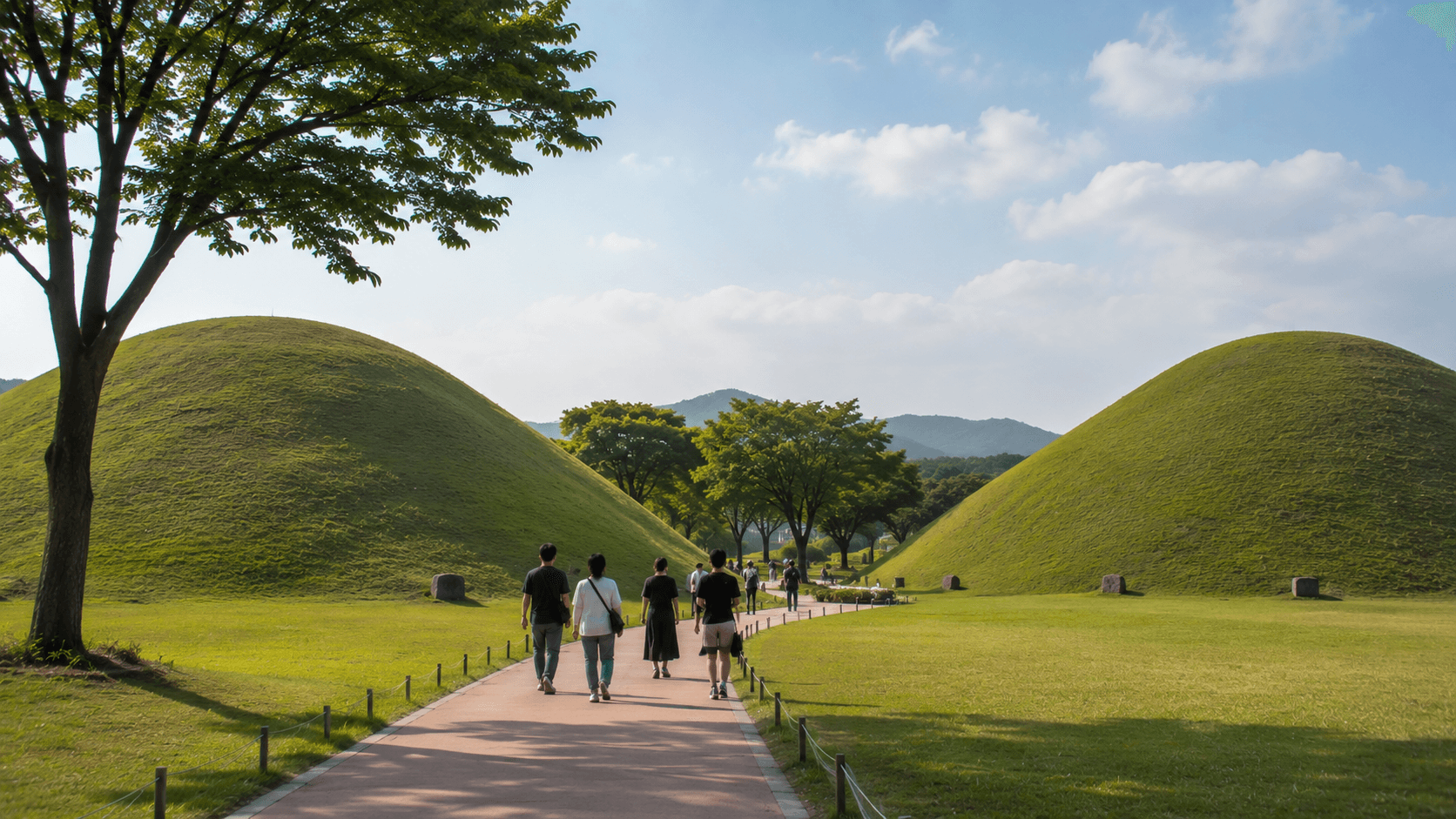
- Daereungwon Tomb Complex
- Hwangnidan-gil
- Cheomseongdae Observatory
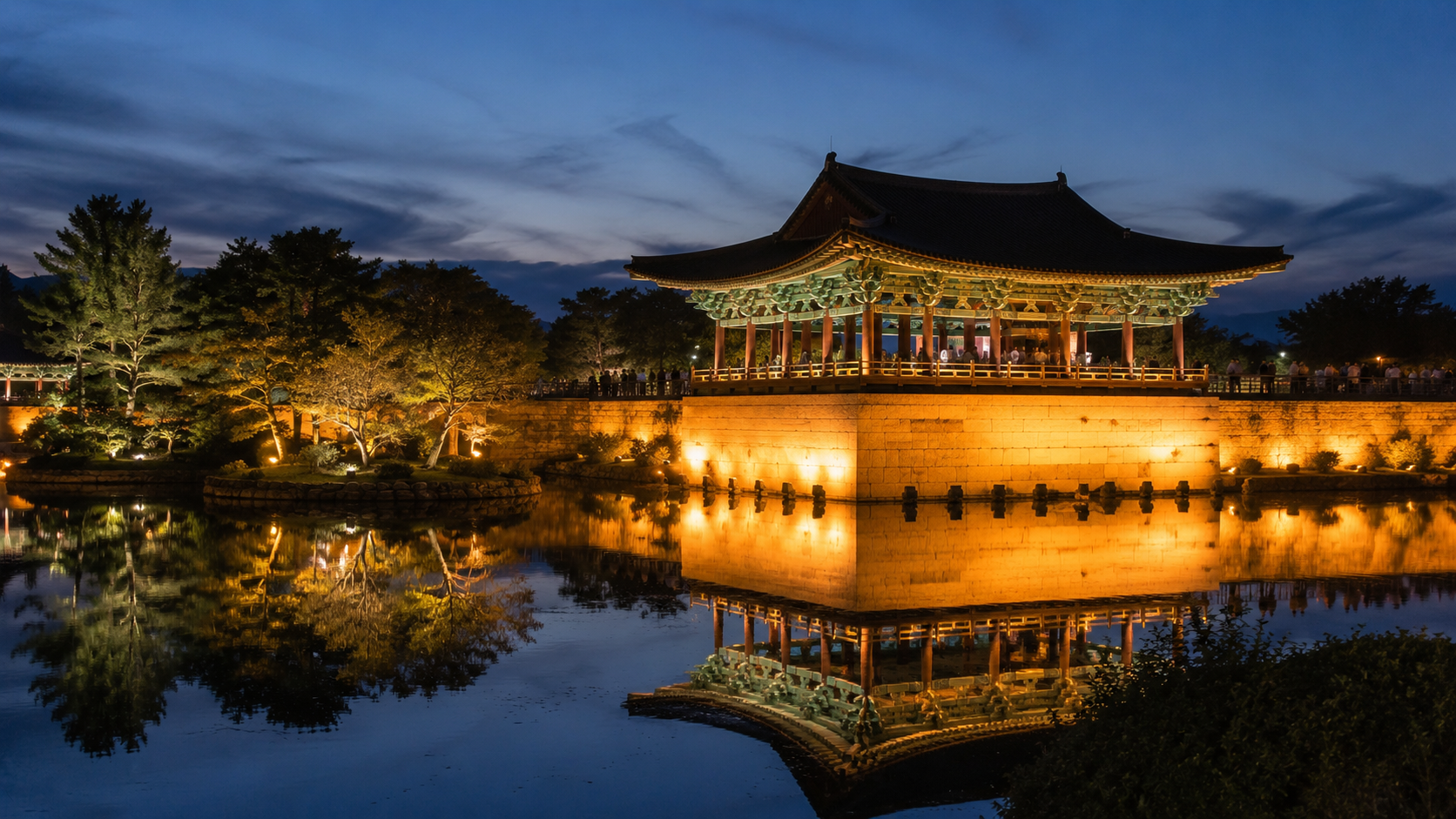
- Donggung Palace and Wolji Pond after sunset
These sights are relatively close together, but the complete route involves substantial walking. Sunset and evening illumination times vary by season, and individual sites may stop admission before closing.
Day 6: Gyeongju beyond the central tomb district
Use the morning for Bulguksa Temple. City buses are economical but can be infrequent compared with Seoul services. Check the return time before entering the temple, particularly outside peak season. A taxi is easier for a group but confirm the estimated fare before a longer journey.
Seokguram Grotto is on the mountain above Bulguksa and should not be treated as a quick extension on foot. Use the appropriate local bus or a taxi and allow extra time for the winding road and uphill approach.
In the afternoon, choose between returning to the historic center and visiting Bomun Tourist Complex. The Korea Tourism Organization’s Gyeongju itinerary information describes Bomun as a lakeside leisure area with walking and cycling routes. It is suitable for a slower afternoon, but distances around the broader district can be larger than they appear on a map.
Day 7: Gyeongju to Busan
Travel from the Gyeongju area to Busan in the morning. Rail is fast if your accommodation and departure point make Singyeongju Station convenient. An intercity bus may involve fewer transfers if you are staying near central Gyeongju.
In Busan, choose your base carefully:
| Area | Suitable for | Main drawback |
|---|---|---|
| Seomyeon | Central subway connections and nightlife | No beach within walking distance |
| Nampo | Markets, old downtown and Busan Station access | Longer journey to Haeundae |
| Haeundae | Beach, coastal attractions and resort atmosphere | Farther from Gamcheon and Nampo |
| Gwangalli | Evening beach views and cafes | Fewer direct intercity connections |
After check-in, explore Nampo-dong, BIFF Square and the area around Yongdusan Park. Keep Jagalchi Market for Day 8 if you want enough time to look around rather than rushing through before closing.
Day 8: Gamcheon, Jagalchi and Yeongdo
Visit Gamcheon Culture Village early. It is built across steep hills, and the experience includes stairs and sloping lanes. Use a local bus or taxi for the final approach rather than assuming the nearest subway station is an easy walk.
Gamcheon is also a residential area. Follow directional signs, avoid blocked alleys and keep noise down. The painted streets and viewpoints are the attraction; entering private spaces for photographs is not acceptable.
Continue to Jagalchi Market and Nampo-dong for lunch. Seafood prices and preparation charges can vary, so ask for the complete price before ordering. If a restaurant sells seafood by weight, confirm whether cooking, table or side-dish fees are separate.
For the afternoon, choose one Yeongdo stop instead of trying to cover the entire island. Taejongdae requires more time and walking, while Huinnyeoul Culture Village is easier to combine with cafes and coastal views. Strong wind or rain can make exposed coastal paths uncomfortable.
Day 9: Haeundae and Gwangalli
Spend the morning around Haeundae Beach. From there, select one coastal activity according to your mobility, weather and reservation status:
- Dongbaekseom and the coastal walking path
- Cheongsapo and nearby viewpoints
- Haedong Yonggungsa Temple
- A reserved coastal train or sightseeing facility
Do not schedule every coastal attraction on the same day. Busan is geographically spread out, and road traffic can make transfers slower than expected.
In the evening, move to Gwangalli Beach for views of Gwangan Bridge. Confirm the final subway or bus connection to your accommodation before settling into a restaurant or cafe. The Korea Tourism Organization also publishes official suggested routes for Busan, which can help with alternatives during poor beach weather.
If your international flight leaves from Incheon the next day, take an afternoon or early-evening train to Seoul instead. Do not rely on a same-day Busan-to-Incheon transfer for an early flight.
Day 10: Departure
For a flight from Gimhae International Airport, check the route from your accommodation and your airline’s terminal information the previous evening. Rail connections generally require at least one transfer, and airport buses vary by district and time.
For an afternoon or evening flight from Incheon, travel from Busan to Seoul with a generous buffer. KTX services terminate at Seoul Station rather than at Incheon Airport, so you must transfer to AREX or another airport service.
A separate domestic flight can work, but it introduces additional baggage rules, check-in requirements and disruption risk. Compare the complete door-to-door journey rather than flight time alone.
Luggage, accessibility and pacing
KTX trains have designated luggage areas, but large spaces can fill on busy services. Keep valuables with you and label major bags. Avoid blocking doors or aisles.
Station elevators are available in many locations, but the accessible route may be far from the most obvious exit. Gyeongju’s historic district includes uneven ground, while Gamcheon and parts of coastal Busan involve steep slopes or stairs. Travelers with limited mobility should use taxis selectively and verify accessible entrances directly with each attraction.
A practical daily rhythm is one major sight in the morning, lunch nearby, one district in the afternoon and a flexible evening. Korea’s cities reward walking, but repeated 20,000-step days can reduce the value of the final part of the trip.
Common itinerary mistakes
- Changing hotels too often: Two nights in Gyeongju prevents the city from becoming a rushed stop between Seoul and Busan.
- Confusing stations: Seoul has several intercity terminals, and Gyeongju’s high-speed station is outside the historic center. Read the full station name on the ticket.
- Trusting foreign map apps for every route: Use a Korea-focused navigation app for live local transport information and verify the final bus or train.
- Planning around exact restaurant opening times: Independent restaurants may close between meal periods, take irregular days off or stop accepting customers early.
- Ignoring weather: Summer heat, monsoon rain, winter cold and coastal wind can all require a slower schedule.
- Making the departure day too ambitious: Keep the final day for transport and airport procedures rather than a distant attraction.
What to check before you go
- Confirm entry and visa requirements with the Korea Visa Portal or the Korean embassy responsible for your place of residence.
- Reserve Seoul–Gyeongju and Busan–Seoul trains when your travel date becomes available.
- Verify attraction closure days; Korean museums and heritage sites do not all close on the same weekday.
- Check your arrival and departure terminals at Incheon Airport.
- Save accommodation names and addresses in both English and Korean.
- Confirm whether your phone supports an eSIM or arrange a physical SIM or Wi-Fi service.
- Pack shoes suitable for long walks, slopes and occasional uneven paving.
- Review weather alerts and air-quality conditions shortly before outdoor days.
- Keep a bank card and some KRW cash available; do not depend on one payment method.
- Use the VISITKOREA travel-planning portal or the 1330 Korea Travel Helpline when official English information is difficult to locate.
Sources
- Korea Tourism Organization: VISITKOREA
- KORAIL English booking service
- Incheon International Airport transportation guide
- Seoul Metropolitan Government Climate Card guide
- Korea Heritage Service Royal Palaces and Tombs Center
- Official Korea Visa Portal
Your next step is to fix your arrival and departure airports, then reserve the intercity trains before choosing timed attractions. Those decisions determine whether the route remains comfortable or becomes dominated by transfers.