Seoul can be explored comfortably on a modest budget because public transport is inexpensive and many major museums, parks and neighborhoods are free. This three-day itinerary keeps paid admission to a minimum while covering royal Seoul, local markets, the Hangang River and contemporary city life.
Prices, admission rules and operating hours in this guide were verified on June 9, 2026. Food costs are planning estimates rather than fixed prices.
At a glance
| Item | Suggested budget for 3 days |
|---|---|
| Transport within Seoul | KRW 10,000-20,000 |
| Attractions | KRW 3,000-10,000 |
| Meals and snacks | KRW 75,000-120,000 |
| Coffee and optional purchases | KRW 15,000-30,000 |
| Estimated total | KRW 105,000-180,000 |
This estimate excludes accommodation, shopping, nightlife and travel between the airport and Seoul.
The route works best if you stay near a central subway station in Jongno, Euljiro, Myeong-dong, Seoul Station or Hongdae. A cheaper room far outside central Seoul may save money overnight but increase travel time and transport costs.
Before starting: choose your transport payment method
The adult subway base fare is KRW 1,550 with a transport card and KRW 1,650 with a single-journey ticket. The fare rises for longer journeys. Seoul's integrated fare system also allows discounted transfers when passengers tap their card both when boarding and leaving. These fares were confirmed on the Seoul Metropolitan Government transport page on June 9, 2026.
For most visitors, the practical choices are:
- Pay as you go: Use a rechargeable transport card and pay for each journey. This is usually economical when following the compact routes below.
- Short-term Climate Card: The official prices are KRW 5,000 for one day, KRW 8,000 for two days and KRW 10,000 for three days. A new physical card costs another KRW 3,000. The pass provides unlimited travel on participating services but excludes the Sinbundang Line, airport buses and some routes outside Seoul. Check the official Climate Card coverage and prices before buying.
As of March 17, 2026, selected vending machines on subway Lines 1-8 accept internationally issued cards for short-term Climate Cards and single-journey tickets. Seoul states that an average service fee of approximately 3.7% applies to international card payments. Availability is limited to equipped machines, so carrying some KRW remains sensible. See the Seoul Metropolitan Government payment announcement.
A three-day Climate Card is most useful if you expect several separate rides each day. Pay-as-you-go travel may cost less when you group nearby sights and walk between them, as this itinerary does.
Day 1: Gyeongbokgung, old Seoul and Gwangjang Market
Morning: Gyeongbokgung Palace
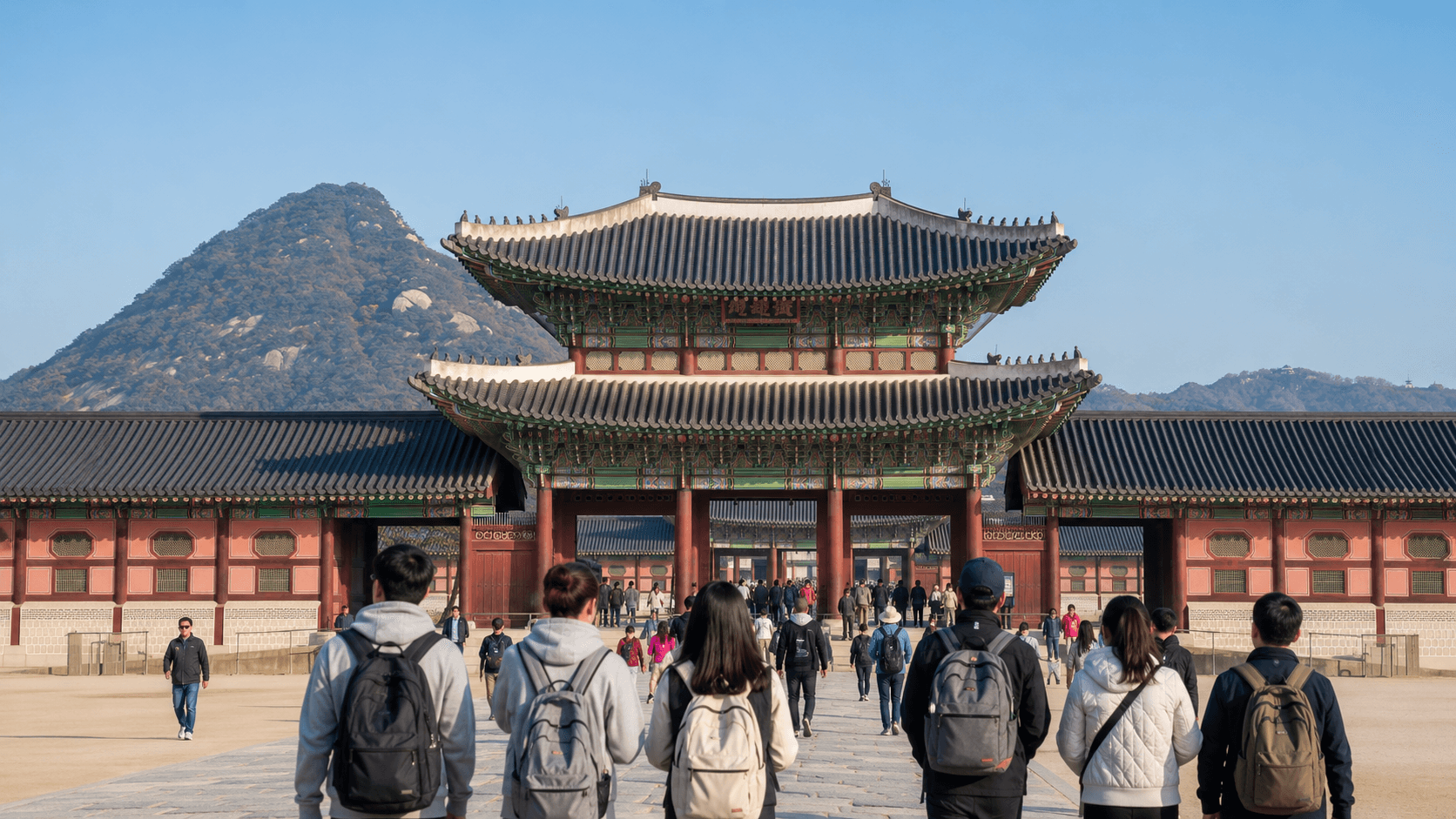
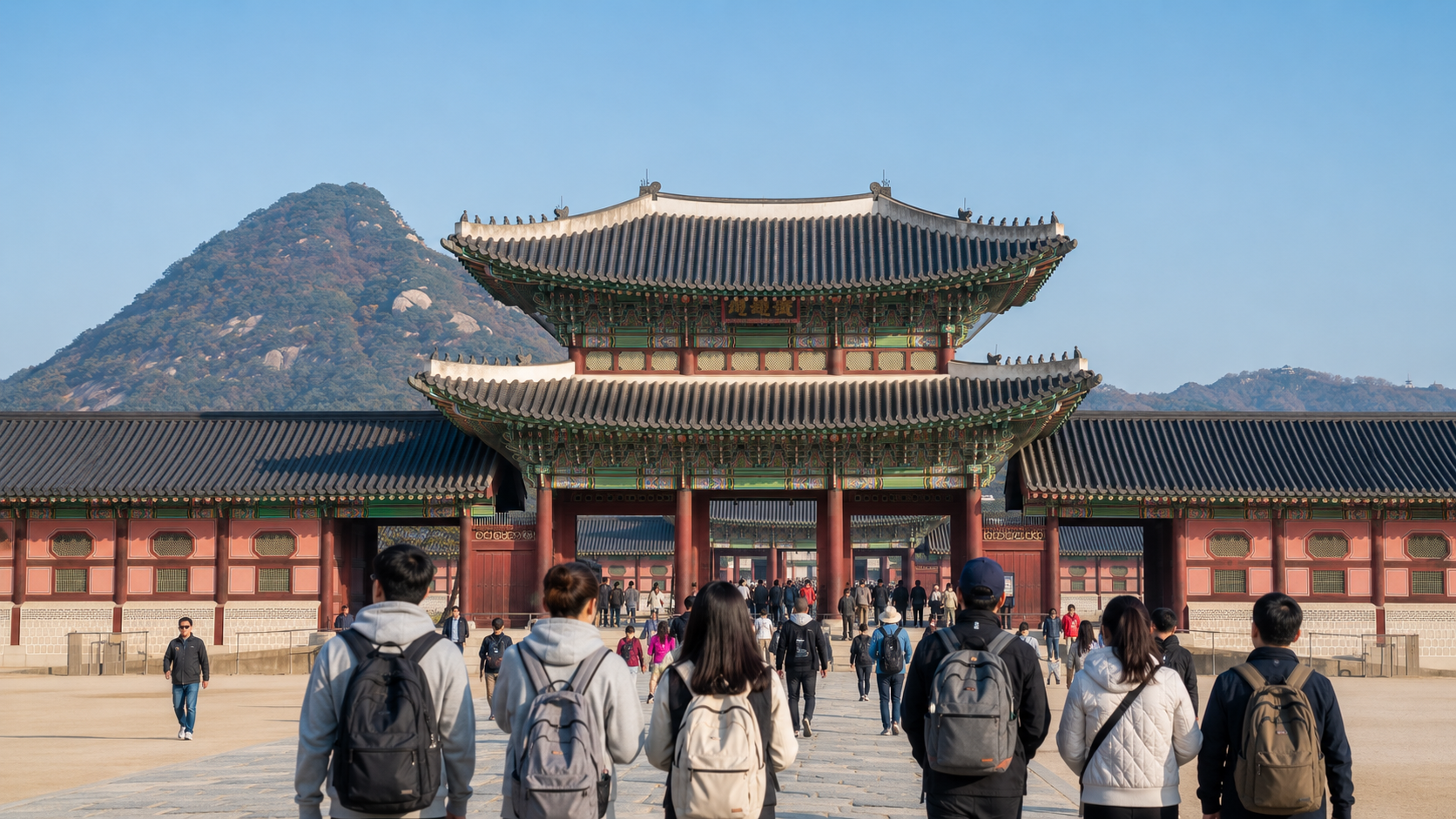
Begin at Gyeongbokgung Palace (경복궁), the main royal palace of the Joseon period. Take Subway Line 3 to Gyeongbokgung Station and follow signs for Exit 5.
Adult admission is KRW 3,000 for ages 19-64. Admission is KRW 1,500 for ages 7-18 and free for children aged six or younger and adults aged 65 or older. The palace is closed on Tuesdays.
Opening hours vary by season:
| Period | Opening hours | Final admission |
|---|---|---|
| January-February | 09:00-17:00 | 16:00 |
| March-May | 09:00-18:00 | 17:00 |
| June-August | 09:00-18:30 | 17:30 |
| September-October | 09:00-18:00 | 17:00 |
| November-December | 09:00-17:00 | 16:00 |
These details were verified on June 9, 2026 through the official Gyeongbokgung visitor information. Allow about two hours for the main throne hall, residential compounds and pavilion areas.
Renting hanbok, Korea's traditional clothing, is optional and usually costs considerably more than palace admission. Do not rent it solely to avoid the KRW 3,000 ticket if your priority is saving money.
Lunch: eat outside the palace zone
Walk west toward Seochon or south toward Jongno for lunch. Look for restaurants displaying prices outside. A simple bowl of noodles, soup with rice or a casual set meal may fit a planning budget of KRW 8,000-13,000.
At small restaurants, water and basic side dishes are normally provided with a meal. Additional portions and ordering rules vary, so do not assume every refill is free. Some older shops use kiosk ordering or have limited English menus; a translation app is useful.
Afternoon: Gwanghwamun and free city history
Walk through Gwanghwamun Square and continue to the Seoul Museum of History. General admission is free. The official English visitor page lists opening hours as 09:00-18:00, with final admission at 17:30, and extended opening until 22:00 on Fridays. It closes on Mondays and January 1. Hours were verified on June 9, 2026 through the Seoul Museum of History.
The museum is particularly useful for first-time visitors because it explains how Seoul developed from a walled capital into the present metropolis. Lockers, wheelchairs and baby strollers are available according to the museum.
If the museum is closed or the weather is good, walk directly toward Cheonggyecheon.
Evening: Cheonggyecheon and Gwangjang Market
Follow Cheonggyecheon (청계천), the stream running through central Seoul, east toward Gwangjang Market. Walking beside the water is free, but steps appear at numerous access points. Travelers who cannot use stairs should look for ramped entrances rather than descending at the first available point.
At Gwangjang Market, set a spending limit before ordering. A practical dinner strategy is to choose one main dish and one snack rather than buying from every stall. Budget approximately KRW 12,000-20,000, depending on what you order.
The market is known for foods such as bindaetteok, a fried mung-bean pancake; gimbap, rice and fillings rolled in seaweed; and tteokbokki, rice cakes in a spicy sauce. Prices and stall schedules vary, and individual vendors may close without notice. The official Seoul tourism listing for Gwangjang Market was last edited on May 4, 2026.
Estimated Day 1 spending: KRW 31,000-49,000, including transport, palace admission, meals and a drink.
Day 2: National Museum, the Hangang River and Hongdae
Morning and early afternoon: National Museum of Korea
Take Subway Line 4 or the Gyeongui-Jungang Line to Ichon Station and follow the signs to the National Museum of Korea.
Admission to the permanent galleries is free; special exhibitions may charge separately. Since March 16, 2026, regular opening hours have been:
- Monday, Tuesday, Thursday, Friday and Sunday: 09:30-17:30
- Wednesday and Saturday: 09:30-21:00
- Final admission: 30 minutes before closing
The museum closes on January 1, Lunar New Year's Day and Chuseok. Permanent and special galleries also close on designated quarterly maintenance days. Confirm your date on the National Museum of Korea visitor information page. These rules were verified on June 9, 2026.
The collection is extensive, so do not attempt every gallery. Spend two or three hours concentrating on Korean history, Buddhist art, ceramics or another section that interests you. Free coat storage, lockers, wheelchairs and strollers are available. Food and drinks are not allowed inside exhibition galleries.
For lunch, use the museum facilities or return toward Ichon Station. Set aside KRW 9,000-14,000.
Afternoon: Ichon Hangang Park
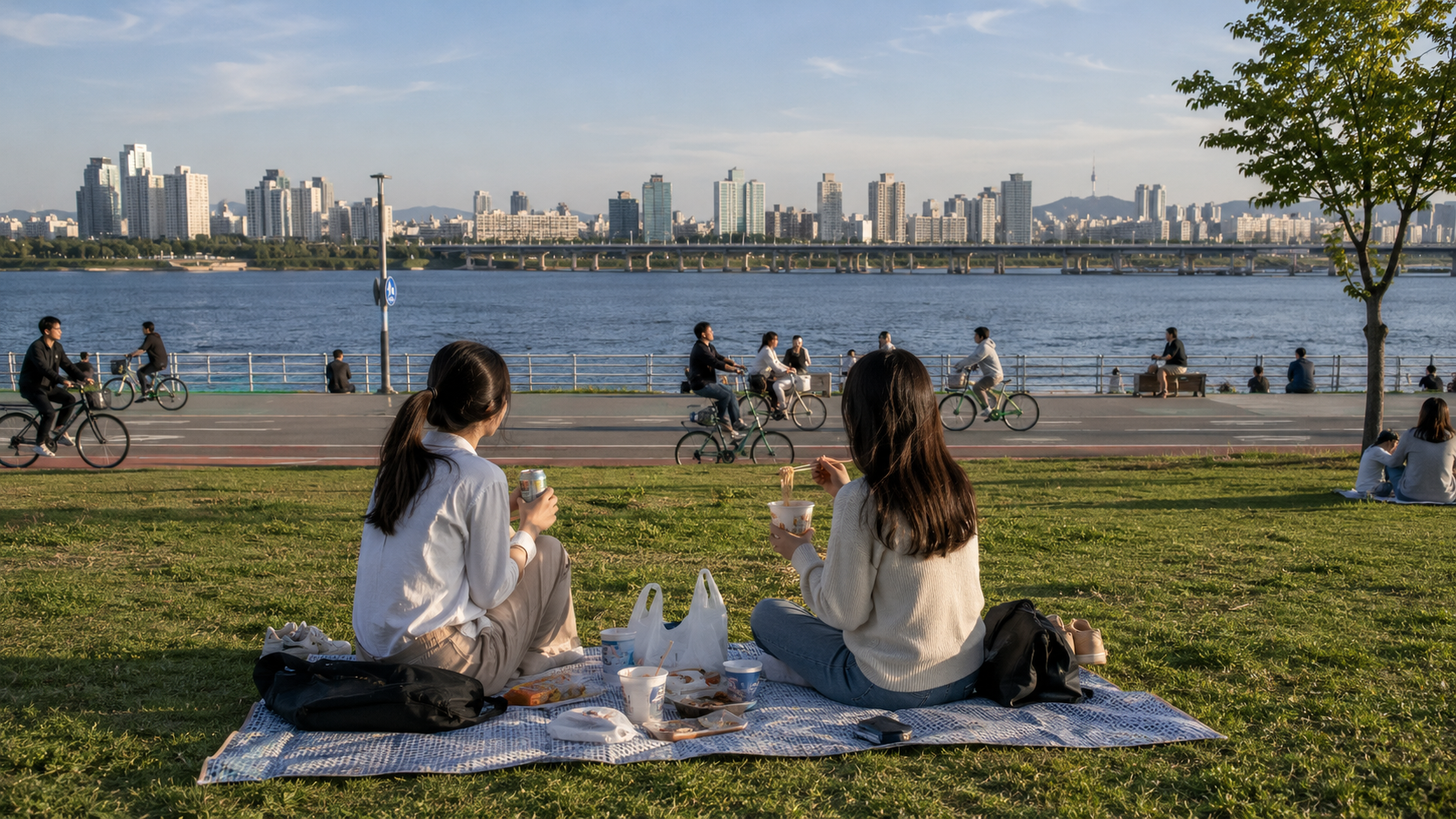
Walk from the museum area toward Ichon Hangang Park for river views. Seoul operates 11 Hangang parks, and entering the general park areas does not require an admission ticket. Commercial rentals, events and sports facilities may charge fees.
Do not plan a long exposed riverside walk during extreme heat, heavy rain or poor air quality. Shade can be limited, and distances between exits may be longer than they appear on a map. Check the official Seoul Hangang Parks guide for park information.
Evening: Hongdae without paid entertainment
Take the Gyeongui-Jungang Line from Ichon toward Hongik University Station. Explore the public streets around Hongdae, the Gyeongui Line Forest Park and Yeonnam-dong on foot.
Street performances are not guaranteed, and schedules change with weather and local regulations. Treat any performance as a bonus rather than building the evening around it. Cafes can quickly increase the day's cost, so choose either dessert or a specialty drink instead of both.
For dinner, look one or two streets away from the busiest pedestrian areas. A budget of KRW 10,000-16,000 is realistic for planning, but menu prices vary substantially.
Estimated Day 2 spending: KRW 29,000-48,000, including transport, two meals, snacks and coffee. Museum admission and the riverside walk are free.
Day 3: Deoksugung area, free art and Namsan
Morning: Deoksugung-gil and Seoul Museum of Art
Start at City Hall Station and walk along Deoksugung-gil. You can enjoy the stone-wall road without entering Deoksugung Palace, keeping the morning free.
Continue to the Seoul Museum of Art's Seosomun Main Branch. Admission is free except for certain special exhibitions. Verified opening hours are:
- Tuesday-Thursday: 10:00-20:00
- Friday: 10:00-21:00
- Weekends and public holidays: 10:00-19:00 in summer and 10:00-18:00 in winter
- Closed Monday and January 1
- Final admission one hour before closing
Check current exhibitions and notices through the official Seoul Museum of Art visitor page. Details were verified on June 9, 2026.
If contemporary art is not a priority, spend the morning around Namdaemun Market instead. Browsing is free, but compare posted prices before buying food or souvenirs.
Afternoon: walk to Namsan
After an inexpensive lunch near Namdaemun or Myeong-dong, walk toward Namsan Park. Reaching the park and following its public walking routes is free. The climb involves prolonged slopes and stairs, so allow more time than a navigation app's estimate.
You do not need to purchase a cable-car ride or an observatory ticket to enjoy views from Namsan. Stop at free viewpoints along the route and turn back when the climb no longer feels comfortable. Travelers with limited mobility should use public transport to a more accessible part of the park and verify current lift or shuttle arrangements before departure.
Carry water in warm weather. In winter, shaded paths can remain icy even when central streets are clear.
Evening: final meal in Myeong-dong or Euljiro
Finish near Myeong-dong or Euljiro. Myeong-dong street-food portions can be relatively expensive when treated as a full meal. Compare the combined cost of several snacks with a single restaurant dish before ordering.
A sensible final-evening budget is KRW 12,000-20,000 for dinner plus KRW 5,000-8,000 for a cafe or dessert.
Estimated Day 3 spending: KRW 30,000-51,000, including transport, meals and one optional cafe stop.
How to reduce the total cost
- Group attractions geographically instead of crossing Seoul repeatedly.
- Carry a refillable bottle where practical, particularly for parks and walking routes.
- Check menu prices before sitting down or ordering at a market stall.
- Use free museums as indoor alternatives during rain, heat or poor air quality.
- Avoid paying for both a palace combination ticket and individual entries unless you will actually visit several palaces.
- Treat observation decks, themed cafes, hanbok rentals and river cruises as optional upgrades, not essential Seoul experiences.
- Tap your transport card when leaving buses as well as when entering and exiting subway stations. This is required for correct transfer and distance calculations.
Adjusting the itinerary by weekday
Closures matter more than the order shown above:
- Monday: The Seoul Museum of History and Seoul Museum of Art are normally closed. Use Gyeongbokgung, the National Museum of Korea or outdoor areas instead.
- Tuesday: Gyeongbokgung is closed. Move the palace visit to another day.
- Wednesday or Saturday: These are useful National Museum days because it remains open until 21:00.
- Friday: The Seoul Museum of History and Seoul Museum of Art offer extended evening hours under their currently published schedules.
Temporary exhibitions, maintenance and public holidays can change these arrangements.
What to check before you go
- Confirm each attraction's closure day and final admission time on its official website.
- Check the weather, heat advisories and air quality before planning Namsan or Hangang walks.
- Verify whether your Climate Card covers every journey, especially airport and suburban routes.
- Keep a small amount of KRW available even if you normally use an international card.
- Wear shoes suitable for palace courtyards, stream paths and steep park routes.
- Use toilets before entering long walking sections; subway stations and museums are generally the easiest places to find them.
- Respect residential neighborhoods by keeping voices low, avoiding private doorways and not photographing residents without permission.
Your next step is to place the three routes into your preferred Korean navigation app, then reorder the days around Gyeongbokgung's Tuesday closure and the museums' Monday closures.
Sources
- Seoul Metropolitan Government: Modes of Transport
- Seoul Metropolitan Government: Climate Card
- Official Gyeongbokgung Palace visitor information
- Seoul Museum of History visitor information
- National Museum of Korea visitor information
- Seoul Museum of Art visitor information
- Seoul Metropolitan Government: Hangang Parks
- Official Seoul Tourism Guide: Gwangjang Market