Busan is a practical base for exploring southeastern South Korea. Gyeongju is the strongest all-round choice for history, while Tongyeong and Geoje offer coastal scenery that feels distinctly different from urban Busan. Ulsan, Gimhae, and Tongdosa are easier alternatives when you want a shorter journey.
The destinations below were selected for their distinctive attractions, realistic same-day return, and public-transport access. Transport services, attraction notices, and booking platforms were checked on June 11, 2026. Fares and departure times vary by date, so confirm them through the linked official services before leaving.
At a glance
| Day trip | Best for | Public-transport effort | Suggested time |
|---|---|---|---|
| Gyeongju | Silla history and architecture | Easy | Full day |
| Tongyeong | Cable-car views and a harbor town | Moderate | Full day |
| Geoje and Oedo | Islands and dramatic coastline | Challenging | Very early full day |
| Ulsan | Coastal walking and urban parks | Moderate | Full day |
| Gimhae | Gaya history and museums | Easy | Half or full day |
| Tongdosa, Yangsan | Temple architecture and forest walks | Easy to moderate | Half or full day |
Busan has several long-distance terminals. Busan Central Bus Terminal is at Nopo in northern Busan, while Busan Seobu Intercity Bus Terminal is beside Sasang Station in western Busan. Check the departure terminal carefully: going to the wrong one can cost more than an hour.
For live tickets, use KORAIL for trains and Bustago for participating intercity buses. Some routes use other reservation systems or sell remaining seats at the terminal. Overseas cards do not work consistently on every Korean booking site, so allow time to use a ticket counter if necessary.
1. Gyeongju: the best day trip for Korean history
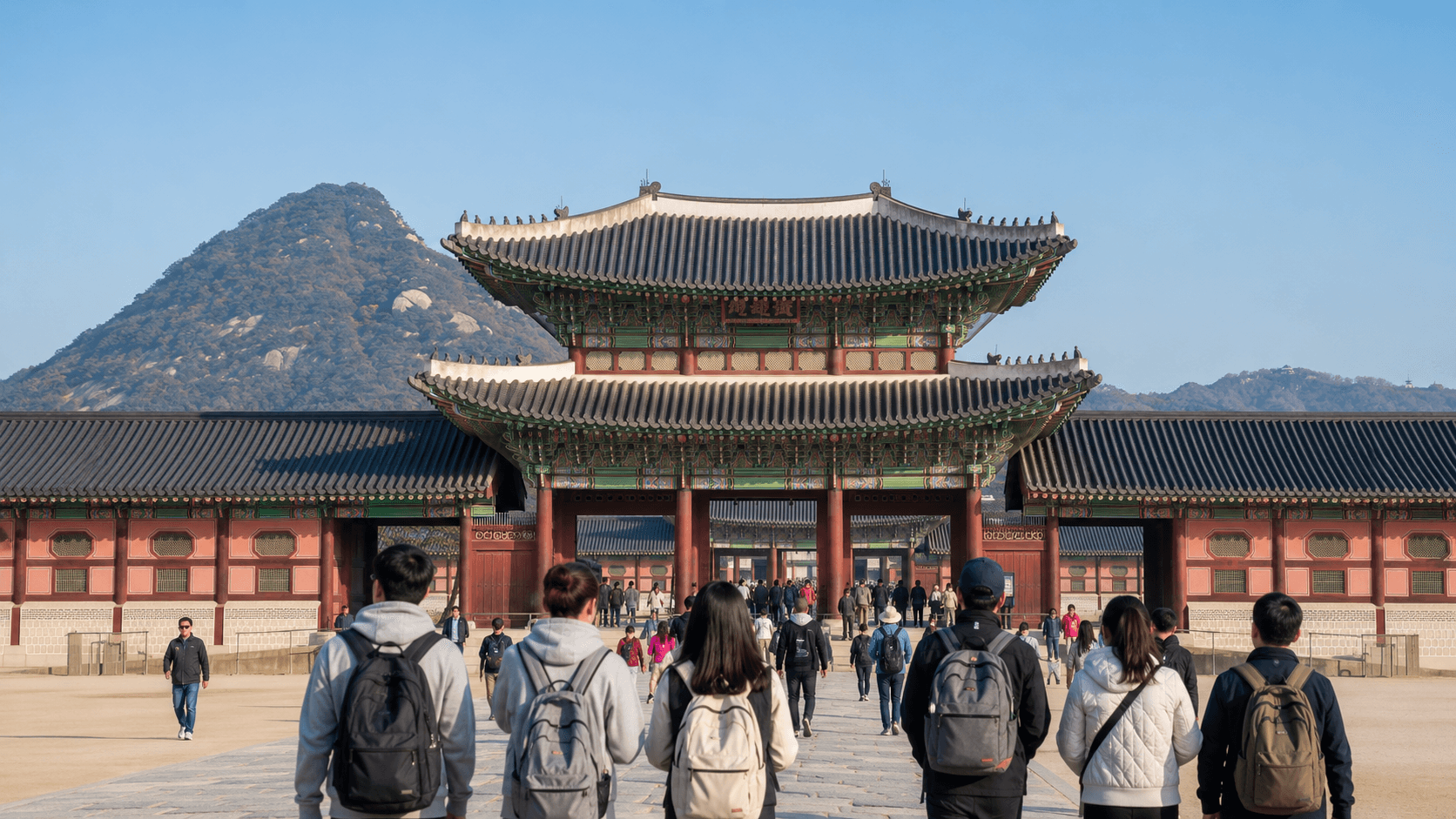
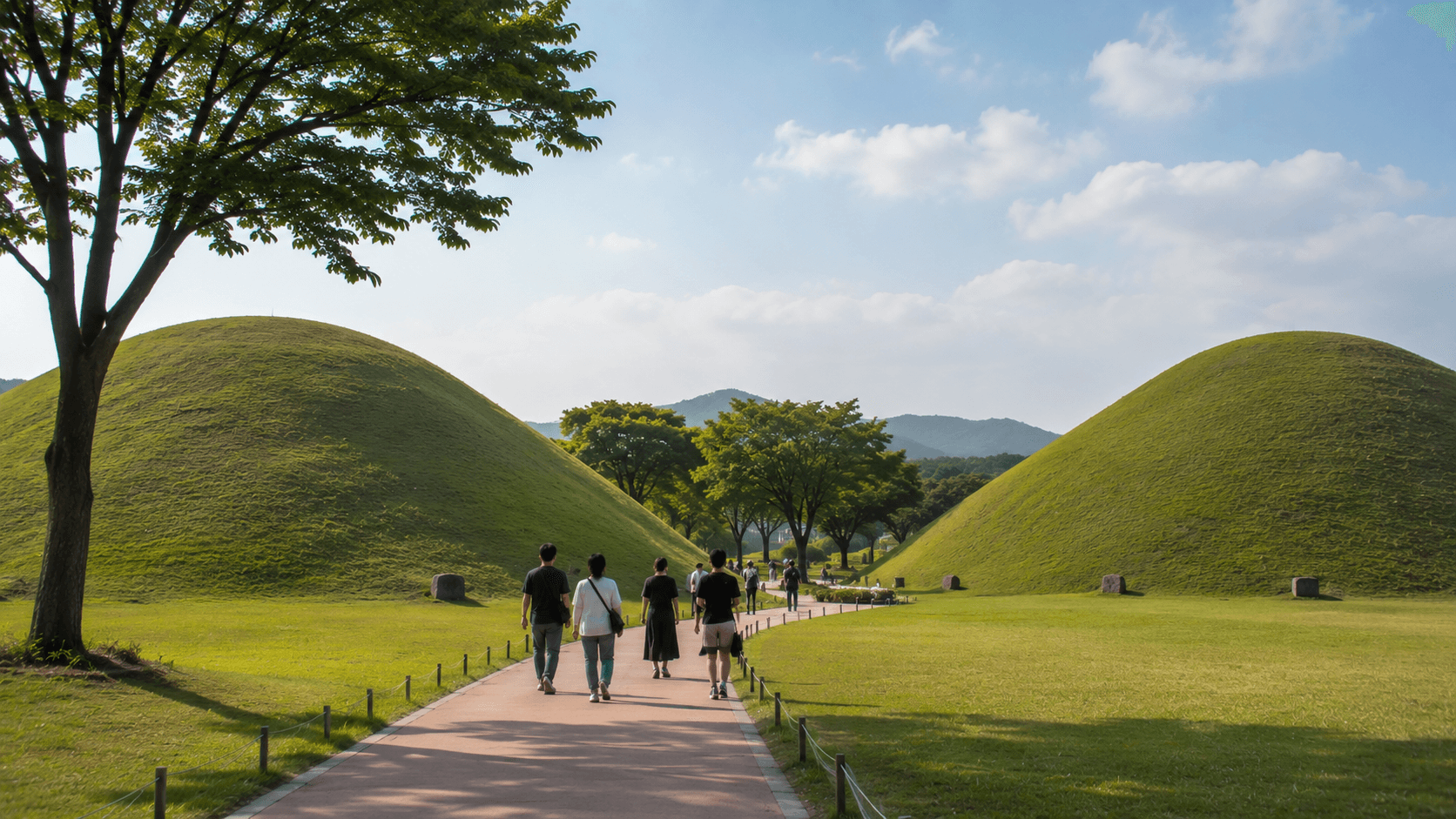
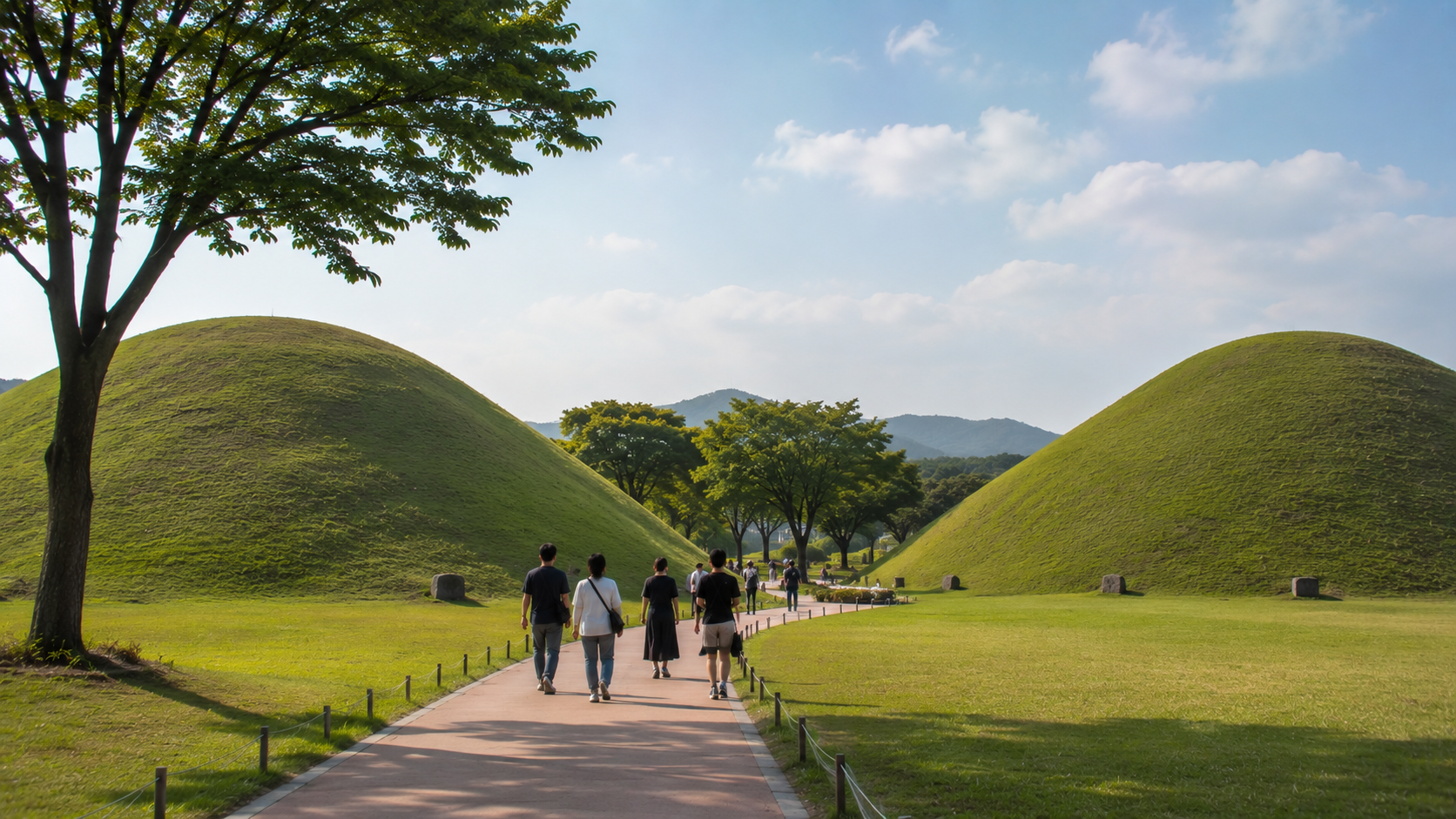
Gyeongju was the capital of the Silla kingdom, which ruled for almost a millennium. Its central historic district combines royal burial mounds, palace remains, a reconstructed bridge, and archaeological sites within a relatively walkable area. UNESCO describes the Gyeongju Historic Areas as an exceptional concentration of Silla-era Buddhist art, tombs, temples, and palace remains.
A practical one-day route
- Travel from Busan to central Gyeongju by intercity bus, or take a KTX train to Gyeongju Station.
- If arriving by KTX, continue by local bus or taxi because Gyeongju Station is west of the main historic district.
- Begin at Daereungwon Tomb Complex and walk toward Cheomseongdae observatory.
- Continue through Gyerim forest to Gyochon Traditional Village and Woljeonggyo Bridge.
- Visit the Gyeongju National Museum if you want historical context and indoor time.
- Finish at Donggung Palace and Wolji Pond, especially if your return schedule permits an evening visit.
Bulguksa Temple and Seokguram Grotto are outside central Gyeongju. Both belong to a separate UNESCO World Heritage property, but combining them with every downtown sight produces a rushed day. Choose either the central heritage district or a temple-focused itinerary unless you are comfortable using taxis.
Practical advice
The downtown sites involve considerable walking but are mostly on level ground. Temple routes include slopes and steps. Local buses are inexpensive, but intervals and English information can vary; KakaoMap or Naver Map is more useful in Korea than relying exclusively on Google Maps.
Gyeongju is popular on spring weekends, during autumn foliage, and around major holidays. Reserve the intercity return journey when possible rather than assuming that the last convenient bus will have seats.
2. Tongyeong: harbor scenery and Mireuksan views
Tongyeong is a compact port city facing the islands of Hallyeohaesang. Its main appeal is the combination of a working harbor, hillside neighborhoods, seafood markets, and elevated views from Mireuksan Mountain.
Direct intercity buses normally make this more practical than traveling by rail. Search for departures from Busan Seobu Intercity Bus Terminal at Sasang, then verify the exact service and fare on Bustago or at the terminal. Road traffic can significantly extend the return journey on Sunday evenings and public holidays.
A practical one-day route
Start with the Tongyeong Cable Car or another Mireuksan viewpoint while visibility is good. Cable-car operation can be suspended because of wind, maintenance, or inspections, so check the operator’s notice on the morning of travel.
After descending, continue to the central harbor area. Jungang Market is useful for seafood and local snacks, while the nearby waterfront is easy to explore on foot. Dongpirang is a steep hillside neighborhood with murals and harbor views; it is visually interesting but unsuitable for travelers who struggle with stairs.
Finish with a walk around Gangguan Harbor before returning to the bus terminal. Do not add an island ferry unless its return time leaves a generous connection margin. A cable-car visit, central Tongyeong, and an offshore island in one winter day is usually too ambitious.
Food and accessibility
Tongyeong is associated with seafood, oysters, and chungmu gimbap, a local meal of small plain rice rolls served with seasoned squid and radish. Confirm prices before ordering seafood sold by weight.
The cable-car facilities are more accessible than Dongpirang’s lanes, although viewpoints and connecting paths may still include gradients. Travelers with luggage should use terminal lockers if available or avoid bringing large bags.
3. Geoje and Oedo: the most ambitious coastal day
Geoje is connected to Busan by road, but its attractions are spread across a large island. It is a good choice for travelers prioritizing coastlines over museums, provided they accept additional transfers and an early start.
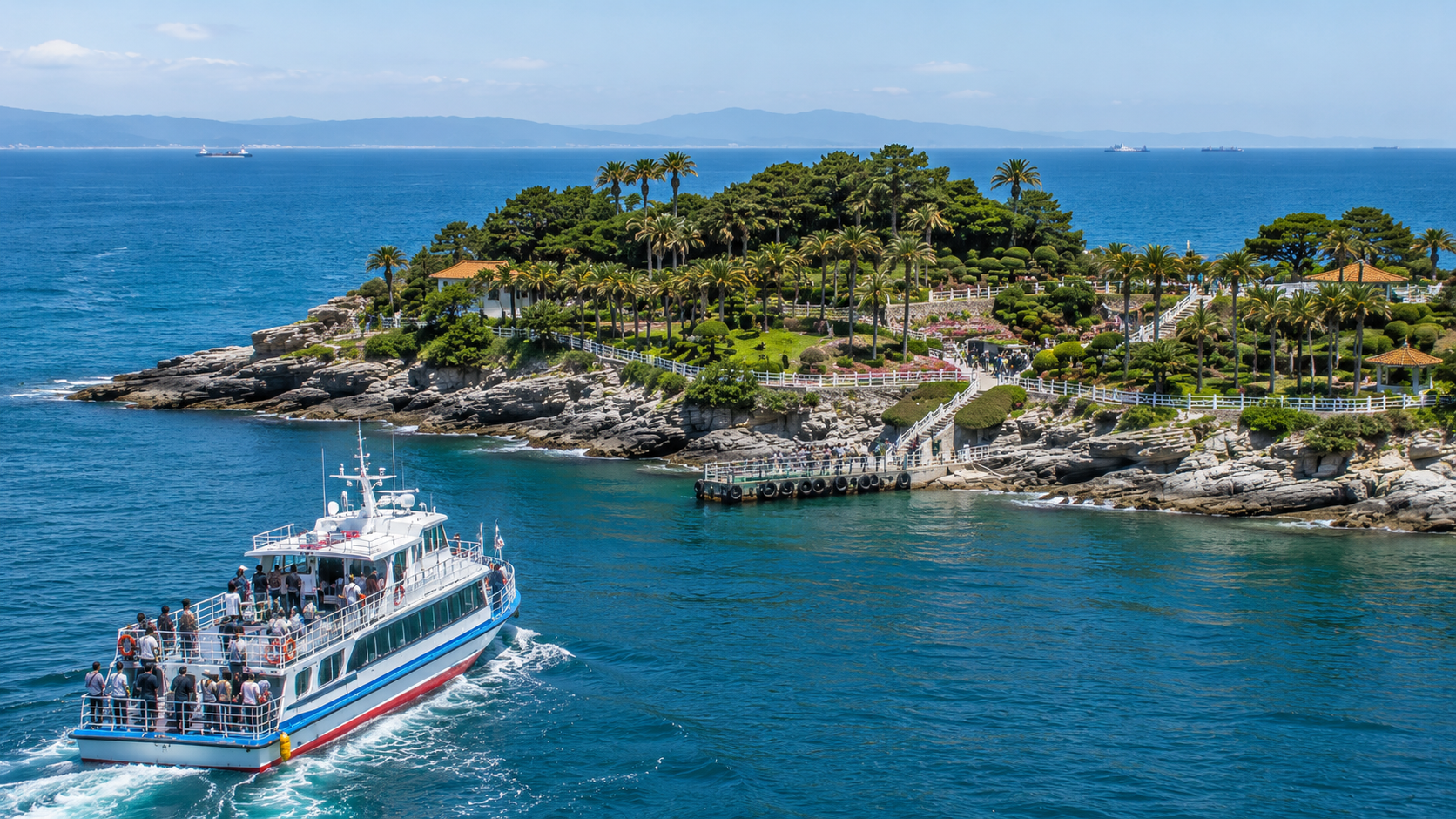
Oedo Botania is reached only by excursion boat from ports on or near Geoje. Sailings depend on sea and weather conditions, and each port may operate its own timetable and package. Confirm the departure port, sailing time, island admission arrangement, and final return before leaving Busan. Carry your passport or Korean residence card because ferry operators may request identification.
Suggested plan with Oedo
- Take an early intercity bus from Busan Seobu terminal toward Geoje.
- Continue by local bus or taxi to the specific excursion-boat port shown on your reservation.
- Take the scheduled boat to Oedo, following the operator’s fixed return time.
- If time remains, visit one nearby coastal stop rather than crossing the island again.
- Return to the intercity terminal with a substantial buffer.
Hill of Wind, Hakdong Mongdol Beach, and coastal viewpoints are often grouped together in driving itineraries, but public buses between them can be slow. A taxi or rental car makes Geoje considerably easier. Never plan a tight same-day flight or long-distance rail connection after a weather-dependent boat trip.
Travelers who want reliable sea views with fewer moving parts should choose Tongyeong or Ulsan instead.
4. Ulsan: an accessible East Sea coast
Ulsan is known internationally as an industrial city, but its eastern districts have beaches, pine woods, rocky shoreline, and walking paths. Daewangam Park is the most straightforward destination for a first visit.
The park’s official site lists several themed coastal and woodland trails, Ulgi Lighthouse, Seuldo, and the suspension bridge. Temporary closures are posted through the Daewangam Park website, so check notices before traveling.
Getting there and planning the day
Regional trains from Bujeon Station to Taehwagang Station may be convenient, depending on the current timetable. Intercity buses are another option. KTX Ulsan Station is far west of the coastal sights, so a fast train is not automatically the fastest door-to-door choice for Daewangam Park.
From Taehwagang or an Ulsan bus terminal, continue by city bus or taxi to Daewangam Park. Walk through the pine forest toward the lighthouse and rocky headland, then continue to Ilsan Beach if conditions are comfortable.
For a longer day, add Taehwagang National Garden rather than attempting widely separated attractions such as Ganjeolgot and Jangsaengpo. Ulsan is geographically extensive, and cross-city buses can consume much of the afternoon.
Daewangam’s paths include uneven surfaces, exposed coast, and some steps. Strong wind can make the headland uncomfortable even when central Ulsan feels mild. Bring a wind-resistant outer layer outside midsummer.
5. Gimhae: the easiest history trip without a long-distance bus
Gimhae is immediately west of Busan and was an important center of Gaya, a group of polities that developed in southern Korea. It receives fewer international visitors than Gyeongju and works well when you want archaeological context without spending several hours in transit.
Take Busan Metro Line 2 to Sasang and transfer to the Busan-Gimhae Light Rail Transit. The light-rail line reaches stations near the Royal Tomb of King Suro, Gimhae National Museum, and central Gimhae. Use a rechargeable transport card and tap when entering and leaving the system.
A simple route
Begin at the Royal Tomb of King Suro, then walk through the surrounding historic area. Continue by light rail or on foot to the Gimhae National Museum. The museum explains Gaya culture and metalworking through artifacts from Gimhae and the wider region; check current exhibitions, closure dates, and visitor information on the official museum website.
Nearby Gujibong and the Daeseong-dong tomb area can extend the visit, but outdoor archaeological sites may offer limited English interpretation. Read the museum displays first if historical context is important to you.
Gimhae is suitable for a half-day trip, a rainy day, or travelers who prefer rail-based navigation. Confirm museum opening information for Mondays and public holidays before departure.
6. Tongdosa: a quieter temple and forest day
Tongdosa Temple in Yangsan is one of Korea’s major Buddhist monasteries and one of the seven temples included in UNESCO’s Sansa, Buddhist Mountain Monasteries in Korea listing. Its courtyards, halls, forest approach, and active religious role make it substantially different from a decorative cultural village.
The most direct public-transport option is generally an intercity bus from Busan Central Bus Terminal at Nopo toward the Tongdosa area, followed by a local connection or walk. Verify the destination name carefully because Yangsan Station, Tongdosa, and the KTX station formerly associated with the temple are not the same place.
Allow several hours to walk from the entrance area through the forest and temple complex. Buildings remain active places of worship: speak quietly, do not block ceremonies, and ask before photographing people at prayer. The Yangsan City tourism section provides an official introduction to Tongdosa and other local attractions.
This trip is particularly suitable in autumn or on a clear winter day. Paths are less demanding than a mountain hike, but comfortable shoes remain necessary. A temple stay is an overnight program and should be reserved separately; it is not part of an ordinary day visit.
How to choose the right trip
Choose Gyeongju for a first visit to Korea or the greatest concentration of historic sights. Choose Tongyeong for a harbor atmosphere and elevated island views. Choose Geoje only when the marine forecast and transport connections are favorable.
Choose Ulsan for a coastal walk without a ferry, Gimhae for an easy museum-focused excursion, or Tongdosa for architecture and a quieter forest setting.
Avoid combining two destinations simply because they appear close on a map. Gyeongju and Ulsan, or Tongyeong and Geoje, can be paired by car, but the transfers usually make them poor public-transport day trips from Busan.
What to check before you go
- Confirm the exact Busan departure terminal.
- Check the final practical return service, not only the final service listed.
- Reserve trains and popular intercity buses for weekends and holidays.
- Recheck cable-car, ferry, suspension-bridge, and trail notices on the morning of travel.
- Carry a charged transport card for local buses and metro connections.
- Keep a physical payment card or cash available when online foreign-card payment fails.
- Save destination names in Hangul for drivers and ticket staff.
- Carry your passport or residence card for ferry travel.
- Check rain, wind, heat, and marine conditions rather than relying only on Busan’s forecast.
- Build extra time into any transfer involving a regional bus or boat.
FAQ
Can I visit Gyeongju from Busan without a tour?
Yes. Direct buses and trains make independent travel practical. The main decision is whether to focus on central Gyeongju or the Bulguksa and Seokguram area.
Which Busan day trip is easiest without speaking Korean?
Gyeongju and Gimhae are the simplest. Gyeongju has established visitor infrastructure, while Gimhae can be reached primarily by metro and light rail.
Is Geoje possible without a car?
Yes, but it requires careful planning. Intercity buses reach the island, while local buses or taxis connect terminals, ferry ports, and coastal sights. A guided excursion or rental car is more efficient for multiple stops.
Should I buy return tickets in advance?
It is advisable for KTX trains, weekend intercity buses, and any trip dependent on a specific ferry. For an unreserved local journey, identify at least two workable return options.
Start by checking live departures from the Busan terminal nearest your accommodation. Once the return journey is secured, build the day around one main area rather than collecting distant attractions.
Sources
- KORAIL train reservations
- Bustago intercity bus reservations
- Visit Busan official travel guide
- UNESCO: Gyeongju Historic Areas
- UNESCO: Seokguram Grotto and Bulguksa Temple
- UNESCO: Sansa, Buddhist Mountain Monasteries in Korea
- Daewangam Park official website
- Gimhae National Museum
- Yangsan City official English website