Seven days is enough to experience three distinct sides of South Korea: the capital’s palaces and neighborhoods, Gyeongju’s Silla-era heritage, and Busan’s coastal scenery. This itinerary uses fast intercity trains and limits hotel changes to keep the journey manageable.
The most efficient route is to arrive in Seoul and depart from Busan. If you have a round-trip flight through Seoul, take a morning train back to the capital on Day 7 and leave a generous buffer before your flight.
Operational information and travel rules in this guide were checked on June 10, 2026. Train times, admission hours and entry requirements can change, so confirm them on the linked official websites before departure.
At a glance
| Day | Base | Main plan |
|---|---|---|
| 1 | Seoul | Arrival, hotel check-in and a gentle neighborhood walk |
| 2 | Seoul | Gyeongbokgung, Bukchon and Insadong |
| 3 | Seoul | Choose modern Seoul, a market day or a riverside route |
| 4 | Gyeongju | Train from Seoul, central Silla heritage area |
| 5 | Busan | Bulguksa, then travel to Busan |
| 6 | Busan | Coastal Busan and evening by the sea |
| 7 | Busan or Seoul | Departure or return train to Seoul |
Recommended accommodation split: three nights in Seoul, one night in Gyeongju and two nights in Busan.
Best for: first-time visitors who want history, city life and coastal scenery without taking domestic flights.
Pace: active but realistic. Expect substantial walking, stairs and transfers.
Before booking the route
Choose the right airports
For the cleanest itinerary, book an open-jaw ticket: fly into Incheon International Airport and leave from Gimhae International Airport in Busan. Gimhae has international services, but its available destinations vary by season.
If your international flight is a round trip through Incheon, consider spending the final night in Seoul instead of Busan. Returning from Busan on the morning of a long-haul flight creates unnecessary risk if trains are delayed or you misjudge the airport transfer.
Check entry requirements for your passport
Visa and electronic travel authorization rules depend on nationality, passport type and purpose of travel. Use the Ministry of Justice’s Korea Visa Portal and the official K-ETA website rather than relying on an airline blog or visa agency.
As verified on June 10, 2026, the official K-ETA site lists a standard application fee of KRW 10,000 and says assessment generally takes up to 72 hours. Temporary exemptions apply to some travelers, so check your own eligibility instead of assuming that every visa-free visitor needs a K-ETA. Immigration rules can change; this is travel-planning information, not legal advice.
Reserve intercity trains
Book long-distance trains through the official KORAIL reservation service. For this route, search for:
- Seoul Station to Singyeongju Station on Day 4
- Gyeongju or Singyeongju to Busan on Day 5
- Busan Station to Seoul Station on Day 7, if required
KTX seats can sell out around weekends, public holidays and major festivals. Reservations are particularly useful when traveling with another person and wanting adjacent seats. Timetables and fares vary by train, so check the live booking result for your date rather than using a fixed price from an older guide.
Day 1: Arrive and settle into Seoul
Do not schedule a palace reservation or paid tour immediately after an international flight. Immigration, baggage collection and the transfer from Incheon Airport can take longer than expected.
The Airport Railroad connects both Incheon terminals with Seoul. The direct AREX Express goes to Seoul Station, while the all-stop service serves intermediate stations and connects with the wider metro network. Confirm current fares and departures through Incheon International Airport’s transport information or the station ticket machines.
Choose a hotel near a useful subway interchange rather than selecting accommodation solely by district name. Good first-time bases include:
- Jongno or Euljiro: convenient for palaces, traditional neighborhoods and central Seoul
- Myeongdong: convenient for shopping, airport transport and first-time navigation
- Hongdae: useful for nightlife and access to the airport railroad’s all-stop service
- Seoul Station: practical when carrying luggage or taking an early KTX
After check-in, keep the plan local. Walk along Cheonggyecheon Stream, explore Myeongdong, or have dinner near the hotel. Convenience stores and many casual restaurants make it easy to eat without a reservation.
Day 2: Palaces, hanok and old Seoul
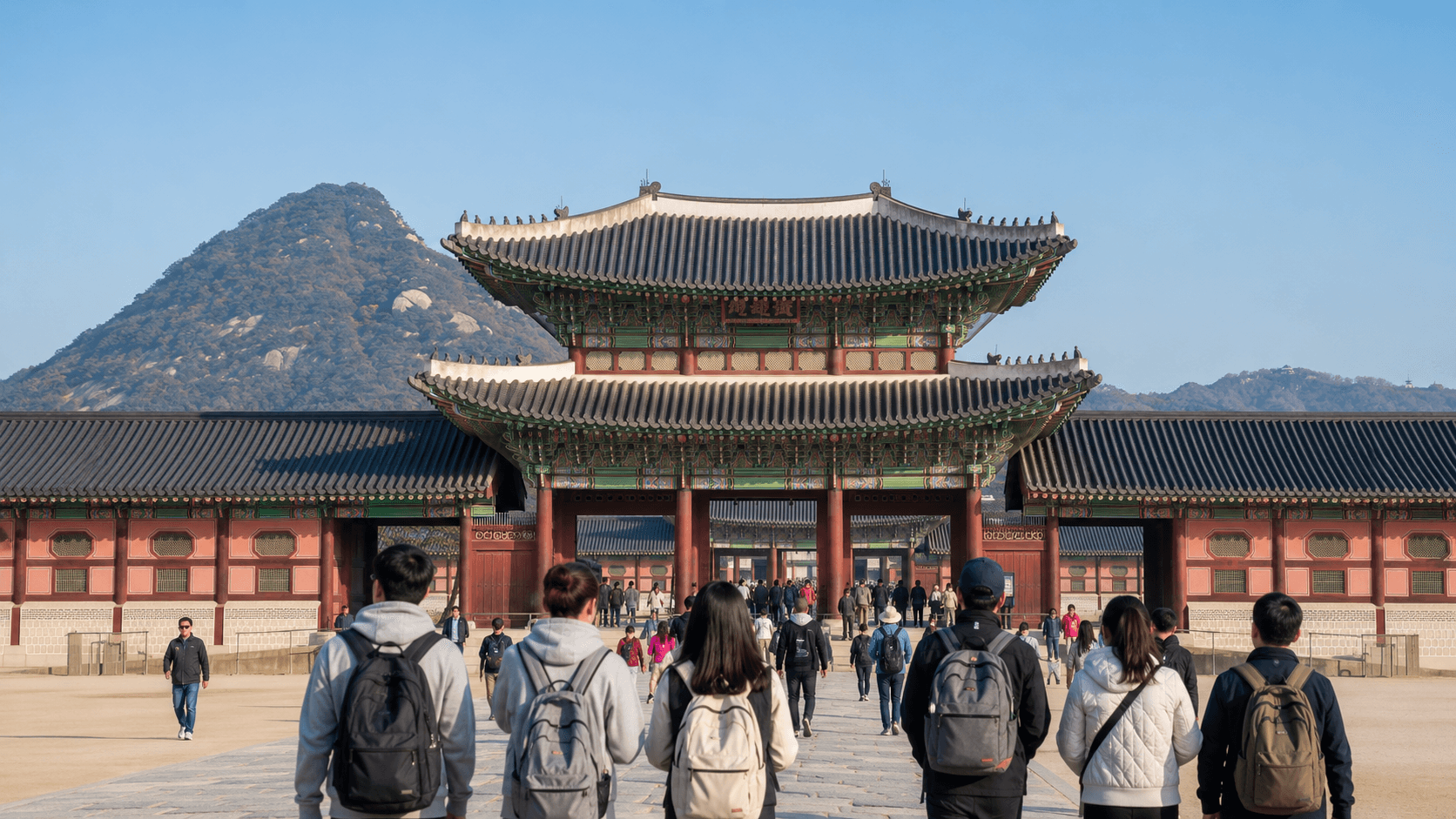
Start at Gyeongbokgung Palace (경복궁), the principal royal palace of the Joseon dynasty. Allow about two hours if you want to see the main courtyards, gardens and museum areas without rushing.
Palace opening hours, weekly closing days and evening programs can change by season. Check the Royal Palaces and Tombs Center shortly before visiting. Hanbok wearers may qualify for free palace admission under official conditions, but renting an outfit is optional rather than necessary.
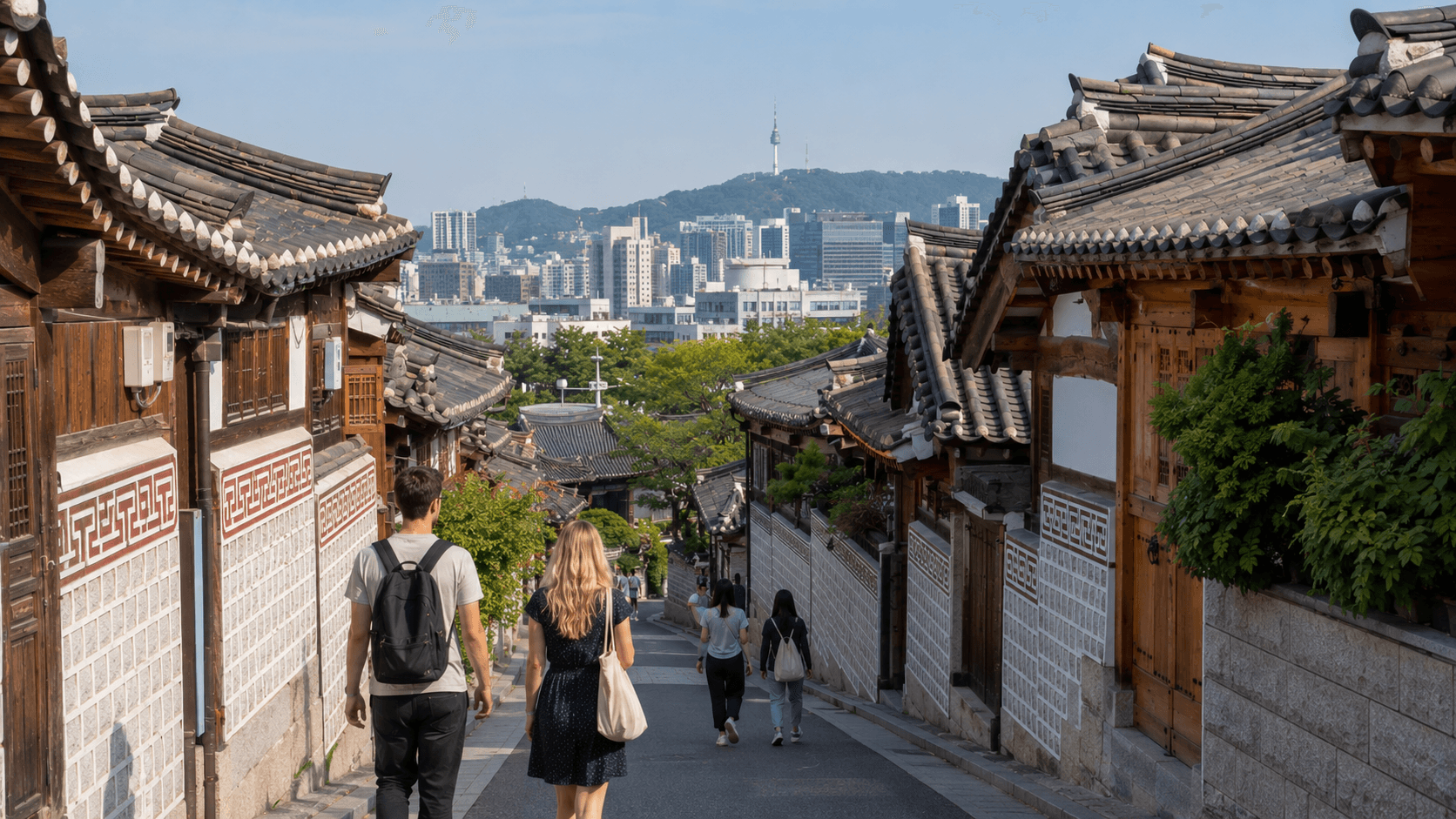
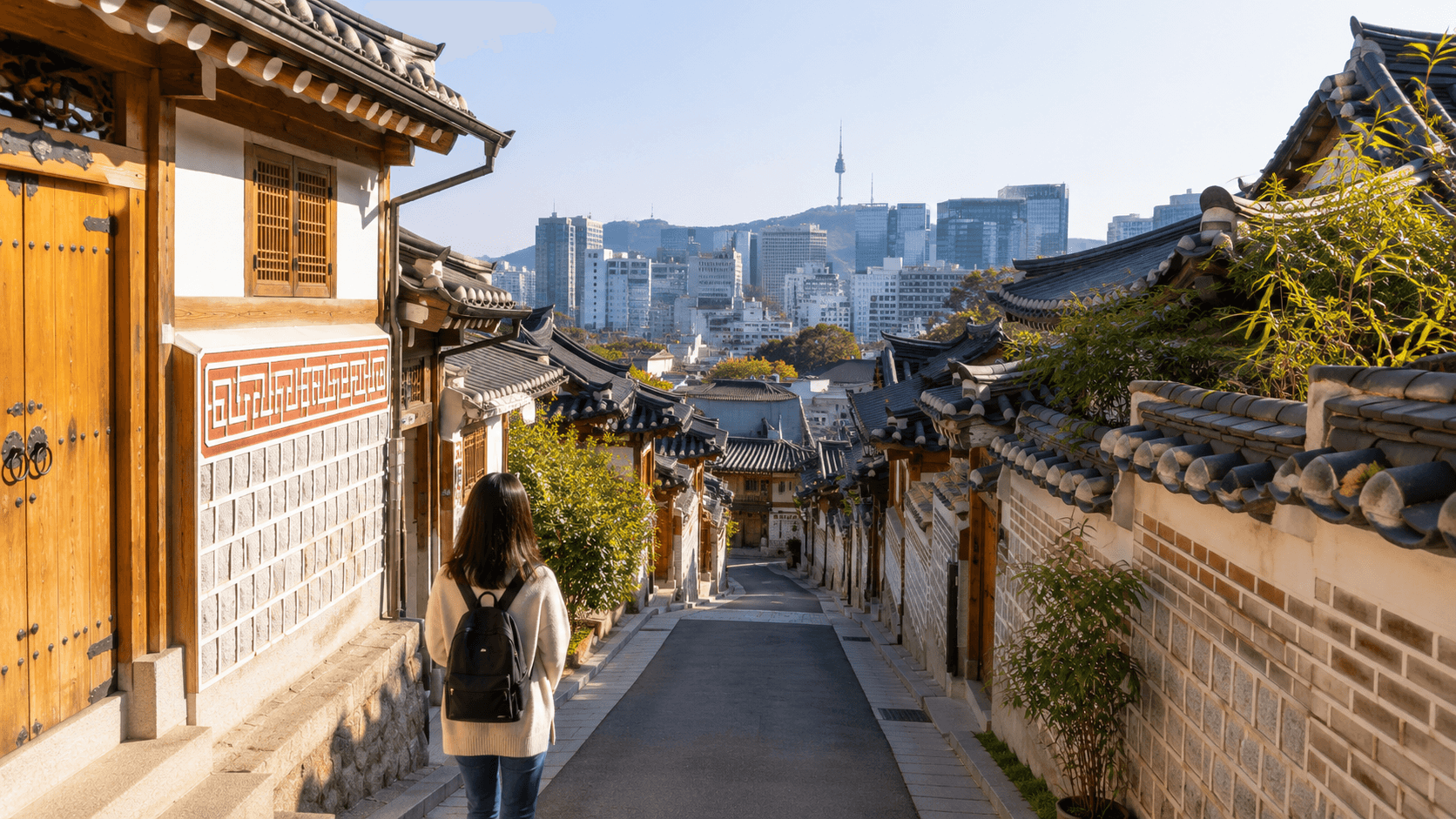
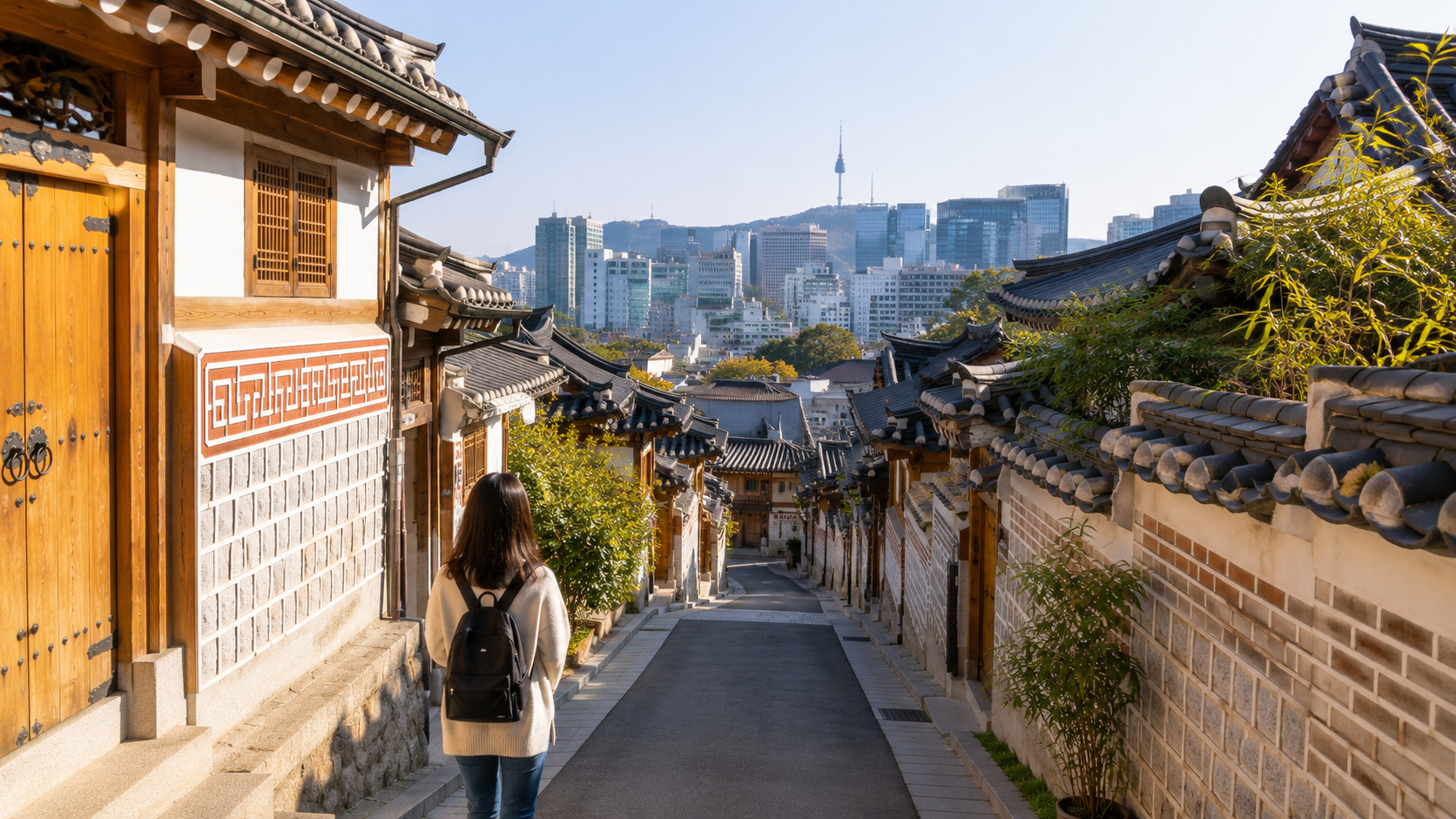
Continue to the Bukchon area or Samcheong-dong for lunch. Bukchon Hanok Village (북촌한옥마을) is a residential neighborhood, not an outdoor theme park. Some sections are subject to visitor-management rules. Follow signs, keep conversations quiet, avoid photographing inside homes and do not block doorways. Seoul’s official Bukchon information page describes the neighborhood and current visitor arrangements.
Spend the late afternoon around Insadong, where traditional crafts, tea houses and souvenir shops are concentrated. Finish at Ikseon-dong if you want cafés and restaurants in renovated hanok buildings, although the narrow lanes become crowded in the evening.
Day 3: Choose your version of modern Seoul
Trying to cover Gangnam, Hongdae, Namsan and several museums in one day produces more time underground than above it. Choose one of these focused routes.
Option A: Markets and central Seoul
Visit Gwangjang Market in the morning, then continue to Dongdaemun Design Plaza and the city-wall area. This route suits travelers interested in food, textiles, street photography and urban design.
Market stalls may accept cards, but carrying some KRW is sensible for small purchases. Walk through first, compare menus and order only what you can comfortably finish.
Option B: The Han River and southern Seoul
Begin around Seoul Forest or Seongsu, continue to the COEX area, and finish beside the Han River. This option gives you contemporary cafés, shopping and a less historical view of the capital.
Distances south of the river are larger than they appear on a tourist map. Use public transportation between neighborhoods rather than planning to walk the entire route.
Option C: Museums and viewpoints
Choose the National Museum of Korea or another major museum, then visit Namsan later in the day. Check the museum’s official calendar because permanent galleries, temporary exhibitions and closing days differ.
For navigation, Naver Map and KakaoMap generally provide more complete local transit and walking information than international map services in Korea. Download at least one before the trip and save your hotel names in Korean.
Day 4: Seoul to Gyeongju
Take a morning KTX from Seoul Station to Singyeongju Station (신경주역). Note that the high-speed station is outside central Gyeongju; you still need a local bus or taxi to reach your hotel and the historic district.
Leave large luggage at your accommodation before sightseeing. A hotel near Hwangnidan-gil, the express bus terminal or the central heritage zone reduces local travel time.
Spend the afternoon walking through central Gyeongju:
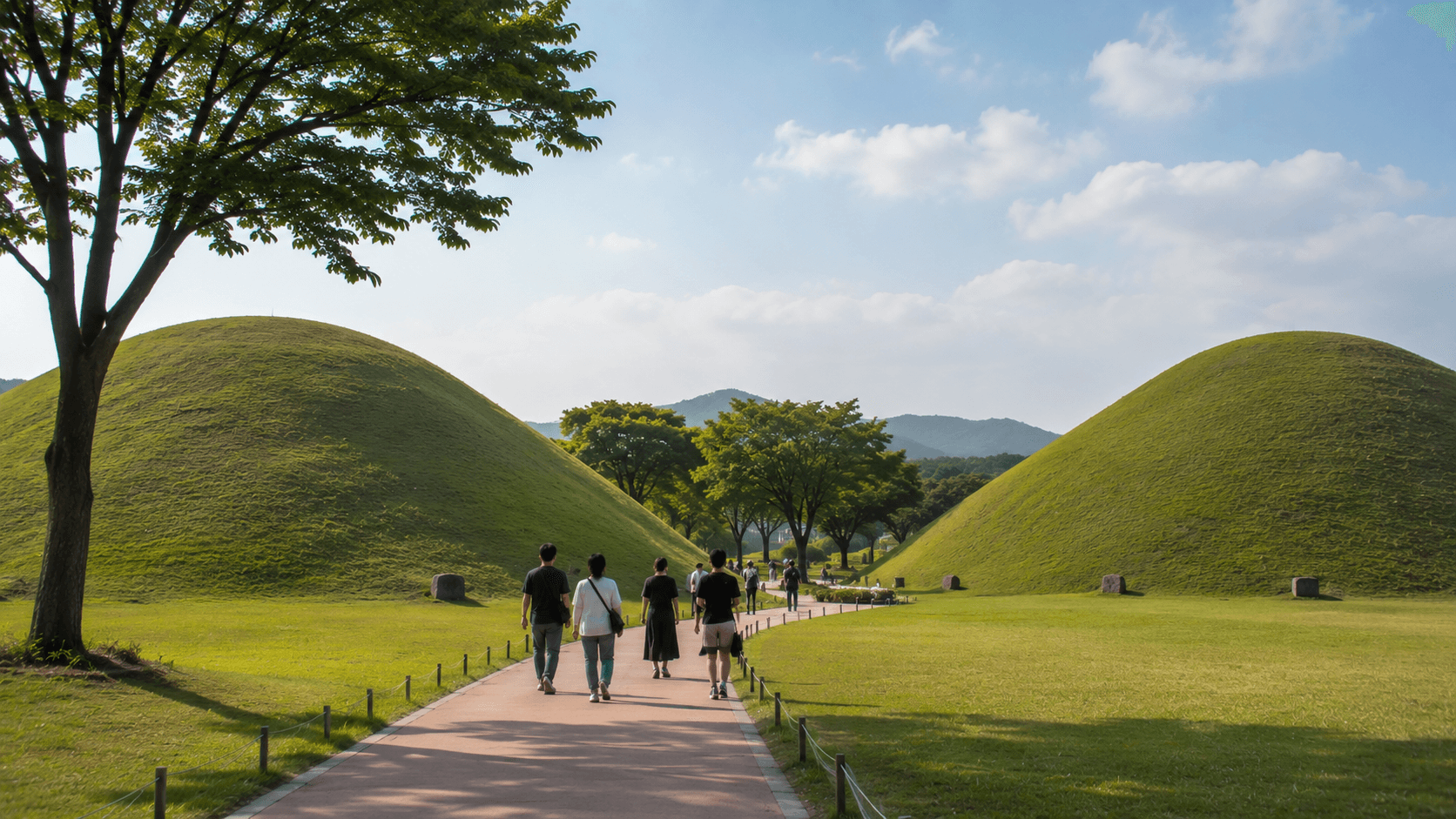
- Daereungwon Tomb Complex
- Cheomseongdae observatory area
- Gyerim forest and the Wolseong surroundings
- Woljeonggyo Bridge
- Donggung Palace and Wolji Pond after sunset, if open
These attractions are relatively close together, but the full circuit still involves several hours of walking. Rent a bicycle only if you are confident riding near pedestrians and road traffic.
Gyeongju was the capital of the Silla kingdom, which ruled much of the Korean Peninsula for centuries. Understanding that context makes the burial mounds, palace sites and Buddhist monuments more meaningful than treating them as unrelated photo stops.
For current admission hours and city transport information, consult the official Gyeongju tourism website.
Day 5: Bulguksa and onward to Busan
Check out but leave your luggage at the hotel. Travel early to Bulguksa Temple (불국사), part of the UNESCO-listed Seokguram Grotto and Bulguksa Temple complex.
Bulguksa is outside central Gyeongju, so allow for local transport in both directions. Buses are economical but may involve waiting; a taxi saves time, especially for two or more travelers. Seokguram is farther uphill and requires additional transport plus walking. Add it only if your train to Busan is late enough.
Dress respectfully, speak quietly and remember that Bulguksa remains an active Buddhist temple. Buildings may be temporarily inaccessible during ceremonies or maintenance.
Return to central Gyeongju, collect your bags and continue to Busan. Depending on the service, you may depart from Singyeongju Station or use another rail or bus connection. Verify the station carefully when booking.
In Busan, stay near one of these areas:
- Seomyeon: central transport connections and extensive dining
- Nampo: convenient for markets, Gamcheon and the old port area
- Gwangalli: evening beach atmosphere and bridge views
- Haeundae: convenient for the eastern coast and resort-style accommodation
Do not assume that Busan’s main attractions are close together. The city stretches along the coast, and crossing it can take well over an hour.
Day 6: Coastal Busan
For a first visit, concentrate on either eastern or western Busan rather than combining every famous attraction.
Recommended eastern route
Start at Haedong Yonggungsa Temple (해동용궁사) early, before tour groups and day-trippers arrive. The site has numerous stairs and uneven surfaces. Travelers with limited mobility should review access conditions before going.
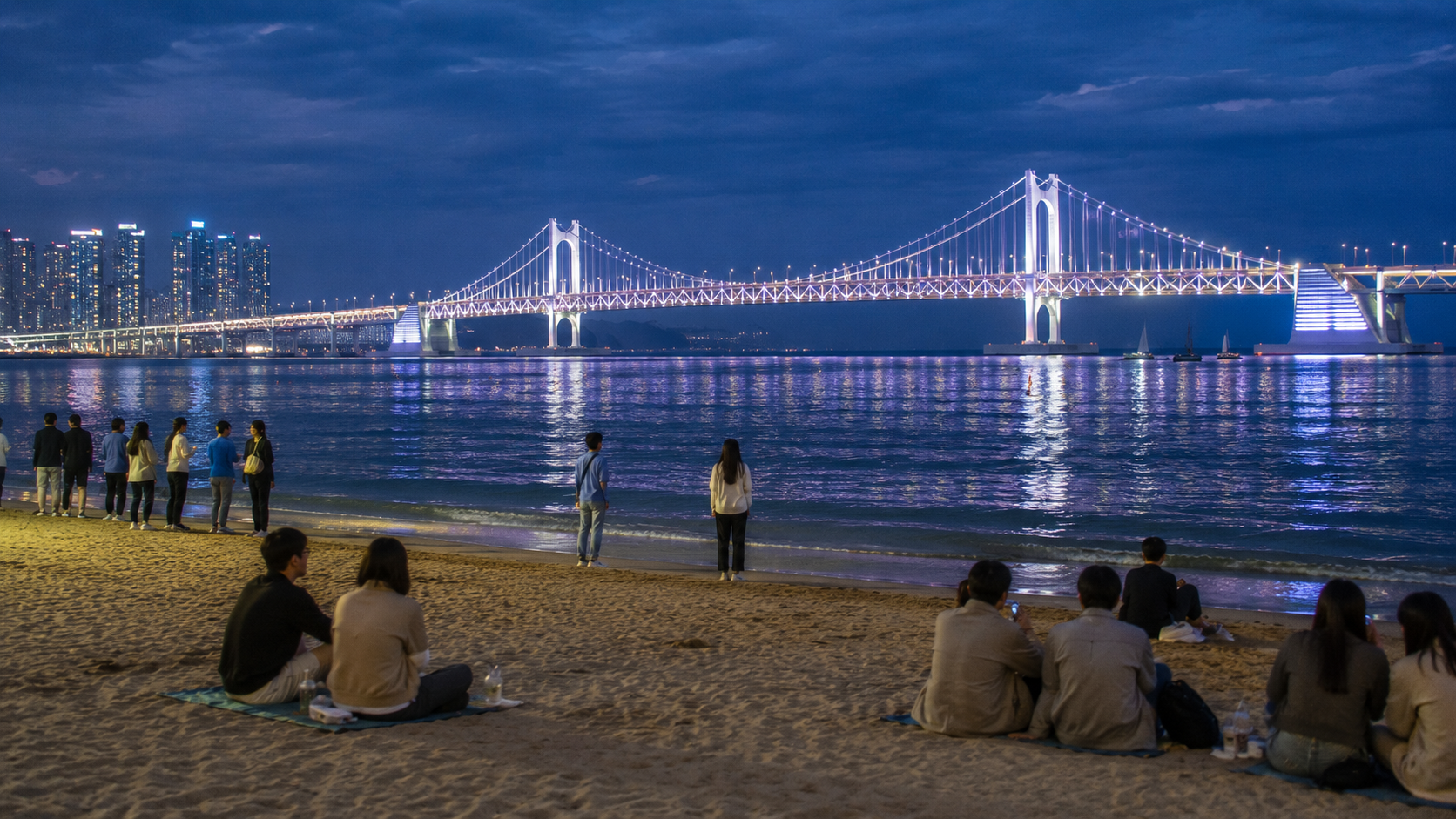
Continue through the Haeundae area. Depending on your interests, walk part of the coast, visit a viewpoint, relax on the beach or explore nearby restaurants. Finish at Gwangalli Beach for views of Gwangandaegyo Bridge after dark.
Alternative western route
Visit Gamcheon Culture Village (감천문화마을), then continue to Jagalchi Market, BIFF Square and the Nampo waterfront. Gamcheon is a real hillside neighborhood with steep lanes and residents. Keep noise down, use public paths and avoid photographing people or private interiors without permission.
Busan’s official tourism portal, Visit Busan, provides current attraction information and transport guidance.
Day 7: Departure
If flying from Gimhae International Airport, check your airline’s terminal and arrive with the buffer recommended by the carrier. The airport is connected to Busan’s urban rail network through the Busan-Gimhae Light Rail Transit, but a transfer is usually required. A taxi may be easier with large luggage or for an early departure.
If returning to Seoul, reserve a KTX from Busan Station. The rail journey is only one part of the transfer: you must also travel from Seoul Station to Incheon Airport. Avoid booking a tight same-day connection between the train and an international flight.
With a late departure, use luggage storage at your hotel or station and spend the morning in one nearby area. Do not carry suitcases through hillside villages, temple stairways or crowded markets.
Transport and payment essentials
A rechargeable T-money card is useful for local buses and urban rail. The official T-money website provides current service information. Purchase and recharge arrangements vary by outlet; carrying KRW is useful because some recharge machines or counters may not accept foreign cards.
Tap your card when entering and leaving buses where required, as well as at subway gates. Failing to tap out can affect transfer discounts or the fare charged.
KTX tickets are separate from ordinary stored-value transit fares. Keep the ticket or mobile booking details accessible until you leave the destination station.
Practical budget
Accommodation and intercity transport vary too widely for a single reliable total. As a planning estimate rather than a quoted fare, a mid-range traveler sharing a room might budget approximately:
| Expense | Planning range per person |
|---|---|
| Meals and drinks | KRW 35,000-70,000 per day |
| Local transport | KRW 8,000-20,000 per day |
| Attractions | KRW 5,000-30,000 per day |
| Intercity transport | Check live KORAIL fares |
| Accommodation | Highly seasonal; compare your exact dates |
Costs increase during cherry-blossom season, autumn foliage periods, summer weekends in Busan and Korean public holidays. Gyeongju accommodation can also tighten during festivals and school-trip periods.
Common mistakes to avoid
- Scheduling Busan, Gyeongju and Seoul attractions on the same day as long transfers
- Booking the wrong Gyeongju station
- Assuming foreign bank cards will work in every machine or small shop
- Visiting Bukchon or Gamcheon as though the streets were museum sets
- Taking large luggage onto crowded local buses
- Planning an early morning palace visit without checking its weekly closing day
- Returning from Busan immediately before an international departure from Incheon
What to check before you go
- Confirm passport, visa and K-ETA requirements through official immigration websites.
- Reserve KTX seats, particularly for Friday, Sunday and holiday travel.
- Check each attraction’s closure day and seasonal hours one week before arrival.
- Confirm whether your Seoul hotel is closer to Seoul Station, another AREX stop or an airport-bus stop.
- Save hotel names and addresses in Hangul.
- Check the weather and air-quality forecast before packing.
- Confirm luggage-storage availability if arriving before check-in.
- Review accessibility details for temples, hillside villages and older stations.
- Allow extra time during heavy rain, extreme heat, snow or major festivals.
Your next step is to choose whether you will fly home from Busan or return to Seoul. Once that decision is fixed, reserve the international flights, KTX journeys and accommodation in that order.
Sources
- Korea Visa Portal, Ministry of Justice
- Official Korea Electronic Travel Authorization website
- KORAIL official reservation service
- Incheon International Airport
- Royal Palaces and Tombs Center
- Seoul Hanok official Bukchon guide
- Gyeongju official tourism website
- Visit Busan official tourism portal
- T-money official English website