Three days is enough to see Seoul’s essential historic and modern districts without spending the entire trip in transit. This itinerary covers Gyeongbokgung Palace and Bukchon, the National Museum of Korea and Namsan, then western Seoul and the Han River.
The schedule assumes three full sightseeing days. If one of them is Tuesday, move Day 1 because Gyeongbokgung Palace is closed on Tuesdays.
At a glance
| Day | Main areas | Focus |
|---|---|---|
| 1 | Gyeongbokgung, Bukchon, Insadong, Ikseon-dong | Royal Seoul and traditional neighborhoods |
| 2 | National Museum of Korea, Namsan, Myeongdong, Cheonggyecheon | Korean history and central Seoul |
| 3 | Hongdae, Yeonnam-dong, Mangwon, Han River | Contemporary neighborhoods and riverside Seoul |
Expect to walk at least 10,000 to 15,000 steps each day. Seoul’s subway system handles the longer journeys, but palace grounds, markets, hills, and neighborhood alleys still require substantial walking.
Before starting: transport and navigation
For a short visit, use either a rechargeable transportation card such as Tmoney or a three-day Climate Card. Always tap your card when entering and leaving the subway, and when boarding and leaving a bus.
As verified on June 9, 2026, Seoul’s short-term three-day Climate Card costs KRW 10,000, excluding the separate KRW 3,000 physical-card price. It provides unlimited travel within its designated service area but does not cover every railway or bus route outside Seoul. The Sinbundang Line, airport buses, intercity buses, and non-Seoul-licensed buses are among the exclusions. See the official Seoul Climate Card guide before relying on it for an airport or suburban journey.
International credit and debit cards can be used at the city’s newer ticket machines to purchase Climate Cards, recharge short-term passes, and buy single-journey subway tickets. Seoul states that international-card transactions carry an average service fee of approximately 3.7%; this payment information was verified on June 9, 2026 through the Seoul Metropolitan Government’s international payment announcement.
Use Naver Map or KakaoMap for local directions. They usually provide more useful Korean transit and walking information than overseas mapping services. Save each destination under both its English and Korean name when possible.
Day 1: Royal Seoul, Bukchon, and traditional streets
9:00 a.m.: Gyeongbokgung Palace
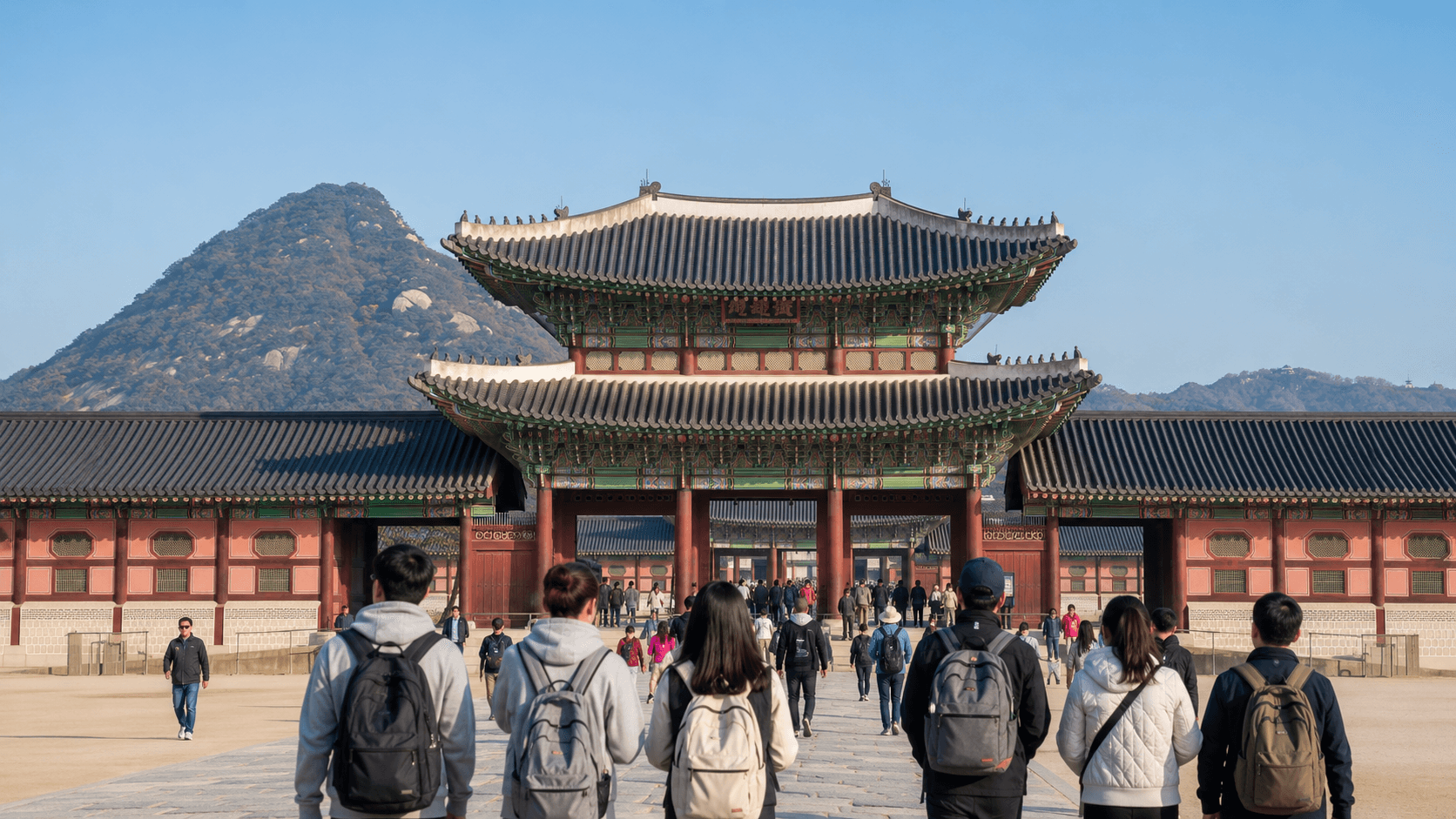
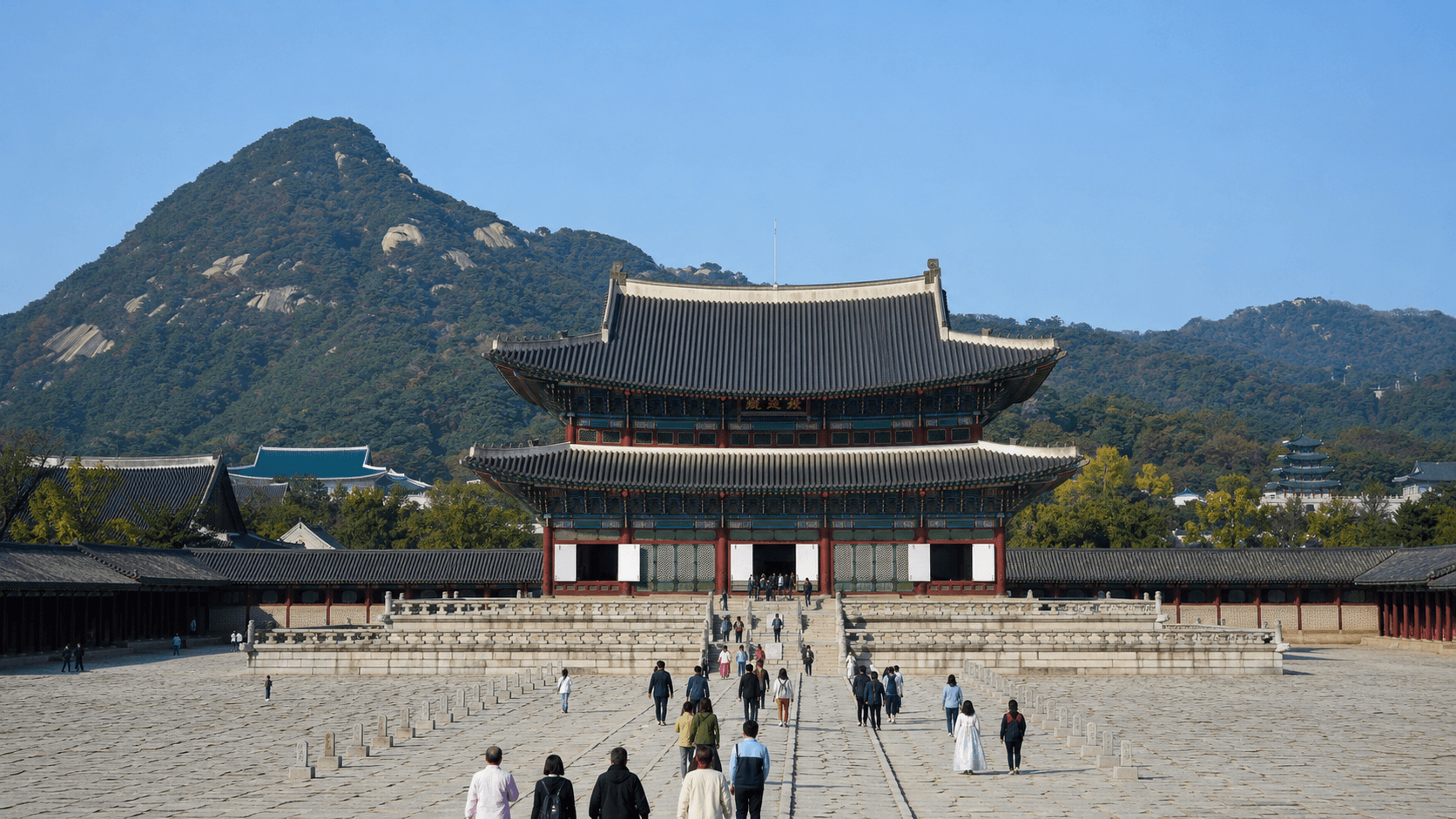
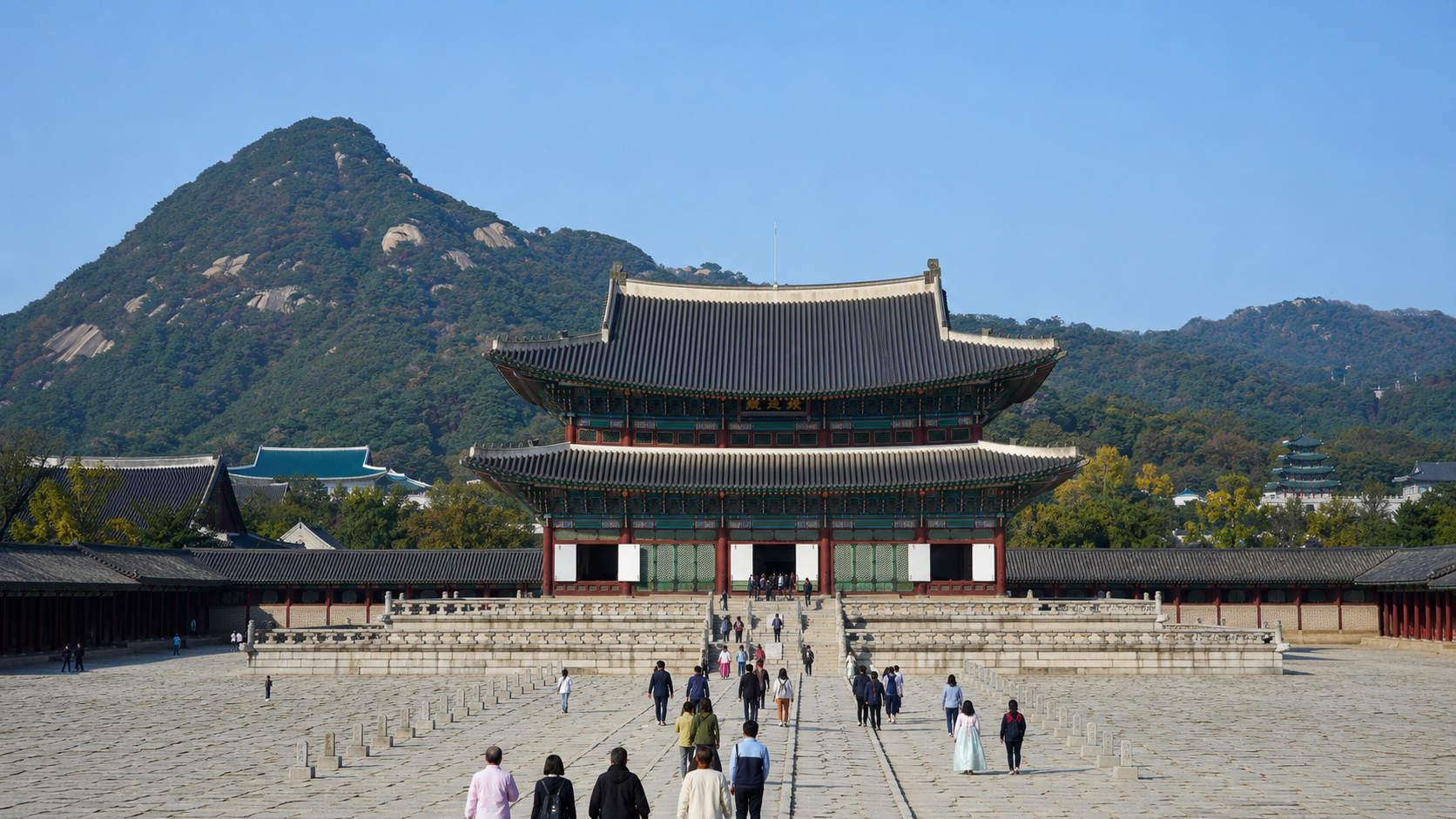
Begin at Gyeongbokgung Palace (경복궁), the principal royal palace of the Joseon dynasty. Arriving near opening time gives you more room around the main gates and throne hall before tour groups become concentrated in the central courtyards.
Enter through Gwanghwamun Gate and continue to Geunjeongjeon, the main throne hall. Then walk toward Gyeonghoeru Pavilion and the quieter northern sections. Allow approximately two hours if you want more than a quick photograph at the entrance.
As verified on June 9, 2026, adult admission for ages 19 to 64 is KRW 3,000. The palace is closed on Tuesdays. Its regular opening hours vary by season:
- January-February: 9:00 a.m.-5:00 p.m.
- March-May: 9:00 a.m.-6:00 p.m.
- June-August: 9:00 a.m.-6:30 p.m.
- September-October: 9:00 a.m.-6:00 p.m.
- November-December: 9:00 a.m.-5:00 p.m.
Final admission is one hour before closing. Confirm current information on the official Gyeongbokgung visitor page, especially during holidays or special evening openings.
Visitors wearing qualifying hanbok, or Korean traditional clothing, may be eligible for free palace admission. Renting hanbok can be enjoyable, but compare the full rental period, return deadline, hairstyle fees, locker availability, and weather suitability before paying.
11:15 a.m.: Walk through Samcheong-dong to Bukchon
Leave through the palace’s eastern side and continue toward Samcheong-dong. This area provides a gradual transition from the palace complex to galleries, cafés, shops, and residential lanes.
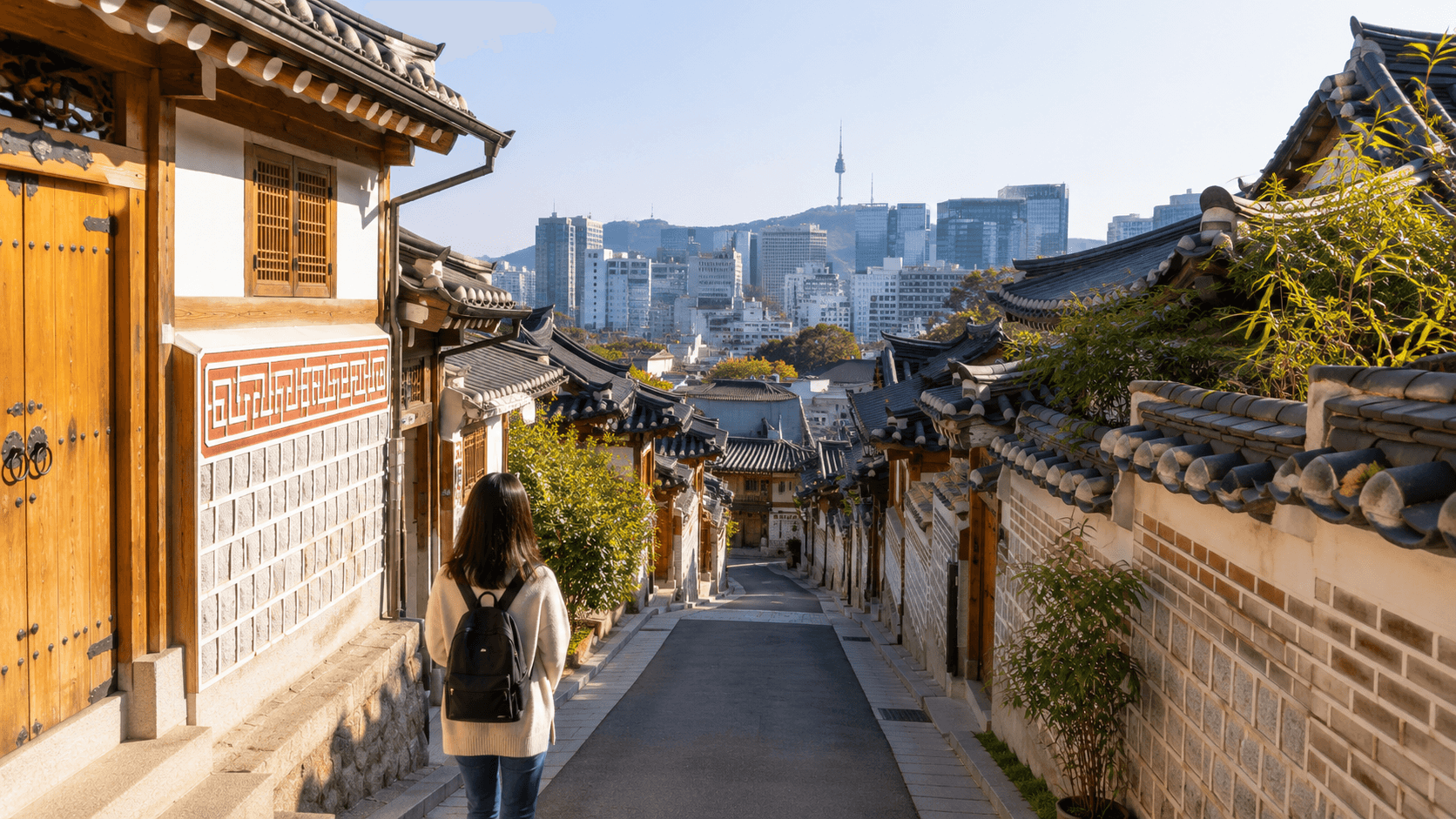
Continue into Bukchon Hanok Village (북촌한옥마을), where hanok, or traditional Korean houses, remain among later buildings. Bukchon is not a theme park: it is a residential neighborhood containing private homes as well as workshops, guesthouses, and commercial spaces.
Tourist access to the designated Red Zone around Bukchon-ro 11-gil is permitted only from 10:00 a.m. to 5:00 p.m. Restrictions apply from 5:00 p.m. until 10:00 a.m. the following day, and violations can result in a KRW 100,000 fine. Enforcement began on March 1, 2025. These rules were verified on June 9, 2026 through the official Seoul notice on Bukchon visitor restrictions.
Keep conversations quiet, do not enter private courtyards, avoid photographing residents, and do not block narrow lanes for group pictures. One hour is sufficient for a respectful walk.
1:00 p.m.: Lunch near Anguk or Insadong
Walk downhill toward Anguk and Insadong (인사동). For lunch, look for a restaurant specializing in one clear category rather than choosing from an enormous mixed menu. Practical options include:
- Kalguksu: knife-cut noodles in broth
- Mandu: Korean dumplings
- Bibimbap: rice mixed with vegetables and other toppings
- Sundubu-jjigae: soft tofu stew, usually served hot and often spicy
- Bossam: sliced pork served with vegetables and condiments
Check prices at the entrance. Restaurants in busy visitor districts may have minimum-order rules or dishes intended for two people.
2:30 p.m.: Insadong and Jogyesa Temple
Walk along Insadong-gil, exploring side streets rather than remaining only on the main shopping road. The district is useful for stationery, ceramics, tea, crafts, and compact souvenirs, although quality and origin vary between shops.
Continue to Jogyesa Temple (조계사), the headquarters of the Jogye Order of Korean Buddhism. Visitors are generally welcome in the grounds, but active worship takes priority. Speak quietly, dress reasonably, and avoid standing directly in front of people who are bowing.
4:30 p.m.: Ikseon-dong
Walk or take the subway to Ikseon-dong (익선동). Its compact lanes contain adapted hanok occupied by cafés, restaurants, and shops. Unlike Bukchon’s protected residential sections, Ikseon-dong is heavily commercial, so expect crowds and queues in the late afternoon.
Use the area for a rest rather than trying to visit every photogenic café. Narrow entrances and raised thresholds are common, and accessibility can vary considerably between converted buildings.
Evening: Jongno or Cheonggyecheon
Have dinner around Jongno 3-ga, then walk part of Cheonggyecheon (청계천), the stream running through central Seoul. Stairways provide access from street level, but ramps and elevators are less frequent. After rain, sections may be restricted for safety.
A practical stopping point is the area around Euljiro or Jonggak. There is no need to walk the entire stream.
Day 2: Korean history, Namsan, and central Seoul
9:30 a.m.: National Museum of Korea
Start at the National Museum of Korea (국립중앙박물관) beside Ichon Station. The museum is extensive, so choose a focused route instead of attempting every gallery.
A useful first visit includes prehistoric and ancient Korea, the Silla and Goryeo collections, Joseon-period material, and the Room of Quiet Contemplation with its pensive bodhisattva sculptures. Allow two and a half to three hours.
As verified on June 9, 2026, the permanent galleries are free. Regular hours are 9:30 a.m.-5:30 p.m. on Monday, Tuesday, Thursday, Friday, and Sunday, and 9:30 a.m.-9:00 p.m. on Wednesday and Saturday. Final admission is 30 minutes before closing. The permanent and special galleries normally close on the first Monday of March, June, September, and December, with additional holiday closures listed by the museum. Check the official National Museum of Korea visitor information for your date.
The museum provides free wheelchairs and strollers, coat storage, lockers, and a lactation room. Paid special exhibitions may require separate tickets.
12:45 p.m.: Lunch in Yongsan
Eat at the museum or travel toward Yongsan Station. Staying nearby prevents an unnecessary cross-city journey before the afternoon schedule.
If you have mobility limitations or young children, consider spending the afternoon at the museum grounds and Yongsan Family Park instead of adding Namsan. This is a practical adjustment, not an equivalent sightseeing route.
2:00 p.m.: Namsan and N Seoul Tower
Travel to the base of Namsan (남산). You can reach the upper area by walking, public bus, or the separately operated cable car. Private cars generally cannot drive directly to the tower area, so check your final access route before leaving your hotel.
The tower plaza and mountain views can be enjoyed without buying an observatory ticket. The paid observatory makes more sense in clear weather; haze, rain, and low cloud can reduce visibility substantially. Check current hours, ticket prices, and maintenance notices on the official YTN Seoul Tower website on the day of your visit.
The walking routes include slopes and steps. Travelers using wheelchairs or carrying strollers should favor accessible public transport and confirm lift availability at each facility.
5:00 p.m.: Myeongdong
Descend toward Myeongdong (명동) for shopping and dinner. Myeongdong is convenient for cosmetics, fashion chains, money exchange, pharmacies, and street food, but compare prices rather than assuming the busiest shop offers the lowest rate.
Street-food stalls usually become more active in the late afternoon and evening. Bring a small amount of cash because payment policies differ by stall. Treat street food as sampling rather than a guaranteed inexpensive meal: buying several items can cost more than a simple restaurant dish.
Common choices include tteokbokki, or rice cakes in spicy sauce; eomuk, fish cake served with broth; hotteok, a filled pancake; and gyeran-ppang, a small egg bread. Ask the price before ordering when it is not displayed.
Evening option: Euljiro or Dongdaemun
For an earlier night, return to your accommodation after Myeongdong. For more sightseeing, continue to Euljiro’s restaurant streets or Dongdaemun Design Plaza (DDP). DDP’s exterior is especially distinctive after dark, but individual exhibitions, shops, and facilities follow separate schedules. Check the official Visit Seoul or DDP listing for the event and venue you intend to enter.
Day 3: Hongdae, local markets, and the Han River
10:00 a.m.: Hongdae and Yeonnam-dong
Begin near Hongik University Station. Hongdae (홍대) refers to the commercial and cultural district around Hongik University rather than one single attraction. Its fashion shops, arcades, photo booths, cafés, and entertainment businesses generally become livelier later in the day, so a quiet morning is better for walking and shopping without peak crowds.
Continue into Yeonnam-dong (연남동) and follow part of the Gyeongui Line Forest Park, a linear park created along a former railway corridor. The route is flat compared with Bukchon or Namsan and provides an easier morning after two demanding days.
Do not build the schedule around seeing street performances at a particular time. Performances are informal and can change with weather, regulations, or the day of the week.
12:30 p.m.: Mangwon Market
Travel to Mangwon Market (망원시장) for lunch. It is a functioning neighborhood market, so entrances and aisles can become crowded. Keep luggage at your accommodation or in a station locker rather than pulling a suitcase through the market.
Walk through once before ordering. This helps you compare portions and avoid filling up at the first stall. Carry cash as a backup even though many established vendors accept cards. Return trays and rubbish according to each stall’s instructions; public bins are not always easy to find.
2:30 p.m.: Choose your afternoon pace
Choose one of these routes based on energy and weather:
- Relaxed: Explore Mangwon-dong cafés, then go directly to Mangwon Hangang Park.
- Shopping: Return to Hongdae for independent fashion, stationery, records, or beauty products.
- Culture: Visit another museum or gallery, confirming its closing day first.
- Rain or extreme temperatures: Spend more time indoors around Hongdae, Yeouido, or a museum rather than forcing a long riverside walk.
5:00 p.m.: Han River sunset
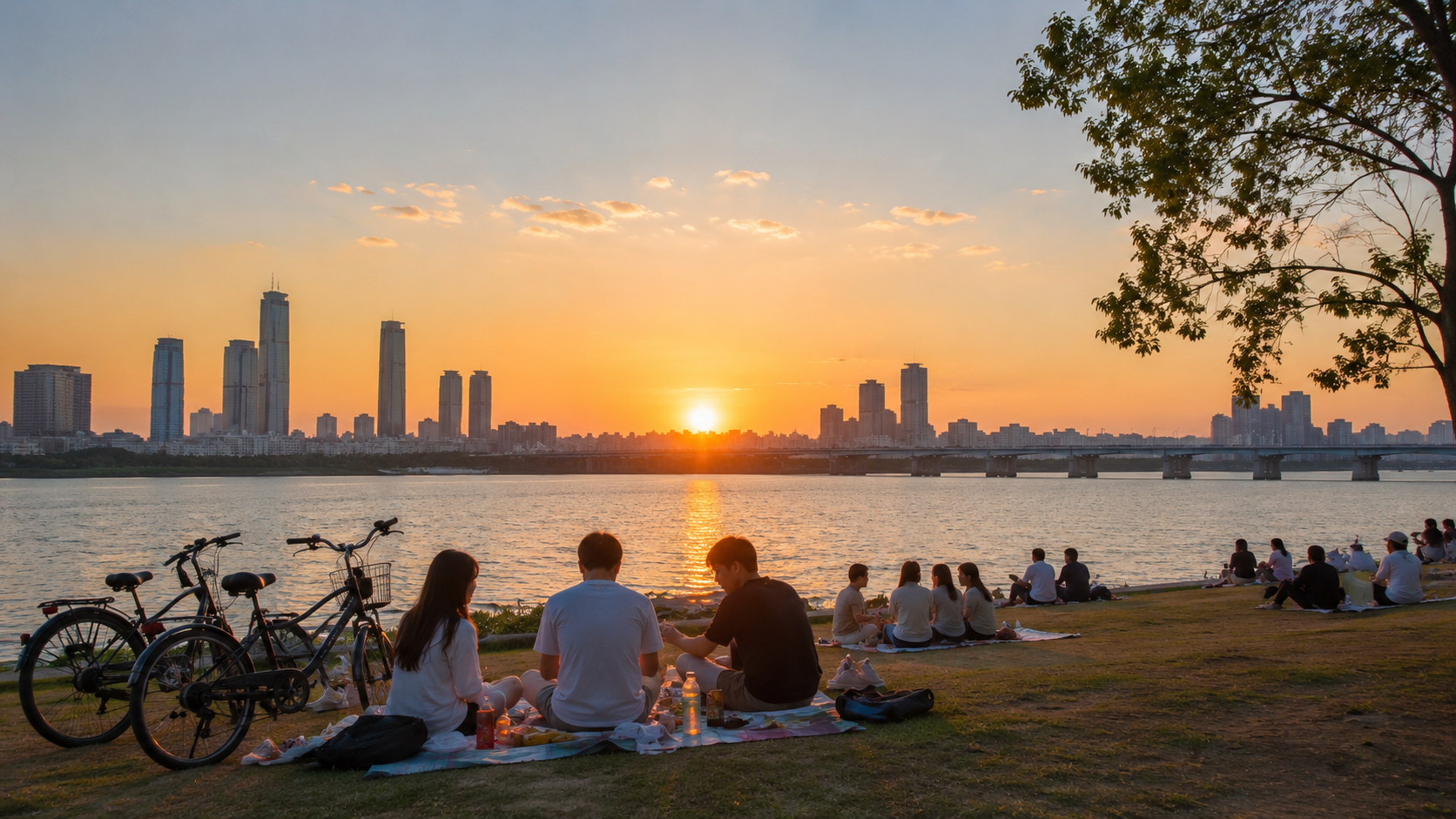
Finish at a Hangang Park (한강공원), one of the public parks along the Han River. Mangwon Hangang Park fits this day’s route, while Yeouido Hangang Park is easier to combine with central business and shopping areas.
Convenience-store picnics are common, but do not leave packaging or food waste beside a full bin. Alcohol rules and event restrictions can change, so follow signs posted in the park. River conditions, heavy rain, heat alerts, and winter cold can make an extended visit impractical.
Bicycle rental is optional, not essential. Use marked paths, watch for fast cyclists, and avoid learning to ride in a busy section at sunset.
Final evening: dinner in Hongdae
Return to Hongdae for your final dinner. Korean barbecue is easier with at least two diners because some restaurants require two portions of meat. Solo travelers can look for noodle shops, rice dishes, stews, pork cutlet, or restaurants explicitly advertising one-person seating.
Allow extra time for the trip back. Subway closing times vary by line, station, direction, and day, so check the final route in a Korean navigation app rather than relying on a single citywide last-train time.
Practical adjustments
If Day 1 falls on Tuesday
Gyeongbokgung is closed. Swap Day 1 with Day 2 or Day 3. Do not simply arrive at Bukchon early instead: tourist access to its Red Zone is restricted before 10:00 a.m.
If it rains
Keep the National Museum of Korea, Myeongdong, and covered shopping areas. Reduce Bukchon, Namsan, and the Han River. Palace courtyards offer limited shelter, and stone surfaces can become slippery.
If you have limited mobility
Seoul’s major subway stations often have elevators, but the nearest elevator may be far from the most convenient exit. Bukchon, Namsan, palace grounds, and older commercial buildings can include hills, uneven paving, steps, and high thresholds. Check the accessible route in advance and use taxis selectively between difficult sections.
If you arrive after a long flight
Do not force this full schedule on arrival day. Use the first evening for a meal and a short neighborhood walk, then begin Day 1 after sleeping. Fatigue makes Seoul’s large stations and long walking routes more difficult to navigate.
What to check before you go
- Confirm that Gyeongbokgung is open and check its seasonal closing time.
- Check whether your museum visit falls on a scheduled gallery-closure day.
- Review Bukchon’s restricted zone and visit only between 10:00 a.m. and 5:00 p.m.
- Compare a three-day Climate Card with pay-as-you-go transport based on your actual routes.
- Download Naver Map or KakaoMap and save destinations before leaving Wi-Fi.
- Check Seoul’s weather, air-quality alerts, and heavy-rain notices each morning.
- Carry a physical payment card and some KRW cash as backups.
- Leave large luggage at your accommodation or in a station locker.
- Check the final subway or bus route before beginning a late-night journey.
Sources
Information was checked on June 9, 2026. Reconfirm time-sensitive details shortly before travel.
- Gyeongbokgung Palace official hours and admission
- Seoul Metropolitan Government Climate Card guide
- Seoul announcement on international card payments for transit tickets
- Official Bukchon tourist-access restrictions
- National Museum of Korea visitor information
- YTN Seoul Tower official website
Your next step is to place the three days on your actual calendar, keeping Gyeongbokgung away from Tuesday and checking the forecast before deciding which evening to spend at Namsan or the Han River.