Four full days give you enough time to see Seoul's historic center, experience its markets and nightlife, visit a major museum, and explore contemporary neighborhoods such as Seongsu and Gangnam. This itinerary is designed for first-time visitors using public transportation, with most stops grouped by area.
All fares, admission fees, operating hours, and access restrictions in this guide were verified on June 9, 2026. Recheck official websites shortly before your visit, particularly around public holidays and during severe weather.
At a glance
| Day | Main area | Highlights |
|---|---|---|
| 1 | Jongno and the historic center | Gyeongbokgung Palace, Bukchon, Insadong, Ikseon-dong |
| 2 | Central Seoul | Gwangjang Market, Dongdaemun, Myeong-dong, Namsan |
| 3 | Yongsan and Mapo | National Museum of Korea, Han River, Hongdae and Yeonnam-dong |
| 4 | Seongsu and Gangnam | Seoul Forest, Seongsu, Bongeunsa Temple, COEX |
Expect considerable walking, including stairs and uneven palace or alley surfaces. A realistic target is 12,000-20,000 steps per day. Travelers with limited mobility should shorten the neighborhood walks and use elevators, buses, or taxis between major stops.
Before starting: transport and payment
Seoul's subway is generally the easiest way to follow this itinerary. As of June 9, 2026, the adult subway base fare is KRW 1,550 with a transportation card or KRW 1,650 for a single-journey ticket. Distance supplements may apply. You must tap your card when entering and leaving the subway and when boarding and exiting buses to receive applicable transfer discounts. See the Seoul Metropolitan Government subway fare guide.
For four days, compare these options:
- Reloadable transportation card: Convenient if you are arriving from Incheon Airport, traveling outside Seoul, or making relatively few journeys. Tmoney cards are sold at convenience stores and subway stations.
- Climate Card short-term pass: There is no four-day version. As of June 9, 2026, the five-day pass costs KRW 15,000, plus KRW 3,000 for a physical card. It covers eligible Seoul subways and Seoul-licensed buses but excludes airport buses, the AREX airport railway, the Sinbundang Line, and some routes outside the city. Check the current Climate Card coverage and purchase instructions before buying.
Since March 17, 2026, designated vending machines at stations on Seoul Metro Lines 1-8 have accepted internationally issued cards for short-term Climate Cards and single-journey tickets. An average service fee of approximately 3.7% applies to international card transactions, according to the Seoul Metropolitan Government payment announcement.
Carry a physical bank card and some KRW in cash. Most established businesses accept cards, but individual market stalls may have different payment policies. Use Naver Map or KakaoMap for local navigation; overseas mapping services may provide incomplete walking directions in Korea.
Day 1: Palaces, Bukchon, and traditional neighborhoods
9:00-11:30: Gyeongbokgung Palace
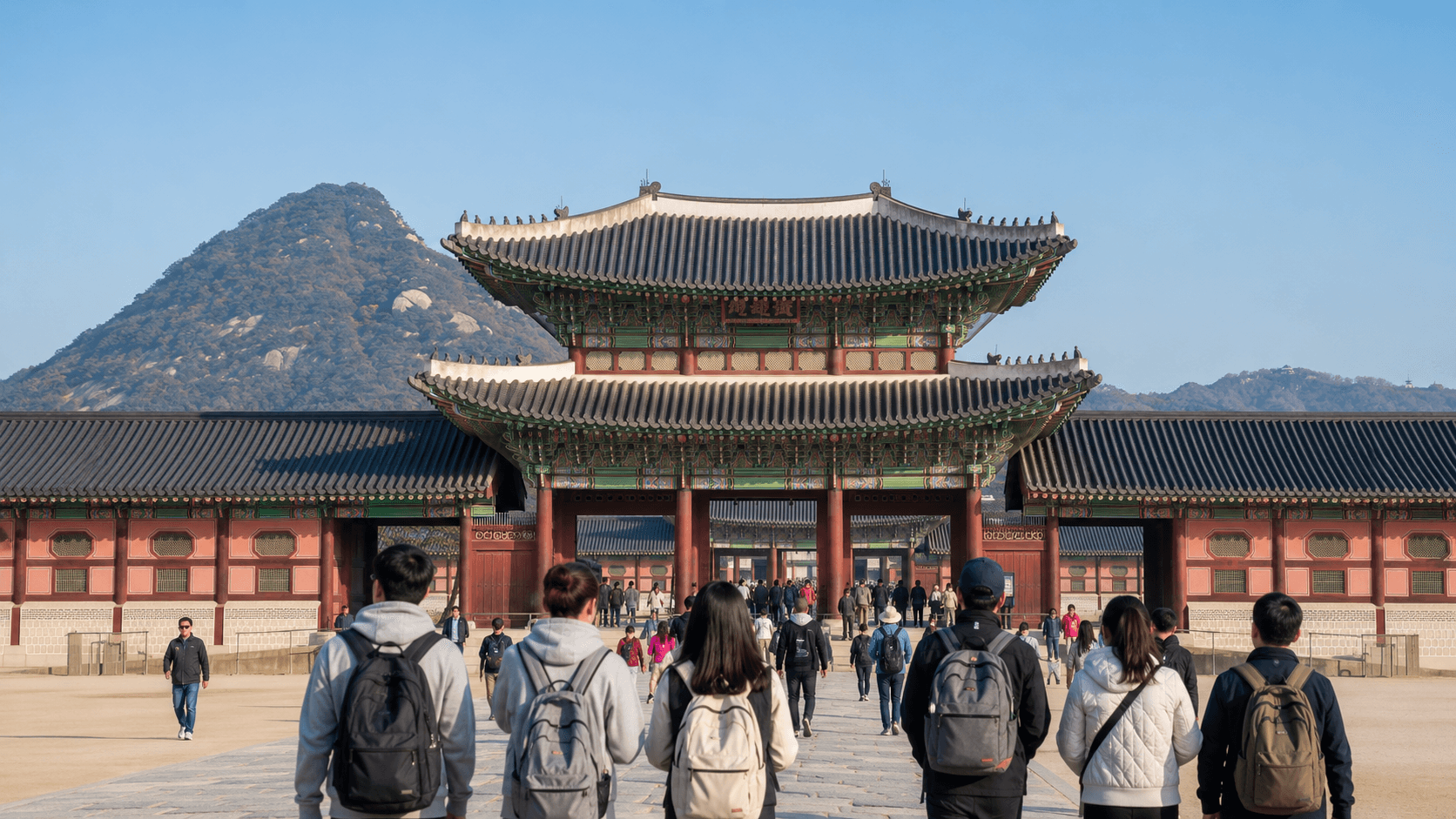
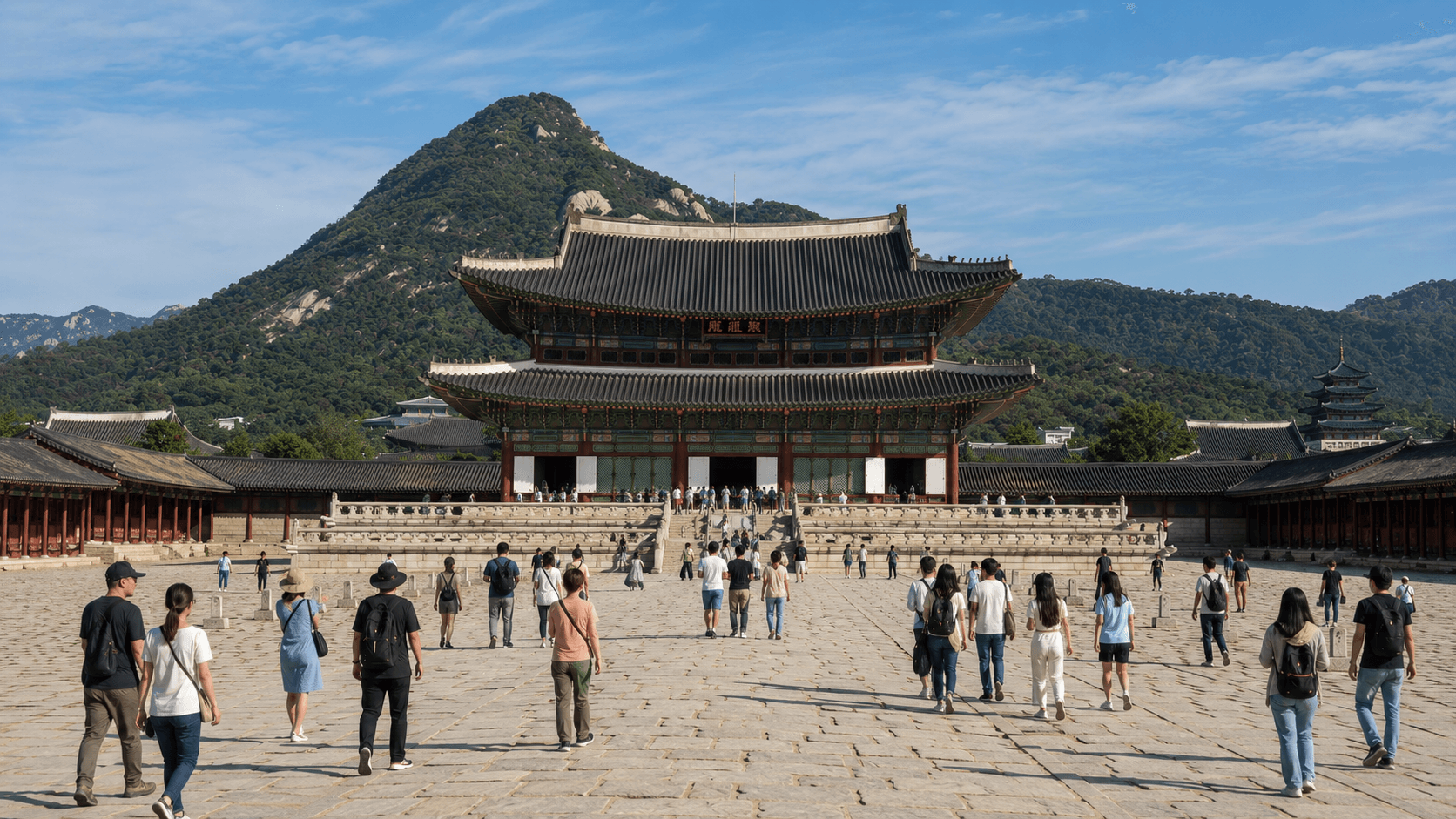
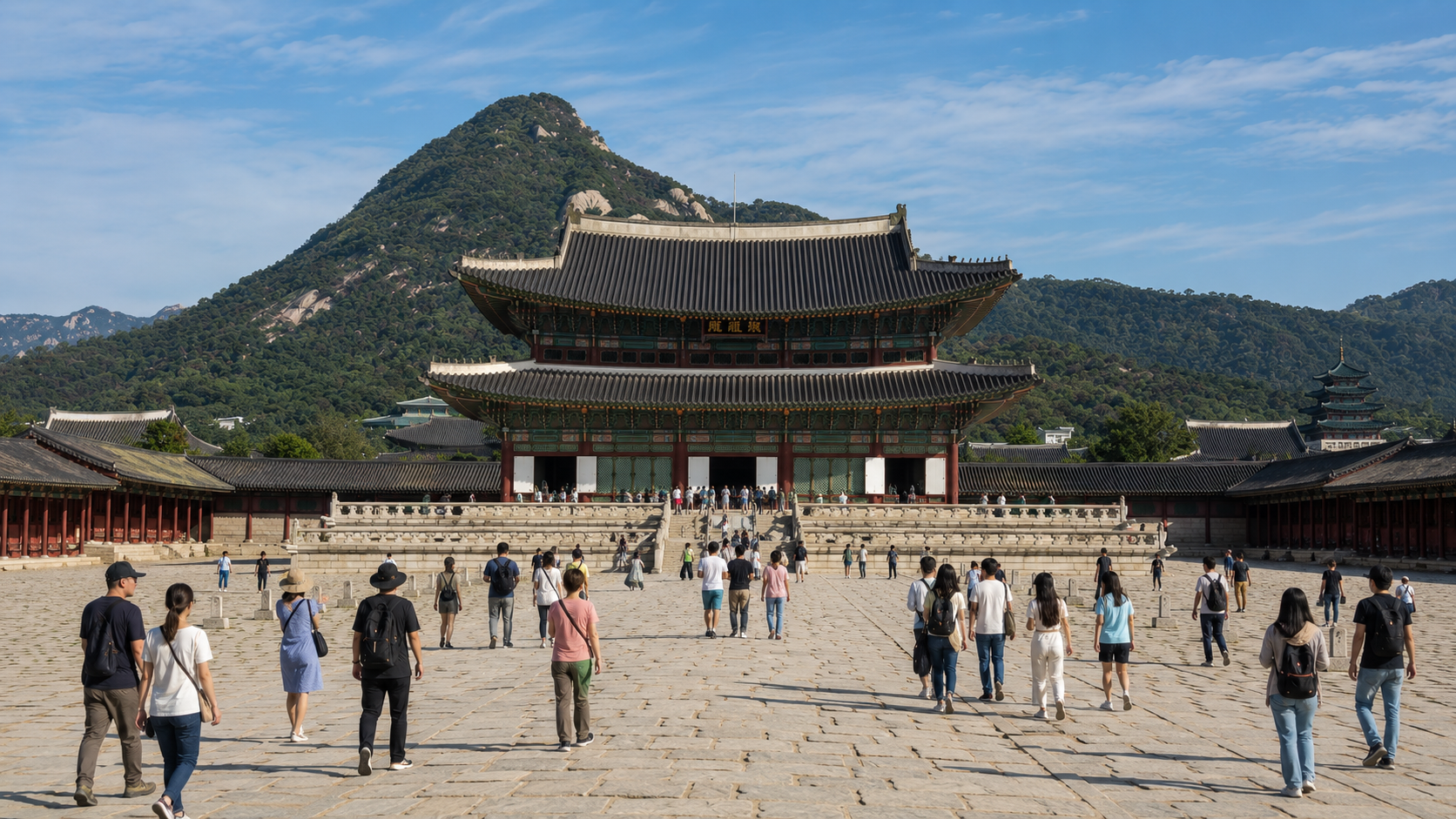
Begin at Gyeongbokgung Palace (경복궁), the principal palace of the Joseon dynasty. Take Subway Line 3 to Gyeongbokgung Station and follow signs for the palace.
As verified on June 9, 2026, regular adult admission is KRW 3,000. The palace opens at 9:00 and closes at 17:00 from November through February, 18:00 from March through May and September through October, and 18:30 from June through August. Final admission is one hour before closing. It is normally closed on Tuesdays; if your first day is Tuesday, exchange Day 1 with another day. Confirm exceptions through the official Gyeongbokgung visitor information.
Allow at least two hours. Walk from Gwanghwamun Gate through the main ceremonial courtyard, then continue to the residential buildings and Gyeonghoeru Pavilion. The grounds are large, so do not try to photograph every building.
Hanbok, traditional Korean clothing, can be rented from independent shops near the palace. Properly dressed hanbok wearers qualify for free palace admission, but rental prices and return conditions vary. Treat the clothing respectfully and check the shop's late-return and damage rules before paying.
11:30-13:00: Lunch in Seochon or near Anguk
For a quieter transition, leave toward the western side of the palace and eat in Seochon. Alternatively, continue east toward Anguk for restaurants serving dishes such as bibimbap, dumpling soup, noodles, or set meals.
At busy restaurants, you may need to enter your name or phone number into a waiting tablet. Staff can usually help if the system requires a Korean number. Solo diners should look for noodle shops, soup restaurants, or counter seating rather than large barbecue restaurants that may require a minimum order.
13:00-15:00: Bukchon Hanok Village
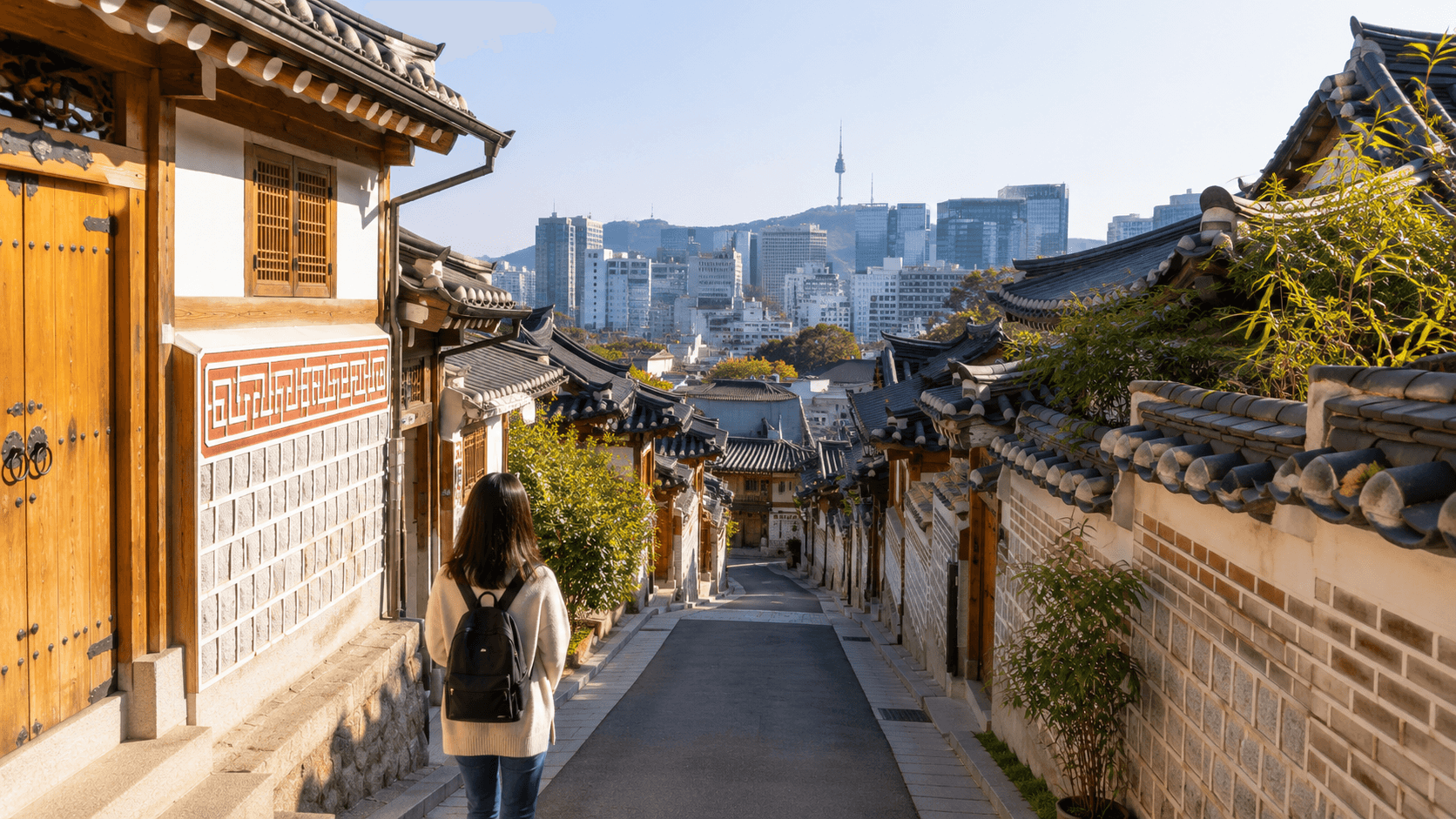
Walk or take a short bus ride to Bukchon, a neighborhood containing traditional-style hanok buildings. Bukchon is not an open-air museum: people live, study, and work here.
The Bukchon-ro 11-gil red zone permits tourist visits only from 10:00 to 17:00. Entry outside those hours has been subject to a KRW 100,000 fine since March 1, 2025. The city also asks visitors to treat Sunday as a rest day for the residential alleyways. Follow posted boundaries, keep voices low, and do not photograph through doors or windows. The exact controlled area is shown in the Seoul city notice on Bukchon restrictions.
Spend about an hour in the lanes rather than treating every viewpoint as a required stop. Bukchon has steep slopes and irregular surfaces. Travelers using wheelchairs or pushing strollers may find the main roads around Anguk easier than the upper alleys.
15:00-17:00: Insadong
Continue to Insadong, known for galleries, craft shops, tea houses, stationery, and souvenir stores. This is a practical place to look for small gifts, but compare prices and materials before buying products described as handmade.
Explore the main Insadong-gil street and one or two side lanes. If you want a break, choose a traditional tea house or café rather than adding another major attraction.
Evening: Ikseon-dong or Jongno
Walk to Ikseon-dong, where narrow hanok lanes contain cafés, restaurants, and small shops. It becomes crowded in the evening, and popular venues may operate waiting lists. The lanes are compact, so one to two hours is sufficient.
For dinner, consider Korean barbecue, grilled fish, noodles, or a shared hotpot. Confirm the minimum order before sitting down, especially when dining alone.
Day 2: Markets, Dongdaemun, Myeong-dong, and Namsan
9:30-11:30: Gwangjang Market
Start at Gwangjang Market near Jongno 5-ga Station. The market contains fabric and clothing sections as well as prepared-food stalls. Common foods include bindaetteok, a mung-bean pancake, mayak gimbap, small seaweed rice rolls, and kalguksu, knife-cut noodles.
Opening times vary by individual vendor, and not every food stall opens early or operates daily. Bring cash as a backup, ask the price before ordering, and avoid assuming that every stall shown on social media represents the whole market.
If you have allergies or dietary restrictions, prepare a Korean-language explanation on your phone. Broths, sauces, and fillings may contain seafood, meat, soy, sesame, or wheat even when these ingredients are not obvious.
11:30-14:00: Cheonggyecheon and Dongdaemun
Walk east beside Cheonggyecheon, the stream running through central Seoul, toward Dongdaemun. The lower stream path is generally easier than the surrounding roads, but access points use a mixture of stairs and ramps.
Continue to Heunginjimun Gate and Dongdaemun Design Plaza, commonly abbreviated to DDP. The exterior and public spaces are worth seeing even when you do not attend an exhibition. Exhibition schedules, ticket prices, and interior operating hours vary, so check the official DDP website for your dates.
Eat lunch around Dongdaemun or return toward Euljiro. Leave time to sit down; combining a large market breakfast with an immediate full lunch is unnecessary.
14:30-17:30: Myeong-dong
Take the subway or a bus to Myeong-dong. This commercial district is useful for cosmetics, fashion, pharmacies, cafés, currency exchange, and everyday shopping. Check refund eligibility and product restrictions before relying on a tax refund. Keep receipts and your passport details available where required.
Myeong-dong Cathedral provides a quieter stop away from the main shopping streets. Dress and behave respectfully if a service is taking place.
Sunset and evening: Namsan and YTN Seoul Tower
From Myeong-dong, reach Namsan by walking, taking a local bus, or using the Namsan cable car. The official tower site estimates a 30-40 minute walk from several common trail entrances. The route is paved but includes sustained slopes and steps.
As verified on June 9, 2026, YTN Seoul Tower is open from 10:00 to 22:30 on weekdays and until 23:00 on weekends and public holidays. The paid T5 observatory is listed at KRW 29,000 for adults and KRW 23,000 for children. The tower complex also has lower free viewing areas, so paying for the upper observatory is optional. Check the official tower hours and accessibility information and current observatory details.
The Namsan cable car is operated separately from the tower. Its official published hours were 10:00-23:00 when verified, but weather and maintenance can affect service. The outdoor escalator to the cable-car platform is suspended for inspection on Mondays from 9:00 to 14:00. See the official access guide.
Arrive before sunset if city views are important, but expect queues on clear weekends. Return to Myeong-dong or your accommodation for dinner rather than depending on a particular tower restaurant without a reservation.
Day 3: National Museum, the Han River, and Hongdae
9:30-13:00: National Museum of Korea
Take Subway Line 4 or the Gyeongui-Jungang Line to Ichon Station and follow the signs to the National Museum of Korea.
The permanent galleries are free. As of June 9, 2026, opening hours are 9:30-17:30 on Monday, Tuesday, Thursday, Friday, and Sunday, and 9:30-21:00 on Wednesday and Saturday. Final entry is 30 minutes before closing. The permanent and special galleries close on designated first Mondays in March, June, September, and December, with the exact dates published annually. Review the museum's official hours and closure calendar.
The collection is too large to cover completely in one morning. Choose two or three sections, such as prehistoric and ancient Korea, Goryeo celadon, Joseon art, or the Gallery of Contemplation. Paid special exhibitions may require separate tickets.
Free wheelchairs and strollers are available in the Great Hall, and the museum provides lockers and coat storage. Food and drinks are not permitted inside exhibition galleries.
13:00-15:00: Lunch and Yongsan break
Eat at the museum complex or travel toward Yongsan Station. This is deliberately a slower part of the itinerary. Museum visits require more standing than many travelers expect, and a proper break will make the evening more manageable.
15:00-17:30: Han River stop
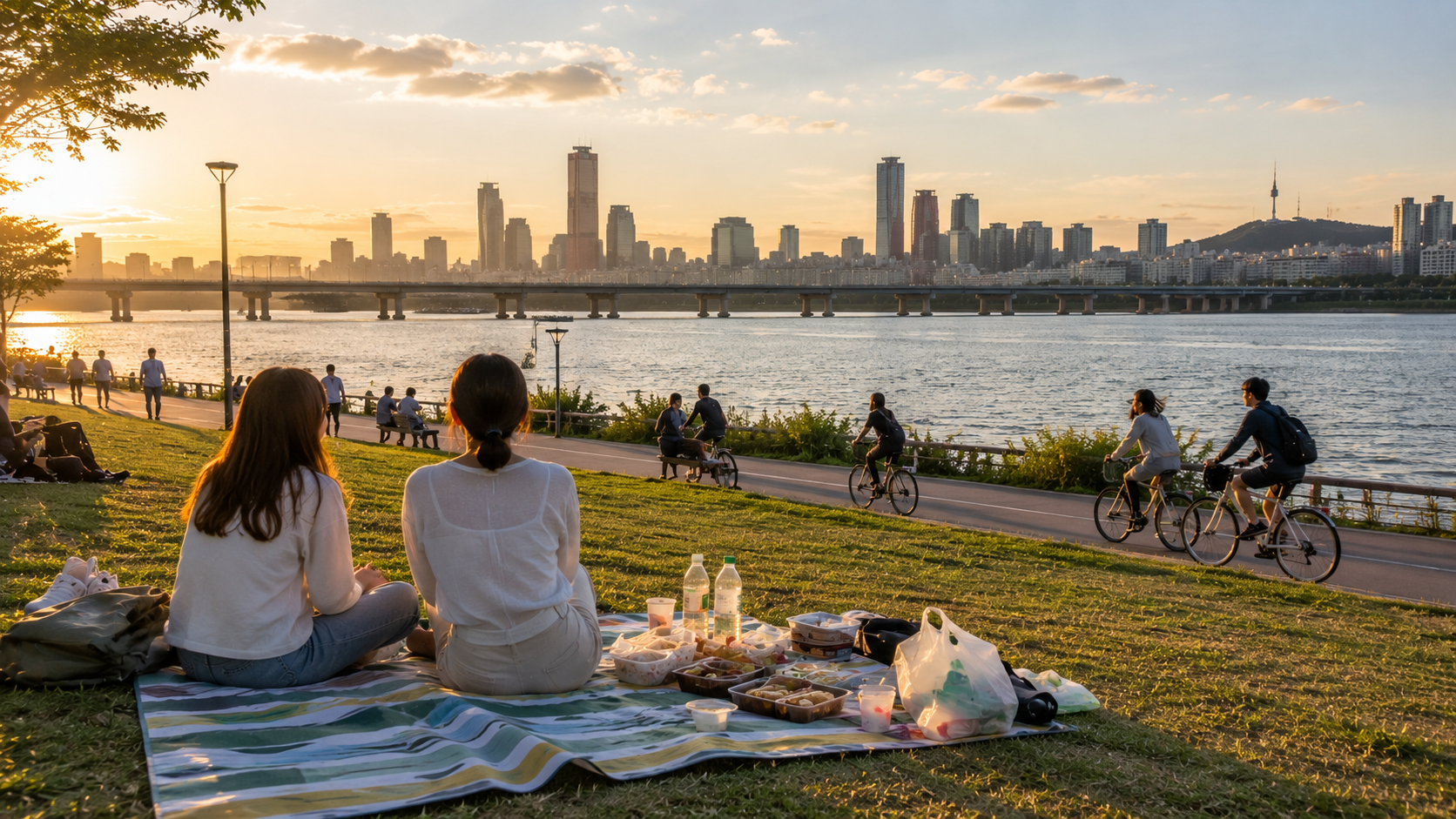
Continue to a convenient Han River park, such as Yeouido Hangang Park or Mangwon Hangang Park. Choose based on your next destination and the weather rather than trying to reach a specific photo location.
The riverside can be windy and has limited shade in exposed areas. During summer heat, heavy rain, or poor air-quality conditions, replace this stop with an indoor café, gallery, or shopping complex. Do not enter fenced or flooded paths, and check city safety notices after storms.
Convenience-store picnics are popular, but dispose of food containers correctly. Alcohol consumption is subject to local rules and temporary restrictions, so follow signs in the park.
Evening: Hongdae and Yeonnam-dong
Travel to Hongik University Station. Start with Gyeongui Line Forest Park and the Yeonnam-dong streets north of the station, then move toward Hongdae's busier commercial area.
Hongdae is known for shops, cafés, restaurants, clubs, and street activity, but performances are not guaranteed at a particular time or location. Keep pedestrian routes clear and do not photograph performers closely without permission.
Late-night subway service is not continuous. The last train varies by line, station, destination, weekday, and transfer route. Check the final complete journey in a Korean navigation app before settling into a bar or club. A taxi may be necessary after service ends.
Day 4: Seoul Forest, Seongsu, and Gangnam
9:30-12:30: Seoul Forest
Begin at Seoul Forest Station on the Suin-Bundang Line or Ttukseom Station on Line 2. The park offers broad paths, lawns, planted areas, and a quieter start to the final day.
There is no need to follow a fixed circuit. Walk for 60-90 minutes, then continue toward Seongsu. Some specialized facilities within the park may have separate hours even when outdoor areas remain accessible.
12:30-16:00: Seongsu-dong
Seongsu developed around warehouses, factories, workshops, and shoe manufacturing. Many former industrial buildings now contain cafés, shops, galleries, and pop-up stores.
Pop-ups change frequently and may require online reservations, Korean-language booking platforms, or long waits. Treat them as optional discoveries rather than anchors for your itinerary. Check each brand's official social account on the day of your visit instead of relying on an old blog post.
Have lunch before joining a café queue. Seongsu spreads across several blocks, and walking between venues can take longer than expected. Visitors with limited mobility should select two confirmed addresses and use a taxi for longer transfers.
16:30-18:00: Bongeunsa Temple
Take the subway or a taxi south to Bongeunsa Temple (봉은사), located opposite the COEX complex. This functioning Buddhist temple offers a marked contrast to the surrounding business district.
Visitors may enter appropriate public areas, but ceremonies and religious spaces take priority over tourism. Speak quietly, wear clothing suitable for a place of worship, and avoid posing directly in front of people praying. Temple programs and building access can change, so consult the official Bongeunsa website if you want to attend a formal activity.
Evening: COEX and final dinner
Cross to COEX for indoor shopping, dining, exhibitions, and the Starfield Library. Access to particular events, the aquarium, and exhibition halls may require separate admission or advance booking.
Finish with dinner in the COEX area or travel to another neighborhood near your accommodation. Korean restaurants can have a last-order time well before the building closes, so do not leave dinner until the final hour of operation.
Approximate sightseeing budget
This estimate excludes accommodation, airport transfers, shopping, nightlife, and special exhibitions.
| Item | Approximate cost per adult |
|---|---|
| Five-day Climate Card and physical card | KRW 18,000 |
| Gyeongbokgung Palace | KRW 3,000 |
| National Museum permanent galleries | Free |
| YTN Seoul Tower upper observatory, optional | KRW 29,000 |
| Meals and snacks | KRW 35,000-70,000 per day |
| Four-day practical total | About KRW 161,000-330,000 |
The lower end assumes casual restaurants, market food, free viewpoints, and limited café visits. Barbecue, cocktails, premium cafés, taxis, and shopping can raise the total quickly.
Common planning mistakes
- Scheduling Gyeongbokgung on Tuesday: The palace is normally closed. Move the historic day rather than replacing it with a rushed alternative.
- Entering restricted Bukchon lanes too early or late: The red zone allows tourist access only from 10:00 to 17:00.
- Planning around exact pop-up stores: Seongsu pop-ups are temporary and may use reservation systems.
- Ignoring travel time inside stations: Major stations can require long walks between platforms and exits.
- Expecting one payment method to work everywhere: Carry a physical card and some cash.
- Taking the last subway for granted: Last-service times depend on your complete route, not simply the station entrance time.
- Overloading rainy days: Palace grounds, Bukchon, Namsan, and the Han River are all outdoor-heavy. Keep the National Museum and COEX as possible weather swaps.
What to check before you go
- Confirm Gyeongbokgung's closure day, seasonal hours, and any special-event access.
- Review the Bukchon controlled-zone map and remain outside residential alleys before 10:00 and after 17:00.
- Check the weather, air quality, and heat or heavy-rain warnings.
- Confirm your Climate Card coverage if traveling beyond Seoul or using airport transportation.
- Download Naver Map or KakaoMap and save your accommodation address in Korean.
- Check the last subway for the complete return route each evening.
- Reserve any essential restaurant, exhibition, children's museum session, or branded pop-up.
- Wear shoes suitable for palace courtyards, hills, and long station transfers.
- Carry your passport or a secure copy of its identification page where appropriate; some reservations and tax-refund procedures require identification.
Your next practical step is to place these four area-based days around Gyeongbokgung's Tuesday closure, then save each day's first and final stop in your preferred Korean navigation app.
Sources
- Seoul Metropolitan Government subway fares
- Seoul Metropolitan Government Climate Card guide
- Official Gyeongbokgung hours and admission
- Seoul Metropolitan Government Bukchon visitor restrictions
- National Museum of Korea visitor information
- Official YTN Seoul Tower visitor information
- Official Dongdaemun Design Plaza website