Five days is enough for a useful introduction to South Korea if you limit the trip to Seoul and Busan. Spend the first three days in Seoul, take the KTX high-speed train south, and use the final two days for Busan. This route works best with an open-jaw flight: arrive at Incheon International Airport near Seoul and depart from Gimhae International Airport in Busan.
If your international flight also leaves from Incheon, adjust Day 5 and return to Seoul by KTX. Do not plan a long Busan sightseeing day before an Incheon departure unless your flight is very late.
All operating hours, admission fees, and access rules below were checked on June 10, 2026. Reconfirm them shortly before traveling because schedules and policies can change.
At a glance
| Day | Base | Main plan |
|---|---|---|
| 1 | Seoul | Arrival, central Seoul, Cheonggyecheon and a market dinner |
| 2 | Seoul | Gyeongbokgung Palace, Bukchon, Insadong and Ikseon-dong |
| 3 | Seoul to Busan | Namsan or a relaxed neighborhood morning, KTX, Gwangalli |
| 4 | Busan | Gamcheon Culture Village, Nampo-dong and Jagalchi area |
| 5 | Busan | Haeundae coast and departure, or KTX back to Seoul |
This is a moderately active itinerary. Expect several hours of walking each day, including slopes and stairs in Bukchon and Gamcheon.
Before Day 1: Set up the trip
Choose practical places to stay
In Seoul, Myeongdong, Jongno, Euljiro and the area around Seoul Station all work well for this route. Myeongdong is convenient for airport transport and evening food; Jongno places you closer to the palaces; Seoul Station is useful if minimizing luggage transfers matters most.
In Busan, choose one of two areas:
- Seomyeon: Central, with convenient metro connections across the city.
- Gwangalli or Haeundae: Better for evening coastal walks, but less convenient for western Busan attractions such as Gamcheon and Nampo-dong.
Four hotel changes would waste too much time. Use one hotel in each city.
Install useful apps
Korean mapping apps usually provide better public-transport and walking information than overseas mapping services. Install Naver Map or KakaoMap and download Korean in Google Translate, Papago, or another translation app for offline use.
Buy a rechargeable transport card after arrival. A T-money or compatible card can be used on most city buses and subways. Keep some KRW cash because card recharge machines and small businesses may not accept every foreign bank card.
Reserve the intercity train
Use the official KORAIL booking service for KTX tickets between Seoul and Busan. Select Seoul as the departure station and Busan as the arrival station; do not accidentally choose a similarly named suburban station.
Exact fares and departure times depend on the selected service and date. KORAIL’s online reservation service was temporarily unavailable for system maintenance when checked on June 10, 2026, so a reliable current fare could not be confirmed and is intentionally omitted here. Check the official booking screen before budgeting or purchasing. Reserve early for Friday evenings, Sundays and Korean public-holiday periods.
Day 1: Arrive and learn central Seoul
Airport to the city
Incheon International Airport has Airport Railroad stations in the basement transportation centers of both terminals. The railroad offers an all-stop service and a separate express service toward Seoul Station. The Incheon Airport railroad guide directs passengers to the operator for current fares and timetables; verify these on your travel date.
Choose the all-stop train if your accommodation is near Hongdae or Gongdeok. The express service can be convenient for Seoul Station, particularly with luggage, but compare its next departure with the all-stop option rather than assuming it will always save time.
Allow time for immigration, baggage collection, buying or recharging a transport card, and finding the station. A morning flight arrival may still mean reaching the hotel around lunchtime. After an evening arrival, skip sightseeing and eat near your accommodation.
Afternoon: Cheonggyecheon and Jongno
After checking in, begin with Cheonggyecheon Stream in central Seoul. It is an easy orientation walk close to Jongno, Euljiro and several subway lines. Walk only one section rather than trying to cover the entire stream.
Continue toward Gwangjang Market if you want a busy traditional-market atmosphere. Browse first, compare displayed prices, and order a few dishes to share. Popular choices include bindaetteok, a mung-bean pancake, and mayak gimbap, small seaweed rice rolls. The market contains both everyday vendors and businesses aimed heavily at visitors, so do not feel obliged to join the longest queue.
Evening: Keep the first night flexible
Jet lag affects travelers differently. End the evening near your hotel instead of scheduling an observation deck or performance with a fixed entry time. Convenience stores, casual restaurants and many central shopping streets remain active after conventional sightseeing sites close, but individual business hours vary.
Practical tip: Save the hotel’s Korean name and address as a screenshot. It is useful when asking for directions or taking a taxi.
Day 2: Royal Seoul, Bukchon and traditional streets
Morning: Gyeongbokgung Palace
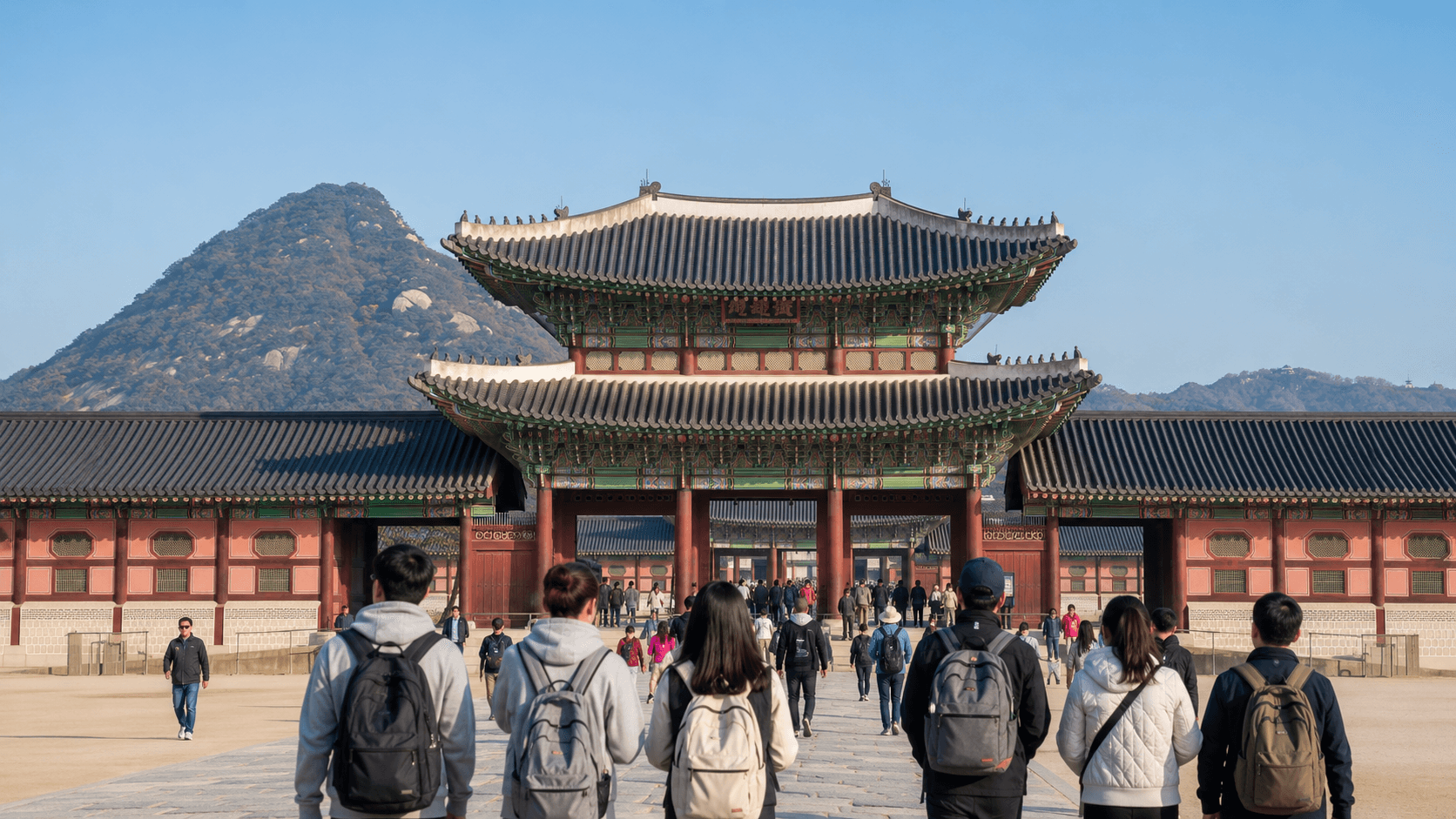
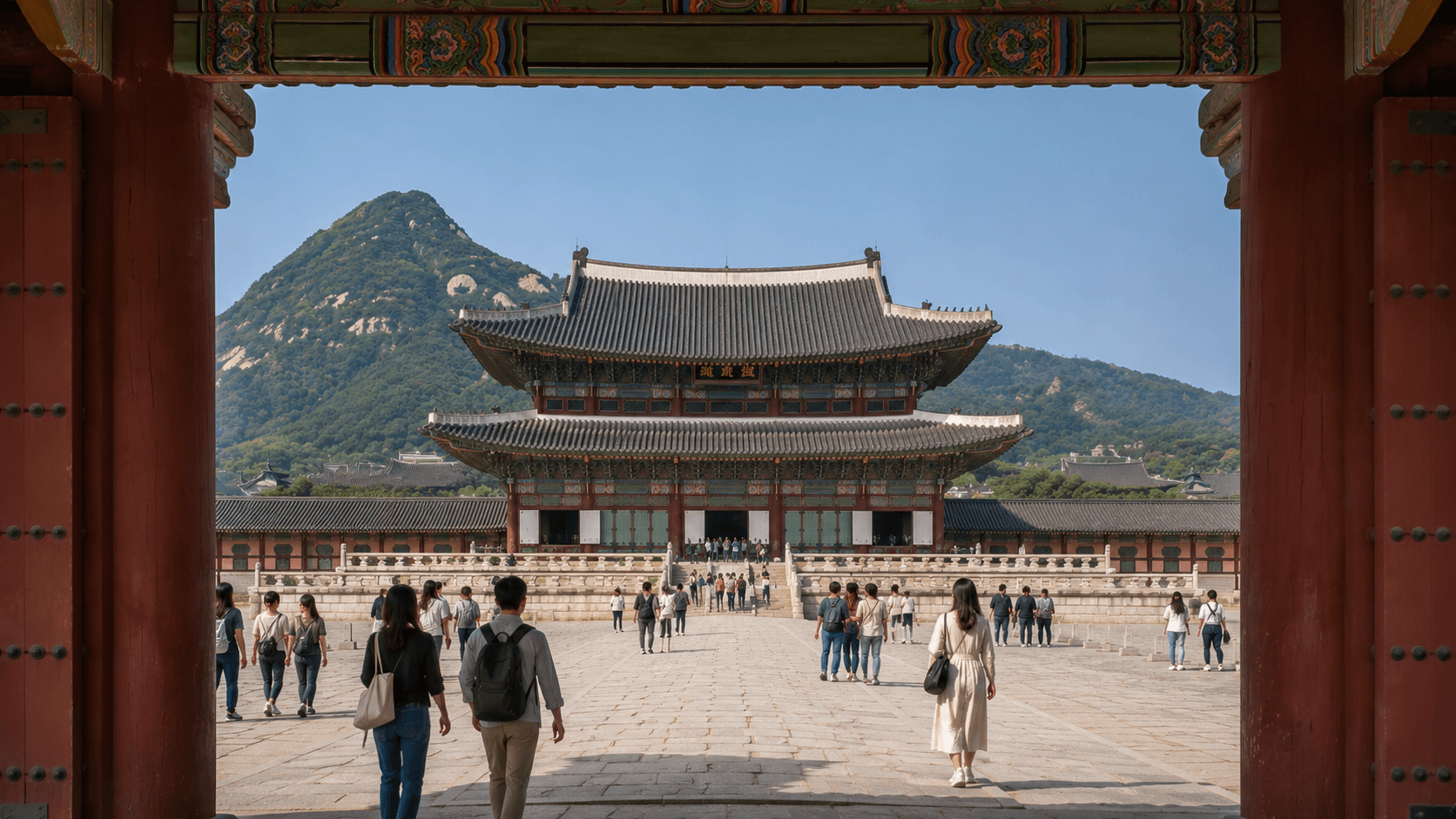
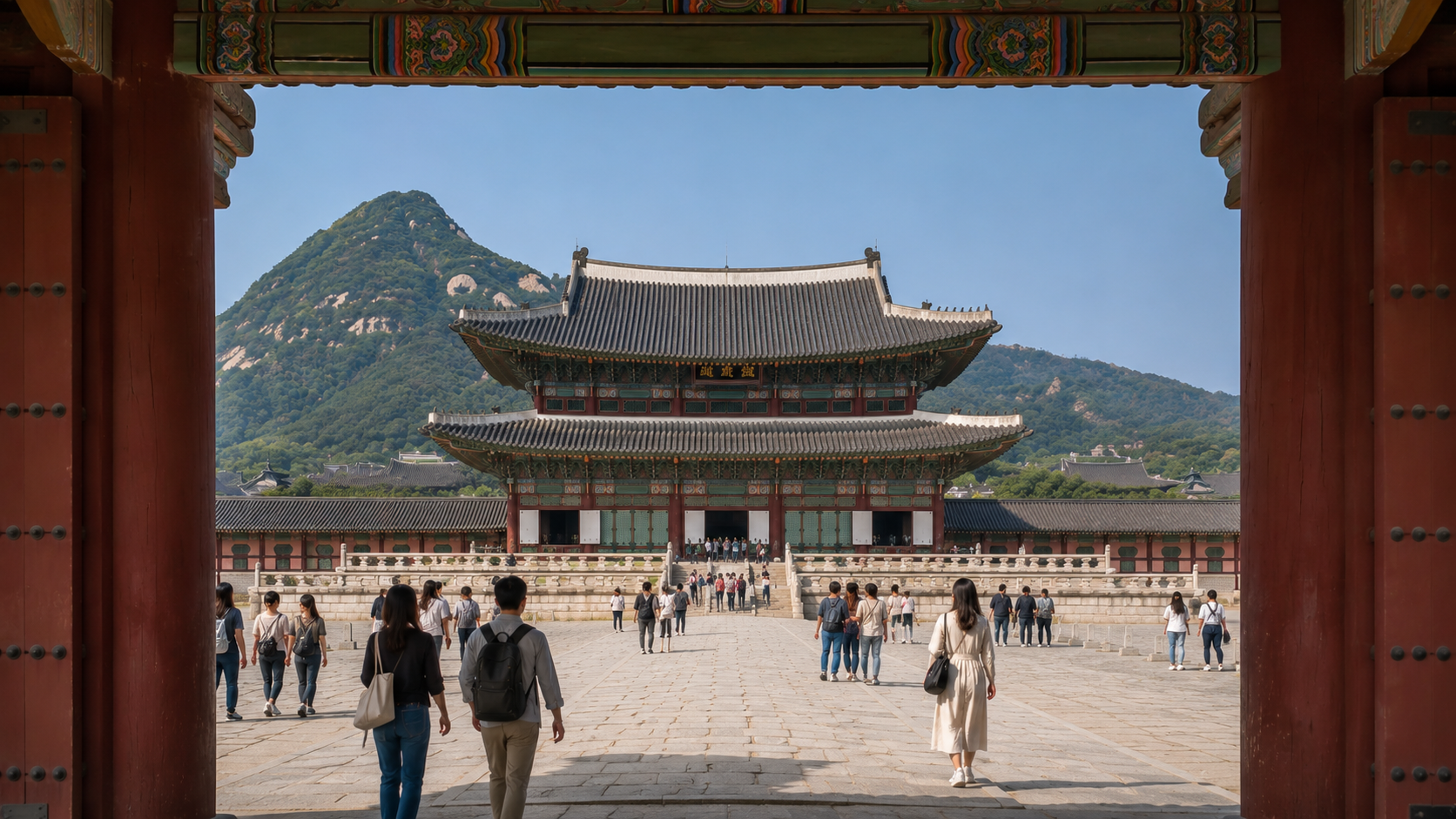
Start at Gyeongbokgung Palace (경복궁), the main palace established for the Joseon dynasty. Arrive near opening time to explore the courtyards before the busiest part of the day.
According to the Korea Tourism Organization’s Gyeongbokgung information, the regular adult admission is KRW 3,000. Hours verified June 10, 2026 are:
- November to February: 09:00-17:00, last admission 16:00
- March to May and September to October: 09:00-18:00, last admission 17:00
- June to August: 09:00-18:30, last admission 17:30
- Regular closure: Tuesday; if Tuesday is a public holiday, closure moves to the following business day
Allow about two hours for the palace. The grounds are large and have uneven stone surfaces. Wheelchair users and travelers with limited mobility should consult the palace directly about accessible routes and temporary construction.
Hanbok, Korean traditional clothing, can be rented from private shops around the palace. Treat it as an optional paid activity, not a requirement. Confirm the rental period, accessories, locker use, late fees and hair-styling charges before paying.
Lunch: Seochon or Samcheong-dong
For lunch, walk west into Seochon or east toward Samcheong-dong. Seochon has small restaurants and older residential lanes; Samcheong-dong connects more directly with Bukchon. Use a map app to choose a nearby restaurant rather than crossing the district for a single famous business.
Afternoon: Bukchon Hanok Village
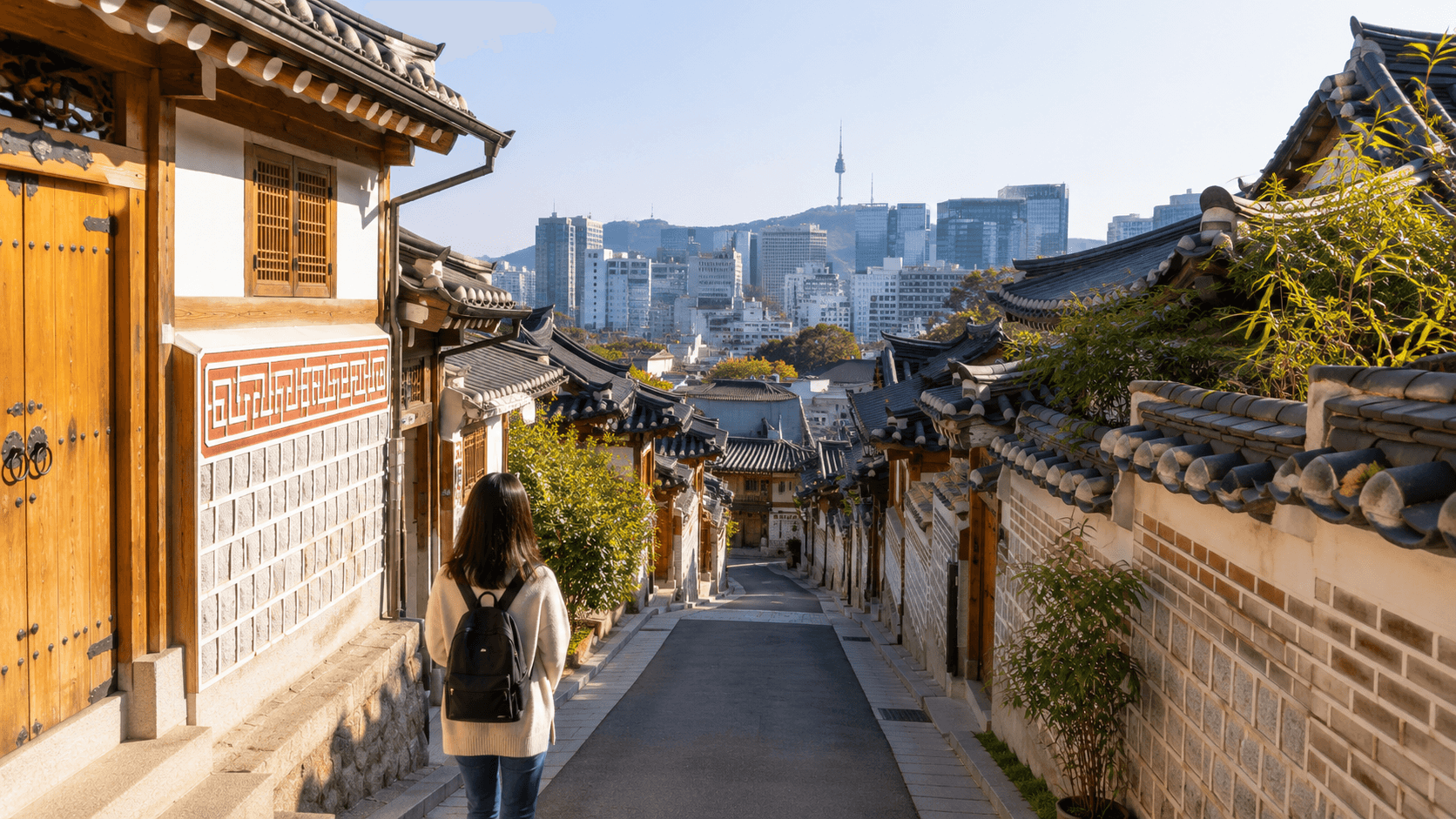
Bukchon Hanok Village (북촌한옥마을) is a living residential neighborhood, not an open-air museum. Its hanok are traditional Korean houses, although many have been adapted as homes, workshops, cafés and cultural spaces.
The road along Bukchon-ro 11-gil has restricted visiting hours of 10:00-17:00, according to the Korea Tourism Organization’s current Bukchon listing, checked June 10, 2026. Follow local signs because restrictions apply to specific streets and may be revised.
Keep voices low, do not photograph through windows or doorways, and do not block entrances. One to 90 minutes is usually enough for the main lanes. Bukchon is hilly; travelers who need a flatter route can spend more time in Insadong instead.
Evening: Insadong and Ikseon-dong
Walk south to Insadong for craft shops, galleries and tea houses, then continue toward Ikseon-dong. Ikseon-dong combines narrow hanok lanes with modern cafés and restaurants. It becomes crowded in the evening, so groups may find it easier to eat just outside the busiest lanes.
Avoid scheduling both a long palace visit and multiple paid cultural workshops unless they are priorities. The area is better experienced at walking pace.
Day 3: A lighter Seoul morning and KTX to Busan
Morning option 1: Namsan and Myeongdong
Take a morning walk around Namsan Park or approach the base of N Seoul Tower for city views. You do not need to pay for the observatory to enjoy the park. Routes involve slopes, so use a bus or cable-car option if walking uphill is unsuitable. Check the relevant operator’s same-day hours before relying on a paid ride.
Return through Myeongdong for lunch and collect your luggage.
Morning option 2: A slower neighborhood visit
If the previous day was tiring, use the morning for a café, a short walk in Seochon, or shopping near your hotel. Five-day itineraries become unpleasant when every morning begins early and every evening ends late.
Afternoon: Train to Busan
Reach Seoul Station at least 30 minutes before departure. This provides time to locate the platform, buy food and handle luggage. KTX trains have overhead racks and designated luggage areas, but large spaces can fill on busy departures. Keep passports, wallets and electronics at your seat.
For planning purposes, block out roughly half a day from Seoul hotel checkout to Busan hotel check-in. This is a practical allowance, not a guaranteed train duration.
Evening: Gwangalli Beach
After checking in, go to Gwangalli Beach for an easy first evening in Busan. The beach and waterfront are open at all times and free to visit, according to Visit Busan’s official Gwangalli guide, checked June 10, 2026. The main attraction after dark is the view across the water toward Gwangandaegyo Bridge.
Restaurants close to the sand can be busy and relatively expensive. Check menus and prices before sitting down, particularly for seafood sold by weight or market price.
Day 4: Gamcheon, markets and old Busan
Morning: Gamcheon Culture Village
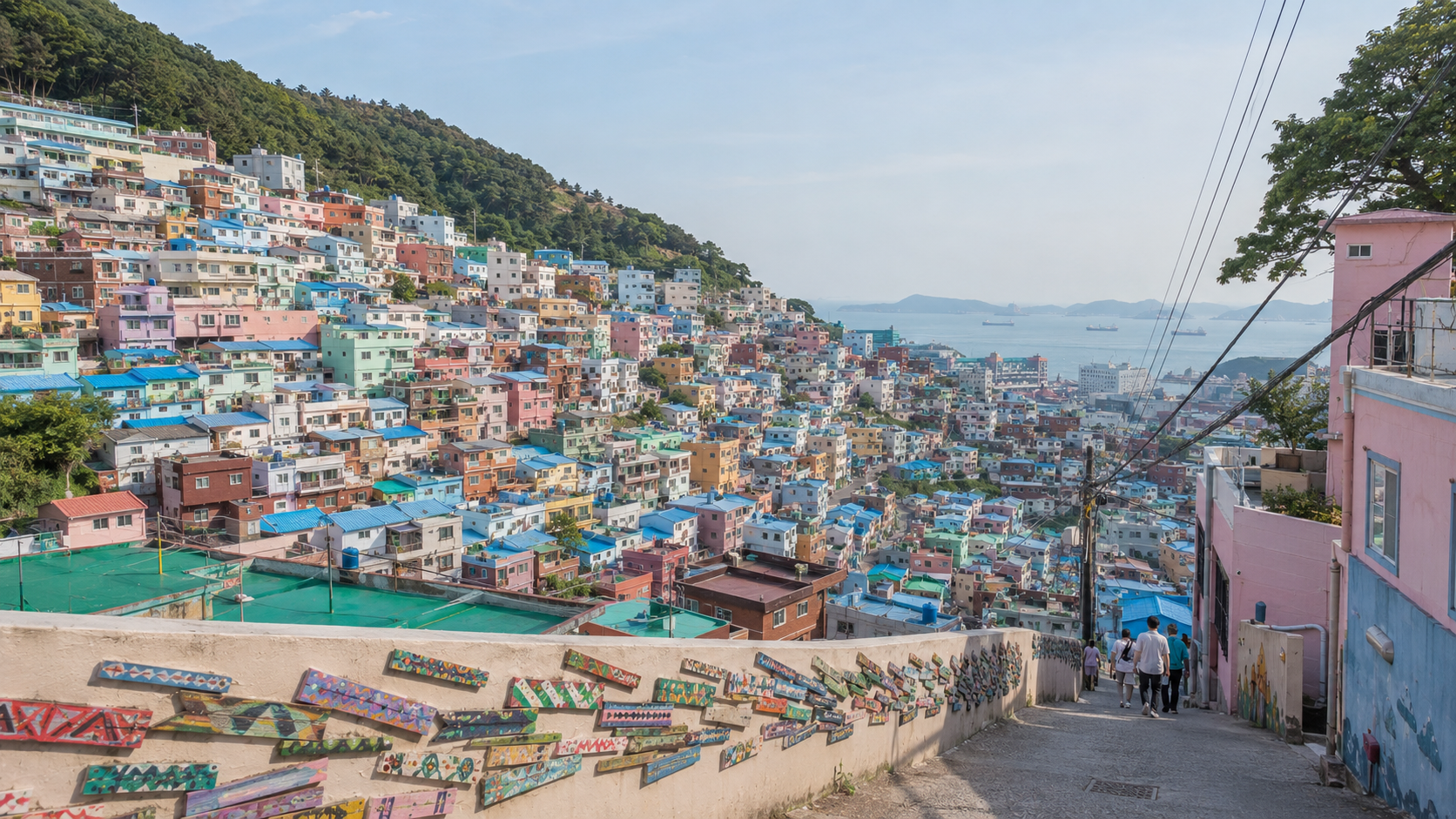
Begin at Gamcheon Culture Village (감천문화마을), a hillside residential district known for layered houses, alleys and public art. It is steep, and reaching it usually involves a local bus or taxi after the metro.
Visit Busan’s Gamcheon Culture Village page lists free admission and the following visitor hours, verified June 10, 2026:
- March to October: 09:00-18:00
- November to February: 09:00-17:00
- Open throughout the year
The village remains a residential area. Stay on public paths, keep noise down, take rubbish with you and do not fly a drone. The official guide lists accessible parking and a wheelchair-accessible bathroom, but the steep terrain and stairs still make much of the neighborhood difficult for travelers with limited mobility.
Afternoon: Nampo-dong and Jagalchi area
Continue to the Nampo-dong area for lunch and a walk through Busan’s older commercial center. Jagalchi is associated with seafood, while nearby streets offer cooked meals, snacks and non-seafood options.
At seafood markets, confirm whether a quoted amount covers only the seafood or also preparation, table and side-dish charges. Ask for the complete price before agreeing. This is practical consumer advice rather than a claim about every vendor.
Walk through BIFF Square and, if you still have energy, Bupyeong Kkangtong Market. Individual stalls keep different schedules, so do not build the day around one specific vendor without checking directly.
Evening: Return to your hotel area
End near Seomyeon, Gwangalli or Haeundae depending on where you are staying. Crossing Busan from west to east takes time, especially during busy periods. A relaxed dinner near the hotel is usually more sensible than adding another distant attraction.
Day 5: Haeundae coast and departure
Morning: Haeundae
Walk along Haeundae Beach early, then choose one nearby activity. Options include Dongbaekseom, a mostly coastal walking route, or the attractions farther east toward Mipo and Cheongsapo.
Some coastal rail and observation attractions require paid, timed reservations. Their prices, operating hours and weather policies can change, so check the official operator immediately before booking. Do not assume that a scenic train or capsule ticket can be bought at the last minute on weekends.
If flying from Busan
Allow generous travel time to Gimhae International Airport. Busan is geographically spread out, and reaching the airport from Haeundae generally requires transfers or a longer taxi journey. Check your airline terminal and live route information that morning.
If flying from Incheon
Replace most of Day 5 with the return journey to Seoul. Take an early KTX from Busan Station and then transfer from Seoul Station toward Incheon Airport. Leave a substantial buffer between the scheduled train arrival and international flight check-in.
For an early or midday Incheon flight, return to Seoul on the evening of Day 4 and stay near Seoul Station or the airport. Purchasing separate rail and air tickets leaves you responsible for missed connections if the train is disrupted.
Food and spending plan
Prices vary sharply by neighborhood and travel style. As a practical planning estimate rather than an official price schedule, allow approximately KRW 60,000-120,000 per person per sightseeing day, excluding hotels, intercity rail, shopping and expensive nightlife.
A flexible daily allowance might cover:
| Expense | Planning range |
|---|---|
| Simple breakfast | KRW 5,000-12,000 |
| Casual lunch | KRW 10,000-20,000 |
| Dinner | KRW 15,000-40,000 |
| Coffee or snacks | KRW 5,000-15,000 |
| Local transport and small admissions | KRW 10,000-25,000 |
Some Korean restaurants require a minimum order of two portions for shared dishes such as barbecue or dakgalbi. Solo travelers should look for noodle shops, soup restaurants, gimbap shops, food courts and restaurants showing single-person set meals.
Common mistakes to avoid
- Trying to add Jeju, Gyeongju and Busan to the same five-day trip.
- Booking a Busan hotel without checking its walking distance from a metro station.
- Arriving at Bukchon outside the restricted visitor hours.
- Planning Gyeongbokgung on its regular Tuesday closure.
- Treating arrival and departure days as full sightseeing days.
- Taking large suitcases through steep neighborhoods such as Bukchon or Gamcheon.
- Booking an Incheon flight too close to a separately ticketed KTX journey.
- Assuming every transport machine or small restaurant accepts an overseas card.
What to check before you go
- Confirm passport, visa and entry requirements through the Korea Visa Portal and the immigration authority relevant to your nationality. Entry rules should not be inferred from a travel blog.
- If applicable to your passport, check the official K-ETA website rather than an agency or advertisement.
- Recheck Gyeongbokgung’s closure day and seasonal hours.
- Confirm Bukchon’s current restricted streets and visitor hours.
- Reserve Seoul-Busan KTX seats through KORAIL.
- Check both airport terminals and ground-transport options.
- Review the weather forecast and air-quality information before packing.
- Confirm accessibility directly with hotels and attractions if step-free access is essential.
- Keep enough flexibility to move coastal activities indoors during heavy rain, high winds or extreme heat.
FAQ
Is five days enough for South Korea?
It is enough for Seoul and Busan at an introductory pace, but not for a broad tour of the country. Travelers who dislike changing hotels may have a better trip by staying in Seoul for all five days and taking one nearby day trip.
Should I buy a rail pass?
Not automatically. Compare the current pass price with the exact point-to-point trains you plan to take. For a simple Seoul-Busan journey, individual tickets may be easier, but the answer depends on your travel dates and whether you return by rail.
Can I replace Busan with a day trip?
Yes. A Seoul-only trip reduces packing and transport time. Possible alternatives include Suwon, Incheon or another destination with straightforward rail access. Check current attraction closures and the last return service before choosing.
Where should I spend an extra night?
Add it to Busan if coastal walks and slower mornings are priorities. Add it to Seoul if museums, shopping, nightlife or a day trip matter more.
Your next step is to decide whether you can depart from Busan or must return to Incheon. That choice determines the Day 5 schedule and should be settled before booking hotels or KTX tickets.
Sources
- Korea Tourism Organization: Gyeongbokgung Palace
- Korea Heritage Service: Gyeongbokgung Palace history
- Korea Tourism Organization: Bukchon Hanok Village
- Seoul Metropolitan Government: Seoul Hanok and Bukchon
- Incheon International Airport: Airport Railroad guide
- KORAIL official booking service
- Visit Busan: Gamcheon Culture Village
- Visit Busan: Gwangalli Beach