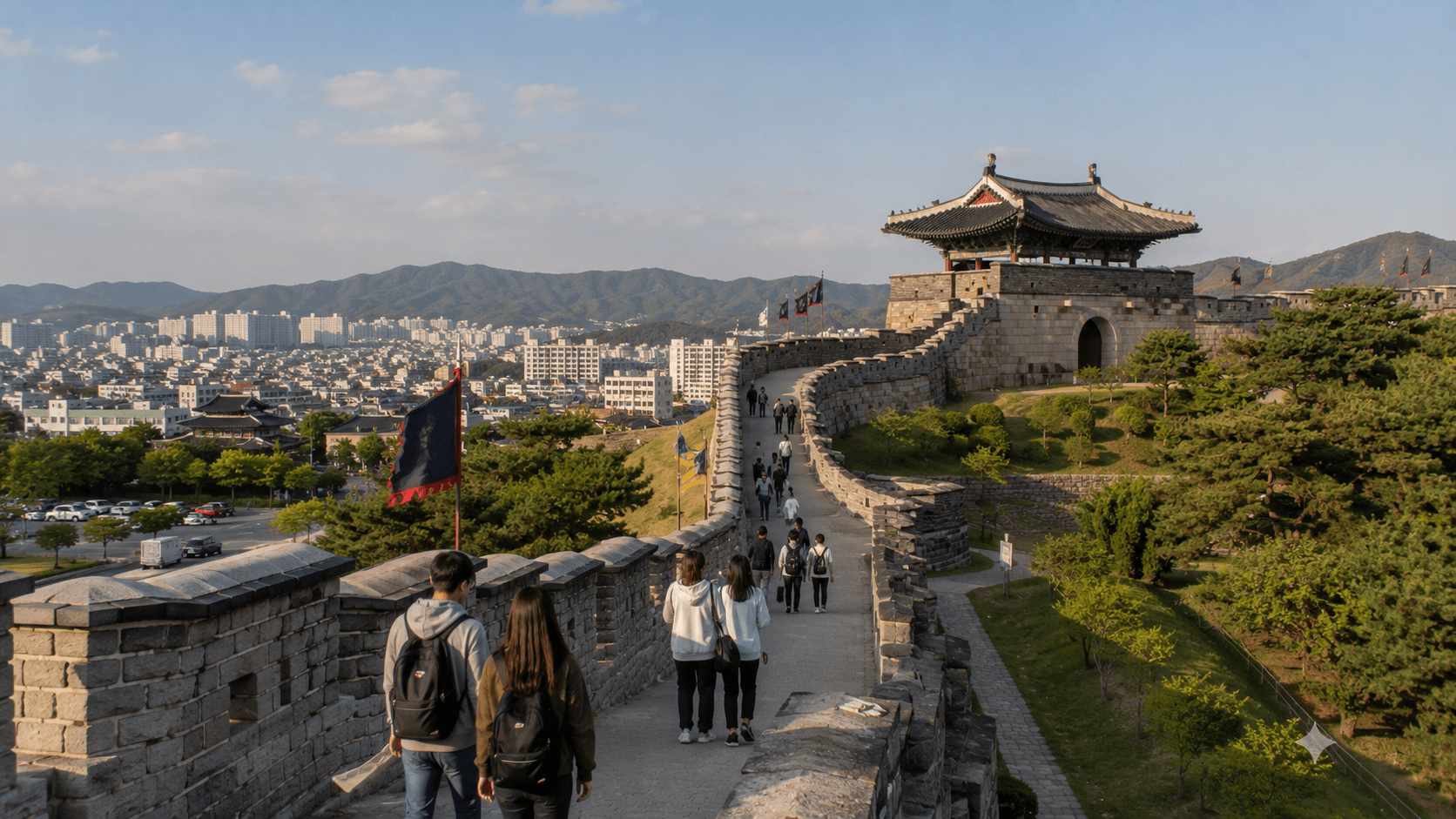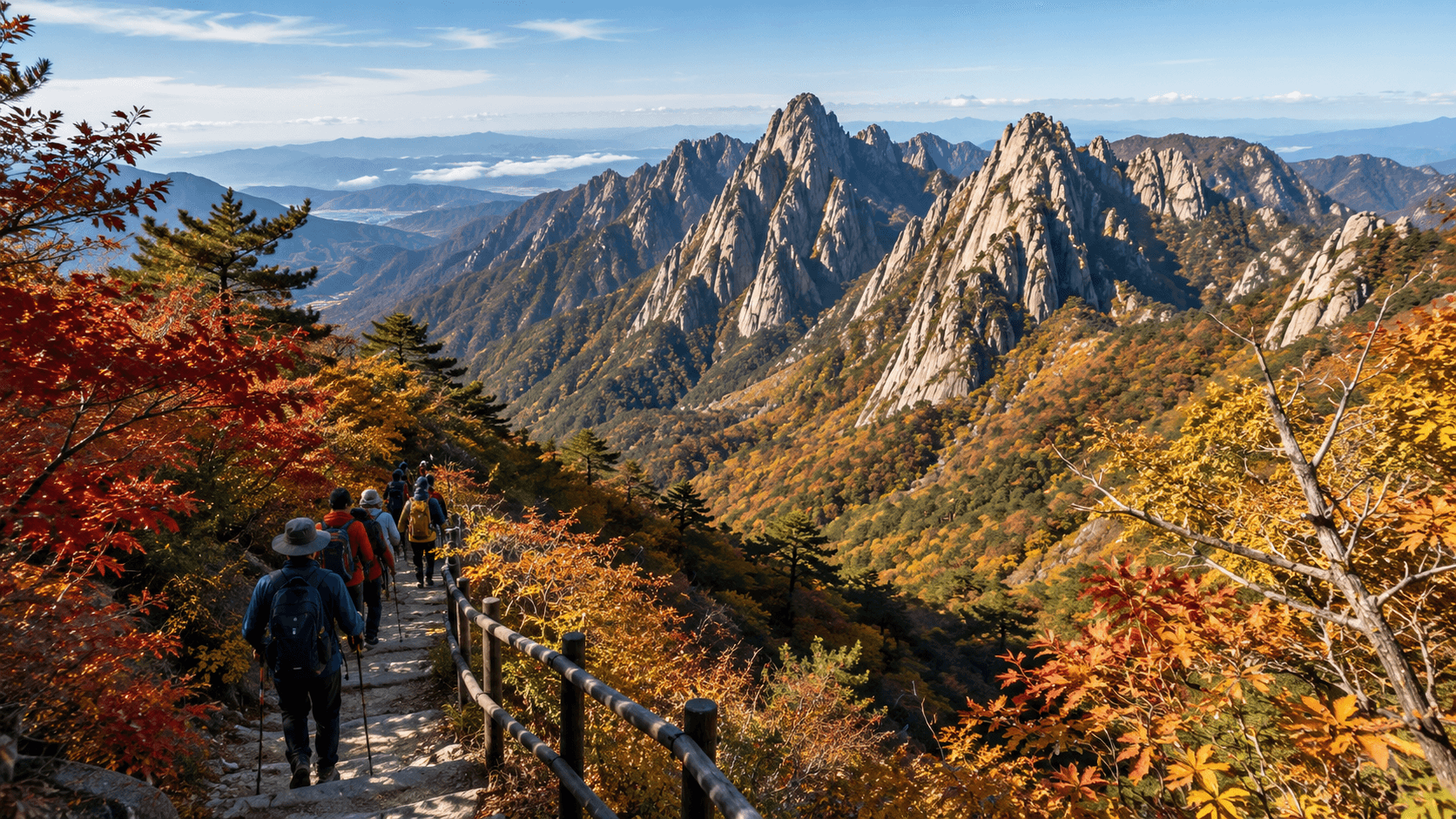
South Korea’s autumn foliage season generally moves from the colder, higher mountains in the northeast toward Seoul, central Korea, the south, and lower elevations. For most visitors, the practical travel window is early October through mid-November. Exact peak dates vary every year, however, and a single mountain can show bare upper slopes, peak color in the valleys, and green trees near its entrance at the same time.
Verification note: As of June 11, 2026, no official nationwide peak-date forecast for autumn 2026 was available from the official sources checked. Treat the dates below as planning windows, not a 2026 forecast. Check current foliage reports, weather, trail restrictions, and transport again shortly before traveling.
At a glance
| Period to consider | Areas most likely to be useful for planning | Good choices |
|---|---|---|
| Early to mid-October | High mountains and northeastern Korea | Seoraksan, higher sections of Odaesan |
| Mid to late October | Mountain parks in central and southern Korea | Odaesan, Jirisan, Bukhansan’s higher trails |
| Late October to early November | Seoul, Gyeongju, lower mountain valleys | Seoul palaces, Seoul parks, Gyeongju historic areas |
| Early to mid-November | Southwestern Korea and lower elevations | Naejangsan, Jeongeup, city parks in southern Korea |
This progression is only a broad pattern. Warm weather can delay color, while strong wind or heavy rain can strip leaves soon after they change.
How Korea’s foliage season works
In Korean, autumn foliage is commonly called danpung (단풍). The word may refer generally to leaves changing color, although it is especially associated with red maple leaves.
Color does not appear everywhere at once. Elevation, latitude, tree species, sunlight, rainfall, and short-term temperature changes all matter. Mountain summits usually turn before sheltered valleys. Northern and northeastern regions generally change before southern and coastal areas.
This makes flexible planning more reliable than selecting one destination months in advance. If your schedule is fixed, choose a base with several foliage options at different elevations. Seoul, for example, offers mountain trails, palace gardens, urban parks, and riverside walks within the same transport network.
For current weather and mountain conditions, consult the Korea Meteorological Administration. Forecasts become much more useful within several days of the trip.
Where to see autumn foliage
Seoraksan National Park: dramatic mountain scenery
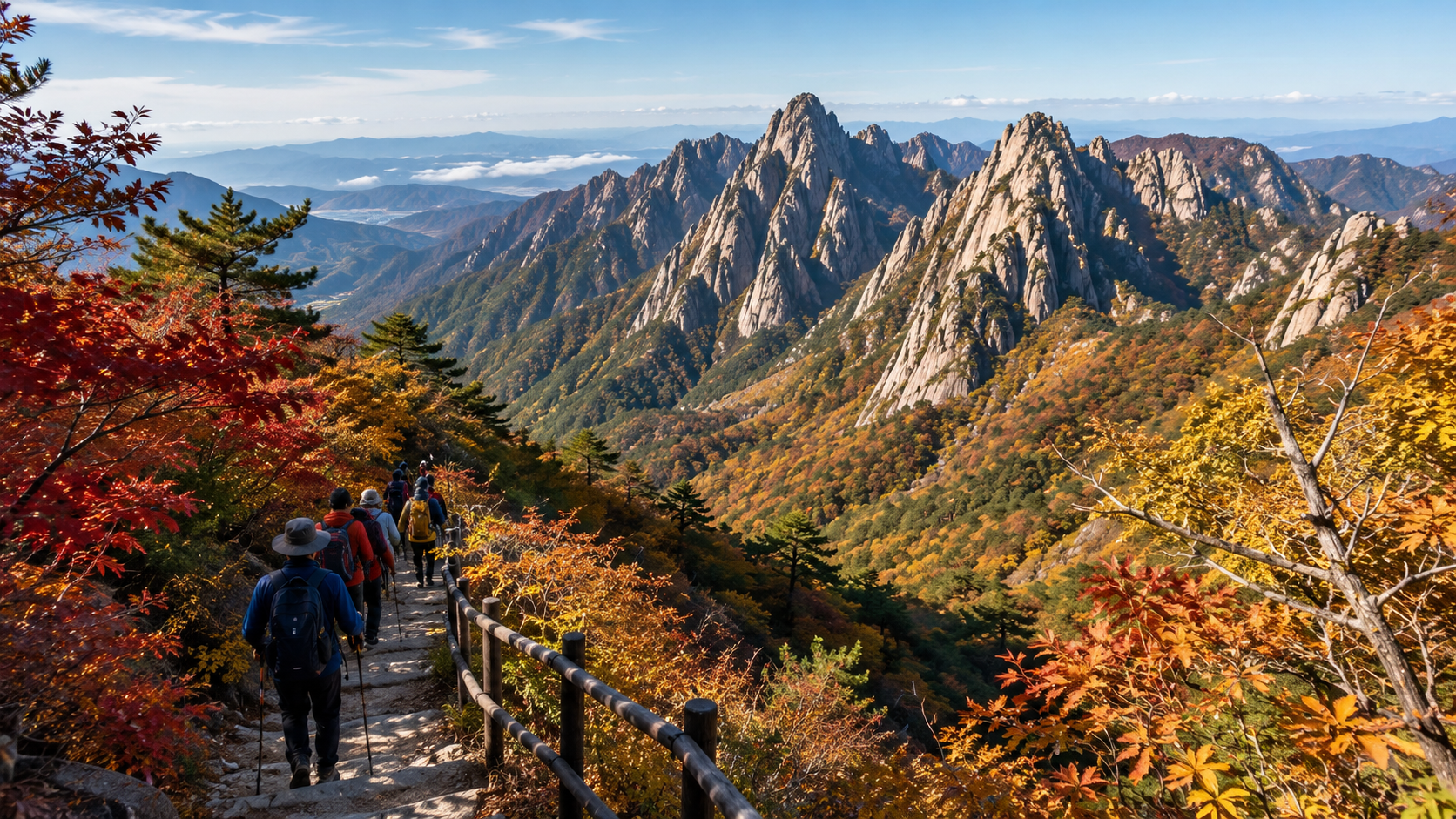
Seoraksan National Park (설악산국립공원), near Sokcho in Gangwon Province, is usually among the first major destinations considered for autumn color. Granite peaks, forested valleys, temples, streams, and steep ridges create wide views rather than a single maple-lined avenue.
The park has everything from relatively approachable valley walks to long, strenuous mountain routes. Do not assume that a popular photograph represents an easy viewpoint. Ulsanbawi, major peaks, and remote ridges require substantial climbing, while lower areas around the Seorak-dong entrance provide more manageable options.
From Seoul, the usual public-transport approach is an intercity or express bus to Sokcho, followed by a local bus or taxi. Staying overnight in Sokcho gives you an earlier start and reduces the risk of missing a return connection after a crowded hiking day.
Autumn weekends can bring queues, congested access roads, and full buses. Check the Korea National Park Service for current trail information and closures before departure. Park access, individual facilities, parking, temples, and privately operated attractions may have separate fees or rules.
Odaesan National Park: forest roads and temple scenery
Odaesan National Park (오대산국립공원) in Gangwon Province is a useful alternative for travelers who prefer forests and temple approaches to exposed rocky summits. The Woljeongsa area is known for its wooded setting, and routes vary from gentle walks to proper mountain hikes.
Jinbu Station, served by selected trains, is a common regional gateway, but the final connection to the park may require a local bus or taxi. Check the complete return journey before leaving the station; rural services can be infrequent and may not match a train arrival conveniently.
Odaesan and Seoraksan do not necessarily peak on the same day. Differences in elevation and local conditions can produce noticeably different color even within the same park.
Seoul: the easiest option without a day trip
You do not need to leave Seoul to see autumn leaves. The city is especially practical if your dates fall around late October or early November, or if weather makes a mountain excursion unsuitable.
Useful choices include:
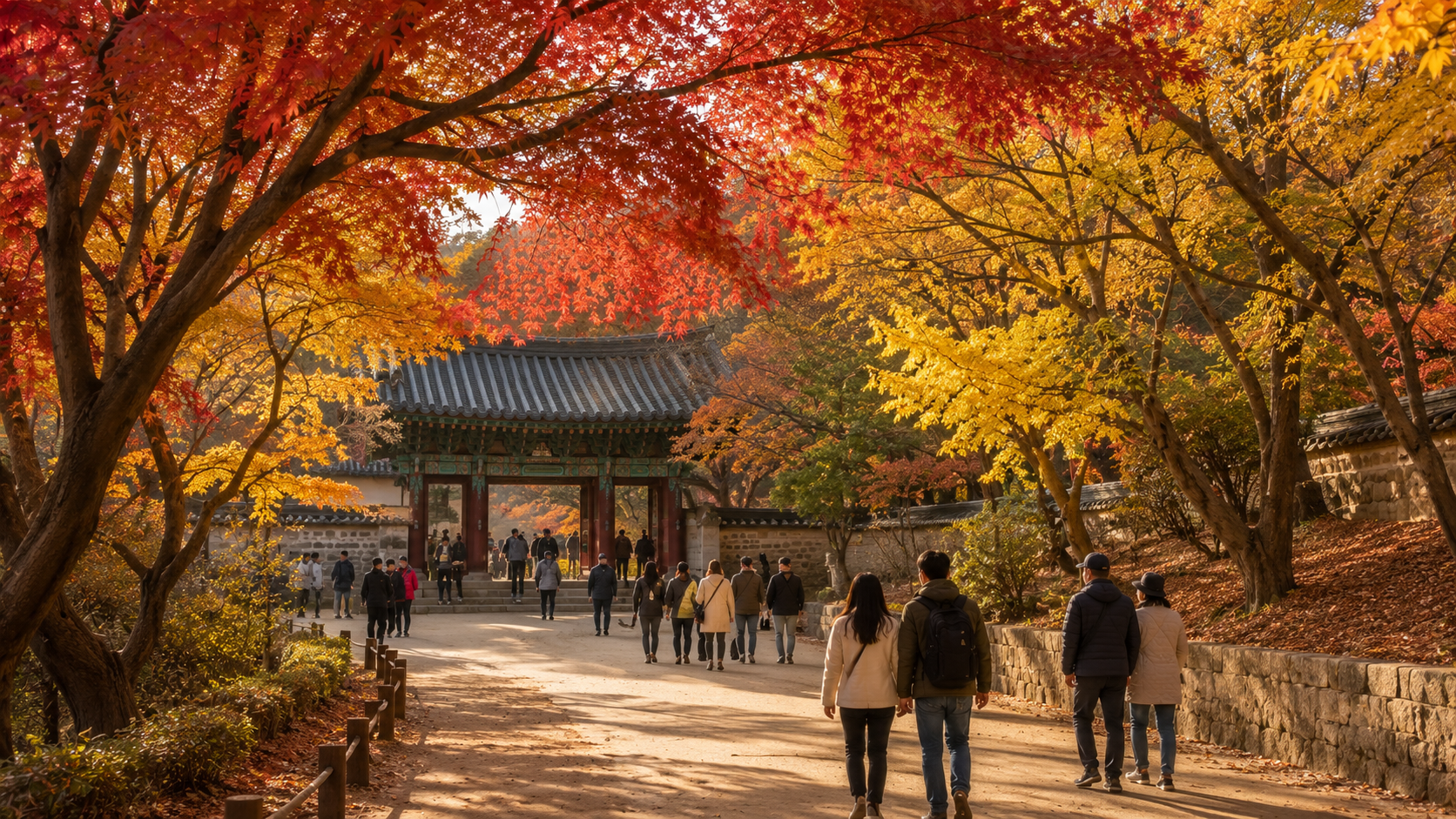
- Changdeokgung Palace and its rear garden: Historic architecture, ponds, pavilions, and mature trees. Rear-garden access can have separate admission or guided-entry arrangements, so confirm the current system on the official Changdeokgung website.
- Deoksugung Stone Wall Road: A central, mostly level walk that can be combined with City Hall and Jeongdong.
- Namsan: Forested slopes, city views, walking paths, buses, and cable-car access. Crowds are usually heaviest near major viewpoints.
- Seoul Forest: A convenient urban park with broad paths and easier access than a mountain trail.
- Bukhansan National Park: A genuine mountain environment within the capital region. Trails range widely in difficulty and may involve steep rock, stairs, and exposed sections.
- Seoul Trail: The city government describes this as 21 routes totaling 156.5 kilometers, with individual sections generally designed for shorter outings. Review the official Seoul Trail information before choosing a section.
Palace admission hours, closure days, tour arrangements, and ticket prices can change. These details should be checked for your exact date rather than copied from an older itinerary.
Naejangsan National Park: late-season maple color
Naejangsan National Park (내장산국립공원), near Jeongeup in southwestern Korea, is one of the most recognizable late-autumn destinations. Its lower paths, temple setting, and dense deciduous trees make it suitable for visitors seeking concentrated color without necessarily completing a summit hike.
A common rail approach is to travel to Jeongeup Station and continue by local transport. During peak foliage periods, the final road into the park can be slow. Leave more transfer time than a map application suggests and avoid scheduling a tightly timed return train immediately after your walk.
Naejangsan is often considered for early or mid-November, but this is not guaranteed. A late warm spell can delay the display, while wind or rain can shorten it. Consult the Korea National Park Service for park notices and the official rail operator for live train availability.
Jirisan National Park: better for experienced planners
Jirisan National Park (지리산국립공원) spans a large mountain area with several gateways. It is not one destination with one entrance, so searching only for “Jirisan” can lead to the wrong side of the park.
Choose a specific valley, temple, trailhead, or town before booking transport. Long ridge routes require appropriate fitness, daylight planning, and careful attention to park restrictions. Some facilities or overnight components may require reservations through the National Park Reservation System.
Jirisan works better as an overnight trip than as an improvised day trip from Seoul. Confirm which entrance your bus, accommodation, or taxi actually serves.
Gyeongju: foliage with historic sites
Gyeongju is a good choice for travelers who want autumn scenery without making hiking the main activity. Trees around royal tomb areas, temple grounds, parks, and historic districts provide seasonal color alongside cultural sightseeing.
The exact appearance varies by site because Gyeongju contains ginkgo, maple, cherry, and other deciduous trees that change at different times. Plan a flexible walking or cycling route instead of expecting every location to peak simultaneously.
For current attraction information, use the official VISITKOREA website and the relevant heritage-site pages.
How to plan around uncertain peak dates
1. Choose a travel window, not one predicted day
For a foliage-focused trip, allow at least three or four days in Korea if possible. A longer stay lets you switch destinations after checking recent photographs, weather reports, and park notices.
2. Compare elevation as well as location
If upper mountain leaves have already fallen, lower valleys may still have color. If city trees remain green, a higher trail may be further advanced. Look for reports naming the exact trail or entrance rather than the mountain alone.
3. Check recent images carefully
Use dated posts from official park, tourism, or municipal accounts when available. Confirm that a photograph was taken recently rather than merely uploaded recently; tourism accounts often reuse seasonal images.
4. Keep one city option available
Heavy rain, high wind, poor visibility, or a trail closure can undermine a mountain trip. A palace, arboretum, urban park, or historic district provides a more flexible alternative.
Transport, reservations, and payment
Intercity trains and buses become busy on peak autumn weekends. Reserve long-distance transport once your date and gateway are clear, especially for Friday evenings, Saturday mornings, and Sunday returns.
Do not rely on English-language map applications alone for rural buses. In Korea, Naver Map and KakaoMap generally provide more locally detailed route information, although English coverage and rural real-time data can vary. Cross-check the destination name in Hangul to avoid similarly named stops.
For train travel, use KORAIL’s official sales channels or station ticket offices. For buses, confirm whether your route is classified as express or intercity because the booking systems and terminals may differ. Verify the departure terminal carefully: Seoul has several major terminals serving different regions.
Carry a Korean transport card for urban buses and subways, plus a payment card and some KRW cash for small rural services or facilities. Acceptance of foreign-issued cards can vary. National parks themselves generally provide broad public access, but parking, cable cars, temples, tours, or other facilities may charge separately.
All fares, schedules, reservation rules, and operating hours should be rechecked for the actual travel date. Information in this guide was reviewed on June 11, 2026, but autumn timetables and seasonal controls may be announced later.
Crowds and realistic expectations
Peak foliage weekends are among the busiest times at famous mountain parks. Expect full buses, queues for cable cars, crowded viewpoints, and slower progress on narrow trails. Arriving early helps, but it does not guarantee solitude.
For a quieter visit:
- Travel on a weekday.
- Stay overnight near the destination.
- Select a valley or forest route instead of the most photographed summit.
- Start after checking the first and last practical transport connections.
- Avoid stopping in the middle of narrow trails for extended photo sessions.
Autumn color can also be patchy. Evergreen trees remain green, different deciduous species change at different times, and some leaves turn brown rather than bright red. Overcast or hazy weather may make colors appear less intense than edited tourism photographs.
Hiking safety and accessibility
Korean mountain trails can be steeper and more technical than their distance suggests. Stone steps, exposed rock, tree roots, and crowded narrow sections are common. Rain makes leaves, wooden decks, and rock surfaces slippery.
Bring shoes with reliable grip, water, a charged phone, and a warm outer layer. Temperatures can fall quickly after sunset or at elevation. Start long hikes early and turn back if the route is taking longer than expected.
Trail closures may be imposed because of weather, fire prevention, maintenance, or safety conditions. Check the Korea National Park Service on the morning of your visit and follow instructions posted at the entrance.
Accessibility varies sharply. Palace grounds and city parks may have paved or compacted routes, but historic thresholds, slopes, gravel, and uneven stone can still create barriers. Mountain cable cars reduce climbing only where they operate; boarding areas and upper viewpoints may still involve stairs or uneven surfaces. Contact the attraction directly for current wheelchair, stroller, and mobility information.
For an emergency, call 119 for fire or ambulance services or 112 for police. The Korea Travel Hotline can be reached at 1330 within Korea for multilingual travel assistance; current service details are available through VISITKOREA.
What to check before you go
Use this checklist 24 to 48 hours before departure:
- Recent foliage photographs from the exact park entrance or trail
- Hourly weather, wind, rain, and temperature at elevation
- Trail closures, entry controls, and reservation requirements
- Sunrise and sunset times
- First and last bus, train, shuttle, or cable-car service
- The correct terminal, station, and park entrance in Hangul
- Return-seat availability
- Admission, parking, tour, or facility fees
- Whether food and water are available after entering the route
- Luggage-storage options if traveling between accommodations
- Accessibility details for the specific path, not only the attraction generally
Frequently asked questions
When is peak autumn foliage in Seoul?
Late October to early November is a reasonable planning window, but it is not a guarantee for 2026. Mountain slopes, palace gardens, street trees, and riverside parks can peak on different dates.
Is October or November better?
Choose October for northern and higher mountain areas. Choose early November for Seoul’s lower elevations, southwestern Korea, and destinations such as Naejangsan. Travelers staying two weeks from mid-October into early November have the widest range of options.
Can I see foliage without hiking?
Yes. Seoul’s palaces, Seoul Forest, Deoksugung Stone Wall Road, and historic areas in Gyeongju are practical choices. Naejangsan and Odaesan also have lower approaches, although surfaces and distances should still be checked.
Should I book an autumn foliage tour?
A tour can simplify rural transfers and reduce uncertainty about the correct entrance. However, verify the walking difficulty, included admissions, departure point, cancellation policy, and how much time is actually spent at the destination. Independent travel offers more flexibility but requires careful return-transport planning.
What should I do if the leaves are early or late?
Change elevation or region. Move to a higher mountain if city trees are still green, or choose a lower valley or southern destination if upper slopes are bare. Recent, location-specific reports are more useful than a forecast published weeks earlier.
Your next planning step
Select two destinations suited to your dates: one primary mountain or regional trip and one flexible city alternative. Recheck official foliage updates, trail conditions, weather, reservations, and the final return connection during the week before departure.