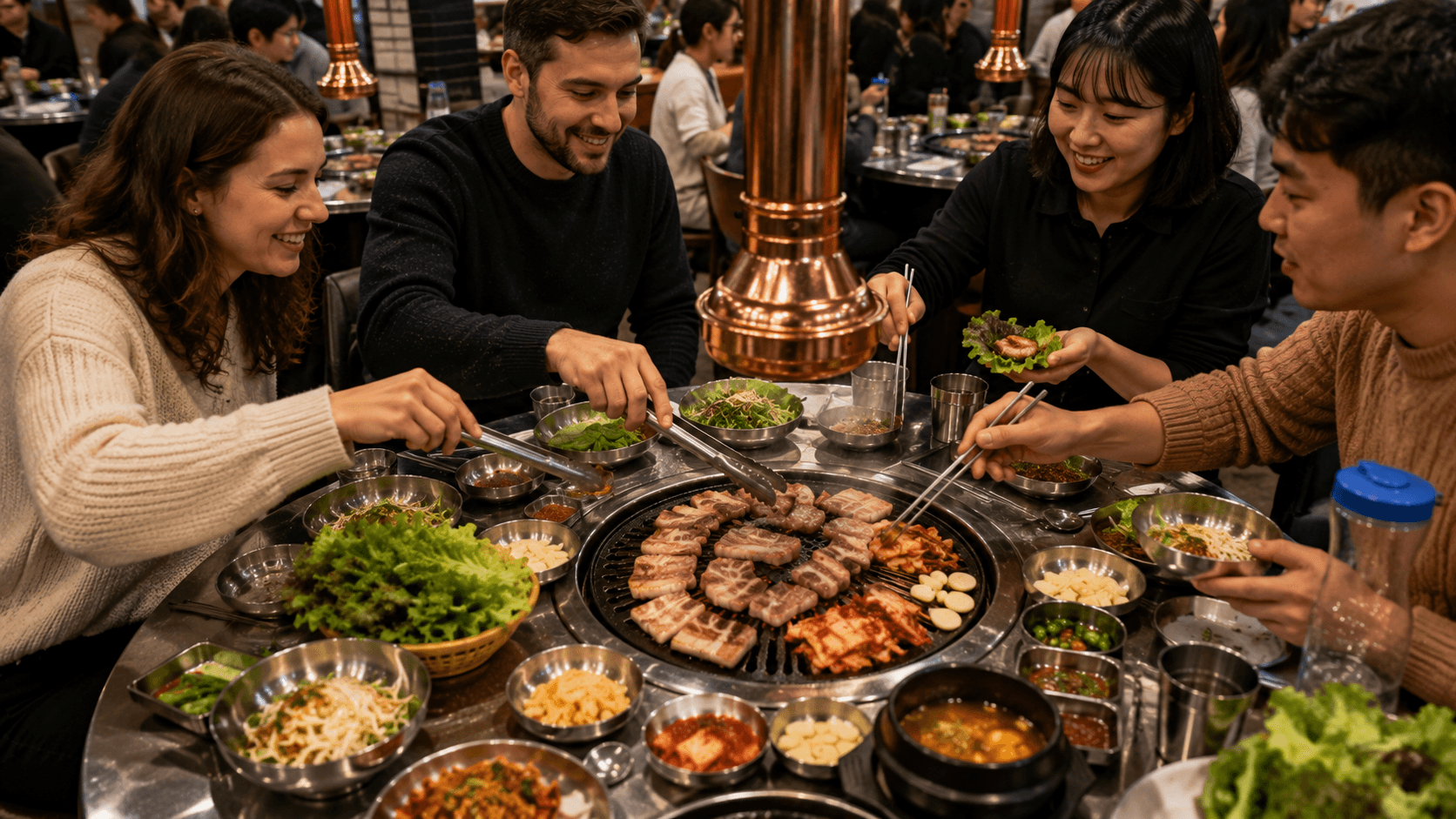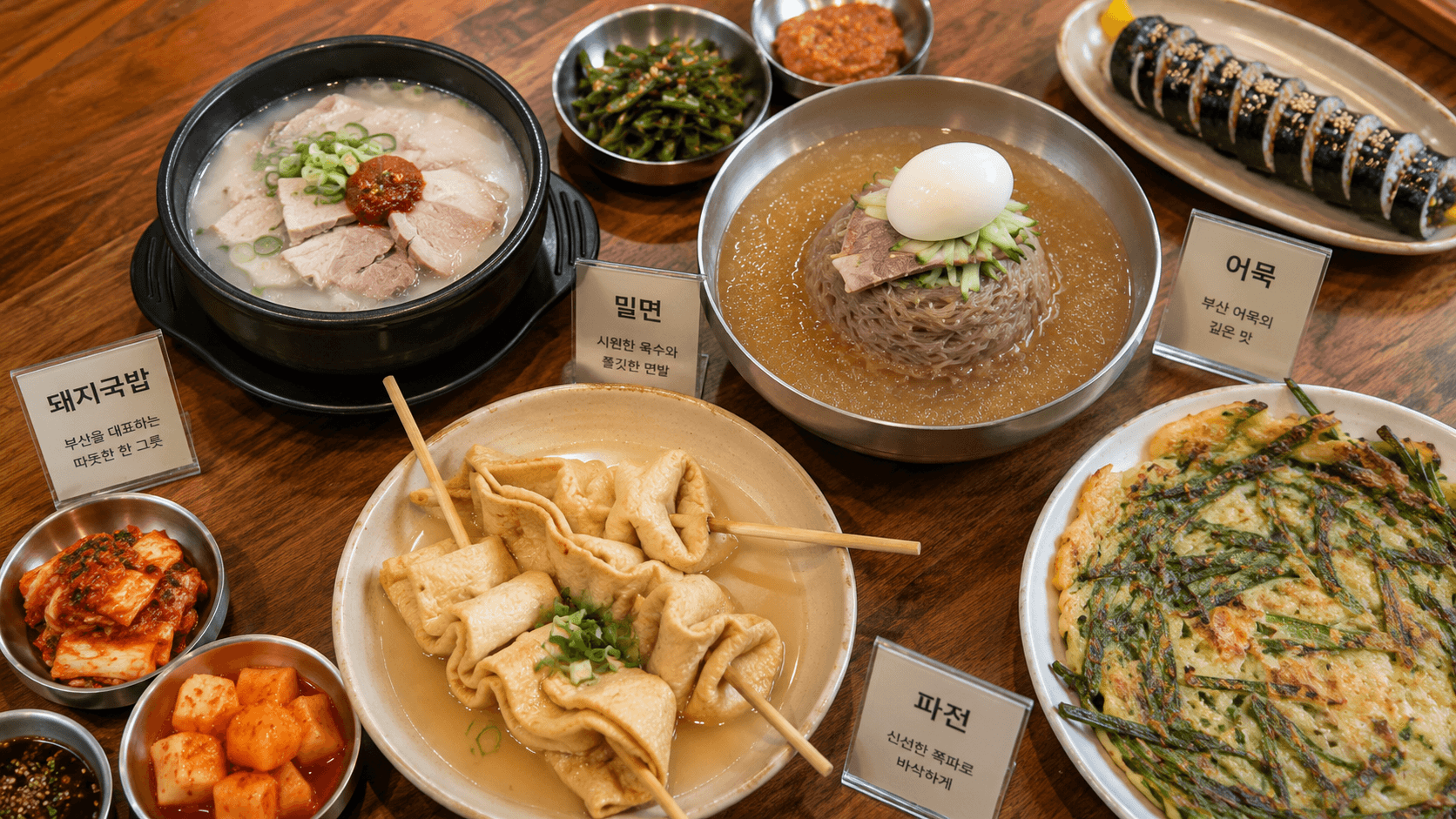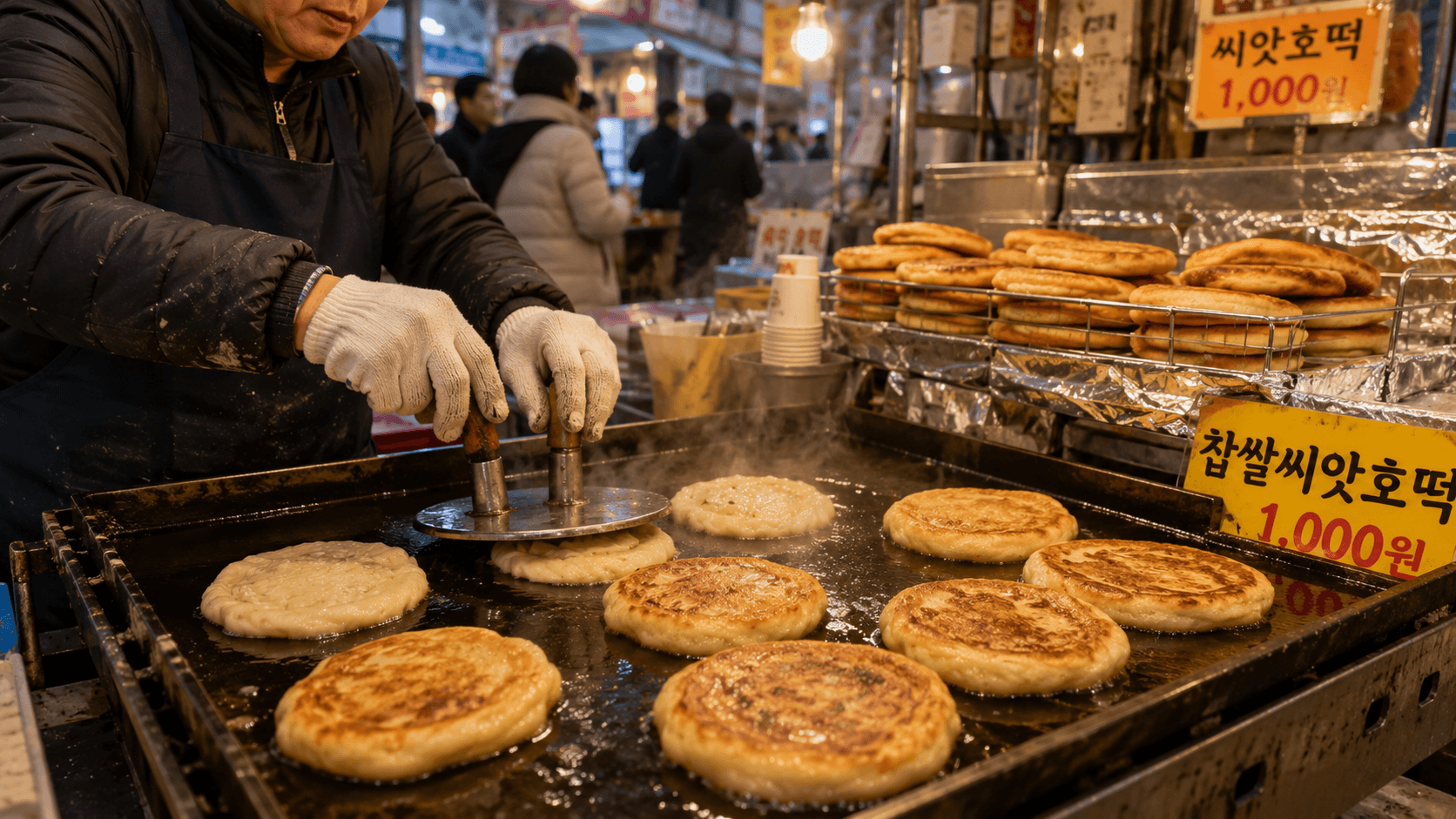
Korean street food ranges from quick snacks served at subway exits to substantial dishes eaten at traditional-market counters. For a first visit, start with tteokbokki, eomuk, hotteok, gimbap, and one freshly fried item. They offer a useful cross-section of Korea’s spicy, savory, sweet, and chewy street-food styles.
There is no objective single best street food. The selections below were chosen for their availability, cultural recognition, distinctive flavor, and usefulness to first-time visitors. Official tourism and food-safety resources were checked on June 11, 2026.
At a glance
| Food | Hangul | What it is | Main caution |
|---|---|---|---|
| Tteokbokki | 떡볶이 | Rice cakes in a spicy-sweet sauce | Often contains fish stock or fish cake |
| Eomuk | 어묵 | Fish cake, usually served on skewers | Contains fish; broth may contain seafood |
| Hotteok | 호떡 | Fried filled pancake | Very hot syrup; possible nuts |
| Bungeoppang | 붕어빵 | Fish-shaped pastry with a sweet filling | Usually contains wheat; may contain egg or milk |
| Gimbap | 김밥 | Rice and fillings rolled in seaweed | Fillings vary; often contains egg, fish cake, or meat |
| Sundae | 순대 | Korean blood sausage | Usually pork-based |
| Twigim | 튀김 | Assorted battered and fried foods | Shared oil and cross-contact are common concerns |
| Mandu | 만두 | Steamed or fried dumplings | Usually contains wheat and may contain pork |
| Dak-kkochi | 닭꼬치 | Glazed chicken skewer | Sauce may contain soy or wheat |
| Gyeranppang | 계란빵 | Small bread baked with an egg | Contains egg and wheat; often milk |
| Bindaetteok | 빈대떡 | Fried mung-bean pancake | May contain pork or seafood |
| Ssiat hotteok | 씨앗호떡 | Busan-style hotteok with seeds | Possible nuts and seeds |
1. Tteokbokki: spicy rice cakes
Tteokbokki is made with cylindrical or sliced rice cakes simmered in a red sauce. The common street version is sweet, savory, and spicy, with a dense, chewy texture. Fish cake, cabbage, spring onion, and boiled eggs may be cooked in the same pan.
The red color does not tell you exactly how hot it will be. Some sauces are mild and sweet; others contain enough gochugaru, or Korean chili flakes, to be uncomfortable for an unprepared visitor. Ask:
An maepge haejuseyo(안 맵게 해주세요): Please make it less spicy.Igeo maewoyo?(이거 매워요?): Is this spicy?
A street stall may not be able to adjust a sauce that has already been prepared. In that case, look for a shop selling soy-sauce tteokbokki or another non-red variation.
Tteokbokki is not automatically vegetarian. The sauce or stock may contain anchovy, and fish cake is a frequent ingredient. Rice cakes can also be made from rice, wheat, or a mixture, so people avoiding wheat should ask rather than relying on the English name.
2. Eomuk: fish cake skewers
Eomuk is processed fish cake shaped into sheets, strips, or folded pieces. At street stalls it is commonly threaded onto a skewer and kept warm in broth. Busan is particularly associated with fish cake, but eomuk stalls are found throughout Korea.
Take a skewer only after confirming how the stall records orders. Some vendors count the empty sticks when you pay, while others expect payment first. The accompanying broth may be self-served in a paper cup or given by the vendor.
Eomuk is a good cold-weather snack, but it contains fish and may also include wheat, soy, egg, or other ingredients. The broth may be made with anchovy, seafood, or meat stock.
3. Hotteok: filled fried pancake
Hotteok is a round pancake cooked on an oiled griddle. The familiar sweet version contains melted sugar, cinnamon, seeds, or chopped nuts. Savory versions may contain vegetables, glass noodles, cheese, or other fillings.
Eat it carefully. The outside cools faster than the syrup inside, which can remain extremely hot. Hold the paper cup or sleeve upright and take a small first bite.
Hotteok is especially common in cooler weather, although year-round availability depends on the location. Wheat is a standard ingredient, and sweet fillings may contain peanuts or tree nuts. Savory versions are not necessarily vegetarian because glass noodles or vegetables may be seasoned with meat-based ingredients.
4. Bungeoppang: fish-shaped pastry
Bungeoppang literally means carp bread, but it does not normally contain fish. It is batter cooked in a fish-shaped mold, traditionally with sweet red-bean paste inside. Custard, chocolate, cheese, sweet potato, and other fillings are also available.
The shape can cause confusion for visitors with seafood allergies, so remember that the main concerns are more likely to be wheat, egg, milk, or the filling. Vendors may use the same molds and utensils for several flavors.
Bungeoppang is strongly seasonal. It is easiest to find during autumn and winter, and individual stalls may appear or disappear without maintaining published schedules.
5. Gimbap: seaweed rice rolls
Gimbap consists of seasoned rice and fillings rolled in dried seaweed, then sliced into bite-sized pieces. Common fillings include pickled radish, carrot, spinach, egg, fish cake, ham, tuna, or beef.
Small rolls sold at markets are sometimes called kkoma gimbap (꼬마김밥), meaning little gimbap. Gimbap is practical when you need something more filling than a skewer but do not want a full restaurant meal.
Do not assume a vegetable-looking roll is vegan. Egg and fish cake are common, while the rice or vegetables may be seasoned with sesame oil. Ask about each filling if you have dietary restrictions.
6. Sundae: Korean blood sausage
Korean sundae, pronounced approximately soon-deh, should not be confused with the ice-cream dessert. It is generally made by filling a casing with glass noodles, blood, and seasonings. Depending on the recipe, it may also contain rice, vegetables, or meat.
A serving may include slices of liver or other offal. Say naejang ppaego juseyo (내장 빼고 주세요) if you want the sausage without the organ-meat pieces.
Regional dipping customs differ. You may receive salt, seasoned salt, ssamjang, or another sauce. Sundae is usually pork-based and is unsuitable for travelers who avoid pork or blood products.
7. Twigim: Korean fried snacks
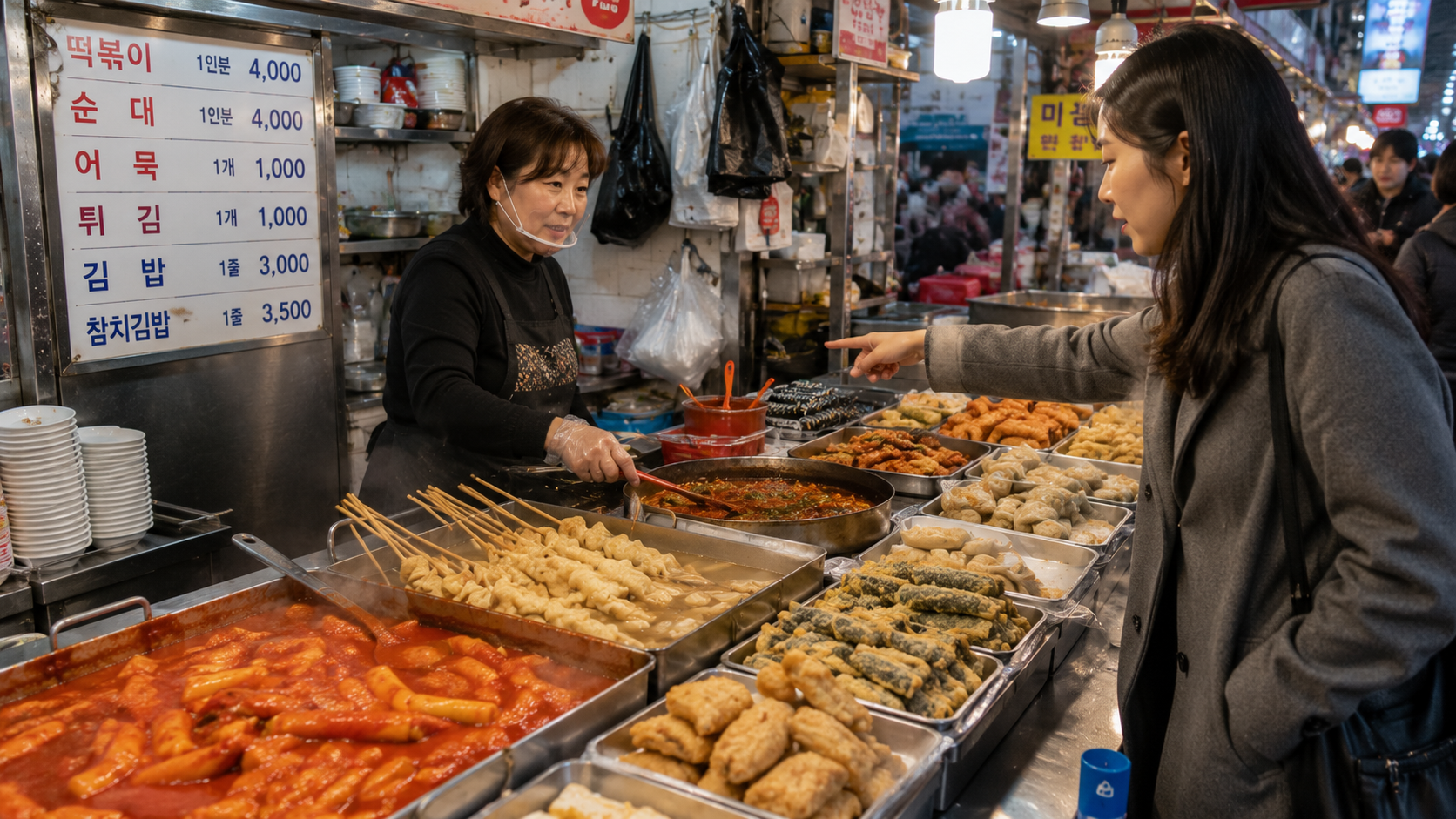
Twigim means fried food. Street-food displays may include battered sweet potato, chili pepper, squid, seaweed rolls, dumplings, boiled eggs, or vegetables. You can point to the pieces you want, and the vendor may cut them before serving.
A popular combination is to dip twigim into tteokbokki sauce. Ask first if the sauce container is shared or if the vendor will pour sauce over your food.
Shared fryers make twigim difficult for people with serious allergies or strict dietary requirements. Vegetable pieces may be fried in the same oil as squid, shrimp, meat, or dumplings. Batter commonly contains wheat and may contain egg.
8. Mandu: dumplings
Mandu are Korean dumplings served steamed, boiled, or fried. Typical fillings combine minced pork, tofu, vegetables, glass noodles, and seasonings. Kimchi mandu are usually spicy, but the word kimchi does not mean that the dumpling is meat-free.
Large steamed dumplings make a convenient portable meal, while smaller fried mandu are often sold alongside tteokbokki. Look for gogi mandu (고기만두) for meat dumplings and kimchi mandu (김치만두) for kimchi dumplings.
9. Dak-kkochi: glazed chicken skewers
Dak-kkochi is grilled chicken on a skewer, often alternating with spring onion. Vendors brush it with a soy-based, spicy, sweet, or mixed glaze.
Ask about the sauce before ordering if you are sensitive to spice. Sogeum (소금) indicates a salt-seasoned option, though availability varies. Soy-based sauces may contain wheat, and separate-looking sauces may still share brushes or preparation surfaces.
Chicken skewers are best eaten immediately while hot. Check that the center appears fully cooked; if it does not, return it to the vendor rather than eating around the undercooked portion.
10. Gyeranppang: egg bread
Gyeranppang is a small bread baked with a whole egg or egg mixture on top. It is mildly sweet and savory, making it approachable for visitors who do not want chili heat. Some versions include cheese, ham, parsley, or seeds.
The standard batter usually contains wheat and may contain milk. Because the egg is part of the dish rather than a removable topping, gyeranppang is unsuitable for people avoiding eggs.
11. Bindaetteok: mung-bean pancake
Bindaetteok is a thick pancake made primarily from ground mung beans. It is fried until crisp outside while remaining softer inside. Gwangjang Market in Seoul is particularly associated with bindaetteok, alongside small gimbap rolls and other market dishes.
Recipes vary. Pork, mung-bean sprouts, kimchi, fernbrake, or seafood may be mixed into the batter. A mung-bean base therefore does not guarantee that the finished pancake is vegan, gluten-free, or free from cross-contact.
One pancake can be substantial. When visiting with another person, share one before ordering several additional foods.
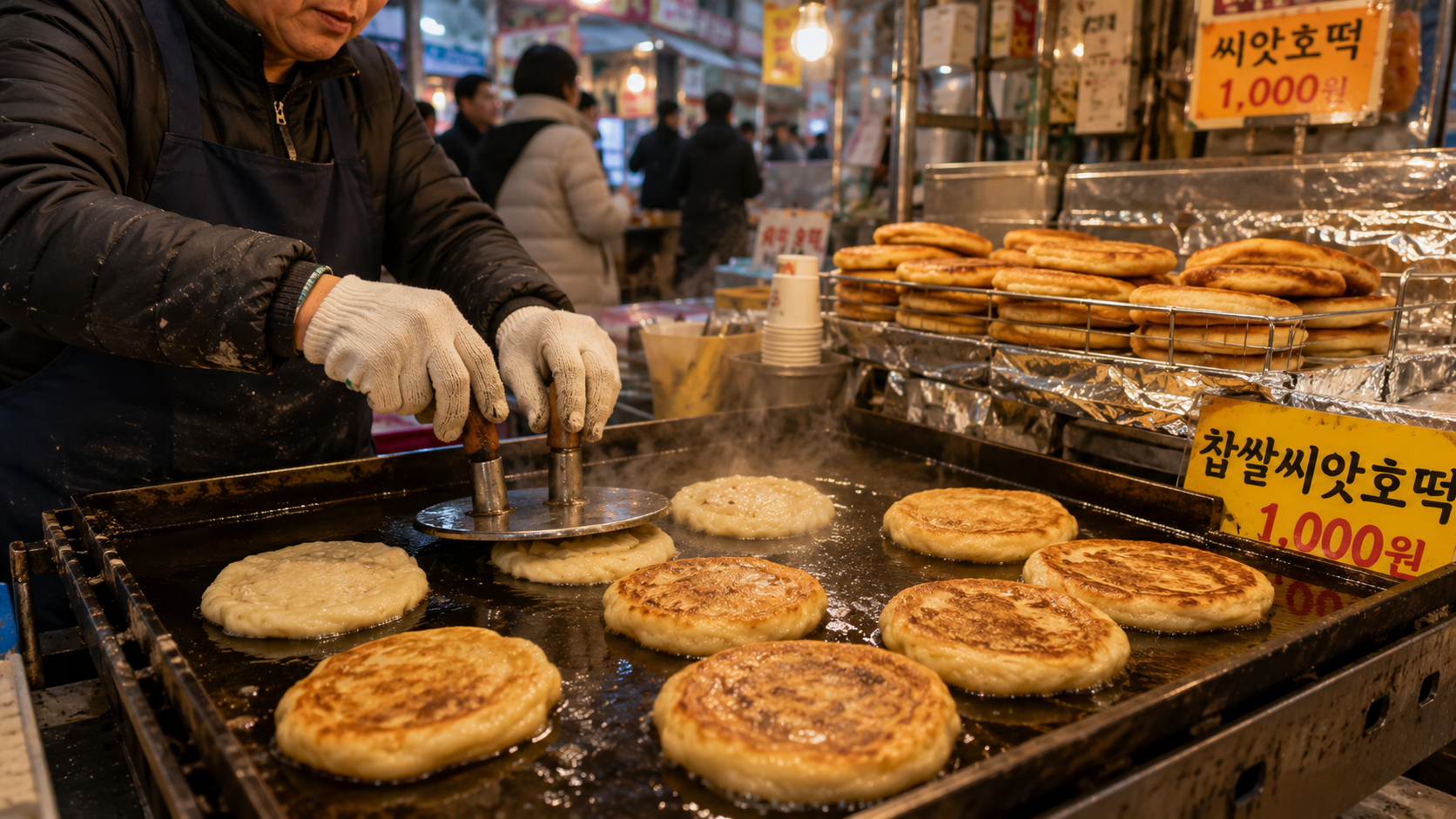
12. Ssiat hotteok: Busan’s seed-filled variation
Ssiat means seed. This Busan specialty is a crisp hotteok opened after frying and packed with a mixture of seeds, sugar, and sometimes nuts. It is closely associated with the Nampo-dong and BIFF Square area.
The official Visit Busan travel guide is the appropriate place to check current destination information before making a special trip. Stall locations and opening patterns can change, particularly for small independent vendors.
Where to look for street food
Traditional markets
Traditional markets offer the broadest selection and often have counters where you can sit. Gwangjang and Namdaemun in Seoul are familiar starting points, while Busan’s central market districts are useful for regional specialties. The Korea Tourism Organization’s VISITKOREA website maintains destination and traditional-market information.
Market-wide hours are not necessarily the same as individual stall hours. Food vendors may close when ingredients sell out, and some market sections observe different holidays. Check the official listing on the day of your visit.
Bunsik shops
A bunsikjip (분식집) is a casual snack shop selling foods such as tteokbokki, gimbap, sundae, ramyeon, and fried items. These shops are often easier than temporary stalls when you need a menu, indoor seating, or a more orderly payment process.
Festival and shopping areas
Night markets, festivals, and busy shopping streets may have visually elaborate foods designed for visitors. These can be enjoyable, but they are not automatically more traditional or better value than neighborhood stalls. Compare posted prices before ordering.
How to order and pay
- Look for a displayed price or menu before choosing.
- Watch whether other customers pay before or after eating.
- Point to the item and indicate the quantity with your fingers.
- Confirm the total before presenting cash or a card.
- Return bowls, cups, or skewers to the indicated collection point.
Payment methods vary by stall. Carry a small amount of KRW cash as a backup, but do not assume every stall is cash-only. Ask Kadeu dwaeyo? (카드 돼요?), meaning Can I pay by card?
Prices differ significantly by city, market, portion, ingredients, and event. Reliable nationwide prices could not be confirmed, so no fixed price range is stated here. Use the posted menu and confirm the amount before ordering.
Allergies and dietary restrictions
Street stalls may not have complete English ingredient lists, and one cooking surface, fryer, knife, or pair of tongs may be used for several foods. A translation app can help with basic questions, but it should not be treated as a guarantee when a reaction could be serious.
Useful phrases include:
Allergi isseoyo(알레르기 있어요): I have an allergy.Ttangkong deureogayo?(땅콩 들어가요?): Does it contain peanuts?Gogi deureogayo?(고기 들어가요?): Does it contain meat?Saengseon deureogayo?(생선 들어가요?): Does it contain fish?
For severe allergies, choose a restaurant that can show packaged ingredients or communicate clearly about preparation. The Ministry of Food and Drug Safety publishes official information on food safety and Korea’s food-labeling system, but unpackaged stall food may not provide the same information as a labeled retail product.
Muslim, vegetarian, vegan, gluten-free, and kosher travelers should verify both ingredients and cooking methods. Vegetable fillings do not rule out anchovy stock, fish sauce, lard, meat seasoning, shared oil, or shared utensils.
Common mistakes to avoid
- Ordering several rice-cake dishes at once without realizing how filling they are.
- Assuming every red dish has the same spice level.
- Treating fish-shaped bungeoppang as a seafood product.
- Assuming kimchi mandu or vegetable gimbap is vegetarian.
- Biting directly into hotteok before the melted filling cools.
- Taking food from a self-service-looking display before checking the ordering system.
- Visiting a famous market late and expecting every individual stall to remain open.
What to check before you go
- Confirm the market or event on its official tourism page.
- Check the individual vendor’s hours where available; market-wide hours may not apply.
- Carry KRW cash plus a payment card.
- Save written Korean allergy information on your phone.
- Bring tissues and hand sanitizer, as temporary stalls may have limited facilities.
- Wear clothes suitable for outdoor or semi-outdoor seating.
- Order one or two items first, then add more if you are still hungry.
Your practical next step is to mark five foods from the table that match your dietary needs, then locate a traditional market through VISITKOREA or the relevant city’s official tourism website. At the market, begin with one savory dish and one sweet snack rather than trying to complete the entire list in a single visit.