Korean food is broader than barbecue and fiery red sauces. A useful first-time tasting plan should include a mixed rice dish, grilled meat, a bubbling stew, a noodle dish, market snacks, and at least one traditional dessert. The dishes below are widely available, but recipes, ingredients, portion sizes, and prices vary by restaurant.
Information and official travel resources were checked on June 11, 2026. Because individual businesses frequently change menus, prices, and opening hours, confirm those details directly before visiting.
At a glance
| Dish | What it is | Typical flavor | Good for |
|---|---|---|---|
| Bibimbap | Rice mixed with vegetables and sauce | Savory, mildly spicy | An approachable first meal |
| Bulgogi | Thinly sliced marinated meat | Sweet and savory | Visitors avoiding strong heat |
| Samgyeopsal | Grilled pork belly | Rich and smoky | A social group dinner |
| Kimchi-jjigae | Kimchi stew, often with pork or tuna | Sour, spicy, savory | A filling everyday meal |
| Samgyetang | Chicken and ginseng soup | Mild and aromatic | A gentler soup option |
| Naengmyeon | Cold buckwheat noodles | Tangy or spicy | Hot-weather dining |
| Gimbap | Filled rice rolls wrapped in seaweed | Mild and savory | A quick meal or picnic |
| Tteokbokki | Chewy rice cakes in sauce | Usually sweet and hot | Street-food sampling |
| Korean fried chicken | Crisp fried chicken with optional sauce | Savory, sweet, or spicy | Sharing with friends |
| Hotteok | Filled griddled pancake | Sweet and nutty | A warm market snack |
1. Bibimbap: the easiest place to begin
Bibimbap (비빔밥) means mixed rice. A bowl usually contains rice, individually seasoned vegetables, an egg, gochujang red-pepper paste, and sometimes beef. Mix everything thoroughly before eating rather than sampling each topping separately.
Regular bibimbap arrives in a bowl, while dolsot-bibimbap (돌솥비빔밥) comes in a very hot stone pot. The latter continues cooking at the table and develops a crisp layer of rice at the bottom. Let it sit briefly before mixing if you want more crust, and do not touch the pot.
Bibimbap looks easy to customize, but vegetarian-looking versions may contain meat, egg, anchovy stock, or sauce made with animal ingredients. Ask before ordering if this matters to you.
Useful order:
Bibimbap hana juseyo(비빔밥 하나 주세요): One bibimbap, please.Gochujang-eul ttaro juseyo(고추장을 따로 주세요): Please serve the gochujang separately.
2. Bulgogi: sweet, savory marinated meat
Bulgogi (불고기) generally consists of thinly sliced meat marinated with ingredients such as soy sauce, garlic, sugar, sesame oil, and fruit. Beef is common, but menus may also offer pork or other variations.
It is usually less spicy than dishes based on red chili paste, making it a practical choice for children and visitors who are still adjusting to Korean heat levels. Depending on the restaurant, it may arrive already cooked, simmer in a shallow pan with vegetables, or be grilled at the table.
Soy sauce means that standard bulgogi is not normally suitable for people avoiding soy or wheat unless the restaurant specifically confirms an alternative recipe.
3. Samgyeopsal and Korean barbecue
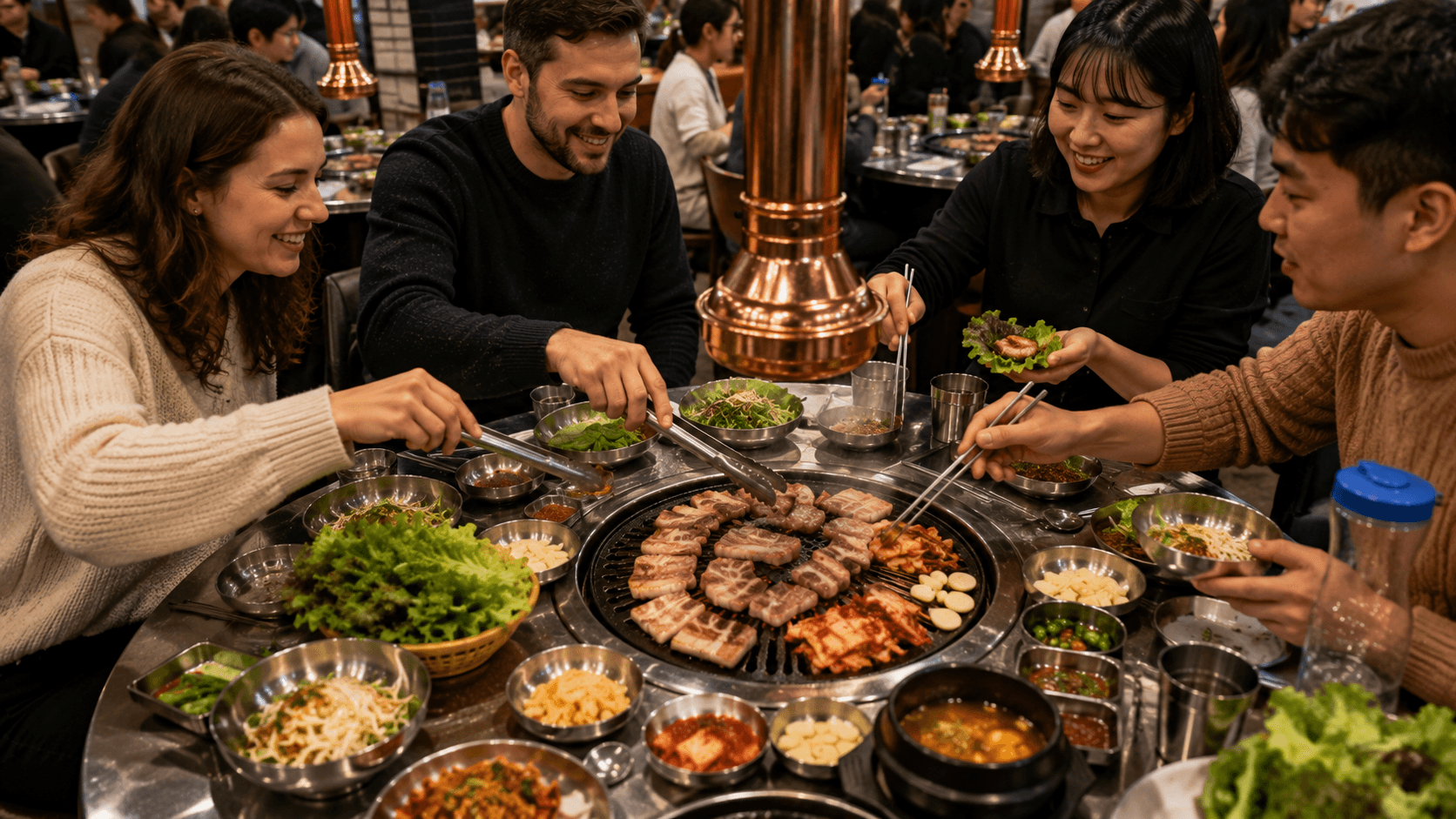
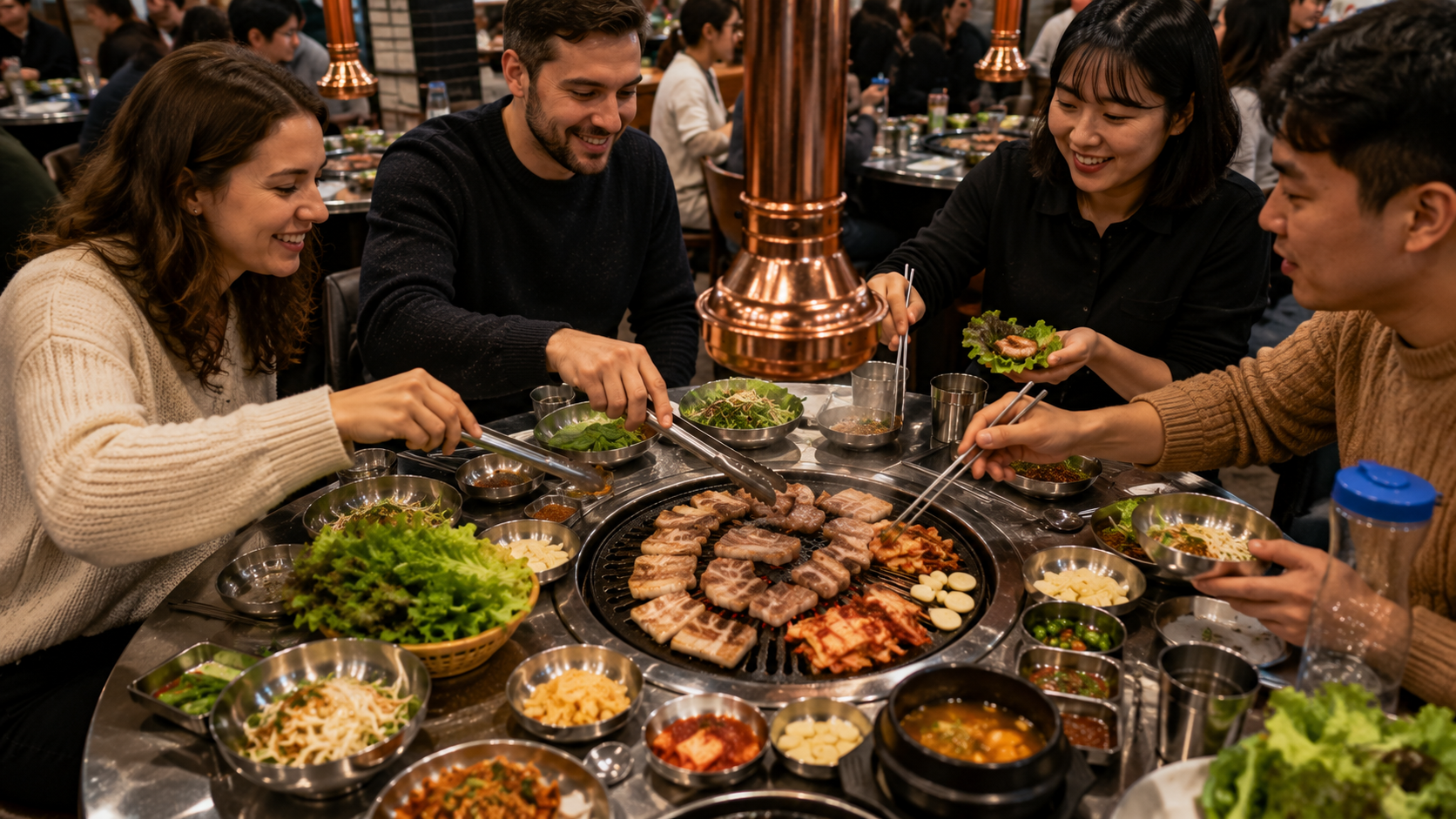
Samgyeopsal (삼겹살) is thick-cut pork belly cooked on a tabletop grill. Diners commonly wrap pieces in lettuce or perilla leaves with garlic, vegetables, and ssamjang (쌈장), a thick fermented dipping sauce.
At many barbecue restaurants, staff cook the meat or help manage the grill. At others, customers do it themselves. Use the supplied tongs for raw meat and separate utensils for eating. Cut larger pieces with the table scissors after they have begun cooking.
Barbecue is easiest with at least two people. Some restaurants require a minimum initial order, often expressed as a number of portions rather than a minimum number of diners. Confirm the rule shown on the menu before sitting down. Beef barbecue can cost considerably more than pork, so check whether the listed price is per portion and how many grams that portion contains.
A typical sequence is:
- Place the meat on the grill or allow staff to do so.
- Turn it when the lower surface has browned.
- Cut it into bite-size pieces.
- Cook pork completely.
- Wrap one piece with a small amount of sauce and accompaniments.
- Order rice, noodles, or fried rice near the end if desired.
4. Kimchi-jjigae and doenjang-jjigae: everyday stews
Jjigae (찌개) is a category of strongly seasoned Korean stews, generally served hot with rice.
Kimchi-jjigae (김치찌개) uses fermented kimchi and often includes pork, tuna, or tofu. Its flavor can be sour, spicy, and deeply savory. The pot may still be boiling when it arrives, so allow it to settle before tasting.
Doenjang-jjigae (된장찌개) is based on doenjang, fermented soybean paste, and commonly contains tofu and vegetables. Although brown rather than red, it is not necessarily vegetarian: anchovy or meat broth is common.
Some stews are individual portions; larger pots may be intended for sharing. If a communal pot is served, use the provided ladle rather than eating directly from it.
5. Samgyetang: whole chicken soup
Samgyetang (삼계탕) is a mild soup containing a small whole chicken stuffed with glutinous rice, usually accompanied by garlic, jujube, and ginseng. It is particularly associated with boknal, the hottest days in the traditional Korean calendar, but specialist restaurants may serve it throughout the year.
The chicken is tender enough to separate with chopsticks and a spoon. Small bones require attention, and the seasoning is often deliberately restrained. Salt and pepper may be provided so each diner can adjust the broth.
This is a useful choice for visitors seeking a hot meal without a chili-based sauce. It is not appropriate for vegetarians, and anyone with dietary or medical concerns about herbal ingredients should ask what the restaurant uses.
6. Naengmyeon: noodles served cold
Naengmyeon (냉면) consists of long, chewy noodles served cold. Mul-naengmyeon (물냉면) comes in chilled broth, while bibim-naengmyeon (비빔냉면) is mixed with a red sauce that is usually sweeter and hotter.
Restaurant staff may offer to cut the noodles with scissors, although this is optional. Mustard and vinegar are often available at the table; taste the broth before adding them.
Cold does not mean vegetarian. Naengmyeon broth can be beef-based, and toppings may include beef and egg. The noodles may contain buckwheat, starches, or a blend, so travelers with allergies should not rely on the English name alone.
7. Gimbap: a practical meal on the move
Gimbap (김밥) consists of rice and fillings rolled in dried seaweed and sliced into rounds. Common fillings include egg, pickled radish, carrot, spinach, fish cake, ham, tuna, or beef.
It is sold by snack restaurants, takeaway shops, markets, and convenience stores. It works well for train journeys and picnics, but freshly prepared gimbap should not be left unrefrigerated for long, especially in warm weather.
Do not assume plain-looking vegetable gimbap is vegan: egg, fish cake, processed meat, and sesame oil are frequent ingredients. Specialized vegan restaurants provide more reliable choices than trying to remove several fillings from a standard roll.
8. Tteokbokki: Korea's famous spicy rice cakes
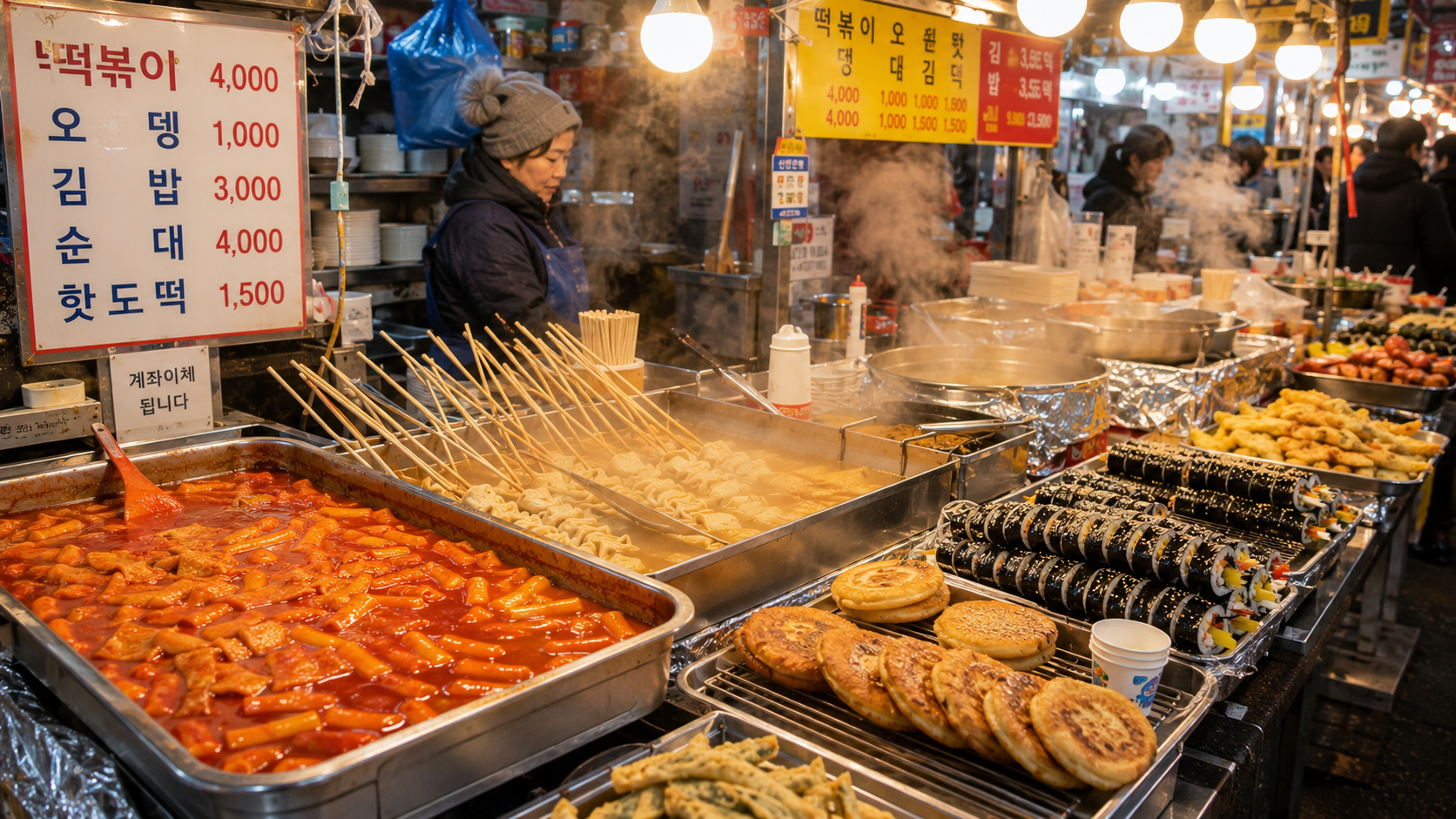
Tteokbokki (떡볶이) is made with chewy cylindrical rice cakes, usually simmered in a sweet, spicy red sauce. Fish cake, boiled eggs, cabbage, and spring onion are common additions. It is widely associated with bunsikjip (분식집), casual snack restaurants, as well as markets and street stalls.
Standard red tteokbokki may be hotter than its sweetness initially suggests. Creamy rose tteokbokki is often milder, while gungjung-tteokbokki (궁중떡볶이) uses a soy-based sauce instead of the familiar red sauce. Neither variation should automatically be considered vegetarian.
Rice cakes are dense and filling. Share one portion if you are also ordering gimbap, fried snacks, or sundae, the Korean blood-sausage dish.
9. Korean fried chicken
Korean fried chicken is commonly served plain, coated in a sweet-spicy sauce, or split between two flavors. The half-and-half option is often called banban (반반). Boneless chicken may be available, but some businesses use thigh meat rather than breast meat.
Portions are generally designed for sharing. A whole-chicken order can be excessive for one person, so look for half portions or smaller menus if dining alone. Pickled radish cubes commonly arrive as a refreshing side.
Chicken restaurants are popular evening venues, and the pairing of chicken and beer is called chimaek (치맥), from chicken and maekju, the Korean word for beer. Alcohol is optional; soft drinks and non-alcoholic choices depend on the restaurant.
10. Mandu and jeon: shareable side dishes
Mandu (만두) are dumplings that may be steamed, boiled, pan-fried, or served in soup. Fillings vary widely and can include pork, beef, tofu, kimchi, vegetables, or glass noodles. Kimchi mandu are usually spicy and are not necessarily meat-free.
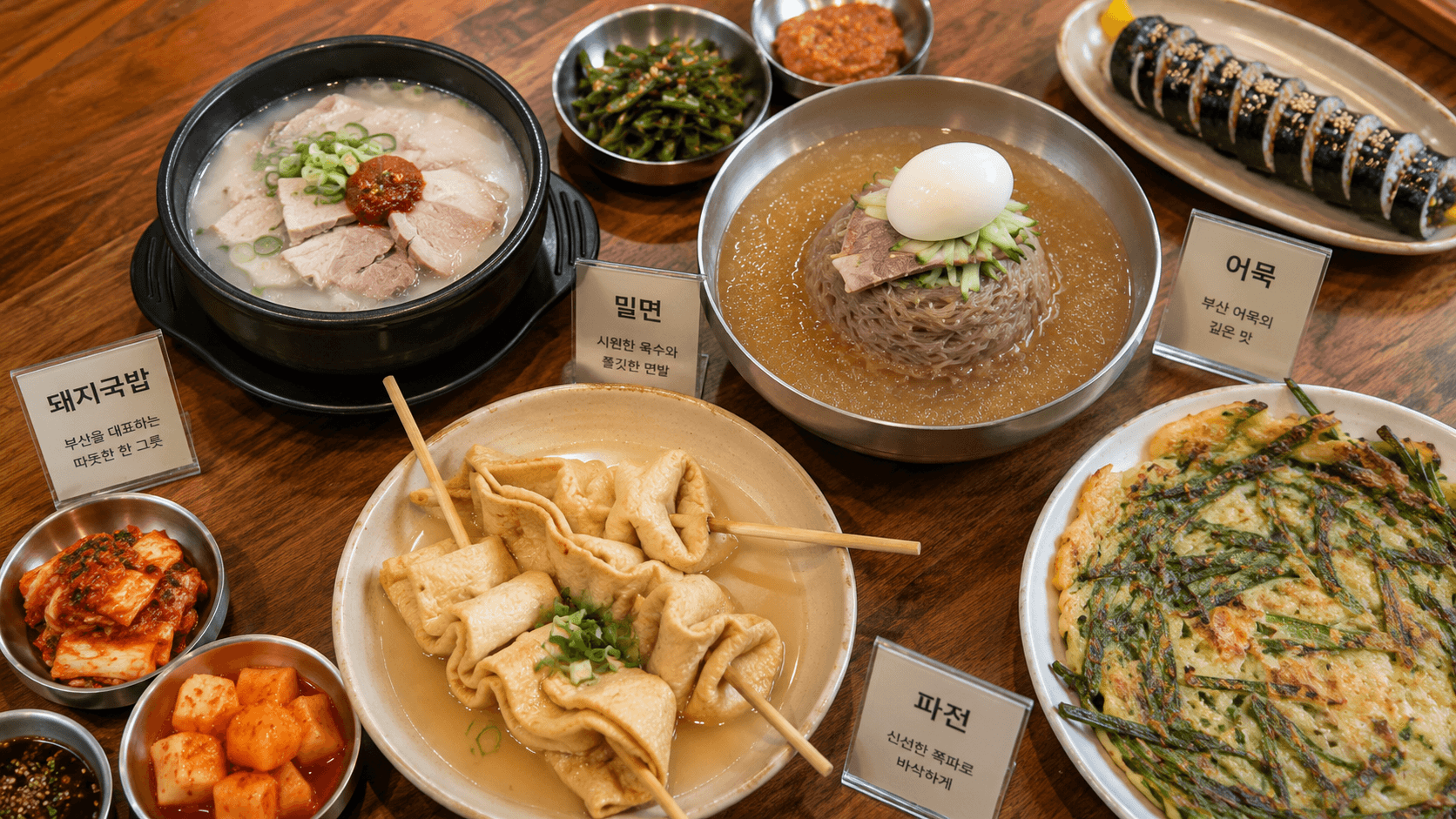
Jeon (전) are savory pan-fried dishes loosely described in English as pancakes. Pajeon (파전) emphasizes spring onions, while haemul-pajeon (해물파전) includes seafood. Bindaetteok (빈대떡) is a thicker mung-bean pancake, often containing pork or vegetables.
These dishes are well suited to sharing. They may be oily and substantial, so order one plate first before adding more food.
11. Market snacks: hotteok, bungeoppang, and eomuk
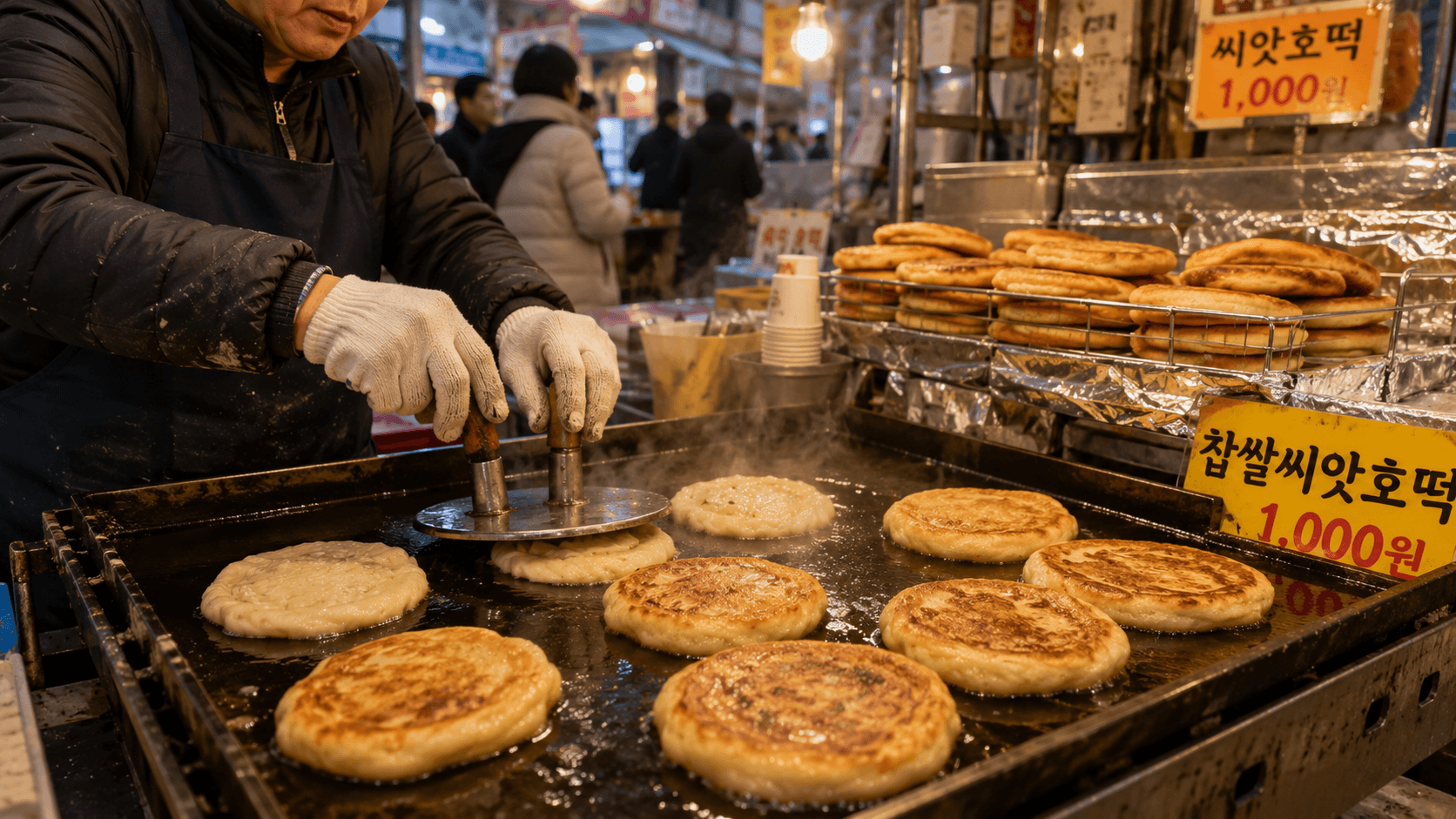
Hotteok (호떡) is a griddled pancake commonly filled with melted brown sugar, cinnamon, and seeds or nuts. The syrup can be extremely hot immediately after cooking; take a small first bite.
Bungeoppang (붕어빵) is a fish-shaped pastry, not a fish dish. Traditional versions contain sweet red-bean paste, while custard, cream, and other fillings also appear. Recipes usually contain wheat and may contain egg or dairy.
Eomuk (어묵), or fish cake, is frequently served on skewers with hot broth. The shared broth container and condiments at a stall may be self-service. Ask the vendor before taking broth if the payment or serving arrangement is unclear.
Market hours and individual stall schedules are inconsistent, and some snacks are seasonal. Verify a market's current information through VISITKOREA's food and destination resources, then check the stall itself on the day.
12. Desserts and drinks worth trying
Bingsu (빙수) is shaved ice served with toppings. Patbingsu includes sweet red beans, while modern versions may use fruit, condensed milk, chocolate, or injeolmi rice cake. Portions are often large enough for two or more people.
Sikhye (식혜) is a sweet rice drink, sometimes containing grains of cooked rice. Sujeonggwa (수정과) is a cinnamon-and-ginger drink commonly served cold. Both offer an alternative to coffee after a meal, although availability varies.
Yakgwa (약과) is a dense, syrup-coated traditional confection made from wheat flour and oil. Injeolmi (인절미) is a soft rice cake coated with soybean powder. Rice cakes are very chewy, so eat them in small bites.
Understanding a Korean restaurant table
Banchan (반찬) are small side dishes served with a meal. Kimchi is common, but the selection varies by restaurant and by main dish. Refills may be available for basic side dishes, although specialty items are not necessarily unlimited. Ask before assuming.
Water and utensils may be brought by staff or placed at a self-service station. Chopsticks and spoons are sometimes stored in a drawer under the table. Call buttons are common in casual restaurants; pressing one is a normal way to request service.
Payment is usually made at the front counter after eating rather than at the table. Payment options can differ at markets and small stalls, so carry a physical payment card and some KRW as a backup.
Dietary restrictions and allergies
Ingredient communication can be difficult when a kitchen uses shared broth, marinades, grills, fryers, and preparation surfaces. A dish described as vegetable may still contain anchovy broth, fish sauce, salted shrimp, egg, meat garnish, or oyster sauce.
Common ingredients requiring attention include:
- Soy and wheat in soy sauce, gochujang, doenjang, marinades, and dipping sauces
- Sesame seeds and sesame oil in rice dishes, vegetables, sauces, and garnishes
- Fish, shellfish, anchovy stock, fish sauce, and salted shrimp in broths and kimchi
- Egg in gimbap, bibimbap, jeon, noodles, and batters
- Peanuts or other nuts in desserts, sauces, and hotteok fillings
For a serious allergy, show a professionally translated allergy card naming the ingredient and explaining that broth, sauce, garnish, and cross-contact also matter. Staff agreement may mean only that the visible ingredient can be removed. When the kitchen cannot confirm its preparation process, choose another establishment. Consult Korea's Ministry of Food and Drug Safety for official food-safety information rather than treating a travel guide as medical advice.
What to check before you go
- Opening hours: Restaurants often close between lunch and dinner or take an irregular weekly day off.
- Last order: This can be earlier than the posted closing time.
- Minimum order: Common at barbecue, hot-pot, and chicken restaurants.
- Portion size: Determine whether a menu price refers to one person, one portion, or a shared dish.
- Ingredients: Confirm broth, sauce, garnish, and cooking method, not just the main ingredient.
- Payment: Smaller market businesses may have fewer options than large restaurants.
- Accessibility: Older restaurants and markets may have steps, narrow aisles, floor seating, or inaccessible toilets.
- Luggage: Busy dining rooms rarely have secure space for large suitcases. Use station or accommodation storage first.
- Reservations: Usually unnecessary at simple snack shops, but useful for popular barbecue restaurants, tasting menus, and large groups.
For current tourism assistance, use the official VISITKOREA website, which provides access to the 1330 Korea Travel Helpline and food-related travel information. Helpline availability and contact methods were verified on June 11, 2026, but data or telephone charges may depend on how you connect.
FAQ
Is all Korean food spicy?
No. Bulgogi, samgyetang, gimbap, galbitang, seolleongtang, japchae, and soy-based dishes can be mild. However, a mild-looking broth or marinade may still contain allergens or animal products.
Can I ask for a dish to be made less spicy?
You can ask, but not every kitchen can adjust a premade sauce or broth. Requesting sauce separately is more realistic for bibimbap and some dipping sauces than for tteokbokki or kimchi stew.
Is tipping expected?
Tipping is not a standard part of ordinary restaurant service in South Korea. Pay the amount shown at the counter unless a business clearly operates under a different stated policy.
What should a first-time visitor order in one day?
Try gimbap or a mild soup for breakfast, bibimbap for lunch, one or two market snacks in the afternoon, and barbecue or a shared stew for dinner. This provides variety without making every meal unusually heavy.
Sources
- Korea Tourism Organization: VISITKOREA
- Korean Food Promotion Institute
- Ministry of Food and Drug Safety
Start by saving the Hangul names of three dishes that suit your diet. Showing the Korean name to restaurant staff is usually more reliable than relying on inconsistent English spellings.