Korea has three distinctly different coastal regions. The East Sea has clear water, broad beaches and dramatic sunrises; the South Sea has sheltered islands, fishing ports and winding shorelines; and the West Sea is known for tidal flats, sunsets and wide changes between high and low tide. For a first coastal trip, choose Busan for convenience, Gangneung for an easy escape from Seoul, Taean for nature, Tongyeong or Yeosu for islands, and Jeju for the widest range of coastal scenery.
At a glance
| Destination | Best for | Ideal stay | Main limitation |
|---|---|---|---|
| Busan | First-time visitors and urban beaches | 2–4 days | Busy during summer and major events |
| Gangneung | A straightforward coast trip from Seoul | 1–2 days | Popular beaches become crowded on weekends |
| Sokcho and Yangyang | Beaches combined with mountains or surfing | 2–3 days | Local sights are spread out |
| Taean Peninsula | Tidal flats, sunsets and quieter beaches | 2 days | Much easier with a car |
| Tongyeong | Island scenery, ports and seafood | 2–3 days | Ferries are weather-dependent |
| Yeosu | Southern night views and accessible coastal walks | 2–3 days | Attractions cover a long peninsula |
| Jeju Island | Volcanic cliffs, coastal drives and long stays | 4–7 days | Weather can disrupt flights, ferries and outdoor plans |
Transport portals, destination information and access guidance in this article were checked on June 11, 2026. Seasonal beach opening dates, ferry departures, attraction hours and admission fees can change, so confirm them shortly before traveling.
1. Busan: the easiest all-round coastal city
Busan is the practical choice when you want beaches without giving up metro access, restaurants, nightlife or a wide range of accommodation. It also works well for travelers who do not drive.
Haeundae Beach (해운대해수욕장) offers the classic urban-resort experience, with a broad sandy shore backed by hotels and high-rise buildings. Walk west toward Dongbaekseom for a quieter coastal path and views back across the bay.
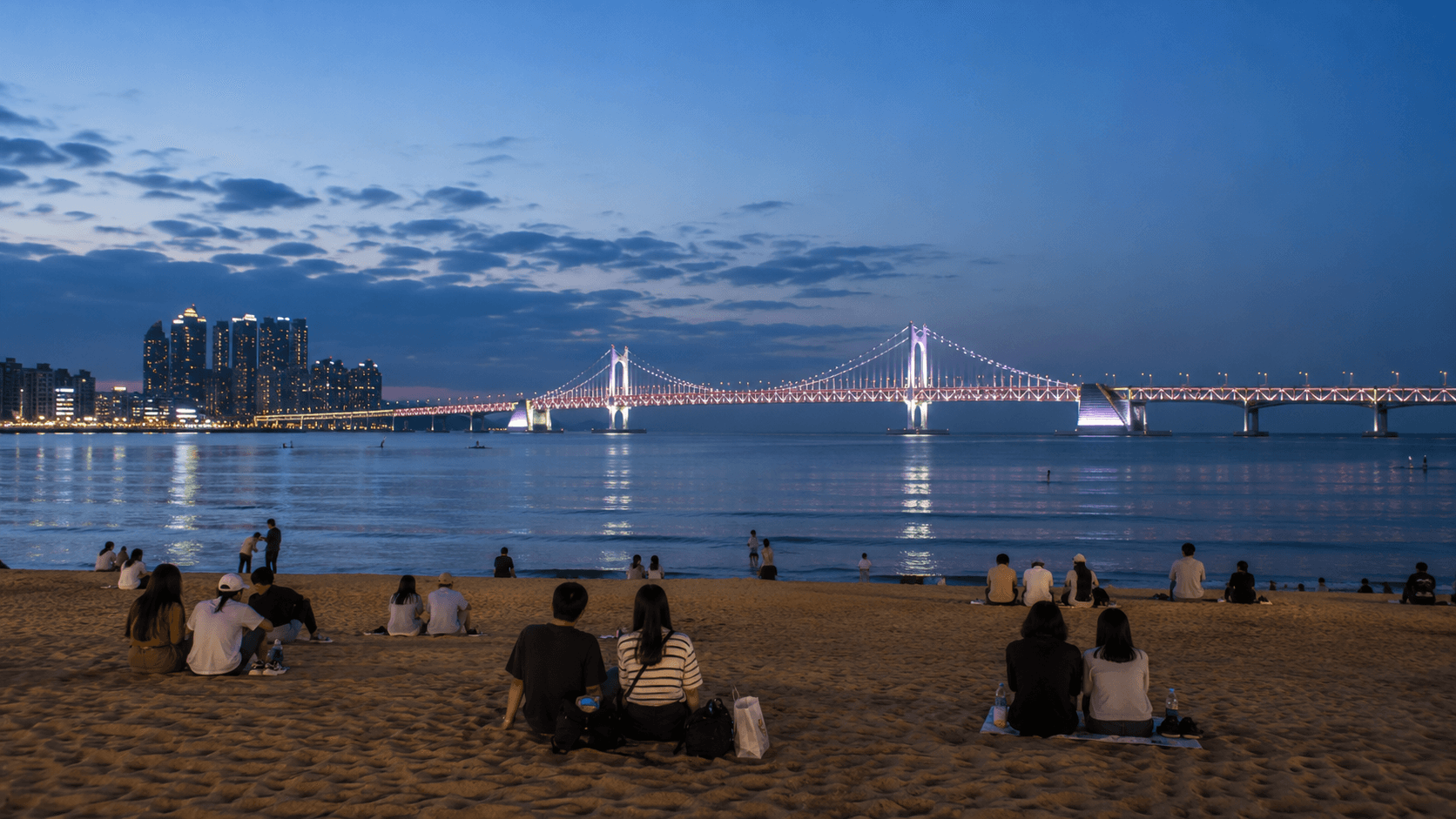
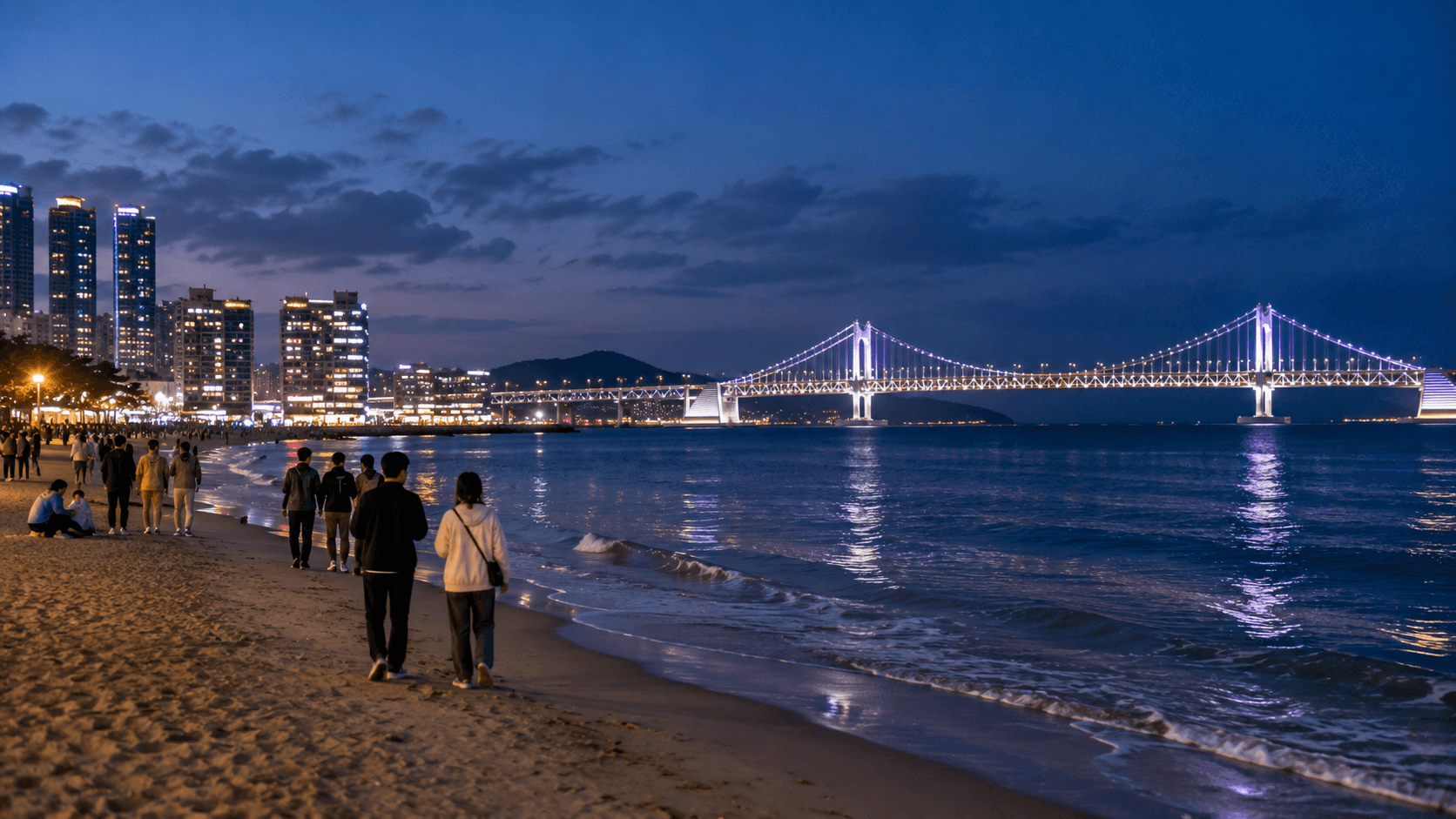
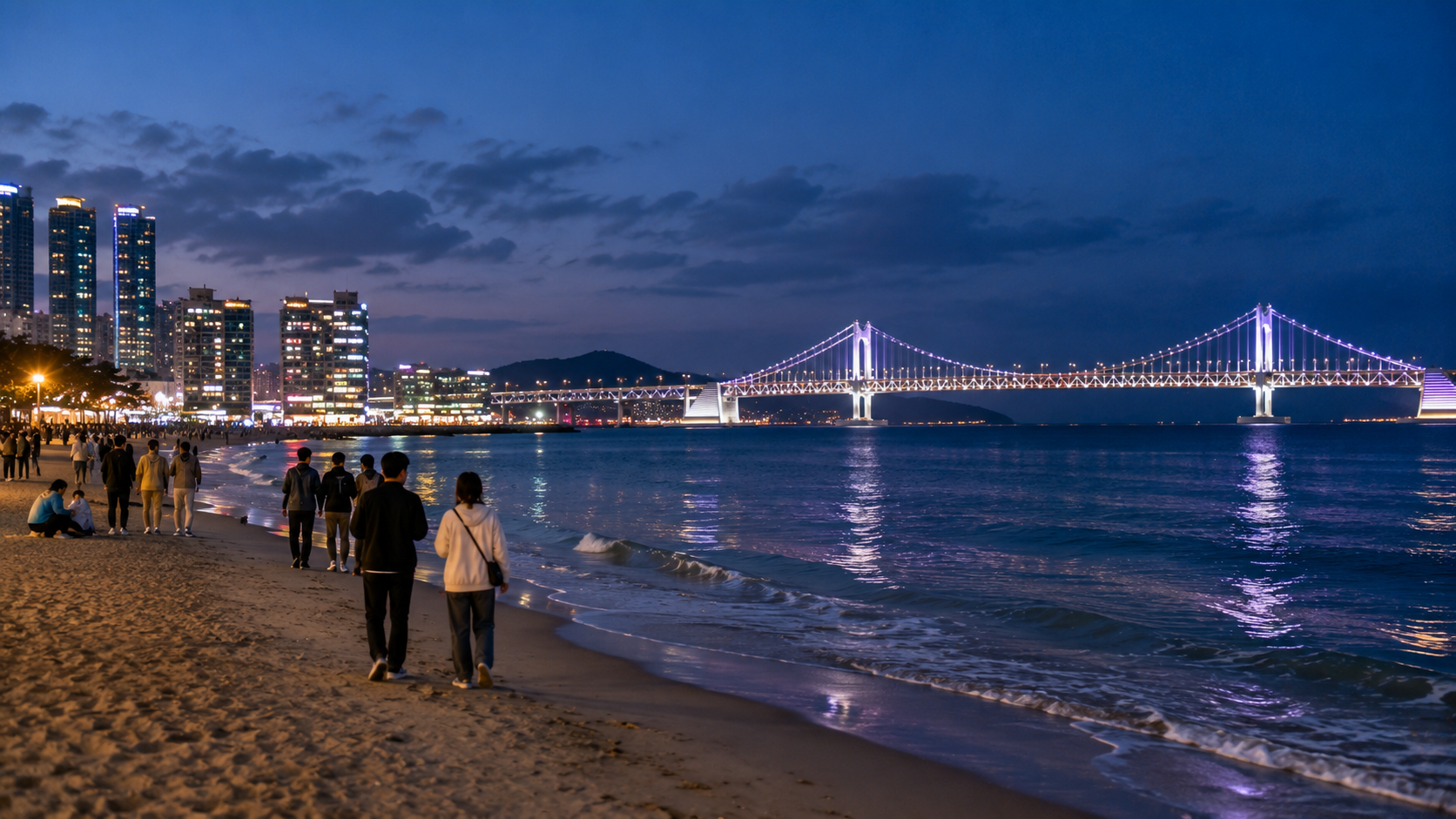
Gwangalli Beach (광안리해수욕장) is better for evening atmosphere. The beach faces Gwangandaegyo Bridge, and the surrounding streets contain cafés, bars and restaurants. Songjeong, east of Haeundae, has a more relaxed feel and is associated with surfing. Dadaepo, on Busan’s western side, is known for a broad tidal shoreline and sunset views.
The official Visit Busan travel guide provides attraction notices, maps and links to the city’s public transport information.
Who should choose Busan?
Choose Busan if this is your first trip to Korea, you have only a few days, or members of your group want different activities. A beach-focused traveler can stay near Haeundae or Gwangalli, while someone more interested in markets, museums or neighborhoods can still travel around the city by metro and bus.
Practical plan
Spend one day around Haeundae, Dongbaekseom and nearby coastal viewpoints. Use a second day for Gwangalli and central Busan, or travel to Yeongdo for cliffside scenery around Taejongdae and Huinnyeoul Culture Village.
Do not assume that being beside the sea means every Busan district is close. Crossing the city can take considerable time, especially during rush hour. Group each day’s stops geographically.
2. Gangneung: the most convenient East Sea escape from Seoul
Gangneung is a strong option for travelers who want clean-looking blue water, long beaches and cafés without planning a complicated road trip. KORAIL trains connect Seoul with Gangneung, although departure times and ticket prices should be checked through the official KORAIL booking website.
Gyeongpo Beach (경포해변) is the city’s best-known beach area. Nearby Gyeongpo Lake adds a cycling and walking route that does not require spending the whole day on the sand. South of Gyeongpo, Gangmun Beach has cafés and a compact promenade. Farther down the coast, Anmok Beach is associated with Gangneung Coffee Street.
Jeongdongjin, southeast of central Gangneung, is a well-known sunrise destination. It is useful for travelers continuing down the East Sea coast, but it should not be treated as a quick walk from the central beach district. Check local train or bus connections in advance.
The Gangneung city website is the official reference for municipal notices and destination information.
When to visit
Late spring and early autumn are generally more comfortable for walking and cycling than the hottest part of summer. Swimming areas, lifeguards, showers and equipment rentals are seasonal. A beach may remain physically accessible outside summer while supervised swimming is unavailable.
Strong wind is common on exposed sections of the East Sea. Carry an outer layer even when central Seoul feels warm, and use the Korea Meteorological Administration weather service before committing to a beach day.
3. Sokcho and Yangyang: mountains, beaches and surfing
Sokcho is useful for travelers who want to combine the coast with Seoraksan National Park. Within the city, Sokcho Beach, Cheongchoho Lake, Yeonggeumjeong Pavilion and the harbor districts provide several different waterside settings. The central market is a practical dinner stop after a coastal walk.
Yangyang, immediately south of Sokcho, has a more dispersed coastline. Surfing businesses are concentrated around beaches such as Surfyy Beach and Jukdo Beach, while Naksansa temple occupies a scenic position above the sea. Conditions, lesson availability and rental operations vary by season, so contact the operator directly rather than relying on an old blog post.
As of June 11, 2026, travelers should verify current Seoul–Sokcho and Seoul–Yangyang connections through official bus booking channels such as KOBUS and Bustago. Do not assume that a rail project shown on an online map is already carrying passengers.
Sokcho or Yangyang?
Choose Sokcho for markets, a compact city base and access toward Seoraksan. Choose Yangyang for surfing, smaller beach communities and a road-trip atmosphere. Without a car, Sokcho is usually the simpler base; use local buses or taxis for selected Yangyang stops instead of trying to cover the entire coast in one day.
4. Taean Peninsula: tidal flats and West Sea sunsets
Taean, in South Chungcheong Province, offers a different coastal landscape from Busan or Gangneung. The West Sea’s large tidal range exposes broad mudflats at low tide, while the peninsula’s west-facing beaches are natural sunset locations.
Taeanhaean National Park protects coastal areas containing beaches, dunes, rocky shores and islands. Mallipo is one of the more developed beach bases. Sinduri Coastal Sand Dune is a better choice for landscape walks, while Kkotji Beach is known for its offshore rock silhouettes at sunset.
Consult the Korea National Park Service for park notices and closures. Trails, ecological areas and access roads may be restricted after severe weather or for conservation work.
Why timing matters
A West Sea beach can look completely different a few hours apart. At high tide, water may approach the upper beach; at low tide, the sea can retreat far across exposed flats. Check local tide information before planning swimming, mudflat activities or sunset photography.
Never enter an unfamiliar tidal flat simply because other people are visible in the distance. Water can return through channels behind walkers, and soft mud may be difficult to cross. Use designated experience areas with local staff when trying a mudflat activity.
Taean is possible by intercity bus, but its beaches are widely separated. A rental car gives you much more control, particularly for sunrise-to-sunset photography or accommodation outside the main settlements.
5. Tongyeong: the strongest choice for island-port scenery
Tongyeong is a working port city surrounded by the sheltered waters and islands of Korea’s South Sea. Its appeal is less about one famous swimming beach and more about harbor views, ferry trips, seafood markets and elevated viewpoints.
The city center contains Gangguan Port, Jungang Market and Dongpirang village. Mireuksan provides wider views across the island-filled coastline; check the current operating status of any cable car or commercial attraction directly before visiting.
Island ferries depart for destinations including Hansando and farther offshore islands, but schedules vary by route, season and weather. Arrive at the terminal early with your passport or accepted identification, and leave room in your itinerary for a canceled return sailing. Never book a tight rail, bus or international flight connection immediately after a ferry excursion.
Tongyeong forms part of the wider Hallyeohaesang marine landscape managed by the Korea National Park Service. It is best for travelers who enjoy slow itineraries and do not need every attraction to have extensive English-language interpretation.
6. Yeosu: southern coast views with city convenience
Yeosu combines a long peninsula, inhabited islands, bridges and a developed waterfront. Compared with Tongyeong, it has the advantage of direct rail access and a larger set of city attractions, making it easier for travelers who prefer not to drive.
Odongdo is connected to the mainland and offers a manageable coastal walk through wooded terrain and around rocky shore viewpoints. Dolsan Island provides night views back toward the city, while the Expo waterfront is convenient for travelers arriving at Yeosu-Expo Station.
Yeosu’s attractions are not all concentrated around the station. Dolsan, central Yeosu and outlying beaches can require separate bus or taxi journeys. Stay near the Expo area for rail convenience or closer to the central waterfront for restaurants and evening walks.
Use the official Yeosu city English website for municipal tourism information, and confirm rail schedules through KORAIL. Ferry users should verify the exact departure terminal because Yeosu has multiple coastal facilities.
7. Jeju Island: Korea’s most varied coastal landscape
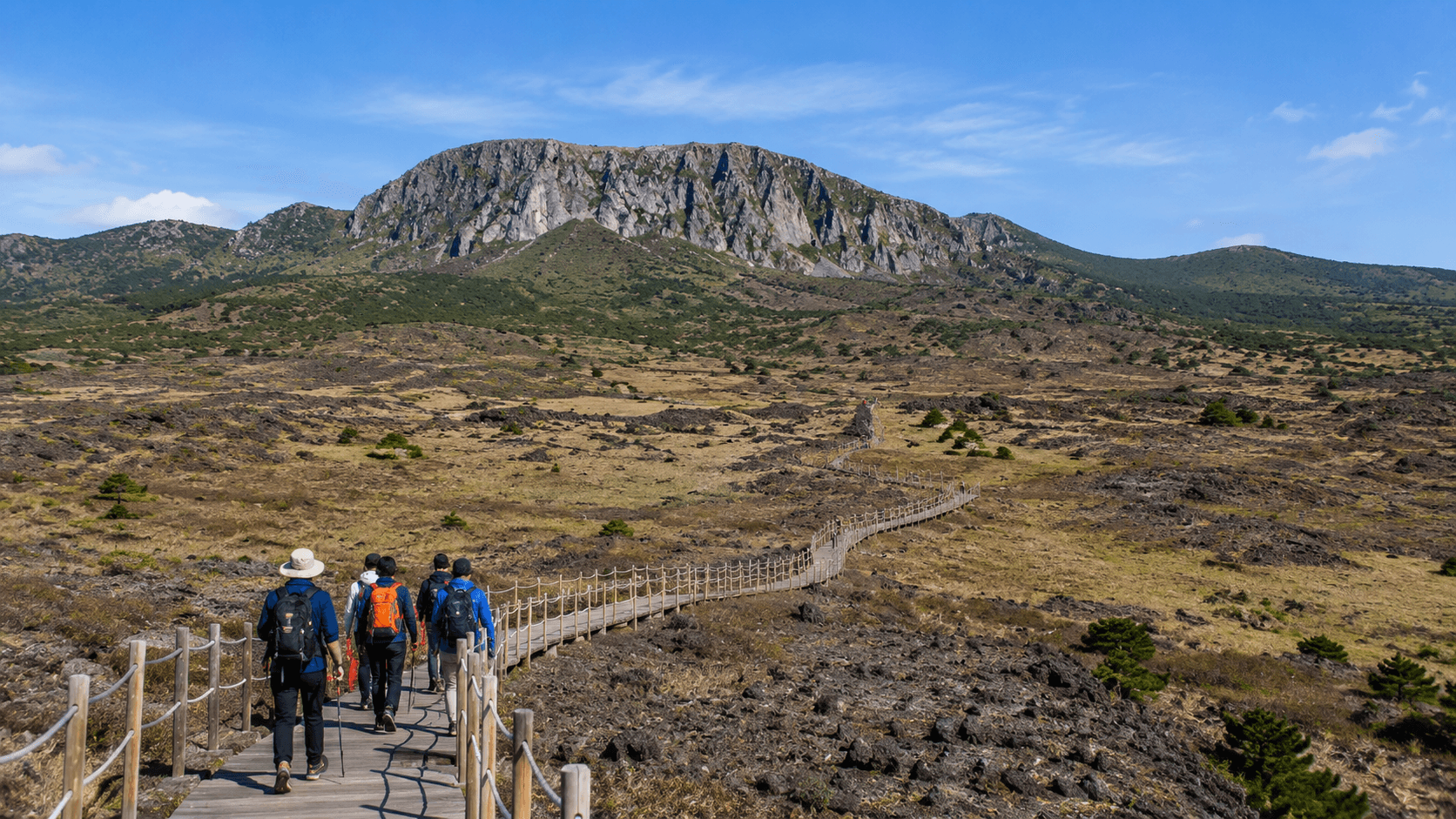
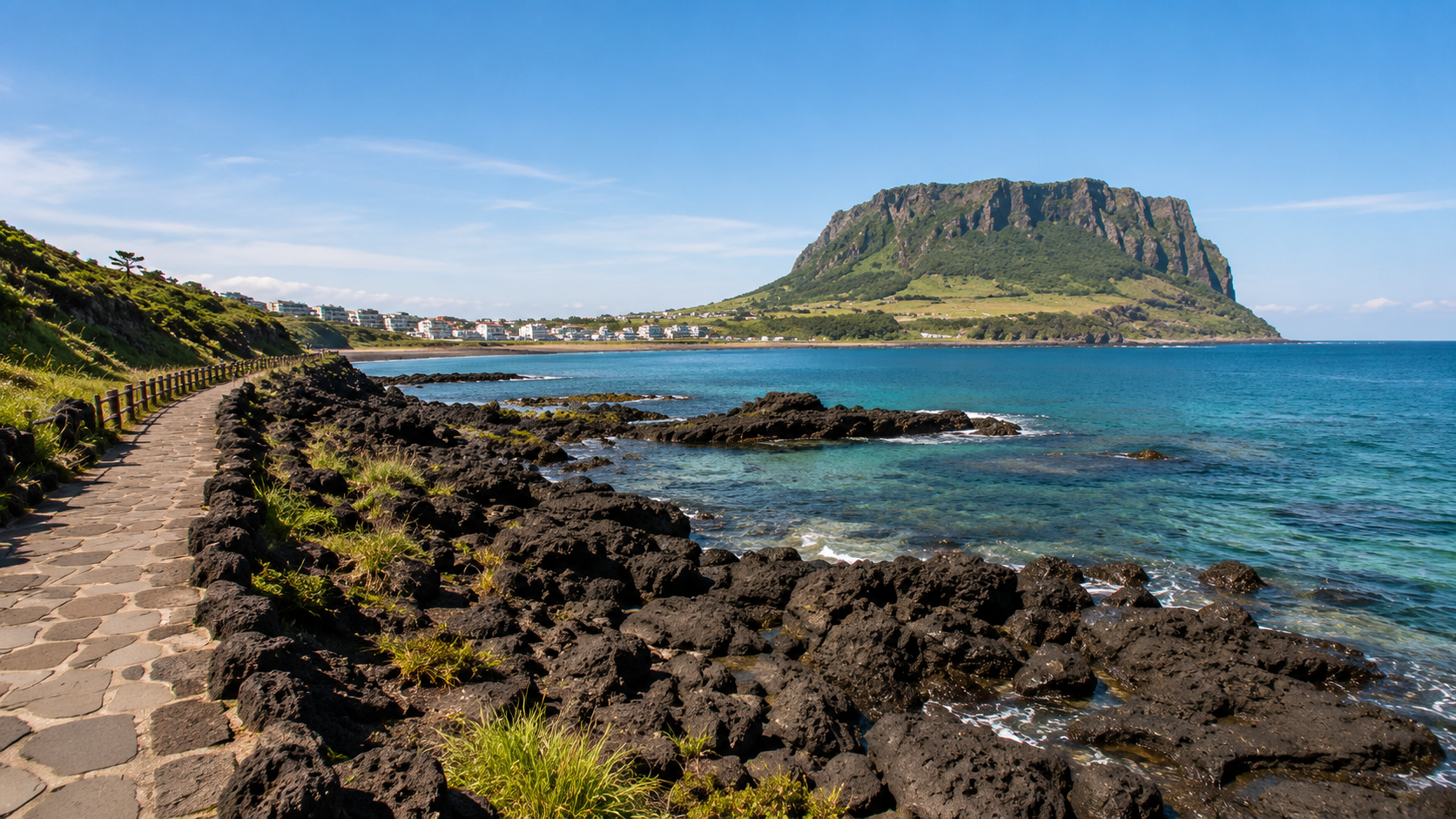
Jeju is the right choice when the coast is the main purpose of the trip rather than a side excursion. Its shoreline includes basalt cliffs, beaches, fishing villages, waterfalls and volcanic formations. UNESCO’s Jeju Volcanic Island and Lava Tubes listing includes Seongsan Ilchulbong, a tuff cone rising beside the ocean.
For a first visit, divide the island into regions. The east has Seongsan Ilchulbong, Seopjikoji and access to Udo. The south includes Seogwipo, waterfalls and the columnar-jointed coast at Jusangjeolli. The west offers beaches, sunset viewpoints and the Sanbangsan area. Trying to circle the entire island every day wastes time.
Visit Jeju provides official destination information, maps, weather guidance and accessibility resources.
Car or public transport?
A car is useful for remote coastal roads, early starts and multi-stop days. Public buses can serve major destinations, but transfers and walking distances require more planning. Travelers without a car should choose one or two bases and build each day around a single part of the island.
Flights and ferries can be delayed by wind, fog or storms. Keep the final day flexible if you have a separate international departure from the mainland.
Choosing the right coast by season
Spring
Spring suits coastal walks, cycling and island sightseeing. Sea temperatures may still be cold, and strong wind can make the coast feel considerably cooler than inland areas.
Summer
Summer is the main swimming season, but it also brings humidity, crowds, heavy rain and possible typhoons. Reserve popular beach accommodation early and check official swimming-zone notices. Swim only where permitted and follow lifeguard instructions.
Autumn
Early and mid-autumn are often comfortable for walking, seafood trips and scenic drives. Ferry operations still depend on marine conditions, even on apparently clear days.
Winter
Winter offers quieter promenades and clear coastal views, but exposed shorelines can be bitterly windy. Some cafés, rentals, cruises and island services operate reduced schedules. Sunrise destinations become especially busy around January 1.
What to check before you go
- Check the Korea Meteorological Administration forecast for wind, rain and heat warnings.
- Confirm seasonal beach opening and supervised swimming dates with the city or county.
- Recheck train, express-bus and intercity-bus schedules on the operator’s official booking site.
- Confirm ferry departures on the day of travel; a reservation does not prevent a weather cancellation.
- Carry accepted identification for ferry check-in.
- Check tide times before visiting West Sea mudflats or tidal beaches.
- Look up the last local bus if staying outside a city center.
- Ask accommodation staff about luggage storage before arriving early.
- Verify whether a coastal trail includes stairs, steep slopes or unpaved sections if accessibility is a concern.
- Keep one flexible activity for poor-weather days.
For the simplest first trip, book two or three nights in Busan or take a one-night Gangneung trip from Seoul. For a longer coast-centered holiday, choose Jeju or combine Tongyeong with another South Sea city rather than trying to cover every region in one journey.