Busan rewards travelers who plan by area. The city stretches along a mountainous coastline, so attractions that look close on a map may require a metro-and-bus journey. For a first visit, prioritize Haeundae and Gwangalli for beaches, Gamcheon and Nampo-dong for markets and urban history, and Yeongdo or Gijang for coastal scenery.
Operating information in this guide was verified on June 11, 2026. Hours, transport routes, seasonal beach rules, and paid attraction prices can change, so check the linked official pages shortly before traveling.
Quick answer
| Place | Go for | Suggested time | Main access |
|---|---|---|---|
| Haeundae Beach | Classic urban beach and coastal walk | 2–4 hours | Haeundae Station, Line 2 |
| Gwangalli Beach | Bridge views and evening atmosphere | 2–3 hours | Gwangan Station, Line 2 |
| Haedong Yonggungsa | Seaside Buddhist temple | 1–2 hours | Bus or taxi from eastern Busan |
| Gamcheon Culture Village | Hillside alleys, art, and city views | 2–3 hours | Bus from Toseong or Goejeong Station |
| Jagalchi and Nampo-dong | Seafood, markets, and street food | 3–5 hours | Jagalchi or Nampo Station, Line 1 |
| Huinnyeoul Culture Village | Cliffside lanes and coastal walking | 2–3 hours | Bus from Nampo Station |
| Taejongdae | Forest, cliffs, and lighthouse views | Half day | Bus from Busan Station or Nampo area |
| Oryukdo and Igidae | Open-sea views and hiking | 2 hours to half day | Local bus or taxi |
If you have only one day, combine Gamcheon Culture Village with Jagalchi and Nampo-dong, then finish at Gwangalli after sunset. With two or three days, add Haeundae, Haedong Yonggungsa, and either Yeongdo or Oryukdo.
1. Haeundae Beach and Dongbaekseom
Haeundae Beach (해운대해수욕장) is the easiest introduction to Busan’s modern coastal side. The broad beach faces a skyline of hotels and residential towers, while restaurants, cafés, convenience stores, and Haeundae Traditional Market are within walking distance.
The beach itself is accessible throughout the year, but supervised swimming, equipment rental, and temporary facilities are seasonal. Do not assume that entering the water is permitted simply because the sand is open. Check current notices through the official Visit Busan travel guide or posted beach signs.
Walk west from the sand to Dongbaekseom, a wooded coastal area connected to the mainland. Its path passes viewpoints, a mermaid statue, and Nurimaru APEC House. This is a manageable way to combine beach scenery with a short walk without leaving central Haeundae.
Practical plan: Allow about two hours for the beach and Dongbaekseom, or longer if you want a meal or aquarium visit. Haeundae Station on Metro Line 2 is the usual access point; the beach is roughly a 10-minute walk down Gunam-ro.
2. Gwangalli Beach
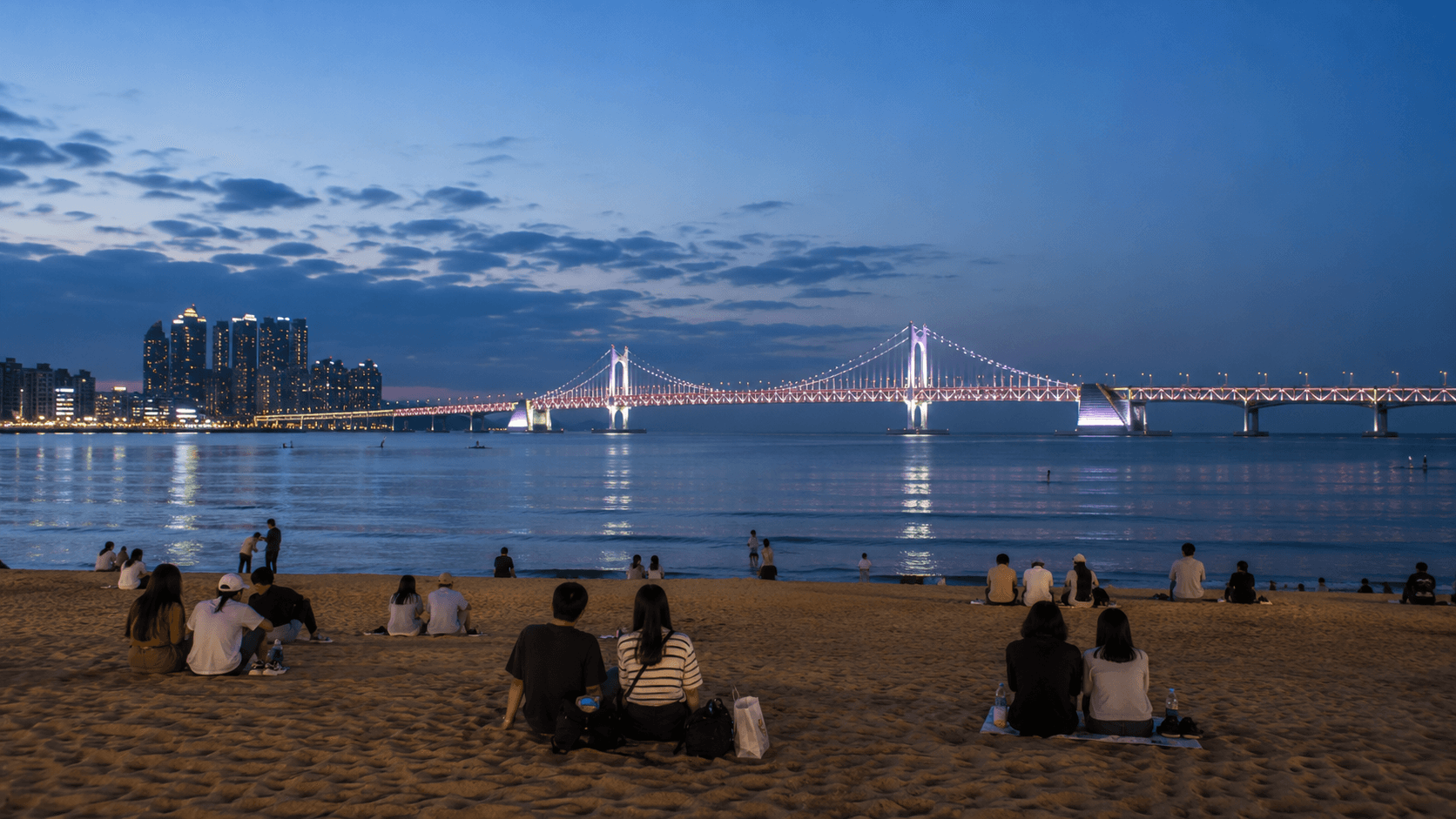
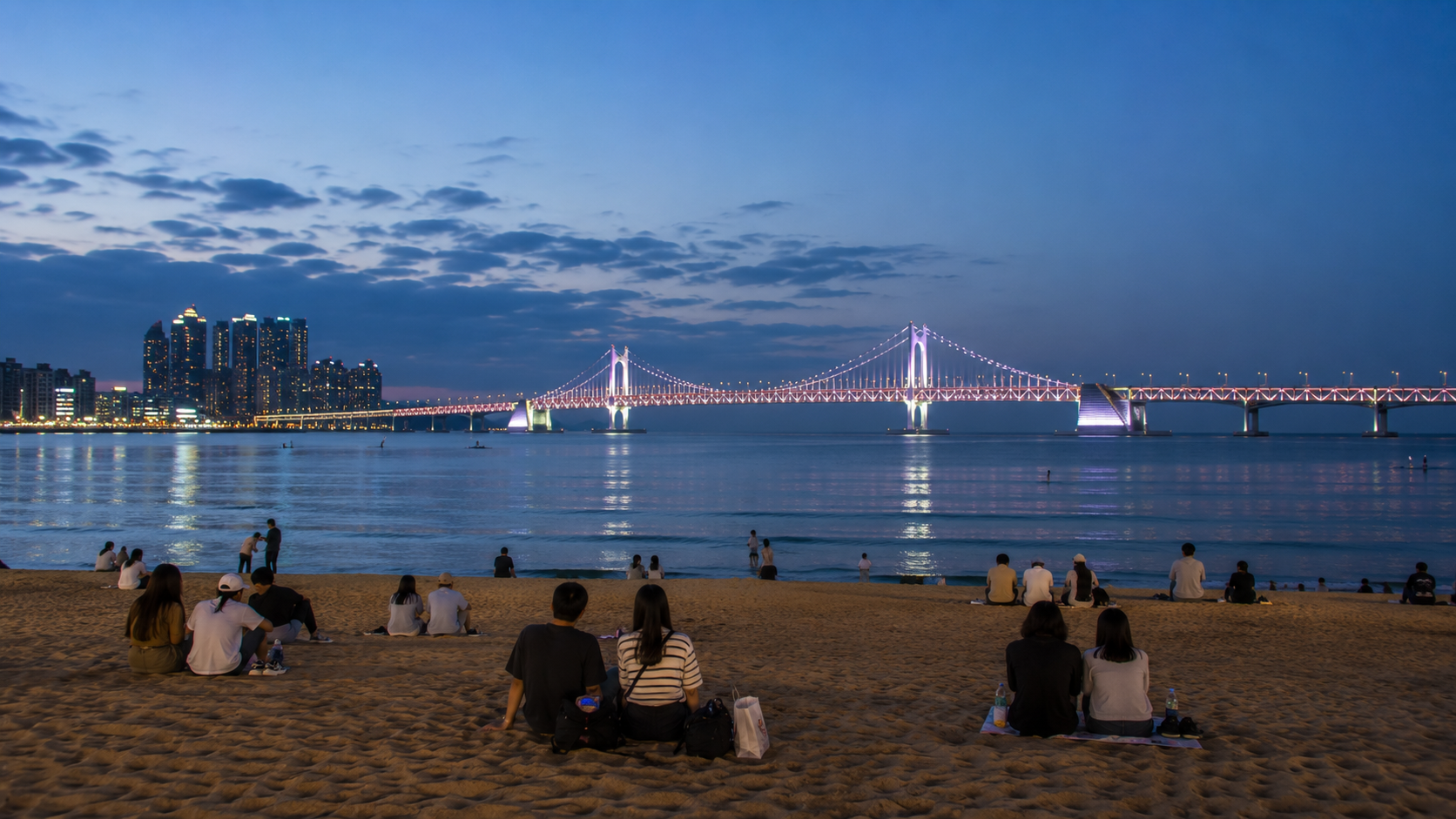
Gwangalli Beach (광안리해수욕장) is the better choice for an evening by the water. Its defining view is Gwangandaegyo Bridge, which spans the bay directly in front of the beach. The waterfront has cafés and restaurants, but you can also enjoy the view without buying anything.
The official Gwangalli listing states that the beach is open at all times and free to access. It is approximately a 13-minute walk from Exit 5 of Gwangan Station on Line 2. These details were verified on June 11, 2026.
Arrive before sunset to see the bay in daylight, then stay as the bridge lights become visible. Busking, festivals, and drone performances may affect crowds or traffic, but schedules can change because of weather and special events. Check the Suyeong-gu tourism website for current announcements.
3. Haedong Yonggungsa Temple
Haedong Yonggungsa (해동용궁사) occupies a rocky section of coast in Gijang, east of central Busan. Its oceanfront position makes it visually different from Korea’s many mountain temples, but it remains an active Buddhist religious site rather than a theme attraction.
Expect stairs, uneven surfaces, narrow approaches, and congestion on weekends and Buddhist holidays. Dress respectfully, keep voices low near prayer halls, and avoid blocking entrances while taking photographs. Admission arrangements and opening times should be confirmed through the official Haedong Yonggungsa website before departure.
Public transport usually involves a bus connection from eastern Busan. A taxi can save time when traveling from Haeundae, Songjeong, or Osiria, particularly for two or more people. Morning visits are generally more practical than midday visits because the main paths are narrow.
Combine the temple with Haeundae, Songjeong Beach, or another Gijang attraction. Pairing it with Gamcheon or Taejongdae on the same day creates unnecessary cross-city travel.
4. Gamcheon Culture Village
Gamcheon Culture Village (감천문화마을) consists of steep residential lanes overlooking western Busan. Public art, workshops, small museums, cafés, and colorful houses make it one of the city’s most recognizable districts. Its history, however, is connected to communities that settled on Busan’s hillsides during and after the Korean War.
According to the official Gamcheon Culture Village listing, the visitor facilities operate from 09:00 to 18:00 from March through October and 09:00 to 17:00 from November through February. General entry is free, although parking and individual experiences may cost extra. These details were verified on June 11, 2026.
Take a village bus from Toseong Station or Goejeong Station on Metro Line 1. Walking uphill from the lower surrounding neighborhoods is possible, but it is tiring and inefficient. The village contains numerous slopes and stairs, so accessibility is limited beyond the principal roads and viewpoints.
This remains a residential neighborhood. Do not enter private alleys marked against entry, photograph through windows, fly a drone, or make excessive noise. Visit Busan specifically asks travelers to maintain quiet and cleanliness.
5. Jagalchi Market, BIFF Square, and Gukje Market
These neighboring sights form Busan’s most convenient half-day market route. Begin near Jagalchi Station, explore the seafood district, continue through BIFF Square, and then walk into Gukje Market and Bupyeong Kkangtong Market.
Jagalchi Market (자갈치시장) includes the prominent waterfront market building as well as surrounding seafood streets. If you plan to eat seafood upstairs or in a nearby restaurant, ask for the complete price before ordering. Confirm whether preparation charges, table fees, or side dishes are billed separately. Current building information is available from the official Jagalchi Market operator.
BIFF Square commemorates Busan’s film culture and is now better known to casual visitors for snack stalls. Gukje Market sells clothing, household goods, tools, souvenirs, and food across a network of covered and open lanes. Business hours vary by individual vendor, and some stalls close one day each month or finish earlier than neighboring shops.
Cash remains useful at traditional stalls, although established shops and restaurants commonly accept Korean cards. Foreign card acceptance is not guaranteed at every small vendor. Carrying a modest amount of KRW avoids payment problems.
6. Huinnyeoul Culture Village and Jeoryeong Coastal Trail
Huinnyeoul Culture Village (흰여울문화마을) sits above the sea on Yeongdo. Its narrow lanes, white walls, cafés, and views of ships waiting outside Busan Port produce a different atmosphere from Gamcheon. The connected Jeoryeong Coastal Trail runs closer to the water below the village.
The official Huinnyeoul guide lists free entry and daily access. From Nampo Station Exit 6, transfer to bus 7, 71, or 508 and get off near Baengnyeonsa Temple in Yeongseon-dong. Details were verified on June 11, 2026.
The area has many stairs and steep sections. Visitors with limited mobility may prefer the upper road and main viewpoints rather than descending to the coastal trail. As at Gamcheon, homes remain mixed among visitor-oriented businesses, so follow signs and avoid treating residential doorways as photo sets.
Huinnyeoul can be combined with Taejongdae because both are on Yeongdo. Start at Huinnyeoul in the morning, eat lunch locally or near Taejongdae, and continue south by bus or taxi.
7. Taejongdae Park
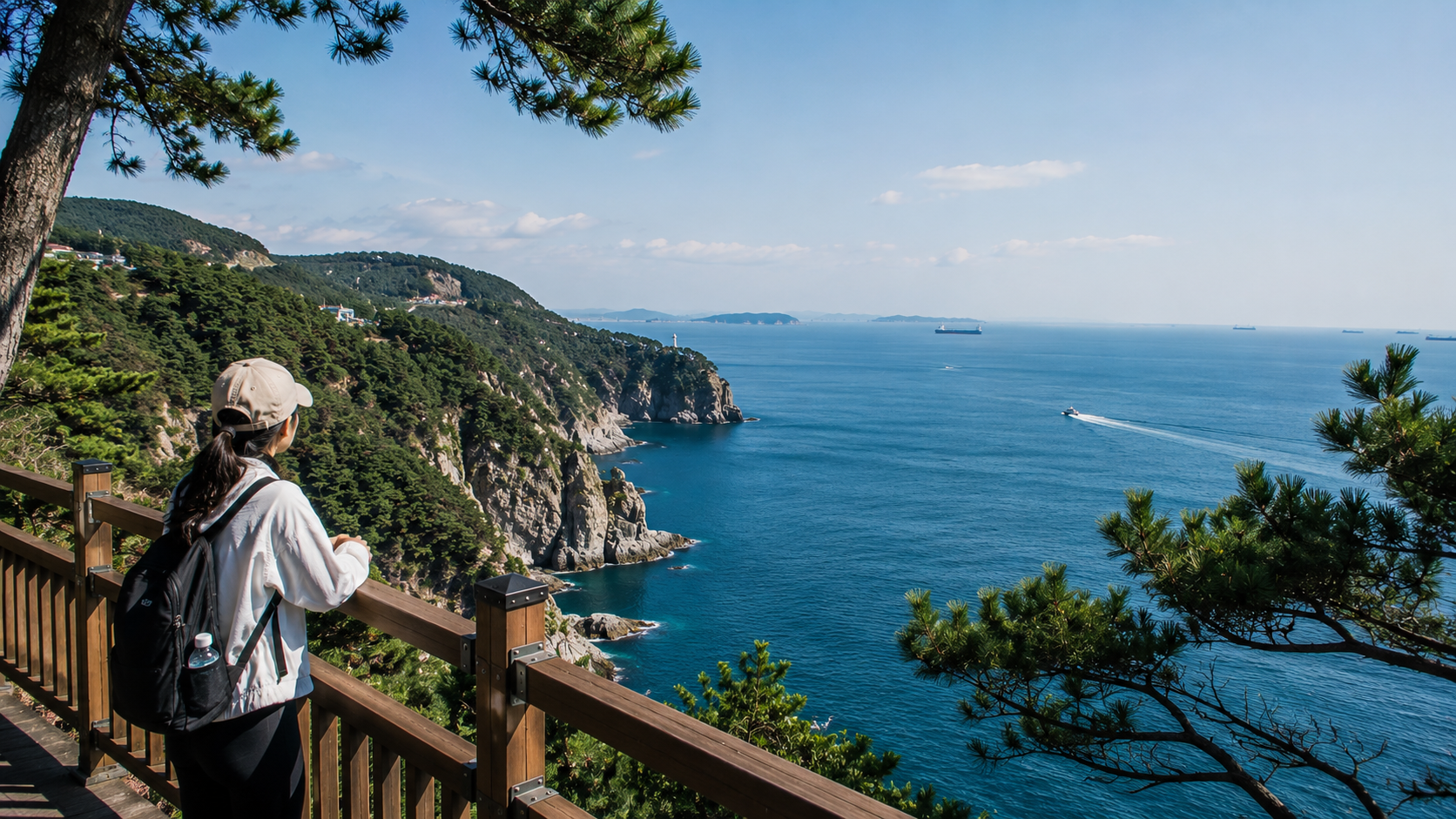
Taejongdae occupies the southern end of Yeongdo and offers forest paths, sea cliffs, an observatory, and Yeongdo Lighthouse. It is a good choice for travelers who want coastal nature without committing to a difficult mountain hike.
Park entry is free, but the Danubi sightseeing train has a separate fare. The official Taejongdae guide says the train does not operate on Mondays. Its listed operating period is 09:20–20:00 from June through August and 09:20–18:00 from October through April. The official English page did not clearly state September hours when checked on June 11, 2026, so confirm locally for a September visit.
Train operation can also be suspended because of weather, maintenance, or site conditions. Wear walking shoes even if you intend to ride, as reaching viewpoints and the lighthouse still requires walking and stairs.
From Busan Station, the official guide lists buses 17, 88, and 101. Bus journeys can be slow during weekends, so leave extra time rather than scheduling a tight connection afterward.
8. Oryukdo Skywalk and Igidae Coastal Walk
Oryukdo is a group of rocky islets off Busan’s southeastern coast. The nearby Oryukdo Skywalk provides a short glass-floor viewpoint, while the surrounding coast marks one end of the Igidae walking route.
The skywalk may close during strong winds, rain, ice, or maintenance. Opening hours have also changed seasonally, so check the official Visit Busan attractions directory before making a dedicated journey.
Travelers wanting only the viewpoint can allow about an hour after arrival. For a longer outdoor day, walk part of the Igidae coast toward the Gwangalli side. The full route requires more time and includes slopes, steps, exposed sections, and limited opportunities to buy drinks. Carry water and avoid starting late in the day.
Which Busan area should you choose?
For beaches and easy nightlife
Stay around Haeundae or Gwangalli. Haeundae offers more large hotels and straightforward visitor infrastructure. Gwangalli is preferable when bridge views and evening cafés matter more than resort facilities.
For markets and efficient sightseeing
Stay near Nampo, Jagalchi, or Busan Station. This side of the city provides convenient access to Gamcheon, BIFF Square, Gukje Market, Yeongdo, and KTX trains.
For quiet coastal scenery
Choose Yeongdo, Songjeong, or Gijang, but examine transport carefully. These areas can be rewarding for repeat visitors and slower trips, although they are less convenient for covering both eastern and western Busan.
A practical three-day plan
Day 1: Western Busan
Visit Gamcheon Culture Village in the morning. Continue to Jagalchi Market, BIFF Square, and Gukje Market for lunch and afternoon browsing. Finish at Yongdusan Park or travel to Gwangalli for the illuminated bridge view.
Day 2: Haeundae and the eastern coast
Go to Haedong Yonggungsa early, then return toward Haeundae. Walk along the beach and around Dongbaekseom. Spend the evening in Haeundae or move to Gwangalli if you did not visit it on the first day.
Day 3: Yeongdo or Oryukdo
Choose Huinnyeoul and Taejongdae for village lanes, port views, and forested cliffs. Choose Oryukdo and Igidae instead if your priority is a longer coastal walk.
Getting around without wasting time
Busan Metro is dependable for major districts, but several coastal attractions require a bus connection. Use a rechargeable Korean transport card for transfers and tap both when boarding and leaving buses. Check routes in a Korean mapping application shortly before departure because roadworks and service adjustments can affect bus stops.
Do not plan the city as if every attraction were beside a metro station. Haeundae to Gamcheon, for example, crosses much of Busan. Grouping sights geographically can save several hours over a three-day trip.
Taxis are useful for the final section to Haedong Yonggungsa, Taejongdae, or Oryukdo, especially when traveling as a group. Have the destination’s Hangul name ready because similarly translated English place names can cause confusion.
What to check before you go
- Check the day’s weather, wind, and rain forecast before visiting skywalks, cliffs, or coastal trails.
- Confirm seasonal beach swimming rules rather than assuming year-round water access.
- Verify the Danubi train’s operation on the morning of a Taejongdae visit.
- Wear shoes suitable for stairs and slopes at Gamcheon, Huinnyeoul, Taejongdae, and Yonggungsa.
- Carry water when walking Igidae or other exposed coastal routes.
- Ask for the total price before ordering seafood at a market.
- Keep a small amount of KRW for stalls or shops that cannot process your foreign card.
- Avoid combining far-eastern Gijang attractions with western Busan sights on the same half day.
- Follow residential-area etiquette and posted photography restrictions.
- Save the Visit Busan tourist information page and Korea’s 1330 Travel Helpline details for assistance.
Your next planning step should be to mark one eastern cluster, one western cluster, and one coastal walking area on your map. Build each day around a single cluster, then check the latest operating notices two or three days before departure.
Sources
- Visit Busan official travel guide
- Official Gamcheon Culture Village information
- Official Gwangalli Beach information
- Official Huinnyeoul Culture Village information
- Official Taejongdae information
- Haedong Yonggungsa official website
- Jagalchi Market official operator
- Korea Tourism Organization’s VISITKOREA