Incheon is much more than the location of South Korea's largest airport. The city combines a historic port district, modern Songdo, waterfront parks, beaches, tidal wetlands and far-flung islands. Because these areas are widely separated, the most practical approach is to choose one or two districts per day rather than trying to cross the entire city.
At a glance
| Place | Best for | Suggested time | Public transport |
|---|---|---|---|
| Chinatown and Open Port district | History, museums and food | Half day | Easy |
| Wolmido | Waterfront views and entertainment | 2-4 hours | Easy, with a bus or taxi from Incheon Station |
| Songdo Central Park | Modern architecture and evening walks | Half day | Easy |
| Ganghwado | Temples, dolmens and rural scenery | Full day | Possible but slower without a car |
| Eulwangri and Wangsan beaches | Sunset and an airport-area stopover | Half day | Bus or taxi |
| Muuido | Coastal walking and a quieter island atmosphere | Full day | Bus or car |
| Sorae Wetland Ecological Park | Wetlands, salt fields and photography | 2-3 hours | Moderate |
| Incheon Grand Park | Cycling, picnics and seasonal scenery | Half day | Easy |
Transport details, admission charges and operating information in this guide were checked on June 11, 2026. Recheck official pages before visiting because schedules, fares and seasonal facilities can change.
1. Chinatown and the Open Port district
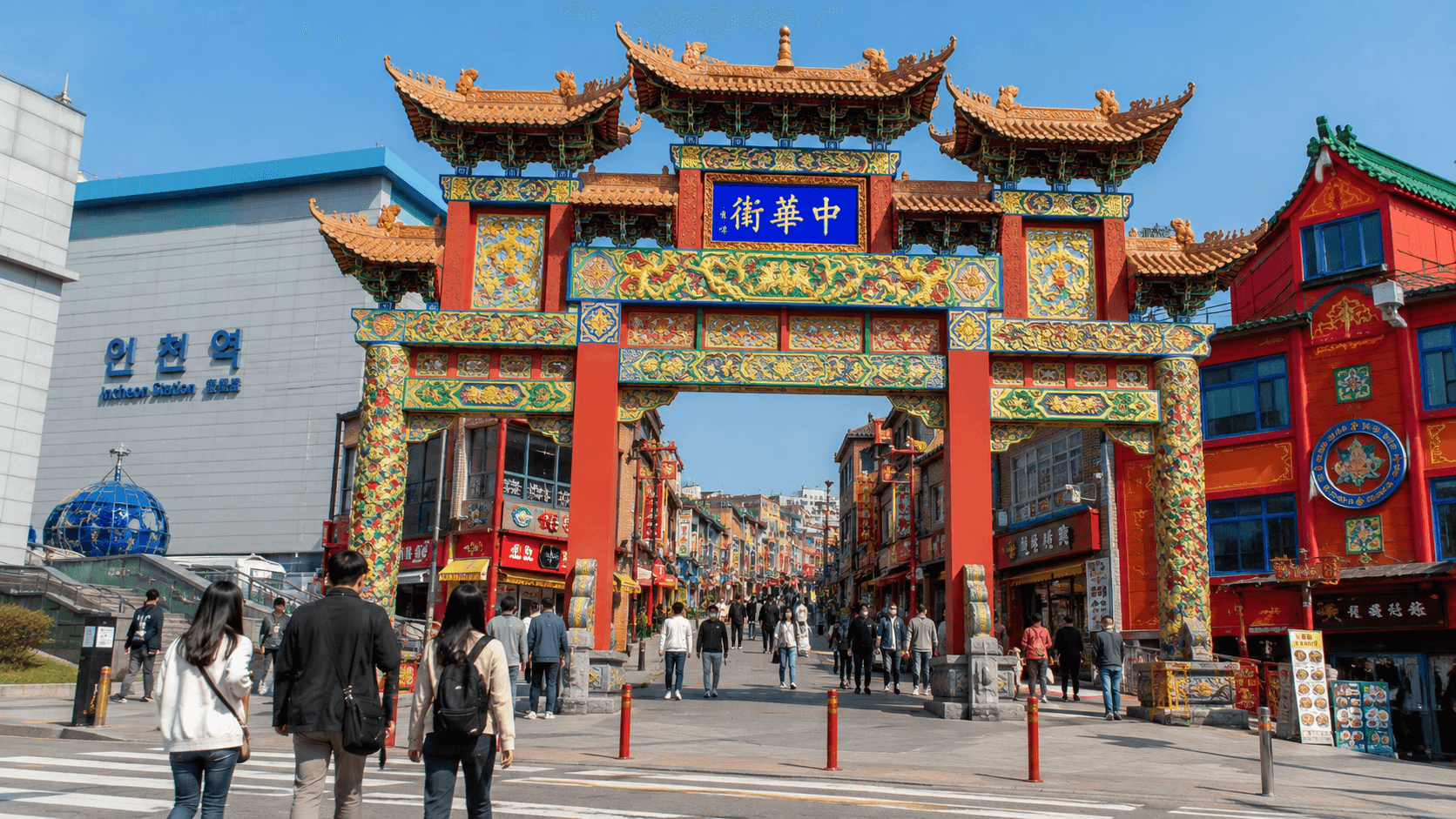
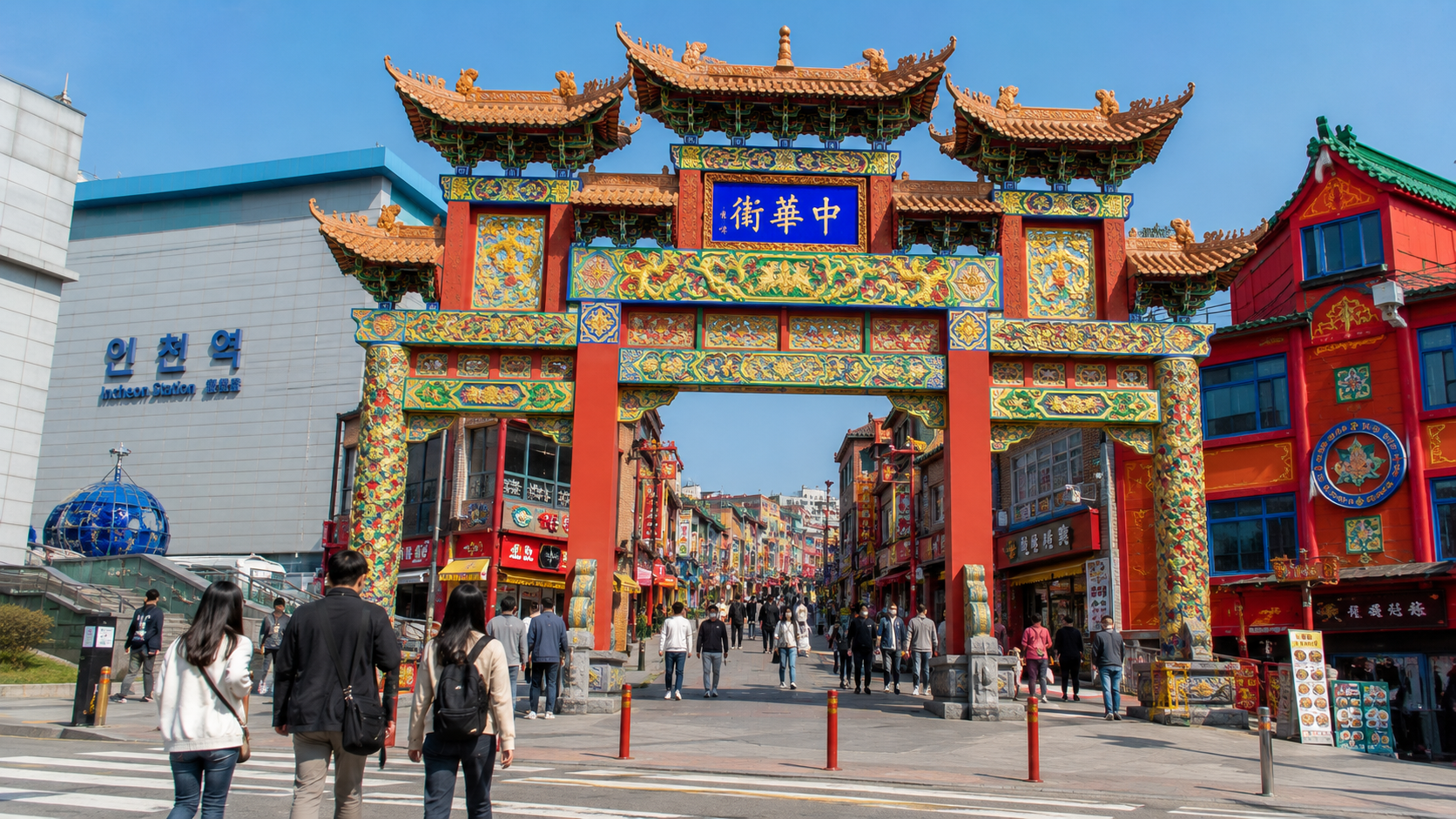
Start at Incheon Station, where Chinatown's large ceremonial gate is visible across the road. The neighborhood developed after Incheon opened to international trade in the late nineteenth century. Today it mixes Chinese-influenced architecture and restaurants with sites connected to Korea's modern port history.
The area is compact enough to explore on foot. A useful route is:
- Enter Chinatown through the gate opposite Incheon Station.
- Walk through the restaurant streets to the Jajangmyeon Museum.
- Cross the Qing-Japanese Settlement Boundary Stairs.
- Continue uphill to Jayu Park, also called Freedom Park.
- Descend through the Open Port district toward Incheon Art Platform and Sinpo International Market.
The Jajangmyeon Museum explains the development of jajangmyeon (짜장면), the Korean-Chinese noodle dish covered with black bean sauce. Museum hours and admission policies can change, so confirm them through the official Incheon Jung-gu tourism site rather than relying on restaurant blogs.
Do not treat Chinatown as only a lunch stop. The neighboring Open Port streets contain former banks, consular-era buildings, religious sites and small museums. The district's hills and older pavements may be tiring for wheelchair users or travelers with heavy luggage.
Practical tip: Visit before lunch on a weekday if you prefer quieter streets. On weekends, popular restaurants may have queues. Check prices before ordering seafood or large shared dishes, and ask whether a menu item is intended for one person or a group.
2. Wolmido and the Wolmi Sea Train
Wolmido is a waterfront recreation district west of Incheon Station. Its promenade, amusement rides, cafes and seafood restaurants create a louder, more commercial atmosphere than the Open Port area. Come for coastal views and evening lights rather than a quiet beach.
The elevated Wolmi Sea Train circles the district and provides views of Incheon Port, the waterfront and surrounding city. The official operator describes the route as 6.1 kilometers, with a complete circuit taking about 42 minutes.
As verified on June 11, 2026, the official Wolmi Sea Train operation guide lists an adult normal fare of KRW 8,000. It operates from 10:00 to 18:00 in the November-March off-season. From April through October, listed hours are 10:00-18:00 Tuesday through Thursday and 10:00-21:00 Friday through Sunday and on national holidays. Monday is the regular closing day. Service can be suspended because of weather or technical conditions.
Online reservations open at 09:00 on the first day of the preceding month and close at midnight before the travel date; same-day online reservations are not offered. Cancellation fees may apply close to departure. Check notices immediately before your trip, particularly during holidays or poor weather.
For a balanced visit, ride the train in daylight, walk along Wolmi Cultural Street and then stay for sunset. Wolmi Park offers a calmer alternative to the amusement area, although reaching its viewpoints involves slopes.
3. Songdo Central Park
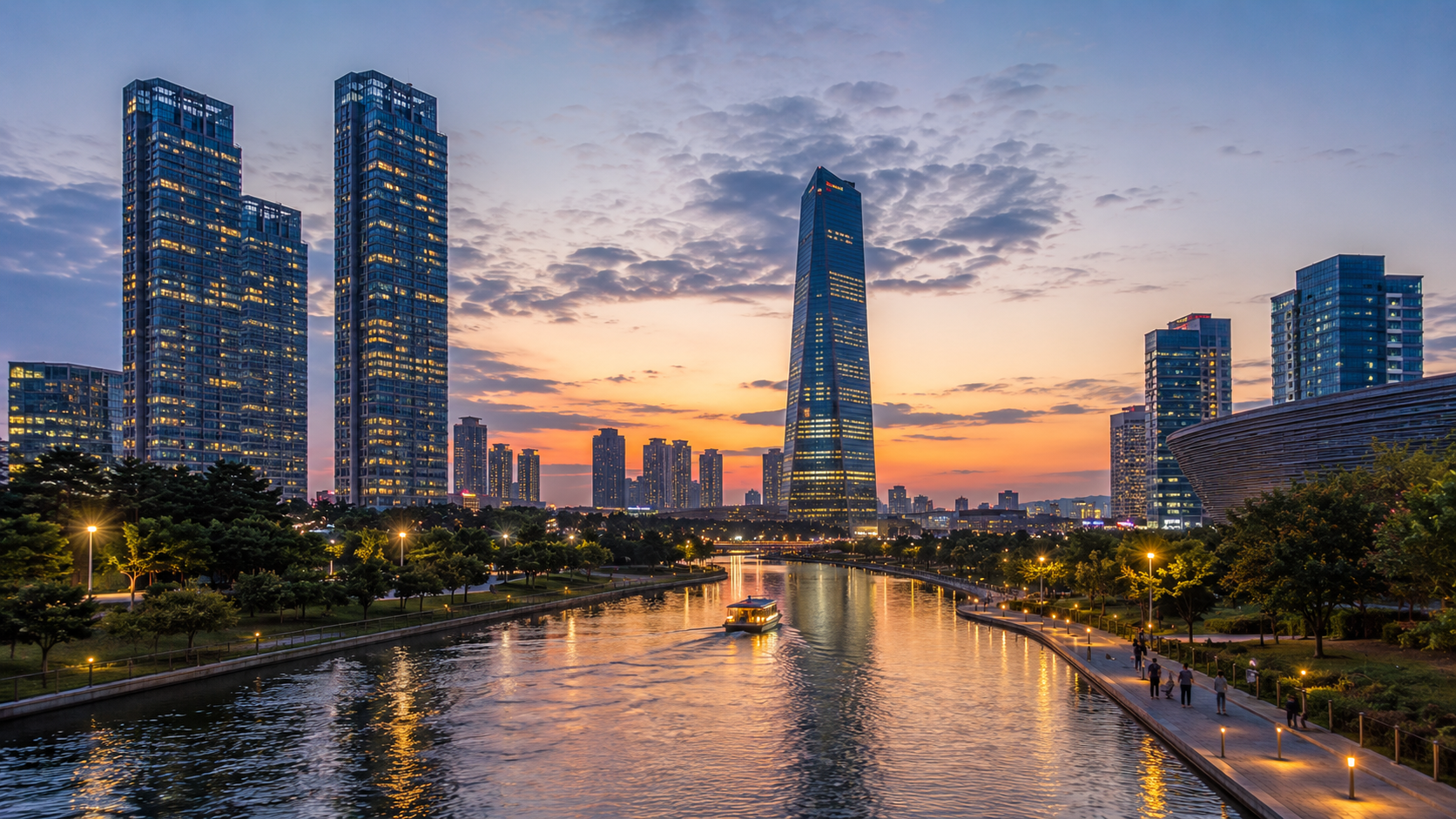
Songdo presents a completely different side of Incheon: broad avenues, high-rise buildings, landscaped public spaces and a seawater canal. Central Park is the district's most convenient starting point and is directly accessible from Central Park Station on Incheon Subway Line 1.
Walk around the canal, cross the pedestrian bridges and look toward the distinctive Tri-Bowl cultural building. The park is particularly attractive in the late afternoon, when the buildings reflect on the water and temperatures become more comfortable.
Allow two or three hours for an unhurried circuit. Seasonal water activities and commercial boat services may operate, but schedules and prices are subject to weather and operator decisions. Confirm these locally rather than planning your day around an unverified departure.
Songdo's main paths are generally broad and comparatively accessible, but distances between buildings can be longer than they appear on a map. There is little shade on some stretches, so bring sun protection in summer. Cafes and restaurants are available around the park and nearby commercial areas.
Best combination: Visit Songdo Central Park in the afternoon, eat nearby and remain until the skyline lights come on. Chinatown and Songdo can technically fit into one long day, but the cross-city journey reduces sightseeing time.
4. Ganghwado: dolmens, temples and rural landscapes
Ganghwado, or Ganghwa Island, is part of Incheon Metropolitan City but feels separate from the dense urban districts. It is the strongest choice for travelers interested in archaeology, traditional religious sites, walking routes and countryside scenery.
Ganghwa dolmens
Ganghwa contains prehistoric dolmens included in the UNESCO-listed Gochang, Hwasun and Ganghwa Dolmen Sites. The most recognizable example is the large table-shaped Bugeun-ri dolmen near the Ganghwa History Museum. The Ganghwa County dolmen guide provides official background and visitor information.
Jeondeungsa Temple
Jeondeungsa (전등사) stands within the historic Samnangseong fortress walls. Its wooded setting and traditional halls make it a good cultural stop even for visitors who are not participating in religious activities. Dress and behave respectfully: keep voices low, avoid obstructing worshippers and follow signs concerning photography inside halls. The Ganghwa County temple directory should be checked for current information.
Manisan Mountain
Manisan is one of Ganghwa's principal hiking destinations. Trails vary in difficulty, and sections can include steep stone steps. Check weather, trail conditions and seasonal restrictions through the official Manisan site before setting out. Wear proper shoes and allow enough time to descend before dark.
Ganghwado is connected to the mainland by road, not by a subway line. Buses are available, but transferring between rural attractions can consume much of the day. A car, taxi arrangement or scheduled tour is more efficient when combining several sites. The official Incheon City Tour lists themed routes that may include Ganghwa-area destinations, but routes operate on selected days and require advance checking.
5. Eulwangri and Wangsan beaches
Eulwangri Beach (을왕리해수욕장) and neighboring Wangsan Beach are on Yeongjongdo, the island that also contains Incheon International Airport. They are practical for travelers with a long layover or an extra night near the airport, provided there is ample time for transport and airport procedures.
These Yellow Sea beaches have dramatic tidal changes. At low tide, the water may recede far from shore and expose broad mudflats; at high tide, the experience looks completely different. Check the local tide forecast before choosing your arrival time. Swimming areas, lifeguard coverage, showers and rental services may be seasonal, so do not assume full beach facilities outside the official summer period.
The west-facing coast is well positioned for sunset. Eulwangri has more restaurants and commercial activity, while Wangsan generally feels more open. Traffic can be heavy on summer weekends and public holidays.
The Incheon Jung-gu tourism guide identifies Eulwangri, Wangsan, Masian and Muuido among the area's main coastal destinations. A taxi is usually the simplest airport connection, but travelers should check the estimated travel time and fare in a Korean navigation app before departing.
6. Muuido and Hanagae Beach
Muuido (무의도) is connected to the airport area by road via Muui Bridge. Its main attractions include Hanagae Beach, coastal scenery and walking routes around Horyonggoksan and Guksabong peaks.
Choose Muuido when you have most of a day and want something less urban than Songdo or Wolmido. Hanagae's appearance changes significantly with the tide, and exposed tidal flats are part of the landscape. Coastal trails can become slippery after rain, while summer heat and limited shade make sufficient water essential.
Public buses reach the island, but service intervals and routes may not match foreign-language map results perfectly. Check both Naver Map and KakaoMap on the day of travel, and avoid depending on the final bus unless you have confirmed it. A car offers more flexibility, especially when combining Muuido with beaches on Yeongjongdo.
7. Sorae Wetland Ecological Park
Sorae Wetland Ecological Park preserves salt-field and wetland scenery associated with the area's former salt-production landscape. Wooden walkways, reed beds, windmills and open skies make it popular with walkers and photographers.
Early morning offers softer light and better conditions for observing birds without large crowds. Remain on designated paths and avoid approaching wildlife. Wetland colors and water levels vary by season and tide, so promotional photographs may not match conditions on the day.
The park itself is separate from Sorae Port and its fish market. Combining them is possible, but check the walking or bus route rather than assuming they are immediately adjacent. Facility notices are published through the Incheon city parks website.
8. Incheon Grand Park
Incheon Grand Park is a useful choice for families, cyclists and travelers who want a spacious green area without leaving the urban transport network. Facilities include a lake, arboretum, woodland areas, playgrounds, sports facilities and seasonal attractions.
According to the official park information, verified June 11, 2026, general park hours are 05:00-23:00 in summer and 05:00-22:00 in winter. Individual facilities may keep shorter hours, close on designated days or require reservations. Incheon Grand Park Station on Incheon Subway Line 2 serves the south gate.
Spring blossoms and autumn foliage attract substantial weekend crowds. For a quieter visit, arrive early on a weekday. Bicycle availability, botanical facilities, the children's zoo and other individual services should be checked separately before travel.
How to plan your Incheon itinerary
One day: historic Incheon
- Morning: Chinatown and the Open Port district
- Lunch: Chinatown or Sinpo International Market
- Afternoon: Wolmi Sea Train and Wolmi Park
- Evening: Wolmido waterfront
One day: modern Incheon and wetlands
- Morning: Sorae Wetland Ecological Park
- Afternoon: Songdo Central Park
- Evening: Dinner and skyline views in Songdo
One day: airport-area coast
- Morning: Muuido or Masian Beach
- Afternoon: Eulwangri and Wangsan beaches
- Evening: Sunset, followed by a return to the airport or airport-area accommodation
One full day: Ganghwado
Choose two or three major stops, such as the dolmens, Jeondeungsa and a section of a walking route. Attempting to cover every museum, temple and viewpoint in one day creates excessive driving time.
Getting around Incheon
Incheon Station, the Open Port district and Chinatown are in the older western city center. Songdo lies much farther south, while the airport beaches are on Yeongjongdo and Ganghwado is northwest of the main urban area. A search result labeled simply “Incheon” can therefore be more than an hour from another Incheon destination.
Use Naver Map or KakaoMap for local bus stops, walking entrances and real-time routing. Google Maps can be useful for orientation, but its Korean public-transport and walking information may be less complete. A rechargeable transportation card such as T-money can be used on ordinary metropolitan subways and buses; tourist services such as the Wolmi Sea Train require separate tickets.
Travelers carrying suitcases should use airport or station lockers where available. Historic districts have hills and uneven surfaces, and buses to beaches or rural areas may not have generous luggage space.
What to check before you go
- Weather: Coastal wind, summer heat, heavy rain or winter cold can substantially change the experience.
- Tides: Check tide times for beaches, mudflats and coastal walks.
- Closing days: Museums, tourist trains and city tours often have weekly closing days.
- Last transport: Confirm the final bus when visiting Muuido, Ganghwado or airport-area beaches.
- Reservations: Book the Wolmi Sea Train, themed city tours and limited-capacity activities in advance where required.
- Footwear: Wear shoes with grip for Ganghwado trails, wetland paths and coastal routes.
- Accessibility: Confirm elevators, step-free entrances and accessible toilets directly with individual attractions. Older districts and mountain sites include slopes and stairs.
- Airport timing: Do not attempt a beach excursion during a short connection. Include immigration, baggage, terminal transfers and security screening in your calculation.
Frequently asked questions
Is Incheon worth visiting from Seoul?
Yes, particularly for the Open Port district, Chinatown, Wolmido or Songdo. The historic center works well as a day trip, but Ganghwado and the airport coast are better treated as separate excursions.
Can I see Incheon during an airport layover?
Possibly, but only with a sufficiently long connection. Yeongjongdo beaches are geographically closer to the airport than Chinatown or Songdo. Travelers must independently confirm entry requirements and leave ample time to return for their flight.
Which area is best for a first visit?
Choose Chinatown, the Open Port district and Wolmido if you want history and local character. Choose Songdo for modern architecture and an easy evening walk. Choose Ganghwado for a full day focused on heritage and nature.
How many days does Incheon need?
One day covers a coherent district, not the whole city. Two or three days allow separate visits to historic Incheon, Songdo and either Ganghwado or the airport-area coast.
Begin by selecting the district that matches your interests, then build the day around nearby sights. Checking travel times between every stop before departure is the simplest way to avoid spending most of an Incheon trip in transit.