Jeonju is one of South Korea’s most rewarding cities for food-focused travel. Start with Jeonju bibimbap and kongnamul-gukbap, then make time for a shared makgeolli meal or a traditional set menu. The city has belonged to the UNESCO Creative Cities Network in the field of gastronomy since 2012, reflecting both its culinary traditions and its continuing investment in food culture.
This guide focuses on dishes rather than a fixed restaurant ranking. Businesses, menus, prices, and opening hours change frequently, so check current information directly before visiting. Time-sensitive information and linked listings were verified on June 11, 2026.
At a glance
| Food | Korean | What it is | Good for |
|---|---|---|---|
| Jeonju bibimbap | 전주비빔밥 | Rice mixed with vegetables, gochujang, egg, and often beef | Essential first meal |
| Soybean sprout soup with rice | 콩나물국밥 | Hot, light broth with rice and crunchy soybean sprouts | Breakfast or a simple lunch |
| Makgeolli table | 막걸리 한상 | Cloudy rice alcohol served with multiple shared dishes | Groups and evening meals |
| Hanjeongsik | 한정식 | Multi-dish Korean set meal | A slower, more formal meal |
| Baekban | 백반 | Rice, soup, and a changing selection of side dishes | Everyday local dining |
| Sundae and sundae-gukbap | 순대·순대국밥 | Korean blood sausage, or sausage in hot soup | Market-food explorers |
| Moju | 모주 | Sweet, spiced, low-alcohol drink | With soup or after a meal |
| Jeonju-style chocolate pie | 전주 초코파이 | Cream or jam-filled chocolate-coated cake | Portable souvenir |
1. Jeonju bibimbap
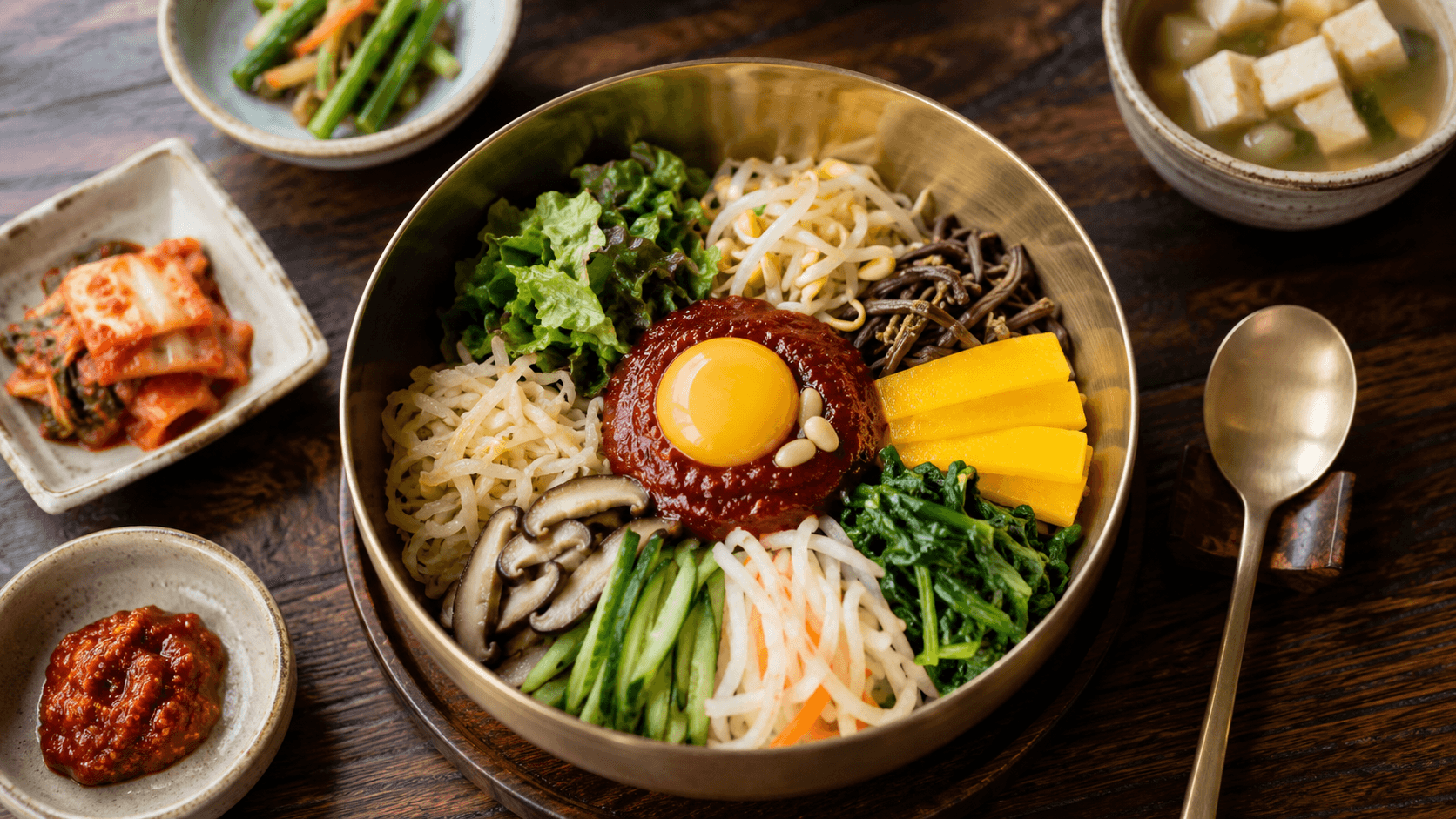
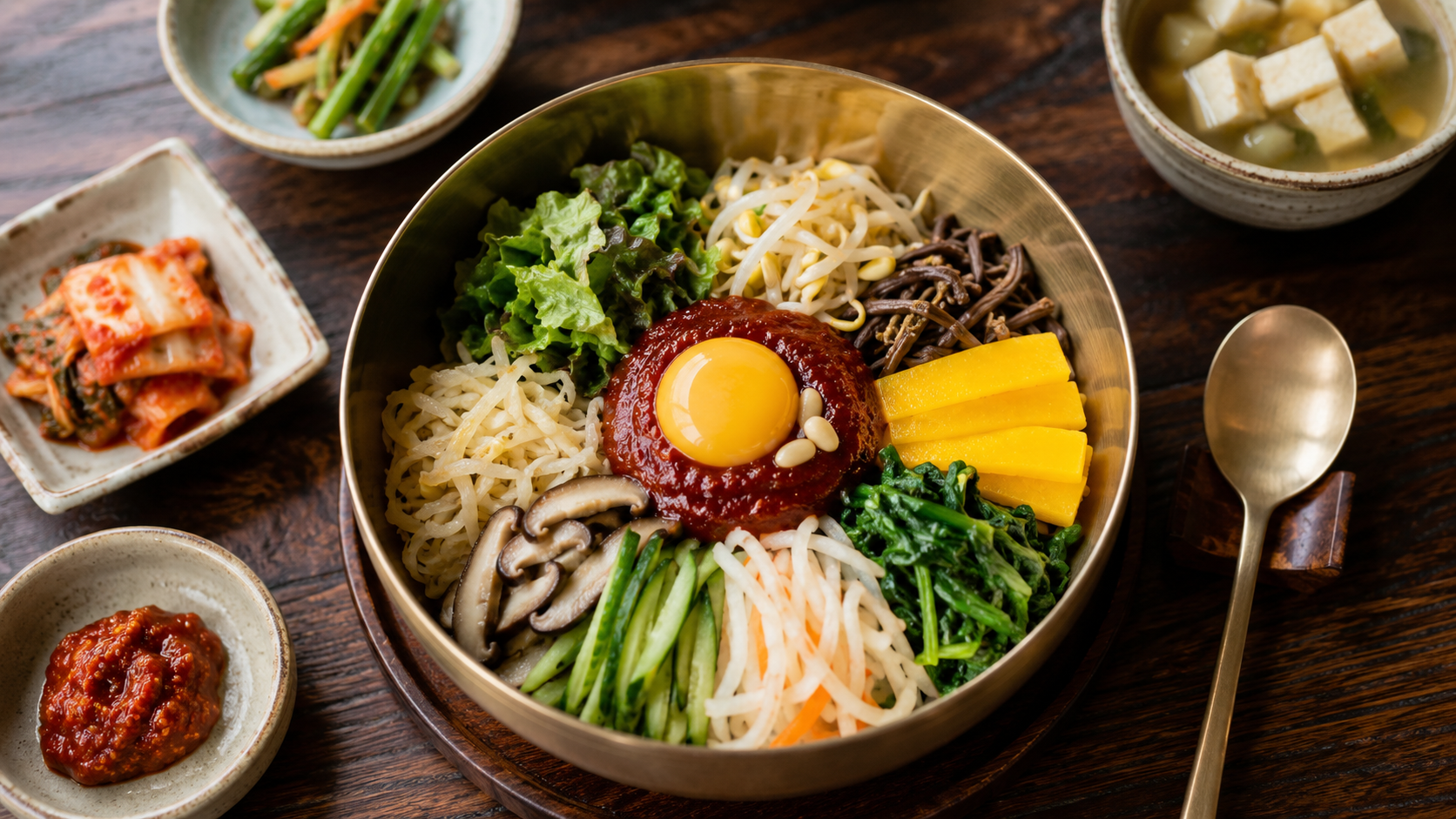
Jeonju bibimbap (전주비빔밥) is the city’s signature dish. Bibimbap literally means mixed rice: a bowl of rice is arranged with individually seasoned vegetables, gochujang red chili paste, sesame oil, egg, and usually beef.
What distinguishes a traditional Jeonju presentation is not one rigid recipe but attention to numerous separately prepared toppings. You may see soybean sprouts, spinach, mushrooms, fernbrake, radish, zucchini, seaweed, or hwangpomuk (황포묵), a yellow-tinted mung-bean jelly. Some restaurants use seasoned raw beef, called yukhoe (육회), while others provide cooked beef.
Mix the bowl thoroughly before eating. Add only part of the gochujang at first because its salt and spice levels vary. If the sauce comes in a separate container, you can adjust it gradually.
Regular bowl or hot stone bowl?
A standard brass or metal bowl lets you taste the vegetables clearly. Dolsot-bibimbap (돌솥비빔밥) arrives in a heated stone bowl and develops a crisp layer of rice at the bottom. The stone-bowl version is satisfying, especially in cold weather, but it is not automatically more traditional or more distinctly Jeonju-style.
Dietary questions to ask
A vegetable-heavy bowl is not necessarily vegetarian. The rice, sauce, or accompanying soup may contain beef, anchovy, or other animal products. Ask:
고기 들어가요?— Does it contain meat?육회 빼 주세요.— Please leave out the raw beef.계란 빼 주세요.— Please leave out the egg.완전 채식 가능해요?— Is a fully vegan version possible?
One established example is Han Kook Jib, which the Korea Tourism Organization lists as a Jeonju bibimbap specialist operating since 1952. Its published hours and other business details should still be reconfirmed on the day of your visit.
2. Kongnamul-gukbap: Jeonju’s everyday comfort food
Kongnamul-gukbap (콩나물국밥) combines soybean sprouts, rice, and hot broth in an earthenware bowl. It is less elaborate than bibimbap but equally important to Jeonju’s food identity.
The broth is commonly seasoned with garlic, spring onion, chili, and salted seafood or anchovy-based ingredients. Some versions include chopped squid. The soybean sprouts remain relatively crisp, giving the soup more texture than its simple appearance suggests.
Restaurants may serve an egg in the soup or provide a softly cooked egg in a separate bowl. If the egg is separate, diners commonly add a little broth and seaweed before eating it. There is no need to pour everything into the main bowl immediately.
Kongnamul-gukbap works particularly well for breakfast, cold weather, or a quick meal between sightseeing stops. It can arrive extremely hot, so stir the bowl and wait before taking the first spoonful.
Do not assume the clear broth is vegetarian. Ask about anchovy stock, salted shrimp, squid, and egg if you have dietary restrictions or seafood allergies.
3. A Jeonju makgeolli table
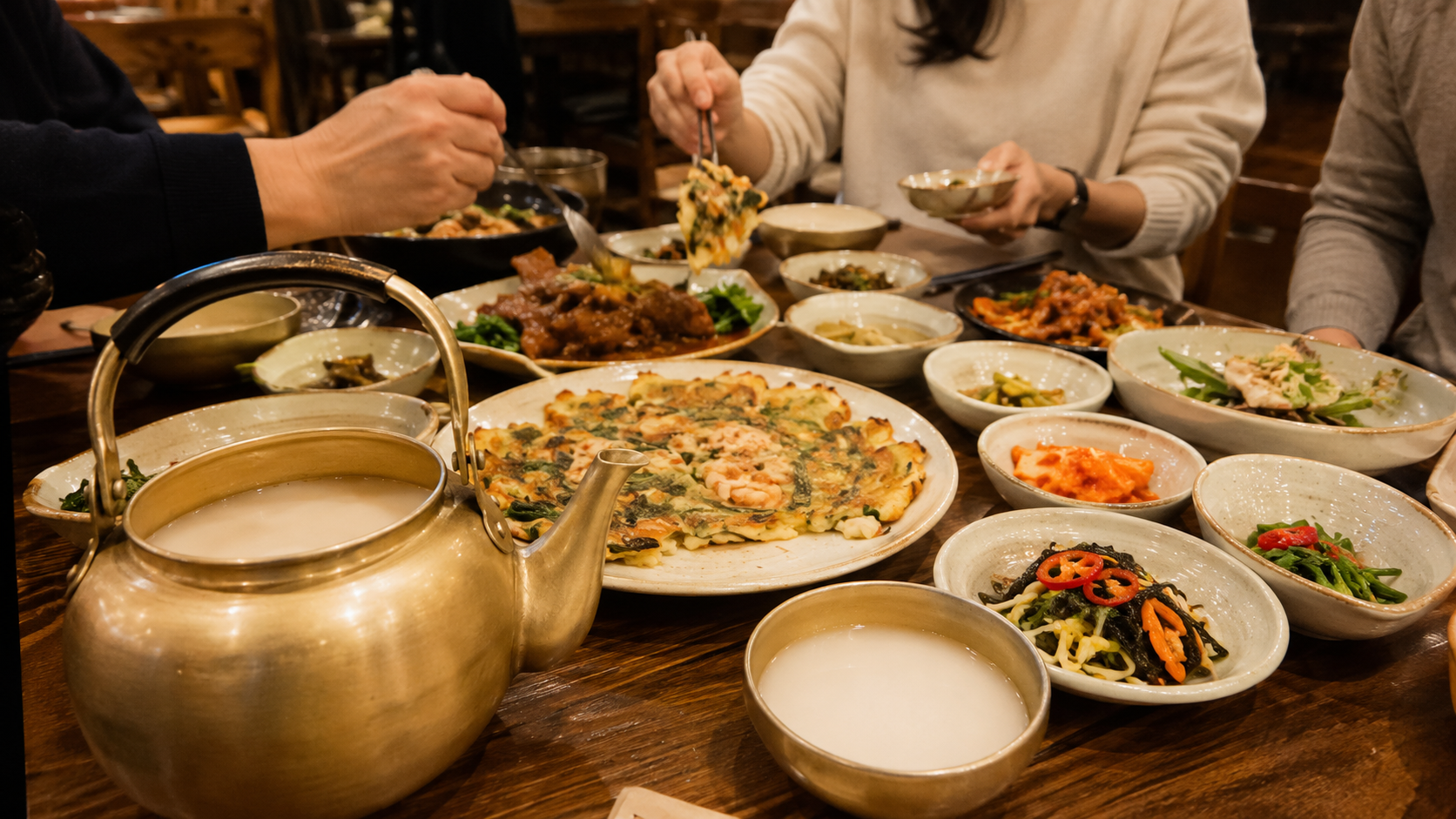
Makgeolli (막걸리) is a cloudy fermented drink generally made from grain, water, and nuruk, Korea’s traditional fermentation starter. Jeonju’s distinctive attraction is the makgeolli-table format: diners order alcohol and receive a changing collection of dishes to share.
Depending on the establishment and order size, the table might include pancakes, tofu and kimchi, grilled fish, braised meat, shellfish, seasoned vegetables, or soup. The exact system is not standardized. At some venues, ordering more kettles or a larger set unlocks additional dishes; elsewhere, food and alcohol are priced separately.
Before ordering, ask:
- What is included in the set?
- Is there a minimum order per table?
- Does the listed price cover food as well as alcohol?
- Can the kitchen accommodate allergies or vegetarian diners?
- Is the portion designed for two, three, or four people?
This experience is better for two or more diners because the food is served communally. Solo visitors should confirm whether a one-person order is accepted.
Makgeolli contains alcohol even when it tastes sweet or mild. Strength varies by product, so check the bottle rather than relying on taste. Korea applies strict drink-driving rules; use public transport or a taxi after drinking.
4. Hanjeongsik and baekban
Jeonju’s reputation also rests on meals with numerous banchan (반찬), the small shared side dishes placed around the table.
Hanjeongsik
Hanjeongsik (한정식) is a structured Korean set meal that can include rice, soup, vegetables, grilled or braised dishes, pancakes, meat, seafood, fermented foods, and dessert. More elaborate restaurants may serve the courses in stages rather than placing everything on the table at once.
This is a good choice when you want to explore a broad range of flavors in one sitting. Allow more time than you would for bibimbap or soup. Higher-end establishments and private rooms may require advance reservations, particularly for groups or weekend dinners.
Baekban
Baekban (백반), literally white rice, is the everyday counterpart. It usually consists of rice, soup or stew, and several side dishes determined by the restaurant. It is generally simpler than hanjeongsik and offers a clearer view of ordinary Korean home-style food.
Side dishes are shared unless individual portions are provided. Some restaurants refill selected banchan without charge, but this is not universal. Ask before requesting more, and take only what your table can finish.
5. Sundae at Nambu Market
Korean sundae (순대) is a sausage traditionally made by filling intestine casing with ingredients such as glass noodles, grain, vegetables, and blood. It is unrelated to the ice-cream dessert with the same English spelling.
At market stalls, sliced sundae may be served with salt or a regional dipping mixture. A more filling option is sundae-gukbap (순대국밥), which places sausage and sometimes assorted pork cuts in a hot soup with rice.
Ask what is included if you do not eat organ meat. Words such as 내장 mean innards or offal, while 순대만 means sundae only. Even a sundae-only serving is not suitable for vegetarians because blood and animal casing are standard ingredients.
Nambu Market (남부시장), near Pungnammun Gate and Jeonju Hanok Village, is a logical area to look for this style of food. Individual stalls keep their own schedules, and market conditions can change around holidays. Check the official Jeonju tourism portal for current visitor information before building an evening around a specific market event.
6. Moju: sweet, spiced, and still alcoholic
Moju (모주) is a dark, sweet drink associated with Jeonju and commonly offered alongside kongnamul-gukbap. It is made by simmering makgeolli with ingredients that may include cinnamon, ginger, jujube, licorice root, or brown sugar.
Heating reduces the alcohol, but it does not guarantee that the finished drink is alcohol-free. Recipes and commercial products differ. Anyone avoiding alcohol for medical, religious, pregnancy, driving, or personal reasons should check the label or ask the seller directly.
Moju is usually served in a small cup. Its sweetness and warming spice make it closer to a digestif than a drink intended to accompany an entire meal.
7. Jeonju-style chocolate pies
Jeonju-style chocolate pies are thick, individually wrapped cakes filled with cream, jam, or both and coated partly or completely in chocolate. Several bakeries now sell their own versions.
These pies are a modern commercial specialty, not an old regional dish on the same level as bibimbap or kongnamul-gukbap. They are still convenient souvenirs because they are portable and widely recognizable.
Check the use-by date and storage instructions, particularly in summer. Common allergens include wheat, milk, eggs, soy, and nuts. Fresh bakery versions may have a shorter shelf life than factory-packed products.
8. Kalguksu and market noodles
Kalguksu (칼국수) means knife-cut noodles. The noodles are served in broth, sometimes with dumplings, seaweed, perilla seed powder, or chili seasoning. Jeonju has well-known noodle shops, and a bowl can be a practical alternative when you need a break from set meals.
However, kalguksu is found throughout Korea and should not displace Jeonju’s more distinctive foods if you have only one or two meals in the city. Broths frequently contain anchovy, shellfish, or meat even when no obvious pieces are visible.
9. Hanok Village street food: choose selectively
Jeonju Hanok Village contains numerous snack shops selling grilled cheese, skewers, dumplings, ice cream, croquettes, and foods flavored or colored to reference bibimbap. These can be enjoyable while walking, but most are modern tourist snacks rather than representative Jeonju cuisine.
Treat them as optional additions. A common mistake is filling up on street snacks and then missing a proper bowl of kongnamul-gukbap or a shared local dinner.
Crowded pedestrian lanes also make hot food and long skewers awkward to carry. Step out of the main flow before eating, dispose of packaging properly, and remember that parts of the hanok area remain residential.
A sensible one-day eating plan
Breakfast
Order kongnamul-gukbap. It is filling without being excessively heavy and is available earlier than many formal restaurants.
Lunch
Choose Jeonju bibimbap. A standard bowl highlights the separate vegetables; choose dolsot if you prefer crisp rice and a hotter meal.
Afternoon
Share one chocolate pie or another bakery snack rather than sampling every novelty in Hanok Village. Visit Nambu Market if its stalls are operating when you are there.
Dinner
For two or more people, choose either a makgeolli table or hanjeongsik. Solo diners may find baekban, noodles, or sundae-gukbap easier to order.
Ordering and payment tips
- Search Korean map apps using the Hangul dish name, not only its English spelling.
- Restaurant queues often require entering a Korean phone number. Ask staff whether they can register an overseas visitor manually.
- Cards are widely used, but carrying some KRW cash is sensible for traditional markets and small stalls.
- Casual soup and bibimbap restaurants usually do not need reservations. Confirm directly for hanjeongsik, private rooms, large groups, or weekend makgeolli meals.
- Ask about chair seating if floor seating is difficult. Older hanok buildings may have steps, narrow entrances, or toilets that are not fully accessible.
- Never assume that vegetable dishes are vegan, halal, kosher, or free from seafood stock.
- Translation apps help, but show staff a written allergy card in Korean for serious allergies.
What to check before you go
- Current opening hours and break times
- The restaurant’s last-order time
- Weekly closing days and holiday changes
- Whether a makgeolli set has a minimum number of diners
- Whether raw beef can be replaced with cooked beef
- Whether soup stock contains anchovies, shellfish, beef, or pork
- Whether reservations require a Korean phone number
- Availability of chair seating, step-free access, and accessible toilets
- Storage requirements for bakery souvenirs
Operating hours and prices vary by business and were not consistently available from current official sources, so they have deliberately not been reproduced here. Check the restaurant’s official listing or contact it on the day of your visit. Travelers can also use the Korea Tourism Organization’s multilingual 1330 Travel Helpline for assistance.
Sources
- UNESCO Creative Cities Network: Jeonju
- Korea Tourism Organization listing for Han Kook Jib
- Official Jeonju tourism portal
- VISITKOREA official travel information
For your next step, save the Hangul names of two priority dishes in your map app: 전주비빔밥 for Jeonju bibimbap and 콩나물국밥 for soybean sprout soup with rice. Compare recent menus and opening notices near your planned sightseeing route before choosing a restaurant.