Korean desserts range from delicate rice cakes served with tea to hot street snacks filled with molten sugar. If you are trying them for the first time, start with bingsu for something cold, hotteok for a warm street snack, and yakgwa or injeolmi for more traditional flavors.
The selections below are editorial recommendations rather than an objective ranking. Availability, recipes, portion sizes, and prices vary by shop and season. Practical information and official resources were checked on June 11, 2026.
At a glance
| Dessert | Korean name | What it is | Where to look | Typical allergens to check |
|---|---|---|---|---|
| Bingsu | 빙수 | Shaved ice with sweet toppings | Dessert cafés | Milk, nuts, soy |
| Hotteok | 호떡 | Griddled filled pancake | Markets and street stalls | Wheat, nuts, sesame |
| Yakgwa | 약과 | Syrup-soaked fried confection | Markets, cafés, supermarkets | Wheat, sesame |
| Injeolmi | 인절미 | Rice cake coated in soybean powder | Rice-cake shops | Soy; possible nut cross-contact |
| Songpyeon | 송편 | Filled half-moon rice cake | Rice-cake shops, especially near Chuseok | Sesame, soy, nuts |
| Bungeoppang | 붕어빵 | Fish-shaped filled pastry | Street stalls in colder months | Wheat, egg, milk |
| Hodu-gwaja | 호두과자 | Walnut-shaped cake with red-bean filling | Station shops and bakeries | Walnut, wheat, egg, milk |
| Dalgona | 달고나 | Thin sugar candy | Tourist districts and markets | Usually simple, but check preparation |
| Dasik | 다식 | Small pressed tea confection | Traditional tea houses | Sesame, soy, nuts |
| Gangjeong | 강정 | Crisp grain or nut confection | Markets and gift shops | Nuts, sesame, soy |
| Yaksik | 약식 | Sweet glutinous rice with fruit and nuts | Rice-cake shops | Nuts, soy, sesame |
| Sikhye | 식혜 | Chilled sweet rice drink | Restaurants, markets, bathhouses | Usually rice and malt; verify additives |
Ingredient lists are only a starting point. Recipes differ, and small vendors may use shared tools or cooking oil.
1. Bingsu: Korea's essential summer dessert
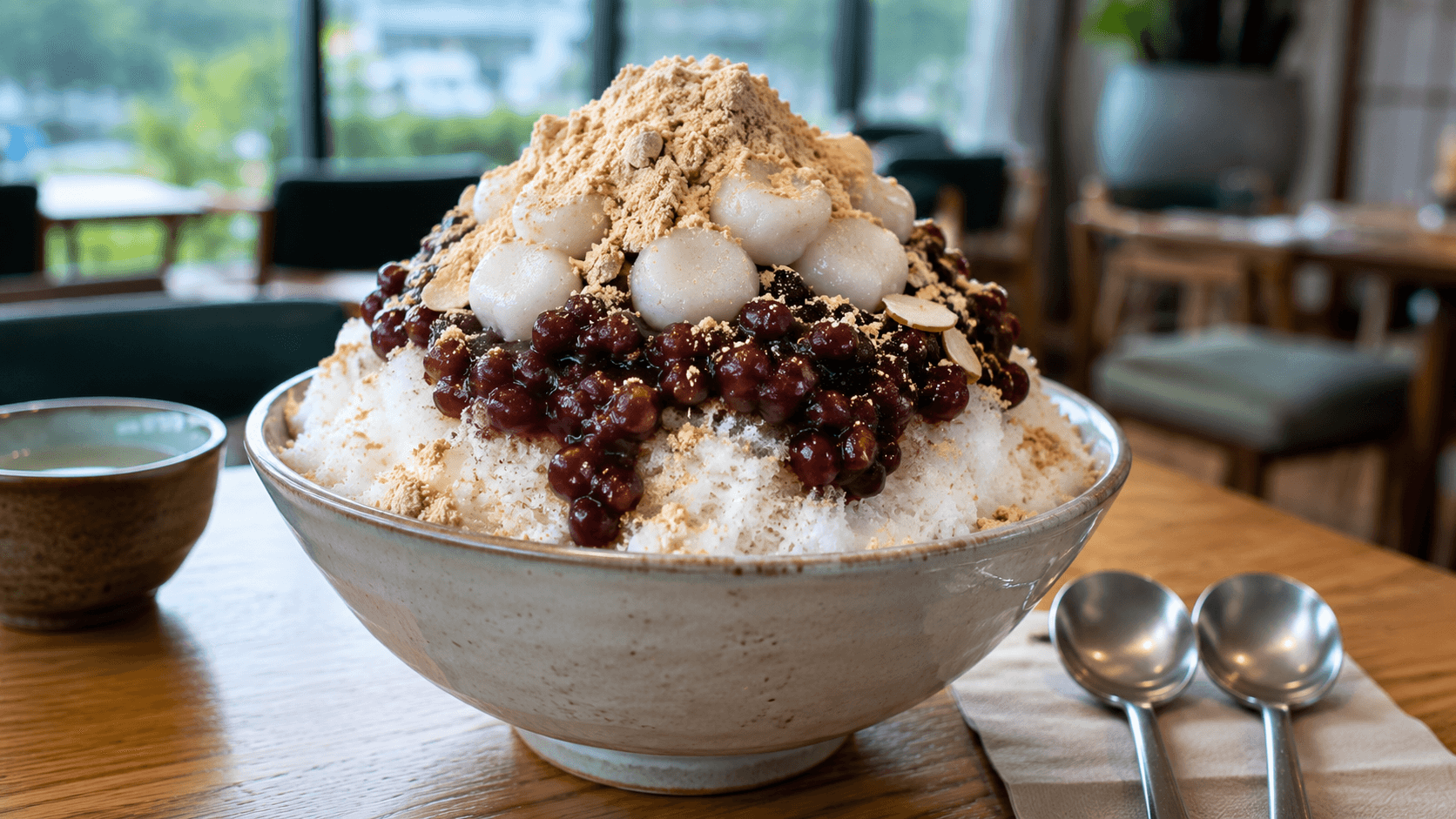
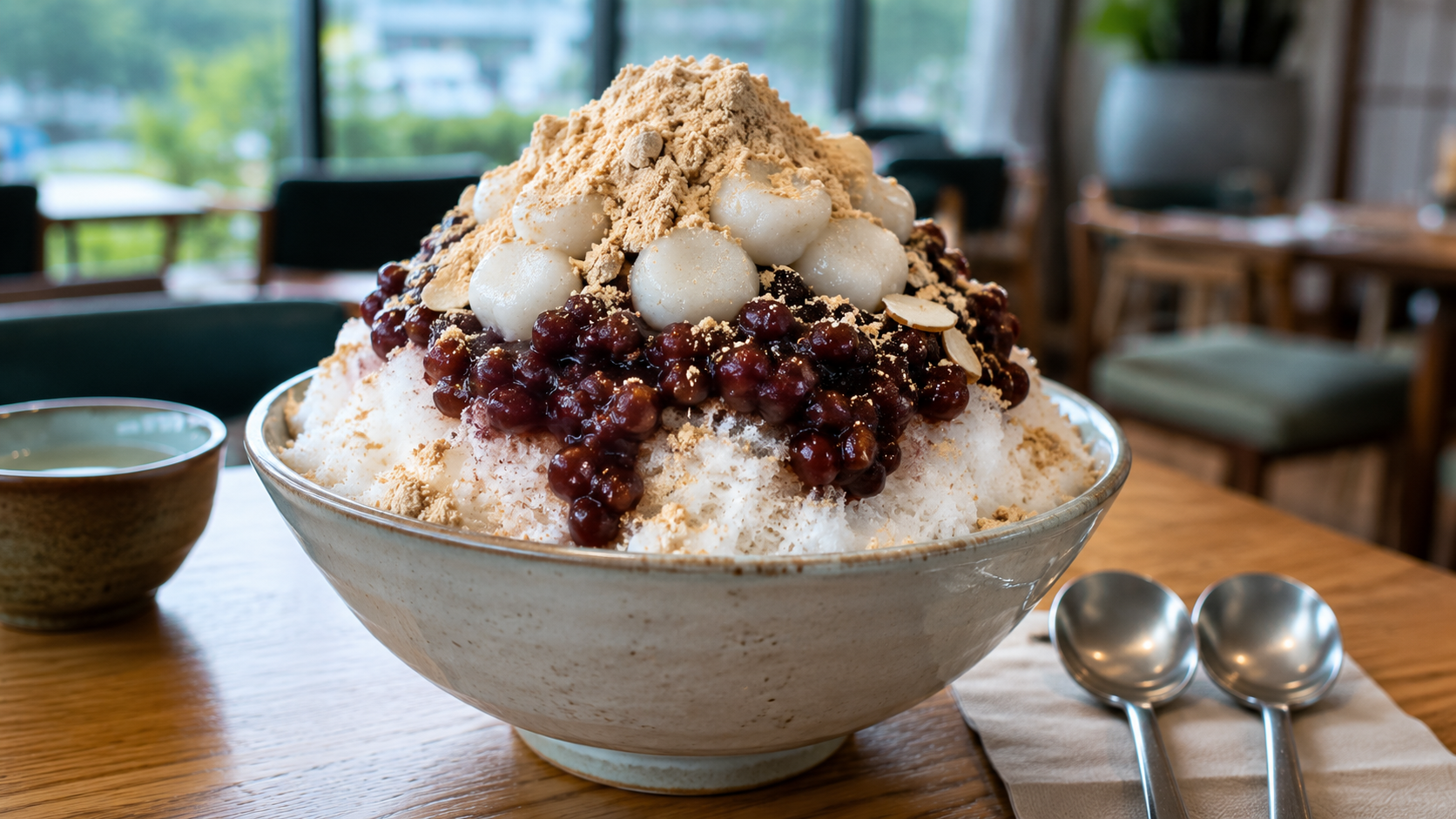
Bingsu (빙수) is finely shaved ice served with toppings. Traditional patbingsu (팥빙수) includes sweetened red beans, while modern versions may feature mango, strawberries, green tea, chocolate, cheesecake, or injeolmi rice cake.
Some cafés use plain ice, but many make a snow-like base from milk. Do not assume a fruit bingsu is dairy-free. Condensed milk, ice cream, cream, or milk-based ice may be added even when dairy is not obvious in the English menu.
Bingsu is often served in a large bowl intended for sharing. Before ordering, look for a serving-size note or ask:
- Is this for one person?
Igeo il-inbun-ieyo?(이거 1인분이에요?) - Does it contain milk?
Uyu deureogayo?(우유 들어가요?)
You can find bingsu at specialist dessert chains, independent cafés, hotel lounges, and traditional tea houses. Menus and prices change frequently, so check the café's current menu rather than relying on an older social-media post.
2. Hotteok: a hot pancake with a syrupy center
Hotteok (호떡) is made by filling dough and flattening it on an oiled griddle. The familiar sweet version contains a mixture such as brown sugar, cinnamon, seeds, and chopped nuts. When freshly cooked, the filling becomes extremely hot and runny.
Take a small bite from the edge and wait before eating the center. Tilting the pancake toward your clothes is a common and messy mistake.
Hotteok is strongly associated with cooler weather, although permanent market shops may sell it throughout the year. Regional and modern versions include seed-filled ssiat hotteok (씨앗호떡), green-tea dough, cheese, or savory fillings. Check the displayed name because not every hotteok is sweet or vegetarian.
3. Yakgwa: chewy Korean honey cookies
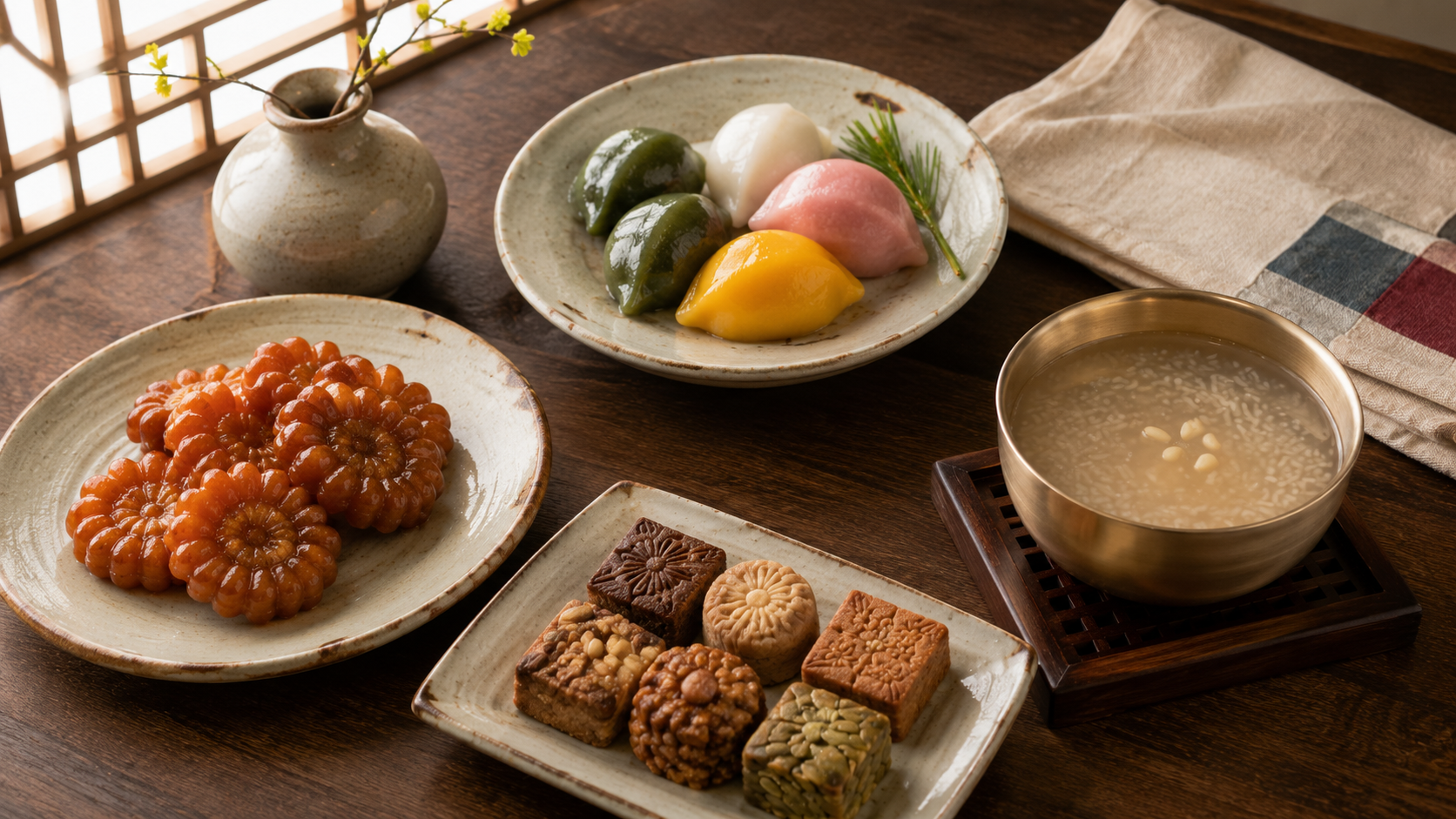
Yakgwa (약과) is a traditional fried wheat confection soaked in honey or syrup. It is usually dense, sticky, and gently flavored with ingredients such as sesame oil or ginger rather than intensely sweet frosting.
Small flower-shaped yakgwa are convenient for sampling and travel well when individually packaged. Larger handmade versions may be softer and richer. Try one with unsweetened tea or coffee, as the confection can feel heavy when eaten by itself.
Yakgwa belongs to the broader category of hangwa (한과), meaning traditional Korean confectionery. The Korean Food Promotion Institute maintains Korean-food recipes, publications, and standardized foreign-language menu terminology, although much of its website is in Korean.
4. Injeolmi: soft rice cake with roasted soybean powder
Injeolmi (인절미) is a soft, chewy rice cake commonly coated with konggaru (콩가루), a roasted soybean powder. Its flavor is mild, nutty, and less sugary than most Western cakes.
Fresh injeolmi is softest on the day it is made. It gradually firms as it sits, especially in a refrigerator. Buy a small portion unless you know how quickly you will eat it.
The powder is loose and easily falls onto clothing. Use the provided pick or fork rather than trying to eat a large piece in one bite. Modern cafés also use injeolmi flavors in toast, ice cream, tiramisu, and bingsu, but these adaptations usually contain more dairy and sugar than the rice cake itself.
5. Songpyeon: half-moon rice cakes
Songpyeon (송편) are small, filled rice cakes shaped like half-moons. Fillings can include sesame and sugar, sweetened beans, chestnuts, or mung beans. Pine needles are traditionally used during steaming, which can give the cakes a subtle fragrance.
Songpyeon are closely connected with Chuseok, Korea's autumn harvest holiday. They are easiest to find in the weeks around the holiday, when rice-cake shops and supermarkets prepare gift sets. Some specialist shops carry them at other times, but year-round availability should not be assumed.
Ask about the filling before buying a mixed box. Pieces of different colors do not necessarily follow a universal flavor code.
6. Bungeoppang: fish-shaped winter pastry
Despite its appearance, bungeoppang (붕어빵) normally contains no fish. It is a fish-shaped pastry traditionally filled with sweetened red-bean paste. Custard, cream cheese, chocolate, pizza, and other fillings are also common.
The name refers to bungeo, or crucian carp, because of the mold's shape. Vendors generally cook the pastries in batches, so the warmest pieces may be at the back of the tray.
Bungeoppang stalls are most visible during cold weather and may move or close without maintaining online listings. Look near subway exits, university districts, markets, and busy pedestrian streets rather than planning a long journey around a single temporary stall.
7. Hodu-gwaja: walnut cakes for train journeys
Hodu-gwaja (호두과자) are small walnut-shaped cakes, usually filled with sweet red-bean paste and a piece of walnut. They are especially associated with Cheonan but are sold at railway stations, motorway rest areas, bakeries, and shopping districts around Korea.
They are best warm, when the cake is soft and the filling is fragrant. Boxed versions are practical for sharing, but check the recommended storage period because fresh cakes do not keep like dry biscuits.
Anyone with a tree-nut allergy should avoid assuming the walnut shape is merely decorative. Traditional versions contain actual walnut, and preparation equipment may be shared.
8. Dalgona: simple sugar candy
Dalgona (달고나) is a brittle candy made by heating sugar and adding a small amount of baking soda. It is often pressed flat and stamped with a shape.
Some sellers offer a shape-cutting challenge, but this is an activity rather than an essential part of eating the candy. The texture is crisp and airy, with a toasted caramel flavor. It can become sticky in humid weather, so keep it wrapped if you are saving it.
Dalgona should not be confused with the whipped instant-coffee drink that became internationally known under the same name.
9. Dasik: small sweets made for tea
Dasik (다식) are small patterned confections traditionally pressed in decorative molds. Depending on the recipe, they may contain sesame, soybean, rice, chestnut, pine pollen, or other powdered ingredients mixed with honey or syrup.
Their texture is usually crumbly or compact rather than chewy. Because the pieces are small and subtly flavored, they make more sense with tea than as a stand-alone sugar snack.
Traditional tea houses are a better place to encounter dasik thoughtfully presented. A tea set may include only one or two pieces, which is generally enough to appreciate the flavor without purchasing a full gift box.
10. Gangjeong: crisp grains, seeds, and nuts
Gangjeong (강정) refers to traditional crisp confections made from ingredients such as puffed rice, sesame seeds, beans, or nuts held together with syrup. The term covers several textures and shapes, from light rice puffs to dense nut bars.
Gangjeong is easy to find in traditional markets and packaged gift sections, particularly around major holidays. It can be a practical edible souvenir because many varieties are dry and individually wrapped.
Check the ingredient label carefully if you have allergies. A pale rice-based piece may have been prepared beside peanut, walnut, sesame, or soybean products.
11. Yaksik: sweet, spiced glutinous rice
Yaksik (약식), also called yakbap (약밥), is sweet glutinous rice seasoned with ingredients such as soy sauce, sesame oil, and sweetener. Jujubes, chestnuts, pine nuts, or other nuts and fruit may be mixed through it.
It is dense and filling, so a small square can be enough. The flavor combines sweetness with toasted, salty, and fruity notes. Look for it at rice-cake shops, traditional markets, supermarket food counters, and ceremonial-food specialists.
This is a useful choice for travelers who prefer desserts without cream, but it is not automatically allergen-free or vegan. Ask about honey, nuts, soy sauce, and other seasonings.
12. Sikhye: a chilled sweet rice drink
Sikhye (식혜) is a traditional sweet drink made with rice and malt. It is usually served cold and may contain soft grains of rice at the bottom of the cup. The flavor is light and malty rather than creamy.
Restaurants sometimes provide a small serving after a meal. It is also sold in cans, bottles, markets, traditional tea houses, and jjimjilbangs (찜질방), Korean bathhouse and sauna complexes.
Packaged sikhye is the easiest version for beginners because the label provides ingredients and storage instructions. Shake it only if the package directs you to do so; otherwise, open it carefully because rice grains may have settled at the bottom.
Where to find Korean desserts
Traditional markets
Markets are useful for comparing street snacks, rice cakes, and packaged confections in one place. Selection differs by market and season. Some stalls accept cards or mobile payments, while others may prefer cash; confirm before ordering rather than assuming one payment method works everywhere.
Tteok shops
Search map apps for tteokjip (떡집), meaning rice-cake shop. These stores are the most direct place to look for injeolmi, songpyeon, yaksik, and assorted rice-cake boxes. Visit earlier in the day for a wider selection.
Traditional tea houses
Tea houses may serve yakgwa, dasik, rice cakes, or candied fruit alongside tea. They are generally a better setting for slowly tasting traditional sweets than a crowded street stall.
Convenience stores and supermarkets
These are useful for packaged yakgwa, sikhye, frozen bungeoppang, rice cakes, and modern dessert products. Packaging makes it easier to examine ingredients and expiry dates, although English labeling may be limited.
Dessert cafés and bakeries
Cafés are the main place for bingsu and contemporary desserts flavored with black sesame, mugwort, soybean powder, sweet potato, or green tea. Treat terms such as “injeolmi cake” as flavor descriptions: the product may be a Western-style cake containing cream, wheat, and eggs.
Ordering and allergy precautions
Korean desserts frequently use wheat, milk, eggs, soybeans, sesame, peanuts, walnuts, pine nuts, and other tree nuts. Red-bean filling is not necessarily free from these ingredients because the surrounding dough or shared preparation area may introduce allergens.
For packaged food, use the ingredient and allergen information on the label. The Ministry of Food and Drug Safety provides official information about Korea's food-safety and labeling systems. For a severe allergy, do not rely only on a translated menu or visual inspection; communicate the exact allergen and avoid food when the seller cannot confirm the ingredients or cross-contact risk.
Useful phrases include:
- I have a peanut allergy:
Ttangkong allergy-ga isseoyo.(땅콩 알레르기가 있어요.) - Does this contain milk?
Igeo uyu deureogayo?(이거 우유 들어가요?) - Does this contain nuts?
Igeo gyeongwallyu deureogayo?(이거 견과류 들어가요?) - What is inside?
An-e mwo deureogayo?(안에 뭐 들어가요?)
These phrases help start the conversation, but they are not a guarantee that a vendor can assess cross-contact.
What to check before you go
- Check the shop's current opening day and last-order time on its official channel.
- Confirm whether a bingsu bowl is intended for one person or for sharing.
- Carry a small amount of KRW cash when visiting temporary street stalls.
- Ask about fillings before buying mixed rice cakes or pastries.
- Check milk, wheat, egg, soy, sesame, peanut, and tree-nut ingredients when relevant.
- Do not assume street snacks are available year-round; hotteok and bungeoppang are easier to find in colder months.
- Eat fresh rice cakes promptly and follow the seller's storage advice.
- Use the VISITKOREA food and travel-information portal to confirm destinations and access the official 1330 Korea Travel Helpline when you need visitor assistance.
FAQ
Are Korean desserts very sweet?
Some are, especially syrup-soaked yakgwa, dalgona, and modern café desserts. Traditional rice cakes and tea confections can be relatively restrained, with more emphasis on rice, beans, sesame, nuts, or mugwort.
Is red bean sweet or savory in Korean desserts?
Dessert fillings normally use sweetened red beans. The paste may be smooth or contain visible bean pieces. Look for pat (팥) on signs and packages.
Are Korean rice cakes gluten-free?
Not necessarily. Although many are based on rice, recipes and processing environments differ. Soy sauce, wheat flour, flavorings, fillings, or shared equipment may be involved. Anyone who must avoid gluten should verify the individual product with the manufacturer or seller.
Which dessert makes the easiest souvenir?
Individually packaged yakgwa, gangjeong, or shelf-stable traditional confectionery are generally easier to transport than fresh rice cakes, cream desserts, or bingsu. Check the expiry date, storage directions, and your destination country's customs rules before packing food.
A useful first tasting plan
Order injeolmi or yakgwa with tea during the afternoon, try hotteok from a busy stall in the evening, and share a bowl of bingsu on a warmer day. This combination introduces chewy rice cake, fried street food, traditional syrup flavors, and Korea's modern café culture without requiring a special restaurant reservation.