The best Korean souvenirs are items that connect clearly to where you traveled and remain useful after you return home. Good choices include hanji stationery, bojagi wrapping cloths, Korean ceramics, regional tea, packaged seaweed, skincare, contemporary design goods, and official K-pop merchandise. Choose according to the recipient, your luggage allowance, and your destination country's import rules rather than buying whatever is most visible in a tourist district.
Information on tax refunds, airport security, and quarantine in this guide was verified on June 11, 2026. Product prices, stock, shop hours, and tax-refund eligibility can change, so confirm them with the retailer before purchasing.
At a glance
| Souvenir | Good for | Packing difficulty | Typical budget level |
|---|---|---|---|
| Korean snacks and seaweed | Coworkers and groups | Easy | Low |
| Hanji stationery | Teachers, colleagues, and journal users | Easy | Low to medium |
| Bojagi or fabric goods | Home cooks and design lovers | Easy | Medium |
| Skincare and cosmetics | Beauty enthusiasts | Easy, except liquids | Low to high |
| Museum and design goods | Most travelers | Easy to moderate | Medium |
| Ceramics | Homeware enthusiasts | Fragile | Medium to high |
| Regional tea or food | Food lovers | Easy to moderate | Low to medium |
| Official K-pop goods | Fans and collectors | Easy | Low to high |
| Traditional liquor | Adults who drink alcohol | Heavy and regulated | Medium to high |
The budget levels above are planning categories, not quoted retail prices. Prices vary substantially according to materials, brand, craftsmanship, and whether an item is mass-produced or handmade.
1. Hanji stationery and paper crafts
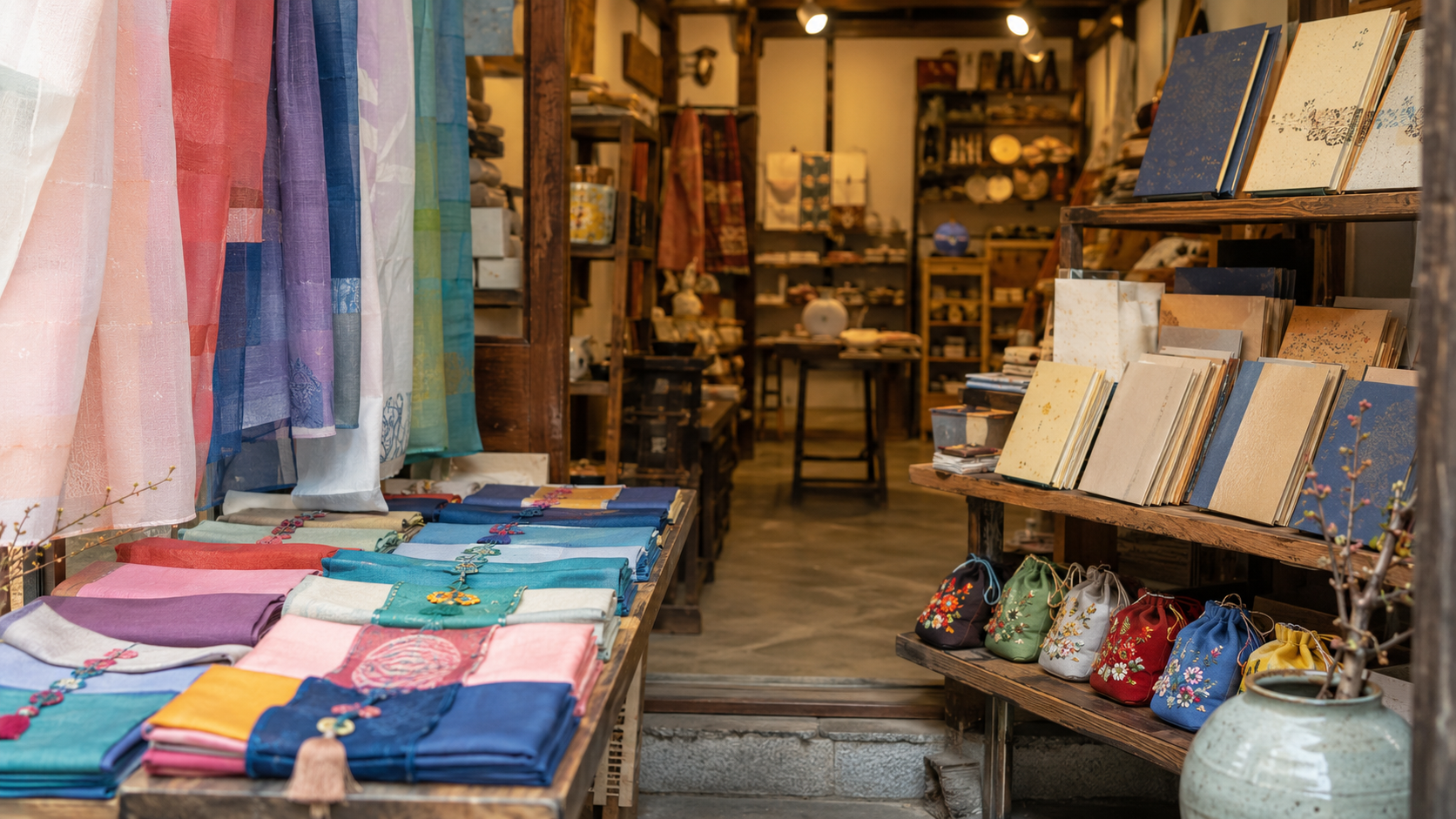
Hanji (한지) is traditional Korean paper, usually associated with the inner bark of the paper mulberry tree. Modern souvenir shops use it for notebooks, letter paper, lamps, storage boxes, fans, bookmarks, and decorative objects.
Small hanji products are among the easiest souvenirs to carry. They are light, flat, and suitable for recipients who may not want food or cosmetics. Before paying, inspect the edges, hinges, and glued sections. A label saying Korean-style paper does not necessarily mean the product was handmade in Korea, so ask about the material and place of production when authenticity matters.
Insadong in central Seoul has many paper and craft shops, but comparison shopping is worthwhile. Museum shops and specialist craft galleries can be easier places to find clearly labeled products with information about the design.
2. Bojagi and practical fabric goods
Bojagi (보자기) is a Korean wrapping cloth traditionally used to wrap, store, or carry objects. Contemporary versions range from inexpensive printed cloths to hand-stitched patchwork pieces made by specialist artisans.
A medium-sized cloth is more versatile than a decorative object: it can become gift wrapping, a table covering, a scarf, or a reusable bag insert. Other portable textile gifts include embroidered pouches, glasses cases, coasters, and small bags inspired by hanbok, Korea's traditional clothing.
Check the fiber content and care label. Silk and handmade patchwork require more careful handling than cotton or polyester. If the seller describes an item as handmade, ask whether the entire piece or only part of its decoration was completed by hand.
3. Korean ceramics
Ceramics make meaningful gifts because Korea has long traditions of celadon, buncheong ware, and white porcelain. Affordable modern pieces may borrow these colors and forms without attempting to reproduce historical works.
For a practical souvenir, consider a small tea cup, rice bowl, spoon rest, incense holder, or miniature vase. Larger tea sets are attractive but consume luggage space and are difficult to protect. Look for an artist's mark, studio label, or written information about the production area if you want an artisan-made piece.
Ask the seller to wrap each item separately. Put ceramics in the center of checked luggage between layers of clothing, not against the suitcase wall. Particularly valuable or delicate pieces are better carried in cabin baggage if they meet your airline's size and weight rules.
Museum shops provide useful visual context before you buy. The National Museum of Korea displays major examples of Korean art and craft, allowing visitors to understand the originals behind many contemporary souvenir designs. Museum admission and shop opening arrangements should be checked on the official site for your visit date.
4. Museum merchandise and contemporary Korean design
Museum shops are reliable starting points when you want something recognizably Korean without buying a generic flag magnet. Their merchandise often adapts historical objects, paintings, calligraphy, architecture, or royal symbols into practical products.
Common choices include postcards, magnets, notebooks, metal bookmarks, jewelry, tote bags, tableware, and small replicas. The National Museum of Korea, the National Palace Museum of Korea, and regional public museums may carry different collections, so do not assume every product is available at every branch.
Contemporary design shops offer another approach. Look for objects inspired by Hangul, Seoul's cityscape, traditional roof tiles, folk painting, or everyday Korean food culture. Check the country-of-origin label if buying a Korea-themed item made in Korea is important to you.
5. Korean food souvenirs
Packaged food works well for colleagues or large families, but choose shelf-stable products with sealed commercial packaging and a visible ingredient list. Practical options include:
- Gim (김), roasted and seasoned seaweed sheets
- Tea bags or loose-leaf Korean tea
- Individually wrapped rice snacks or cookies
- Yakgwa (약과), a traditional honey-flavored confection
- Dried fruit or regional citrus products
- Instant coffee sticks
- Ramyeon, provided your destination permits its ingredients
- Gochujang or other sauces in travel-safe commercial packaging
Seaweed is light but can be crushed, while boxed sweets take more room than expected. Place fragile snacks in a rigid container or near the top of your suitcase. Check expiry dates and allergen information, particularly for products containing nuts, sesame, wheat, shellfish, dairy, or soy.
Regional products make more specific souvenirs than supermarket snacks available worldwide. On Jeju, for example, look for commercially packaged products using local citrus. In Boseong or Hadong, tea is a natural choice. In Andong, local food and liquor products may be available, although alcohol brings additional customs and packing considerations.
Do not assume that sealed food is automatically permitted in your home country. Meat, fresh fruit, seeds, plants, dairy products, and some seafood can be restricted even when sold legally in Korea. Check the customs and agricultural quarantine rules of the country where you will arrive.
6. Korean tea and tea accessories
Korean tea is a compact gift that can reflect the region you visited. Green tea, roasted grain tea, citron tea concentrate, and herbal infusions are widely sold, but they differ in weight and preparation.
Loose-leaf green tea is usually the easiest premium option to pack. Grain teas and tea bags suit recipients who prefer simple preparation. Citron tea, or yuja-cha (유자차), is generally sold as a thick preserve in a glass or plastic jar. It is heavy, can leak, and counts as a liquid or gel for aviation-security purposes.
If buying a tea bowl or cup with the tea, ask whether it is dishwasher- and microwave-safe. Handmade ceramics may need hand-washing even when they look like everyday tableware.
7. Skincare and cosmetics
Korean skincare is easy to find, but the most useful gift is not necessarily the most fashionable product. Sheet masks, hand cream, lip products, sunscreen, and small skincare sets are easier to share than products requiring a precise shade or skin-type match.
Read the full ingredient list and check the expiry date or period-after-opening symbol. Avoid making medical claims about acne, eczema, pigmentation, or other conditions. Anyone with allergies or a diagnosed skin condition should consult an appropriate medical professional before using an unfamiliar product.
For international flights departing Korea, ordinary liquid, aerosol, and gel restrictions apply to cabin baggage. As verified on June 11, 2026, the Incheon International Airport restricted-items guide states that liquids in carry-on baggage must generally be in containers of 100 milliliters or less and placed in one transparent one-liter zip bag per passenger. Larger cosmetics should go in checked baggage unless they qualify under a specific exemption or are handled according to applicable duty-free rules. Confirm requirements with your airline, particularly when transferring through another country.
8. Official K-pop and character merchandise
For a fan, an album, light-stick accessory, photocard holder, plush item, or tour product may be more meaningful than a traditional souvenir. Counterfeit products are common around major shopping areas and online marketplaces, so use an official artist store, entertainment-company shop, authorized album retailer, concert venue, or clearly identified licensed seller when authenticity matters.
Before buying an electronic light stick, check whether batteries are included and whether the model is compatible with current concert systems. Spare lithium batteries and power banks are subject to aviation rules, so verify packing requirements with your airline.
Albums and magazines become heavy quickly. Protect corners with cardboard and keep collectible inclusions inside a rigid folder. Limited products can sell out, and pop-up shops may use timed-entry reservations. Treat social-media announcements as provisional until confirmed through the artist, label, venue, or retailer's official channel.
9. Traditional liquor
Soju, regional distilled spirits, fruit wine, and makgeolli can be distinctive gifts for adults, but alcohol is one of the least convenient souvenirs. Bottles are heavy, breakable, and subject to airline, customs, age, and import limits.
Unpasteurized makgeolli may require refrigeration and can build pressure, making it unsuitable for long journeys unless the producer explicitly packages it for transport. Shelf-stable bottles are more practical. Ask the retailer whether the product must remain chilled and whether the cap is designed for air travel.
Pack bottles in individual leakproof bags and cushion them in the center of checked luggage. Do not quote or rely on Korea's duty-free allowance when entering another country; your destination's customs rules determine what you may import and whether tax is due.
Where to buy Korean souvenirs
Museum shops
Choose museum shops for products tied to specific artifacts, periods, or regional collections. They are particularly useful for design goods, books, replicas, jewelry, and stationery. Check the museum's official website for closure days and shop access, as the retail area may not follow exactly the same schedule as the galleries.
Insadong and craft districts
Insadong is convenient for comparing traditional-style crafts, calligraphy materials, ceramics, textiles, and small gifts. Quality varies widely. Compare several shops, inspect labels, and ask whether an item was made in Korea.
Traditional markets
Markets are useful for packaged foods, kitchen items, socks, inexpensive gifts, and regional specialties. Some stalls accept international cards, while others work more smoothly with cash or a Korean payment method. Ask the price before committing, especially when products are sold by weight.
Supermarkets and convenience stores
These are practical for snacks, seaweed, instant drinks, and small everyday products. Supermarkets usually offer better multipacks, while convenience stores suit last-minute purchases. Avoid buying refrigerated goods unless you can maintain the required temperature.
Department stores and airport shops
Department stores are convenient for premium food sets, cosmetics, crafts, and formal gifts. Airport shops are useful for final purchases but should be a backup rather than your main plan: selections may be smaller, and not every city product or regional specialty will be available.
Tax refunds for eligible visitors
Not every purchase or retailer qualifies for a tourist tax refund. Confirm participation before paying and carry your passport if the shop requires it for documentation.
As verified on June 11, 2026, the Incheon Airport domestic tax-refund guide states that eligible purchases must exceed KRW 15,000 and that travelers should request and retain the purchase receipt and refund documents. The airport also advises keeping refund-eligible goods unopened and unused in case customs inspection is required.
A practical sequence is:
- Look for a tax-refund sign and ask whether your purchase qualifies.
- Present your passport when requested.
- Keep the receipt and refund paperwork together.
- Do not use or open goods that may need customs inspection.
- At departure, tell airline staff before checking a bag containing refund-eligible goods.
- Follow the kiosk or customs-desk instructions at your departure airport.
Refund providers, operating hours, eligibility, and procedures can change. Verify the current process with the retailer and your departure airport rather than assuming all Korean airports use identical arrangements.
Packing and customs checklist
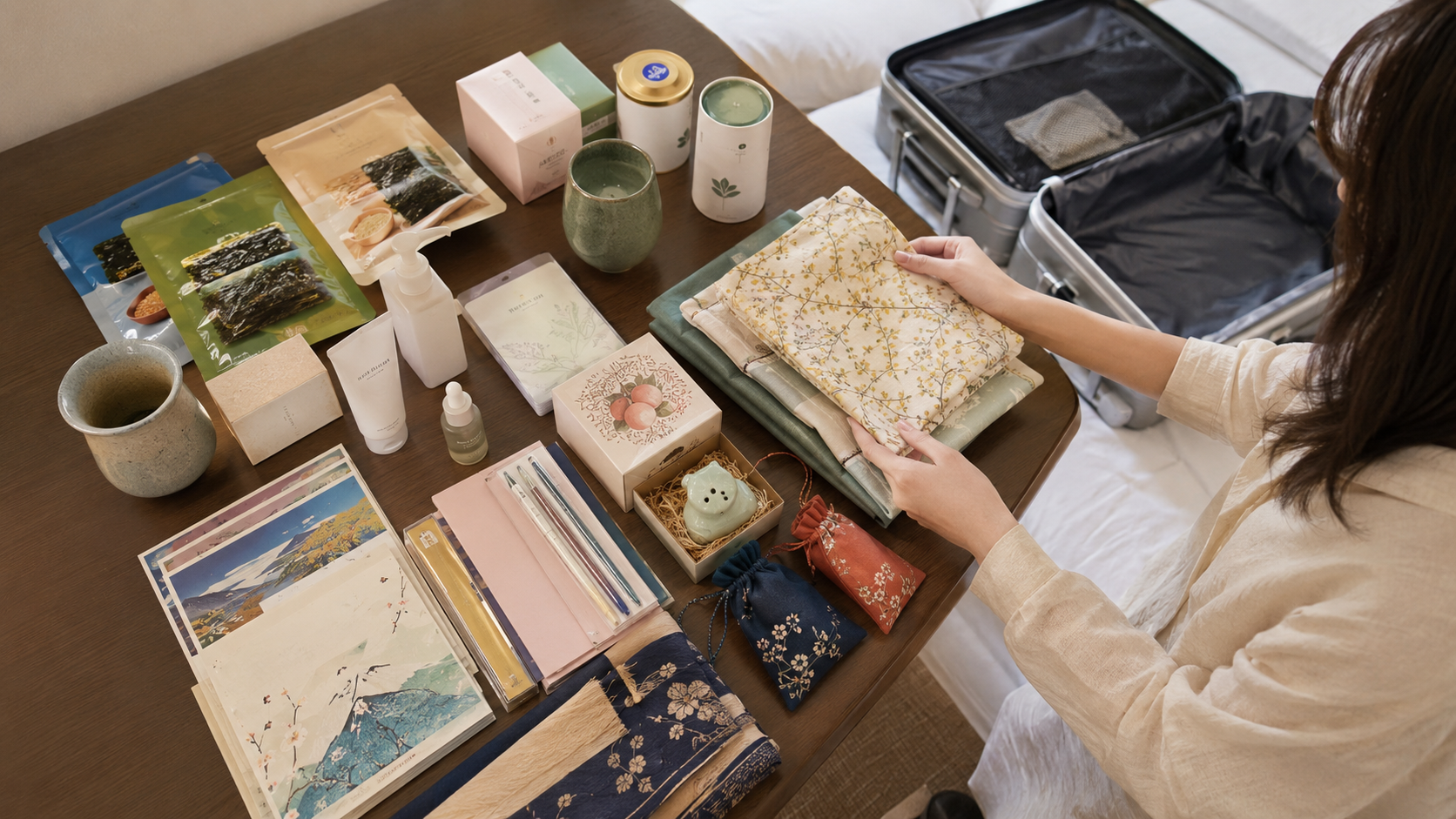
- Photograph valuable or fragile items before packing.
- Keep receipts for expensive crafts, jewelry, and electronics.
- Put sauces, cosmetics, tea concentrates, and other liquids in sealed bags.
- Cushion ceramics and bottles individually.
- Check your airline's cabin and checked-baggage weight limits.
- Confirm destination-country rules for food, alcohol, plants, seeds, animal products, and medicines.
- Avoid unidentified antiques or objects that may be protected cultural property.
The Incheon Airport restricted-items guide notes that exporting cultural property may require authorization or certification from the Korea Heritage Service. If an object appears old, is sold as an antique, or has uncertain provenance, ask the seller for documentation before purchase. Decorative weapons and products made from protected wildlife can also create legal and security problems.
For plants or plant products, the Incheon Airport quarantine guide advises travelers to check the destination country's import requirements and whether a phytosanitary certificate is needed. This is particularly relevant to seeds, living plants, untreated wood, and some agricultural products.
Common souvenir mistakes
Buying too early
Large ceramics and food boxes become a burden when you still have several cities to visit. Photograph the item and shop details, then return near the end of your trip when practical.
Assuming Korean-themed means made in Korea
Check the country-of-origin label. A Korea-inspired product may still be a perfectly acceptable inexpensive gift, but it is different from a locally made craft.
Choosing food without checking ingredients
A familiar-looking snack may contain seafood powder, alcohol, meat flavoring, nuts, or dairy. Read the label before buying for someone with allergies, dietary restrictions, or religious requirements.
Relying on airport availability
Airport inventory changes, and regional goods may not be stocked. Buy specific products in the city and reserve airport shopping for common items.
What to check before you go
- Who is the gift for, and will they realistically use it?
- Is the item made in Korea, if that matters to you?
- Does it need refrigeration?
- Is it fragile, liquid, oversized, or unusually heavy?
- Is it allowed through aviation security and into your destination country?
- Does the shop participate in tourist tax refunds?
- Do you have the receipt and any authenticity or origin documentation?
- Have you checked the shop's current hours through an official channel?
A simple buying plan works well: purchase lightweight gifts such as stationery, textiles, and cosmetics during the trip; buy food close to departure; and leave enough suitcase space for one carefully chosen craft or museum piece.