Seoul does not have one market that is best for every visitor. Choose Gwangjang for a concentrated street-food experience, Namdaemun for broad shopping, Mangwon for a neighborhood market, Tongin for a palace-area lunch stop, Gyeongdong for produce and traditional ingredients, or Noryangjin for seafood.
Operating hours, closing days and payment policies often differ by individual vendor. The practical information below was checked on June 11, 2026; confirm specific shops or market programs shortly before visiting.
At a glance
| Market | Best for | Nearest subway | Suggested visit |
|---|---|---|---|
| Gwangjang Market | Famous Korean market foods | Jongno 5-ga, Line 1 | Late morning or early evening |
| Namdaemun Market | Clothing, kitchenware, souvenirs and food alleys | Hoehyeon, Line 4 | Weekday morning to mid-afternoon |
| Mangwon Market | Everyday neighborhood food shopping | Mangwon, Line 6 | Lunch or late afternoon |
| Tongin Market | A compact stop near Gyeongbokgung | Gyeongbokgung, Line 3 | Before or during lunch |
| Gyeongdong Market | Produce, dried goods and medicinal herbs | Jegi-dong, Line 1 | Morning to early afternoon |
| Noryangjin Fisheries Wholesale Market | Fresh seafood and wholesale-market activity | Noryangjin, Lines 1 and 9 | Morning or early evening |
These recommendations use clear criteria: variety, visitor interest, access by public transport and whether the market offers an experience meaningfully different from the others.
1. Gwangjang Market: best for a first street-food visit
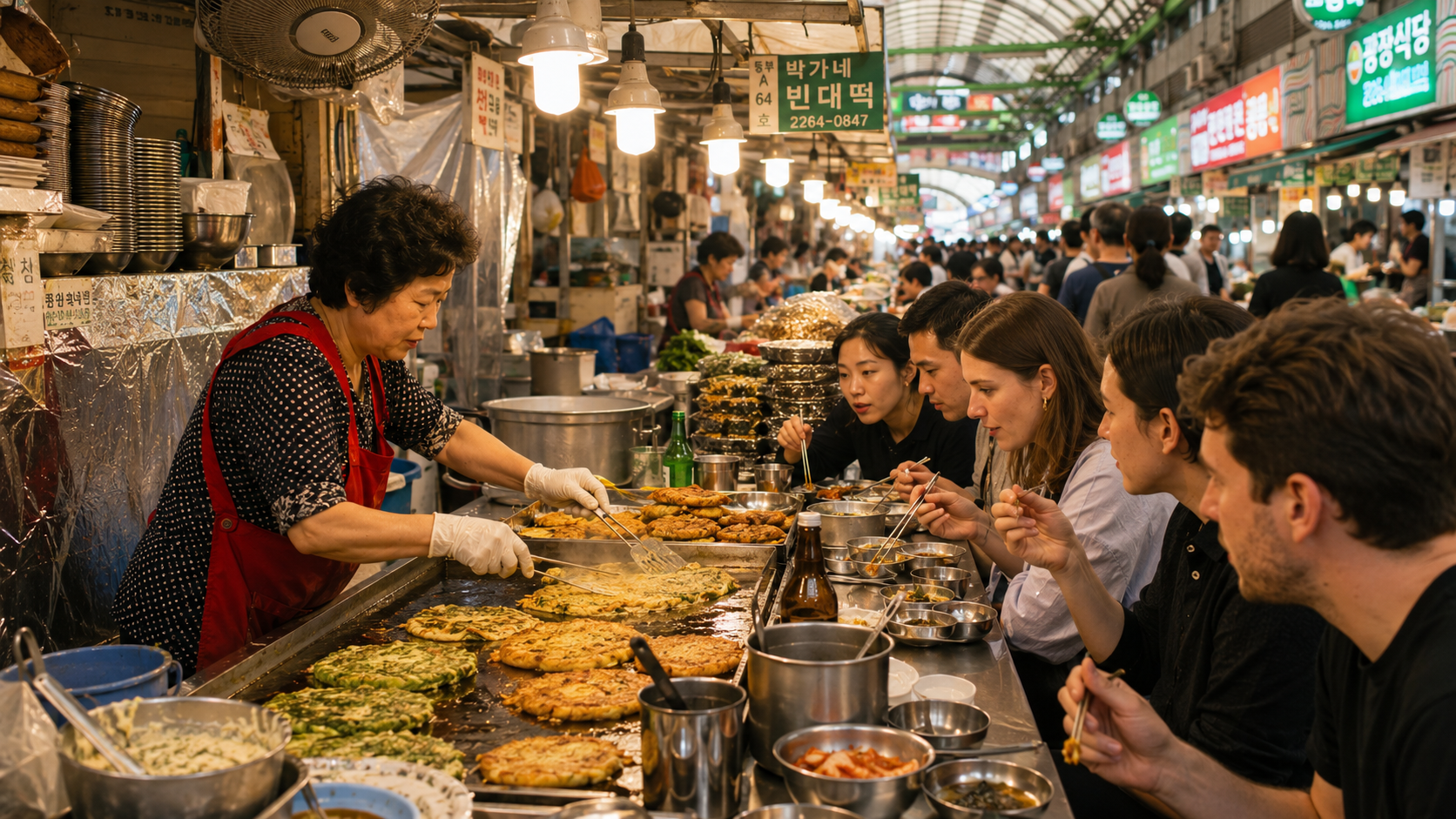
Gwangjang Market (광장시장) is the simplest choice for travelers who want several recognizable Korean dishes in one covered market. Its food lanes contain counters and communal seating where vendors serve items such as bindaetteok (mung-bean pancakes), kalguksu (knife-cut noodle soup), dumplings, gimbap and marinated raw beef.
The market is not exclusively a food attraction. Its wider commercial area includes textiles, clothing and traditional goods, as described by the official Gwangjang Market website. Food stalls, fabric shops and other sections do not necessarily follow the same schedule.
How to visit
Use Jongno 5-ga Station on Line 1 for the most direct approach. Euljiro 4-ga Station on Lines 2 and 5 is another option. Arrive before the main lunch or dinner rush if you want a better chance of finding a seat.
Walk through the food arcade once before ordering. Similar-looking dishes can vary in portion, ingredients and price. Check the displayed menu and confirm the price before sitting down, particularly when ordering several items.
What to expect
Gwangjang can be noisy, crowded and tightly packed. Seating may be on backless stools with little room for luggage. A planning budget of KRW 10,000-25,000 per person is reasonable for several snacks or one fuller meal, but this is a practical estimate rather than an official or fixed price.
Some counters accept cards, while others may prefer cash or a Korean payment method. Carrying small KRW notes remains useful. Ask before ordering if card payment is essential.
2. Namdaemun Market: best for variety and practical shopping
Namdaemun Market (남대문시장) is a large commercial district rather than a single hall. Its lanes and buildings sell clothing, accessories, children's goods, kitchen equipment, eyewear, imported products and souvenirs. It is the better choice when shopping matters as much as eating.
The market is beside Sungnyemun, Seoul's historic south gate, and within walking distance of Seoul Station and Myeongdong. The official Namdaemun Market website provides market maps and category information, although each building and vendor can keep a separate schedule.
Food alleys
Namdaemun is known for specialized restaurant lanes. Galchi-jorim alley serves cutlassfish braised in a spicy sauce, while another cluster specializes in kalguksu. These are compact restaurant areas, not polished food courts. Menus may be limited, tables are close together and staff may need to seat parties wherever space is available.
Shopping tips
Start from Hoehyeon Station on Line 4 and photograph the market map or entrance sign. The lanes can look similar, and searching for one specific building after wandering away is difficult.
Prices are sometimes negotiable for clothing or general merchandise, but bargaining is not required everywhere. Ask politely, accept a clear refusal and avoid negotiating over inexpensive prepared food. Inspect products before paying because exchange policies at independent stalls may be restrictive.
Visit on a weekday morning or early afternoon for the broadest practical shopping experience. Sunday is a poor choice for visitors seeking specific wholesale or specialist shops because many businesses traditionally close, although individual restaurants and street vendors may still operate. Confirm the relevant building before making a special trip.
3. Mangwon Market: best for neighborhood atmosphere
Mangwon Market (망원시장) is smaller and easier to understand than Gwangjang or Namdaemun. It primarily serves the surrounding residential area, with vendors selling produce, meat, side dishes, rice cakes and prepared food alongside snacks aimed at day visitors.
This is a good choice for exchange students, longer-term visitors and travelers staying around Hongdae or Hapjeong. You can see the practical side of a Korean market without navigating a major wholesale district.
What to eat and buy
Rather than searching for one famous stall, look for foods that travel well: fried snacks, dumplings, rice cakes, gimbap, fruit or packaged side dishes. Prices and queues can change, so choose based on the posted menu and what is being prepared fresh.
Mangwon Market is also useful before a picnic at Mangwon Hangang Park. However, the market and riverside are not directly beside each other. Check the walking route in a Korean navigation app and allow additional time, especially in hot, wet or cold weather.
Practical points
Use Mangwon Station on Line 6. The lanes are mostly level, but narrow passages, queues and delivery carts can make movement difficult for wheelchair users or visitors with large suitcases. A weekday visit is generally easier than a busy weekend afternoon.
Card acceptance is common at established shops but not universal at small food counters. Bring a reusable bag if buying groceries; takeaway packaging is designed for short local journeys and may leak if carried around all day.
4. Tongin Market: best near Gyeongbokgung
Tongin Market (통인시장) is a compact covered market west of Gyeongbokgung Palace. It works well as part of a palace and Seochon itinerary because it requires less time than Seoul's larger markets.
The market became known for its yeopjeon dosirak, a lunchbox program using reproduction brass coins called yeopjeon (엽전). Visitors traditionally exchange money for coins, receive a tray and select small portions from participating stalls before eating in a designated café area.
Do not build an itinerary around this program without checking it first. Participation, coin-sale hours, café operation and closing days can change independently of the general market. The market's official Korean-language website is the appropriate place to check current notices; as of June 11, 2026, reliable current English details for every part of the lunchbox program could not be confirmed.
A sensible route
Visit Gyeongbokgung Palace first, then walk west through Seochon to the market. The nearest subway station is Gyeongbokgung Station on Line 3, but the market still requires a street-level walk.
Arrive before the end of the lunch period. Even when the coin program is unavailable, independent shops may be open for regular purchases in KRW. Do not assume every stall participates in the lunchbox system.
Tongin is less suitable for travelers seeking a large dinner market or extensive souvenir shopping. Its strengths are manageable size, local food and proximity to central historic sights.
5. Gyeongdong Market: best for produce and traditional ingredients
Gyeongdong Market (경동시장) and the adjoining Seoul Yangnyeongsi (서울약령시) district form one of Seoul's most distinctive commercial areas. Expect produce, grains, dried seafood, roots, mushrooms, ginseng and ingredients associated with Korean traditional medicine.
This is a working market, not primarily a street-food destination. It is particularly useful for cooks, food researchers and visitors curious about ingredients that are difficult to identify in an ordinary supermarket.
Visit the museum first
The Seoul Yangnyeongsi Herb Medicine Museum provides context for the surrounding district. Check the official museum website for current opening days, exhibition information and visitor facilities before going. Museum schedules and market shop hours are separate.
Use Jegi-dong Station on Line 1. Morning to early afternoon is the most practical visiting window, based on the market's wholesale and grocery character rather than a single confirmed market-wide schedule.
Health and customs caution
Do not treat a market vendor's recommendation as medical advice. Ask a qualified clinician before consuming unfamiliar herbal products, particularly if you are pregnant, take prescription medication or have allergies.
Travelers taking products abroad should also check their destination's customs and biosecurity rules. Dried roots, animal-derived ingredients, seeds and fresh produce may be restricted even when they can legally be purchased in Korea.
6. Noryangjin Fisheries Wholesale Market: best for seafood
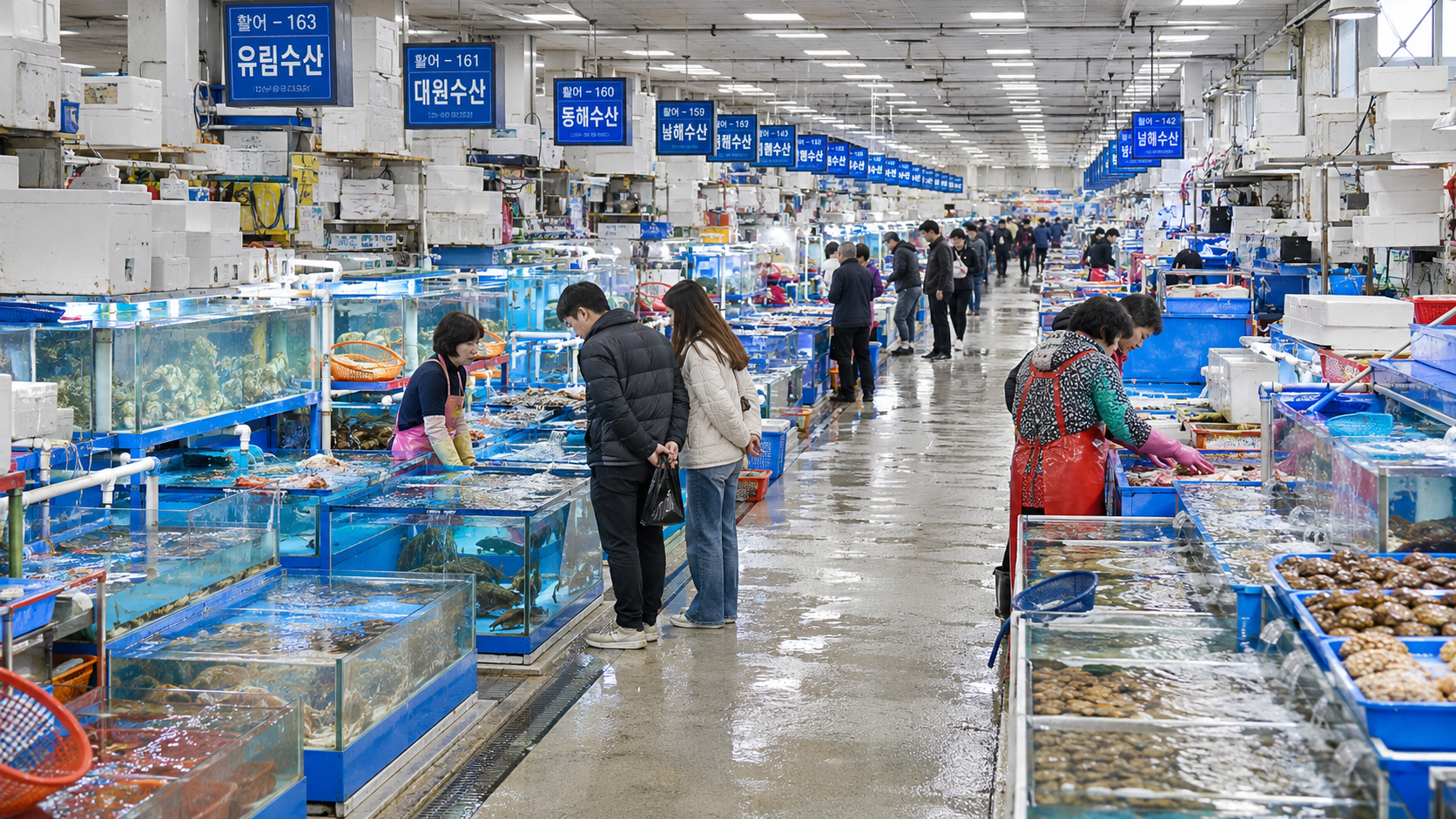
Noryangjin Fisheries Wholesale Market (노량진수산시장) is a multilevel seafood market where wholesalers and retailers sell live, fresh and prepared marine products. Visitors can inspect the sales floor, purchase seafood and, depending on the seller and restaurant arrangement, have it prepared for eating in the building.
The official Noryangjin market website publishes market information and notices. Different auctions, retail stalls and restaurants follow different schedules, so descriptions of the entire complex as simply open all day can be misleading.
Understand the bill before buying
A seafood meal may involve more than one charge: the seafood purchase, preparation or cooking, table service and optional side dishes or drinks. Before agreeing, ask for the seafood price, preparation charge and total expected cost. Confirm whether the quoted price is per item, per kilogram or for the complete portion.
For expensive seafood, use a calculator or translation app to verify the figure. Keep the receipt or photograph the written price. This is a sensible precaution in any wholesale market and does not imply that bargaining is always expected.
Access and accessibility
Noryangjin Station is served by Lines 1 and 9. Follow signs toward the fisheries market and allow time to cross the station-area walkways.
The modern building has elevators, but wet floors, seafood tanks, carts and strong smells can still make the sales areas challenging. Closed shoes with slip-resistant soles are preferable. Visitors with shellfish allergies should be cautious because seafood is handled throughout the building.
How to choose the right market
Choose only one or two unless markets are a major interest. Gwangjang and Namdaemun fit naturally into a central Seoul day. Tongin pairs with Gyeongbokgung and Seochon. Mangwon combines well with Hongdae or the Han River. Gyeongdong is a specialist morning trip, while Noryangjin works as a separate seafood meal or photography stop.
For the broadest first visit, choose Gwangjang for food and Namdaemun for shopping. For a less tourism-focused outing, choose Mangwon or Gyeongdong.
Payment, etiquette and common mistakes
- Carry a physical credit card and some KRW cash. International mobile wallets and foreign-issued cards may not work at every stall.
- Check prices before ordering, especially when seafood is sold by weight.
- Return dishes and utensils where directed rather than leaving them on another vendor's counter.
- Ask before photographing vendors at close range. A wide market scene does not require the same interaction as a recognizable portrait.
- Do not block narrow lanes while filming or deciding what to order.
- Avoid bringing large luggage. Storage space is limited, and delivery carts need room to pass.
- Separate ordinary market schedules from special programs, restaurants and wholesale sections.
- Use Naver Map or KakaoMap for pedestrian directions. Searching the Hangul market name can produce more accurate entrances than an English search.
What to check before you go
- Check the market's official website or social account for temporary closures and holiday notices.
- Confirm the hours of a specific restaurant, building or program rather than relying on a market-wide listing.
- Look up the nearest accessible subway exit if stairs are difficult.
- Carry small KRW notes for stalls that do not accept foreign cards.
- Check the weather. Covered arcades provide some protection, but routes from subway stations and lanes between buildings may be outdoors.
- Plan food restrictions in advance. Broths, sauces and pancakes may contain seafood, meat, wheat, sesame or other allergens that are not obvious from appearance.
- For Noryangjin, agree on seafood and preparation charges before paying.
- For Tongin, verify whether the lunchbox café and coin exchange are operating that day.
Your next step is to select the market that matches your main goal, save its Hangul name in your map app and verify the particular shops or programs you intend to use on the day of your visit.