There is no single best neighborhood for every Seoul trip. For most first-time visitors, Myeongdong is the easiest all-round choice because it is central and connected to subway Lines 2 and 4. Choose Hongdae for nightlife and convenient airport-rail access, Jongno or Insadong for palaces and traditional Seoul, or Gangnam when most of your plans are south of the Han River.
At a glance
| Neighborhood | Best for | Main transport | Main drawback |
|---|---|---|---|
| Myeongdong | First visits, shopping, short stays | Lines 2 and 4 | Busy and tourist-oriented |
| Hongdae and Yeonnam | Nightlife, cafés, younger travelers | Line 2, AREX, Gyeongui-Jungang Line | Weekend noise and crowds |
| Jongno, Insadong and Anguk | Palaces, history, traditional streets | Lines 1, 3 and 5, depending on location | Some quiet streets close early |
| Dongdaemun | Fashion, late shopping, transport connections | Lines 2, 4 and 5 | Less residential atmosphere near major roads |
| Itaewon and Hannam | International dining and nightlife | Line 6 | Hills and less convenient cross-city rail access |
| Gangnam and Samseong | Business, modern shopping, conventions | Line 2 and other southern lines | Farther from the historic center |
| Jamsil | Families, Lotte World, concerts and sports | Lines 2 and 8 | Long trips to western and historic Seoul |
Neighborhood boundaries are informal, and hotel descriptions sometimes use a famous district name for properties that are not especially close to it. Check the walking route to the nearest subway entrance, not just the neighborhood label.
1. Myeongdong: the easiest base for a first visit
Why stay here
Myeongdong sits between Seoul's historic center and Namsan Mountain. It provides straightforward access to shopping, restaurants, Namdaemun Market, City Hall and Cheonggyecheon Stream. The official Seoul tourism guide identifies Myeongdong Station on Line 4 and Euljiro 1-ga Station on Line 2 as the area's main subway access points.
This is usually the most practical choice for travelers with three or four days in Seoul who want to see major attractions in several directions. Line 4 runs toward Seoul Station and Dongdaemun, while Line 2 provides useful connections toward Hongdae, Gangnam and Jamsil.
What to expect
The main shopping streets are bright, crowded and heavily oriented toward visitors. English, Japanese and Chinese signage is relatively common, and numerous cosmetics shops, department stores and street-food stalls operate in the area. Individual business hours vary, so confirm specific shops rather than assuming the entire district stays open late.
Stay closer to Euljiro 1-ga for Line 2 access, or near Myeongdong Station for Line 4 and the Namsan side. Properties uphill toward Namsan can involve steep approaches that are inconvenient with luggage.
Best for: first-time travelers, shoppers, solo visitors and short stays.
Consider another area if: you want quiet residential streets, independent nightlife or a less visitor-focused environment.
2. Hongdae and Yeonnam: nightlife, cafés and airport access
Why stay here
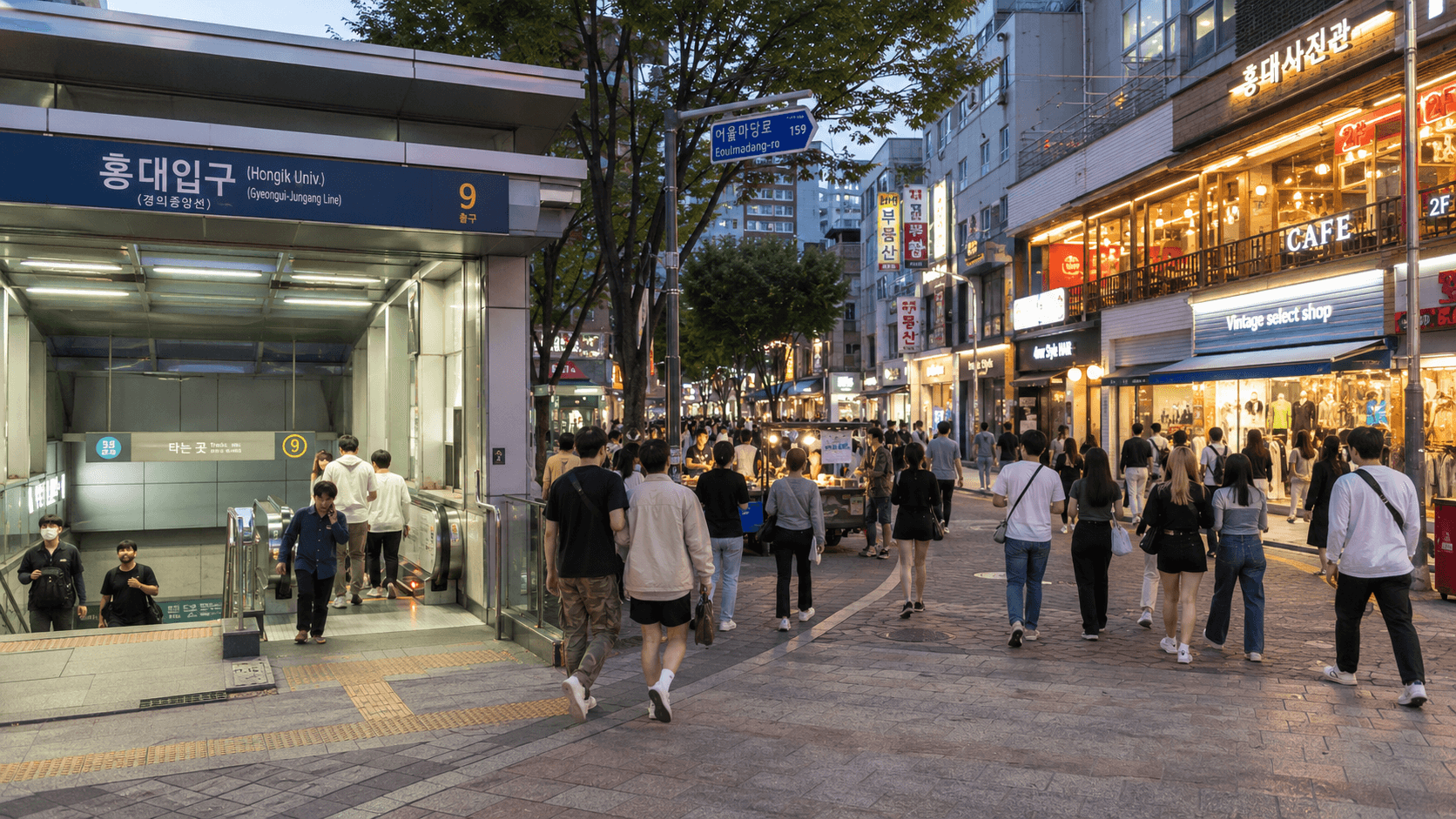
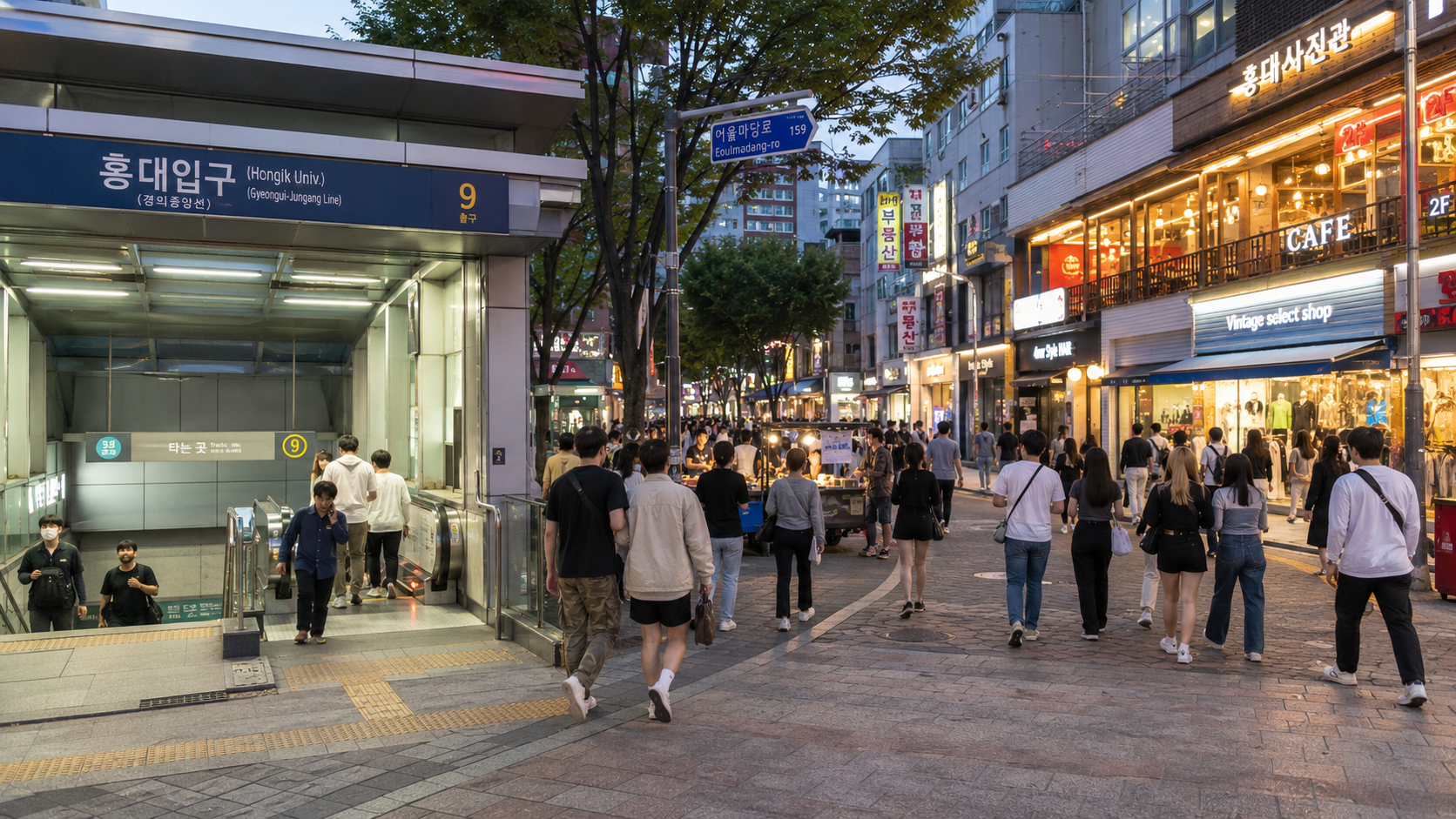
Hongdae is centered on Hongik University Station, served by subway Line 2, the Gyeongui-Jungang Line and the Airport Railroad, commonly called AREX. That combination makes it particularly convenient for travelers arriving through Incheon International Airport and for trips around western Seoul.
The official Hongdae guide describes the district as a center of pop, indie, art and nighttime culture. The busiest streets contain fashion shops, restaurants, clubs, performance spaces and late-night businesses. Yeonnam-dong, north of the station, has more cafés and residential lanes, while Hapjeong and Sangsu to the south offer additional restaurants and music venues.
Where to book within the area
Choose the Hongik University Station side for the simplest airport connection. Exits and underground transfers can involve long walks, so check which exit is closest to the property.
Choose Yeonnam-dong for a calmer setting within walking distance of Hongdae. Some accommodation is several blocks from the station, however, and the walk may feel long with suitcases.
Choose Hapjeong if you want nightlife but prefer to avoid the most crowded streets immediately around Hongik University.
Best for: younger travelers, nightlife, cafés, K-pop shopping and late arrivals that still connect with scheduled airport trains.
Consider another area if: you are sensitive to street noise or expect to spend most days in eastern Seoul, Jamsil or Gangnam.
3. Jongno, Insadong and Anguk: the best base for historic Seoul
Why stay here
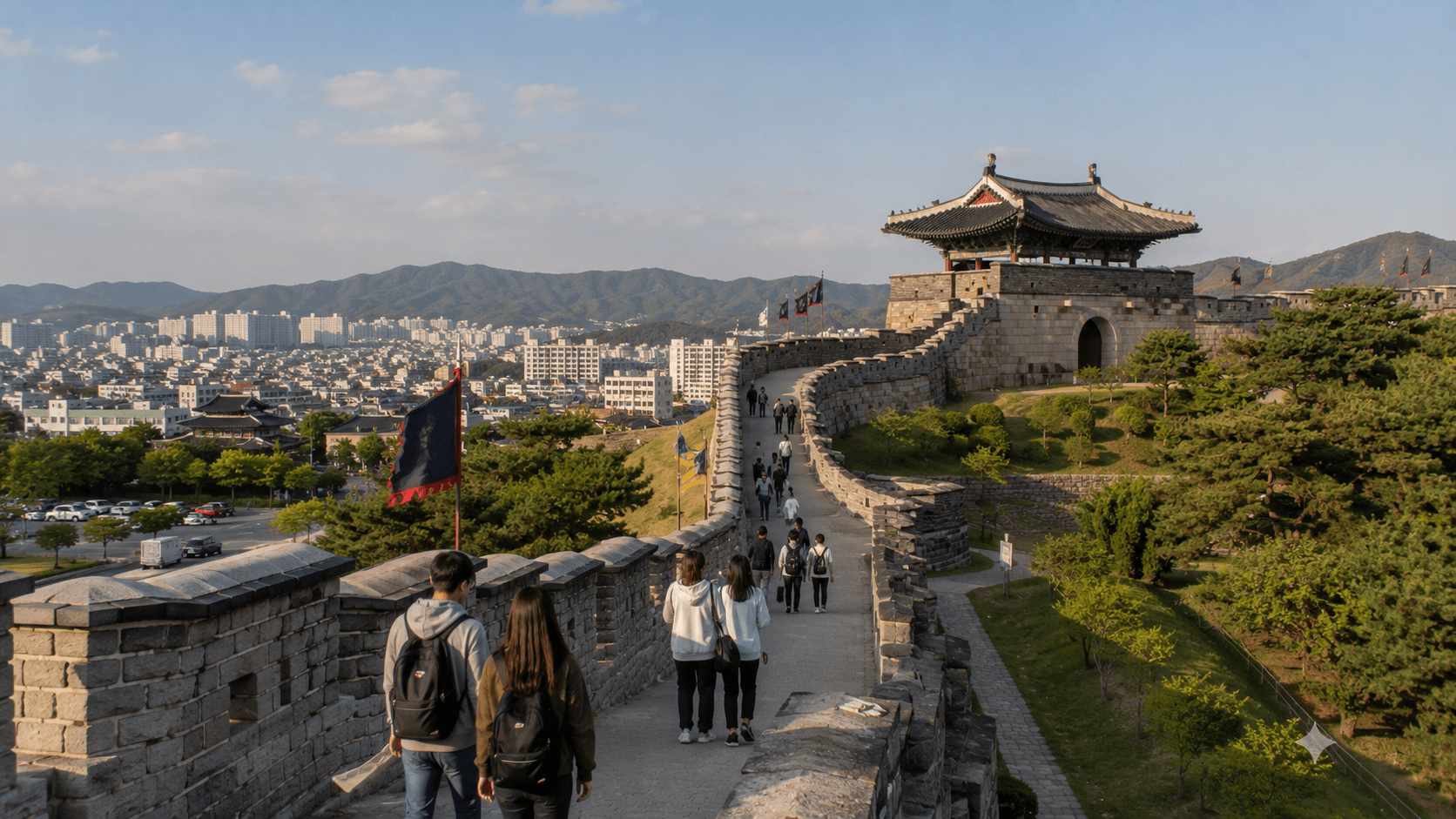
This central area places you near Gyeongbokgung Palace, Changdeokgung Palace, Insadong, Ikseon-dong, Bukchon and several museums. The official Insadong guide highlights its traditional tea houses, galleries, crafts and central location.
Anguk Station on Line 3 is convenient for Insadong and Bukchon. Jongno 3-ga provides Lines 1, 3 and 5, making it a stronger transport base, although its immediate surroundings feel busier and more commercial. Gwanghwamun is useful for palace visits and city-center offices.
Choose your exact location carefully
Accommodation around Insadong and Anguk works well for walking to cultural attractions. Hanok, or traditional Korean house, guesthouses can be memorable, but rooms may be smaller, sound insulation may be limited and sleeping arrangements may use floor bedding. Confirm the bathroom type, bed style and luggage access before booking.
Jongno 3-ga and Ikseon-dong offer more evening restaurants and bars. Streets around popular alleys can become crowded, while nearby business streets may be much quieter after closing time.
Bukchon remains a residential neighborhood rather than a hotel district. As verified on June 10, 2026, tourists may not enter the designated red zone around Bukchon-ro 11-gil between 5 p.m. and 10 a.m.; violations can result in a KRW 100,000 fine. Consult the Seoul Metropolitan Government's Bukchon restriction notice and follow signs on site. These restrictions do not mean that every street near Anguk closes, but they make it important to confirm a guesthouse's location and access instructions.
Best for: history, architecture, museums, traditional culture and travelers who prefer walking to sightseeing sites.
Consider another area if: your priorities are clubs, contemporary shopping or frequent trips south of the river.
4. Dongdaemun: late shopping and strong subway connections
Why stay here
Dongdaemun is practical for travelers interested in fashion markets, wholesale shopping and Dongdaemun Design Plaza, usually abbreviated to DDP. DDP's official tourism listing confirms that Dongdaemun History & Culture Park Station is served by Lines 2, 4 and 5.
Those three lines provide useful direct or one-transfer journeys across much of Seoul. The district also has a broad range of large hotels and compact business-style accommodation.
What to check
Dongdaemun Station and Dongdaemun History & Culture Park Station are different stations. Confirm which one the hotel actually uses. A property described as being in Dongdaemun may also be east of the main DDP and market area.
Late-night retail schedules differ among malls and wholesale markets and can change by day, season or holiday. Check each venue directly rather than booking on the assumption that all shopping operates overnight.
Best for: fashion buyers, repeat visitors, late shoppers and travelers who value multiple subway lines.
Consider another area if: you want leafy streets, neighborhood cafés or easy airport-rail access without a transfer.
5. Itaewon and Hannam: international dining and evening social life
Why stay here
Itaewon has one of Seoul's broadest concentrations of international restaurants, bars and specialist food businesses. The official Seoul guide to Itaewon lists Itaewon and Noksapyeong stations on Line 6 as the main rail access points. The area also provides access to Leeum Museum of Art, the Seoul Central Mosque, Haebangchon and paths around Namsan.
This can be a comfortable base for newcomers who want familiar cuisines or an internationally oriented evening scene. Hannam-dong, farther east, is generally quieter and more dispersed, with galleries, restaurants and upscale accommodation.
Drawbacks to understand
Itaewon's topography is a genuine consideration. Many guesthouses, restaurants and side streets sit on slopes or stairways above the main road. A short map distance does not necessarily mean an easy walk with luggage, a stroller or limited mobility.
Line 6 is useful but does not directly serve Myeongdong, Gangnam Station or many palace-area stops. Expect transfers. Weekend nightlife can also produce noise around the busiest streets.
Best for: international dining, nightlife, LGBTQ-friendly venues and travelers meeting Seoul-based friends.
Consider another area if: step-free access or the simplest possible sightseeing transport is your main priority.
6. Gangnam and Samseong: modern Seoul and business travel
Why stay here
Gangnam is not one compact neighborhood. It includes major commercial areas around Gangnam Station, Samseong and COEX, as well as Sinsa, Apgujeong and Cheongdam.
Stay near Gangnam Station for offices, restaurants, language schools and busy nightlife. Stay near Samseong Station for exhibitions, business events and indoor shopping at COEX. The official COEX listing places the complex near Samseong Station on Line 2 and lists accessible pathways, elevators and restrooms within the facility.
Sinsa and Apgujeong are better suited to travelers focused on fashion, beauty clinics, galleries and cafés. The official Garosu-gil guide identifies Sinsa Station on Line 3 and the Sinbundang Line as the nearest station for that area.
Is Gangnam good for a first visit?
It can be, but only when your itinerary justifies it. Gangnam is south of the Han River, while the royal palaces, Bukchon, Insadong and much of historic Seoul are north of the river. Daily cross-city journeys can consume more time than visitors expect.
Best for: business trips, conventions, medical appointments and itineraries concentrated in southern Seoul.
Consider another area if: this is a short first visit centered on palaces, markets and historic neighborhoods.
7. Jamsil: families, theme parks and large events
Why stay here
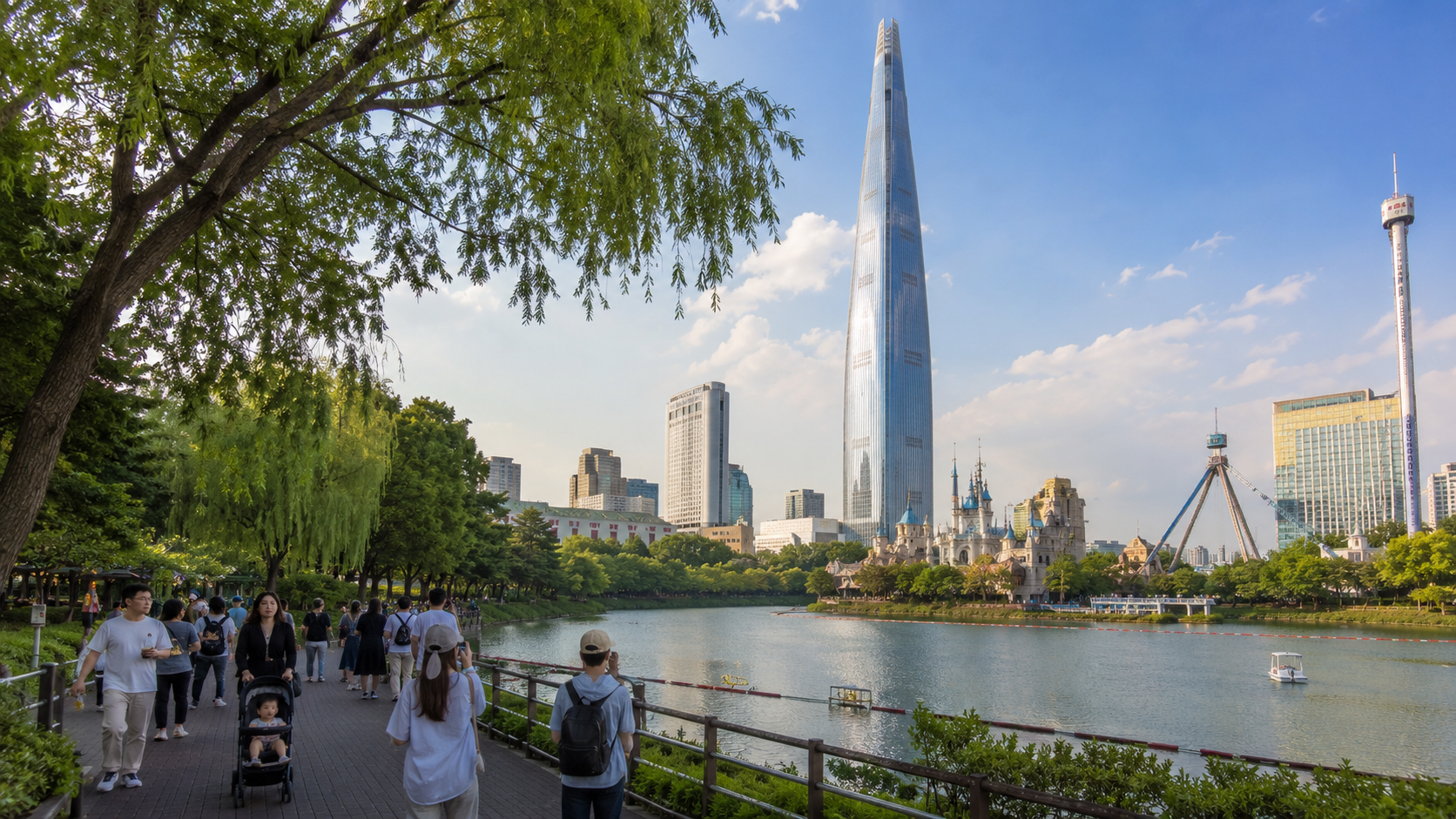
Jamsil is the practical choice for Lotte World, Lotte World Tower, Seokchon Lake, Olympic Park and events at nearby arenas or stadiums. Jamsil Station is served by Lines 2 and 8. The official Seokchon Lake guide describes the lake's 2.5-kilometer walking route and proximity to Lotte World and the surrounding commercial district.
The area has large hotels, department stores, restaurants and extensive indoor facilities, which can help families during very hot, cold or rainy weather.
Main trade-off
Jamsil is in southeastern Seoul. Line 2 connects it with Gangnam, Dongdaemun and Hongdae, but trips to western Seoul are long. Travelers planning several days around palaces and traditional neighborhoods will usually find a central hotel more efficient.
Best for: families, Lotte World visits, concerts, sports events and southeastern Seoul itineraries.
Consider another area if: you want to explore the historic center on foot.
How to choose your hotel within a neighborhood
A well-located hotel in your second-choice district is often more useful than a poorly located hotel in your first choice. Before paying, check:
- Walking distance to the correct station entrance. Aim for a route you can manage with luggage, not merely a short straight-line map distance.
- Subway line, not just station name. Large transfer stations can require long underground walks.
- Terrain. This matters particularly around Namsan, Itaewon, Haebangchon, Bukchon and parts of northern Seoul.
- Noise reviews. Look specifically for comments about clubs, road traffic, thin walls and construction.
- Room details. Confirm whether the room has a window, private bathroom, air conditioning, heating and enough floor space for open luggage.
- Lift access. Small guesthouses and older buildings may not have an elevator.
- Reception and luggage storage. Confirm procedures if you arrive before check-in or after the front desk closes.
- Final price. Compare the complete booking total, cancellation terms and taxes rather than the first nightly rate shown.
Transport and payment basics
As verified on June 10, 2026, the adult subway base fare using a transport card is KRW 1,550, while a single-journey ticket starts at KRW 1,650. Distance supplements may apply. Current fares are published on the Seoul Metropolitan Government transport page.
From March 17, 2026, new vending machines at 273 stations on Seoul subway Lines 1–8 began accepting internationally issued cards and supported mobile payments for single-journey tickets and short-term Climate Card products. The city notes that an average service fee of approximately 3.7% applies to international card transactions. Availability is tied to the new machines, so carrying another payment method remains sensible. See the official international-card announcement.
Do not assume that a hotel's closest train runs all night. Last-train times vary by station, direction, line and day. Check the route on the evening of travel, especially after concerts or nightlife.
What to check before you go
- Open the property on a map and inspect the walking route from the station.
- Confirm whether airport access is direct or requires a subway transfer.
- Ask the property about elevators, steps and late check-in when accessibility matters.
- Check recent reviews for nighttime noise and nearby construction.
- Verify bed type and bathroom arrangements at hanok stays and guesthouses.
- Check the exact venue for concerts, appointments and conferences before choosing Gangnam or Jamsil.
- Review current Bukchon access restrictions if staying near Anguk or a hanok village.
- Recheck subway fares, last trains and airport transport shortly before departure.
For a first visit without a specialized itinerary, begin by comparing hotels within a level ten-minute walk of Myeongdong Station, Euljiro 1-ga Station or Jongno 3-ga Station. Travelers prioritizing nightlife or direct Airport Railroad access should make the same comparison around Hongik University Station.
Sources
- Visit Seoul: Myeongdong
- Visit Seoul: Hongdae
- Visit Seoul: Insadong
- Seoul Metropolitan Government: Bukchon visitor restrictions
- Seoul Metropolitan Government: subway and bus fares
- Seoul Metropolitan Government: international-card transit payments
- Visit Seoul: Dongdaemun Design Plaza
- Visit Seoul: Itaewon
- Visit Seoul: COEX
- Visit Seoul: Seokchon Lake Park