The most reliable payment setup in South Korea is a physical international credit or debit card for everyday purchases, a separate Tmoney card for public transportation, and some Korean won (KRW) in cash. Do not depend entirely on a phone wallet or assume that tapping a foreign bank card will open subway gates.
Payment and transportation details in this guide were verified on June 9, 2026.
At a glance
| Payment method | Best for | Main limitation |
|---|---|---|
| International credit or debit card | Hotels, restaurants, cafés, shops, taxis and major attractions | Individual cards can be declined; foreign transaction fees may apply |
| Tmoney or EZL transportation card | Subways, local buses and transfers | Regular cards generally require cash for purchase and top-up |
| Korean won cash | Markets, small businesses, emergencies and transit-card top-ups | Some buses are cashless |
| Tourist prepaid payment card | Travelers whose foreign cards are unreliable or expensive | Issuance, exchange, withdrawal and refund terms vary |
| Apple Pay or another phone wallet | A convenient secondary option at participating terminals | Acceptance is not universal, and Korean transit setup may require a locally issued card |
The best setup for most visitors
Before leaving home, prepare the following:
- A primary Visa or Mastercard with international transactions enabled.
- A second card from another bank or network, stored separately.
- Enough Korean won to buy and load a transportation card, plus a small emergency reserve.
- A physical Tmoney or EZL card after arrival.
South Korea has extensive card acceptance. The Korea Tourism Organization states that international cards including Visa, Mastercard and American Express can be used at major hotels, department stores and other businesses. However, acceptance by a particular terminal or merchant is never guaranteed, so a backup remains important. See the official Korean currency and payment information.
1. Use an international card for most purchases
A physical credit or debit card is normally the easiest way to pay for accommodation, meals, coffee, shopping, admission tickets and taxis. Even relatively inexpensive purchases are commonly paid by card.
Visa and Mastercard generally provide the broadest practical coverage for international travelers. American Express and UnionPay may also work, particularly at major businesses, but should not be your only option.
Prepare your cards before departure
Check these points with your bank or card issuer:
- International and card-present transactions are enabled.
- You know the foreign transaction fee and overseas ATM fee.
- Your bank has your current phone number or another way to approve suspicious transactions.
- You can access the banking app abroad without relying on your home SIM for every login.
- Your daily purchase and cash-withdrawal limits are sufficient.
A travel notice is no longer required by every bank, but check rather than assume. Bring at least two cards because an issuer may block a transaction even when the Korean merchant accepts that card network.
Always choose Korean won when offered a currency choice
A terminal or ATM may offer to charge you in your home currency instead of Korean won. This is called dynamic currency conversion, or DCC.
Paying in your home currency may include a separate exchange-rate markup or fee. Visa explains that the merchant or ATM must show the relevant exchange rate and charges and allow the cardholder to accept or decline the conversion. In most cases, selecting KRW lets your card network and issuer handle the conversion instead. Review your own card’s fees before deciding. See Visa’s official explanation of dynamic currency conversion.
Useful phrases are:
- Korean won, please.
- KRW, please.
- 원화로 결제해 주세요. (Wonhwa-ro gyeoljehae juseyo, meaning “Please charge it in Korean won.”)
Keep the physical card with you
Contactless payment is available at some Korean terminals, but the presence of a card reader does not guarantee that a foreign tap-to-pay card or phone wallet will work. A merchant may need you to insert the card instead.
Do not leave your physical cards at the hotel simply because they are saved in a phone wallet.

2. Get a separate transportation card
A foreign bank card is not a substitute for a Korean transportation card at ordinary subway gates and local-bus readers. The Korea Tourism Organization’s current transportation guide says foreign-issued cards are not accepted for direct tap payment on regular subways, buses or AREX commuter services. Use a Tmoney or another compatible transportation card instead. See the official transportation payment guide for international visitors.
Tmoney and EZL
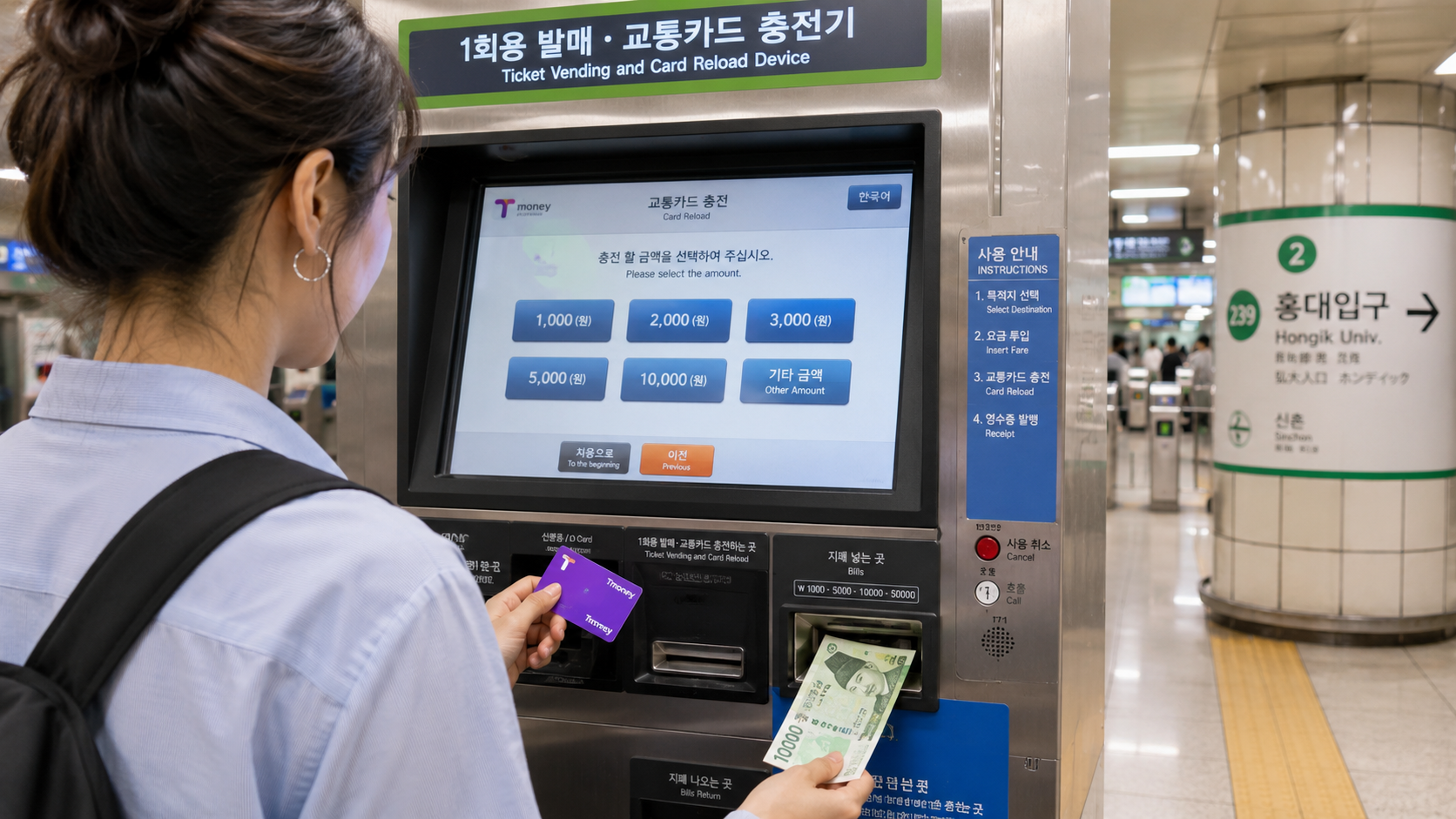
Tmoney and EZL are rechargeable stored-value cards used on public transportation. They can be bought at participating convenience stores and transport facilities and used on compatible buses and subways. Some affiliated shops also accept their stored value.
According to the Korea Tourism Organization transportation-card guide, a standard Tmoney card generally costs approximately KRW 3,000–5,000, depending on the card and design. This is the card price, not usable fare balance.
Bring cash for a standard Tmoney card
The Korea Tourism Organization’s transportation payment chart, current when checked on June 9, 2026, says regular Tmoney purchases and top-ups at convenience stores and ordinary subway facilities are cash only and do not accept foreign-issued cards. Procedures can differ at specialized machines, but travelers should arrive with Korean won rather than assuming a foreign card will work.
A practical initial load is KRW 20,000–30,000 for a short urban stay. This is a planning suggestion, not a fixed requirement. Your actual spending depends on the city, trip length and number of rides.
At a convenience store, hand the card and cash to the cashier and say:
- Tmoney charge, please.
- 티머니 충전해 주세요. (Tmoney chungjeonhae juseyo, meaning “Please top up my Tmoney.”)
Tap when entering and leaving
On Korean local buses and most subway systems, tap the same transportation card when entering and exiting. Tapping out records the distance traveled and is normally necessary for transfer discounts.
Do not use one card to enter and another to exit. Keep the card away from other contactless cards when tapping to avoid a card clash.
Do not rely on paying a bus fare in cash
Cashless bus services have expanded. The Korea Tourism Organization reports that all city buses in Incheon, Daegu and Gwangju operate without cash, while many Seoul buses are also cashless. A transportation card is therefore essential even if you intend to use cash elsewhere. Check the official VISITKOREA city-bus guide before traveling outside your usual city.
Seoul’s foreign-card exceptions
Since March 17, 2026, designated vending machines at 273 stations on Seoul Subway Lines 1–8 have accepted internationally issued Visa and Mastercard cards for:
- Single-journey subway tickets
- Short-term Climate Card passes valid for 1, 2, 3, 5 or 7 days
Seoul states that foreign-card purchases through these machines carry an average service fee of approximately 3.7%. This does not mean that regular Tmoney top-ups or direct foreign-card tapping are universally available. See the Seoul Metropolitan Government announcement on international card payments for transit tickets.
3. Carry some Korean won in cash
Korea is highly card-oriented, but cash remains useful for:
- Buying or topping up a regular transportation card
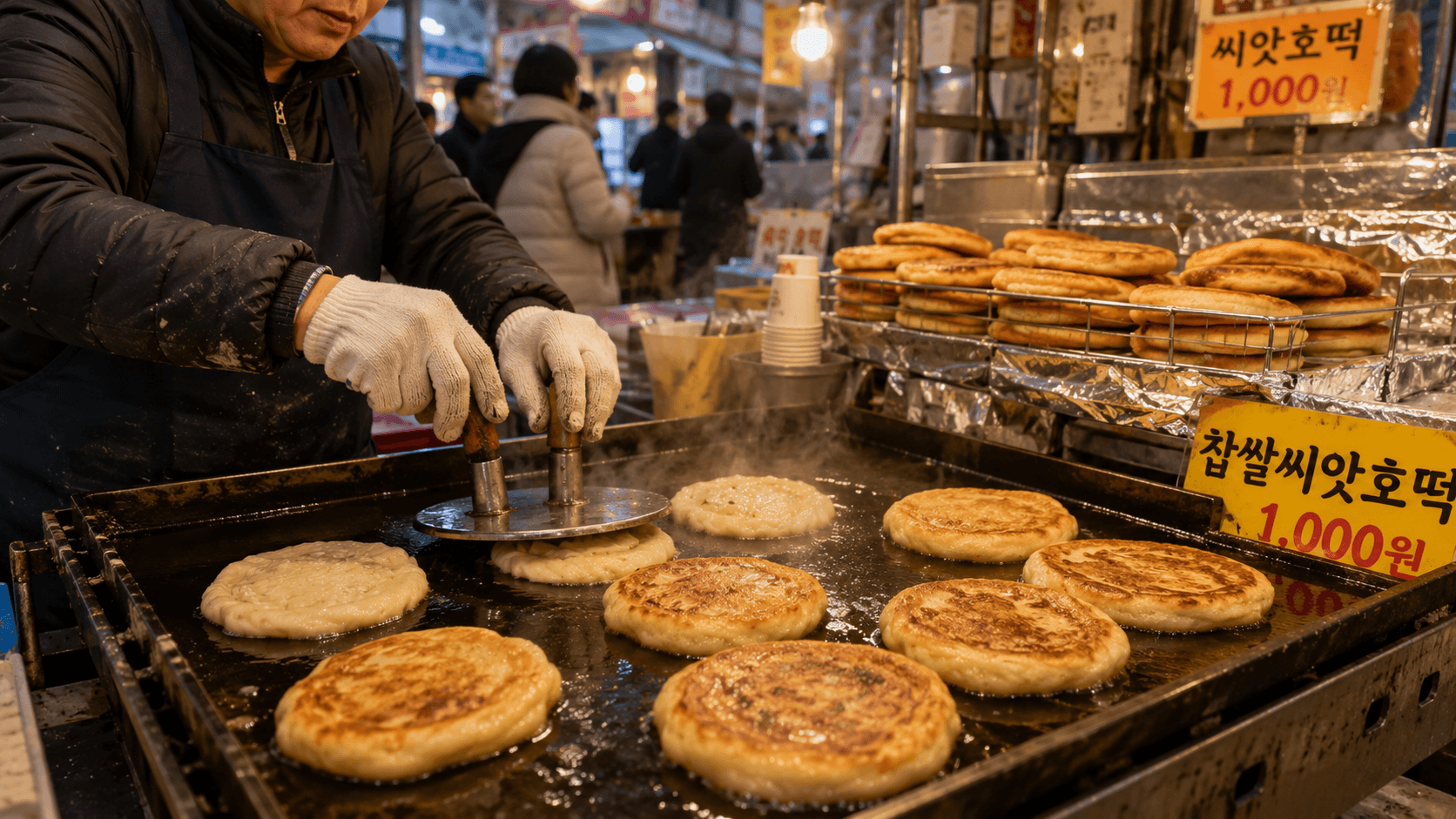
- Traditional markets and small independent stalls
- Coin lockers, older vending machines or small facilities
- Splitting bills when a merchant cannot process multiple foreign cards
- Emergencies after a card decline, lost phone or network failure
For an ordinary short visit, carrying approximately KRW 50,000–100,000 at a time is a reasonable practical starting point. This is not an official requirement, and carrying more than necessary creates avoidable loss risk.
Korean banknotes come in denominations of KRW 1,000, 5,000, 10,000 and 50,000. Keep smaller notes available for transit top-ups and small businesses.
Withdrawing cash from an ATM
Look for an ATM marked Global, International, Visa, Plus, Mastercard or Cirrus. Airports, major stations, bank branches and some convenience stores have machines capable of handling foreign cards, but not every ATM does.
The Korean ATM operator and your home bank may each charge a fee. The exchange rate and withdrawal limit also depend on the issuing bank. If an ATM offers conversion into your home currency, review the displayed rate and charges; selecting withdrawal in KRW usually avoids the ATM’s DCC conversion.
Do not wait until your last banknote is gone. A particular foreign card may be rejected even at a machine displaying the correct network logo.
4. Consider a tourist prepaid card only when it solves a problem
Tourist-focused prepaid cards can combine a Korean payment balance, foreign-currency loading and transportation functions. They may be useful when:
- Your home card charges high foreign transaction fees.
- Your foreign card repeatedly fails at Korean merchants.
- You want a separate travel budget.
- You prefer to load foreign cash or a payment card into a Korean prepaid product.
For example, the Korea Tourism Organization describes WOWPASS as a visitor-focused prepaid payment and transportation product available through designated kiosks, with a passport required for issuance. Its current features are summarized in the official transportation-card comparison.
Do not assume a prepaid card is automatically cheaper than your existing bank card. Before loading a large amount, check the provider’s current:
- Issuance fee
- Exchange rate or exchange markup
- App top-up fee
- ATM withdrawal fee and limit
- Refund rules
- Expiration policy
- Separate payment and transportation balances
These commercial terms can change. Confirm them directly with the provider on the day you purchase or load the card.
5. Treat mobile wallets as a backup
Apple Pay and other mobile-payment services can be convenient at participating Korean merchants, but terminal support is not universal. A phone wallet should supplement, rather than replace, your physical card.
Apple now supports adding Tmoney to compatible Apple devices. However, Apple states that a South Korea-issued credit or debit card is required to purchase or top up Tmoney through Apple Wallet. That makes it unsuitable as the only arrival plan for most short-term international visitors. See Apple’s current instructions for adding a transit card to Apple Wallet.
Korean QR and app-based payment services may require a Korean bank account, locally issued card, verified Korean phone number or resident identity process. Visitors should not download a wallet simply because they see its logo at checkout; check its foreign-user registration and funding rules first.
Recommended setup by traveler type
Short-term visitor
Use one international card for purchases, keep a second card in reserve, buy a physical Tmoney card and carry enough cash for top-ups and emergencies.
Exchange student or new resident
Use the visitor setup initially. After opening a Korean bank account, compare locally issued debit cards, automatic transit-payment functions and mobile wallets. Eligibility and identity requirements depend on the bank and immigration status, so confirm them directly with the bank.
Family or group
Give each person their own transportation card where possible. This makes subway gates and transfers simpler. A bus driver may sometimes process several passengers on one card, but that arrangement can complicate transfers and does not work like separate subway entries.
Traveler with high foreign-card fees
Compare your bank’s conversion and transaction charges with a reputable travel card or Korean tourist prepaid card. Evaluate the complete cost, including loading, exchange, withdrawal and refund charges.
Common payment mistakes
Assuming a foreign contactless card works on transit
It generally does not work at ordinary subway and local-bus readers. Buy a compatible Korean transportation card.
Arriving without cash for Tmoney
Regular Tmoney purchases and top-ups are still generally cash only. Withdraw or exchange a small amount of KRW before depending on local transit.
Bringing only one card
A card can fail because of issuer security controls, network problems or a merchant terminal’s configuration. Bring a backup from a different issuer if possible.
Accepting home-currency conversion automatically
Read the terminal before approving a transaction. Choose KRW unless you have compared the offered conversion with your card issuer’s rate and intentionally prefer it.
Loading too much onto a prepaid product
Refund locations, limits and procedures vary. Load moderate amounts and review the official refund terms before departure.
Depending entirely on a phone
A depleted battery, damaged phone, lost device or unsupported terminal can remove access to every wallet stored on it. Keep a physical payment card and emergency cash separately.
What to check before you go
- Confirm international payments and ATM withdrawals are enabled on both cards.
- Compare foreign transaction, cash-advance and ATM fees.
- Save your card issuers’ international support numbers somewhere outside your wallet.
- Make sure banking apps will work with your travel SIM or eSIM.
- Bring a physical card even if you normally use Apple Pay or another wallet.
- Obtain enough KRW for a transportation card and first-day expenses.
- Check the latest transportation-card rules for every city on your itinerary.
- Review any tourist prepaid card’s current fees and refund conditions.
- Keep your backup card and emergency cash separate from your main wallet.
FAQ
Can I travel in Korea using only a credit card?
You may be able to pay for most ordinary purchases, but a credit card alone is not a dependable transport solution. Regular subway and bus readers generally require a Korean transportation card, and standard Tmoney top-ups often require cash.
Can I tap my foreign Visa or Mastercard on a Seoul bus?
No. The Korea Tourism Organization’s current guidance says foreign-issued cards are not accepted for direct tap payment on ordinary local-bus readers. Use Tmoney or another compatible transportation card.
Can I buy Tmoney with a foreign credit card?
The official international-visitor transportation chart says regular Tmoney purchases and top-ups are cash only. Seoul’s newer foreign-card machines apply to specified single-journey tickets and short-term Climate Cards, not universal Tmoney loading.
How much cash should I carry?
There is no required amount. Approximately KRW 50,000–100,000 is a practical emergency and small-payment reserve for many short visits, provided you keep cards available for larger expenses.
Is Apple Pay enough for Korea?
No. It works only at participating merchants, and Apple says topping up Tmoney in Apple Wallet requires a South Korea-issued payment card. Carry a physical bank card and a separate transit card.
Your next step
Before departure, enable two physical international cards and check their fees. After arrival, obtain KRW and buy a Tmoney or EZL card before taking local buses or ordinary subway services.
Sources
- Korea Tourism Organization: International visitors’ transportation and payment guide
- Korea Tourism Organization: Transportation cards
- Korea Tourism Organization: City buses and cashless payment
- Seoul Metropolitan Government: International card payments for transit tickets
- Apple Support: Adding a transit card to Apple Wallet
- Visa: Dynamic currency conversion