Daegu rewards travelers who look beyond Korea’s better-known coastal and capital-city itineraries. The city combines accessible mountain scenery, traditional markets, modern history, contemporary art and lively evening districts. For a first visit, prioritize Apsan Observatory, Seomun Market and the historic center; add Palgongsan National Park if you have a second full day.
Information on opening hours, access and visitor services was verified on June 11, 2026. Always recheck official pages shortly before your trip, especially for cable cars, museums, hiking trails and seasonal events.
At a glance
| Place | Best for | Suggested time | Main access |
|---|---|---|---|
| Apsan Observatory | City views and a short mountain outing | 2–4 hours | Bus or taxi, then cable car or trail |
| Seomun Market | Local food and traditional shopping | 1.5–3 hours | Seomun Market Station, Line 3 |
| Modern Cultural Alley | History and architecture | 2–3 hours | Central Daegu on foot |
| Palgongsan National Park and Donghwasa | Hiking, nature and Buddhist culture | Half or full day | Bus, taxi or city tour |
| Kim Gwangseok Street | Murals, cafés and evening atmosphere | 1–2 hours | Metro plus a short walk |
| Suseongmot Lake | Relaxed evening walk | 1–2 hours | Suseongmot Station, Line 3 |
| Daegu Art Museum | Contemporary art and rainy-day sightseeing | 1.5–3 hours | Metro and bus or taxi |
| Gyeongsang-gamyeong Park | Quiet historic stop in the city center | 30–60 minutes | Walk from Jungangno area |
1. Apsan Observatory for the clearest introduction to Daegu
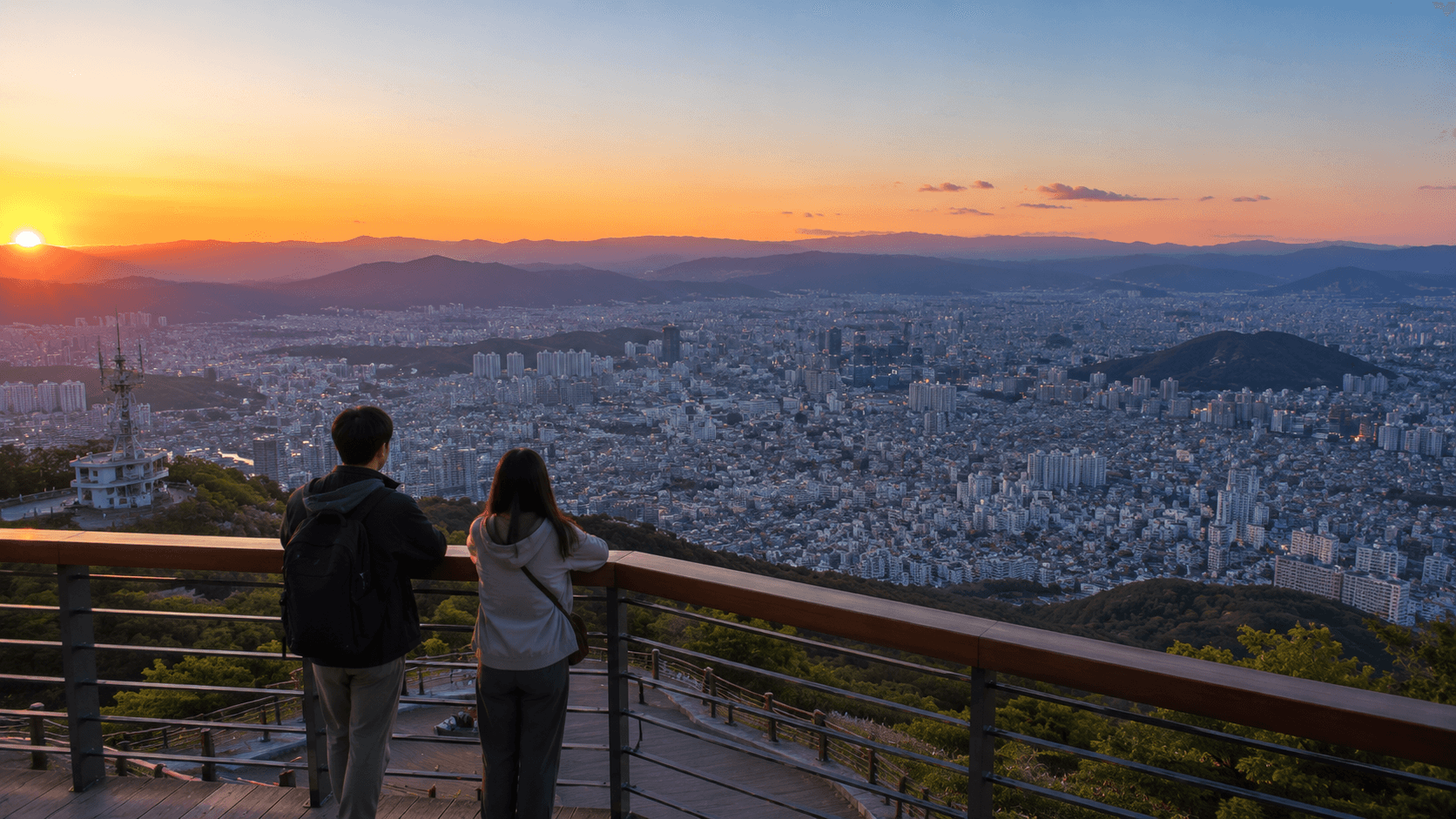
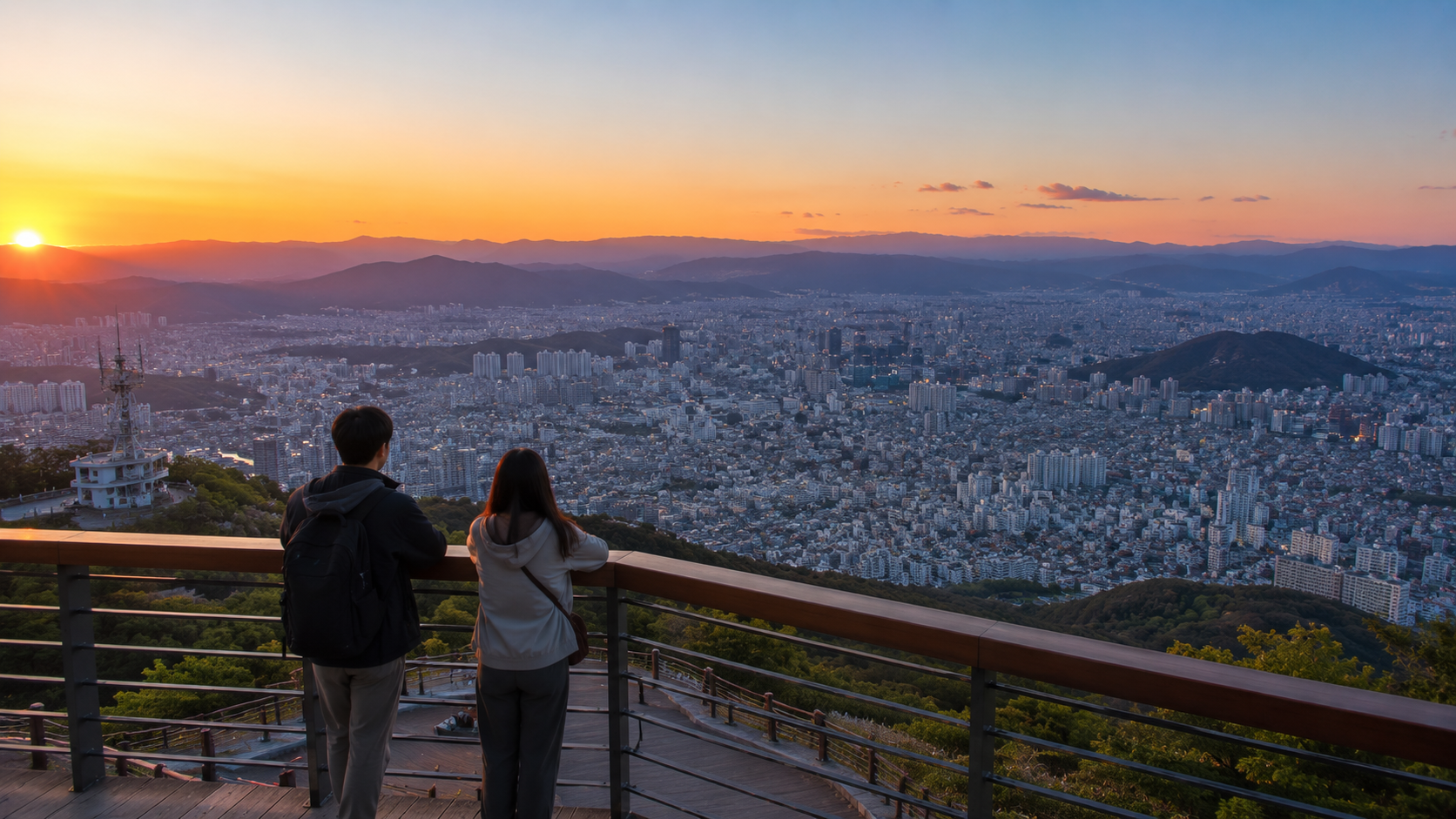
Apsan Observatory is the most useful first stop for understanding Daegu’s geography. From the mountainside, you can see the dense urban basin framed by ridges. Late afternoon provides daylight for identifying landmarks, while staying until dusk adds the city lights.
According to the official Daegu Tourism page for Apsan Observatory, visitors can approach from Keungol using the cable car or hike from Anjiranggol. The listed Anjiranggol route is approximately 2.5 kilometers and takes about one hour, although actual time depends on fitness, weather and trail conditions.
The cable car reduces the climb but does not eliminate walking. Expect slopes and steps between transport points and the observatory. Operating hours, fares and suspension notices can change because of weather or maintenance, so check the operator’s latest information on the day of travel. Do not plan a tight connection immediately afterward.
Practical plan: Arrive two hours before sunset, take the cable car up if it is operating, walk to the viewpoint and return before the final service. Travelers who prefer hiking should start earlier and carry water, particularly during Daegu’s hot summer weather.
2. Seomun Market for food and everyday city life
Seomun Market (서문시장) is Daegu’s major traditional market and one of the easiest places to sample the city’s informal food culture. Its covered sections and surrounding lanes sell textiles, clothing, household goods, dried seafood and prepared food.
The official Daegu Tourism listing for Seomun Market gives regular market hours as 09:00–18:00 and states that luggage storage is available. These details were verified on June 11, 2026, but individual stalls keep their own schedules. Some vendors close on market holidays or after selling out.
Come hungry, but do not expect every stall to have an English menu or accept foreign cards. A Korean-issued payment card is widely useful in Korea, while cash can still help at small traditional-market stalls. Ask the price before ordering when it is not displayed, and look at portion sizes before buying several dishes.
Seomun Market Station on Daegu Metro Line 3 is the most convenient rail stop. Line 3 is an elevated monorail, so the journey also provides an inexpensive view over parts of the city. The city’s official public-transport page includes the metropolitan railway map and links to Daegu Transportation Corporation.
The market is a practical lunch stop between the historic center and western Daegu. Allow extra time if you want to browse fabric buildings rather than only visiting the food lanes.
3. Modern Cultural Alley for Daegu’s layered history
Modern Cultural Alley is not a single attraction with one entrance. It is a walking area through Jung-gu, Daegu’s central district, linking historic religious buildings, former residences, narrow stairways and streets associated with the city’s development in the late nineteenth and early twentieth centuries.
The official Daegu Tourism description notes that guided alley tours are available through local cultural interpreters. Advance arrangements may be necessary, especially for foreign-language assistance. Independent visitors should use the city’s tourist map or a Korean navigation app because the route crosses ordinary neighborhood streets and is not always obvious at every junction.
Wear comfortable shoes. The route includes hills, steps and uneven sections, and some historic buildings may have limited wheelchair access. Do not assume that every building visible on the route is open to the public.
A sensible walking sequence is to start near the Cheongna Hill area, continue through the historic alleys and finish around Yangnyeongsi, Daegu’s traditional medicinal-herb district. From there, walk toward Gyeongsang-gamyeong Park or Dongseongno.
4. Palgongsan National Park and Donghwasa Temple for a full nature day
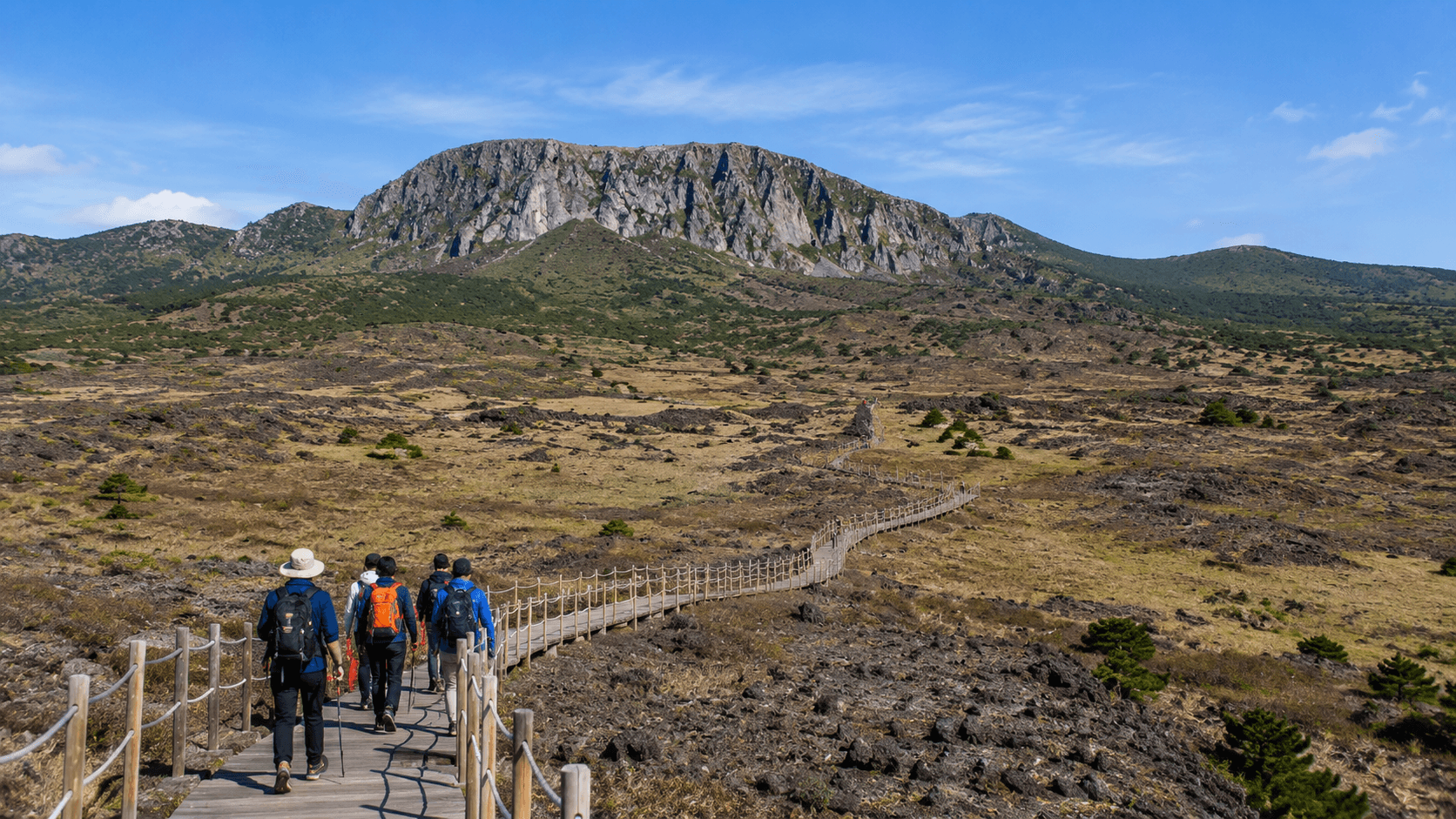
Palgongsan is the strongest choice when you want a substantial mountain outing without leaving the Daegu region. The Korea National Park Service states that Palgongsan became Korea’s 23rd national park in December 2023. The park extends across Daegu and neighboring parts of North Gyeongsang Province, with granite ridges, temples and multiple hiking areas. See the official Palgongsan National Park page for trail maps and current closure information.
Do not treat Palgongsan as one compact attraction. Trailheads, Donghwasa Temple, Gatbawi and the cable-car area are separated, and crossing between them can consume significant time. Choose one focus for the day:
- Donghwasa and nearby forest: Appropriate for culture, architecture and a less demanding outing.
- Cable-car area: Suitable for elevated scenery with less hiking, subject to operating conditions.
- Gatbawi: Better for visitors prepared for a sustained stair climb.
- Longer ridge hike: Only for travelers with suitable footwear, water and a clear route plan.
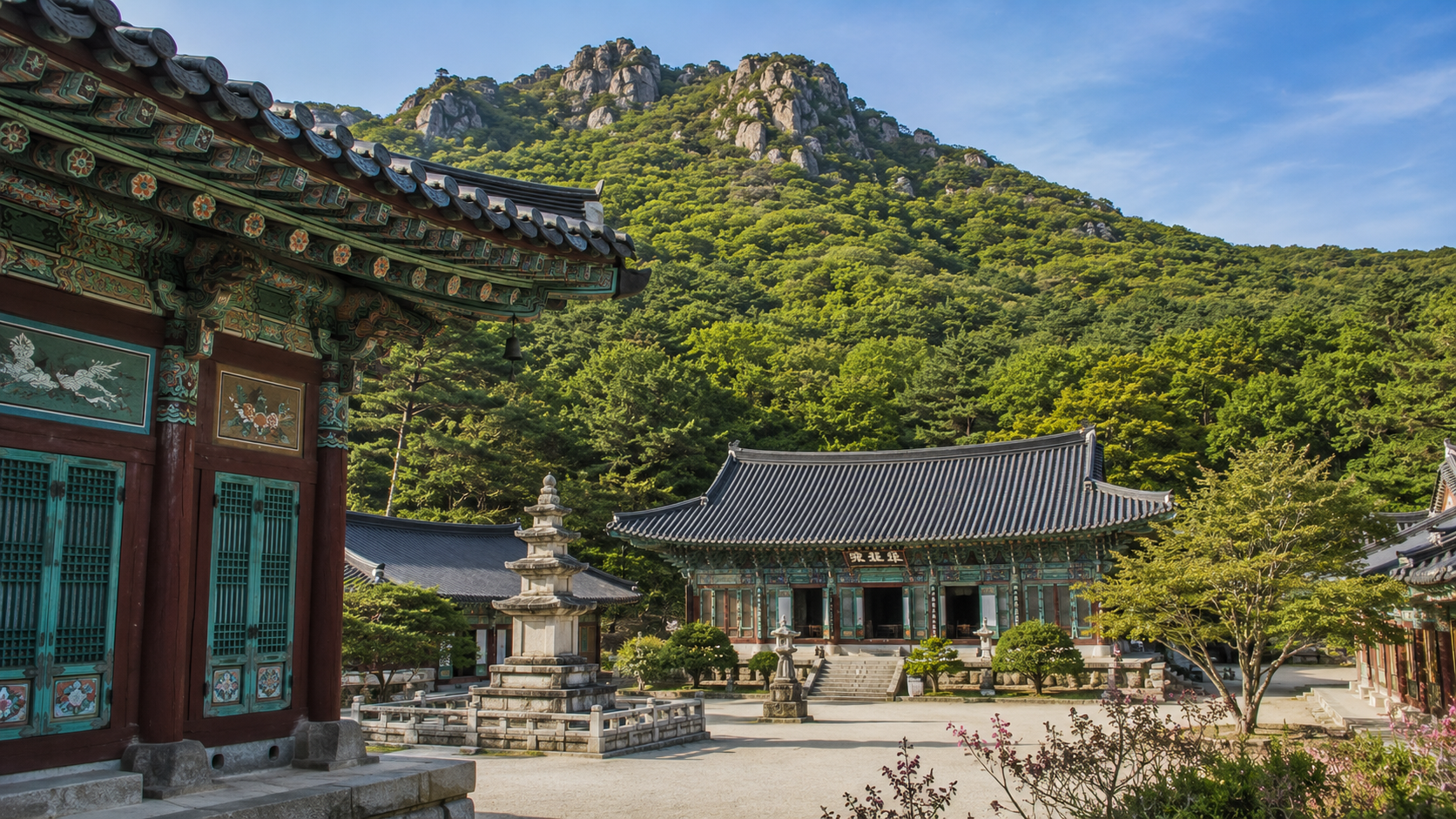
Donghwasa (동화사) is an active Buddhist temple, not merely a sightseeing set. The official Daegu Tourism listing for Donghwasa places it about 22 kilometers northeast of central Daegu and identifies major features including the Daeungjeon main hall and the large Tongil Yaksa Buddha.
Dress and behave respectfully: keep conversations quiet near worship halls, follow photography signs and do not block people who are praying. Mountain buses may be less frequent than inner-city services, so check both the outbound and return journey before leaving central Daegu. A taxi or official city-tour course can simplify the trip, but prices and schedules should be confirmed when booking.
5. Kim Gwangseok Street and Bangcheon Market for murals and cafés
Kim Gwangseok Street is a compact mural street beside Bangcheon Market. It commemorates the Korean singer-songwriter Kim Gwangseok through paintings, sculptures and music-related installations. The official tourism page describes the decorated wall as approximately 350 meters long.
Visitors unfamiliar with Kim’s music can still enjoy the lane as a short urban-art stop, but its cultural meaning is clearer after listening to a few of his songs. The surrounding district contains cafés, small bars and independent shops, making it more appealing in the late afternoon or early evening than early in the morning.
The street is narrow and can become crowded on weekends. Murals also change or weather over time, so do not expect every image seen in older photographs to remain unchanged. Combine it with Suseongmot Lake for an easy evening itinerary.
6. Suseongmot Lake for an evening walk
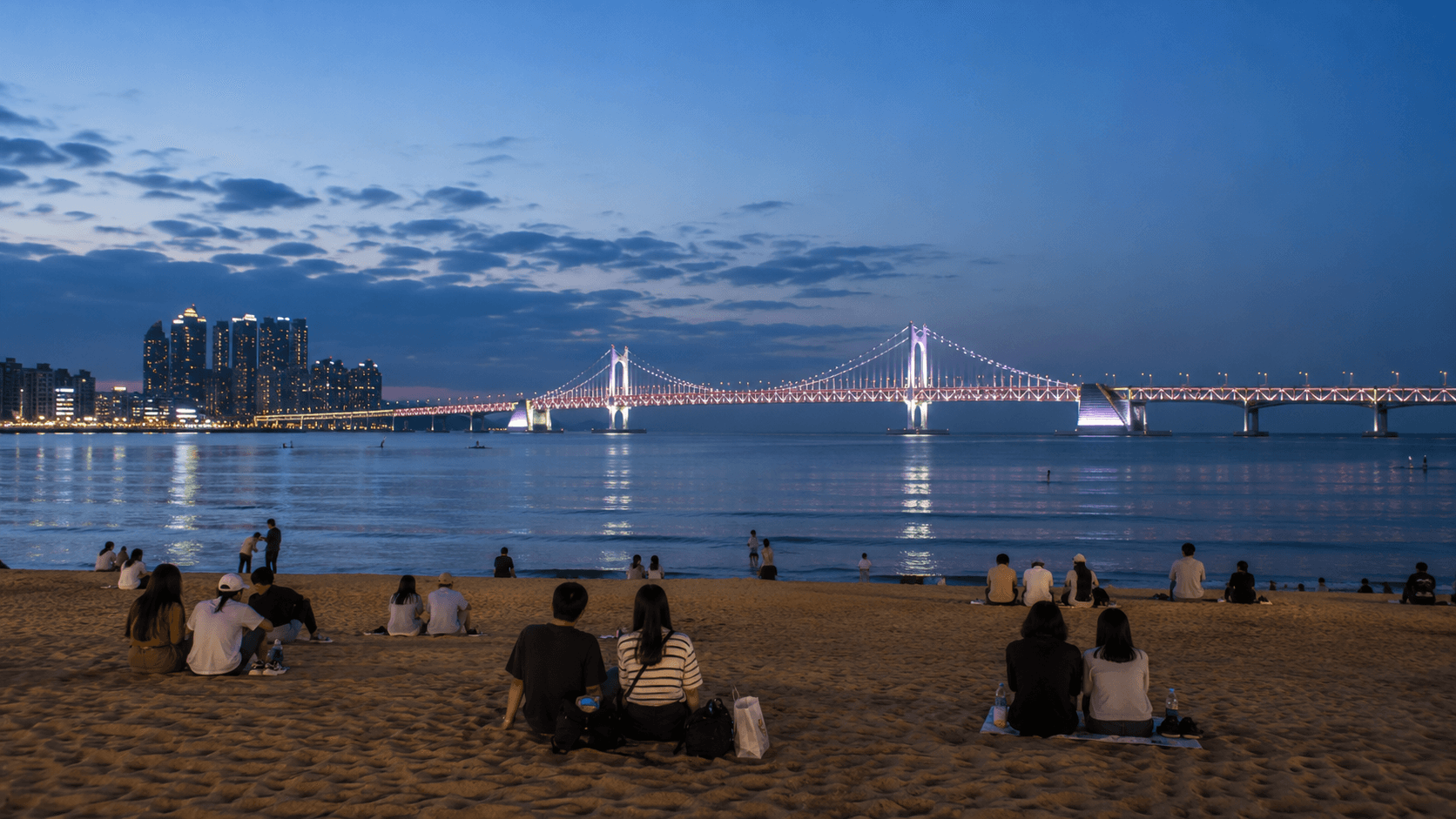
Suseongmot Lake (수성못) is a landscaped urban lake surrounded by walking paths, restaurants and cafés. It is better approached as a relaxed neighborhood outing than as a major daytime landmark. Visit around sunset, walk the perimeter and continue to dinner nearby.
The official Daegu Tourism page for Suseongmot confirms that the outdoor park area is generally accessible at any time, while businesses and amusement facilities maintain separate hours and prices. These details were checked on June 11, 2026.
Suseongmot Station on Metro Line 3 is the useful rail stop. The route from the station to the main lakeside area still requires walking, so travelers with mobility concerns may prefer a short taxi ride. Paths are mostly easier than Daegu’s mountain attractions, but conditions around individual facilities vary.
7. Daegu Art Museum for contemporary culture and bad-weather days
Daegu Art Museum is the city’s principal contemporary-art museum. It is outside the central sightseeing district, so visit when the current exhibitions interest you or when you want a quieter half-day away from markets and shopping streets.
The official museum listing provided by Daegu Tourism lists opening hours of 10:00–19:00 from April through October and 10:00–18:00 from November through March, with Monday closure. It also lists accessible toilets and disabled parking. These hours were verified on June 11, 2026; check the Daegu Art Museum website for exhibition closures, holiday arrangements and admission information before traveling.
The museum is not immediately beside a central metro station. Plan on connecting by bus or taxi, and allow more travel time during weekday traffic.
8. Gyeongsang-gamyeong Park for a quiet historic pause
Gyeongsang-gamyeong Park occupies part of the former provincial government complex from the Joseon period. Historic structures include Seonhwadang, the governor’s office, and Jingcheonggak, the governor’s residence.
The official Daegu Tourism listing states that the park itself is open without a time restriction and has an accessible toilet. It also notes that foreign-language interpretation may be available when multilingual interpreters are working or when groups reserve in advance. Availability should not be assumed without confirmation.
The park is small enough to include between other central sights. Pair it with the Modern Cultural Alley, Yangnyeongsi and Dongseongno rather than making a separate journey solely for the park.
How to organize your Daegu itinerary
One day
Start with the Modern Cultural Alley, continue to Seomun Market for lunch and spend late afternoon at Apsan Observatory. This route covers history, food and scenery without requiring a remote mountain trip.
Two days
Use the first-day plan above. On day two, choose Palgongsan and Donghwasa for nature, then return to central Daegu for dinner. Do not add Gatbawi unless your transport and hiking schedule leave enough daylight.
Three days
Add Daegu Art Museum, Kim Gwangseok Street and Suseongmot Lake. This slower schedule works well for summer, when a long midday break can make sightseeing more comfortable.
Getting around Daegu
Daegu’s three metro lines cover the central districts and several major attractions. Line 3 is an elevated monorail serving Seomun Market and Suseongmot. Apsan and Palgongsan require bus, taxi or cable-car connections beyond the metro network.
Use a rechargeable Korean transport card for ordinary metro and city-bus journeys. Check live routes with a Korean navigation app because bus stops, service intervals and transfer instructions can change. The Daegu Tourism transport guide links to official metro and bus information.
For help in English, Japanese or Chinese, Korea’s official 1330 Travel Helpline is linked through the Daegu Tourism website. Service channels and operating arrangements can change, so consult the current contact page before relying on it.
What to check before you go
- Confirm cable-car hours, fares and weather suspensions for Apsan or Palgongsan on the day of travel.
- Check Korea National Park Service notices before hiking Palgongsan.
- Verify museum opening hours, exhibition changes and holiday closures.
- Look up the final bus or metro connection before visiting an outer mountain area.
- Carry water and sun protection from late spring through early autumn.
- Keep some cash available for small market purchases, although card acceptance is common.
- Use shoes suitable for hills, stairs and uneven alleys.
- Ask before photographing worshippers, vendors or people at close range.
- Check accessibility for each building rather than assuming an entire district is step-free.
Sources
- Daegu Tourism: 30 representative attractions
- Daegu Tourism: 12 scenic views
- Korea National Park Service: Palgongsan National Park
- Daegu Tourism: public transportation information
- Daegu Metropolitan City English website
- Daegu Art Museum
For your next step, choose whether Apsan or Palgongsan will be your main outdoor outing, then build the remaining days around central Daegu’s walkable market and historic districts.