Jeonju is best known for its large traditional neighborhood and food culture, but the city offers more than a quick walk through Jeonju Hanok Village. First-time visitors should combine the historic center’s royal shrine, hanok lanes, craft workshops, market, and viewpoints with at least one attraction outside the old town.
The places below were selected for their cultural significance, accessibility, and value to a first visit. Visitor information was checked on June 11, 2026. Individual admission fees, opening hours, and program schedules can change, so confirm them through the linked official sources before traveling.
At a glance
| Place | Why visit | Suggested time |
|---|---|---|
| Jeonju Hanok Village | Traditional architecture, food, crafts, and historic sights | 3–5 hours |
| Gyeonggijeon Shrine | Joseon royal history and a quieter historic setting | 45–75 minutes |
| Jeondong Cathedral | Distinctive architecture beside the old town | 15–30 minutes |
| Omokdae | Elevated views over the hanok roofs | 30–45 minutes |
| Jeonju Hyanggyo | Historic Confucian school grounds | 30–45 minutes |
| Nambu Market | Local food and everyday market atmosphere | 1–2 hours |
| Jaman Mural Village | Hillside lanes, murals, and cafés | 30–60 minutes |
| Deokjin Park | Lotus pond and relaxed local scenery | 1–2 hours |
| National Intangible Heritage Center | Exhibitions and performances about living traditions | 1–2 hours |
1. Jeonju Hanok Village
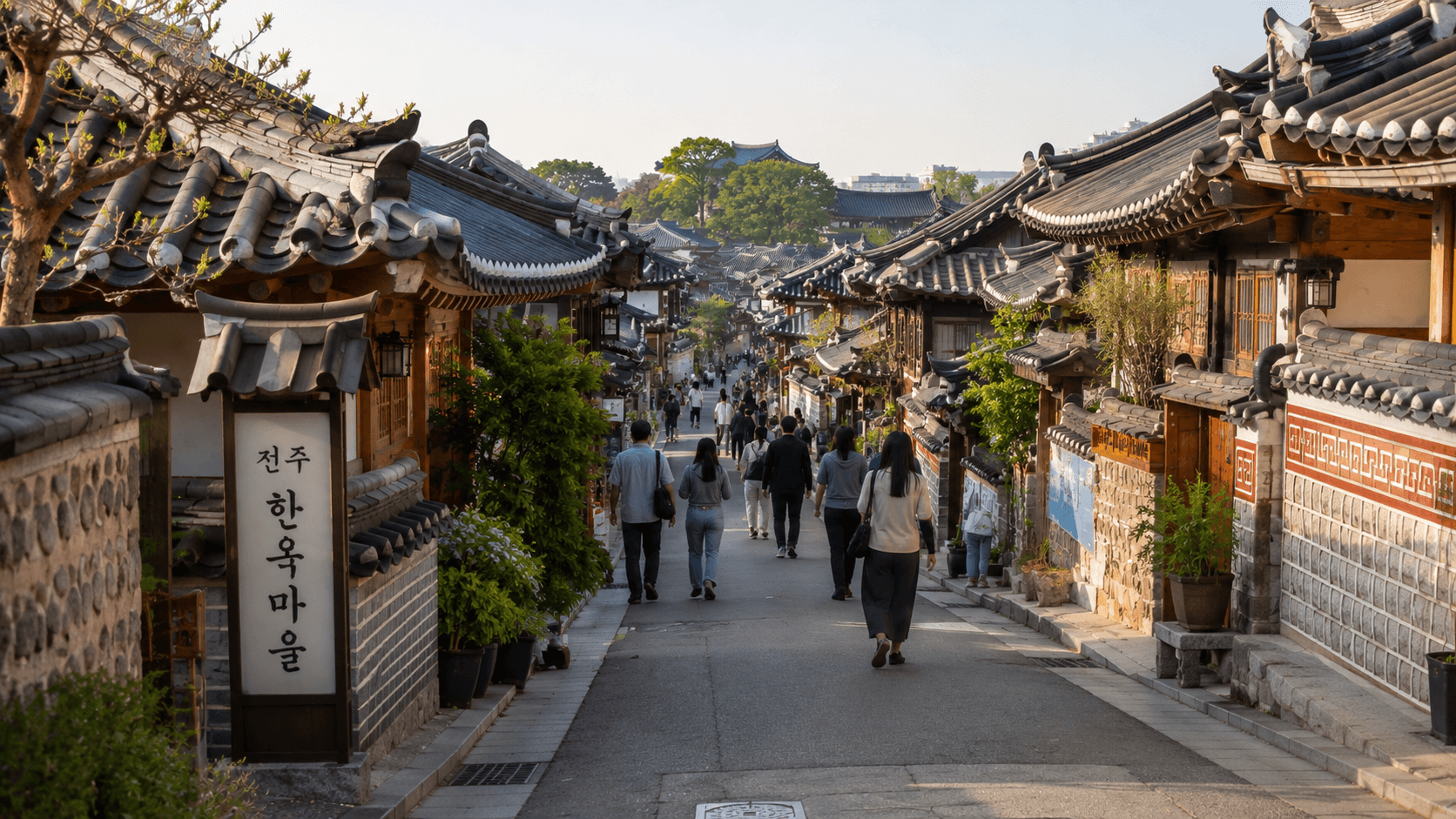
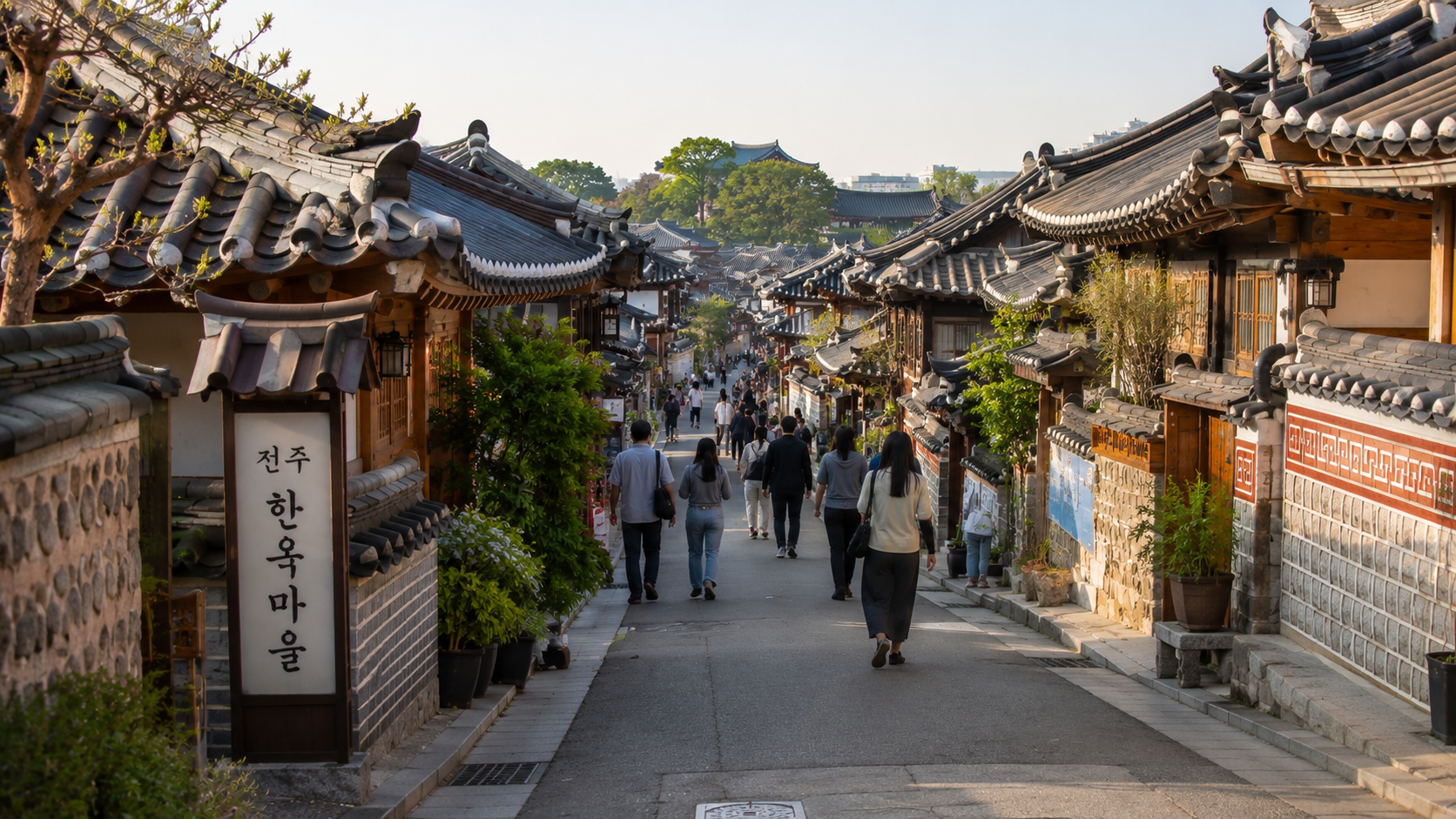
Jeonju Hanok Village, or Jeonju Hanok Maeul (전주한옥마을), is the city’s main visitor district. Hundreds of traditional-style buildings stand within a compact network of lanes containing guesthouses, restaurants, tea rooms, museums, and craft workshops.
The area itself is an open neighborhood rather than a gated attraction, so you can walk through it at any time. Museums, workshops, religious buildings, and private businesses keep their own hours.
Start near Gyeonggijeon Shrine and move toward the quieter eastern lanes. The central shopping streets can become congested around lunchtime and on weekends, while the edges of the neighborhood generally offer a calmer view of the architecture.
Hanbok rental shops are common. Wearing hanbok, the traditional Korean clothing seen in historic districts, is optional rather than necessary. Before renting, check the return deadline, deposit policy, included accessories, weather policy, and whether the advertised price covers the full outfit.
Use the Jeonju City tourism website for official destination information and current notices.
2. Gyeonggijeon Shrine
Gyeonggijeon Shrine (경기전) is one of the most important historic sites in central Jeonju. It was established during the Joseon dynasty to enshrine a portrait of King Taejo, the dynasty’s founder, whose family was associated with Jeonju.
Inside the grounds, tree-lined paths and traditional buildings provide a useful contrast to the busier commercial streets outside. The site also contains historical displays connected to royal portraiture and the Joseon dynasty.
Gyeonggijeon is a ticketed attraction, but I could not reliably confirm its complete June 2026 English-language schedule and fee table from an accessible official page. Check the latest notice through Jeonju’s official tourism portal before visiting. Ticket offices may stop admission before the site closes.
Allow at least 45 minutes. Visit shortly after opening if you want clearer views of the buildings and fewer photography queues.
3. Jeondong Cathedral
Jeondong Cathedral (전동성당) stands opposite Gyeonggijeon and is one of the historic center’s most recognizable landmarks. Its brick exterior differs sharply from the timber buildings and tiled roofs nearby.
The cathedral remains an active religious site, not simply a photo stop. Access to the interior may be limited during Mass, ceremonies, maintenance, or other church activities. Keep conversations quiet, avoid blocking entrances, and follow posted photography restrictions.
The exterior can be included easily between Gyeonggijeon and Nambu Market. A short visit is sufficient unless the interior is open and you wish to spend more time there.
4. Omokdae and Imokdae
Omokdae (오목대) is a small elevated historic site overlooking parts of Jeonju Hanok Village. It is one of the most useful places for understanding the district’s layout because the climb reveals layers of tiled roofs below.
The route involves slopes and stairs. Wear shoes with reasonable grip, particularly after rain or snow. Travelers using wheelchairs or pushing strollers should not assume that every approach is step-free; check local maps and conditions before setting out.
Nearby Imokdae (이목대) is connected to the area’s Joseon royal history. Together, the two sites work best as a short scenic detour rather than a major half-day attraction.
For softer light and more comfortable temperatures, go in the morning or late afternoon. After dark, remain on lit paths and do not rely on the hill as a late-night viewpoint.
5. Jeonju Hyanggyo Confucian School
Jeonju Hyanggyo (전주향교) is a historic Confucian school complex on the quieter side of the hanok district. Its courtyards, old trees, and traditional halls make it a worthwhile stop for visitors interested in education and social life during the Joseon period.
This is a heritage property rather than a reconstructed entertainment area. Some halls may be closed, and access can change when ceremonies or cultural programs are underway. Observe posted boundaries and avoid entering buildings unless signs clearly permit it.
The school is especially convenient as part of a walking route from Omokdae through the eastern end of Hanok Village. Allow around 30 to 45 minutes.
6. Nambu Market and Youth Mall
Nambu Market (남부시장) sits beside the historic district and offers a more everyday view of Jeonju. Vendors sell produce, prepared foods, household goods, and regional ingredients. An upper-level area known as Youth Mall has hosted small independent businesses, although individual shops and opening patterns can change.
The market is most useful around mealtimes, but not every stall accepts international cards. Carry some KRW and ask the price before ordering if it is not displayed. Market aisles can be narrow, so large suitcases are inconvenient.
Night-market operations have varied by season and event schedule. As of June 11, 2026, a dependable current English timetable could not be confirmed from an accessible official source. Do not plan an evening solely around the night market without checking the latest announcement through the official Jeonju tourism website.
7. Jaman Mural Village
Jaman Mural Village (자만벽화마을) occupies a hillside near Omokdae. Its narrow lanes contain murals, small cafés, and views toward the traditional district.
The neighborhood is compact, and 30 to 60 minutes is usually enough. Its appeal depends partly on current artwork and which businesses are open, so it should be treated as an optional extension rather than Jeonju’s principal attraction.
People live in and around these lanes. Keep noise down, do not photograph residents without permission, and avoid entering private steps, gardens, or doorways to compose a picture.
8. Deokjin Park
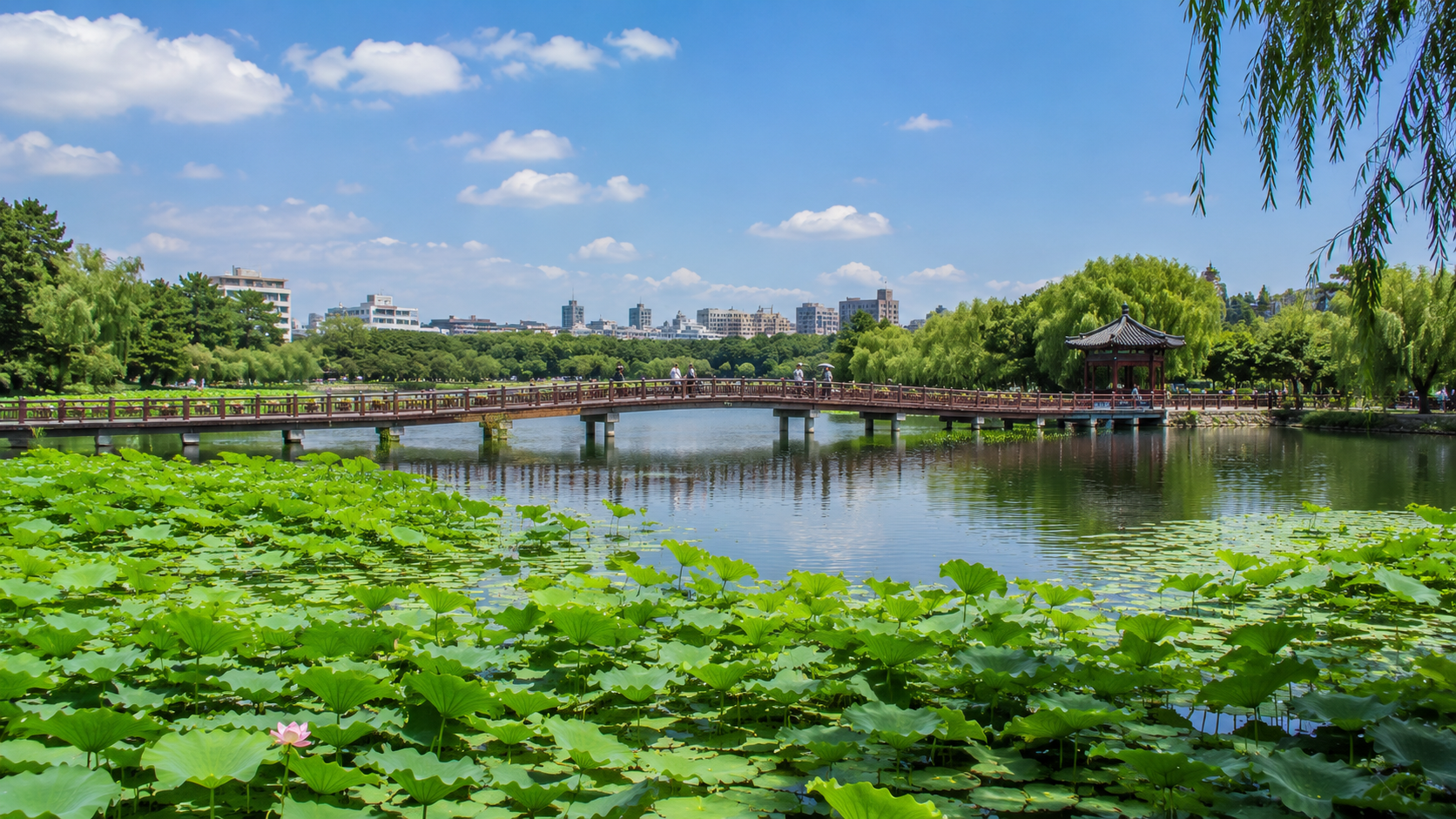
Deokjin Park (덕진공원) provides a break from the architecture and crowds of the historic center. Its main feature is a large pond associated with seasonal lotus flowers, crossed by a pedestrian bridge and surrounded by walking areas.
Lotus conditions depend on weather and the time of year; do not expect full blooms on a fixed date. Even outside the flowering period, the park is suitable for a quiet walk and offers a better sense of how local residents use the city’s public spaces.
The park is outside the main Hanok Village sightseeing circuit. A taxi or city bus is generally more practical than walking from the historic center. Map applications may offer different bus routes depending on your starting point, so check live directions immediately before departure.
9. National Intangible Heritage Center
The National Intangible Heritage Center explores Korean traditions maintained through skills and performance, including music, dance, craft, ritual, and oral culture. It is a useful choice when you want more explanation than an outdoor heritage district can provide.
Exhibition access and scheduled performances are not the same thing. A performance may require advance booking even when general exhibitions are free. Check the National Intangible Heritage Center’s official website for current opening information, closures, exhibitions, and reservation notices. The site is primarily in Korean, so a browser translation tool may be helpful.
The center is also a practical rainy-day or very hot-weather option. Allow one to two hours, longer if you have reserved a performance or educational program.
What to eat in Jeonju
Jeonju is designated a UNESCO Creative City of Gastronomy, reflecting the city’s culinary heritage. The best-known local dish is Jeonju bibimbap (전주비빔밥), rice mixed with vegetables, seasoning, and other toppings.
Other foods to look for include kongnamul-gukbap (콩나물국밥), a hot rice and soybean-sprout soup, and moju (모주), a sweet, lightly alcoholic drink made with spices. Moju still contains alcohol unless a business explicitly identifies its version as alcohol-free.
Restaurants in the busiest visitor streets may have queues and tourist-oriented menus. Compare posted prices and look one or two blocks beyond the main pedestrian lanes. Food allergies can be difficult to communicate because broths, sauces, and side dishes may contain ingredients that are not obvious. Show a written Korean allergy card and confirm each dish directly with the restaurant.
UNESCO provides background on the international Creative Cities Network, while current restaurant details should be checked through local listings rather than assumed from older guidebooks.
A practical one-day route
Morning
- Arrive in the historic center before its busiest period.
- Visit Gyeonggijeon Shrine when the grounds are relatively quiet.
- See Jeondong Cathedral across the road.
- Walk through the central and residential lanes of Jeonju Hanok Village.
Lunch
Choose bibimbap, kongnamul-gukbap, or another regional dish. Allow extra time on weekends because well-known restaurants may operate a waiting-list system.
Afternoon
- Climb to Omokdae for a view over the tiled roofs.
- Continue to Jaman Mural Village if you enjoy cafés or street art.
- Walk to Jeonju Hyanggyo.
- Finish at Nambu Market or take a taxi to the National Intangible Heritage Center.
For a second day, add Deokjin Park and a museum, workshop, or scheduled cultural performance.
Getting to and around Jeonju
Jeonju Station is served by KTX and other rail services, but it is not within walking distance of Hanok Village for most travelers carrying luggage. Use a city bus or taxi for the final journey. Travel time varies substantially with traffic.
Book and verify trains through the official KORAIL booking service. Confirm the train number, departure station, and date carefully: Seoul has several rail terminals, and not every Jeonju-bound itinerary uses the same one.
Express and intercity buses also connect Jeonju with other Korean cities. Jeonju has more than one bus terminal, so check the terminal name shown on your ticket rather than asking only for “the bus station.”
Central Hanok Village is best explored on foot. For Deokjin Park, Jeonju Station, or outlying museums, buses and taxis are more efficient. Korean mapping services generally provide better local walking and transit information than foreign map platforms.
Where to stay
Stay inside or beside Hanok Village if atmosphere and early access to the historic streets matter most. Traditional hanok guesthouses may use floor bedding, enforce quiet hours, and provide limited sound insulation. Check bathroom arrangements, mattress type, luggage storage, and accessibility before booking.
Stay near a major road or commercial district if you prefer larger rooms, elevators, conventional beds, and easier taxi pickup. Accommodation around Jeonju Station is practical for an early train but less convenient for evening walks in the old town.
What to check before you go
- Confirm attraction closures, admission rules, and cultural-program reservations through official websites.
- Check your exact train or bus terminal and allow time to reach Hanok Village.
- Review the weather forecast; much of a first visit is outdoors.
- Carry some KRW for markets, small shops, and situations where an overseas card is rejected.
- Leave large luggage at your accommodation or an available storage facility before exploring narrow lanes.
- Wear comfortable shoes for stone paving, slopes, and stairs.
- Check accessibility directly with each attraction if step-free access is essential.
- Verify the return deadline and additional charges before renting hanbok.
- Avoid building an itinerary around seasonal flowers, night markets, or performances without confirming the current schedule.
Frequently asked questions
Is one day enough for Jeonju?
One full day covers the principal sights around Hanok Village. Stay overnight if you want a slower visit, an early-morning walk, cultural activities, or time for Deokjin Park and museums.
Is Jeonju Hanok Village free?
Walking through the neighborhood is free. Individual shrines, museums, workshops, rentals, and activities may charge admission or participation fees.
When should I visit?
Spring and autumn usually provide comfortable conditions for walking, but weekends and public holidays can be busy. Summer brings heat, humidity, and rain; winter can be cold with icy surfaces. Visit major outdoor sights early in the day regardless of season.
Can I visit without speaking Korean?
Yes. The main visitor district is accustomed to international travelers, but English information is inconsistent outside major attractions. Keep destination names in Hangul on your phone and use a Korean map application for navigation.
Next step
Choose whether Jeonju will be a day trip or an overnight stop, then check transport availability before reserving accommodation or activities. Build the first day around Gyeonggijeon, Hanok Village, Omokdae, Jeonju Hyanggyo, and Nambu Market; add Deokjin Park or the National Intangible Heritage Center only if your schedule has enough room.
Sources
- Jeonju City official tourism portal
- Korea Tourism Organization’s official VISITKOREA website
- KORAIL official booking service
- National Intangible Heritage Center
- UNESCO Creative Cities Network
Official information and links were reviewed on June 11, 2026.