Pohang is a spread-out coastal city where modern steel architecture, working fishing ports, beaches and mountain valleys sit within the same municipal area. First-time visitors should prioritize Space Walk and Yeongildae Beach in central Pohang, then choose either the Homigot–Guryongpo coast or Naeyeonsan mountain area for a longer excursion.
At a glance
| Place | Best for | Suggested time | Main consideration |
|---|---|---|---|
| Space Walk | Architecture and views | 1–2 hours | May close in strong wind or rain |
| Yeongildae Beach | Easy seaside walk | 1–2 hours | Best combined with Space Walk |
| Jukdo Market | Seafood and local food | 1–2 hours | Ask prices before ordering |
| Homigot Sunrise Square | Sunrise and coastal scenery | 1–2 hours | Far from central Pohang |
| Guryongpo | Port history and food | 2–3 hours | Combine with Homigot |
| Naeyeonsan and Bogyeongsa | Hiking and waterfalls | Half or full day | Wear proper walking shoes |
| Igari Anchor Observatory | Coastal photography | 30–60 minutes | Exposed to wind and weather |
| Oeosa Temple | Quiet lake and temple scenery | 1–2 hours | Easier with a car or taxi |
Access information was checked on June 11, 2026. Hours, trail restrictions, bus timetables and attraction access can change because of weather, maintenance or seasonal operations.
1. Space Walk at Hwanho Park
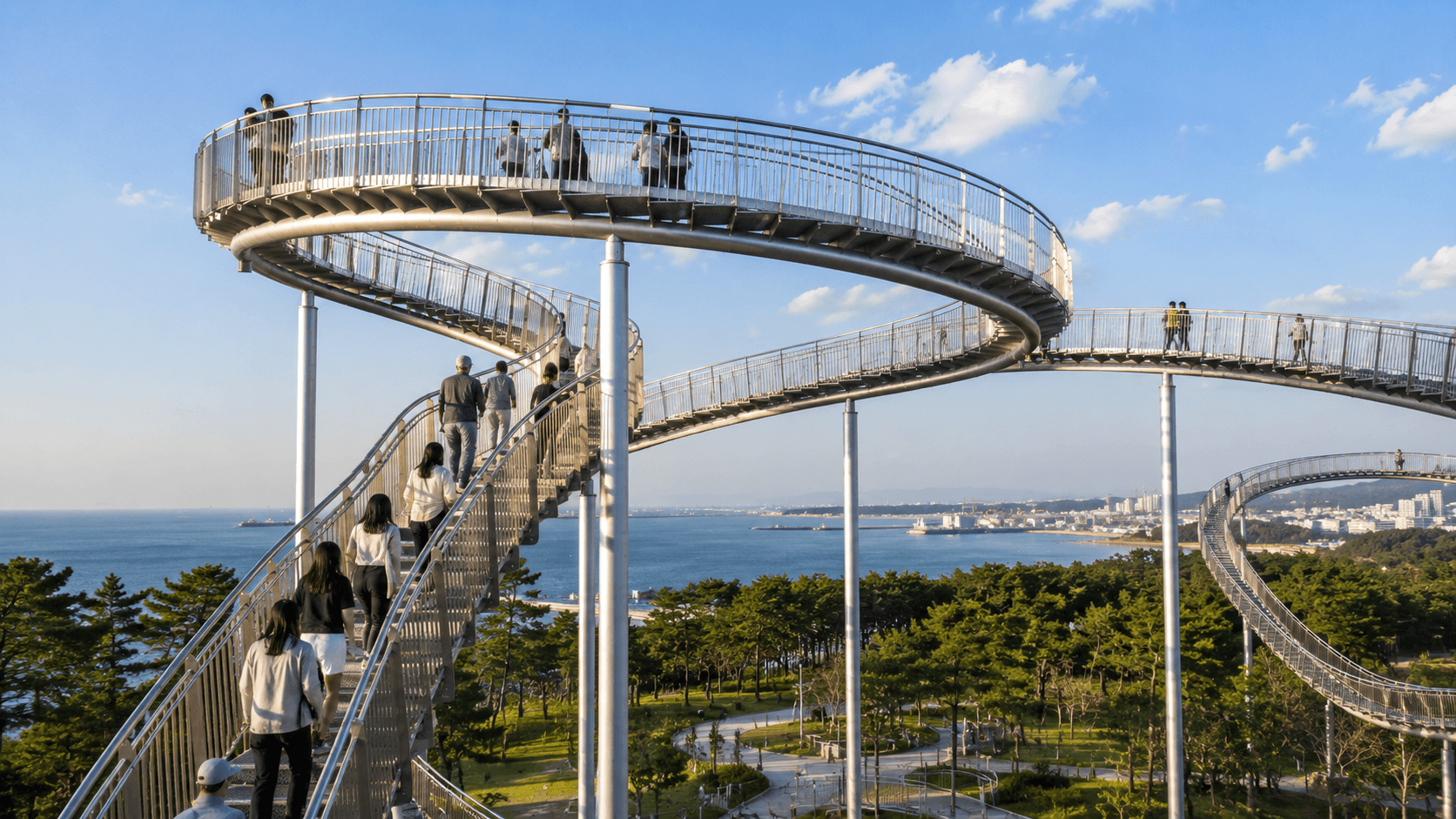
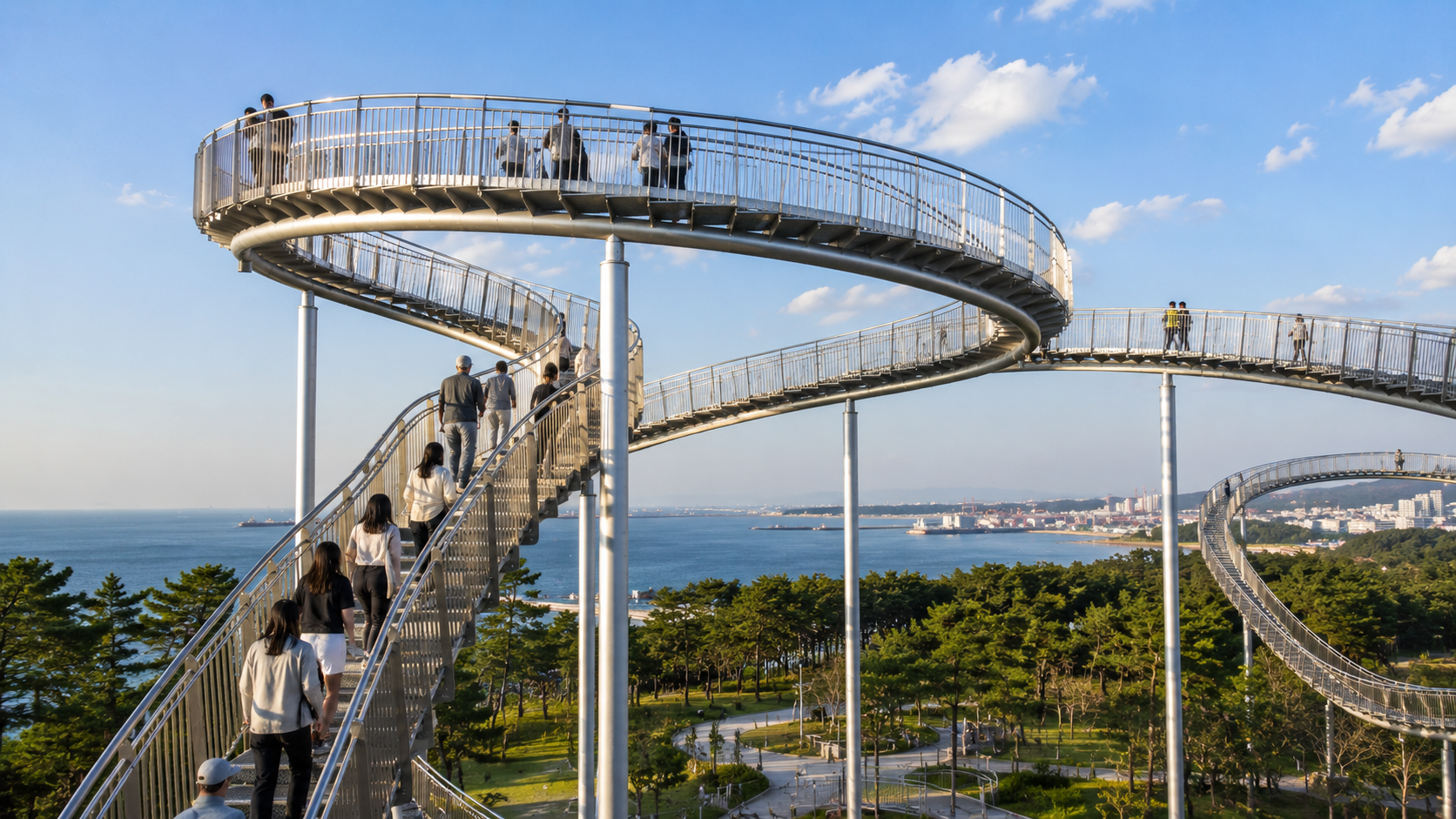
Space Walk (스페이스워크) is Pohang’s most recognizable contemporary attraction. The elevated steel walkway curves above Hwanho Park like a roller coaster, although visitors walk rather than ride. Its high points provide views over Yeongil Bay, nearby apartment districts and the industrial coastline.
The installation has two walkable branches. The central loop is part of the sculpture but is not open for walking. Expect steep steps and movement underfoot, particularly when other visitors are climbing nearby.
Admission is free. Entry can be suspended during strong winds, heavy rain, snow or other unsafe conditions. The attraction also limits the number of people on the structure, so weekend queues are possible. Check the official Space Walk website on the day of your visit; operating conditions were verified on June 11, 2026, but a reliable current seasonal timetable was not consistently available through its English page.
This is not a good attraction for wheelchairs, strollers or anyone unable to manage repeated stairs. Hwanho Park itself provides a more accessible alternative, though some routes are sloped.
Practical plan
- Arrive near opening time or late in the afternoon to avoid the busiest period.
- Allow time to walk uphill through Hwanho Park from the road or parking area.
- Continue to Yeongildae Beach afterward rather than treating Space Walk as an isolated stop.
- Bring a secure bag: loose hats and light objects can be troublesome in coastal wind.
2. Yeongildae Beach and the marine pavilion
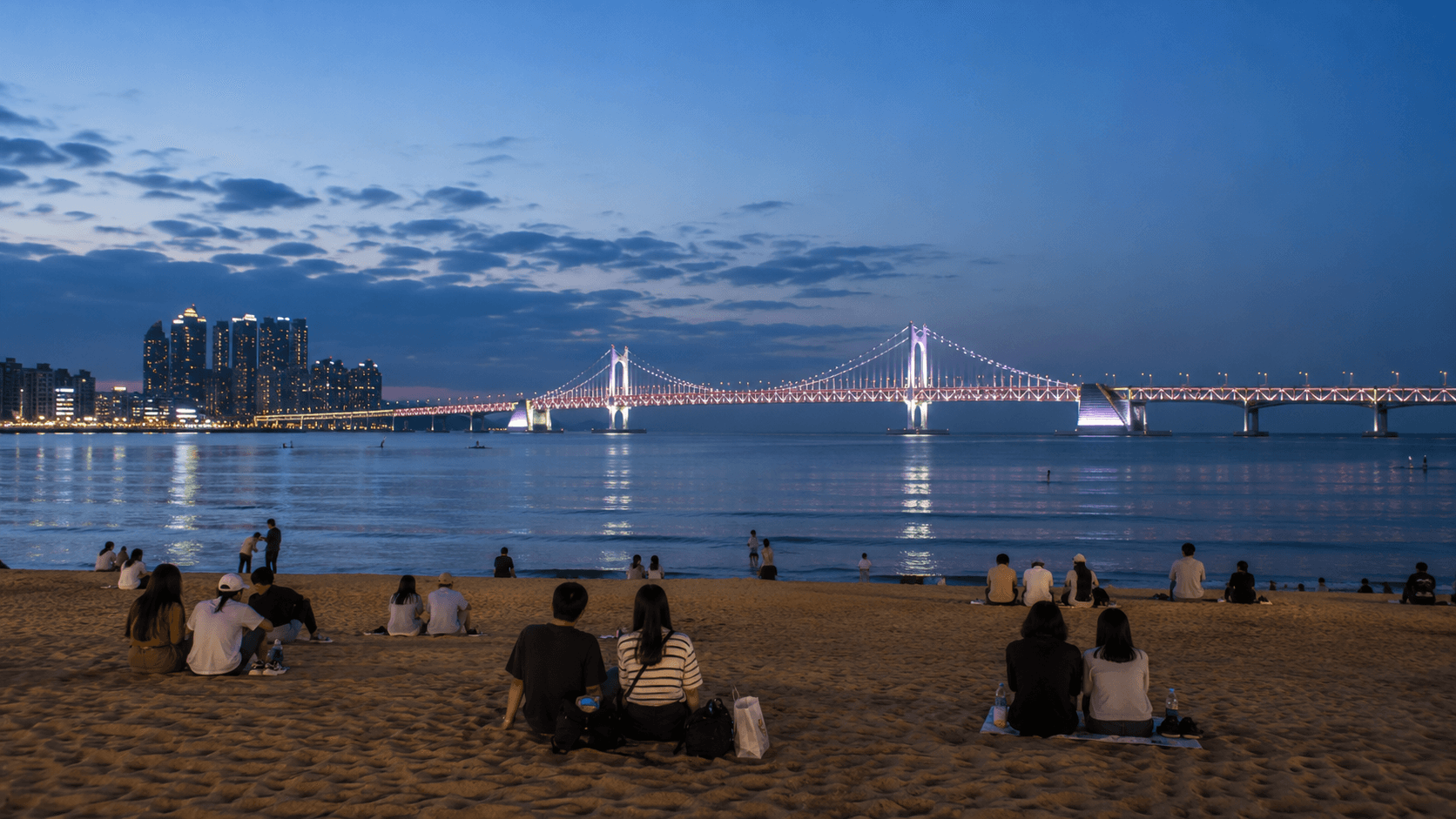
Yeongildae Beach (영일대해수욕장) is the easiest place to experience Pohang’s waterfront without leaving the urban area. Its broad promenade is lined with restaurants, cafés and accommodation, making it suitable for an evening walk even outside the summer swimming season.
The visual landmark is Yeongildae, a Korean-style pavilion built over the water and reached by a pedestrian bridge. It is particularly attractive around sunset and after dark, when the pavilion and surrounding waterfront are illuminated. Across the bay, industrial lights provide a distinctly Pohang backdrop rather than an untouched coastal landscape.
The beach is free to visit throughout the year, but swimming areas, safety services, showers and rental facilities operate seasonally. Beach-opening dates and supervised swimming hours should be confirmed through Pohang City before a summer visit.
Space Walk and Yeongildae Beach are close enough to combine in one half-day area, although the exact walk can feel longer than it appears on a map. A short taxi ride is practical in poor weather or with luggage.
3. Jukdo Market
Jukdo Market (죽도시장) is the city’s major traditional market and one of the most useful stops for understanding Pohang as a working fishing center. The surrounding district contains seafood stalls, produce vendors, household-goods shops and restaurants serving raw and cooked fish.
The market is not a single attraction with one universal timetable. Individual stalls and restaurants keep their own hours, and activity varies by section. Morning through lunchtime is a sensible period for seeing the seafood trade, while restaurants may remain active later.
How to order seafood without confusion
- Ask for the total price before agreeing to an order.
- Confirm whether side dishes, preparation and table charges are included.
- Use a translation app to show the species, quantity and cooking method.
- Do not assume every stall accepts foreign-issued cards; carry some KRW as a backup.
- If raw fish is unfamiliar, choose a restaurant with a written menu and clearly displayed prices.
Pohang is associated with gwamegi (과메기), semi-dried Pacific herring or saury traditionally eaten with seaweed, vegetables and condiments. It is most closely connected with the colder months and the Guryongpo area. Travelers with fish allergies or dietary restrictions should ask carefully about broths, sauces and shared preparation surfaces.
4. Homigot Sunrise Square
Homigot (호미곶) is a cape east of central Pohang known for its open sea views and the large Hand of Mutual Success sculpture rising from the water. A matching hand stands on land in the square.
The cape is strongly associated with sunrise, especially around New Year. On ordinary days, however, it is also a straightforward coastal stop with space to walk, watch fishing boats and visit the lighthouse area. The nearby National Lighthouse Museum explains Korea’s maritime navigation history, but museum opening days and exhibition access should be checked before departure.
Sunrise conditions are never guaranteed. Check the Korea Meteorological Administration forecast, cloud cover and official sunrise time rather than relying on a general estimate. Arrive well before sunrise if photography is your priority, particularly on weekends.
Homigot is far from Pohang Station and the central beach district. Local buses serve the peninsula, but trips may involve long waits and indirect routing. A rental car, taxi or prearranged driver makes it much easier to combine Homigot with Guryongpo.
5. Guryongpo Japanese House Street
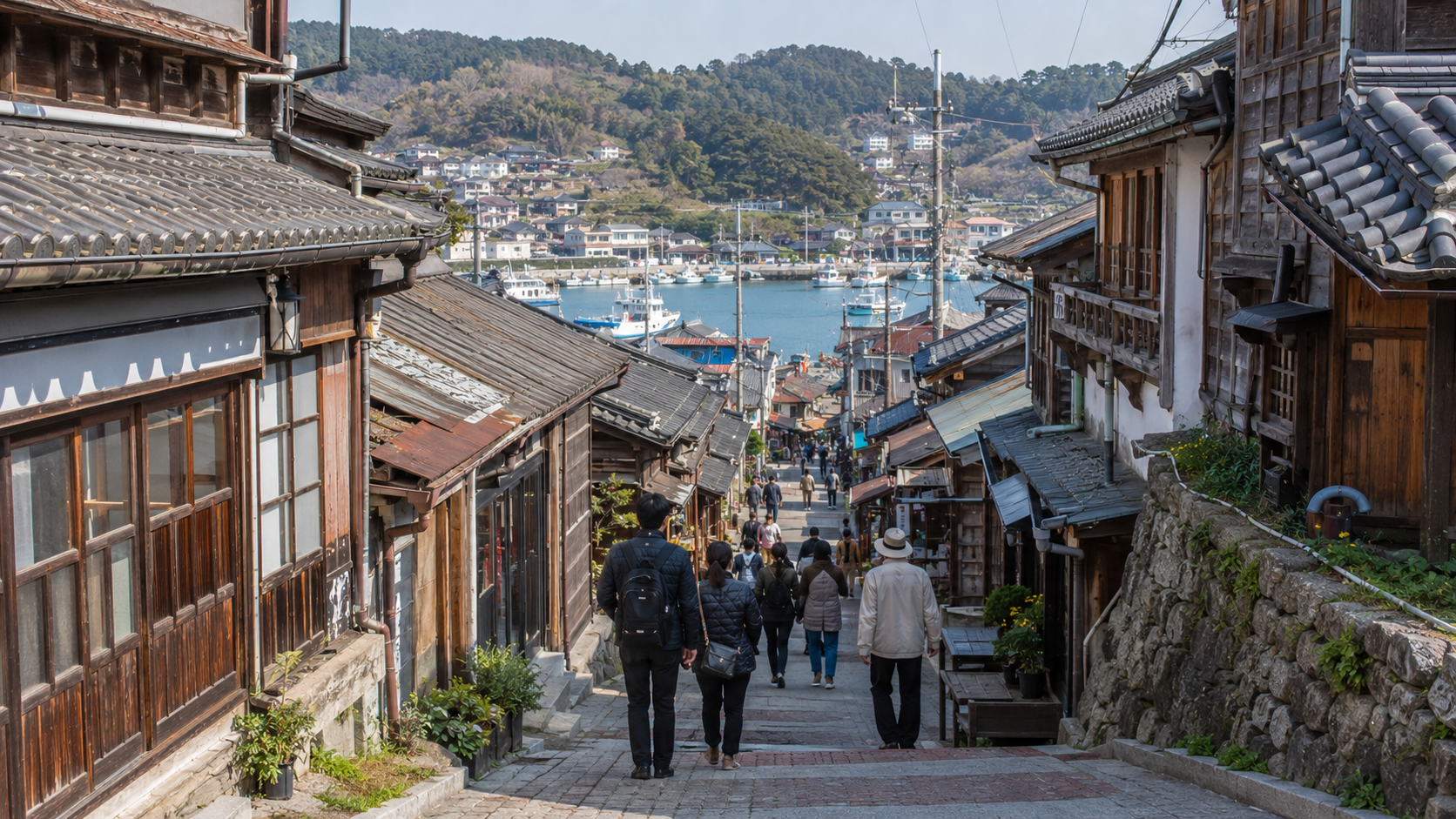
Guryongpo Japanese House Street (구룡포 일본인가옥거리) preserves part of a neighborhood developed during the period of Japanese colonial rule. Restored wooden buildings now contain small museums, exhibits, shops and cafés.
The area should be approached as a historical district rather than simply a decorative photo location. Exhibits provide context about the port’s development and the lives connected to it, although the amount of English interpretation may vary.
The street became widely recognizable through Korean television productions, but its practical appeal is broader: it is compact, walkable and directly connected to Guryongpo’s port and seafood culture. Allow time to leave the main staircase and explore the neighboring market streets.
Many small businesses close on their own schedules, and museum hours can differ from those of the outdoor street. No single set of operating hours could be reliably confirmed for every facility on June 11, 2026. Visit during the daytime and check individual venues when you arrive.
Combining Guryongpo and Homigot
A practical route is:
- Travel from central Pohang to Guryongpo.
- Explore the historic street and port before lunch.
- Continue to Homigot in the afternoon.
- Return to central Pohang before local bus frequency decreases in the evening.
Drivers can also reverse the route for sunrise at Homigot followed by breakfast and sightseeing in Guryongpo.
6. Naeyeonsan Mountain and Bogyeongsa Temple
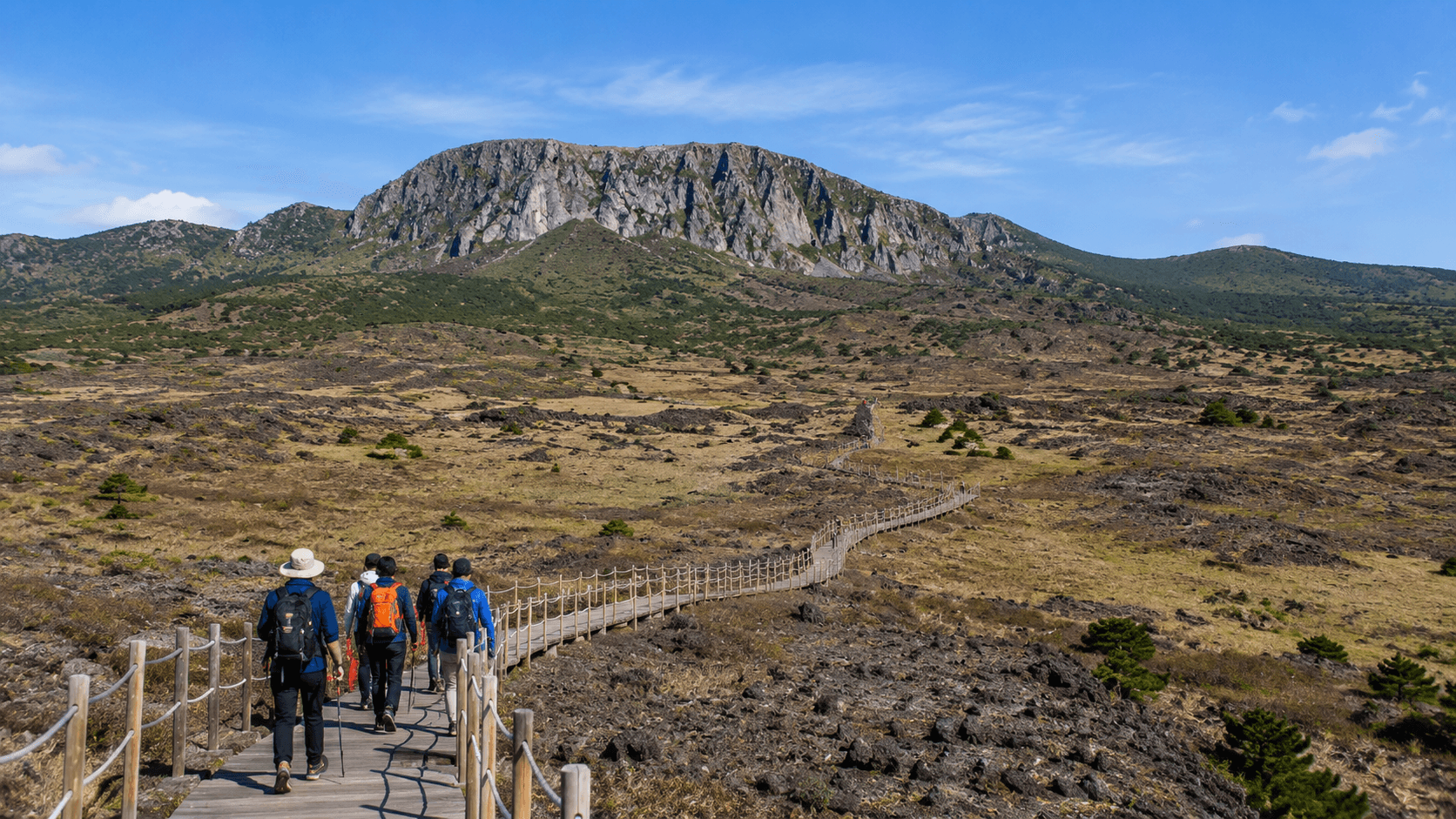
Naeyeonsan (내연산) offers the strongest contrast to Pohang’s industrial and coastal scenery. The main visitor route begins near Bogyeongsa Temple (보경사) and follows a forested valley toward a series of waterfalls.
You do not need to climb the mountain’s highest points to enjoy the area. A shorter walk from the temple into the lower valley is suitable for casual hikers, while reaching more distant waterfalls requires additional time, elevation gain and appropriate footwear.
Trail conditions vary considerably after rain, during winter freezes and in periods of wildfire risk. Check notices at the entrance and obey closures. Mountain rescue access may be slow, so do not treat the developed lower path as evidence that every route is easy.
Bring water, sun protection and shoes with reliable grip. Some food businesses operate near the entrance, but hikers should not depend on finding supplies farther into the valley. Temple buildings are active religious spaces: speak quietly, dress reasonably and avoid blocking ceremonies or photographing people at prayer without permission.
Public transport is possible but less flexible than travel within central Pohang. This is generally a half-day minimum and a better full-day destination for anyone planning a longer hike.
7. Igari Anchor Observatory
Igari Anchor Observatory (이가리 닻 전망대) projects over the sea on Pohang’s northern coast. Its anchor-inspired shape makes it a popular photography stop, while the elevated deck provides a clear view along the rocky shoreline.
The visit itself is relatively short, so it works best as part of a northern coastal drive rather than a destination for an entire day. It can be combined with Wolpo Beach or the Naeyeonsan area when transport and daylight allow.
The deck is exposed to wind, waves and salt spray. Access may be restricted in unsafe weather, and wet surfaces can be slippery. Verify local notices on the day of travel rather than relying on older operating-hour listings.
8. Oeosa Temple and Oeoji Lake
Oeosa Temple (오어사) sits beside Oeoji Lake in the hills south of urban Pohang. The setting is quieter and more enclosed than the city’s major coastal attractions, with temple buildings, forested slopes and reflections across the reservoir.
This is a good choice for travelers who want a gentle scenic walk rather than a demanding mountain route. Conditions around the lake still vary by path, and not every section should be assumed to be step-free or wheelchair accessible.
Oeosa is relatively inconvenient to reach by public transport. A taxi can solve the outward journey, but arranging the return in advance is sensible because passing taxis may be scarce. Ask a driver to wait, schedule a pickup or use a Korean taxi app if your account and payment method work in Korea.
How many days do you need?
One day without a car
Stay within central Pohang:
- Morning: Space Walk and Hwanho Park
- Lunch: Jukdo Market
- Late afternoon: Yeongildae Beach
- Evening: waterfront dinner and pavilion views
Two days with a car
Use the first day for central Pohang. On the second day, visit Guryongpo and Homigot, adding another coastal stop only if daylight and weather permit.
Two days for hikers
Spend one day around Space Walk, Yeongildae and Jukdo Market. Reserve the second for Bogyeongsa and the Naeyeonsan valley.
Getting to and around Pohang
Pohang Station is outside the central waterfront area. KORAIL operates rail services to the station, including KTX services on the Donghae branch, but departures and fares vary by date. Check the official KORAIL station and booking information for your exact travel day. Rail availability was verified on June 11, 2026; no fixed fare is quoted here because prices depend on train and origin.
Pohang Gyeongju Airport is a small joint civil-military airport. Routes can change, so confirm current flights directly with the Korea Airports Corporation. Photography toward military facilities, aprons or restricted airfield areas may be prohibited.
Within Pohang, buses are useful for central districts but less convenient for linking several remote attractions in one day. Korean mapping apps generally provide better local bus information than international map services. Keep each destination’s Hangul name available for drivers and searches.
Taxis are practical for short urban journeys. For Homigot, Naeyeonsan or Oeosa, compare the cost of multiple long taxi trips with a rental car or reserved driver. Confirm the estimated fare and return arrangements before beginning a remote trip.
What to check before you go
- Check wind and rain conditions before visiting Space Walk or exposed coastal decks.
- Confirm KTX, bus or flight times for your exact date.
- Search destinations by their Hangul names in a Korean navigation app.
- Carry a physical payment card and some KRW for markets and small businesses.
- Ask seafood restaurants for the complete price before ordering.
- Confirm seasonal swimming rules before entering the sea.
- Check trail closures and sunset time before hiking at Naeyeonsan.
- Do not plan several distant attractions around infrequent buses without checking the return journey.
- Allow extra time between Pohang Station and the city center.
For current English-language visitor assistance, contact the Korea Tourism Organization’s 1330 Travel Helpline or ask your accommodation to confirm local notices.
FAQ
Is Pohang worth visiting without a car?
Yes, particularly for Space Walk, Yeongildae Beach and Jukdo Market. A car becomes more useful for Homigot, Guryongpo, Oeosa and northern coastal attractions.
Where should first-time visitors stay?
The Yeongildae area is convenient for the beach, evening dining and Space Walk. Accommodation closer to central commercial districts may offer easier access to Jukdo Market and intercity buses. Pohang Station itself is not the most convenient base for waterfront sightseeing.
Can you visit Pohang as a day trip from Seoul?
A same-day rail trip is possible when suitable KTX services are available, but concentrate on central Pohang. Adding Homigot or Naeyeonsan creates a rushed day and increases the risk of missing the return train.
When is the most practical time to visit?
Spring and autumn are generally comfortable for walking, while summer suits beach activities but can be hot, humid and rainy. Winter offers clear coastal scenery and seasonal gwamegi, although strong wind can close exposed attractions. Always use the short-range forecast for the actual date.
Sources
- Pohang City official website
- Pohang Space Walk official website
- KORAIL Pohang Station information
- Korea Airports Corporation: Pohang Gyeongju Airport
- Korea Tourism Organization VISITKOREA
Start by deciding whether your extra day belongs to the Homigot coast or the Naeyeonsan valley. That choice determines whether you need a car and prevents spending too much of the visit moving between opposite sides of Pohang.