Sokcho combines mountain scenery, East Sea beaches, fishing neighborhoods and compact urban attractions in one manageable destination. For a first visit, prioritize Seoraksan National Park, the central market, Abai Village and the coast around Yeonggeumjeong. Two full days are enough for the main sights, while a third day allows for a longer hike or a slower circuit of the lakes and ports.
At a glance
| Place | Main reason to visit | Suggested time | Best for |
|---|---|---|---|
| Seoraksan National Park | Hiking, granite peaks and temples | Half or full day | Nature and photography |
| Sinheungsa Temple | Buddhist culture inside Seoraksan | 45-90 minutes | Culture and an easier walk |
| Sokcho Tourist & Fishery Market | Local food and practical meal choices | 1-2 hours | Food and rainy days |
| Abai Village | Displaced-community history and regional dishes | 1-2 hours | History and food |
| Yeonggeumjeong Pavilion | Open coastal views and sunrise | 30-60 minutes | Short scenic stop |
| Sokcho Beach | Sand, sea views and an easy promenade | 1-2 hours | Families and relaxed walks |
| Oeongchi Badahyanggiro | Coastal walking path | 1-2 hours | Easy seaside walking |
| Cheongchoho Lake | Waterfront parks and evening views | 1-2 hours | Low-effort sightseeing |
| Yeongrangho Lake | Quieter walking and mountain views | 1-3 hours | Cycling and a slower pace |
These places are selected for their value to a first-time visitor, ease of combining them into an itinerary and importance to Sokcho's landscape or history. They are not ranked as an absolute top-ten list.
1. Seoraksan National Park
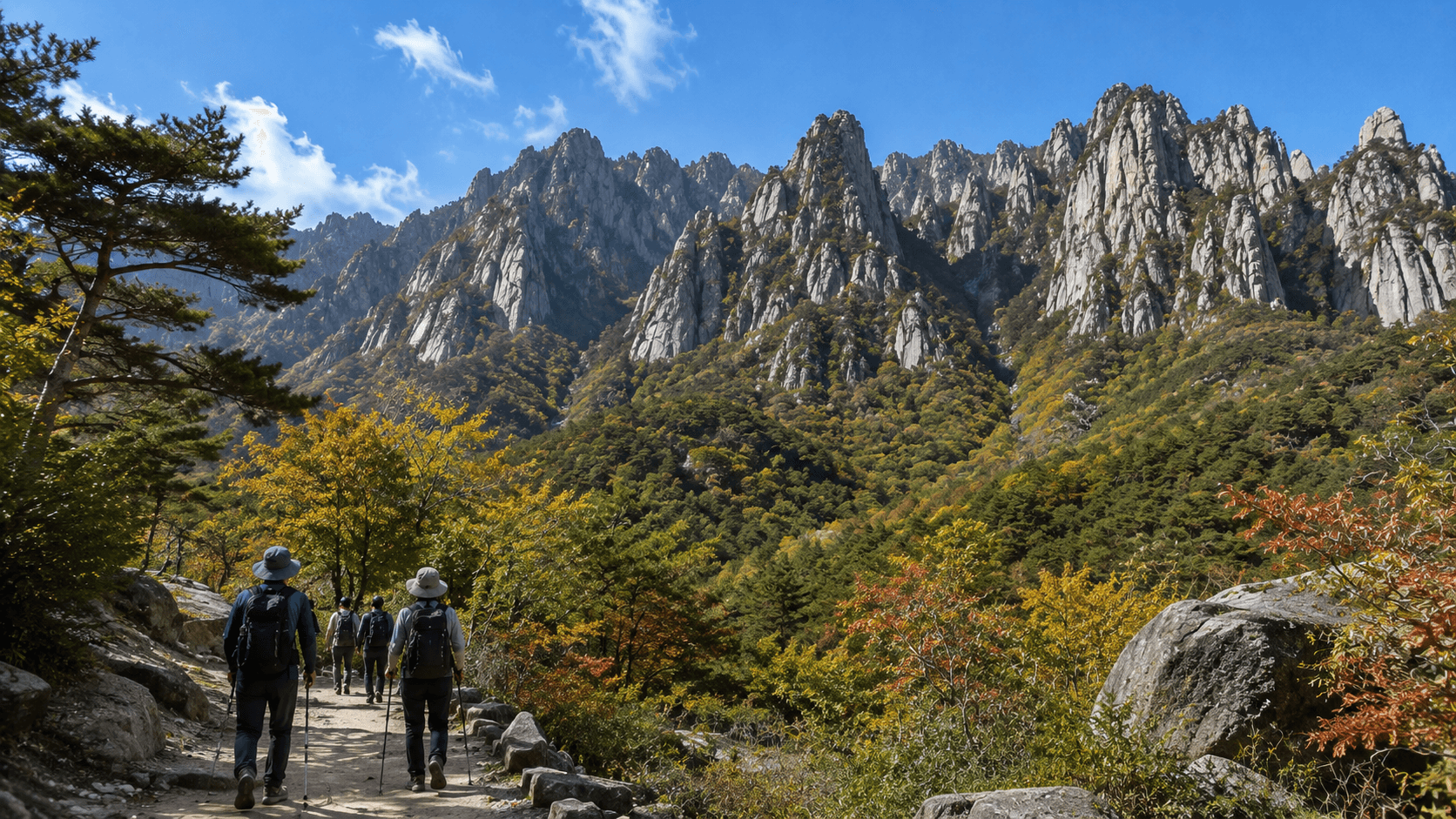
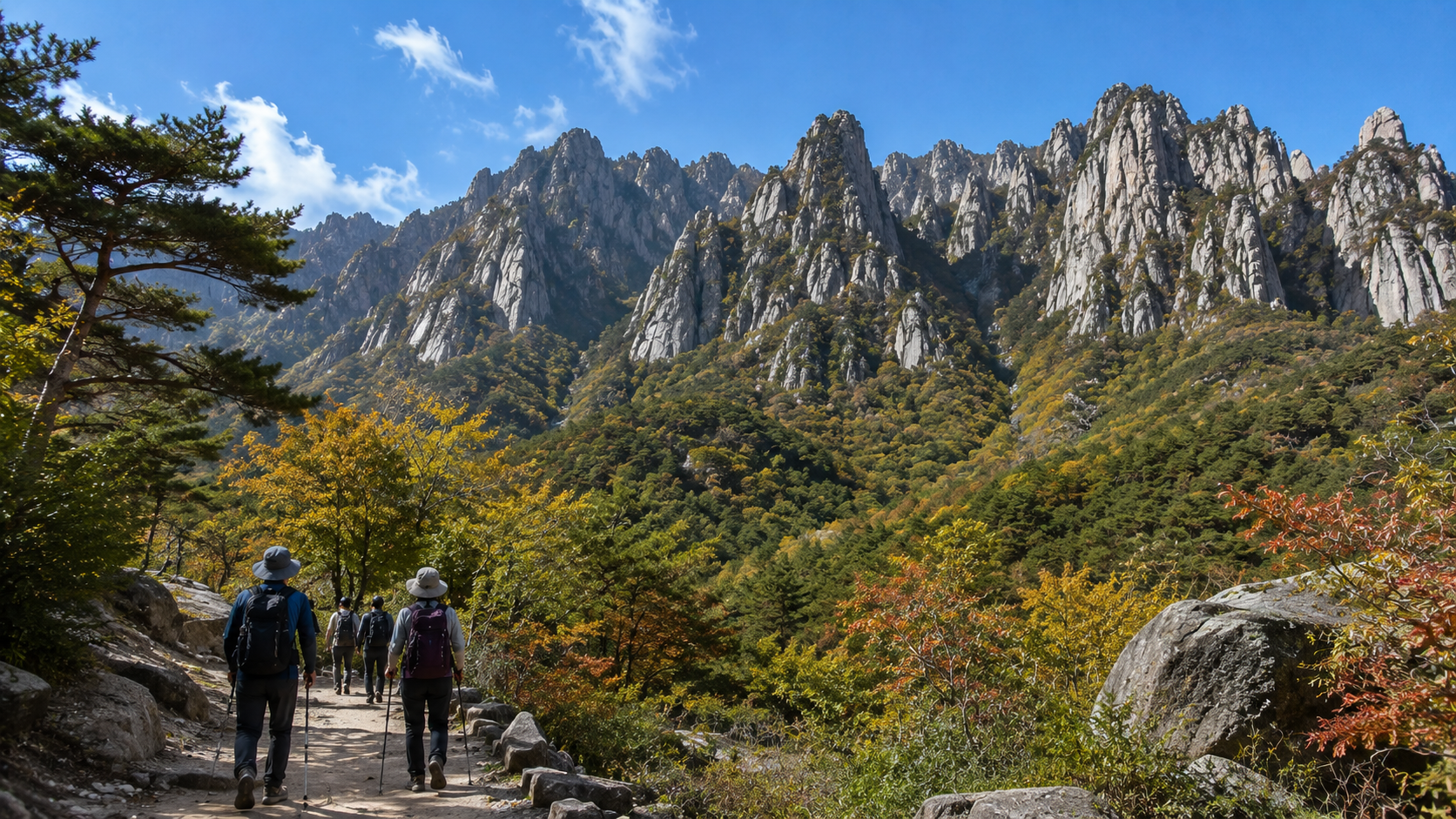
Seoraksan National Park (설악산국립공원) is the main reason many travelers come to Sokcho. Its eastern entrance at Seorak-dong provides access to dramatic granite formations, forest trails, Sinheungsa Temple and the Seorak Cable Car.
You do not need to attempt a summit to appreciate the park. Choose a route according to your fitness, available daylight and current trail conditions:
- Easy visit: Walk through the entrance area to Sinheungsa and explore the lower valley.
- Moderate outing: Follow a marked route toward Biryong Falls, Biseondae or Heundeulbawi, depending on conditions.
- Demanding hike: Ulsanbawi involves a sustained climb and steep stairs. Start early and carry water.
- Advanced mountain route: Long ridge and summit courses require proper equipment, realistic turnaround times and a careful weather check.
Trail access can change because of wildfire prevention periods, heavy rain, snow, rockfall or maintenance. Check the Korea National Park Service's Seoraksan information shortly before departure. Do not rely only on an old blog or saved map.
Public buses connect central Sokcho with the Seorak-dong entrance, but frequency and travel time vary with traffic. Autumn weekends can be particularly congested. Starting in the morning gives you more flexibility and reduces the risk of finishing after dark.
2. Sinheungsa Temple
Sinheungsa (신흥사) stands inside the Seoraksan entrance area, making it an easy cultural stop before or after a short hike. The approach passes a large bronze Buddha before reaching the temple buildings beneath the mountains.
This is an active Buddhist site, not simply a photo location. Speak quietly, avoid blocking worshippers and follow signs concerning photography or restricted halls. Shoes generally remain outside when visitors are permitted to enter a temple building.
Sinheungsa works especially well for travelers who want to see Seoraksan but cannot manage a steep trail. The paths near the entrance are considerably less demanding than the routes to Ulsanbawi or the higher peaks, although surfaces may still be uneven.
3. Seorak Cable Car and Gwongeumseong
The Seorak Cable Car travels from the national park entrance area toward Gwongeumseong (권금성), providing elevated views without a long ascent. After leaving the upper station, visitors can walk farther toward viewpoints, but the terrain beyond the building is rocky and should not be treated as an accessible paved promenade.
As verified on June 11, 2026, the operator lists the standard round-trip fare as KRW 16,000 for adults and KRW 12,000 for children aged 36 months through elementary-school age. Children under 36 months ride free. Tickets are round trip only.
Advance reservations are not accepted. Tickets must be purchased at the site on the day, and operation can stop because of strong wind, bad weather or safety inspections. Daily hours vary, so check the homepage on the morning of your visit. The operator states that wheelchairs can use the cable car via the elevator, but strollers are not permitted inside and must be left at the designated storage area. These rules and fares were confirmed through the official Seorak Cable Car fare page and official operating FAQ.
Arrive early if the cable car is important to you. On a busy day, the next available boarding time may be much later than your ticket-purchase time.
4. Sokcho Tourist & Fishery Market
Sokcho Tourist & Fishery Market (속초관광수산시장), often called Sokcho Central Market in English, is the city's most convenient food stop. Covered sections make it useful in rain, while surrounding alleys contain seafood sellers, snack counters and small restaurants.
Common items include dakgangjeong, or sweet and spicy fried chicken; ojingeo sundae, squid stuffed with a seasoned filling; grilled seafood; dried fish; pancakes; and packaged snacks. Individual businesses keep their own hours, and popular counters may have queues.
A few practical points improve the visit:
- Look at the displayed menu and price before ordering.
- Ask whether seafood prices are per item, per plate or by weight.
- Carry a physical payment card and some cash. Payment policies vary by stall.
- Do not assume every product is suitable for immediate eating; some seafood is sold for cooking or transport.
- If you have allergies, use a translated allergy card. Fish sauce, shellfish and sesame can appear in foods that may not look seafood-based.
The market is close enough to Abai Village and Cheongchoho Lake to combine all three in one afternoon.
5. Abai Village and the Gaetbae Boat
Abai Village (아바이마을) developed as a settlement for people displaced from North Korea's Hamgyeong region during and after the Korean War. The word abai is associated with an older man in the Hamgyeong dialect. Understanding this history makes the neighborhood more meaningful than treating it solely as a restaurant street or television-drama location.
The best-known local foods are abai sundae and ojingeo sundae. Despite the English transliteration, sundae here means Korean blood sausage or a related stuffed dish, not an ice-cream dessert. Ingredients differ by restaurant, so vegetarians and travelers avoiding pork or blood should ask before ordering.
The small Gaetbae (갯배) hand-pulled ferry crosses the narrow channel between the village area and central Sokcho. Its operation, fare and service hours can change, and reliable current English information was not available during verification on June 11, 2026. Check locally before building a tight itinerary around the crossing. Bridges and road routes provide alternatives.
Abai Village remains a lived-in neighborhood. Keep noise low on residential lanes and avoid photographing residents at close range without permission.
6. Yeonggeumjeong Pavilion and Dongmyeong Port
Yeonggeumjeong (영금정) is a compact coastal viewpoint near Dongmyeong Port. A pavilion reached by a short walkway sits above the rocks, while another nearby viewpoint rises slightly above the harbor area.
This is one of Sokcho's easiest scenic stops. It requires much less time than Seoraksan and can fit before breakfast, around sunset or between other attractions. Sunrise is popular, but wind and spray can make the exposed walkway cold even when central Sokcho feels mild.
Wear shoes with grip after rain or in winter. Waves should be viewed from designated paths and platforms rather than from wet shoreline rocks. Combine the pavilion with a harbor walk, but confirm restaurant prices before ordering seafood from a tank or by weight.
7. Sokcho Beach
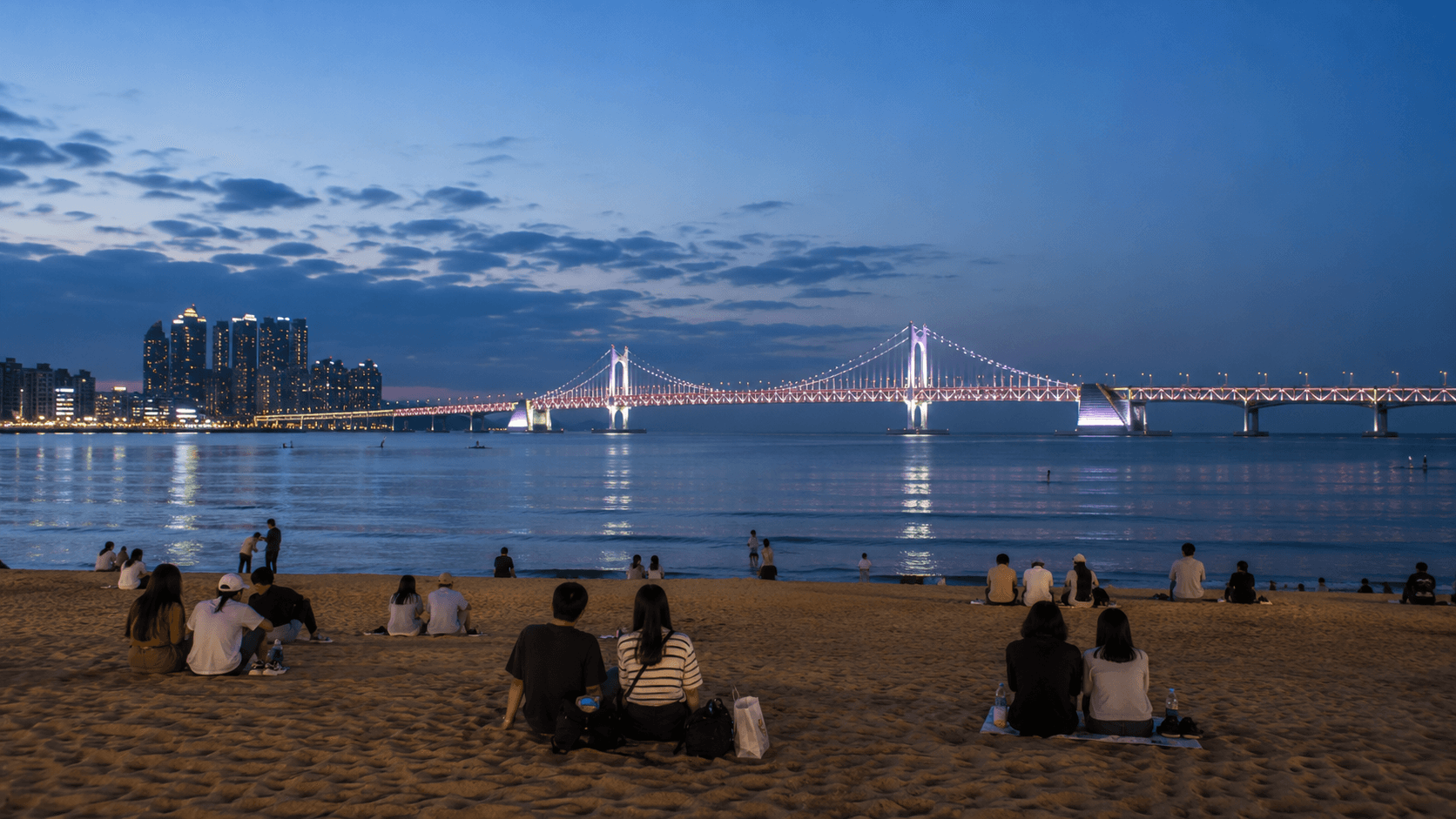
Sokcho Beach (속초해수욕장) is close to the intercity and express bus terminal area, making it practical for an arrival or departure day. Outside the official swimming season, it remains useful for a walk and an open view of the East Sea.
Swimming access, supervised zones, rental services and temporary restrictions are seasonal. Check posted beach signs on arrival and follow lifeguard instructions. The sea can have strong waves and currents even on a bright day.
The beach area is mostly level, but sand access and temporary installations may affect wheelchair or stroller movement. Visitors primarily interested in a promenade can stay on the paved approaches and continue south toward the Oeongchi area.
8. Oeongchi Badahyanggiro Coastal Trail
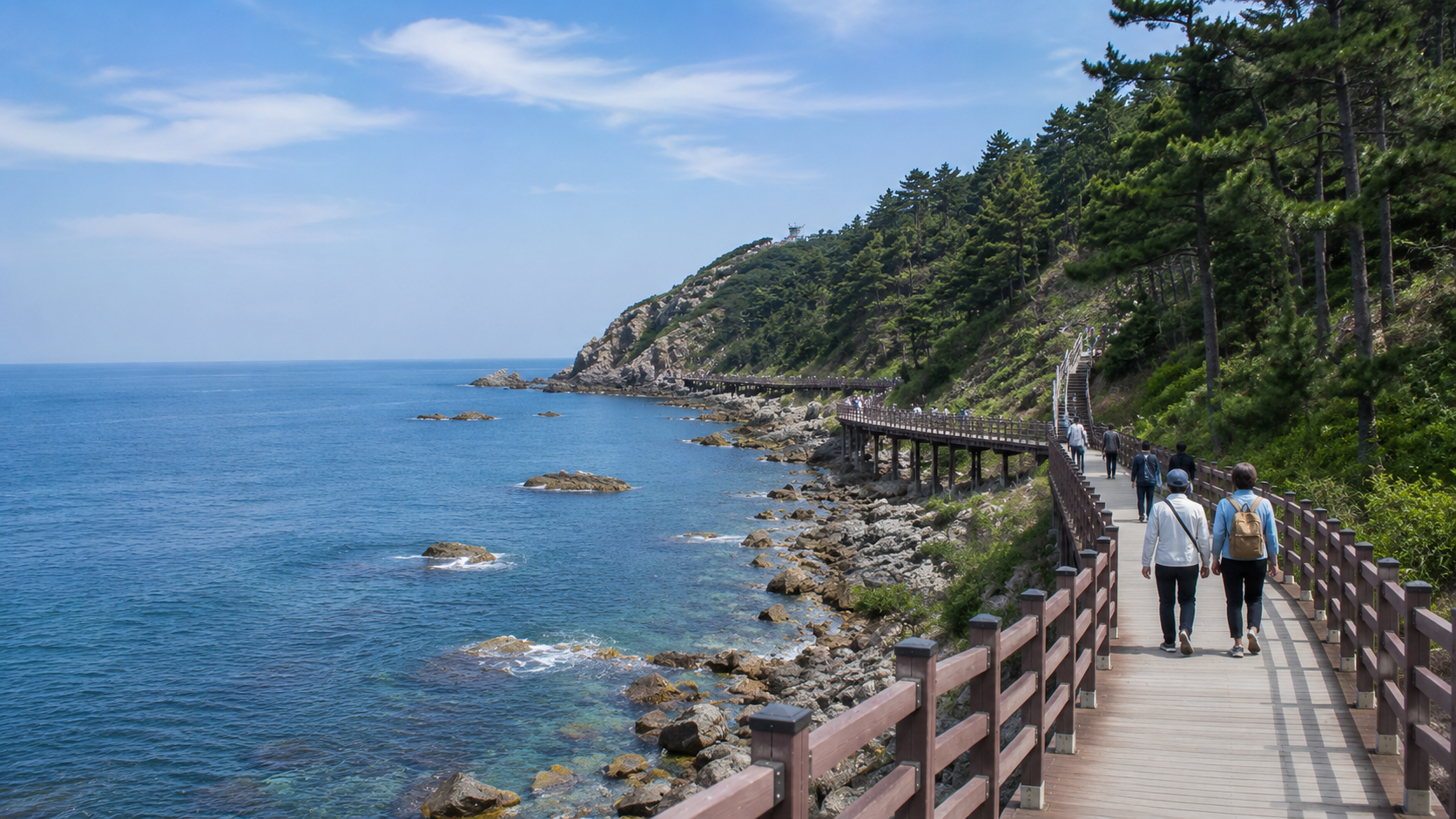
Oeongchi Badahyanggiro (외옹치 바다향기로) is a seaside walking route around the headland south of Sokcho Beach. Boardwalk sections provide close views of the water, rocky coast and forested slope without requiring mountain-hiking equipment.
It is an easier alternative when Seoraksan is clouded over or when your group has mixed fitness levels. However, a coastal boardwalk is still exposed to wind, waves and winter ice. Access may be restricted during severe weather or maintenance, so check local notices and entrance signs.
Allow more time than the distance suggests. Photo stops, uneven sections and the walk back to transport can extend the outing. Bring sun protection because shade is limited on exposed parts of the route.
9. Cheongchoho Lake
Cheongchoho (청초호) is a lagoon-like lake beside central Sokcho. The surrounding parks and paths offer a calmer contrast to the market and beach, with views of bridges, boats and the city skyline.
This area is most useful as a connecting walk rather than a separate half-day expedition. You can move between the market, the waterfront and the approaches to Abai Village while staying close to cafés and urban transport.
Evening can be attractive when bridges and buildings are illuminated, but lighting levels vary along the water. Stay on marked paths and use more active streets if walking alone late at night.
10. Yeongrangho Lake
Yeongrangho (영랑호) lies north of central Sokcho and has a quieter, more residential atmosphere than Cheongchoho. Walking and cycling routes offer changing views of the lake, surrounding hills and, in clear conditions, the Seoraksan landscape.
The full circuit takes more time than a quick map glance may suggest. Travelers with only one day should prioritize Seoraksan and the central coast, but Yeongrangho is a good addition to a relaxed two- or three-day stay.
Rental availability and path diversions can change, so do not assume a bicycle will be available without checking locally. Pedestrians should remain alert on shared sections.
How to organize your visit
One day
Start early at Seoraksan and choose either a lower-valley walk or the cable car. Return to central Sokcho in the afternoon, eat at the Tourist & Fishery Market, cross toward Abai Village if time permits, and finish at Yeonggeumjeong.
This plan is possible but leaves little room for a long hike. Mountain traffic or a cable-car wait can force you to drop an evening stop.
Two days
Day 1: Seoraksan National Park, Sinheungsa and either a moderate trail or the cable car.
Day 2: Sokcho Beach, Oeongchi coastal trail, Abai Village, the market and Yeonggeumjeong.
A two-day schedule gives you enough flexibility to move the mountain visit if visibility or weather is poor.
Three days
Use the third day for Ulsanbawi or another longer park route, followed by a slow walk around Yeongrangho or Cheongchoho. This is the better choice for hikers and travelers visiting during busy autumn weekends.
Getting around Sokcho
Central attractions are relatively close, but Seoraksan is outside the downtown cluster. Local buses are the budget option, while taxis are useful for early starts, groups or connections between places that would otherwise require transfers.
For travel from Seoul, intercity and express buses are generally the most straightforward public-transport option. Services use different Seoul terminals and different Sokcho terminals, so check both endpoints carefully. Live schedules, fares and seat availability should be confirmed through the Tmoney intercity bus reservation system or the operator shown for your route. This advice was verified on June 11, 2026; departure times and fares should be checked again for your actual travel date.
Allow additional time on Friday evenings, Sundays, public holidays and peak autumn weekends. Road congestion can substantially extend a scheduled journey.
What to check before you go
- Check Seoraksan trail openings and weather through the Korea National Park Service.
- Check the cable car's same-day operating notice; tickets cannot be reserved in advance.
- Confirm live intercity or express bus schedules for both directions.
- Download Korean map apps and save destinations in Hangul.
- Carry a payment card plus a modest amount of cash for small stalls or local services.
- Pack layers. The mountain, beach and exposed harbor can feel very different on the same day.
- Start longer hikes early and note sunset time.
- Confirm seafood pricing by item, plate or weight before ordering.
- Ask your accommodation about luggage storage if arriving before check-in.
- Use the VISITKOREA 1330 travel helpline when you need multilingual tourist assistance.
Frequently asked questions
What is the single most important place to visit in Sokcho?
For most first-time visitors, it is Seoraksan National Park. It offers the area's defining mountain scenery and can be adapted to different fitness levels. If the weather makes a mountain visit impractical, combine the market, Abai Village and Yeonggeumjeong instead.
Is Sokcho worth visiting without hiking?
Yes. Sinheungsa and the lower Seoraksan area require less exertion than a major hike, while the beach, market, Abai Village, ports and lakes provide a full day of non-hiking activities.
Where should first-time visitors stay?
Stay near the central market and Cheongchoho for food and urban sightseeing, near Sokcho Beach for coastal access and bus-terminal convenience, or near Seorak-dong when an early mountain start is the main priority. Check the exact map location rather than relying only on a property using "Sokcho" in its name.
When is the most crowded period?
Autumn foliage weekends are typically among the busiest times around Seoraksan. Summer weekends also increase demand near the beach. Reserve transport and accommodation early, and avoid scheduling a tight connection after a mountain visit.
Your next step should be to choose the Seoraksan route that matches your group, then book transport and accommodation around that decision. The mountain day determines how much energy and time remain for Sokcho's coast and central neighborhoods.