South Korea's strongest spa hotels fall into several distinct categories: luxury treatment spas in Seoul, natural hot-spring resorts in Busan and structured wellness retreats on Jeju Island. The right choice depends on whether you want massage treatments, Korean bathing culture, hydrotherapy or a full wellness-focused stay.
This guide uses confirmed facilities rather than claiming that one property is universally best. Information, operating hours and admission rules were checked against official hotel websites on June 11, 2026. Room rates and treatment prices change by date, so confirm the total cost directly before booking.
At a glance
| Hotel | Location | Best for | Main spa feature |
|---|---|---|---|
| Banyan Tree Club & Spa Seoul | Jung-gu, Seoul | A spa-centered luxury stay | Full treatment menu and 11 treatment rooms |
| Four Seasons Hotel Seoul | Gwanghwamun, Seoul | Sightseeing with an upscale spa | Treatments, Korean sauna and indoor pool |
| Ananti at Busan Cove | Gijang, Busan | Coastal hot-spring facilities | Large Water House complex using natural hot-spring water |
| WE Hotel Jeju | Seogwipo, Jeju | A structured wellness retreat | Hydrotherapy, forest programs and medical spa services |
| Hotel Nongshim | Dongnae, Busan | Traditional public hot-spring bathing | Direct access to the large Hurshimchung spa |
How these hotels were selected
The list prioritizes properties whose official websites confirm a substantial spa, hot-spring or wellness facility. Selection also considers the range of treatments, the role of the spa in the overall stay, location and usefulness for international travelers.
The word spa can mean very different things in Korea. At a luxury hotel, it usually refers to private massages, facials and body treatments. A Korean hot-spring complex may instead have gender-separated communal baths, saunas and relaxation rooms. A wellness resort may combine water exercise, meditation, forest walks and consultations.
Always check what your room actually includes. Accommodation, pool access, sauna admission and private treatments are often sold separately.
1. Banyan Tree Club & Spa Seoul
Best for a dedicated luxury spa stay in Seoul
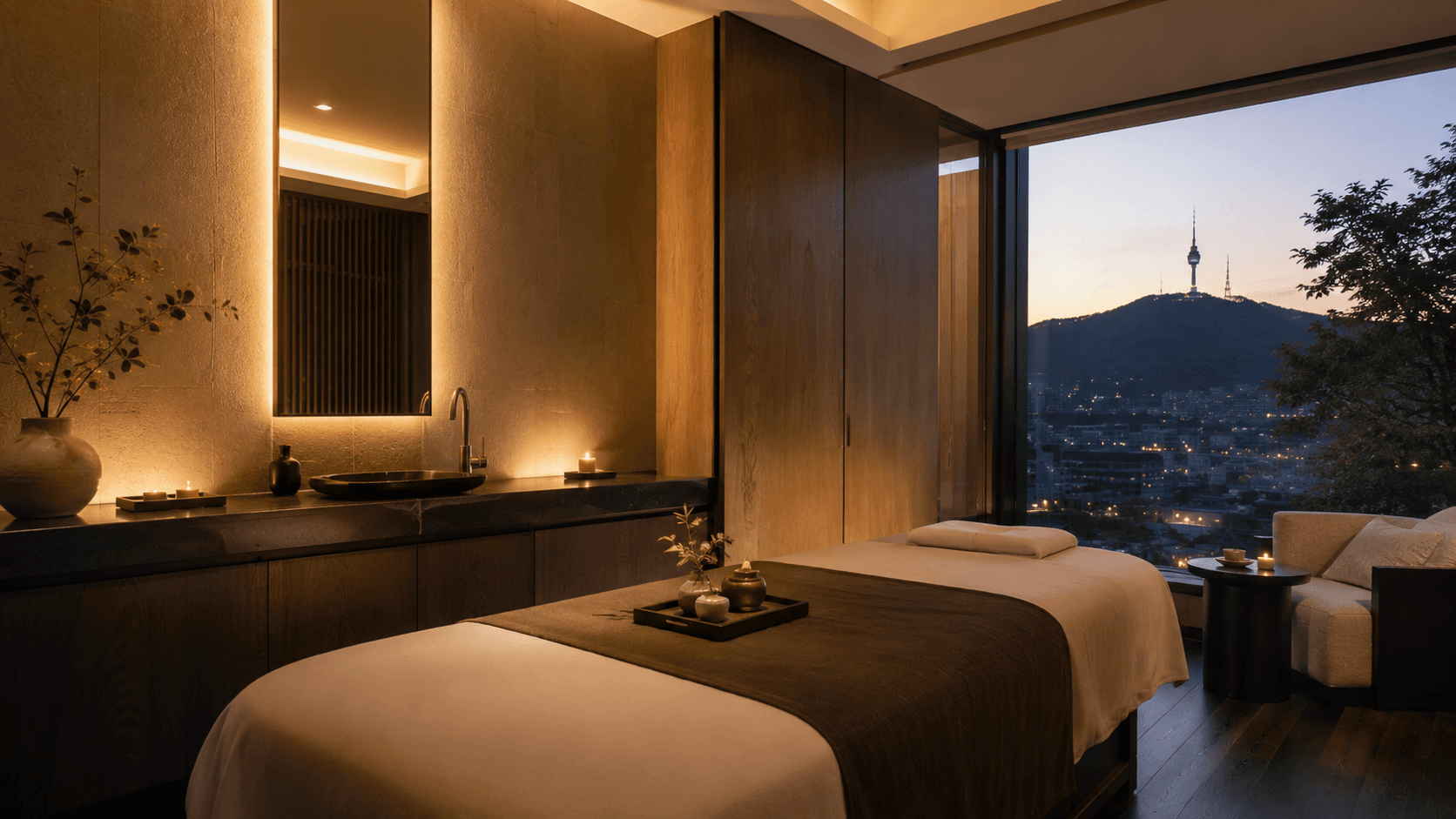
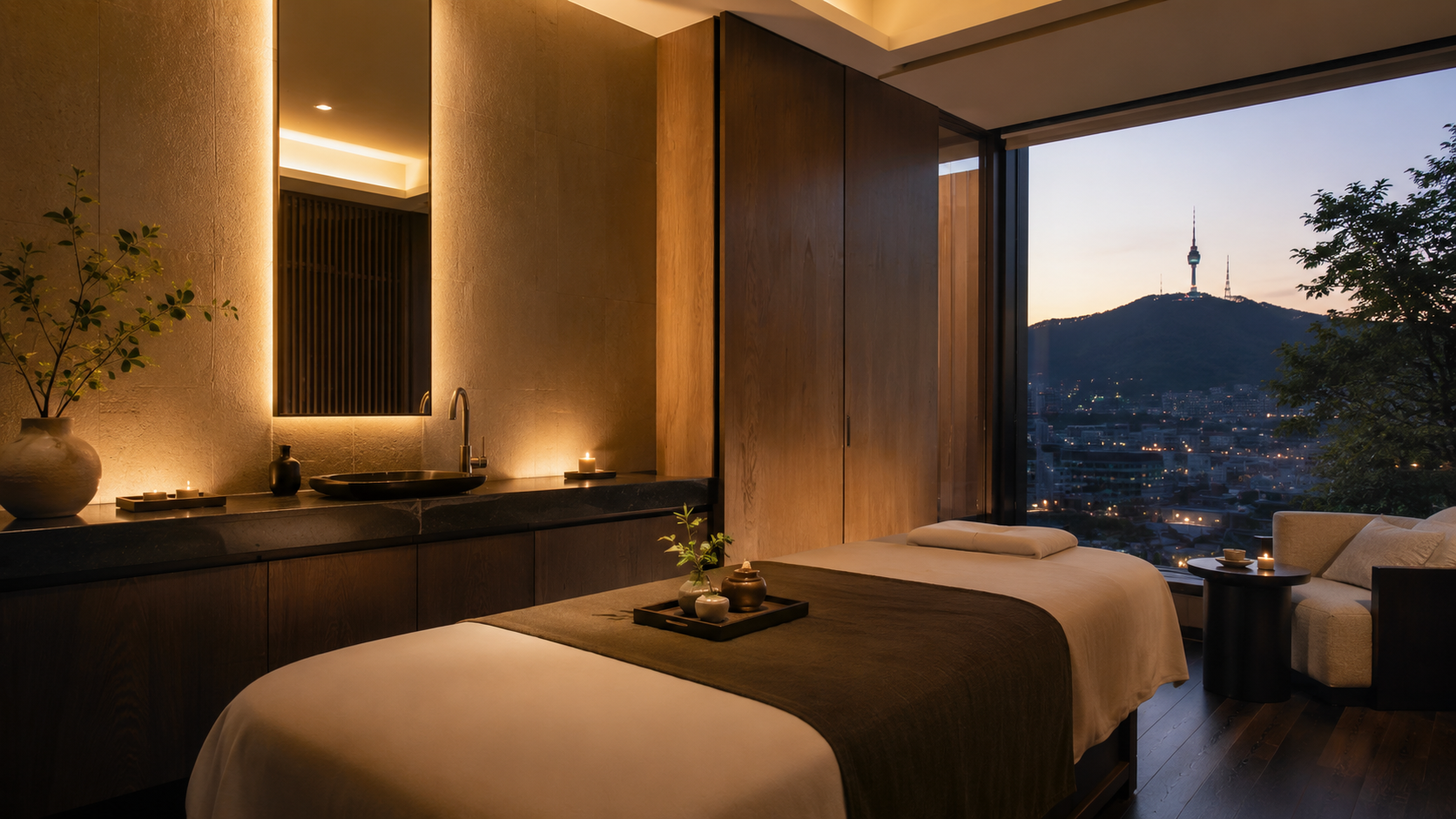
Banyan Tree Club & Spa Seoul is set beside Namsan Mountain, south of central Seoul's main palace district. It feels more like an urban resort than a conventional city hotel, making it suitable for travelers who want to spend meaningful time at the property rather than use it only as a place to sleep.
The hotel's official spa page lists 11 treatment rooms, relaxation areas, selected private baths and a dedicated head-spa room. Treatments include the Royal Banyan program and a Korean-themed program using green-tea exfoliation and Korean therapy techniques.
The spa's published hours were 11:00 a.m. to 9:00 p.m. when checked on June 11, 2026. Treatment prices were not consistently displayed in a simple public rate table, so request the current menu and final price directly from the spa.
Why choose it: The treatment spa is central to the property's identity, and the hotel also lists indoor and outdoor pools, a fitness center and sauna among its facilities.
Practical limitation: The hillside location is less convenient for spontaneous subway trips than hotels in flat, central neighborhoods. The hotel provides official public-transport directions, but a taxi may be easier with luggage.
Booking tip: Reserve treatments when you book the room, particularly for weekends or couples' appointments. Ask whether your treatment includes access to any bath, sauna, pool or relaxation facility; do not assume that every hotel amenity is included.
2. Four Seasons Hotel Seoul
Best for combining palace sightseeing with spa time
Four Seasons Hotel Seoul is near Gwanghwamun and within convenient reach of central Seoul attractions. It is a practical luxury option when only part of your trip is devoted to wellness.
According to the hotel's official spa information, the facility offers signature programs, facial and body therapies, a nail bar, an indoor pool and a Korean sauna. The sauna contains cold, warm and hot baths plus dry and wet sauna rooms. A separate fee applies, and the sauna closes on the fourth Tuesday of each month.
As verified on June 11, 2026, spa hours were 10:00 a.m. to 9:00 p.m., with the last 60-minute appointment at 8:00 p.m. The indoor pool was listed as open from 5:30 a.m. to 10:30 p.m., with adults-only use from 8:30 p.m. to 10:30 p.m. These arrangements can change for maintenance or special events.
Why choose it: The hotel provides both private spa treatments and a recognizable version of Korean bathing culture without requiring a trip away from central Seoul.
Practical limitation: A luxury-hotel sauna is more polished and internationalized than a neighborhood jjimjilbang, meaning a Korean bathhouse and sauna complex. It is convenient, but not a substitute for visiting a large public bath if cultural immersion is your priority.
Booking tip: Ask separately about treatment availability, sauna fees and pool eligibility. Families should also confirm current age restrictions and designated adults-only periods.
3. Ananti at Busan Cove
Best for an oceanfront hot-spring resort
Ananti at Busan Cove occupies a coastal site in Gijang, east of central Busan. Its defining wellness facility is Water House, a large indoor and outdoor hot-spring complex with pools, media installations and sea views.
The official website describes a 4,600-square-meter interior and 6,600-square-meter total area, supplied by natural hot-spring water pumped from 600 meters underground. This is primarily a bathing and pool experience rather than a conventional massage-centered hotel spa.
As checked on June 11, 2026, published off-peak hours for January through June and September through December were 9:00 a.m. to 8:00 p.m. on weekdays and 9:00 a.m. to 9:00 p.m. on weekends and public holidays. July and August hours were listed as 9:00 a.m. to 9:00 p.m. Pool areas close 30 minutes earlier.
Water House normally closes on the third Tuesday of selected months. The official schedule specifically listed June 16, September 15, October 20, November 17 and December 15, 2026 among upcoming closures when verified.
Registered guests at Ananti at Busan Cove and Ananti at Busan Village were listed as receiving complimentary access within standard room occupancy, from 1:00 p.m. on check-in day until 3:00 p.m. on check-out day. Confirm that this remains attached to your particular room plan.
Why choose it: Water House provides the most resort-like hot-spring experience on this list, particularly for travelers who value pools, architecture and ocean views.
Practical limitation: Gijang is outside Busan's main sightseeing core. Allow additional travel time if your itinerary centers on Haeundae, Seomyeon, Nampo or Busan Station.
What to bring: Pack a swimsuit. The official rules require swimwear in the indoor pool and restrict several large flotation devices. Guests may also be asked to cover extensive tattoos.
4. WE Hotel Jeju
Best for hydrotherapy and a wellness program
WE Hotel Jeju is in the forested mid-mountain area of Seogwipo, rather than beside Jeju's beaches or in a dense town center. It combines hotel accommodation with wellness services supported by the affiliated WE Hospital.
Its official wellness program includes hydrotherapy, an aqua-meditation pool, forest activities, mindful movement, individual wellness consultations and a medical spa offering body and facial treatments. The hotel states that natural volcanic bedrock water is used throughout its guest rooms, pools, spa facilities and wellness programs.
This is the most program-oriented property in the selection. It suits travelers who want to plan their stay around water exercise, forest time and guided activities instead of booking a single massage between sightseeing appointments.
Why choose it: The combination of hydrotherapy, forest programs and consultations offers a broader wellness structure than a standard hotel spa.
Practical limitation: The location is easiest with a rental car or planned taxi transfers. Bus travel is possible on Jeju, but rural and mid-mountain journeys can involve long waits or transfers.
Important health note: A service described as a medical spa should not be treated as a replacement for medical diagnosis or treatment. Discuss any injury, pregnancy, cardiovascular condition or other health concern with an appropriate medical professional and inform the facility before participating.
Booking tip: Ask which wellness sessions are included in the room package, which require advance reservations and whether English-language guidance will be available on your dates.
5. Hotel Nongshim and Hurshimchung
Best for experiencing a large Korean hot-spring bath
Hotel Nongshim is in Busan's Dongnae district and is connected with the Hurshimchung hot-spring complex. This is the most traditional Korean bathing option in the guide and generally offers better value than a private luxury treatment spa.
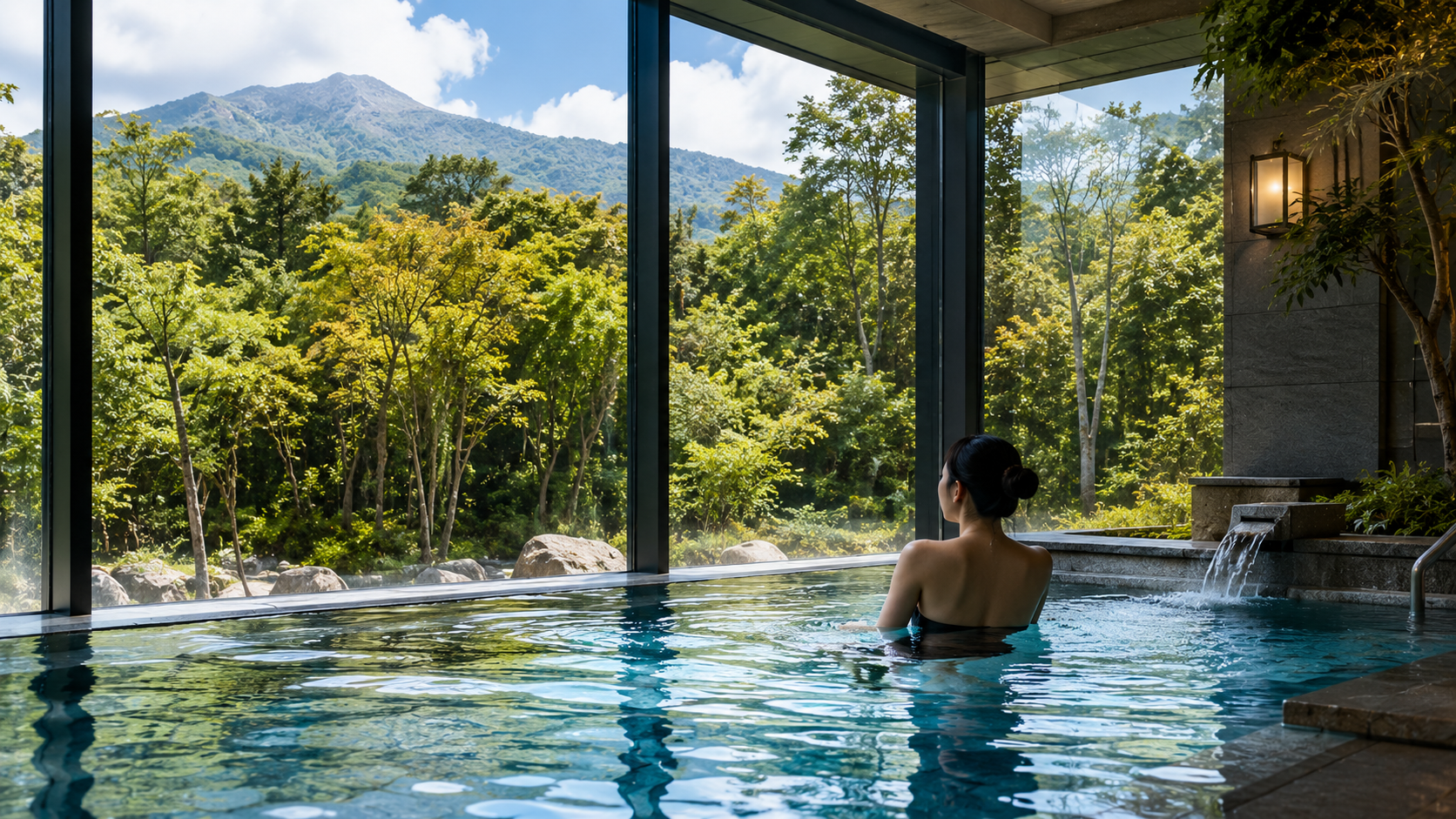
The hotel states that Hurshimchung covers approximately 4,300 square meters, accommodates up to 3,000 visitors and contains around 40 baths, including hinoki wood, cave and open-air baths. It also has jjimjil facilities: dry, heated sauna rooms and shared relaxation areas where visitors wear the provided clothing.
According to the official spa guide, checked on June 11, 2026, the hot spring was open daily from 5:30 a.m. to 10:00 p.m., with final entry at 9:30 p.m. The jjimjil sauna operated from 6:30 a.m. to 9:00 p.m.
Adult hot-spring admission was listed at KRW 15,000 on weekdays and KRW 18,000 on Saturdays, Sundays and public holidays. Sauna robe rental cost an additional KRW 4,000. A standard hot-spring visit was limited to three hours, with longer access available when using additional facilities; overtime was charged at KRW 2,000 per hour.
Why choose it: It provides straightforward access to one of Korea's large urban hot-spring bathhouses without requiring a remote resort stay.
Practical limitation: This is a public bathing environment, not a quiet private spa. Expect nudity in gender-separated wet areas, busier periods on weekends and a more local atmosphere than at an international luxury hotel.
Bathhouse etiquette: Shower thoroughly before entering a communal bath. Do not wear a swimsuit in the gender-separated bathing area unless signs explicitly state otherwise. Keep the small towel out of the bathwater, speak quietly and follow staff instructions regarding tattoos or skin conditions.
Which spa hotel should you book?
Choose Banyan Tree Club & Spa Seoul when private treatments and a resort atmosphere are the main purpose of your stay.
Choose Four Seasons Hotel Seoul when you want an excellent central location, private treatments and convenient access to a Korean-style sauna.
Choose Ananti at Busan Cove when large hot-spring pools, ocean views and time at the resort matter more than proximity to central Busan.
Choose WE Hotel Jeju for a multi-day wellness itinerary involving hydrotherapy, forest activities and consultations.
Choose Hotel Nongshim for an accessible introduction to communal Korean hot-spring bathing at a comparatively modest admission price.
What to check before you go
- Confirm whether spa, sauna, pool or hot-spring access is included in your room rate.
- Reserve private treatments before arrival, especially for weekends and public holidays.
- Check the facility's maintenance day and seasonal operating hours.
- Ask about age limits, adults-only periods and rules for children of a different sex using changing rooms.
- Confirm tattoo policies. Some Korean bathing facilities may require tattoos to be covered or may restrict entry.
- Bring a swimsuit for resort pools and mixed-gender water facilities. Traditional gender-separated baths are usually used without swimwear.
- Tell the spa about pregnancy, injuries, allergies or health conditions before booking a treatment.
- Verify cancellation charges for both the hotel room and spa appointment.
- Allow extra travel time for Gijang in Busan and the mid-mountain area of Jeju.
FAQ
Can non-guests use these hotel spas?
Policies differ by property and facility. Hurshimchung sells public admission. Luxury treatment spas may accept outside guests with reservations, but pools, saunas and resort facilities can remain restricted to hotel guests or members. Contact the property before traveling there solely for spa access.
Do I need to be naked at a Korean spa?
Gender-separated communal wet areas are normally used without swimwear. Mixed-gender pools, hydrotherapy areas and resort water facilities generally require swimsuits. Follow the signs and instructions at each property.
Are spa treatments included with the room?
Usually not. A room may include limited pool, sauna or hot-spring access, while massages and facials are charged separately. Packages sometimes bundle treatments, but the inclusions should be stated in the booking conditions.
Which option is most suitable for a first-time visitor?
Four Seasons Seoul offers the easiest combination of central sightseeing, international hotel service and Korean sauna facilities. Hotel Nongshim is the better choice for travelers specifically interested in a large Korean public bath and comfortable with communal bathing etiquette.
Sources
- Banyan Tree Club & Spa Seoul official hotel page
- Banyan Tree Seoul official spa information
- Four Seasons Hotel Seoul official spa information
- Ananti at Busan Cove official website
- Ananti Water House official information
- WE Hotel Jeju official wellness information
- Hotel Nongshim official website
- Hurshimchung official spa guide
After choosing a property, check its official booking page for your exact dates and contact the spa separately to confirm treatment availability and facility access before paying a nonrefundable room rate.