Seoul is too large to cover in one weekend, so the most practical first trip is to divide it into two areas: historic central Seoul on Saturday and eastern Seoul plus the Hangang River on Sunday. This route balances major sights with neighborhoods where you can walk, eat, shop, and slow down.
The itinerary works in any season, but outdoor sections should be shortened during summer heat, heavy rain, or severe winter cold. Prices, access rules, and operating information below were verified on June 9, 2026.
At a glance
| Day | Main route | Best for |
|---|---|---|
| Saturday | Gyeongbokgung Palace → Bukchon → Insadong or Ikseon-dong → Cheonggyecheon | Korean history, traditional architecture, food, and evening walks |
| Sunday | Seoul Forest → Seongsu-dong → Yeouido Hangang Park | Green space, contemporary Seoul, cafés, shopping, and river views |
Allow approximately eight to ten hours each day, including meals and breaks. You do not need a car: every main stop is accessible by subway, bus, or a manageable walk.
Before the weekend: transport and navigation
Choose a transit card
For this route, either a rechargeable Tmoney card or a two-day Climate Card can work.
A Tmoney card uses stored value and charges for each journey. It is usually the simpler choice if you expect to walk extensively or take only a few rides. Cards are commonly sold at convenience stores and transit facilities, but the card itself and any loaded balance are separate costs.
The Seoul Climate Card offers unlimited travel within its designated service area. As verified on June 9, 2026, the short-term pass costs KRW 8,000 for two days, plus KRW 3,000 for a new physical card. Short-term passes do not include Seoul's Ttareungi public bicycles. The pass begins on the day it is loaded and cannot be activated in advance.
The Climate Card does not cover every metropolitan route. In particular, exclusions and restrictions apply to services such as the Shinbundang Line, airport buses, and some routes or stations outside Seoul. Review the current coverage on the Seoul Metropolitan Government Climate Card page before buying it.
Since March 17, 2026, new vending machines at stations on Seoul Subway Lines 1–8 have accepted internationally issued credit and debit cards for Climate Card purchases, short-term recharging, and single-journey tickets. An average service fee of approximately 3.7% applies to international card transactions, according to the Seoul Metropolitan Government payment announcement.
Whichever card you use, tap when entering and leaving the subway. On buses, enter through the front, tap once, and tap again before leaving through the rear door.
Install a Korean navigation app
Google Maps can be useful for place names, but public transport and walking directions are generally more practical in Naver Map or KakaoMap. Search using the English name first; if results are unclear, copy the Korean name from this guide.
Save these destinations before leaving your accommodation:
- Gyeongbokgung Palace: 경복궁
- Bukchon Hanok Village: 북촌한옥마을
- Insadong: 인사동
- Ikseon-dong Hanok Village: 익선동한옥거리
- Cheonggyecheon Stream: 청계천
- Seoul Forest: 서울숲
- Seongsu-dong: 성수동
- Yeouido Hangang Park: 여의도한강공원
Saturday: historic Seoul without rushing
9:00 a.m.: Start at Gyeongbokgung Palace
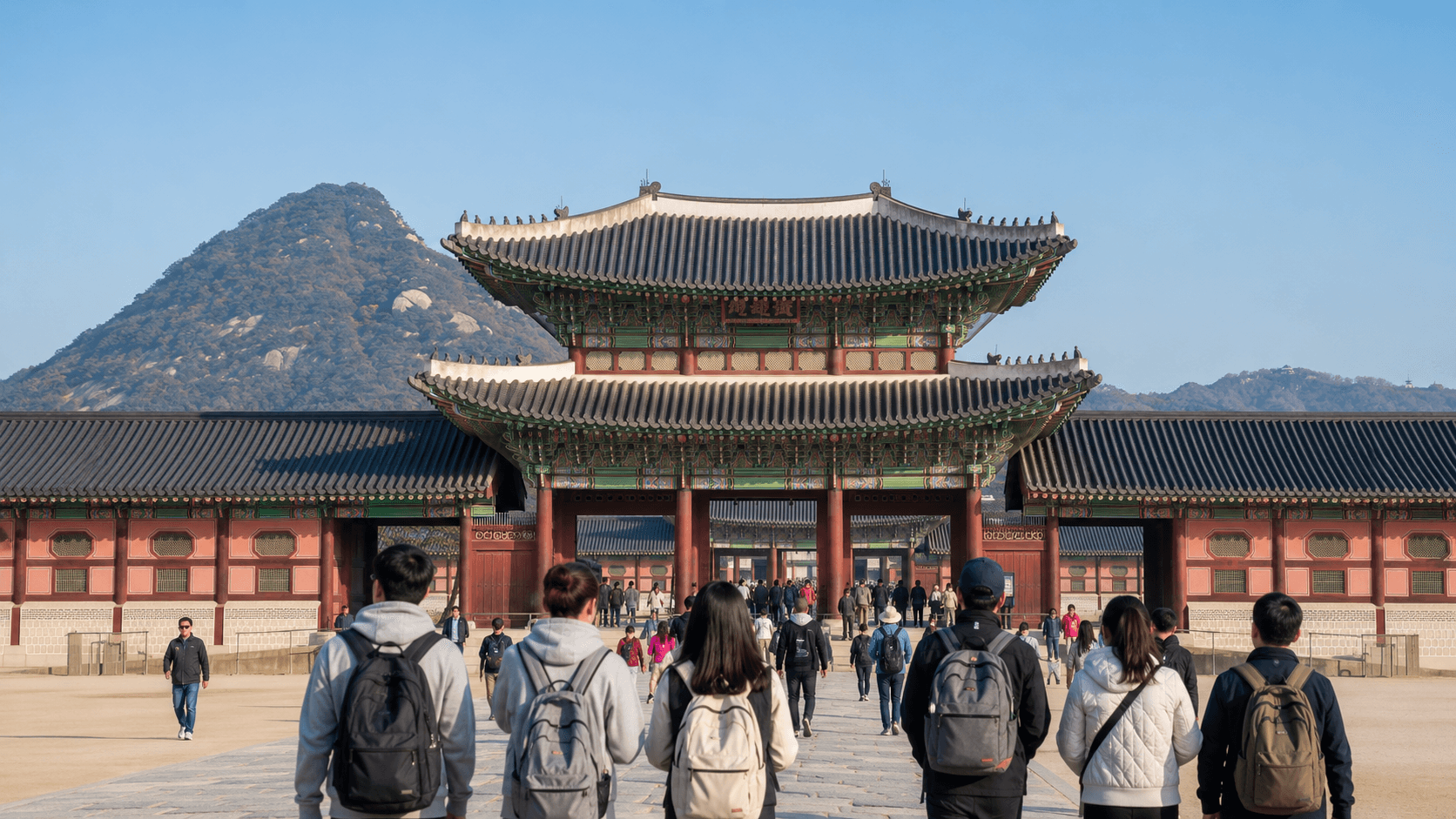
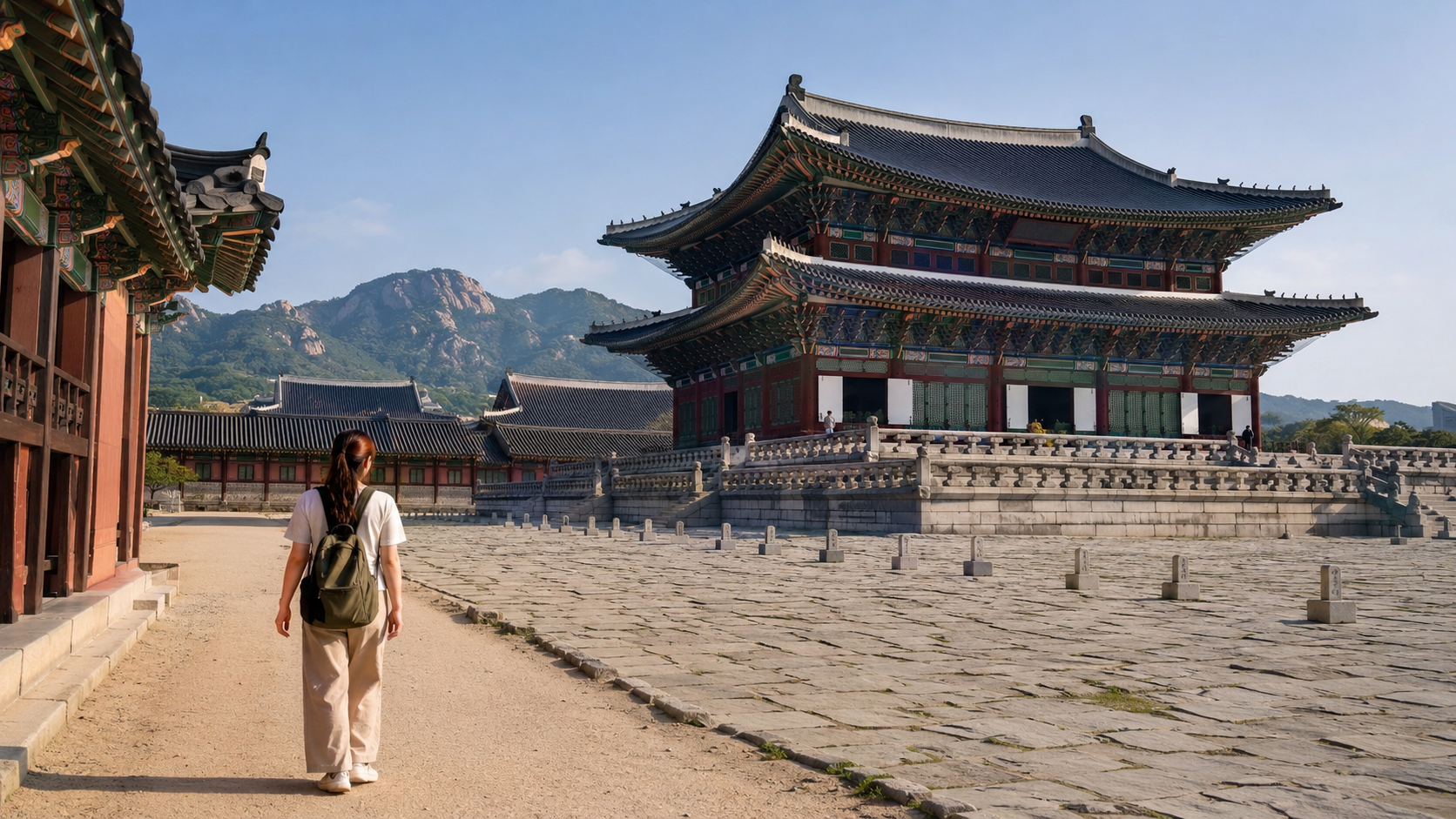
Begin at Gyeongbokgung Palace, the principal palace of the Joseon dynasty. Arriving near opening time gives you cooler temperatures in summer and a quieter first hour throughout the year.
As verified on June 9, 2026, standard adult admission is KRW 3,000. Seasonal closing times vary, and last admission is normally one hour before closing. The palace is generally closed on Tuesdays, although temporary schedules may apply around public holidays and special events. Check the Royal Palaces and Tombs Center shortly before your visit.
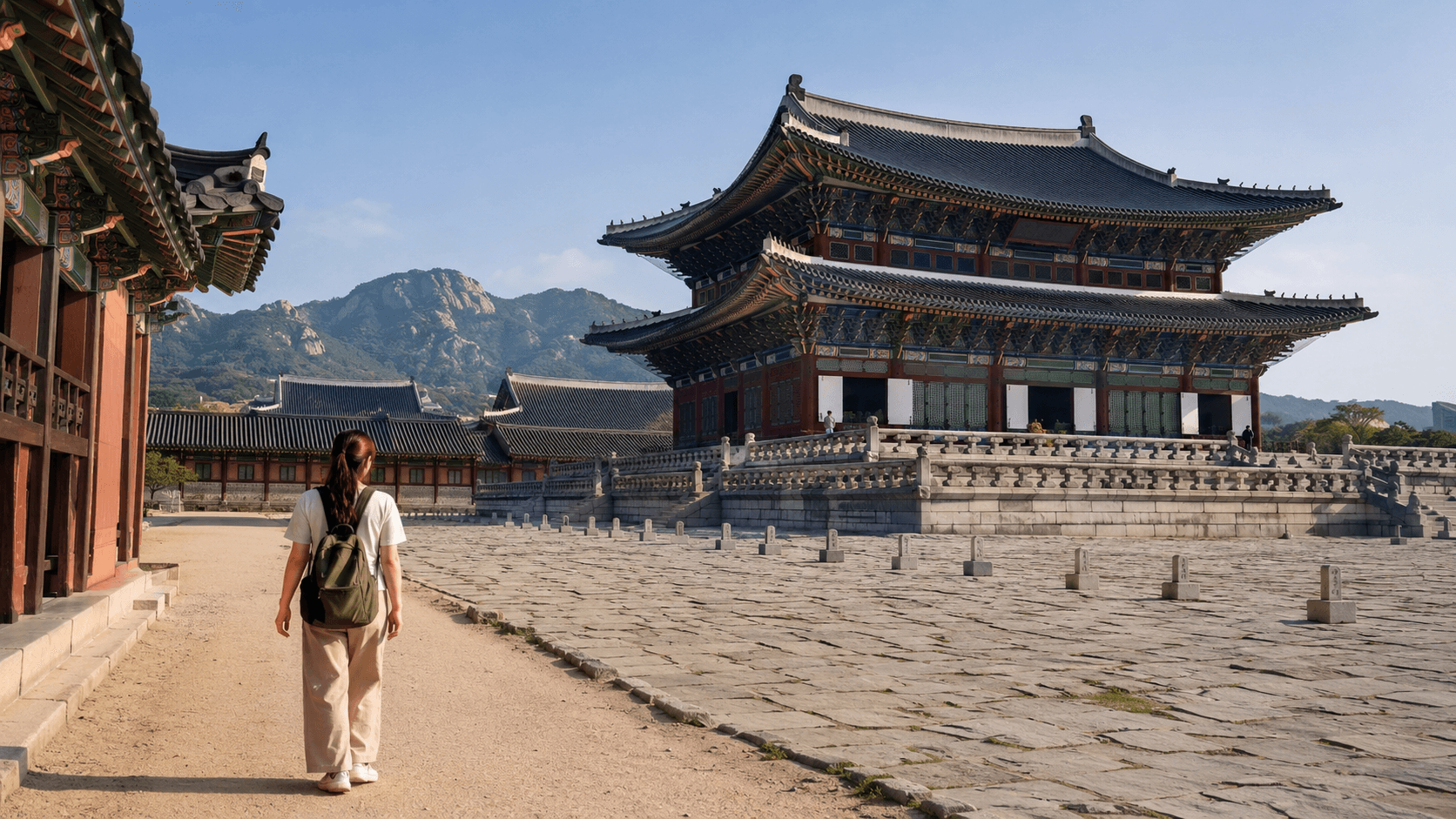
Allow 90 minutes to two hours. Rather than trying to photograph every building, concentrate on the main throne hall, Geunjeongjeon; Gyeonghoeru Pavilion beside the pond; and the quieter northern grounds around Hyangwonjeong Pavilion.
Free wheelchair and stroller loans may be available near the entrance, subject to availability. The main palace grounds are broad and mostly level, but stone thresholds and uneven historic surfaces can make some buildings difficult to approach.
Should you rent hanbok?
Hanbok is traditional Korean clothing. Visitors wearing qualifying hanbok can enter the royal palaces free under the official admission policy, but rental prices and costume quality vary by shop.
Rent one if dressing up and taking photographs is an important part of your day. Otherwise, regular admission is inexpensive, and skipping the rental leaves more time for the palace itself. Ask the shop about return time, lockers, hairstyle fees, and whether winter accessories are included before paying.
11:15 a.m.: Walk to Bukchon carefully
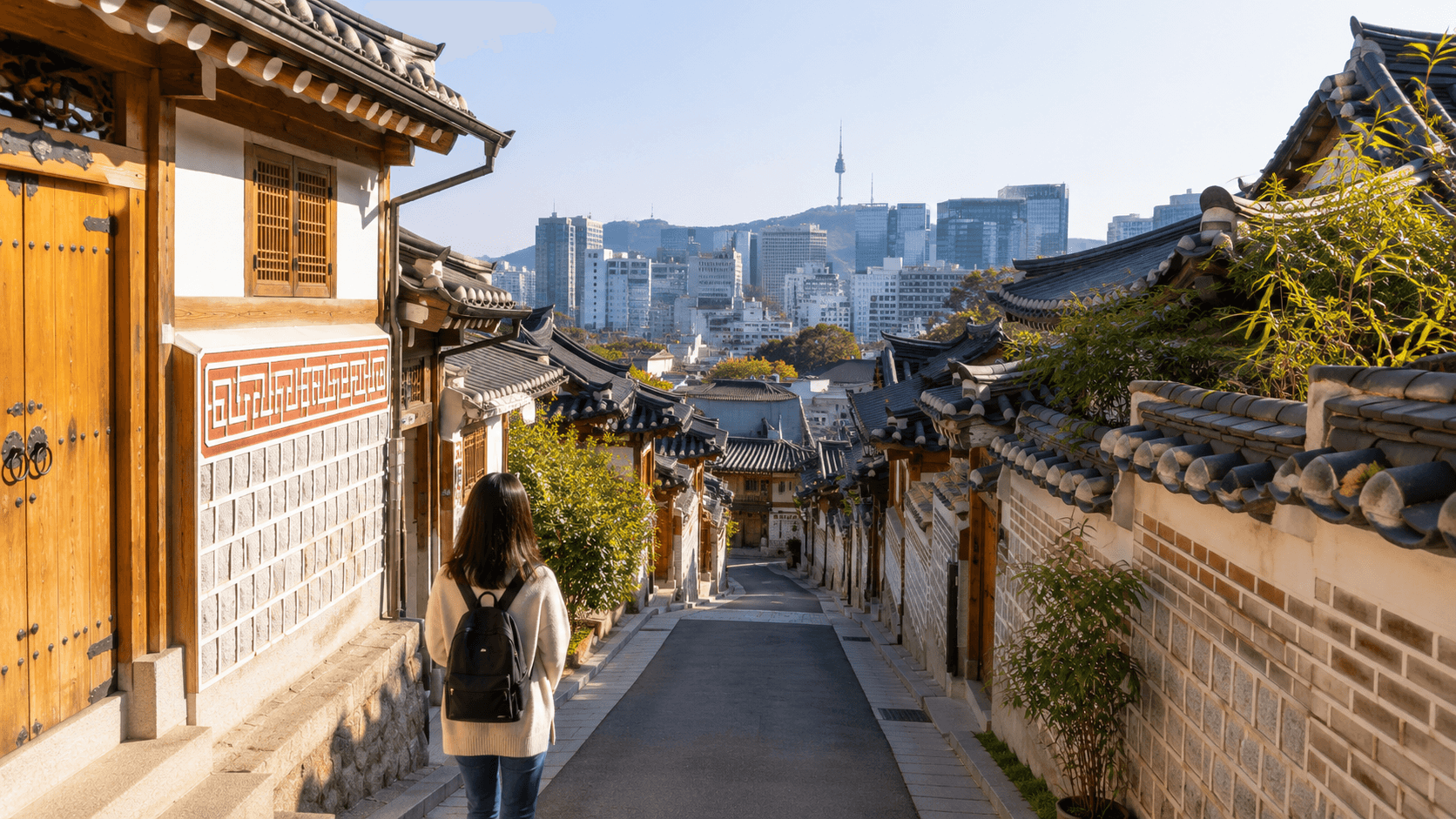
From the palace, continue toward Bukchon Hanok Village, a neighborhood containing many hanok, or traditional Korean houses. The walk takes you through one of Seoul's most historically dense areas, but Bukchon is not an open-air museum: people live and work here.
The main residential tourism zone has restricted visiting hours of 10:00 a.m. to 5:00 p.m., verified on June 9, 2026. Entry to restricted areas is prohibited from 5:00 p.m. until 10:00 a.m. the next day. Visitors should keep voices low, avoid photographing inside homes, and travel in groups of no more than ten. Current rules are listed on the official Visit Seoul Bukchon Hanok Village page.
Spend about 45 to 60 minutes here. Use Anguk Station or the Bukchon Cultural Center as your navigation point instead of following crowds into narrow residential lanes. The neighborhood is hilly, with slopes and uneven surfaces. Travelers using wheelchairs, walkers, or strollers may prefer the gentler streets near the cultural center and main roads.
12:30 p.m.: Lunch near Anguk or Insadong
Walk south toward Anguk and Insadong for lunch. This area has Korean set meals, dumplings, noodle shops, temple-style vegetarian food, and casual international options.
For a simple meal, look for one of these terms:
- Kalguksu (칼국수): knife-cut noodles in broth
- Mandu (만두): Korean dumplings
- Bibimbap (비빔밥): rice mixed with vegetables and other toppings
- Baekban (백반): a home-style set meal with rice and side dishes
Restaurant prices and opening hours change frequently. As a practical planning estimate rather than a confirmed fixed price, allow KRW 10,000–25,000 per person for a casual lunch in central Seoul. Check the menu outside before entering, especially if you have allergies or dietary restrictions. Vegetarian-looking dishes may still contain meat broth, fish sauce, or seafood.
2:00 p.m.: Choose Insadong or Ikseon-dong
Trying to explore both neighborhoods thoroughly can make the afternoon feel repetitive. Choose according to your interests.
Option A: Insadong for crafts and traditional culture
Insadong is the better choice for calligraphy supplies, ceramics, tea, crafts, and souvenirs. Walk along the main street but also check the smaller side alleys. Some galleries are free, while workshops and performances may require reservations.
Choose this option if you are shopping for gifts or want a quieter tea break.
Option B: Ikseon-dong for cafés and compact lanes
Ikseon-dong combines small hanok buildings with cafés, restaurants, boutiques, and photo spots. It is more commercial and can become congested on weekend afternoons.
Choose this option if your priority is contemporary food and café culture rather than historical interpretation. Avoid blocking narrow lanes while waiting for photographs, and do not assume every attractive courtyard is public space.
5:00 p.m.: Walk beside Cheonggyecheon
Finish the afternoon at Cheonggyecheon, the restored stream running through central Seoul. Enter near Jongno or Gwanghwamun and walk only as far as your energy allows; there is no need to complete the full route.
The lower stream path has frequent steps, although accessible entrances are available at selected points. After heavy rain, parts of the path may be closed for safety. Follow barriers and electronic notices rather than entering a restricted section.
For dinner, return to Jongno, Euljiro, or Myeong-dong. A casual dinner commonly requires a planning budget of roughly KRW 12,000–30,000 per person, excluding alcohol, but actual prices depend on the restaurant and dish.
Sunday: parks, Seongsu, and the river
9:30 a.m.: Begin in Seoul Forest
Take the subway to Seoul Forest, a large urban park near Seongsu-dong. Starting here gives you a quieter morning before the surrounding cafés and shops become busy.
The park itself is open 24 hours year-round, while individual facilities keep separate hours and some close on Mondays. According to the Seoul Forest Conservancy, the visitor center operates from 10:00 a.m. to 6:00 p.m., and the Eco Forest footbridge generally operates from 7:00 a.m. to 8:00 p.m., extending to 9:00 p.m. from June through August. These hours were verified on June 9, 2026 and may change for maintenance or weather.
Allow 60 to 90 minutes. The park is suitable for a gentle walk, but distances between sections are longer than they appear on a map. Stay near the main lawns, pond, and central paths if you want to conserve energy.
11:30 a.m.: Explore Seongsu-dong
Walk or take a short bus ride into Seongsu-dong, a former industrial district now known for cafés, fashion stores, workshops, and temporary brand exhibitions. The neighborhood is spread across several blocks, so choose a few saved places instead of wandering toward every social-media recommendation.
Weekend queues can be long at heavily publicized cafés and pop-up stores. A useful rule is to skip any line that would consume more than 20 or 30 minutes of a short trip. Independent bakeries and coffee shops are widely distributed beyond the busiest streets.
Pop-up events are temporary and their admission systems vary. Some accept walk-ins, while others use Korean reservation platforms or require local phone verification. Treat them as optional rather than building the entire day around one event.
Have lunch in Seongsu before leaving. Allow KRW 12,000–30,000 per person as a practical estimate for a casual meal, with cafés and desserts extra.
3:30 p.m.: Cross the city to Yeouido
Take the subway to Yeouinaru Station on Line 5 for direct access to Yeouido Hangang Park. The journey from Seongsu usually requires a transfer, so check live directions rather than memorizing a fixed route.
Buy drinks or picnic food before entering the park if you want a wider choice. Food delivery to Hangang parks is common, but ordering apps may require Korean-language navigation, a local phone number, or a compatible payment method. For a first visit, buying food at a convenience store or nearby restaurant is usually simpler.
5:00 p.m.: End beside the Hangang River
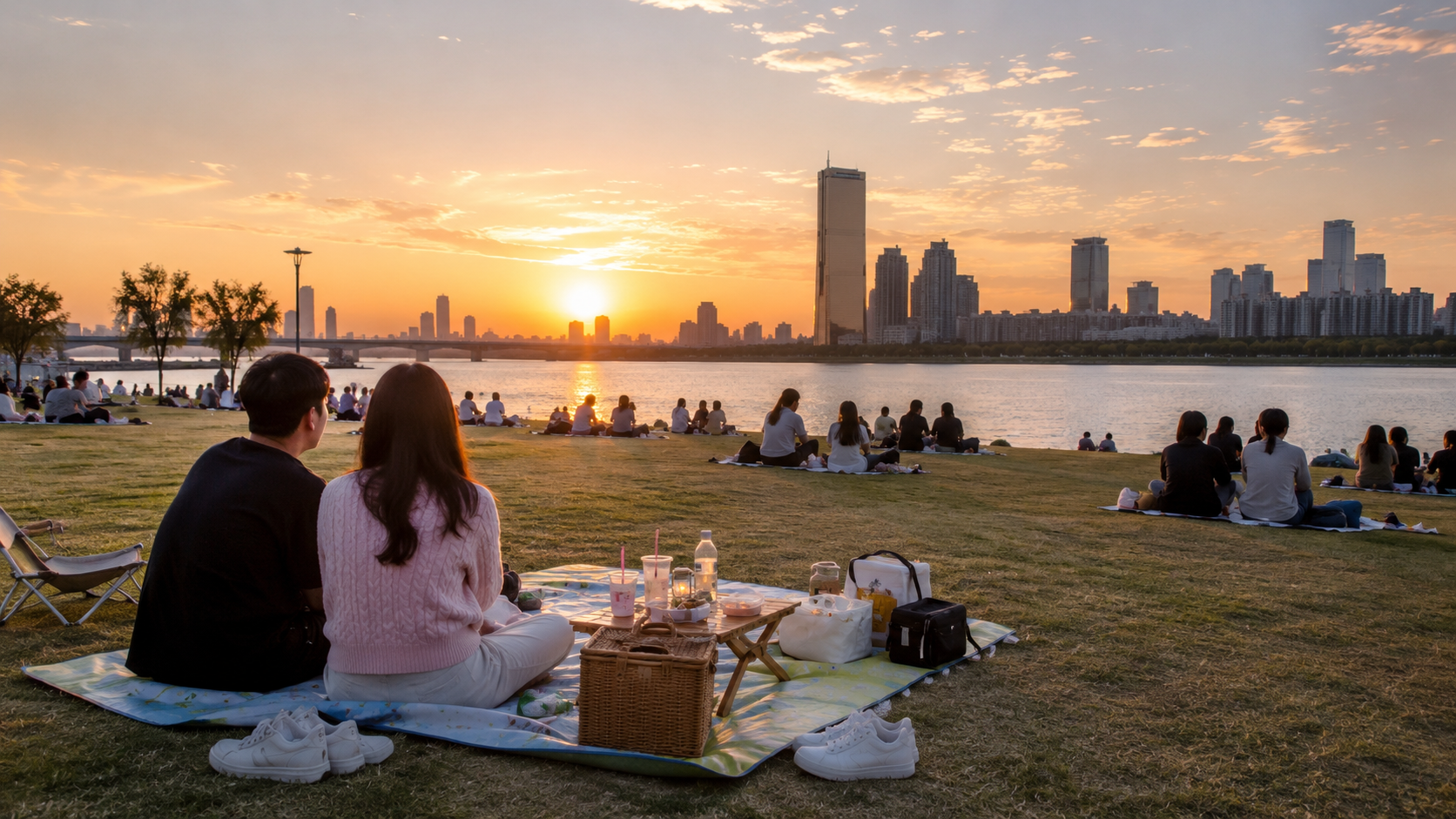
Yeouido Hangang Park is open year-round and is free to enter. It sits close to Yeouinaru Station, making it one of the easiest river parks for a short visit. The official Visit Seoul Yeouido Hangang Park guide lists accessible restrooms and parking facilities.
Walk along the river, sit on the grass, or stay for sunset. Outdoor concerts, fountains, pools, markets, and light shows are seasonal rather than guaranteed. Check the Seoul city or Visit Seoul event calendar for your exact weekend.
Keep your transit card available after sunset. Large events can make Yeouinaru Station extremely crowded, and station access may be controlled temporarily. If that happens, follow staff instructions or walk to another nearby station shown in your navigation app.
Expected weekend budget
These figures are practical estimates, not fixed prices.
| Item | Estimated cost per person |
|---|---|
| Two-day Climate Card plus new physical card | KRW 11,000 |
| Gyeongbokgung admission | KRW 3,000 |
| Two lunches | KRW 20,000–50,000 |
| Two dinners | KRW 24,000–60,000 |
| Drinks and snacks | KRW 10,000–30,000 |
| Optional hanbok rental or shopping | Varies |
| Basic total excluding accommodation | Approximately KRW 68,000–154,000 |
Using Tmoney instead of a Climate Card may cost less if you take only a few rides. Accommodation is excluded because weekend prices differ sharply by neighborhood, room type, season, and booking date.
Adjustments for rain, heat, and limited mobility
On a rainy Saturday, keep Gyeongbokgung brief and spend more time in museums, galleries, tea houses, or covered shopping areas around Insadong. Historic stone and timber surfaces can become slippery.
During Seoul's hot and humid summer, start at 9:00 a.m., take an indoor break after lunch, and reach the river closer to sunset. Carry water and use sunscreen even when the sky is cloudy.
For limited mobility, reduce Bukchon's steep residential lanes and concentrate on Gyeongbokgung's main axis, Insadong's central street, the flatter sections of Seoul Forest, and Yeouido Hangang Park. Confirm elevator exits in your navigation app before traveling, because the nearest numbered subway exit may have only stairs.
Common mistakes to avoid
- Do not schedule distant areas such as Hongdae, Gangnam, Bukchon, and Jamsil in one day.
- Do not enter Bukchon's restricted residential zone outside the permitted 10:00 a.m.–5:00 p.m. hours.
- Do not assume the Climate Card covers every airport or metropolitan journey.
- Do not rely on a single foreign card. Carry a second payment method and some KRW for small businesses or unexpected machine problems.
- Do not plan around a seasonal event until its date, reservation rule, and cancellation policy are confirmed officially.
- Do not underestimate walking. Comfortable shoes are more useful than adding another attraction.
What to check before you go
- Confirm Gyeongbokgung's seasonal closing time and any special-event restrictions.
- Check Seoul's weather warnings and air-quality forecast.
- Review Climate Card coverage if your hotel is outside central Seoul.
- Save Korean destination names in Naver Map or KakaoMap.
- Check whether your preferred Seongsu pop-up requires advance registration.
- Bring a portable battery; navigation and translation apps use significant power.
- Carry your passport or a secure copy where identification may be required, while following your accommodation's guidance on storing the original.
- Recheck the final subway or bus route before staying late at the river.
Your next step is to save the eight Korean place names above in your navigation app, then check the official Gyeongbokgung schedule and Seoul weather forecast for your actual weekend.
Sources
- Seoul Metropolitan Government: Climate Card
- Seoul Metropolitan Government: International card payments for transit tickets
- Royal Palaces and Tombs Center: Gyeongbokgung admission information
- Visit Seoul: Bukchon Hanok Village
- Seoul Forest Conservancy: Visitor information
- Visit Seoul: Yeouido Hangang Park