Credit cards are accepted at most hotels, restaurants, cafés, convenience stores, supermarkets, attractions, and retail shops in South Korea. However, you should not rely on one foreign card for every transaction. Public transportation, small market vendors, unattended machines, and Korean apps can require cash, a prepaid transportation card, or a locally compatible payment method.
Information about payment and transportation systems in this guide was verified on June 9, 2026.
Quick answer
| Situation | Can you normally use a foreign credit card? | What to prepare |
|---|---|---|
| Hotels and department stores | Usually yes | Physical card plus passport for check-in |
| Restaurants and cafés | Usually yes | Small cash reserve for exceptions |
| Convenience stores and supermarkets | Usually yes | Card or cash |
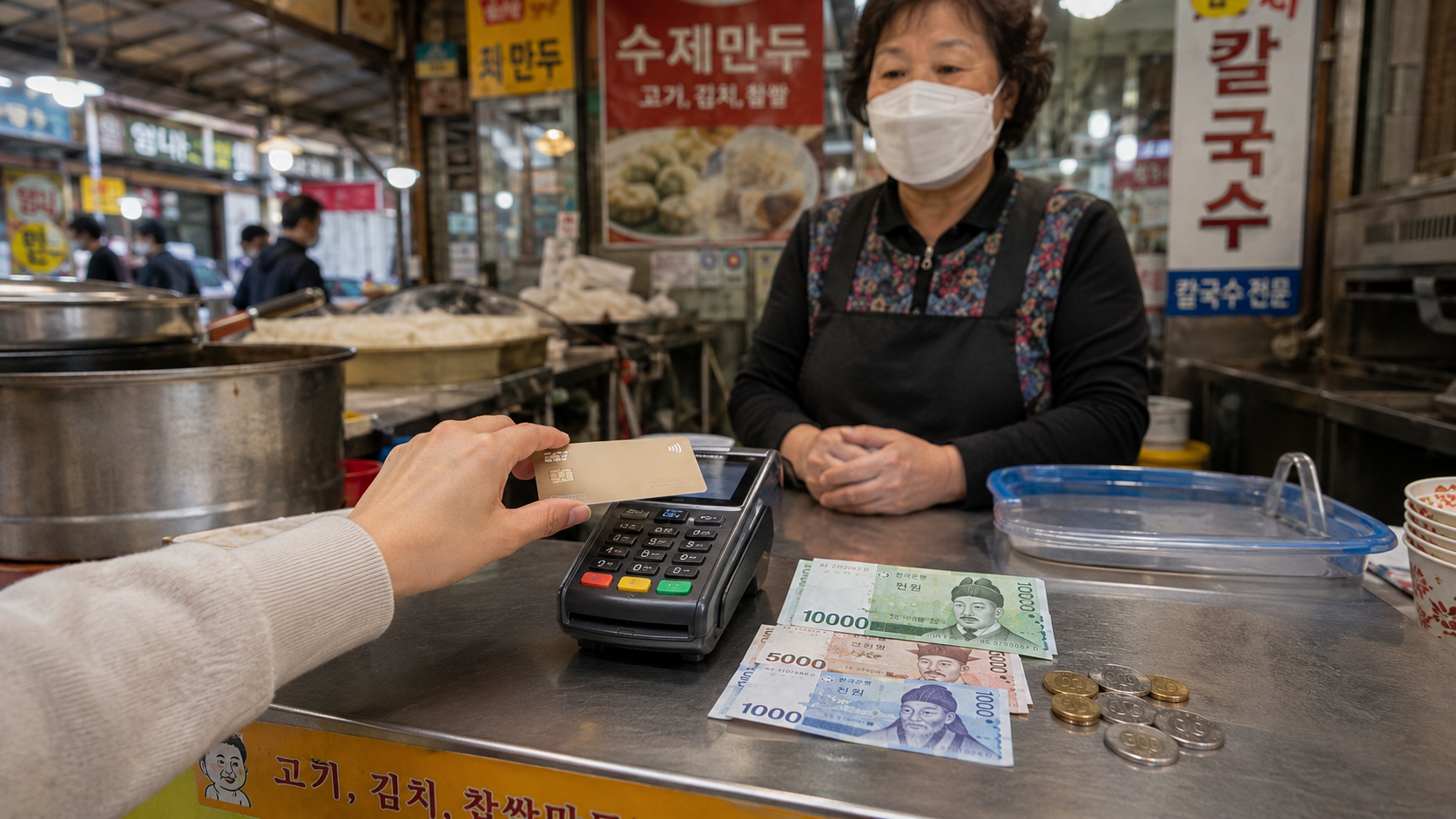
| Traditional markets and street stalls | Varies by vendor | Cash or a prepaid card where accepted |
| Seoul taxis | Usually yes | Card, transportation card, or cash |
| Subway and city bus gates | Not as an ordinary bank-card tap | Tmoney, EZL, or another accepted transit card |
| Transit-card top-ups | Often cash; some machines now accept cards | KRW cash, especially outside supported Seoul stations |
| Korean websites and apps | Unreliable | Use a global version that explicitly accepts foreign cards |
| Rural areas and small independent businesses | Acceptance varies | Cash and a second card |
The practical setup for most visitors is:
- Bring at least two internationally enabled cards.
- Buy a Tmoney or EZL transportation card after arrival.
- Keep approximately KRW 50,000 in cash as a suggested emergency reserve.
- Confirm that your bank allows transactions in South Korea.
How widely are credit cards accepted in Korea?
Card acceptance is extensive. The Korea Tourism Organization’s currency guide says that most Korean businesses accept credit cards, including hotels, department stores, and general shops. Visa, Mastercard, American Express, and other cards can be used, although individual merchants may not support every network.
The Seoul Metropolitan Government’s currency information similarly states that credit cards are usable in most stores, restaurants, hotels, and tourist destinations nationwide, including for small purchases.
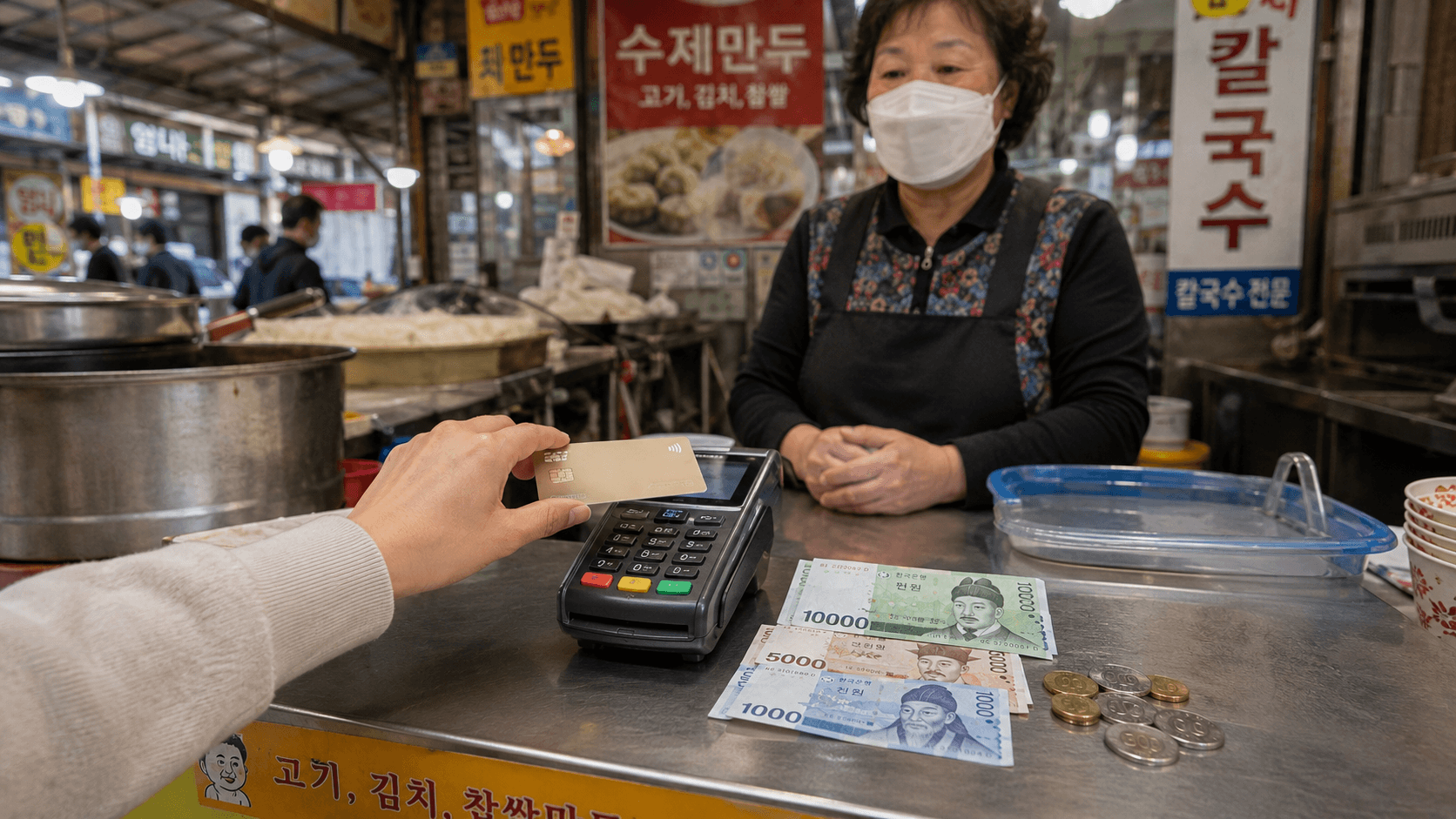
In practice, paying by card for a coffee, convenience-store purchase, restaurant bill, or museum ticket is normal. Staff may take your card and insert it into a terminal rather than handing you a portable reader. At self-checkout machines, follow the on-screen card instructions and look for an English-language option.
A business accepting Korean cards does not guarantee that every foreign-issued card will work. Approval still depends on the merchant’s terminal, payment network, your issuing bank, and the type of transaction.
Where foreign cards usually work
Visitors can generally expect card payment at:
- Hotels, hostels, and major guesthouses
- Department stores, shopping malls, and chain retailers
- Convenience stores such as CU, GS25, 7-Eleven, and emart24
- Supermarkets and pharmacies
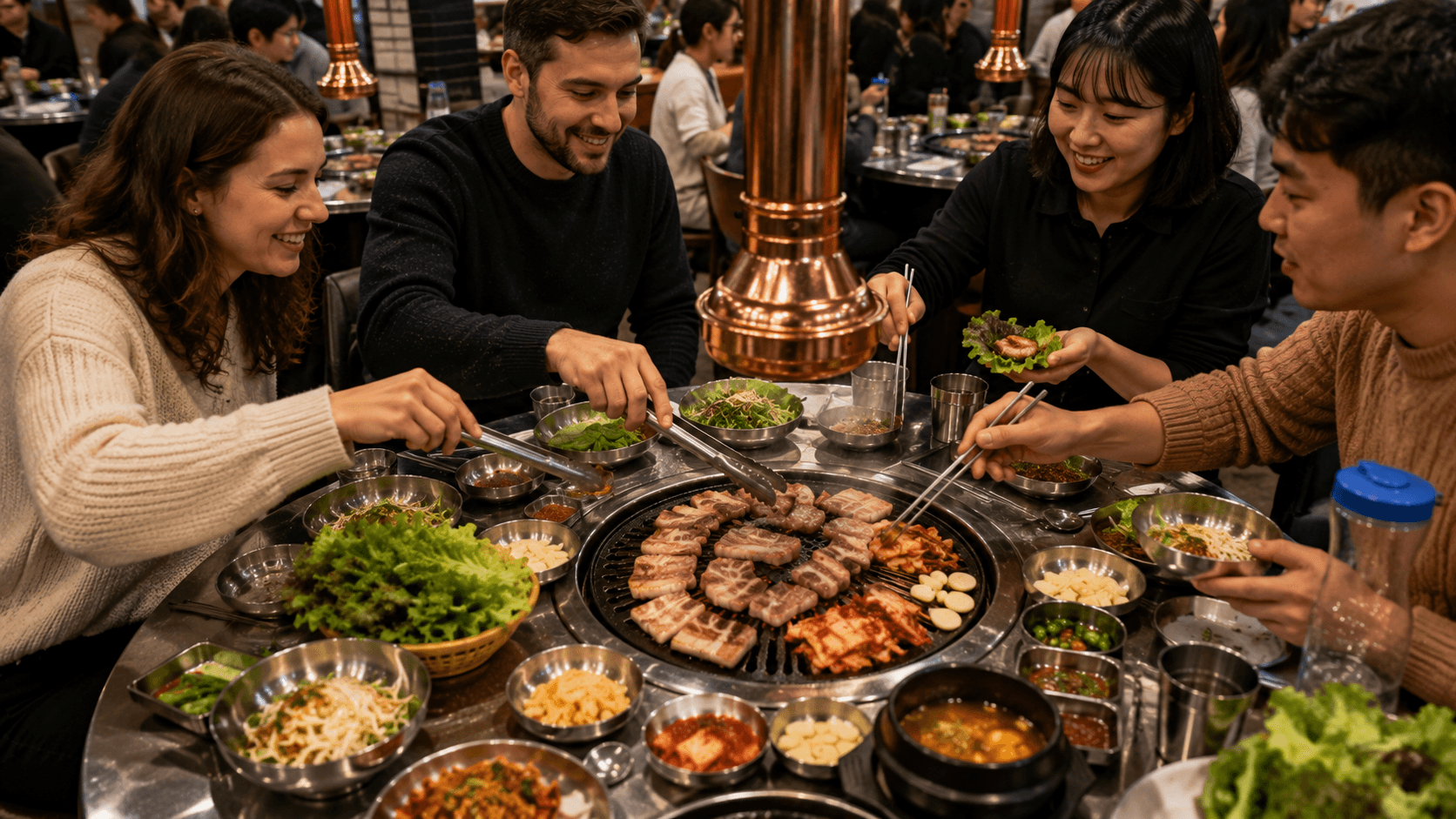
- Most restaurants, bakeries, bars, and cafés
- Museums, theme parks, and major tourist attractions
- Train-station ticket counters and many transport ticket machines
- Car-rental companies
- Hospitals and larger clinics
- Franchised beauty salons and other established service businesses
Always confirm the accepted payment methods before receiving an expensive service. A small guesthouse, private tour operator, or clinic may request advance payment through a particular platform or bank transfer.
Where you may still need cash
Traditional markets and street stalls
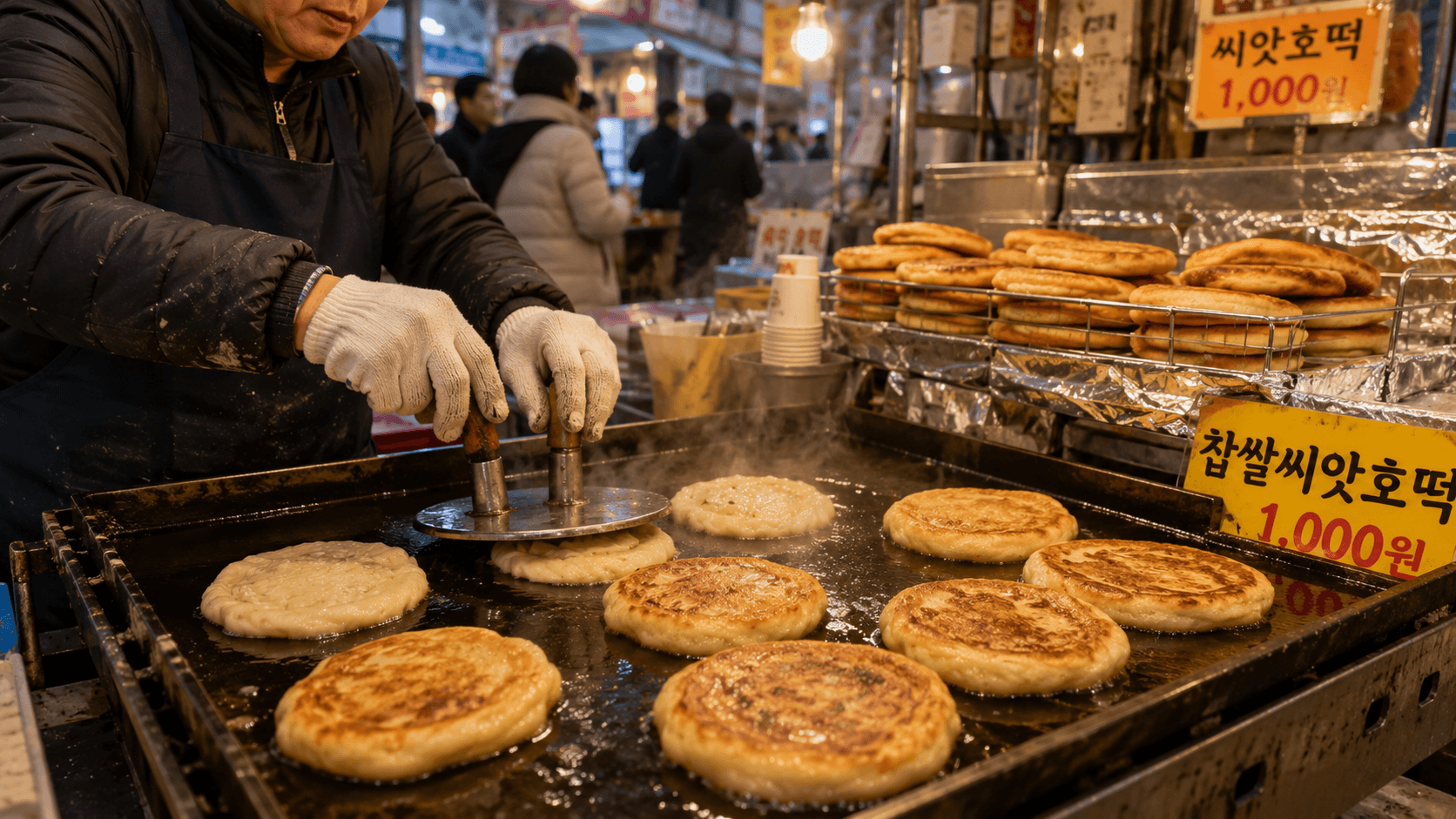
Permanent shops inside traditional markets increasingly have card terminals, but individual food stalls and temporary vendors may operate differently. Some accept cards or QR payments; others prefer or require cash.
Ask before ordering if no card terminal or payment logo is visible. A simple question is “Kadeu dwaeyo?” (카드 돼요?), meaning “Can I pay by card?”
Cash is also useful at flea markets, seasonal festivals, small countryside stalls, and informal sales stands. Do not assume that a vendor can process an overseas mobile wallet merely because a Korean QR code is displayed.
Unattended machines
Older vending machines, lockers, photo booths, parking-payment terminals, and ticket machines may accept only coins, banknotes, Korean cards, or a transportation card. Newer machines are more likely to support international cards, but availability is inconsistent.
Check the logos and instructions before putting luggage into a locker or entering a paid parking facility. Keeping KRW 1,000 and KRW 10,000 notes can be particularly useful.
Small or remote businesses
Card acceptance can be less predictable at remote hiking facilities, countryside pensions, small island businesses, and family-run establishments. Network interruptions can also temporarily prevent electronic payment.
This does not mean that rural Korea is cash-only. It means that having cash matters more when the nearest alternative business or ATM is far away.
Credit cards do not replace a transportation card
The most common visitor mistake is assuming that a contactless Visa or Mastercard can be tapped directly at every subway gate or city bus reader. Korea’s public transportation system primarily uses stored-value transportation cards rather than general open-loop bank-card payment.
The two widely used options are Tmoney and EZL. According to the Korea Tourism Organization’s transportation-card guide, these prepaid cards can be bought at convenience stores and used on participating public transportation. They can also be used at affiliated shops displaying the relevant logo.
Buying and topping up a physical transportation card
A standard physical card generally costs several thousand won before you add travel credit. Card designs and retail prices vary.
The important payment issue is the top-up method. Cash remains the most dependable option for loading a physical transportation card. Some machines accept Korean-issued debit or credit cards, while card support differs by city, station, and device.
Seoul introduced an important exception on March 17, 2026. At 440 new vending machines across 273 stations on Seoul Subway Lines 1–8, visitors can use internationally issued Visa and Mastercard debit or credit cards to purchase single-journey tickets and buy or recharge short-term Climate Cards. The Seoul Metropolitan Government announcement states that an average service fee of approximately 3.7% applies to international-card transactions. This information was verified on June 9, 2026.
That service does not mean every transportation-card machine nationwide accepts foreign cards. Carry cash when traveling outside the supported network or when loading an ordinary Tmoney or EZL card.
Airport Railroad tickets
The Airport Railroad Express, or AREX, has installed credit-card payment for single-use subway tickets at its stations between Incheon International Airport and Seoul Station. The Korea Tourism Organization’s AREX notice explains that the ticket still includes a KRW 500 deposit, returned through a deposit-refund machine after the journey.
Apple Pay and mobile Tmoney
Apple Pay can be used only where the merchant has a compatible contactless reader and accepts the card’s network. Apple advises users to look for the Apple Pay or contactless-payment symbol rather than assuming every card terminal supports tapping.
Apple Pay Tmoney is available on compatible iPhones and Apple Watches. However, Apple’s official Tmoney announcement states that adding funds to the Wallet-based Tmoney card requires a credit or debit card issued in South Korea. A short-term visitor with only foreign cards should therefore plan on using a physical transportation card unless their mobile Tmoney has already been funded through a supported method.
Can you pay taxis by card?
Seoul taxis normally accept cash, credit cards, and transportation cards. The Seoul Metropolitan Government’s taxi guide confirms all three payment methods.
Before leaving the taxi, wait for the terminal to approve the transaction and request a receipt if needed. If you booked through an app and selected automatic payment, check whether the fare was already charged so that you do not pay twice.
Taxi-app payment is a separate issue from paying in the vehicle. A Korean app may require a domestic phone number or Korean card for registration. International versions of taxi services can be easier for visitors, but supported cards and service areas should be checked in the app before travel.
Airport buses also have operator-specific rules. For example, Airport Limousine’s official instructions say that passengers traveling from Seoul toward Incheon Airport should normally pay the driver with cash or Tmoney; ordinary credit-card processing is not completed on the bus. Check the operator for your exact route rather than assuming all airport buses use the same system.
Why a foreign card may be declined
A declined transaction does not necessarily mean that the business refuses foreign customers. Common possible causes include:
- Overseas transactions are disabled by your bank.
- The bank flags the purchase as unusual activity.
- The merchant does not support your card network.
- The terminal cannot complete contactless payment but may accept an inserted chip card.
- The machine supports only Korean-issued cards.
- An online checkout requires Korean identity or phone-number verification.
- Your debit card requires a PIN or has insufficient available funds.
- The card’s magnetic stripe, chip, or contactless function is damaged.
If tapping fails, ask the cashier to insert the card. If the inserted card also fails, use a second card rather than repeatedly attempting the same transaction. Multiple failed attempts can trigger an issuer’s fraud controls.
Contact your bank through its official app or number if a card that previously worked begins failing at several unrelated businesses.
Korean websites and apps are a separate problem
A physical shop may accept your foreign card even when its Korean website or app does not. Domestic online services can require a Korean phone number, a locally issued card, or identity verification linked to a Korean resident record.
The Korea Tourism Organization notes this problem in its guidance on restaurant reservations: many domestic systems require a Korean number or do not accept overseas cards. Services designed for visitors, such as CATCHTABLE Global, explicitly support registration by email and payment with international cards.
Similar restrictions can affect food delivery, event tickets, advance restaurant deposits, shopping sites, and local subscription services. Look for an English or “global” version and confirm that it specifically mentions foreign-issued or international cards. An English interface alone does not guarantee foreign-card support.
Contactless cards and mobile wallets
Bring the physical card even if you normally pay entirely by phone. Contactless support is expanding, but not every Korean terminal is configured for international NFC payments.
When using Apple Pay, the merchant must support contactless payment and the network of the card stored in your wallet. Other mobile wallets have their own issuer, device, and merchant requirements. Korean QR-payment logos such as those for domestic banking apps should not be treated as proof that an overseas wallet will work.
A practical order of payment attempts is:
- Try your usual contactless card or mobile wallet if the correct symbol is displayed.
- Insert the physical chip card if tapping fails.
- Try your second card.
- Pay with KRW cash or an accepted prepaid card.
Fees, exchange rates, and the currency shown on the terminal
Your home bank may charge a foreign-transaction fee, apply its own exchange rate, or impose an ATM fee. These charges come from your card agreement, so check them before departure.
A terminal may offer to charge you in your home currency instead of Korean won. This is called dynamic currency conversion. The screen should show the currencies and conversion information. Compare the offered conversion with your card issuer’s terms before choosing. Selecting KRW leaves the currency conversion to your card network and issuer, while selecting your home currency uses the conversion offered at the point of sale.
Do not approve a transaction until you have checked the displayed amount. Korean prices can contain several zeros, making KRW 50,000 easy to misread as KRW 5,000 at a glance.
How much cash should you carry?
There is no official amount that every traveler needs. As a practical suggestion, KRW 50,000 in mixed notes is a reasonable starting emergency reserve for ordinary urban travel. Carry more when visiting islands, rural areas, markets, festivals, or hiking destinations.
You do not need to exchange your entire travel budget into cash. ATMs and exchange counters are available at major airports and cities, but machine compatibility, withdrawal fees, and operating access vary. Use machines at banks, airports, or other established locations, and check that your card’s network logo is displayed.
What to check before you go
- Enable overseas purchases and cash withdrawals with your card issuer.
- Confirm your foreign-transaction and ATM fees.
- Know your card PIN, including for debit cards and cash withdrawals.
- Bring two cards stored separately.
- Carry the physical cards even if they are loaded into a mobile wallet.
- Save your bank’s official lost-card contact details.
- Buy a physical Tmoney or EZL card if you will use public transportation.
- Keep small KRW notes for top-ups, markets, lockers, and emergencies.
- Check whether advance-booking apps explicitly accept foreign-issued cards.
- Ask about payment before ordering when no card terminal is visible.
FAQ
Can I travel in Seoul without cash?
It is becoming easier, particularly after Seoul added international-card support to selected subway vending machines in March 2026. However, carrying some KRW remains sensible for ordinary transportation-card top-ups, small vendors, older machines, and unexpected card failures.
Can I tap my foreign bank card directly on a Korean bus or subway gate?
Do not assume so. Most systems expect a compatible transportation card such as Tmoney or EZL. Buy and load one before boarding unless the specific operator clearly advertises direct bank-card payment.
Are small card payments accepted?
Cards are commonly used for inexpensive purchases at convenience stores, cafés, and other established businesses. Individual vendors and machines may still have different payment capabilities.
Is a debit card enough?
An internationally enabled debit card can work, but relying on one card creates problems if your bank blocks it or a terminal does not support it. Carry a second payment card and some KRW cash.
Should I bring US dollars or another foreign currency for shops?
Everyday prices and payments are in Korean won. Foreign banknotes are for exchange, not normal retail payment. Obtain KRW through an authorized exchange counter or a compatible ATM.
Sources
- Korea Tourism Organization: Korean Currency and Exchange Information
- Korea Tourism Organization: Transportation Cards
- Seoul Metropolitan Government: Currency Exchange and Payment Methods
- Seoul Metropolitan Government: International Card Payments at Subway Vending Machines
- Seoul Metropolitan Government: Taxi Guide
- Apple Korea: Apple Pay Tmoney Requirements
Your next practical step is to check your bank’s overseas-use settings, then plan to obtain a transportation card and a small amount of KRW soon after arrival.