South Korea is generally straightforward to travel around once you understand a few local systems. The mistakes that cause the most trouble are usually practical: relying on the wrong map app, boarding transport without a suitable payment card, underestimating travel times, or assuming restaurant service works as it does at home.
The information below was verified on June 9, 2026. Transport policies, tax-refund rules, operating hours, and entry requirements can change, so confirm critical details shortly before departure.
At a glance
| Common mistake | Better approach |
|---|---|
| Using only Google Maps | Install Naver Map or Kakao Map |
| Expecting every bus to accept cash | Carry a loaded transportation card |
| Forgetting to tap off a bus | Tap when boarding and leaving |
| Assuming an international bank card will always work | Carry a second card and some KRW |
| Planning intercity travel too tightly | Reserve trains and allow transfer time |
| Arriving at the wrong airport terminal | Check the airline and terminal before leaving |
| Waiting for restaurant staff to approach | Use the table call button or order kiosk |
| Tipping automatically | Do not tip unless a business clearly provides that option |
| Treating priority seats as ordinary seats | Leave them available for eligible passengers |
| Assuming attractions open daily | Check official closure days and reservation rules |
1. Relying only on Google Maps
Google Maps can help with basic place searches, but it should not be your only navigation tool in Korea. Local platforms generally provide more useful walking routes, public-transport information, entrances, Korean addresses, and business listings.
Install Naver Map or Kakao Map before arrival. According to the Korea Tourism Organization's app guide, Naver Map provides route suggestions for walking, cycling, driving, and public transport. Naver Map supports English, Japanese, and Simplified Chinese, while Kakao Map offers Korean and English interfaces.
Save important destinations in advance, including your hotel. Search results can be easier to confirm when you have the Korean name or Hangul address. A romanized business name may have several spellings.
Practical fix: Save a screenshot of your accommodation's Korean address and telephone number. It can help a taxi driver or station employee identify the correct place.
2. Arriving without a transportation card
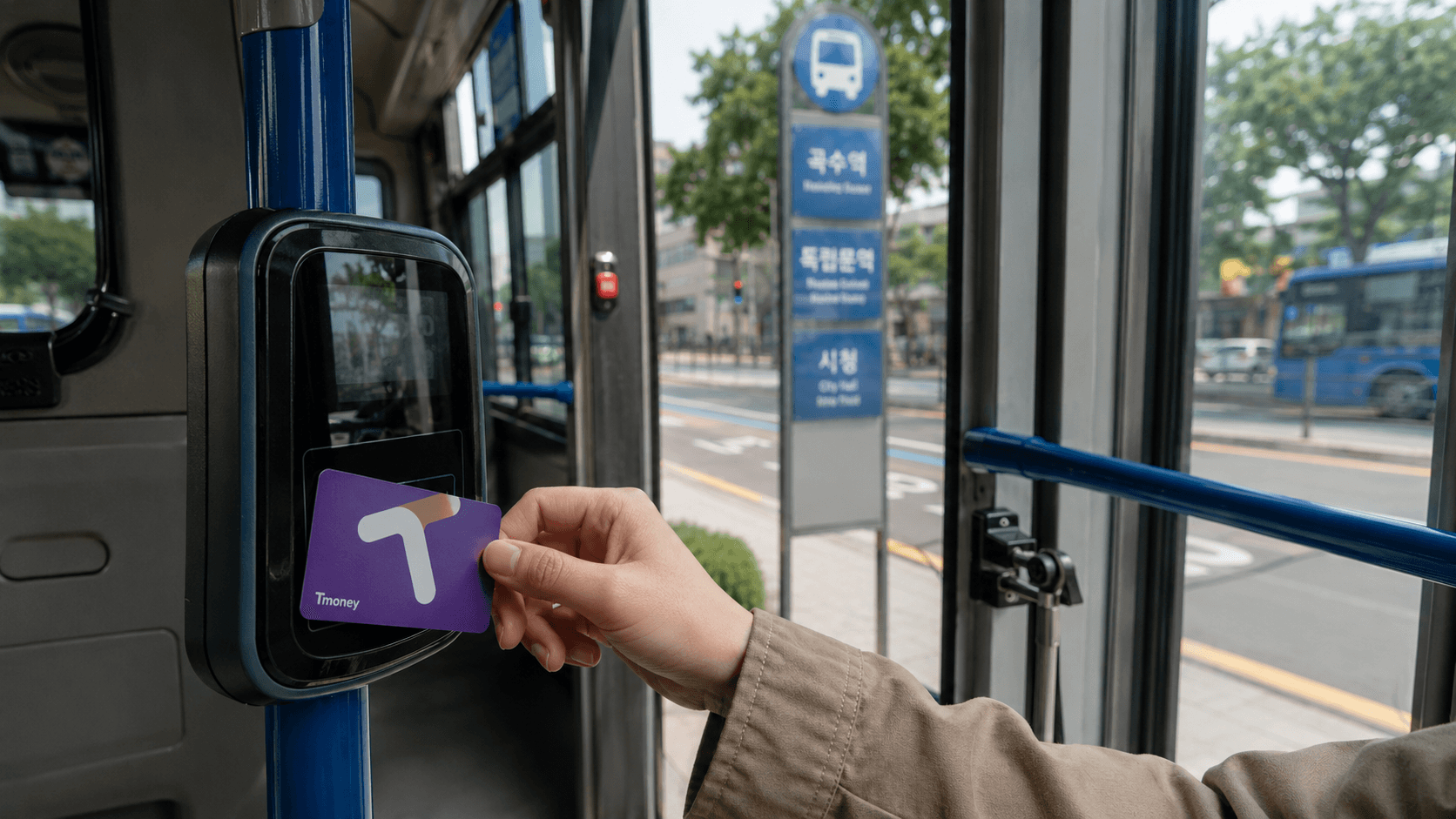
A prepaid transportation card, such as Tmoney or EZL, is more practical than buying individual tickets. It can be used across much of the country on buses and subways, although coverage and transfer rules vary.
Do not assume every bus accepts cash. The official VISITKOREA city-bus guide warns that many city buses are cashless, including all city buses in Incheon, Daegu, and Gwangju and many routes in Seoul.
Buy a card at a convenience store or eligible station sales point and load enough balance before boarding. A card's purchase price is separate from its usable balance.
In Seoul, short-term Climate Card passes may suit travelers making many journeys, but their coverage is not nationwide. They exclude services including the Sinbundang Line, airport buses, and some routes outside Seoul. Check the Seoul Metropolitan Government Climate Card guide before buying one.
As of March 17, 2026, designated vending machines at 273 Seoul subway stations on Lines 1–8 accept internationally issued cards and mobile payments for short-term Climate Card passes and single-journey tickets. This does not mean every transportation-card machine or convenience-store counter accepts foreign cards. The details are in the city's international card payment announcement.
3. Forgetting to tap off the bus
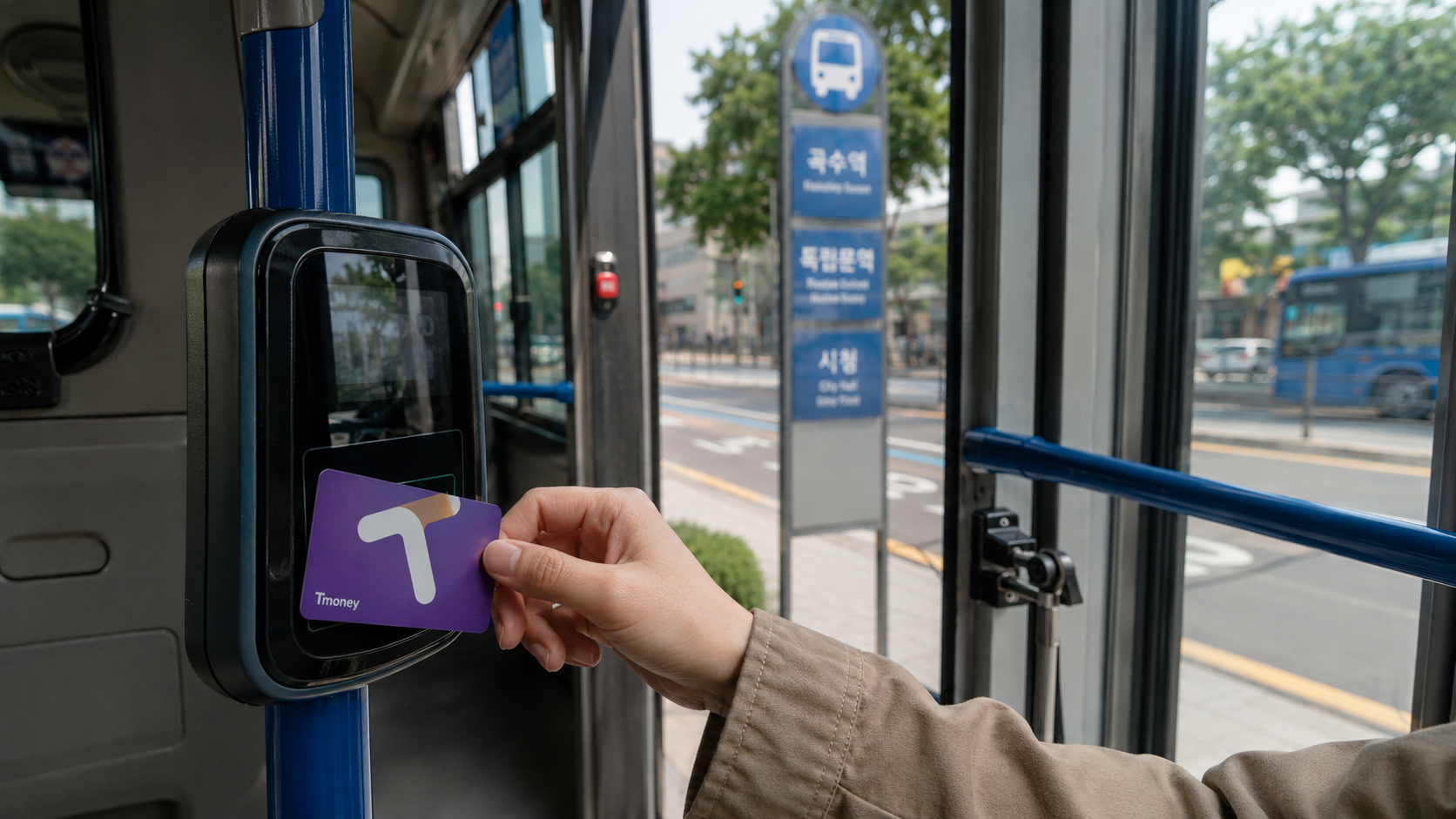
On most urban bus systems, tap your transportation card when boarding and again before leaving. The second tap records the end of the journey and is important for distance-based fares and transfers.
In Seoul, passengers normally enter through the front door, tap beside the driver, press the stop bell before their destination, tap at the rear reader, and leave through the back door. The city's public-transport guide explains the process for first-time users.
Missing the exit tap may result in an incorrect fare or loss of a transfer benefit. Do not wait until you are standing outside the bus.
4. Assuming international cards work everywhere
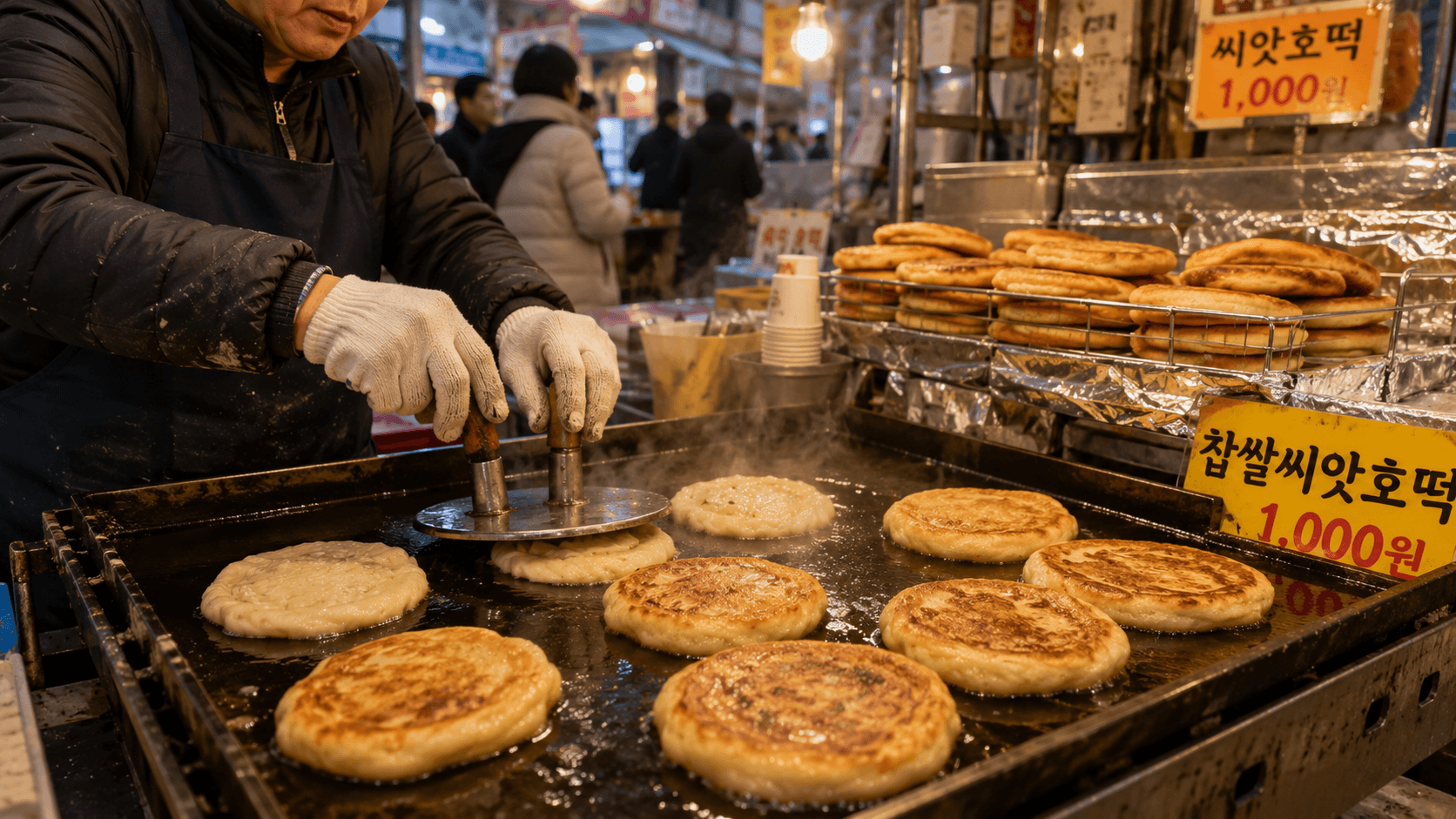
Card payment is widespread, but a foreign card can still fail because of the terminal, issuer security controls, offline processing, or a requirement for a Korean-issued card. Small market stalls, older machines, transportation-card reload points, and some ticketing systems may require cash or another payment method.
Carry at least two cards from different networks and keep a modest amount of Korean won. Notify your bank of your travel dates if required, and make sure you know your PIN.
Do not depend entirely on mobile wallets. Compatibility varies by device, card issuer, and merchant terminal.
5. Planning routes by distance rather than travel time
Two attractions that look close on a map may be separated by a hill, river, limited crossing points, or a lengthy station transfer. Large subway stations can require several minutes of walking between platforms or exits.
Check door-to-door travel time in a Korean map app. Include time to find the correct station exit, wait for a bus, store luggage, and walk through large complexes.
For a comfortable sightseeing day, group places by district rather than crossing Seoul repeatedly. Outside the capital, check the final local bus back from rural attractions instead of considering only the outbound journey.
6. Leaving intercity tickets until the last minute
KTX and other reserved trains can sell out on popular routes, especially on Friday evenings, weekends, public holidays, and around Seollal or Chuseok. Reserving early matters when your accommodation or flight depends on a particular train.
Use the official Let's Korail website or Korail Talk app for KORAIL services. The Korea Tourism Organization's app guide identifies these as KORAIL's official booking platforms. SRT operates separately, so confirm which operator serves your intended train.
Avoid unofficial websites that resemble an operator's booking page but add unclear fees. Check the departure station carefully: Seoul Station, Yongsan Station, Cheongnyangni Station, and Suseo Station serve different routes.
7. Confusing airport terminals or underestimating the airport journey
Incheon International Airport has two passenger terminals. Your arrival terminal and departure terminal may differ if you change airlines during the trip.
Check the terminal in your airline booking and again on the official Incheon International Airport website. Do this before selecting an airport train, bus stop, hotel shuttle, meeting point, or taxi destination.
Allow additional time for the trip from central Seoul, terminal navigation, baggage procedures, security, and immigration. Late-night arrivals require particular care because normal rail and bus services do not run continuously. Verify the last service for your exact arrival date rather than relying on an old blog post.
8. Assuming every restaurant follows Western service patterns
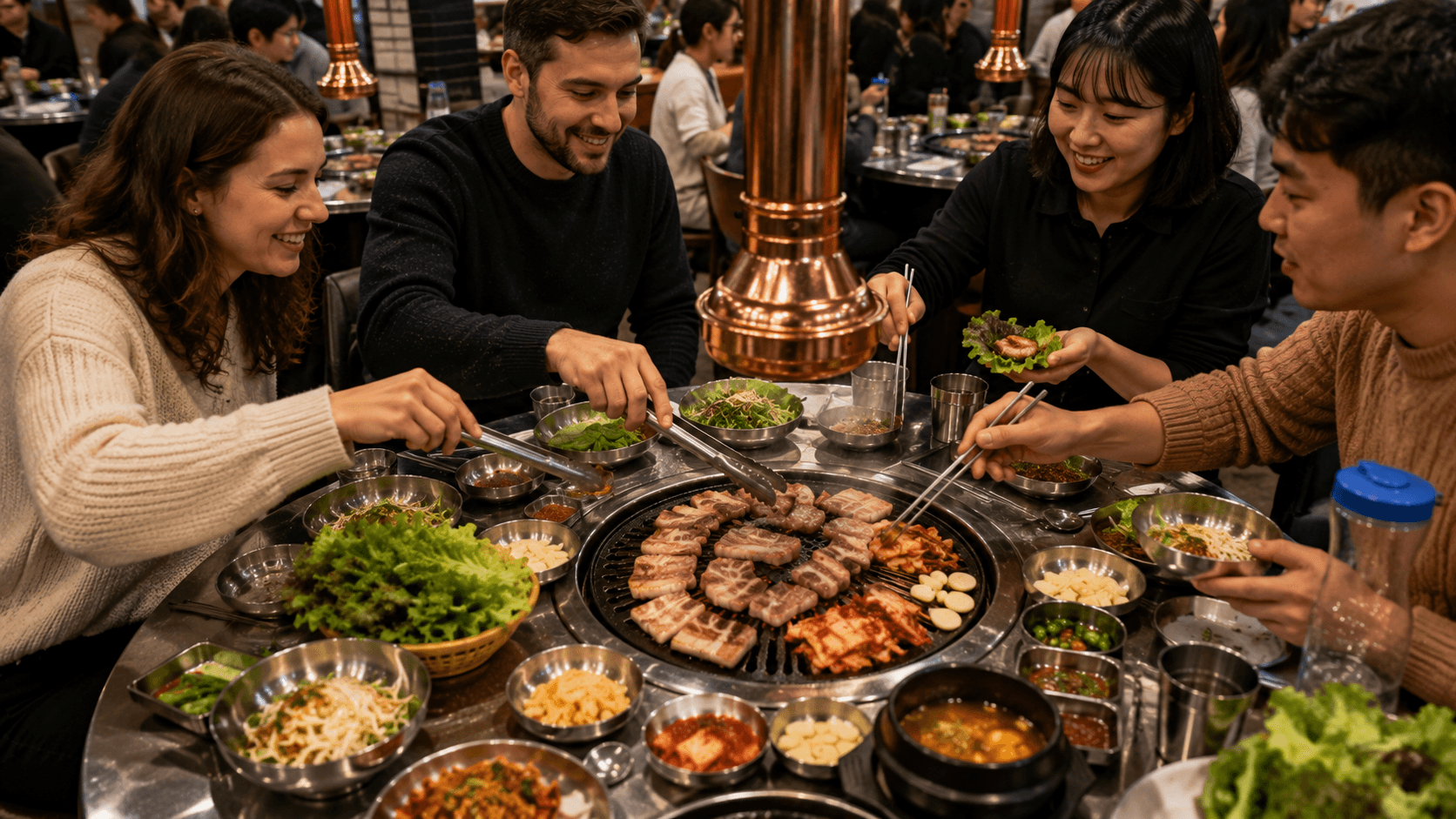
At casual Korean restaurants, staff may not return to the table repeatedly. Look for a call button marked 호출 or 벨, and press it once when you need assistance. Cutlery and napkins may be in a drawer beneath the tabletop, while water and extra side dishes may be self-service.
Some restaurants require ordering through a touchscreen kiosk or tablet. Foreign-card acceptance and language options vary. If the kiosk fails, show the screen to an employee rather than repeatedly attempting payment.
The official VISITKOREA food guide confirms that tipping is neither required nor generally expected. Complimentary side-dish refills are common, but not every item on the table is necessarily free. Ask before opening bottled drinks or ordering additions.
Restaurants specializing in barbecue, hot pot, or set menus may require a minimum order for two people. Solo travelers should check the menu or ask before sitting down.
9. Ignoring dietary details hidden in broths and sauces
A dish that appears vegetarian may contain anchovy broth, fish sauce, meat stock, egg, or seafood seasoning. Removing visible meat does not necessarily make it vegetarian, halal, or suitable for an allergy.
Carry a clearly written Korean dietary card that states what you cannot eat and whether cross-contact is dangerous. For a serious allergy, do not rely only on automatic translation. Ask staff to check the ingredients and preparation method.
Travelers with medical dietary restrictions should choose restaurants able to give a clear answer. Uncertainty is a reason to order something else, not evidence that a dish is safe.
10. Wearing difficult shoes on a shoes-off day
Shoes are removed in some traditional accommodations, temples, restaurants with floor seating, fitting rooms, and private homes. Watch what other guests do and look for a raised floor, shoe rack, or slippers.
Wear clean socks and shoes that are easy to remove when visiting such places. Do not step onto a raised indoor floor in outdoor shoes, and do not wear bathroom slippers into other rooms.
This is less about mastering complicated etiquette than noticing how the space is organized.
11. Blocking subway doors, escalators, or narrow pavements
Busy Korean stations move quickly. Before boarding a train, stand to the side and let passengers leave. Once inside, move away from the doorway when possible. Large suitcases should not block aisles, escalator landings, or platform gates.
Priority seats are intended for older passengers, disabled passengers, pregnant passengers, people with infants, and others who need them. Pink seats are specifically marked for pregnant passengers. The official Seoul tourism etiquette guide explains these seat categories.
Keep calls and videos quiet on public transport. During rush hour, a backpack worn on your chest or held by hand takes up less shared space than one left on your back.
12. Expecting public rubbish bins everywhere
Public bins exist, but they may not appear exactly when you need one. Keep a small bag for receipts, tissues, and food packaging until you find a suitable bin at a station, convenience store, attraction, or your accommodation.
Do not leave rubbish beside a full bin or place household waste on the street. Disposal and recycling rules differ by municipality and accommodation type. Ask your hotel or host how to separate general waste, food waste, glass, cans, and plastics.
At Hangang parks, littering can lead to penalties, and waste should go into the designated facilities. See the Seoul Metropolitan Government's Hangang visitor rules.
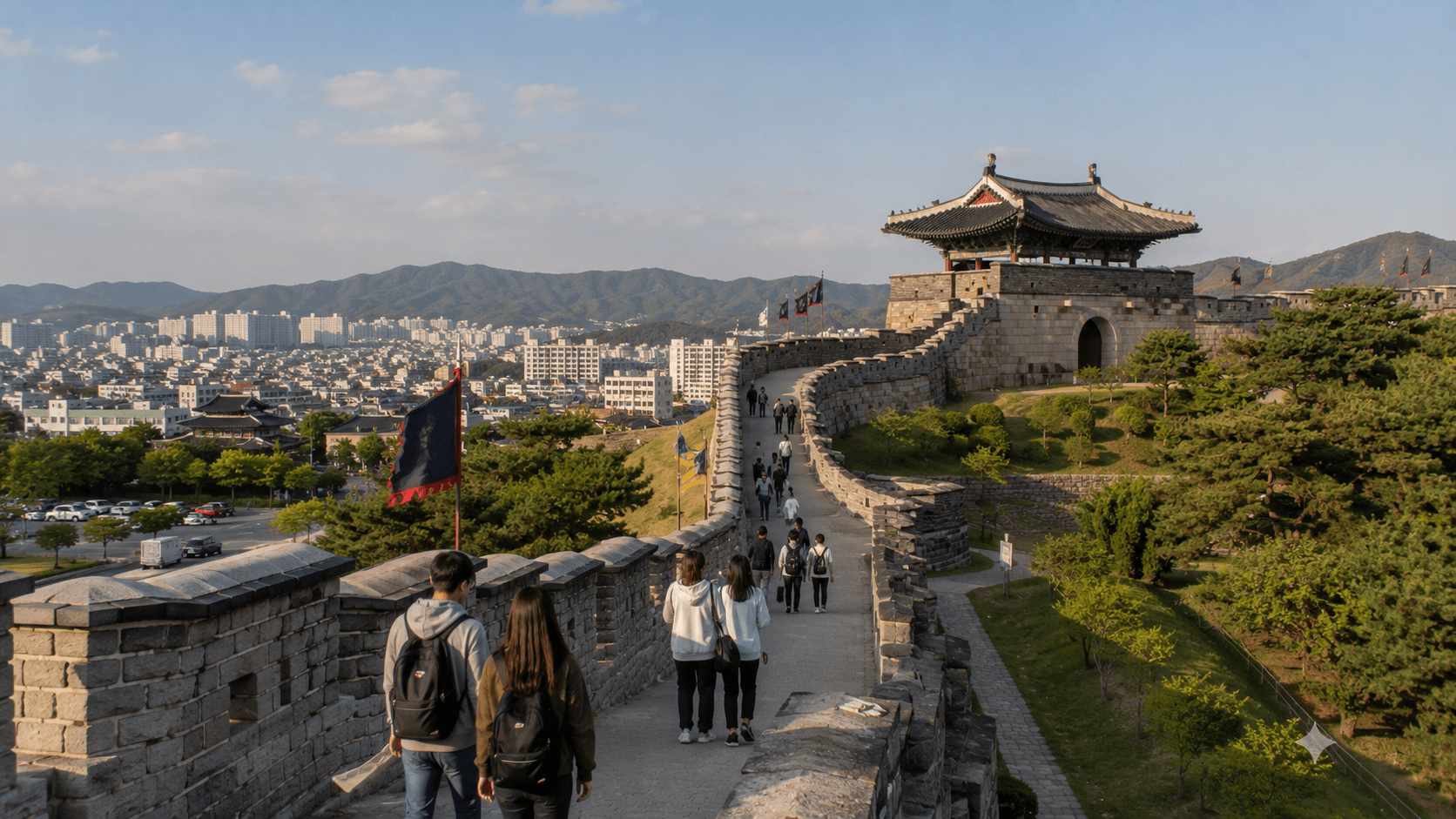
13. Assuming attractions are open every day
Museums, palaces, observation facilities, markets, and restaurants may close on a particular weekday or require timed admission. Last entry can be much earlier than the building's closing time.
Check the attraction's official website on the day before your visit. Confirm:
- Regular closing day and public-holiday exceptions
- Last admission time
- Online reservation requirements
- Passport or identification requirements
- Bag restrictions and storage options
- Accessibility routes and elevator availability
Do not build an itinerary from search-result opening hours alone. Temporary closures, private events, weather, and maintenance may not appear promptly on third-party listings.
14. Treating tax refunds as automatic
A shop being popular with tourists does not mean every purchase qualifies for a refund. Look for a participating tax-refund sign, present your passport when requested, and keep the correct receipt or refund document.
According to the VISITKOREA tax-refund guide, the minimum qualifying purchase is KRW 15,000 at a participating store. Eligibility depends on residency and length of stay, and opened or used goods may be excluded from the general refund process. Immediate and later refund systems use different procedures.
These rules were verified on June 9, 2026. Check the official guide before shopping because thresholds and eligibility requirements can change.
15. Traveling without essential Korean details or emergency numbers
Mobile data can fail, batteries run out, and an English business name may not be recognized. Keep an offline note containing:
- Your accommodation's name, address, and telephone number in Korean
- A local emergency contact, if available
- Passport and travel-insurance details
- Essential medication information
- Your embassy or consulate's contact details
- The location of your luggage storage or meeting point
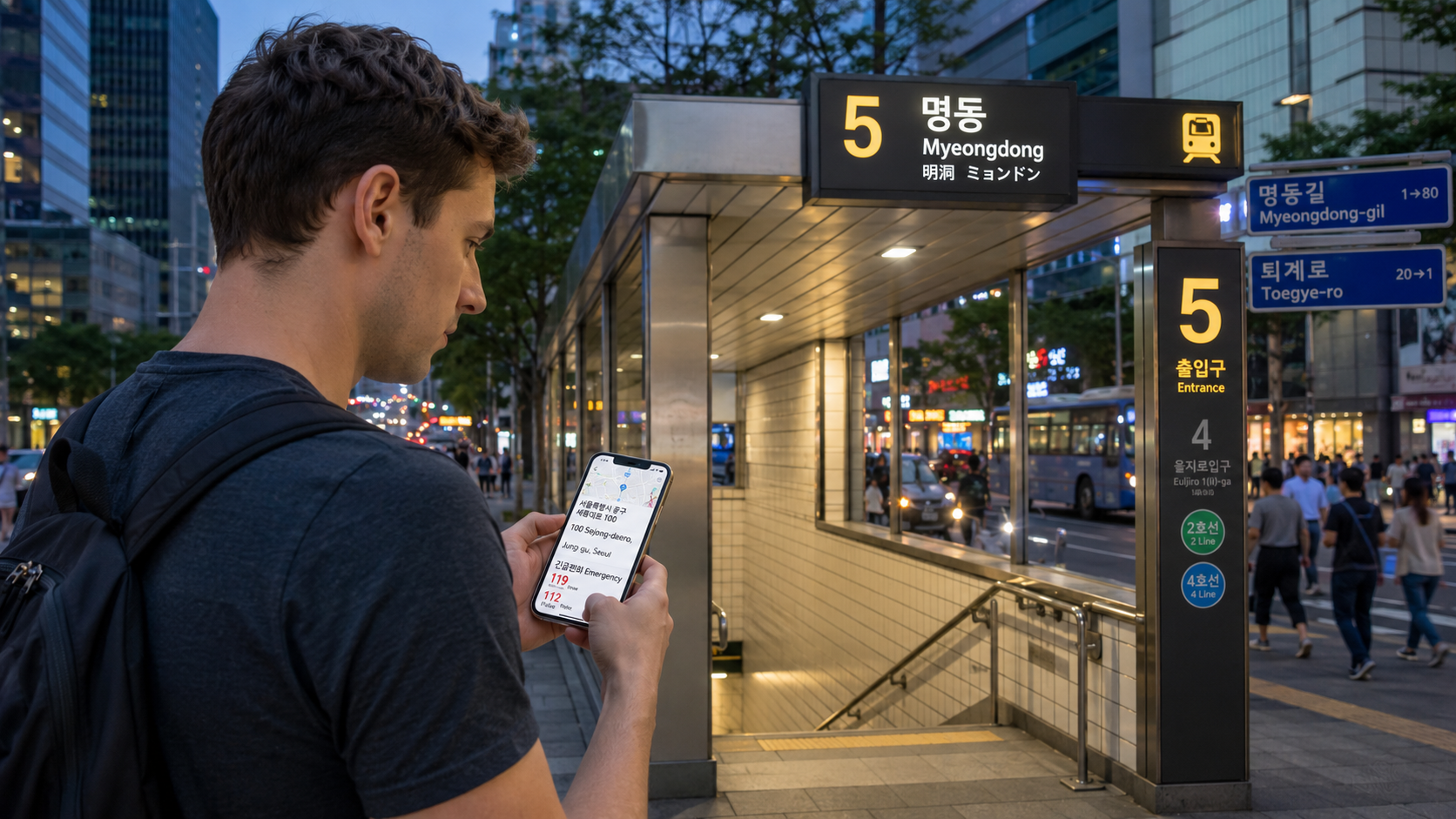
For an immediate threat to life or property, call 112 for police or 119 for fire and ambulance. The Korea Tourism Organization's emergency guide also lists the 1330 Korea Travel Hotline for tourism information and interpretation assistance. These numbers were verified on June 9, 2026.
When calling emergency services, state your location first. A nearby station exit number, building name, road address, or visible shop sign can be more useful than a long explanation.
What to check before you go
Use this checklist during the final week before departure:
- Confirm current entry and immigration requirements with the relevant Korean authority.
- Install Naver Map or Kakao Map and save your hotel in Korean.
- Arrange mobile data through roaming, an eSIM, or a local SIM.
- Prepare at least two payment cards and some KRW.
- Check how you will obtain and reload a transportation card.
- Reserve essential intercity trains and timed attractions.
- Confirm your Incheon Airport terminal and airport transport.
- Save 112, 119, and 1330 in your phone.
- Review travel insurance coverage and emergency procedures.
- Recheck official opening hours, last admission, and final transport services.
The most useful next step is to place your accommodation, airport terminal, first-day destinations, and emergency information into one offline note. That single preparation solves several of the most common problems before they occur.
Sources
- Korea Tourism Organization: Helpful Apps and Resources
- Korea Tourism Organization: City Bus Guide
- Seoul Metropolitan Government: Public Transportation
- Seoul Metropolitan Government: Climate Card
- Incheon International Airport
- Korea Tourism Organization: Tax Refund Guide
- Korea Tourism Organization: Emergency Situations