A realistic daily travel budget for South Korea is ₩70,000–₩110,000 per person for budget travel, ₩150,000–₩250,000 for a mid-range trip, and ₩300,000 or more for a higher-comfort visit. These estimates include accommodation, meals, local transport, attractions, and small incidental expenses, but exclude international flights and major intercity travel.
The figures below are planning ranges rather than official price averages. Hotel rates, restaurant prices, and activity costs vary by city, season, neighborhood, and booking date. Fixed public transport fares and admission fees were verified on June 9, 2026.
At a glance
| Travel style | Estimated daily cost per person | Typical choices |
|---|---|---|
| Shoestring | ₩70,000–₩110,000 | Hostel, simple meals, public transport, mostly free sights |
| Budget hotel | ₩110,000–₩170,000 | Guesthouse or basic private room, casual restaurants |
| Mid-range | ₩150,000–₩250,000 | Business hotel, cafés, paid attractions, occasional taxi |
| Comfortable | ₩300,000–₩500,000+ | Higher-end hotel, restaurant meals, taxis and premium activities |
These ranges assume one traveler. Two people sharing a hotel room can often reduce the per-person accommodation cost substantially.
A practical daily budget breakdown
Shoestring traveler: ₩70,000–₩110,000
A low-cost day might include:
| Expense | Planning range |
|---|---|
| Hostel bed or low-cost guesthouse | ₩25,000–₩50,000 |
| Food and drinks | ₩25,000–₩35,000 |
| Local transport | ₩5,000–₩8,000 |
| Attractions | ₩0–₩10,000 |
| Other expenses | ₩5,000–₩10,000 |
This budget is most realistic if you book accommodation early, use buses and subways, eat at neighborhood restaurants or markets, and combine one paid attraction with free areas such as parks, traditional neighborhoods, riverside paths, and public museums.
A private room in central Seoul may push the total above this range, particularly on weekends or during major events.
Mid-range traveler: ₩150,000–₩250,000
A typical mid-range day might look like this:
| Expense | Planning range |
|---|---|
| Business hotel or well-rated private room | ₩80,000–₩150,000 |
| Food, coffee, and drinks | ₩40,000–₩70,000 |
| Local transport and occasional taxi | ₩8,000–₩20,000 |
| Attractions or activities | ₩10,000–₩30,000 |
| Other expenses | ₩10,000–₩20,000 |
This level allows for a centrally located room, several café stops, restaurant meals, and an occasional taxi without requiring close tracking of every purchase.
Comfortable traveler: ₩300,000–₩500,000 or more
Higher-comfort travel may include a full-service hotel, taxis, cocktails, premium observation decks, guided activities, and more expensive Korean barbecue, seafood, or tasting menus. Accommodation alone can exceed ₩300,000 during peak periods, so this category has no meaningful upper limit.
Accommodation: the largest variable
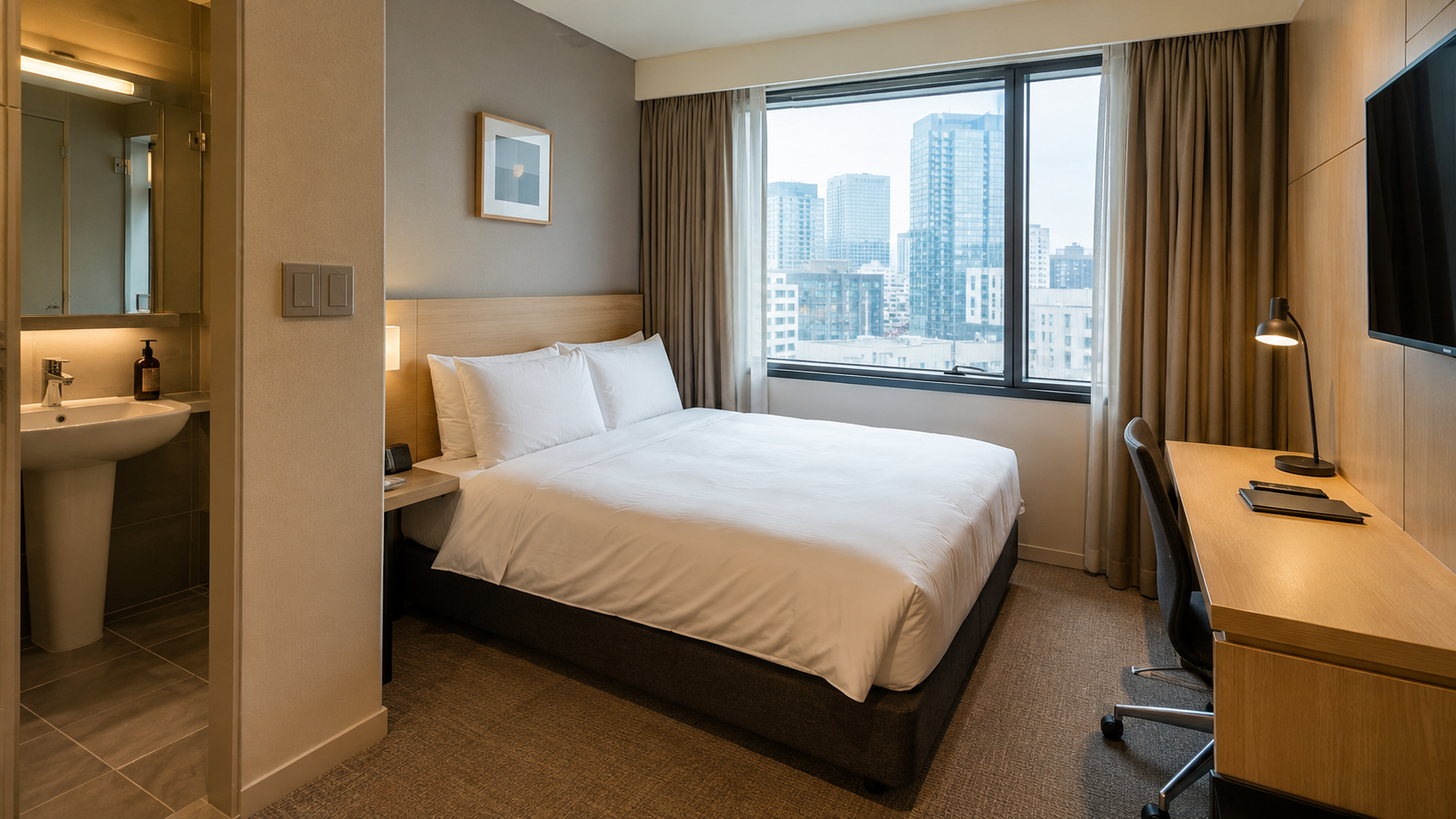
Accommodation generally determines whether a Korea trip feels inexpensive or costly. Prices can change sharply according to:
- City and neighborhood
- Weekday versus Friday or Saturday night
- Cherry blossom, autumn foliage, festival, and holiday periods
- Room size and whether breakfast is included
- Refundable versus non-refundable conditions
- How far ahead you book
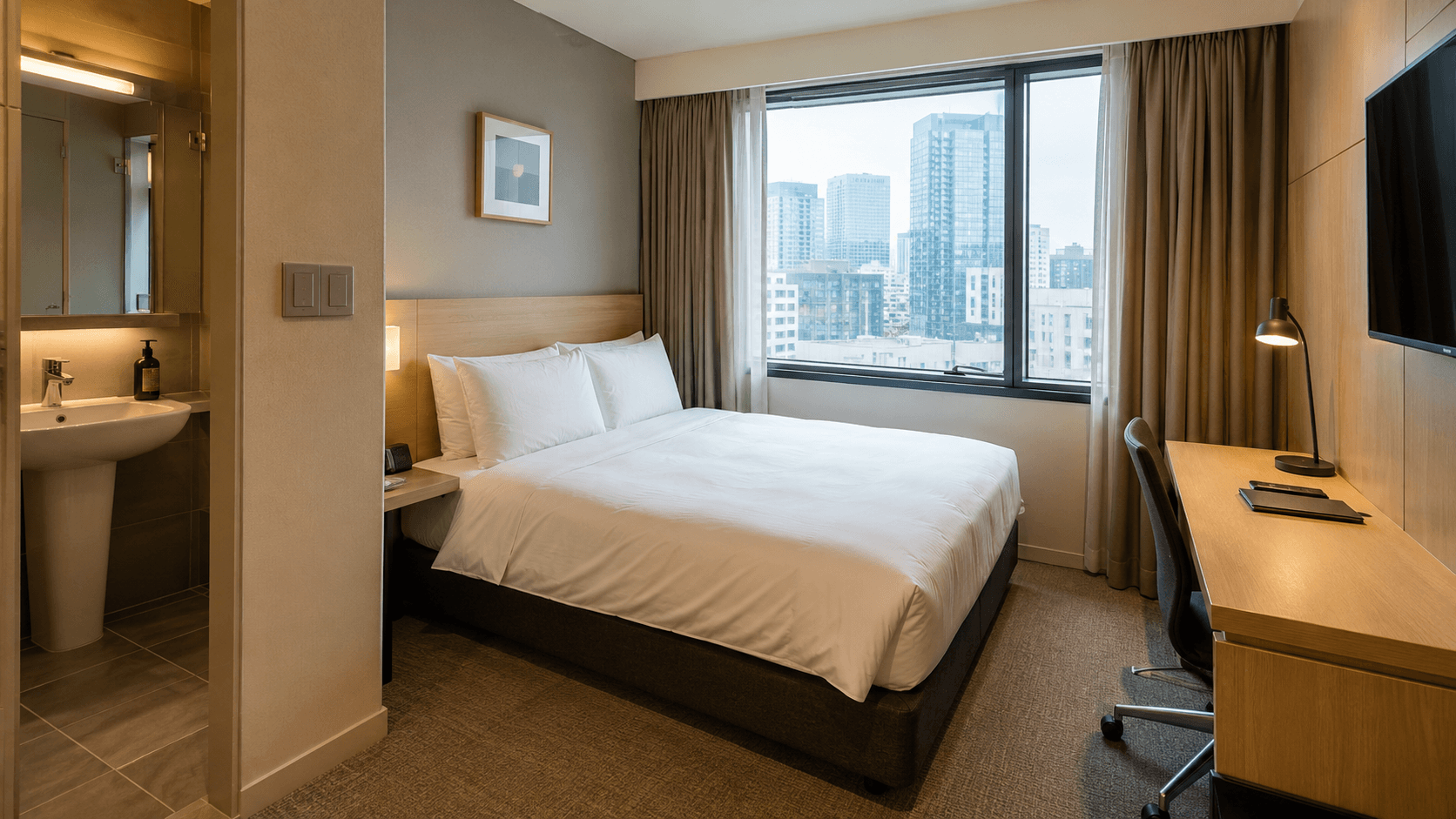
For planning purposes, hostel beds may fall around ₩25,000–₩50,000, while simple private rooms often begin around ₩60,000–₩100,000. Centrally located mid-range hotels frequently require ₩100,000–₩200,000 or more. These are editorial budgeting ranges, not guaranteed rates.
In Seoul, compare areas outside the most expensive central districts, but calculate the transport time before booking. A cheaper room that requires two long transfers every day may not represent good value.
In Busan, rooms near Haeundae and Gwangalli can rise during summer weekends and festivals. Properties around Seomyeon, Busan Station, or less central metro stops may offer better value depending on your itinerary.
Check whether the displayed price includes taxes and whether the property charges separately for breakfast, early check-in, luggage storage, or additional guests.
Food costs
Food spending can remain controlled if you eat where local workers and students eat. It increases quickly when a day includes specialty coffee, alcohol, desserts, Korean barbecue, or restaurants in major tourist districts.
A useful planning allowance is:
- Low-cost: ₩25,000–₩35,000 per day
- Moderate: ₩40,000–₩70,000 per day
- Comfortable: ₩80,000–₩140,000 or more per day
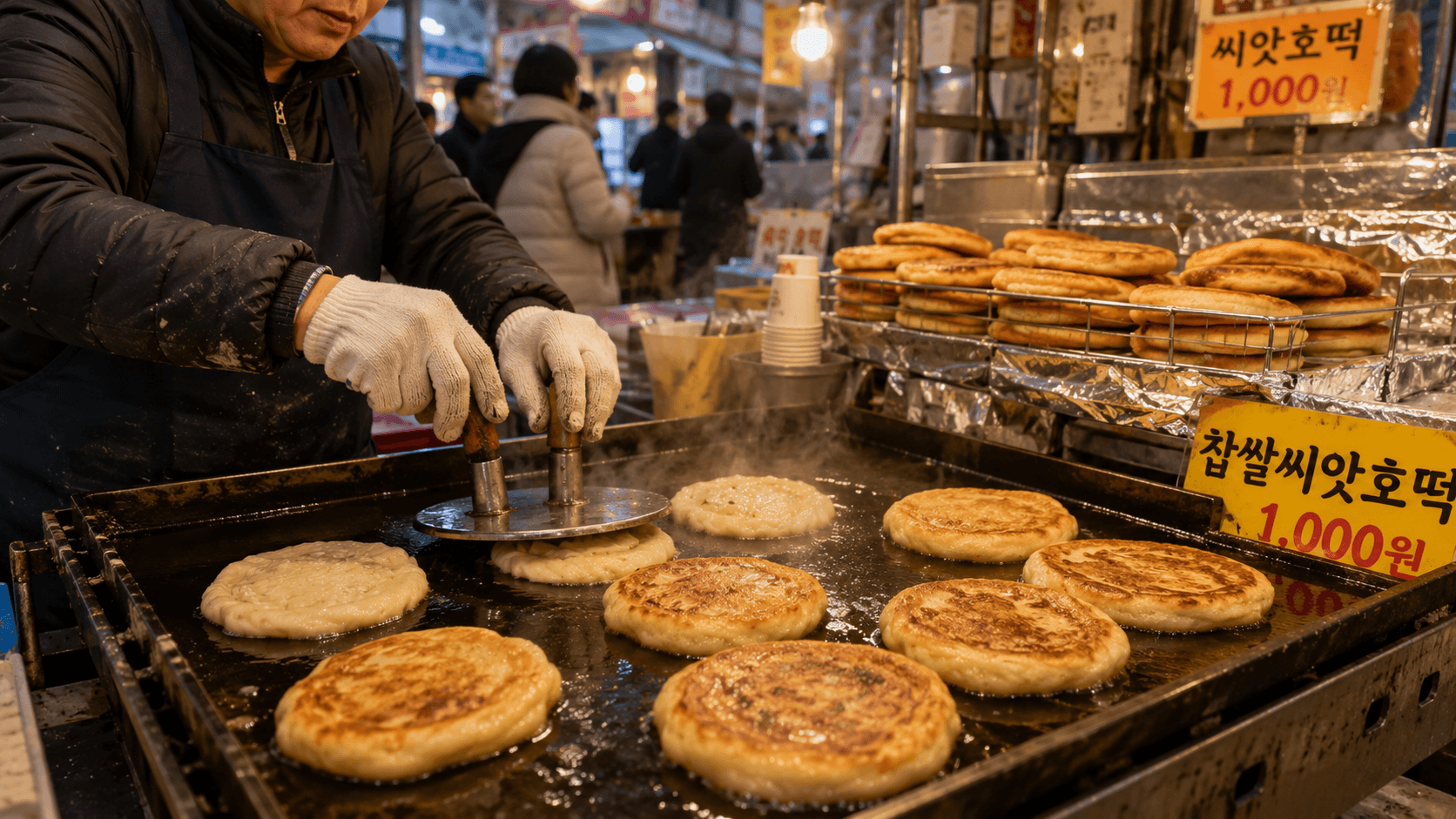
Simple dishes such as gimbap, noodles, rice bowls, soups, and convenience-store meals are usually the easiest way to control costs. Many Korean restaurants specialize in one dish, so an inexpensive restaurant is not necessarily fast food.
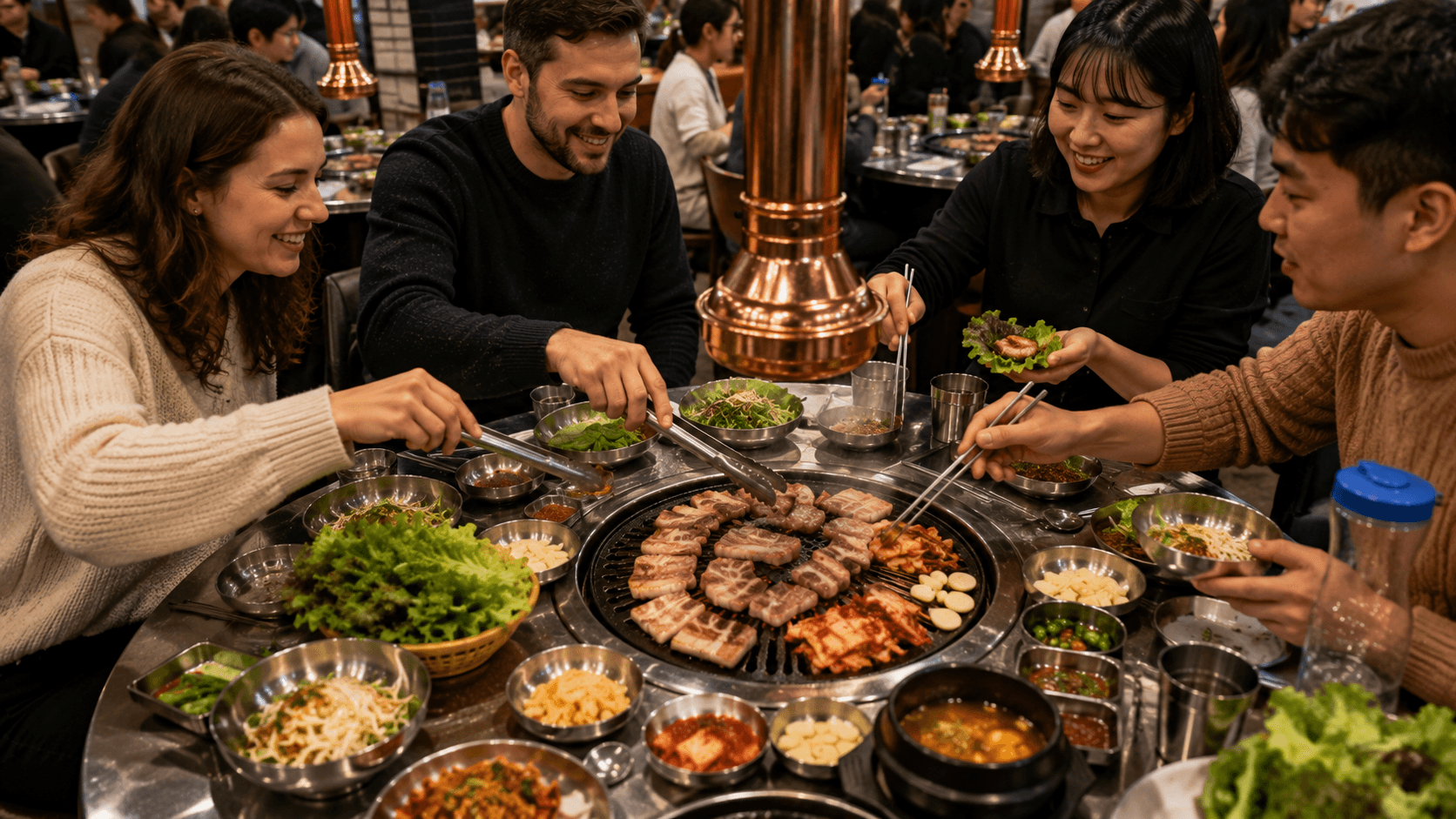
Korean barbecue and some shared dishes can be harder for solo travelers to budget. Restaurants may require two portions of meat or set a minimum order. Look for the Korean words il-inbun (1인분), meaning one portion, and i-inbun isang (2인분 이상), meaning two or more portions.
Water is commonly provided with a restaurant meal, but coffee, alcohol, desserts, and late-night snacks should be treated as separate budget categories. A traveler who buys two café drinks and an evening beer each day can easily add ₩15,000–₩30,000 to the total.
Local transportation
Public transport is one of the more predictable parts of a Korea travel budget.
Seoul subway and buses
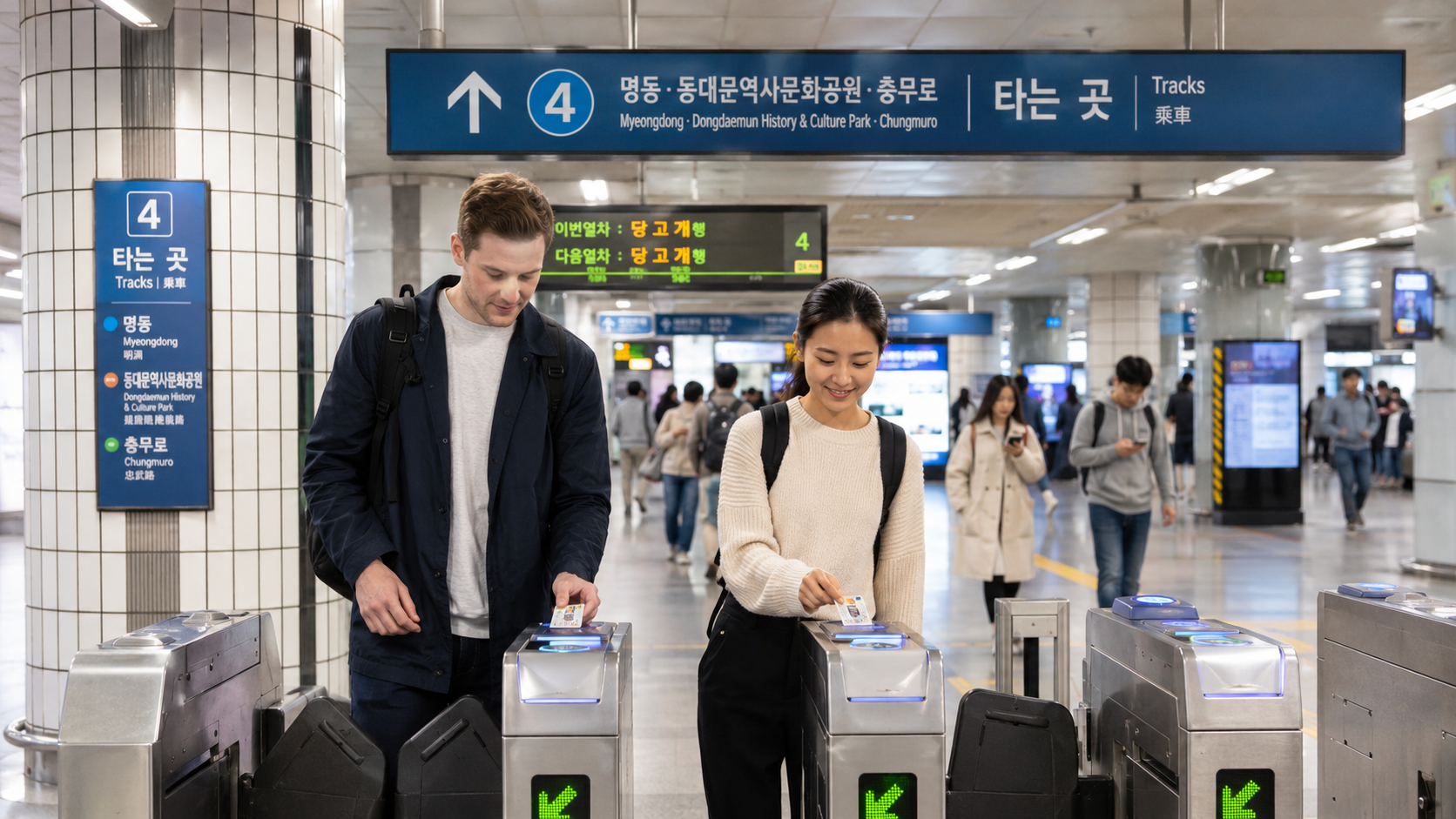
As of June 9, 2026, the adult base subway fare in Seoul is ₩1,550 with a transportation card and ₩1,650 for a single-use ticket. Longer journeys cost more. Seoul's integrated fare system can apply transfer discounts between eligible buses and subways when you tap your card correctly when boarding and leaving. See the Seoul Metropolitan Government transport fare guide.
For most sightseeing days, allow approximately ₩5,000–₩8,000 for public transport. Trips into Gyeonggi Province or repeated long-distance journeys around the metropolitan area can cost more.
A standard prepaid transportation card normally costs about ₩3,000–₩5,000, before adding travel credit. Cards such as Tmoney and EZL can be bought and recharged at participating convenience stores and transport locations. Check the Korea Tourism Organization transportation-card guide for current sales and usage information.
Seoul Climate Card
Visitors making several trips each day should compare individual fares with the Climate Card. As verified on June 9, 2026, short-term passes cost:
| Pass | Price |
|---|---|
| 1 day | ₩5,000 |
| 2 days | ₩8,000 |
| 3 days | ₩10,000 |
| 5 days | ₩15,000 |
| 7 days | ₩20,000 |
A physical card costs an additional ₩3,000. Coverage does not include every metropolitan route, airport bus, or private railway, and short-term validity starts on the day the pass is loaded. Confirm boundaries and purchasing rules on the official Seoul Climate Card page.
Do not buy a pass automatically. A ₩5,000 one-day pass only saves money if your covered journeys would otherwise exceed that amount.
Busan transport
Busan's adult city-bus fare is ₩1,550 by transportation card or ₩1,700 in cash, according to the Busan Metropolitan Government public transportation guide, verified June 9, 2026. Cash passengers do not receive the same transfer benefits.
A daily allowance of ₩5,000–₩10,000 is reasonable for ordinary metro and bus sightseeing. Coastal destinations can be far apart, so a day linking several districts may require more travel than a compact Seoul itinerary.
Taxis
Seoul's standard daytime taxi base fare is ₩4,800 for the first 1.6 kilometers, verified June 9, 2026. Distance, slow traffic, late-night surcharges, and travel outside Seoul increase the total. Current meter rules are listed on the official Seoul taxi fare page.
Taxis can be good value for three or four people sharing a short ride. For a solo traveler, several taxi journeys can add ₩30,000–₩60,000 to the day surprisingly quickly.
Attractions and activities
Korea offers a useful mix of free public spaces, inexpensive heritage sites, and premium commercial attractions.
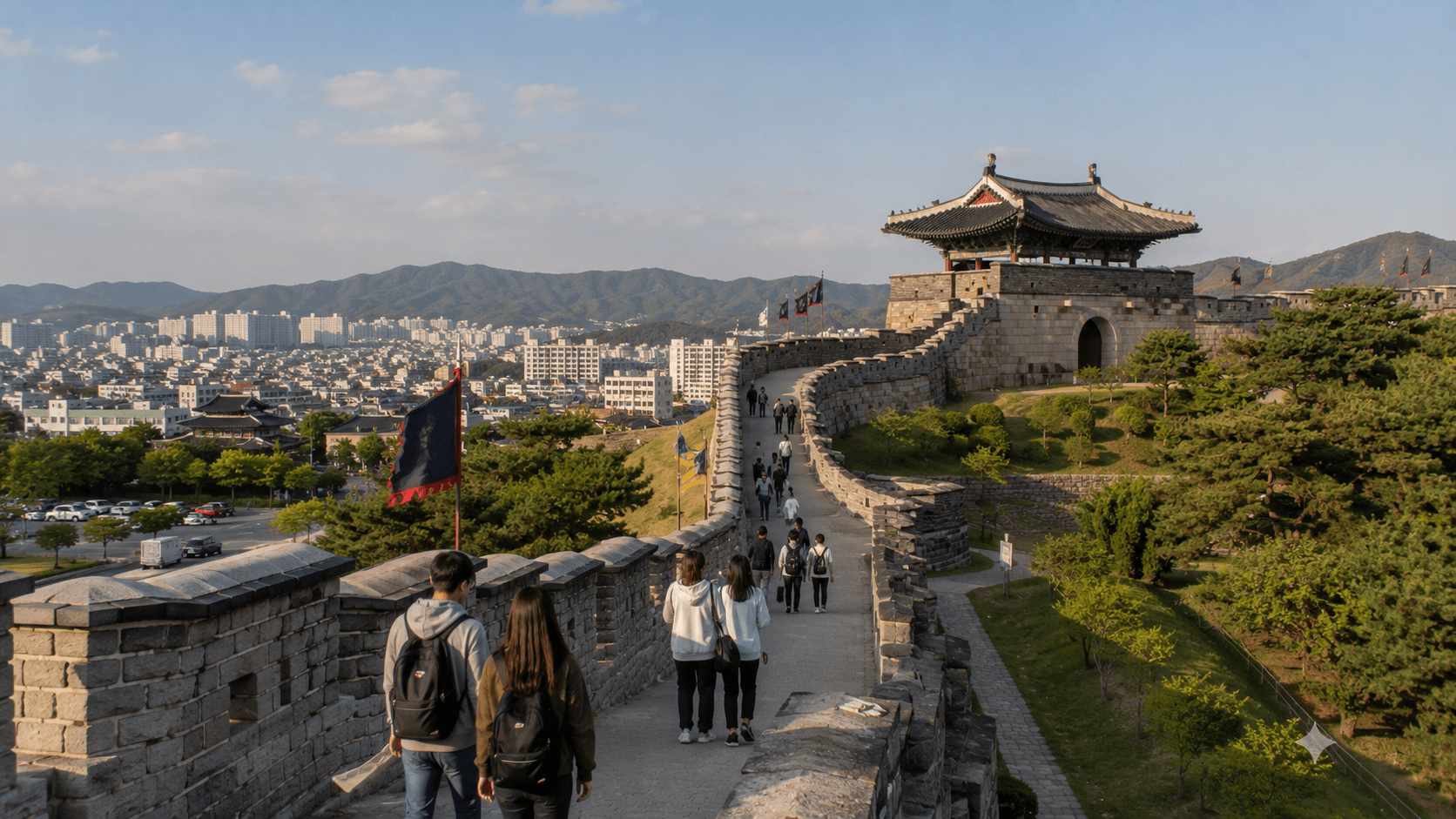
Gyeongbokgung Palace in Seoul charges ₩3,000 for adults aged 19–64, verified June 9, 2026. A combination ticket covering the major royal palaces and Jongmyo Shrine costs ₩10,000 and is valid for one admission to each included site within three months. Check the official Gyeongbokgung hours and admission page before visiting.
Many parks, markets, neighborhoods, temples, hiking routes, and riverside areas have no general admission charge. Commercial observation decks, theme parks, performances, guided tours, workshops, and cable cars cost considerably more.
A practical attraction allowance is:
- Free-focused day: ₩0–₩5,000
- One or two standard attractions: ₩10,000–₩30,000
- Premium activity day: ₩40,000–₩100,000 or more
Reserve a separate amount for bookable activities rather than forcing them into the ordinary daily allowance.
Costs that should not be hidden inside the daily budget
Some expenses occur only once or on particular travel days. Calculate them separately:
- Airport transport
- KTX, SRT, intercity bus, ferry, or domestic flight tickets
- SIM card, eSIM, or portable Wi-Fi
- Travel insurance
- Shopping and cosmetics
- Nightlife and alcohol
- Theme parks and ticketed performances
- Luggage delivery or storage
- Rental cars, fuel, tolls, and parking
For example, Airport Limousine buses between Incheon International Airport and central Seoul charge ₩17,000 for a direct adult ticket on the operator's listed routes, verified June 9, 2026. Fares and boarding procedures vary by route and terminal; consult the official Airport Limousine fare page.
For intercity trains, search your actual route and date through the official KORAIL booking site. Train frequency and prices depend on the service, station pair, and seat class, so an old generic fare table is not reliable enough for trip budgeting.
Sample seven-day Korea budgets
The following examples exclude international flights and shopping.
| Style | Daily estimate | Seven days | Add for airport and intercity travel |
|---|---|---|---|
| Shoestring | ₩90,000 | ₩630,000 | At least ₩50,000–₩150,000 |
| Mid-range | ₩200,000 | ₩1,400,000 | At least ₩100,000–₩250,000 |
| Comfortable | ₩400,000 | ₩2,800,000 | Depends on route and service level |
These calculations are deliberately simple. A Seoul-only trip normally has lower transport costs than an itinerary covering Seoul, Gyeongju, Busan, and Jeju.
How to reduce your daily cost
- Compare the total accommodation price. Include taxes, breakfast, cancellation terms, and transport from the hotel.
- Stay near a useful subway line. A convenient location can reduce both taxi spending and lost time.
- Use a transportation card. It is simpler than buying individual tickets and can provide eligible transfer discounts.
- Group nearby sights. Crossing Seoul or Busan repeatedly wastes money and time.
- Make lunch the main restaurant meal. Keep dinner simple on days when you have already spent heavily on cafés or activities.
- Alternate paid and free attractions. A palace, museum, neighborhood walk, and riverside evening can fill a day without a large admission budget.
- Treat shopping separately. Otherwise, skincare, clothing, and souvenirs make the daily travel figure meaningless.
- Keep a contingency fund. Add approximately 10–15% for weather changes, missed connections, luggage storage, or an unexpected taxi.
Payment tips for newcomers
International credit and debit cards are widely useful, but acceptance is not universal. Keep some KRW cash for transportation-card recharging, traditional markets, small businesses, or machines that reject foreign cards.
Tell your bank that you will be traveling and check foreign transaction and ATM fees. When a payment terminal offers conversion into your home currency, compare the rate and fees before accepting it.
Do not store your full travel budget on a transportation or prepaid card. Refund rules and locations vary, and recovering a large unused balance can be inconvenient.
What to check before you go
- Search accommodation using your exact dates, including Friday and Saturday nights.
- Confirm whether the room price includes taxes and breakfast.
- Check the latest subway, bus, and airport fares.
- Price every intercity journey separately on the official operator's site.
- Check attraction closure days and reservation requirements.
- Confirm whether your transport pass covers the airport and suburban stations.
- Carry at least two payment methods and a modest amount of KRW cash.
- Add a 10–15% contingency allowance.
Start by booking accommodation and pricing your intercity route. Once those two figures are known, use ₩40,000–₩80,000 per day for ordinary food, local transport, and sightseeing, then adjust upward for cafés, nightlife, taxis, and premium activities.
Sources
- Seoul Metropolitan Government: Bus and subway fares
- Seoul Metropolitan Government: Climate Card
- Seoul Metropolitan Government: Taxi fares
- Busan Metropolitan Government: Public transportation
- Korea Tourism Organization: Transportation cards
- Gyeongbokgung Palace: Hours and admission
- Airport Limousine: Official fares
- KORAIL: Official train booking