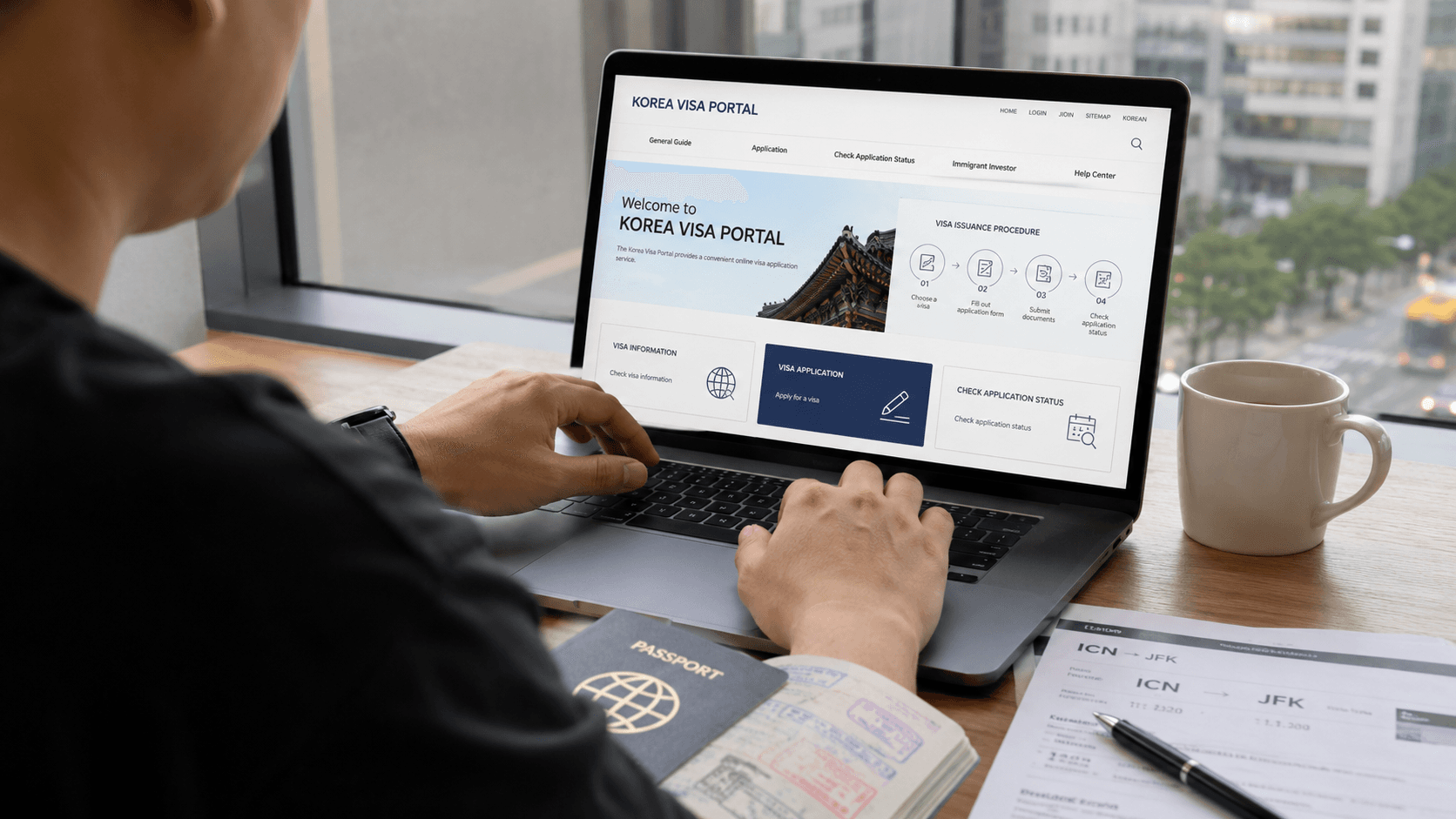
The short answer is: it depends on your passport, the purpose of your visit, and how long you plan to stay. Some travelers can enter South Korea without a visa for a short holiday or business visit. Others need a visa before departure, and visa-free entry generally does not permit employment or long-term study.
Entry rules can change and may differ even between travelers living in the same country. The information below was verified on June 9, 2026. Confirm your individual status through the official Korea Visa Portal and the Korean embassy or consulate responsible for your place of residence before booking non-refundable travel.
Quick answer
| Your situation | What you will usually need |
|---|---|
| Short holiday with a visa-exempt passport | Passport, plus K-ETA if your nationality is not currently exempt from K-ETA |
| Short holiday with a passport that is not visa-exempt | Short-term visitor or tourist visa issued before travel |
| Paid work, including most teaching and professional employment | Appropriate work visa |
| University study or a long-term language program | Appropriate student or training visa |
| Joining a spouse or family member for long-term residence | Visa matching your family relationship and circumstances |
| Airport connection without entering Korea | Possibly no Korean entry document, but this depends on your itinerary and whether you pass immigration |
A visa, a K-ETA, and an arrival card are different documents. Having one does not automatically replace the others.
Step 1: Check your passport nationality
Korea's entry rules are based primarily on the passport you will use to travel, not simply your country of residence, birthplace, or departure airport.
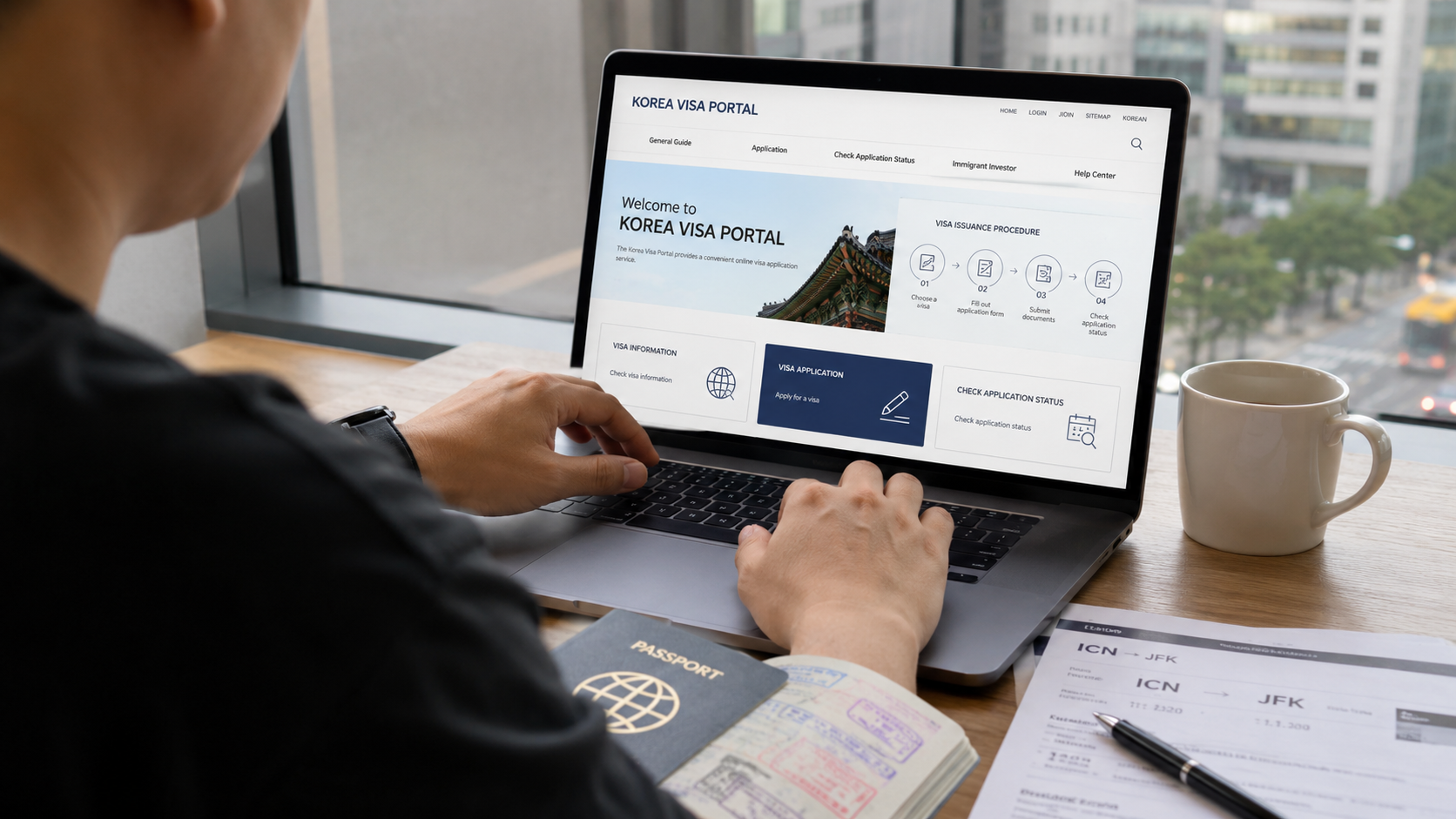
Use the Visa Navigator on the Korea Visa Portal and enter:
- Your continent and passport nationality or region.
- Your purpose of entry.
- Your intended length of stay.
- The relevant visa or visa-free category shown in the results.
Visa-free periods are not identical for every nationality. Do not assume that a friend's 90-day allowance applies to you. For example, the Korean Embassy in Canada states that Canadian passport holders may make qualifying short visits for up to 180 days, while other nationalities may receive shorter periods.
The period you are actually permitted to remain is determined under Korean immigration rules and confirmed during entry inspection. A visa exemption allows you to travel without obtaining a visa in advance; it does not guarantee admission.
Dual nationals
If you have two passports, check the rules for the passport you intend to present when checking in and entering Korea. Use the same passport consistently for your booking, K-ETA application if required, arrival declaration, and immigration inspection.
Travelers who also hold Korean nationality may be subject to different documentation rules and should consult a Korean embassy or consulate.
Step 2: Check whether your activity is allowed without a visa
Visa-free entry is generally designed for short visits such as:
- Tourism
- Visiting friends or relatives
- Attending meetings or events
- Certain unpaid or limited business activities
- Transit that requires entry into Korea, when the traveler qualifies
It should not be treated as permission to take paid employment. If you will teach, perform, provide services, receive remuneration, undertake long-term study, or work for a Korean organization, check the correct status before traveling.
The official Visa Portal lists separate categories for short-term employment, study, language training, professional work, working holidays, family residence, and other purposes. The correct category depends on what you will actually do, not what you call the trip.
Exchange students and degree students normally need a student status arranged with their university. Participants in a short recreational class while visiting as tourists are in a different position from students enrolling in a formal semester or long-term course.
Step 3: Understand K-ETA
The Korea Electronic Travel Authorization, or K-ETA, is an electronic travel authorization for eligible travelers entering without a visa. It is not a visa.
As verified on June 9, 2026, nationals who are currently covered by Korea's temporary K-ETA exemption remain exempt through December 31, 2026, Korea Standard Time. The extension is confirmed in the Korean government's official K-ETA exemption notice.
The exemption does not cover every visa-free nationality. Check your passport directly on the official K-ETA website. When an exempt nationality is selected, the system should display an exemption message.
If you are not K-ETA-exempt
Eligible visa-free travelers who remain subject to K-ETA must receive approval before boarding a flight or ship to Korea. According to the official K-ETA application guide, as verified on June 9, 2026:
- The application fee is KRW 10,000, plus a separate online payment charge.
- The fee is non-refundable, including when authorization is refused.
- Assessment usually takes no more than 72 hours but can take longer.
- There is no official expedited assessment service.
Apply early rather than waiting until check-in. Use only k-eta.go.kr or the official K-ETA mobile application. Commercial sites may charge substantially higher service fees and cannot guarantee approval.
Should an exempt traveler apply voluntarily?
A traveler covered by the temporary exemption can still apply and pay for K-ETA. One practical benefit is that a traveler holding a valid K-ETA is generally exempt from submitting an arrival card.
For most occasional visitors, completing the free e-Arrival Card instead will be the simpler option. Voluntary K-ETA approval does not provide a longer visa-free stay or permission to work.
Step 4: Complete the arrival declaration if required
Most foreign visitors who do not hold a valid K-ETA must submit an arrival declaration. Important exemptions include registered foreign residents, valid K-ETA holders, and certain crew members.
Korea's free e-Arrival Card can be submitted online from three days before arrival. The Korea Immigration Service's e-Arrival Card guidance says that the declaration requests information including:
- Passport details
- Arrival and departure information
- Purpose of entry
- Address and contact details in Korea
- Occupation information
A submitted declaration remains valid for 72 hours. Have your first accommodation's Korean address and telephone number ready before starting.
Use only the official e-Arrival Card website. The Korea Immigration Service warned in March 2026 that imitation sites were requesting payment information. The official service is free.
When you definitely need to investigate a visa
Do not rely on ordinary tourist entry if you intend to:
- Work or receive payment in Korea
- Teach, perform, model, film commercially, or provide professional services
- Study at a university or attend a long-term language program
- Stay beyond your nationality's visa-free allowance
- Join a spouse or family member for residence
- Undertake an internship, placement, or training program
- Move to Korea under an employer's sponsorship
- Enter using a passport that is not eligible for visa-free admission
The exact visa category and required evidence vary. An employer, university, or sponsor in Korea may need to complete part of the process, including applying for a confirmation of visa issuance in eligible cases.
How to apply when a visa is required
1. Identify the correct category
Start with the Korea Visa Portal. Common categories include short-term general visits, tourism, short-term employment, university study, language training, professional employment, and working holidays.
Do not select a tourist category merely because it appears easier. A mismatch between the application and your actual activity can result in refusal or problems at the border.
2. Find the responsible diplomatic mission
Visa applications are handled by Korean embassies, consulates, or authorized visa application centers. Jurisdiction is often based on where you legally reside.
Requirements can differ by mission because local document procedures, appointment systems, accepted payment methods, and processing volumes vary. Use the website of the specific Korean mission responsible for your address.
3. Follow its current checklist
Documents may include a passport, application form, photograph, proof of legal residence, itinerary, financial evidence, accommodation details, invitation documents, school admission papers, or employment documents.
The Visa Portal's e-Form guidance explains that completing an online form does not necessarily finish the application. For applicable categories, applicants must print the barcoded form and submit it with the required documents to the diplomatic mission.
4. Allow enough processing time
There is no single worldwide processing period. Timelines can change according to nationality, visa type, location, season, and whether additional review is needed. One embassy's published estimate should not be applied to another country.
Check the mission's current notice immediately before applying. Avoid buying non-refundable tickets until you understand its requirements and risks.
Transit through a Korean airport
You may not need to enter Korea if your bags are checked through, you already hold the onward boarding pass, and your connection remains in the international transit area. Confirm this arrangement with your airline because separate tickets, baggage collection, terminal changes, overnight arrangements, or airline procedures may require you to pass immigration.
Passing immigration means you must qualify to enter Korea, either through visa-free admission, an applicable transit arrangement, or a visa. Korea has special rules for certain third-country transit passengers, but eligibility includes detailed conditions and exclusions. The official transit guidance published by a Korean consulate advises travelers to review the conditions and contact Korean immigration when uncertain.
Do not assume that holding a visa for the United States, Canada, Australia, or New Zealand automatically permits entry into Korea. Your route, destination, nationality, and document validity all matter.
What immigration officers may ask for
Even when you qualify for visa-free entry or hold a visa, be ready to show:
- A valid passport
- K-ETA approval, if required
- Your return or onward itinerary
- Accommodation details and a Korean contact number
- A clear explanation of your visit
- Evidence that you can support yourself during the trip, if requested
- Documents relating to a conference, family visit, course, or business meeting, when relevant
Keep these details accessible during airline check-in and arrival. Screenshots or offline copies are useful when airport Wi-Fi or roaming is unavailable.
Common mistakes
Confusing K-ETA with a visa
K-ETA is for eligible visa-free travelers. It does not turn an ineligible passport into a visa-exempt passport and does not authorize employment.
Checking residence instead of nationality
A person living in the United States with a non-US passport must check the rules for that passport. A residence card or foreign visa may be relevant in limited transit situations but does not normally change the passport's basic tourist-entry status.
Using an unofficial application website
Use only the official Korea Visa Portal, K-ETA site, e-Arrival Card site, or a Korean diplomatic mission's website. Be cautious when a site advertises guaranteed approval, urgent K-ETA processing, or a paid arrival card.
Assuming a previous trip guarantees the same rules
K-ETA exemptions, visa-waiver arrangements, and administrative procedures can change. Check again before every trip, especially if you renewed your passport or changed your purpose of travel.
Booking before checking processing rules
Visa appointments and processing periods vary by diplomatic mission. Confirm the procedure before committing to flights, accommodation, tuition, or employment start dates.
What to check before you go
Complete this checklist before departure:
- Check your passport nationality in the official Visa Navigator.
- Confirm that your planned activities are permitted under visa-free entry or your visa category.
- Check your permitted length of stay.
- Confirm whether your nationality requires K-ETA on your travel date.
- Apply early if K-ETA is required.
- Submit the free e-Arrival Card if you are required to do so.
- Verify that your passport meets your airline's and Korean mission's validity requirements.
- Prepare your accommodation address and contact number in Korea.
- Keep onward-travel and supporting documents accessible.
- Recheck official notices shortly before departure.
Frequently asked questions
Do US citizens need a visa for South Korea?
US passport holders generally do not need a visa for a qualifying short visit, but the permitted activity and period still matter. As verified on June 9, 2026, US citizens are included in the temporary K-ETA exemption through December 31, 2026. Travelers planning work, study, or a longer stay must investigate the relevant visa.
Do UK, EU, Australian, or Canadian citizens need a visa?
Many passports from these places qualify for short visa-free visits, but rules and permitted periods are not uniform. Check the exact passport nationality through the Visa Navigator. Do not treat regional citizenship or residency as a single immigration category.
Is K-ETA the same as an e-Arrival Card?
No. K-ETA is advance travel authorization for eligible visa-free passengers. The e-Arrival Card is an arrival declaration. A valid K-ETA generally exempts its holder from filing an arrival card.
Can I work remotely while visiting Korea as a tourist?
Do not assume ordinary tourist entry covers remote work. The answer can depend on the nature, duration, employer, clients, and income-generating activity. Korea also has separate work-related and digital-nomad provisions with specific requirements. Seek current guidance from a Korean diplomatic mission or the Immigration Contact Center rather than relying on informal online advice.
Who can answer a complicated case?
The Korea Immigration Service operates the multilingual Immigration Contact Center. As verified on June 9, 2026, it is available on weekdays from 09:00 to 22:00 Korea Standard Time; after 18:00, service is limited to Korean, English, and Chinese. Dial 1345 within Korea or use the international contact details published on its official page.
Your practical next step is to open the official Visa Navigator with your passport and itinerary in front of you. Check nationality, purpose, and length of stay together, then confirm any application instructions with the Korean embassy or consulate responsible for where you live.
Sources
- Korea Visa Portal and Visa Navigator
- Official Korea Electronic Travel Authorization website
- K-ETA application and fee guidance
- Official notice extending temporary K-ETA exemptions through 2026
- Korea Immigration Service e-Arrival Card guidance
- Official Korea e-Arrival Card service
- Korea Immigration Contact Center