Hongdae is one of Seoul’s easiest neighborhoods for browsing independent fashion, Korean beauty products, accessories, character goods and temporary pop-up stores in one trip. The shopping district is spread across several streets rather than concentrated in a single mall, so the most useful strategy is to choose a starting zone and explore on foot.
Information on transport and tourist tax refunds was checked on June 11, 2026. Individual shop hours, prices and pop-up schedules change frequently; confirm them through the shop’s official website or social-media account before making a special journey.
At a glance
| Question | Practical answer |
|---|---|
| Best station | Hongik University Station (홍대입구역) |
| Best time to start | Early afternoon, when more independent shops are open |
| Busiest period | Friday and Saturday evenings |
| Main purchases | Street fashion, cosmetics, accessories, stationery and character goods |
| Payment | Cards are widely accepted, but carry some cash for small stalls |
| Tax refund | Available only at participating stores and for eligible purchases |
| Time needed | About three hours for the central streets; half a day with Yeonnam-dong or Hapjeong |
Understanding the Hongdae shopping area
“Hongdae” is short for Hongik Daehakgyo (홍익대학교), or Hongik University. In everyday use, however, the name describes a much larger commercial area extending around Hongik University Station, the university entrance, Sangsu and parts of Yeonnam-dong and Hapjeong.
There is no single entrance or central shopping avenue. The area includes busy pedestrian streets, basement boutiques, multi-brand fashion stores, cosmetics chains, malls, cafés and quieter residential alleys. Shops can also disappear or relocate quickly, particularly pop-ups and small independent boutiques.
For navigation, search using Korean place names where possible:
- Hongik University Station: 홍대입구역
- Hongik University: 홍익대학교
- Hongdae Red Road: 홍대 레드로드
- Yeonnam-dong: 연남동
- Hapjeong Station: 합정역
- Sangsu Station: 상수역
KakaoMap and Naver Map generally provide more useful local listings than relying only on street addresses. Check the most recent visitor reviews as well as the business’s official account, since an old map entry does not always mean a shop is still operating.
Where to start
Hongik University Station and the main streets
Hongik University Station connects Seoul Subway Line 2, the Gyeongui–Jungang Line and the AREX airport railway. Only AREX all-stop trains serve Hongik University Station; AREX Express trains run directly between the airport and Seoul Station. Check current airport-rail information through the official AREX website. This transport information was verified on June 11, 2026.
Exits 8 and 9 place you near the busiest commercial streets. This is the most convenient starting point for first-time visitors, but Exit 9 and its surroundings can become extremely crowded. Travelers with large suitcases, wheelchairs or strollers may find another accessible exit more comfortable; use the station map or ask station staff for the nearest elevator.
Near the station, expect large fashion and cosmetics retailers, photo booths, accessory stores, character merchandise and shops aimed at international visitors. This section is convenient but not necessarily the cheapest. Compare prices before buying common cosmetics or mass-produced souvenirs.
Hongdae Red Road and Eoulmadang-ro
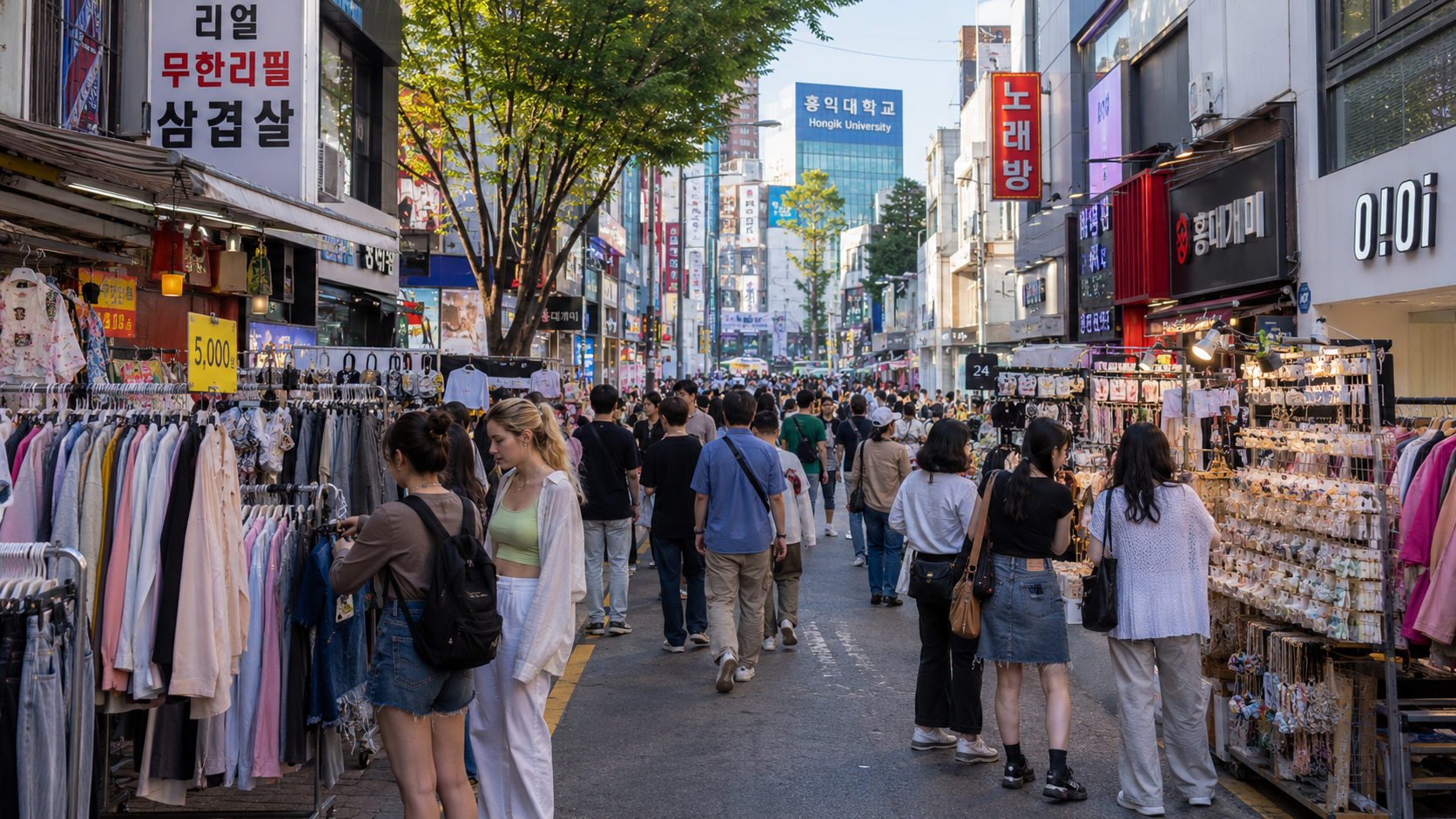
The streets leading toward Hongik University form Hongdae’s liveliest shopping and entertainment zone. Map searches for Hongdae Red Road or Eoulmadang-ro (어울마당로) will bring you into the central area.
This is a useful place to browse:
- Affordable Korean street fashion
- Baseball caps, bags and jewelry
- Phone cases and small electronics accessories
- Cosmetics and colored contact-lens shops
- K-pop and character merchandise
- Self-photo studios and personalized gifts
The main route can feel repetitive because several stores carry similar products. Check fabric labels, stitching, return conditions and country of manufacture instead of assuming every item is made in Korea.
Streets closer to Hongik University
The lanes nearer the university entrance contain smaller clothing stores, art-related businesses and casual accessories. Some shops occupy upper floors or basements and may be easy to miss. Look for vertical signboards beside building entrances, but avoid entering premises that do not clearly display a business name and prices.
Independent shops often open later than department stores and may close on an irregular weekday. Early afternoon is usually a more practical starting time than morning, but no single schedule applies throughout Hongdae.
Yeonnam-dong
North of the station, Yeonnam-dong offers a quieter alternative to central Hongdae. The area around Gyeongui Line Forest Park contains cafés, stationery stores, gift shops, lifestyle boutiques and small fashion businesses. The park was developed along the former Gyeongui railway corridor and provides an easy walking reference through the neighborhood.
Yeonnam-dong is better for slow browsing than bargain hunting. Stores are scattered through side streets, so allow more time and expect to walk farther between stops. Residential buildings are mixed among commercial properties; keep noise down and do not enter private courtyards while looking for shops.
Hapjeong and Sangsu
Continue south toward Hapjeong for larger retail complexes and a more conventional indoor shopping experience. This can be useful during heavy rain, extreme heat or winter cold. The lanes between Hongdae, Sangsu and Hapjeong also contain select shops and small fashion labels, although they are less densely packed than the streets near Hongik University Station.
Hapjeong Station is served by Lines 2 and 6, while Sangsu Station is on Line 6. Either can provide a less crowded departure point after walking through Hongdae.
What to shop for
Korean fashion
Hongdae is particularly useful for casual clothing: oversized shirts, denim, knitwear, cargo trousers, dresses, caps and seasonal outerwear. The selection generally favors current youth-oriented styles rather than formal clothing or luxury labels.
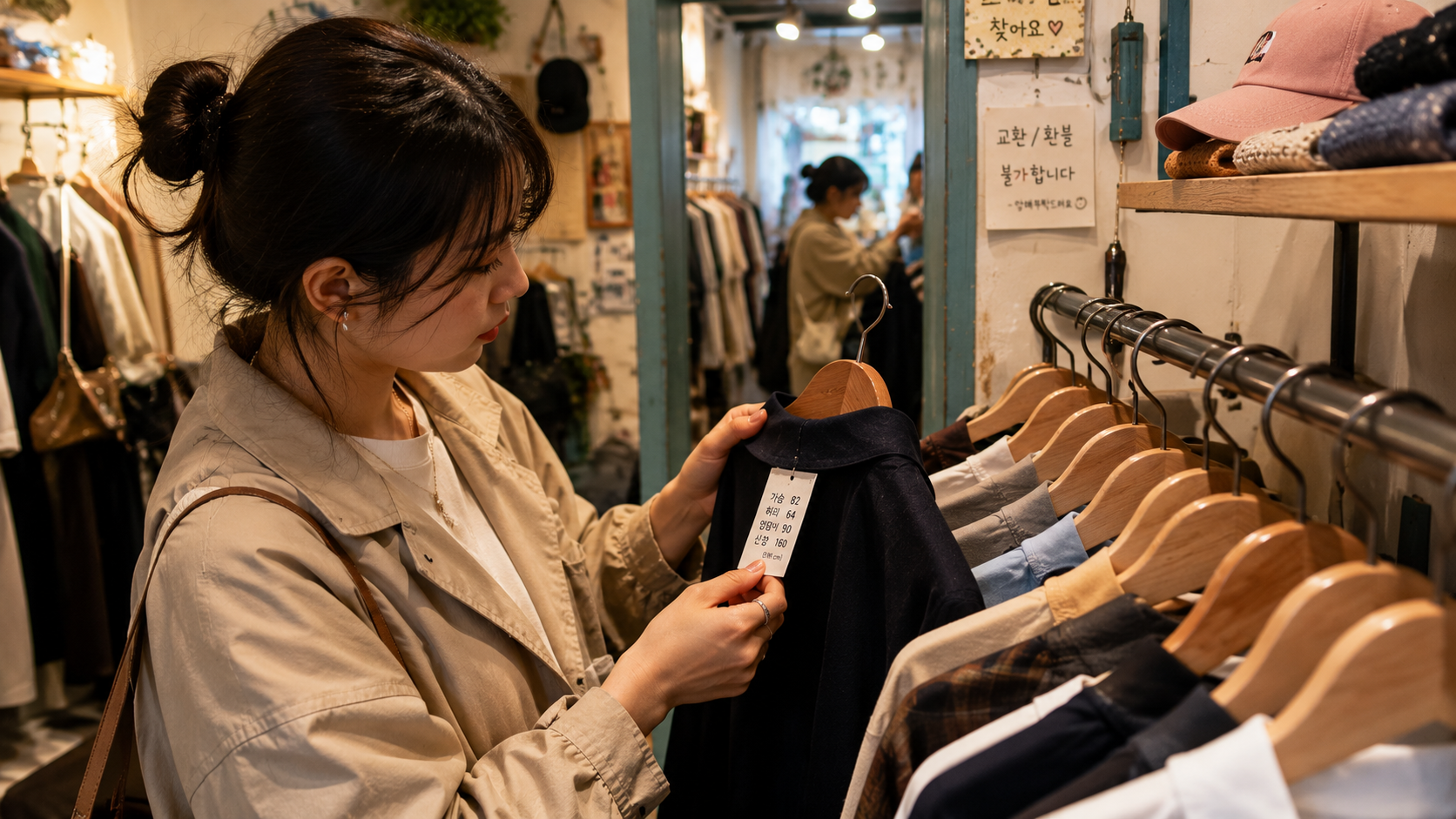
Sizing requires attention. Some small boutiques sell garments in a single “free size,” which is not a standardized measurement and does not mean the item fits everyone. Ask for measurements in centimeters and compare them with clothing you already own. Fitting rooms may be limited, and some stores do not allow white garments, sale items or delicate fabrics to be tried on.
Before paying, check:
- Whether the item is free size or offered in numbered sizes
- Whether fitting is allowed
- The fabric and care label
- Whether sale items can be exchanged
- Whether the same design comes in several qualities or fabrics
Returns based on a change of mind may be difficult once you leave Korea. Keep the receipt and inspect zippers, buttons and seams before leaving the shop.
Vintage and secondhand clothing
Vintage shops are distributed around Hongdae, Sangsu and Yeonnam-dong. Stock can include imported sportswear, denim, military-inspired pieces and reconstructed clothing. “Vintage” does not always mean inexpensive: curated or rare items may cost more than new mass-market clothes.
Check for stains, odors, damaged fasteners and altered sizing. Confirm whether bags and branded goods have been authenticated; do not assume authenticity unless the seller provides a clear guarantee and supporting documentation.
K-beauty products
Hongdae has both large beauty retailers and individual brand shops. Larger multi-brand stores are convenient for comparing sunscreen, sheet masks, cleansers and makeup in one place. Brand shops may offer exclusive sets or samples, but promotional bundles are not automatically cheaper per item.
Read the shelf label carefully. Similar packaging may represent different shades, skin types or product volumes. For skincare, check the ingredient list and stop using a product if irritation occurs. Staff can explain products, but their guidance should not replace advice from a qualified medical professional, particularly if you have allergies or a skin condition.
When buying liquids for a flight, remember your airline and airport-security restrictions. Place larger liquid containers in checked baggage unless they qualify under the applicable cabin-baggage rules.
Accessories, stationery and gifts
Hongdae is a practical place to buy lightweight gifts such as socks, key rings, stickers, notebooks, hair accessories and phone charms. Yeonnam-dong tends to have more design-led stationery and small lifestyle objects, while the central streets have a larger selection of inexpensive trend items.
For handmade goods, ask whether the seller designed or produced the item. Some stalls mix original work with wholesale merchandise. If originality matters, look for an artist name, product information or an official online account.
K-pop and character merchandise
Album shops and merchandise stores may carry current releases, older albums, light sticks, photocards and fan-made goods. Official and unofficial products can be displayed close together, so ask directly if authenticity matters.
For light sticks or electronic merchandise, confirm that the model is compatible with the relevant app or concert system. Request a receipt and check the shop’s exchange policy before opening sealed packaging. Concert venues may reject unofficial products even if they look similar to official versions.
Pop-up stores
Hongdae regularly hosts short-term brand, animation and entertainment pop-ups. These may require advance booking, a numbered waiting ticket or registration through a Korean app. Others allow walk-ins but close the queue early when capacity is reached.
Treat every pop-up as a separate event. Verify its dates, admission rules, purchase limits and identification requirements through the organizer’s official account. Reposted images and old blog articles frequently remain online after an event has ended.
A practical half-day route
Step 1: Begin near Hongik University Station
Arrive in the early afternoon and start around Exits 8 or 9. Visit major cosmetics or fashion stores first if you want easy comparisons, tax-refund services or a place to orient yourself.
Step 2: Walk toward Hongik University
Follow the main shopping streets toward the university, exploring side lanes when a store interests you. Photograph the building entrance or save the map location if you plan to return; similar-looking streets can make shops difficult to find again.
Step 3: Continue toward Sangsu or loop back north
Choose Sangsu for more clothing and a quieter departure, or return toward the station and cross into Yeonnam-dong for stationery, gifts and cafés. Trying to cover both directions in a short visit can lead to unnecessary backtracking.
Step 4: Make final purchases after comparing
Common cosmetics, accessories and souvenir items often appear in several stores. Save larger purchases until you have checked prices, sizes and refund eligibility. For tax-refund purchases, keep the product, receipt and related paperwork together.
Payment and tourist tax refunds
Major shops generally accept Korean and international payment cards, but acceptance depends on the store and card network. A foreign card can occasionally fail because of issuer security settings or terminal compatibility. Carry a backup card and a modest amount of KRW cash, especially for small stalls.
Eligible short-term foreign visitors can receive a tax refund only from participating retailers displaying a tax-refund or tax-free sign. According to the Korea Tourism Organization’s duty-free and tax-refund guide, the minimum qualifying purchase is KRW 15,000, eligible goods must be new and unused, and the traveler must leave Korea within three months of purchase. The KTO page was last updated on October 21, 2025 and was checked for this guide on June 11, 2026.
Immediate refunds are available at selected stores under separate transaction and total-purchase limits. Present your passport before payment and ask whether the refund is immediate or must be completed later. Keep the goods available in case customs requests an inspection before departure. Rules and airport procedures can change, so consult the KTO guide and the Korea Customs Service traveler information before your flight.
A “tax-free” sign does not mean every customer or every purchase qualifies. Students and long-term residents should check the eligibility conditions rather than assuming that a foreign passport is sufficient.
Luggage and accessibility
Hongdae’s station complex is large, and some transfers involve long corridors. The commercial streets also have slopes, uneven paving and crowded pedestrian areas. Many small boutiques are located in basements or upper floors without an obvious elevator.
For a more manageable visit:
- Avoid bringing airport-sized luggage onto the busiest streets.
- Confirm locker dimensions before relying on station storage.
- Use an elevator exit shown on the current station map if stairs are difficult.
- Visit on a weekday afternoon for generally lighter crowds.
- Use indoor retail complexes near the station or Hapjeong during severe weather.
Do not assume every shop has an accessible entrance or toilet. Contact a specific business in advance when step-free access is essential.
Common mistakes to avoid
Arriving too early
Hongdae is not a traditional morning market. Some independent businesses open around midday or later, and hours vary. Use the morning for another attraction and begin shopping in the early afternoon unless a particular store confirms an earlier opening.
Assuming everything is locally made
A Korean storefront or Korean-language label does not establish where a product was manufactured. Check the origin label if buying Korean-made goods is important to you.
Buying immediately on the busiest street
Convenient locations may carry the same merchandise as nearby stores at different prices. Compare several shops, especially for phone accessories, hats and souvenirs.
Ignoring return rules
Small retailers may allow exchanges only within a short period, require the original receipt and tags, or exclude discounted products. Ask before paying, particularly for clothing you cannot try on.
Depending on an old social-media post
Pop-ups and small shops change quickly. Confirm that the post comes from the official business or organizer and check its publication date.
What to check before you go
- Save Hongik University Station and your intended exit in a Korean map app.
- Check official opening hours for any must-visit shop.
- Verify pop-up dates, reservation rules and queue procedures.
- Bring a passport if you plan to request a tourist tax refund.
- Carry a backup payment method and some KRW cash.
- Record your clothing measurements in centimeters.
- Leave space in your luggage for purchases and observe airline liquid limits.
- Check the weather because much of the route is outdoors.
- Review your home country’s customs allowance before buying expensive goods.
Frequently asked questions
Is Hongdae cheaper than Myeong-dong?
Neither district is uniformly cheaper. Hongdae has more youth fashion, accessories and small boutiques, while Myeong-dong has a dense concentration of major beauty retailers and tourist-oriented stores. Compare the exact product rather than choosing by neighborhood alone.
Can I shop in Hongdae in the morning?
Large malls and chains may open earlier, but many independent boutiques begin business later. Early afternoon provides a wider choice. Confirm the schedule of any specific store before visiting.
Do I need cash?
Cards are accepted at many established shops, but cash remains useful for small stalls or when a foreign card fails. Pay in KRW when your card terminal offers a currency choice unless you have confirmed that dynamic currency conversion is advantageous.
Is Hongdae suitable for shopping with children?
The area has character shops, stationery and photo studios, but evening crowds and nightlife can make the central streets tiring for families. A weekday afternoon and the Yeonnam-dong side of the station are generally easier to navigate.
Where should I go after shopping?
Continue to Yeonnam-dong for cafés and small design shops, walk south to Hapjeong for indoor retail, or take Line 2 from Hongik University Station to another part of central Seoul. Before leaving, save the location of any shop where you may need to request an exchange.