Choosing between Hongdae, Myeongdong, and Gangnam is mainly a question of location and travel style. Stay in Myeongdong for efficient first-time sightseeing, Hongdae for nightlife and direct airport-rail access, or Gangnam when most of your plans are south of the Han River. None is universally better, and choosing the wrong part of Gangnam can add substantial cross-city travel.
Transit connections, airport facilities, and operating hours mentioned below were checked on June 10, 2026. Always confirm your final route and last train on the day of travel.
Quick answer
| Choose | Best for | Main advantage | Main drawback |
|---|---|---|---|
| Hongdae | Nightlife, younger travelers, cafés, airport access | Hongik University Station has direct all-stop AREX service | Busy and noisy around nightlife streets |
| Myeongdong | First visits, major sights, shopping, short stays | Central position north of the Han River | Tourist-oriented and crowded at peak times |
| Gangnam | Business, COEX, modern shopping, southern Seoul | Convenient for destinations within Gangnam and nearby districts | Farther from many historic attractions and Incheon Airport |
Most first-time visitors: Myeongdong.
Late nights, live music, or a social atmosphere: Hongdae.
COEX events, business appointments, clinics, or plans concentrated in southern Seoul: Gangnam.
Understand what the names mean
Hongdae and Myeongdong refer to relatively recognizable visitor districts. Gangnam is more complicated.
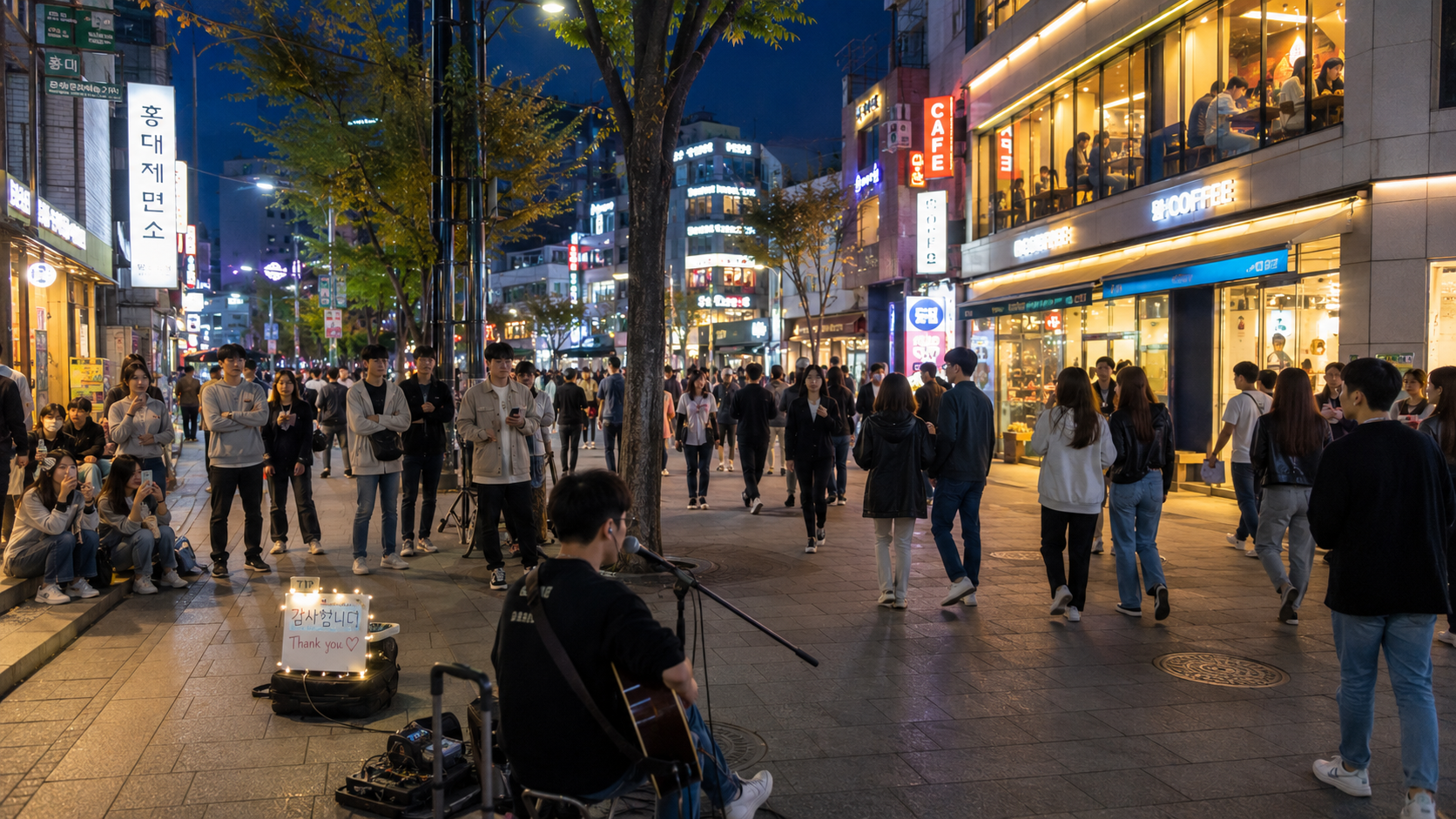
Hongdae (홍대) is the area around Hongik University. Visitors usually stay near Hongik University Station, the main nightlife streets, Yeonnam-dong, or Hapjeong.
Myeongdong (명동) is a compact commercial neighborhood in central Seoul. Accommodation may be closer to Myeongdong Station, Euljiro 1-ga Station, Chungmuro, or the edge of Namdaemun.
Gangnam (강남) can mean Gangnam-gu, the large administrative district south of the Han River, or the commercial area around Gangnam Station. COEX, Cheongdam, Apgujeong, Sinsa, and Gangnam Station are not one compact, walkable neighborhood. Check the nearest station before booking.
Hongdae: best for nightlife and airport access
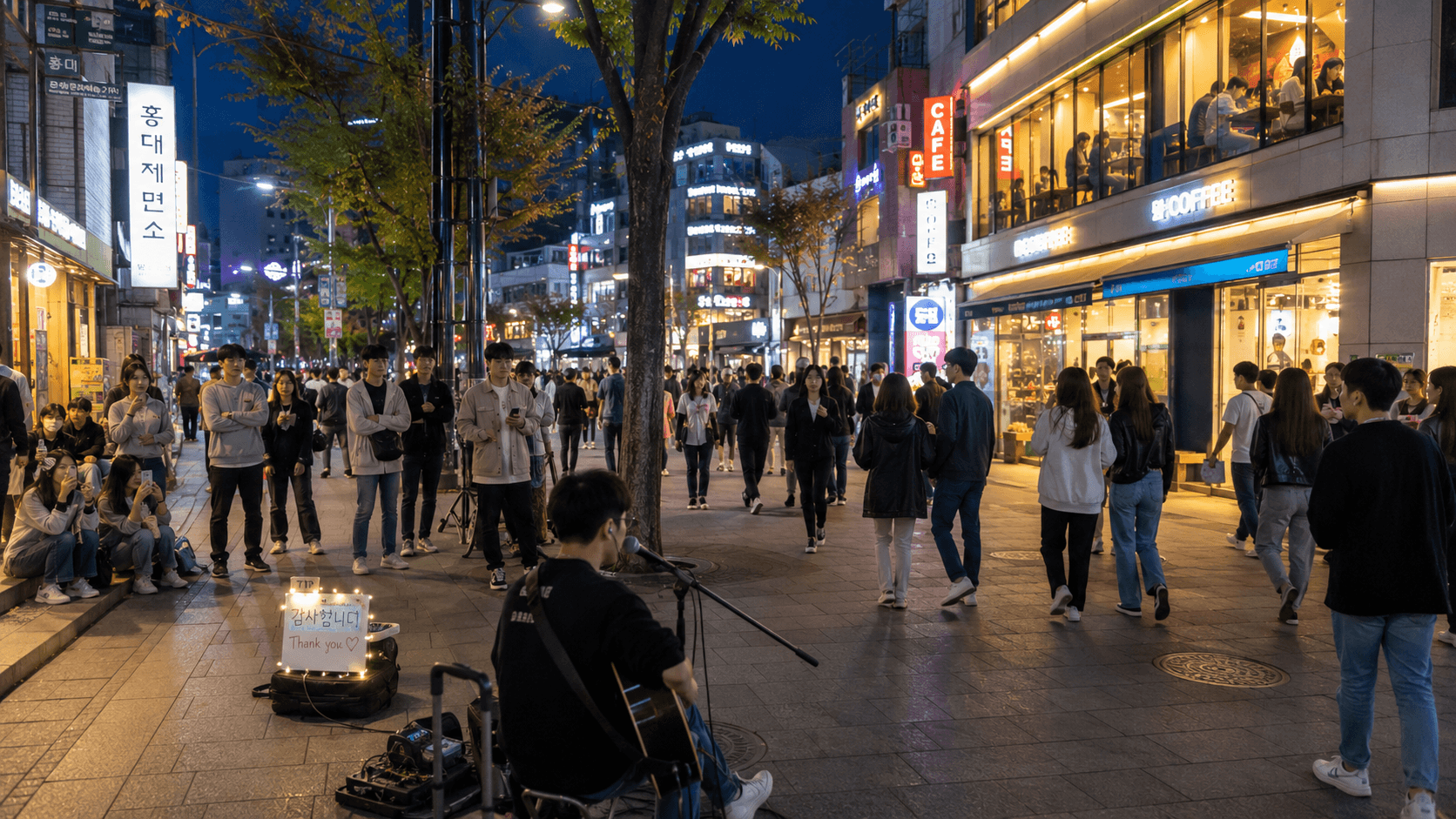
Hongdae has restaurants, bars, clubs, karaoke rooms, fashion shops, performance spaces, and late-opening businesses. Its energy is concentrated around Hongik University Station and the streets toward Hongik University, with a quieter café and residential atmosphere north toward Yeonnam-dong.
Why stay in Hongdae
Hongik University Station is served by Seoul Subway Line 2, the AREX all-stop airport train, and the Gyeongui-Jungang Line. The direct AREX connection is particularly useful after arriving at Incheon International Airport: unlike the AREX Express, the all-stop train serves Hongik University Station without requiring a transfer.
The airport journey is also easier if you have moderate luggage and your accommodation is genuinely close to an appropriate station exit. Hongik University Station is large, however, and walking between its platforms, exits, and surrounding hotels can take longer than a map suggests.
Hongdae is a practical choice when evenings matter as much as daytime sightseeing. You can return from another district, eat locally, and continue the night without planning a second journey. Yeonnam-dong and the Gyeongui Line Forest Park provide calmer alternatives within walking distance.
What to expect
The busiest streets can be noisy well into the night, especially on Friday and Saturday. A hotel described as being “in Hongdae” may sit above restaurants, near clubs, or on a quieter side street several blocks away. Read recent reviews specifically for noise, room insulation, and the walk from the station.
Hongdae is west of central Seoul. Line 2 provides useful connections, but visiting palaces and traditional neighborhoods generally requires a transfer, a bus, or additional walking. It is still manageable for sightseeing, just less central than Myeongdong.
Hongdae works well for
- Travelers who prioritize bars, clubs, live performances, and late meals
- Exchange students and younger visitors looking for a social district
- Passengers who want direct all-stop AREX access
- Repeat visitors planning time in western Seoul
- Café and independent-shop itineraries around Hongdae, Yeonnam, Mangwon, and Hapjeong
Avoid Hongdae if
Choose another area if you need reliably quiet evenings, dislike dense weekend crowds, or plan to spend almost every day around palaces, museums, and traditional central neighborhoods.
Myeongdong: best for a first visit
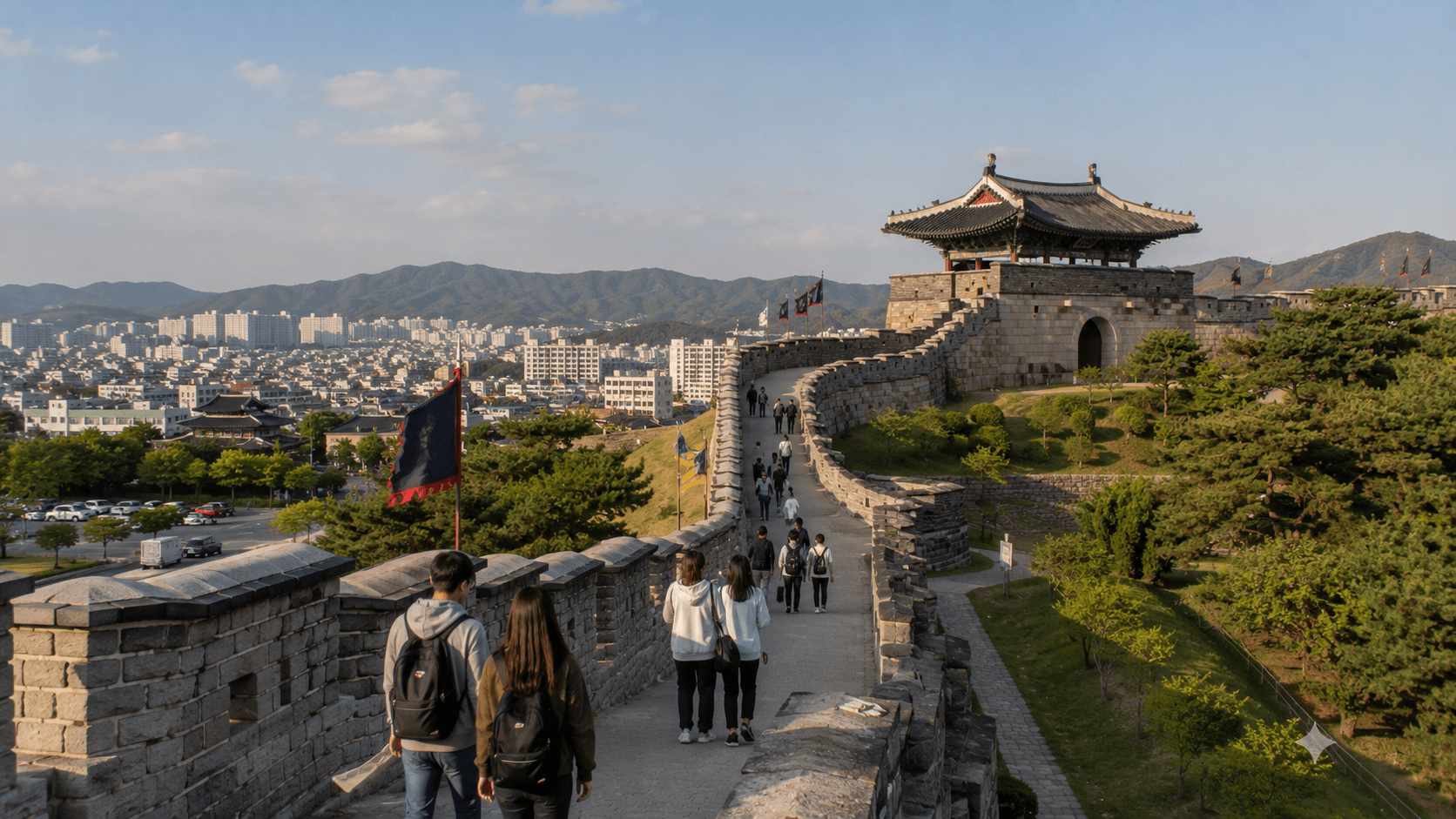
Myeongdong is the safest general recommendation for travelers building a classic first-time Seoul itinerary. It is north of the Han River and close to major sightseeing zones, including central shopping districts, Namdaemun, Namsan, City Hall, and the historic core.
Why stay in Myeongdong
Myeongdong Station is on Line 4, while the northern side of the district can be reached from Euljiro 1-ga Station on Line 2. Some hotels marketed as Myeongdong properties are closer to Chungmuro, Euljiro, or City Hall, so the nearest station can matter more than the neighborhood name.
The area is convenient for short visits because several attractions can be grouped geographically. You can spend one day around the royal palaces and Insadong, another around Namsan and central shopping, and reach Seoul Station relatively easily for intercity trains or airport transport.
Myeongdong also has a high concentration of hotels, restaurants, convenience stores, cosmetics shops, and businesses accustomed to international customers. This does not guarantee English service everywhere, but it can reduce friction during a first visit.
What to expect
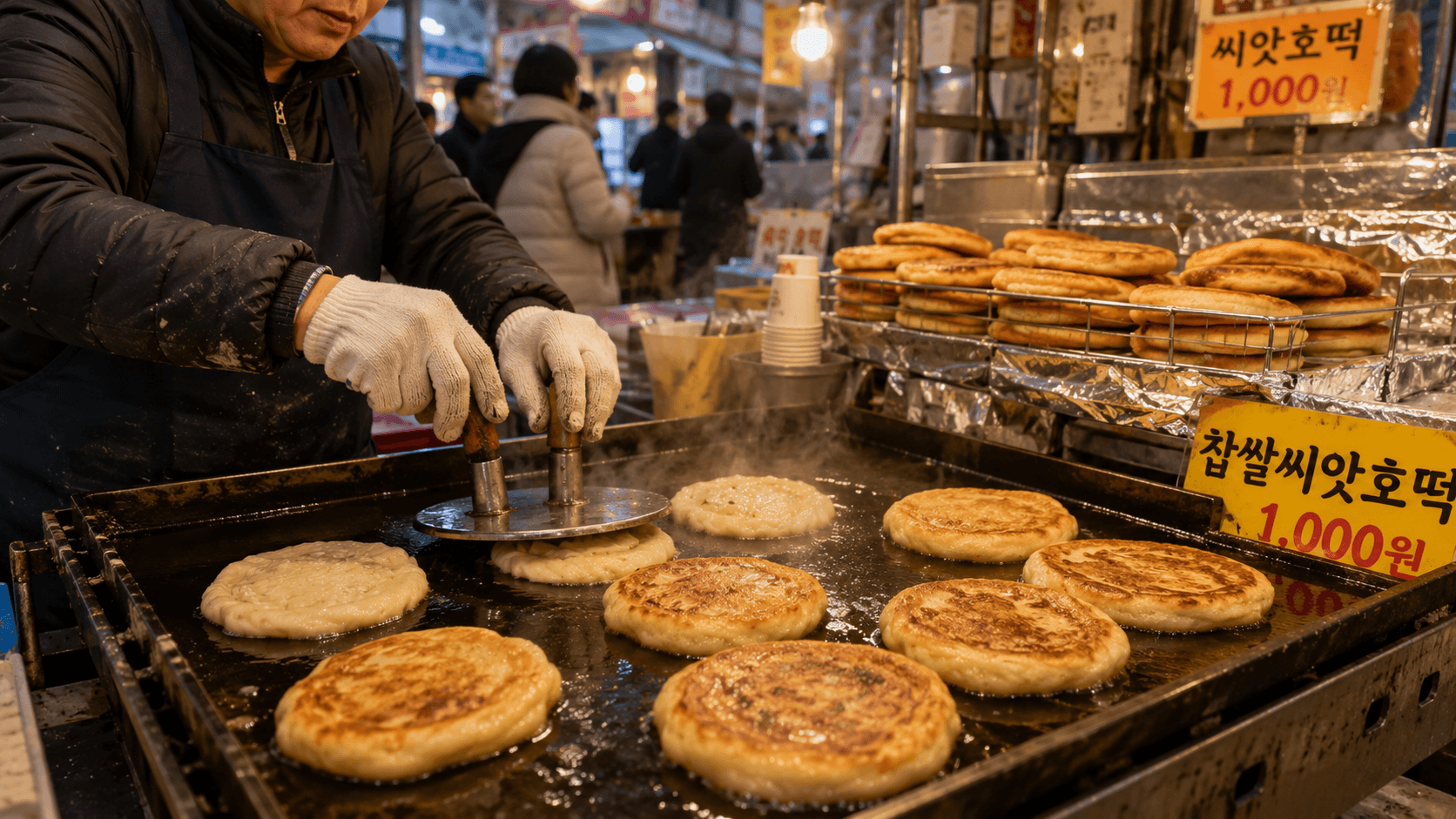
The main shopping streets are heavily visitor-oriented. They are useful for cosmetics, fashion chains, snacks, and quick meals, but they do not represent ordinary residential Seoul. Prices and quality vary, particularly among street food vendors and restaurants positioned primarily for tourists.
The atmosphere changes by time of day. Early mornings can be quiet because many retail businesses open later than offices or breakfast cafés. Evenings are much busier. Check individual opening hours rather than assuming every shop follows the same schedule.
Myeongdong has no direct AREX station. Rail passengers normally travel through Seoul Station and connect to Line 4, walk, take a taxi, or use another suitable route. Airport limousine buses may serve hotels in the wider area, but stops and schedules can change; verify them through the airport or operator before relying on a particular service.
Myeongdong works well for
- First-time visitors with a broad sightseeing itinerary
- Short stays of two to four nights
- Travelers interested in palaces, markets, museums, and central Seoul
- Families or mixed-interest groups needing a flexible base
- Visitors who value hotel choice and familiar tourist infrastructure
Avoid Myeongdong if
Myeongdong may feel too commercial if your priority is neighborhood cafés, local nightlife, or a residential atmosphere. It is also less convenient than Gangnam for consecutive appointments around COEX, Jamsil, or southern Seoul.
Gangnam: best for southern Seoul and business travel
Gangnam offers modern commercial districts, office towers, department stores, restaurants, nightlife, medical facilities, and large entertainment complexes. Its main weakness is not a lack of things to do, but distance from the historic center and the size of the district.
First decide which part of Gangnam
Gangnam Station: Best for restaurants, bars, offices, language academies, and Line 2 or Shinbundang Line access.
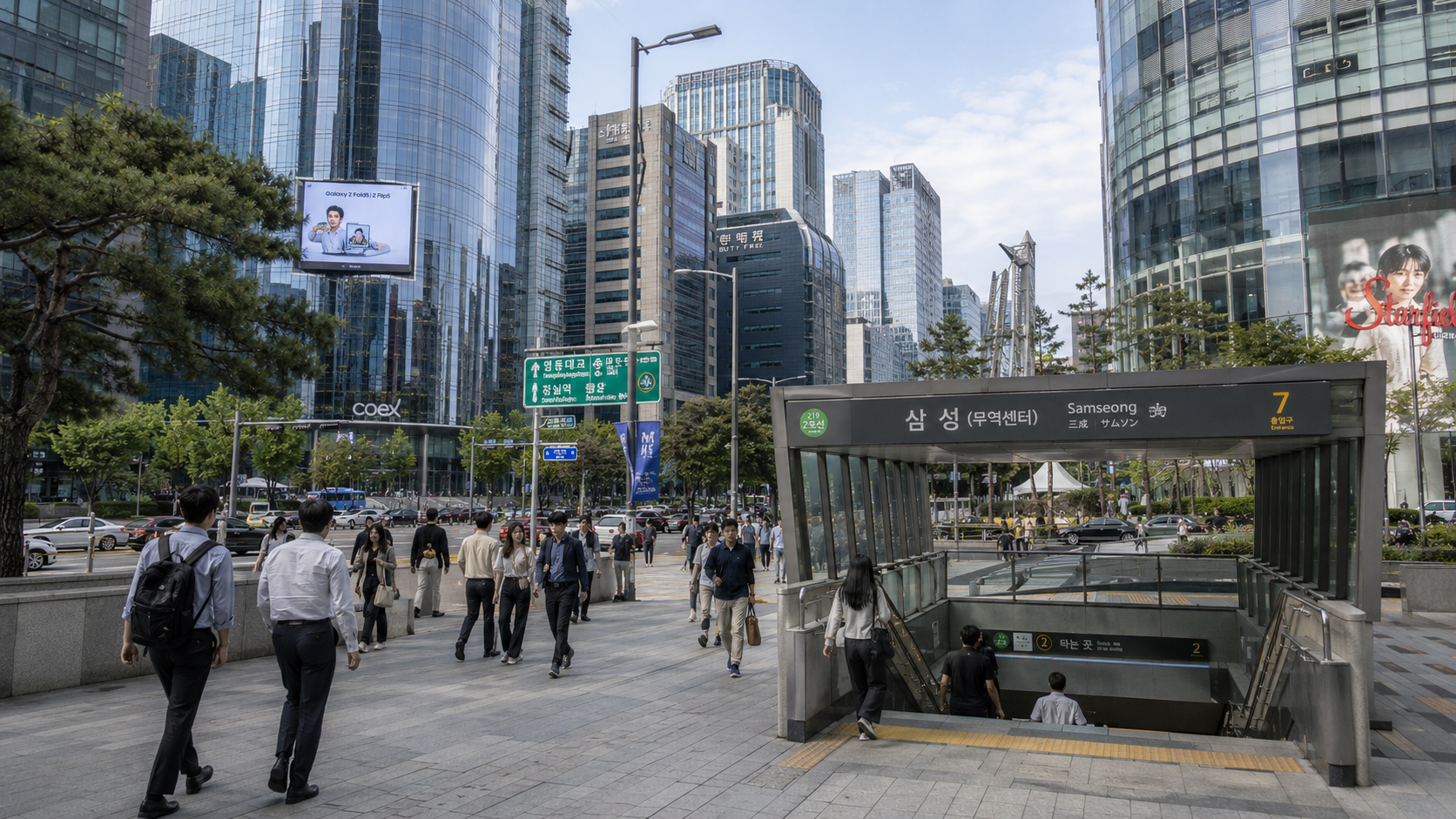
Samseong and COEX: Best for exhibitions, conferences, Starfield COEX Mall, and Bongeunsa Temple. COEX confirms access from Samseong Station on Line 2, Bongeunsa Station on Line 9, and Cheongdam Station on Line 7. Samseong and Bongeunsa have direct pedestrian connections into the complex through specified exits.
Sinsa and Apgujeong: Better for fashion, beauty services, cafés, and restaurants. These areas are not within easy walking distance of Gangnam Station.
Cheongdam: Associated with luxury retail, entertainment companies, galleries, and upscale dining, but destinations can be spread out and may require buses or taxis.
Why stay in Gangnam
Gangnam is the logical base when your fixed commitments are already there. Examples include a COEX exhibition, business meetings, a university or hospital visit, or appointments at a specific clinic. Staying north of the river to save money can be a false economy if it creates two long cross-city trips every day.
The COEX area is particularly useful in bad weather because shopping, restaurants, entertainment, and convention facilities are connected indoors. The official Starfield COEX Mall website listed general mall hours of 10:30 to 22:00 on June 10, 2026, while individual stores may use different hours.
Gangnam Station has strong subway and bus connections, but the streets and station can be crowded during commuting periods. Large intersections, underground passages, and numerous exits can make short-looking walks confusing.
What to expect
Travel to central attractions can consume a significant part of the day. A route from southern Gangnam to a palace area may involve a transfer and crowded trains. Gangnam is therefore a weaker base for visitors whose checklist is dominated by Gyeongbokgung, Bukchon, Insadong, Myeongdong, and Dongdaemun.
Airport access is also less straightforward than Hongdae. Depending on your exact hotel, the practical options may include an airport bus, a taxi, or subway and AREX transfers. Do not book simply because a property says “Gangnam”; identify the exact station and calculate the airport route first.
Gangnam works well for
- Business travelers and conference attendees
- Visitors with appointments at specific southern Seoul facilities
- Shopping and dining trips focused on Gangnam, Jamsil, or Seongsu
- Travelers who prefer modern commercial districts
- Repeat visitors who have already covered the historic center
Avoid Gangnam if
Do not choose Gangnam only because the name is internationally familiar. For a palace-heavy first trip, it usually creates more travel than Myeongdong. It is also important not to confuse Gangnam Station with COEX or Apgujeong when selecting a hotel.
Direct comparison by travel priority
Airport convenience
Winner: Hongdae. Hongik University Station is directly served by the AREX all-stop train. Myeongdong generally requires a connection from Seoul Station or another mode, while Gangnam usually involves a longer transfer, bus, or taxi journey.
The Incheon Airport railroad guide confirms airport-train facilities in both terminals and directs passengers to AREX for current fares and schedules.
Historic sightseeing
Winner: Myeongdong. It is better positioned for the palaces, Insadong, Jongno, Namdaemun, Namsan, and other central districts. Hongdae is workable but farther west. Gangnam generally requires more cross-city travel.
Nightlife
Winner: Hongdae for variety and density around a visitor-friendly hub. Gangnam Station also has extensive nightlife, but it serves a different part of the city and can feel more office-oriented on weekdays. Myeongdong has evening shopping and food, not the same concentration of clubs and late-night entertainment.
Shopping
There is no single winner.
- Myeongdong: Cosmetics, major chains, department stores, and tourist shopping
- Hongdae: Youth fashion, accessories, small shops, and trend-driven retail
- Gangnam: Department stores, luxury retail, large malls, and beauty services
Food
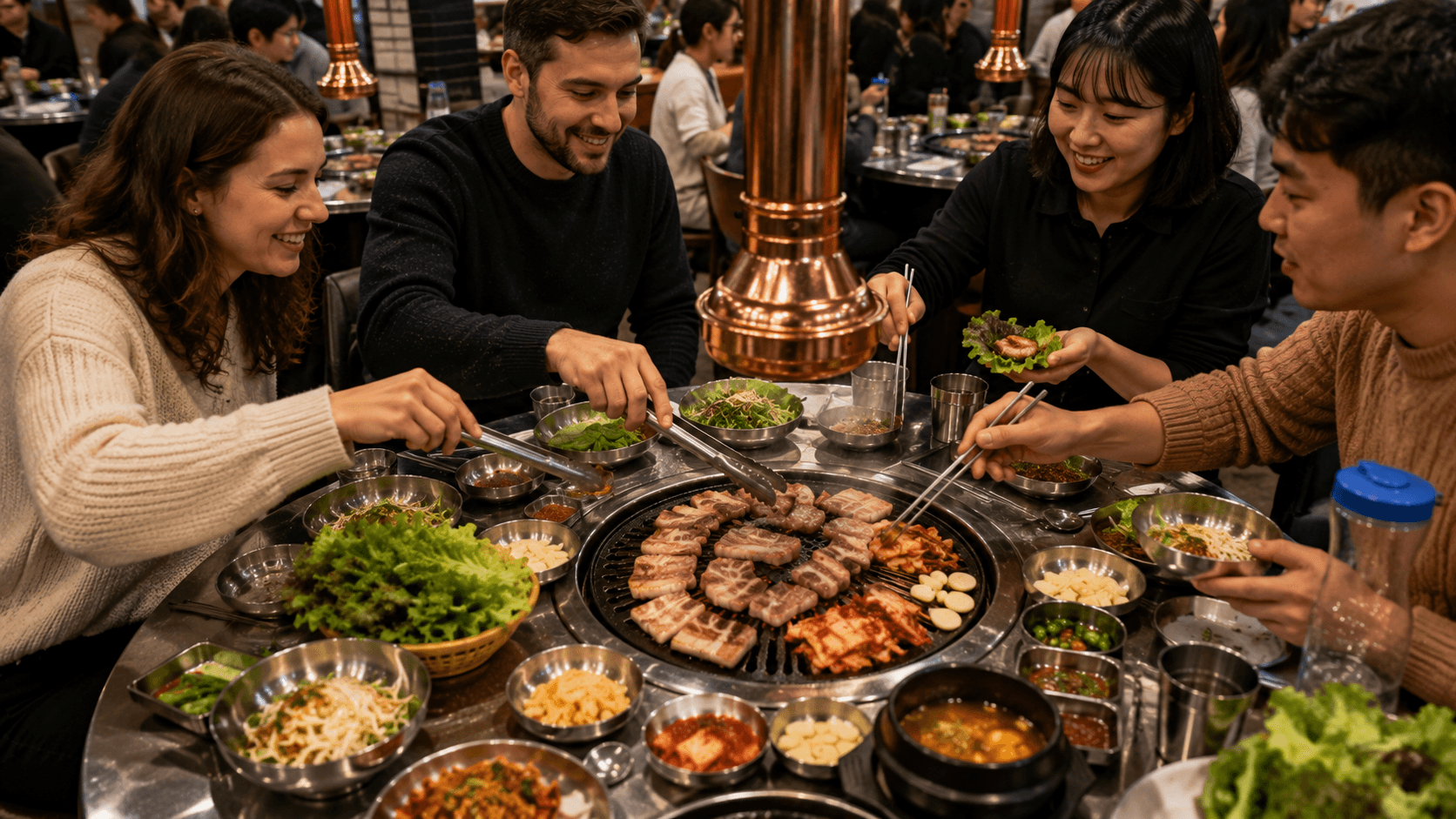
All three areas have extensive choices. Hongdae and Gangnam generally provide stronger late-night dining environments. Myeongdong is easy for first-time visitors but rewards checking recent Korean map reviews and walking beyond the most tourist-focused lanes.
Quiet and sleep quality
The neighborhood is less important than the exact block. Avoid rooms facing Hongdae nightlife streets, Myeongdong pedestrian lanes, or Gangnam’s main roads if noise is a concern. Ask the hotel whether rooms have external windows and request a high floor away from elevators and nightlife-facing façades.
Luggage and accessibility
Incheon Airport’s guide lists staffed T-Luggage counters at Hongik University Station and Myeongdong Station, offering storage and certain same-day delivery services. Availability, accepted luggage, deadlines, and prices should be checked directly before travel.
Accessibility also depends on the precise station entrance. A station may have elevators without every exit being step-free. Large interchange stations can involve long corridors, escalators, and crowded platforms. Travelers using wheelchairs, strollers, or heavy luggage should check an accessible route in a Korean navigation or subway app rather than selecting the nearest numbered exit automatically.
What to check before you book
- Search the hotel’s address in Naver Map or KakaoMap, not only an international booking map.
- Identify the nearest station, line, exit number, and walking route.
- Check whether the route includes steep streets, stairs, or underground crossings.
- Read recent reviews for street noise, construction, room size, and air conditioning.
- Confirm check-in hours if your flight arrives late.
- Calculate routes to your three most important destinations.
- Check the final airport journey with luggage, including transfers and walking.
- Verify the last train on the day; do not rely on a generic blog timetable.
- Confirm airport-bus stops and schedules directly with the operator or airport.
FAQ
Is Hongdae or Myeongdong better for a first trip?
Myeongdong is usually better for a sightseeing-heavy first trip because it is closer to central historic districts. Choose Hongdae instead if nightlife and easy all-stop AREX access matter more.
Is Gangnam too far from the main tourist attractions?
It is not too far for occasional visits, but daily cross-city journeys become inefficient. Gangnam makes sense when a substantial share of your itinerary is south of the Han River.
Can I visit all three without changing hotels?
Yes. Seoul’s subway network connects them, so changing hotels is normally unnecessary on a short trip. Select one base and visit the other districts as half-day or evening excursions.
Which area is best for families?
Myeongdong is generally the easiest all-purpose choice. Families attending a COEX event may prefer Samseong, while families sensitive to late-night noise should be cautious about central Hongdae streets.
Which area is cheapest?
There is no consistently cheapest district. Prices change with weekends, holidays, concerts, exhibitions, and room type. Hongdae often has more guesthouse-style options, while all three districts include both budget and higher-priced accommodation.
The practical decision
Book Myeongdong when this is your first Seoul visit and your itinerary covers several central attractions. Book Hongdae when evenings, cafés, and direct all-stop airport rail access define the trip. Book Gangnam only after confirming that your main destinations are actually near your chosen Gangnam station.
Your next step is to place each shortlisted hotel on a map and compare routes to Incheon Airport and your three fixed attractions. That simple check is more reliable than choosing by neighborhood reputation alone.