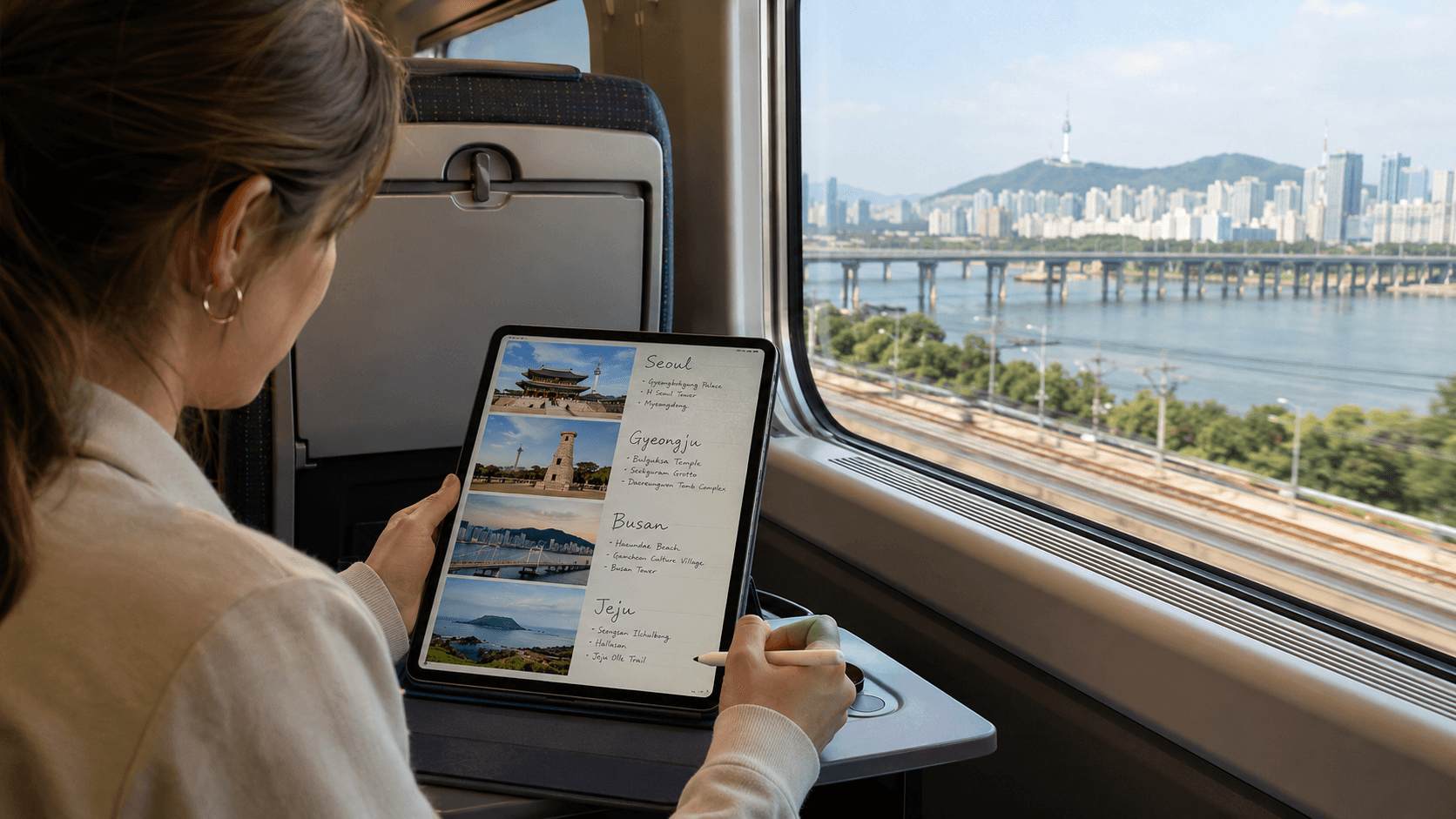
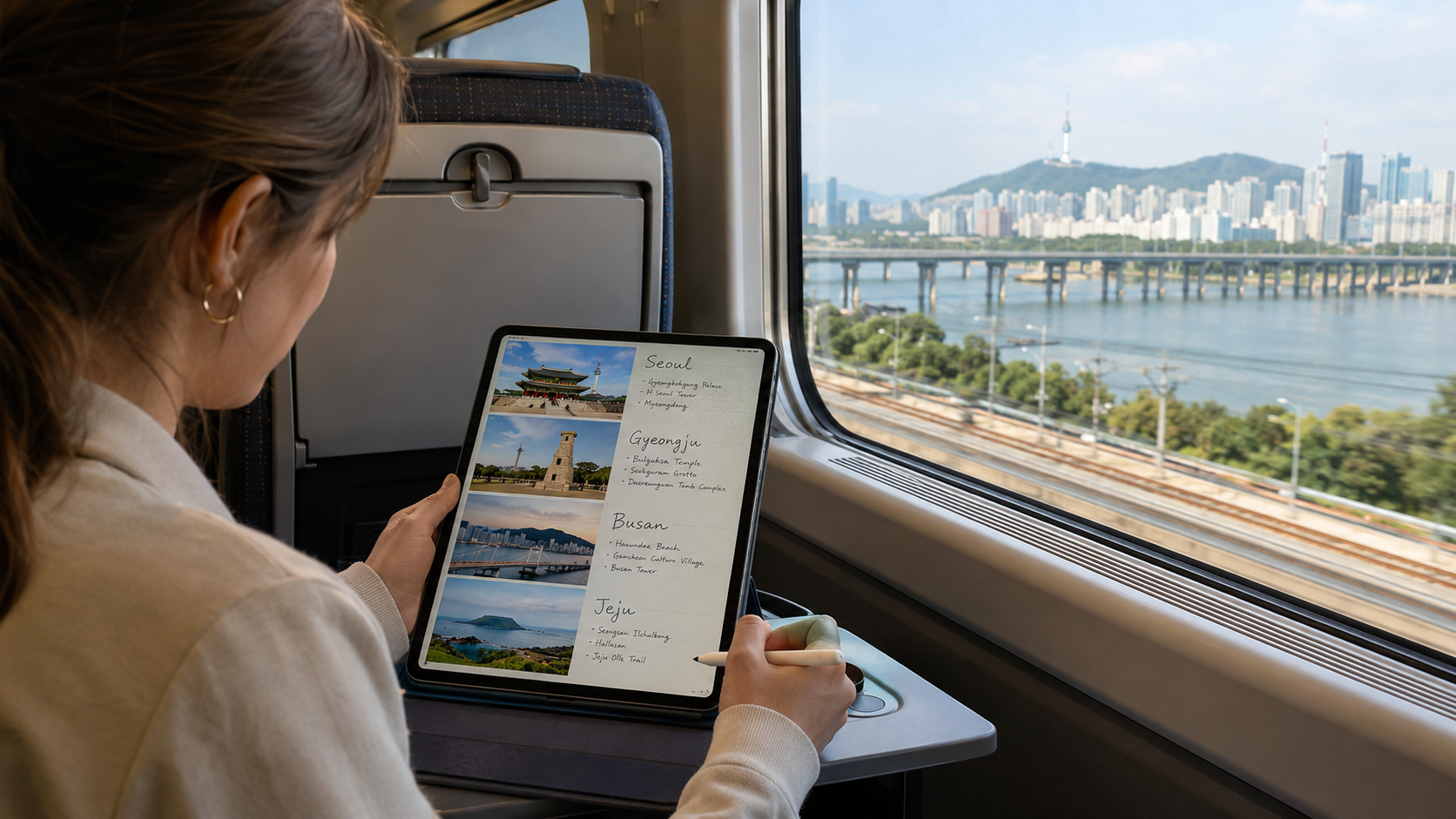
Most first-time visitors should allow 7 to 10 full days in South Korea, excluding long-haul arrival and departure days when possible. Seven days is enough for Seoul plus one other area; ten days gives you time for Seoul, Busan, and either Gyeongju or Jeju without making every day a transfer day.
A three- or four-day visit can still work, but it should usually stay focused on Seoul. With two weeks, you can travel at a more comfortable pace and include smaller cities, hiking, coastal scenery, or several nights on Jeju Island.
Planning information and time-sensitive travel details in this guide were verified on June 9, 2026.
Quick answer
| Time available | Realistic plan | Pace |
|---|---|---|
| 3 days | Seoul only | Fast |
| 4–5 days | Seoul with one day trip, or Seoul and Busan | Moderate to fast |
| 6–7 days | Seoul plus Busan or Gyeongju | Balanced |
| 8–10 days | Seoul, Gyeongju, and Busan; or Seoul and Jeju | Comfortable |
| 11–14 days | Seoul, central or eastern Korea, Busan, and Jeju | Comfortable |
These figures refer to usable sightseeing days. A flight landing at 6 p.m. does not provide a full day, and an early international departure may effectively remove the previous evening from your itinerary.
Is one week enough for South Korea?
Yes. One week is enough for a rewarding first trip, provided you limit the number of overnight bases.
A sensible seven-day plan is:
- Days 1–4: Seoul
- Day 5: Travel to Busan
- Days 6–7: Busan, followed by departure or a return to Seoul
An alternative for travelers more interested in history is four nights in Seoul followed by two or three nights in Gyeongju. For nature, use Seoul as a base and add day trips rather than changing hotels repeatedly.
What does not work well is trying to fit Seoul, Busan, Gyeongju, Jeju, and a national park into seven days. Although Korea has fast transport, every move still involves packing, reaching a station or airport, waiting, and checking into another hotel.
How to count your travel days correctly
Treat arrival day as a partial day
Most intercontinental visitors arrive through Incheon International Airport, west of Seoul. Immigration, baggage collection, transport, and hotel check-in can consume much of the day.
Even after reaching central Seoul, jet lag may make a tightly scheduled palace visit or evening performance unrealistic. Use arrival day for a neighborhood walk, dinner, a convenience-store stop, and practical tasks such as obtaining a transport card.
Check current airport transport options through the Incheon International Airport transportation guide and the official Airport Railroad website. Fares, departure times, and last trains should be checked for your specific date.
Do not overfill departure day
For an international flight, allow time to travel to the airport and complete airline procedures. Travelers leaving from Incheon should not plan a distant attraction on the same day unless their flight is late and their luggage arrangements are secure.
Count hotel changes as travel time
A two-hour train journey rarely takes only two hours door to door. Add time for:
- Hotel checkout and travel to the station.
- Finding the platform and boarding.
- The train journey itself.
- Local transport at the destination.
- Luggage storage or hotel check-in.
As a planning rule, assume that changing cities will use at least half a day, even when the rail journey is relatively short.
What you can do with 3 days
With three full days, stay in Seoul. The city is large, and its major districts are spread across both sides of the Han River.
A realistic outline is:
Day 1: Historic Seoul
Visit Gyeongbokgung Palace, walk through part of Bukchon or nearby Seochon, and continue to Insadong or Ikseondong. Check palace closure days and admission information on the Korea Heritage Service palace website before fixing the order of your itinerary.
Day 2: Markets and central neighborhoods
Combine a traditional market with central Seoul sights. Avoid selecting several markets simply because they appear close on a map; time spent eating and exploring is part of the experience.
Day 3: Modern Seoul
Choose one main area south of the river, such as Gangnam or Jamsil, or stay north for museums, shopping, and a Han River walk. Crossing the city repeatedly wastes time.
Do not add an overnight trip to Busan to a three-day itinerary. If you want to leave Seoul, choose one day trip and accept that it will replace a full city day.
What you can do with 4 or 5 days
Four or five days allows you to understand Seoul at a less hurried pace. You can also add one day trip.
Common options include:
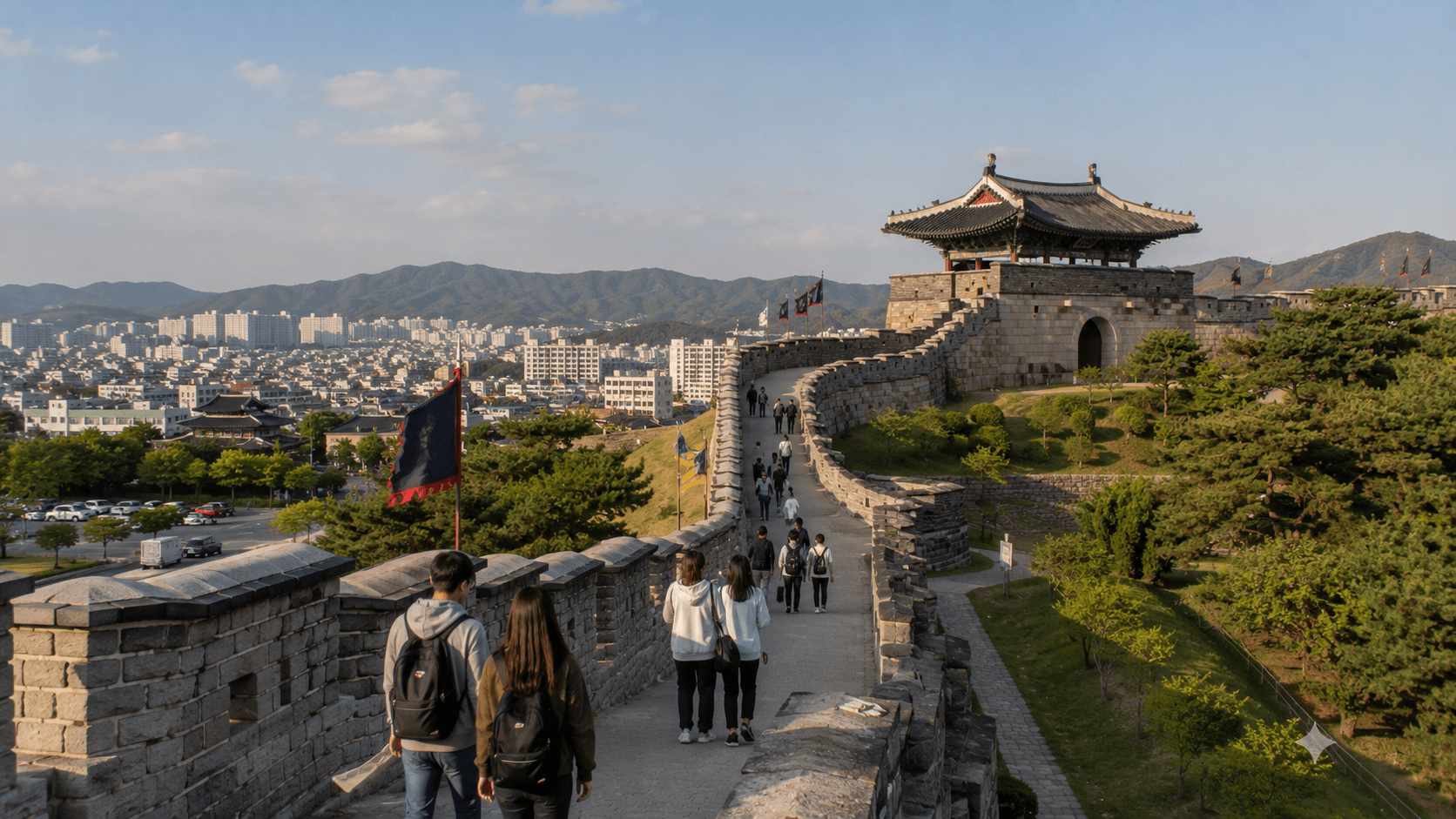
- Suwon: Fortifications and urban history.
- Incheon: Chinatown, port history, and newer waterfront districts.
- The Demilitarized Zone: Usually visited through an organized tour, with routes and access subject to security conditions.
- A mountain or national park: Appropriate for travelers who prioritize hiking over another urban sightseeing day.
For a five-day trip, a Seoul-and-Busan split is technically possible, but it will be fast. Use centrally located accommodation, travel early, and avoid inserting another city between them.
What you can do with 6 or 7 days
This is the minimum length at which a two-city trip feels reasonably balanced.
Option 1: Seoul and Busan
Spend four days in Seoul and two or three in Busan. This combination gives you the clearest contrast between the capital and Korea's main southeastern port city.
Reserve intercity trains through Korail's official booking website or the official KorailTalk app. Train times, seat availability, and fares vary by service and date, so confirm them when booking. Tickets can become harder to obtain around weekends and major Korean holidays.
Option 2: Seoul and Gyeongju
Choose Gyeongju if royal history, archaeology, temples, and historic landscapes matter more to you than beaches or nightlife. Two nights are more useful than a rushed day trip because major sites are not all concentrated beside the rail station.
Option 3: Seoul with regional day trips
This is often the easiest plan for families, travelers with large luggage, and visitors who dislike frequent check-ins. Five or six nights in one hotel also gives you flexibility when rain or fatigue changes your schedule.
What you can do with 8 to 10 days
For many first-time visitors, 8 to 10 days is the most practical range.
Classic mainland itinerary
- Seoul: 4 nights
- Gyeongju: 2 nights
- Busan: 3 nights
- Departure or positioning night: 1 night if required
This route works geographically: Gyeongju lies between the Seoul region and Busan, although the exact rail connection depends on the station and service selected.
Seoul and Jeju itinerary
- Seoul: 4 or 5 nights
- Jeju: 3 or 4 nights
- Airport or buffer night: As required
Jeju should generally receive at least three nights. Its attractions are distributed around the island, and travel can be slower than the distances suggest. The Korea Tourism Organization notes that Jeju can be explored by rental car or bus and highlights its walking routes; see the official VISITKOREA Jeju overview.
Most domestic visitors fly to Jeju, commonly from Gimpo Airport in Seoul or Gimhae Airport near Busan. The VISITKOREA transport guide recommends checking operators directly for current schedules and fares.
Do not assume Incheon and Gimpo are interchangeable. They are separate airports in different locations. If your international flight uses Incheon but your Jeju flight leaves from Gimpo, allow substantial transfer time and verify the route before buying separate tickets.
What you can do with 11 to 14 days
Two weeks lets you include more of Korea without turning the trip into a checklist.
One workable 14-day structure is:
- Days 1–4: Seoul
- Days 5–6: Sokcho and the Seoraksan area, or Gangneung
- Days 7–8: Gyeongju
- Days 9–11: Busan
- Days 12–14: Jeju or additional time in Seoul
This is still an active itinerary. For a slower trip, omit either the east coast or Jeju and add those nights to Seoul, Busan, or a smaller regional base.
Two weeks is especially useful if you want to hike, visit cafes and markets without rushing, attend an event, or leave room for weather-related changes.

Should you include Jeju on a first trip?
Include Jeju when volcanic landscapes, coastal walks, beaches, or driving are central to your plans. Leave it for another visit when your main interests are Seoul, Korean history, food neighborhoods, or efficient rail travel.
Jeju adds at least two airport journeys and may require a rental car, taxis, or careful bus planning. Weather can also affect outdoor plans. It is therefore a poor addition to a short itinerary simply for the sake of saying you visited the island.
Three to four nights is a reasonable first stay. Five nights gives hikers and slower travelers more flexibility.
How many days do you need in Seoul?
Allow four full days for a first visit to Seoul. Three days covers major highlights, while five or more allows for museums, neighborhood exploration, hiking, shopping, or a day trip.
Seoul's size is easy to underestimate. Build each day around one or two adjoining districts rather than selecting attractions from opposite ends of the city.
The official Seoul tourism site provides current visitor information and transport guidance through Visit Seoul. As verified on June 9, 2026, the site advises travelers to check visa information and airport-to-city transport before departure.
How many days do you need in Busan?
Allow two full days at minimum, or three if you want both coastal areas and central neighborhoods.
Busan is geographically spread out. A beach, hillside neighborhood, market, temple, and coastal trail may each require a separate journey. Group attractions by area and check the final public-transport connection back to your accommodation.
A single night is possible but often means arriving after lunch and leaving the next morning. That is insufficient unless Busan is merely a stop between other destinations.
How many days do you need in Gyeongju?
Allow one full day for highlights or two nights for a more useful visit. Central historic sites can be combined, but temples and other outlying attractions require additional travel.
Travelers using trains should check which station their service uses and how they will reach their accommodation. Do not assume that every station bearing the city name is in the historic center.
Practical ways to make a short trip work
- Book accommodation close to a useful subway or rail connection.
- Group attractions by neighborhood.
- Reserve long-distance trains before busy weekends and holidays.
- Use luggage storage instead of returning across the city before departure.
- Keep one flexible block for rain, fatigue, or an attraction that takes longer than expected.
- Check weekly closing days for palaces and museums.
- Avoid changing hotels for a destination that can be visited comfortably as a day trip.
Entry planning for 2026
Entry requirements depend on nationality, passport, trip purpose, and length of stay. They should not be inferred from another traveler's experience.
As verified on June 9, 2026, Korea's official K-ETA service states that the temporary K-ETA exemption for currently covered nationalities has been extended through December 31, 2026. This does not mean that every traveler is exempt or can enter without a visa. Check your passport's status directly through the official K-ETA website and consult the relevant Korean embassy or consulate for visa questions.
The official K-ETA site lists a fee of KRW 10,000 for travelers who must apply and says assessment generally takes up to 72 hours. These details were verified on June 9, 2026 and may change.
What to check before you go
- Your passport-specific visa or K-ETA requirement.
- Whether arrival and departure days are usable sightseeing days.
- The exact airports shown on every flight booking.
- Korail schedules and ticket availability for intercity journeys.
- Korean public holidays and major local events.
- Accommodation check-in and luggage-storage policies.
- Attraction closure days and advance-reservation requirements.
- The last train, bus, or ferry for any evening journey.
- Accessibility at stations and attractions if traveling with reduced mobility or heavy luggage.
- Seasonal weather, especially for hiking, islands, and coastal routes.
FAQ
Is five days in Korea too short?
No, but focus mainly on Seoul. Add one day trip if desired. A Seoul-and-Busan itinerary is possible in five days, although it involves a faster pace and less flexibility.
Is 10 days in Korea enough?
Yes. Ten days can comfortably cover Seoul, Gyeongju, and Busan, or Seoul and Jeju. It is long enough to experience more than one region without changing accommodation every night.
Is two weeks in Korea too long?
No. Two weeks supports a slower multi-city itinerary, outdoor activities, or time in smaller destinations. It also provides useful flexibility during hot, cold, or rainy weather.
Should I visit both Busan and Jeju?
Visit both only if you have roughly 10 days or more and coastal destinations are a priority. They offer different experiences, but including both requires additional transport and reduces time elsewhere.
What is the most practical first-trip length?
Book nine or ten nights if your schedule and budget allow. That usually produces seven to nine useful sightseeing days after accounting for flights, arrival fatigue, and transfers.
Sources
- Korea Tourism Organization travel planning and transport information
- Official K-ETA service
- Korail official rail booking website
- Incheon International Airport transportation guide
- Official Airport Railroad website
- Visit Seoul official tourism guide
- Korea Heritage Service royal palaces guide
Start by counting your full sightseeing days, then choose no more than one overnight base for every three to four days available. That single limit will usually produce a better Korea itinerary than adding one more destination.