South Korea is highly card-friendly, so most visitors do not need to carry their entire travel budget in cash. For a typical one-week trip, start with KRW 150,000-250,000 per person and use an international credit or debit card for hotels, restaurants, shopping, and advance reservations. Carry more if you will visit rural areas, traditional markets, or cash-only accommodations.
Information on transportation payments, currency exchange, and customs rules in this guide was verified on June 9, 2026.
Quick answer
| Trip type | Suggested starting cash | When it is suitable |
|---|---|---|
| 3-4 days in Seoul or Busan | KRW 100,000-150,000 | Hotels and major transport already booked; card used for most spending |
| One week in major cities | KRW 150,000-250,000 | Typical first-time trip using public transportation |
| One to two weeks across Korea | KRW 250,000-400,000 | Includes smaller cities, markets, hiking areas, or rural transport |
| Longer stay or exchange semester | KRW 200,000-300,000 initially | Withdraw or exchange more after learning your local payment options |
These figures are cash reserves, not total travel budgets. Accommodation, intercity trains, major attractions, and most restaurant bills can normally be paid by card or booked online.
A practical mix for most visitors is:
- One internationally enabled Visa or Mastercard as the main payment method
- A second card stored separately as a backup
- KRW 150,000-250,000 in cash
- A rechargeable Korean transportation card
- Small KRW 1,000, KRW 5,000, and KRW 10,000 notes for minor purchases
Where cards usually work
International cards are commonly accepted at hotels, department stores, convenience stores, chain cafés, supermarkets, attractions, and established restaurants. The Korea Tourism Organization states that major hotels, shops, and other businesses accept international cards including Visa, Mastercard, and American Express; see its official Korean currency and exchange guide.
Card acceptance does not guarantee that every foreign card will process successfully. A terminal may reject a card because of the issuing bank's security settings, an offline transaction, a communication problem, or an unsupported card network. This is why a small cash reserve and a second card remain useful even in central Seoul.
Before departure, check that your cards:
- Are enabled for overseas purchases and ATM withdrawals
- Have a four-digit PIN you know
- Do not expire during the trip
- Have sufficient available credit or account balance
- Have reasonable foreign-transaction and cash-withdrawal fees
Keep the cards in separate places. Losing a wallet should not remove every payment method you have.
When you may still need cash
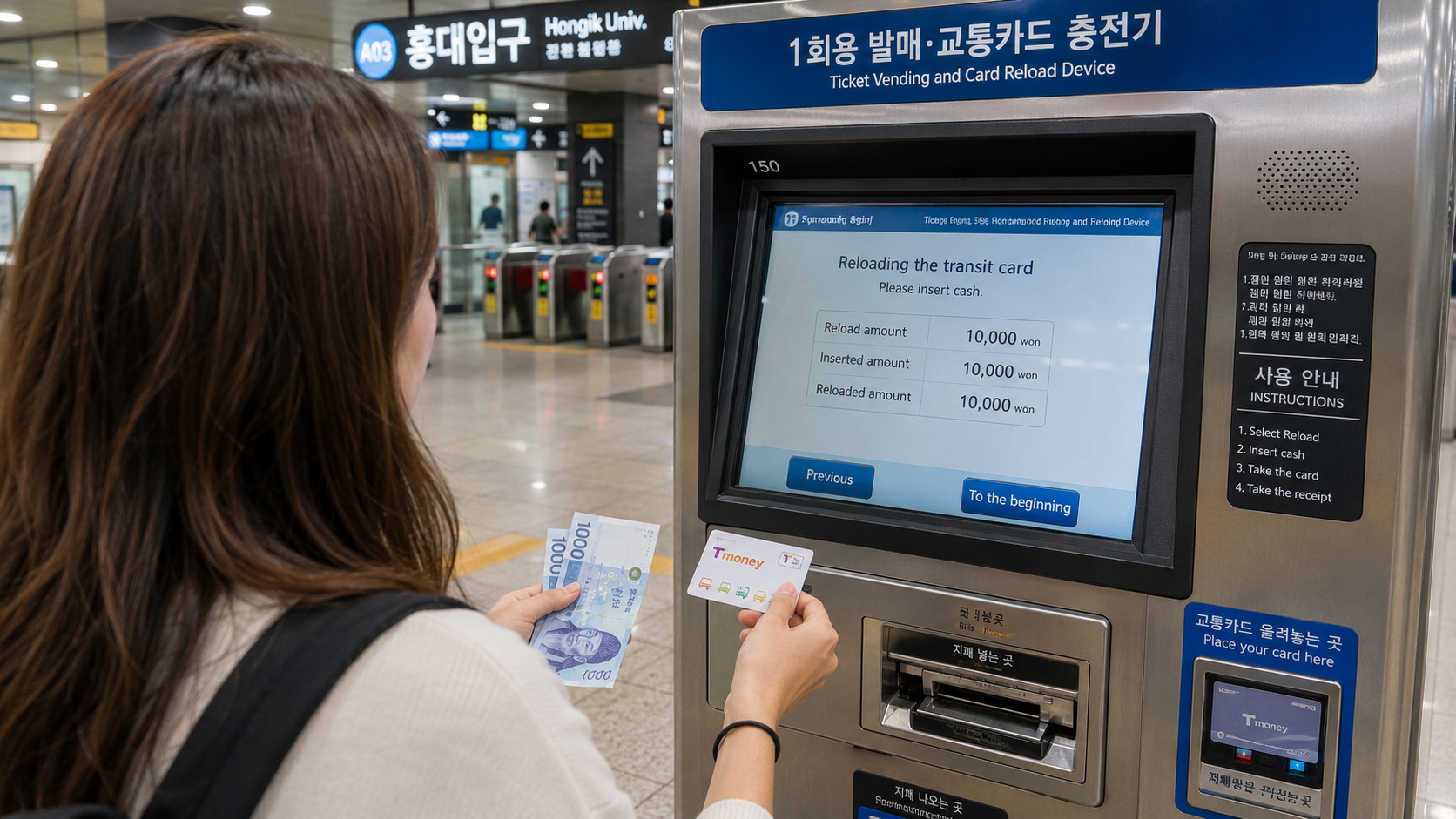
Buying and recharging a regular transportation card
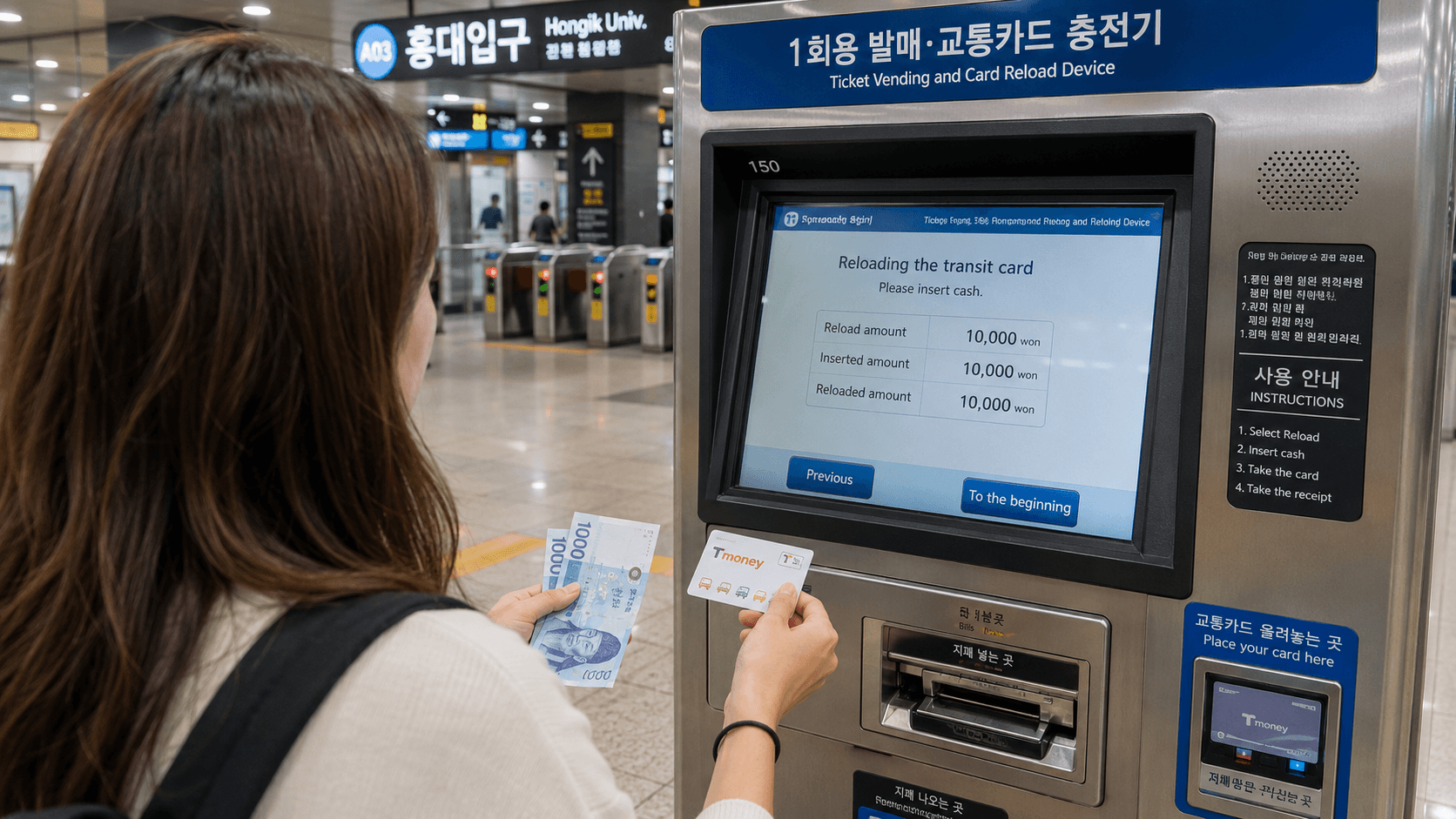
A regular Tmoney card is a rechargeable stored-value card used for buses, subways, and some taxis and convenience-store purchases. It is often the most important reason for a visitor to obtain Korean cash soon after arrival.
According to the Korea Tourism Organization's 2026 transportation payment guide, regular Tmoney cards sold at convenience stores and subway stations generally require cash for purchase or top-up, and foreign-issued cards are not accepted for those transactions. Conditions can differ for specialized products and newer machines, so read the payment options shown on the machine rather than assuming every recharge point works the same way.
A reasonable initial Tmoney balance for an urban visitor is KRW 20,000-40,000. Add smaller amounts later instead of loading your full transportation budget at once. The plastic card itself is sold separately, and its price varies by design.
Do not try to tap an ordinary overseas contactless bank card directly at a subway gate or bus reader. Korea is gradually introducing additional payment options, but direct open-loop payment is not yet universal as of June 9, 2026.
Seoul Climate Card exception
Seoul's short-term Climate Card Tourist Pass offers unlimited use within its covered transport area for a selected period. Since March 17, 2026, designated new vending machines at 273 stations on Seoul Subway Lines 1-8 have accepted internationally issued Visa and Mastercard cards for short-term Climate Card purchases and recharges. The same machines can sell single-journey subway tickets using international cards.
Seoul Metropolitan Government reports an average international-card service fee of approximately 3.7% for these transactions. The change does not mean that every Tmoney purchase or recharge nationwide is card-enabled. Check the official Seoul announcement on international card payments and the Climate Card coverage rules before choosing the pass.
Markets and small independent businesses
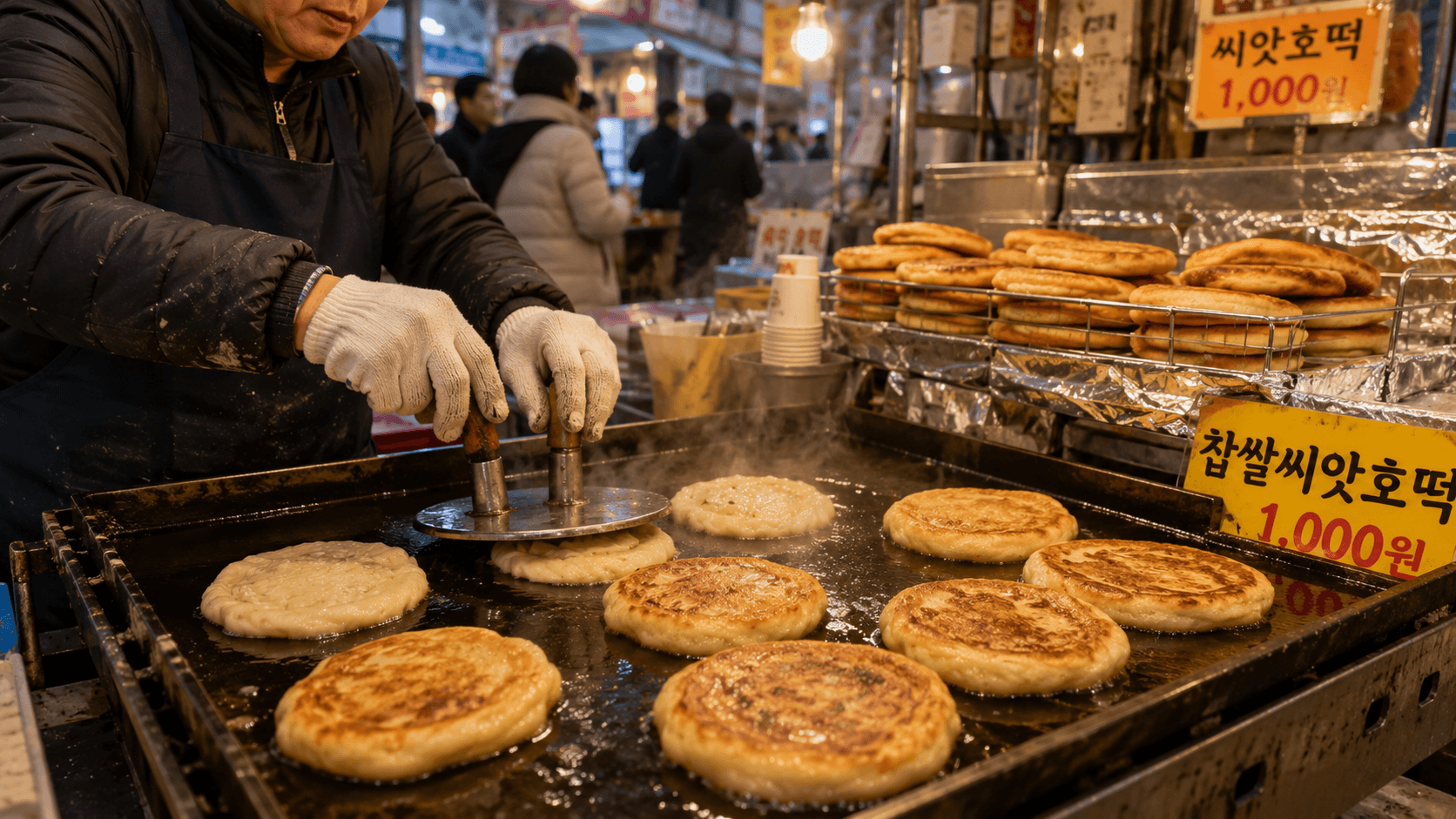
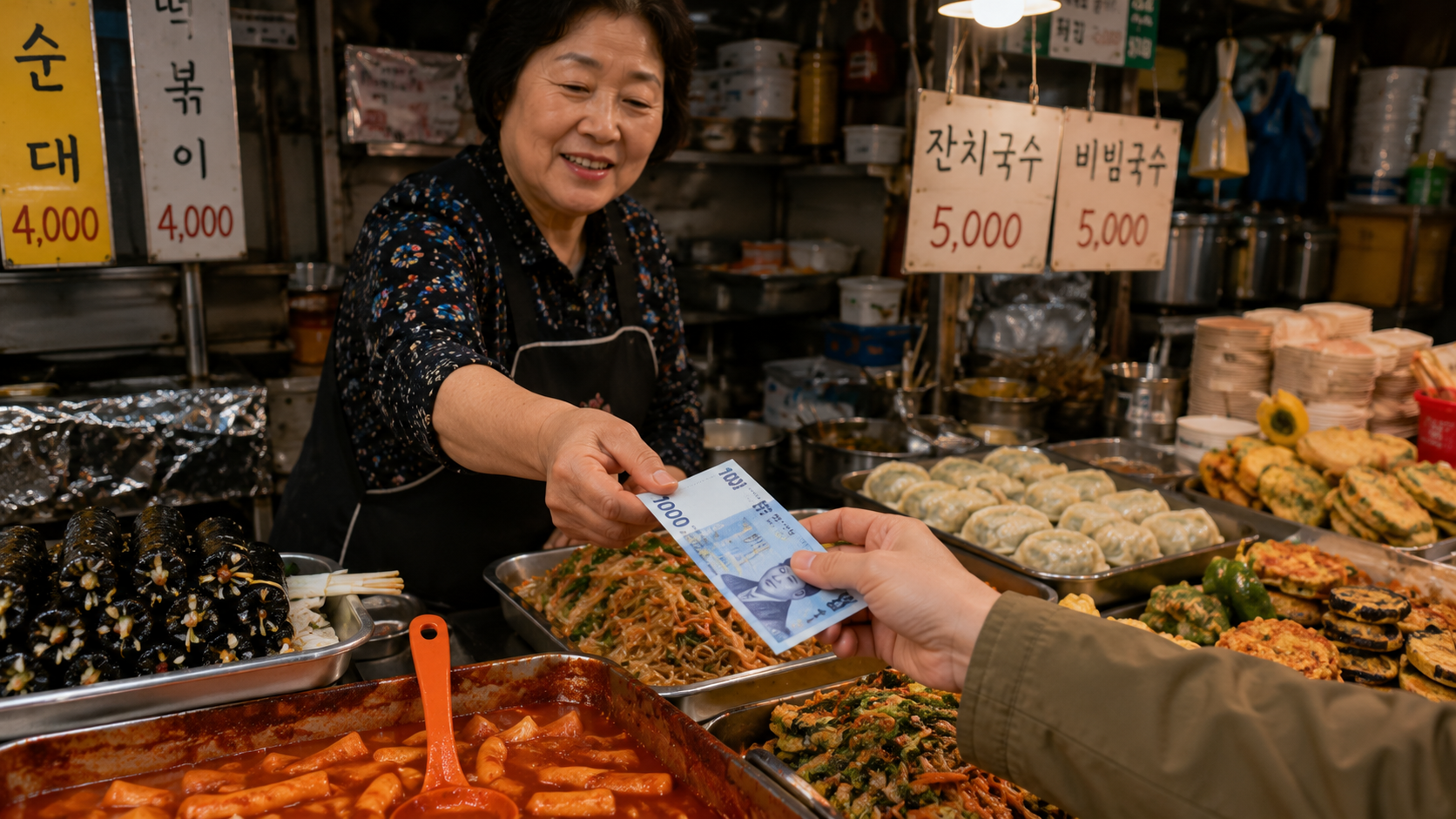
Traditional markets increasingly have card terminals, but individual food stalls, temporary festival booths, rural vendors, and very small businesses may prefer or require cash. Even when a terminal is present, a foreign-issued card may not process.
Bring small notes if markets are an important part of your itinerary. A KRW 50,000 note can be inconvenient for a KRW 3,000 snack early in the day when a vendor has limited change.
Cash is also useful for:
- Small temple donations or honor-system payments
- Rural buses or local services where payment arrangements are unclear
- Coin-operated equipment
- Splitting a restaurant bill among friends
- Paying when a terminal or network is temporarily unavailable
- Recharging a regular transit card unexpectedly
These are contingency situations, not reasons to carry your entire budget in banknotes.
How much cash to carry each day
You do not need to take your entire reserve out with you. For an ordinary sightseeing day in Seoul or Busan, KRW 30,000-70,000 in your wallet is usually a sensible backup if you expect to pay mainly by card.
Consider carrying KRW 70,000-120,000 for a day involving a traditional market, a rural destination, a festival, or several small independent businesses. Keep the rest locked in your accommodation or another secure place.
Couples and families do not necessarily need to multiply the recommended reserve by the exact number of travelers. Some emergency expenses are shared. However, each person should ideally have access to at least one independent payment method in case the group becomes separated.
Should you bring KRW from home?
Arriving with some Korean won is convenient, particularly if your first task is buying or loading a regular transportation card. You do not need to obtain the full amount before departure if the exchange rate or fees at home are unfavorable.
A practical approach is to arrive with KRW 50,000-100,000, then exchange or withdraw more after checking the available rates and fees. If Korean won is difficult to obtain in your country, bring a widely exchanged foreign currency in clean, undamaged notes and exchange a small amount after arrival.
The Korea Tourism Organization says money can be exchanged at banks and authorized exchange counters. Regular bank business hours are generally around 09:00-16:00 on weekdays, although hours differ by branch and location. It also warns that old or damaged foreign notes may be difficult to exchange. Airport exchange counters are convenient but should not automatically be assumed to offer the most favorable rate. Check the official VISITKOREA exchange information and the Incheon International Airport website for current facility locations and hours.
Exchanging cash versus using an ATM
There is no universal cheapest option. Your real cost may include:
- Your bank's foreign-transaction fee
- Your bank's overseas ATM fee
- A fee charged by the Korean ATM operator
- The exchange-rate margin
- Dynamic currency conversion charges
Some Korean ATMs have menus for international cards, but compatibility, withdrawal limits, and fees vary. Use an ATM at an airport, bank branch, or established financial facility, and look for the network logo shown on your card.
If a terminal or ATM offers to convert the transaction into your home currency, compare the terms carefully. Choosing KRW normally allows your card network or issuing bank to perform the conversion, while accepting a home-currency amount may apply the terminal operator's conversion rate. Check your own bank's fee structure before deciding.
Do not depend on one planned ATM withdrawal immediately after landing. A machine can reject a valid card, and your bank may block an unfamiliar transaction until you confirm it.
Building your cash amount step by step
Use this calculation instead of choosing an arbitrary large amount.
1. Set aside transportation-card money
Allow KRW 20,000-40,000 for an initial regular Tmoney balance, plus the separate card purchase price. Add more later when needed.
If you will use a Seoul Climate Card, check its current duration, coverage, physical-card cost, and payment method before adding this amount. The pass is not valid on every route outside Seoul.
2. Add your likely cash-only spending
Estimate market food, small purchases, rural transport, and other planned cash payments. For a typical city-based visitor, KRW 10,000-30,000 per day is often enough for this category because larger bills can remain on a credit or debit card.
This is a planning suggestion rather than an official spending average. Travelers who prefer street food and markets may use more; those eating at established restaurants may use almost none.
3. Add an emergency reserve
Keep KRW 50,000-100,000 separate from your everyday wallet. This can cover transportation, a meal, or a small urgent purchase if your card stops working.
4. Subtract prepaid expenses
Do not carry cash for hotels, rail tickets, tours, or airport transportation that you have already paid for. The Korea Tourism Organization's 2026 guide confirms that foreign-issued cards are accepted through several major transport channels, including ticket machines or counters for KTX, SRT, and A'REX services, although acceptance can vary by sales channel.
Cash planning for different itineraries
Seoul-only trip
For three to seven days in Seoul, KRW 100,000-200,000 is normally adequate as a starting amount when accommodation is prepaid and you have functioning international cards.
Choose the higher end if you will use regular Tmoney, visit several markets, or want a larger emergency reserve. Choose the lower end if you will use a Climate Card purchased by international card and have a reliable backup card.
Seoul and Busan
For a one-week Seoul-and-Busan itinerary, start with approximately KRW 150,000-250,000. KTX tickets, hotels, and most urban purchases can be paid by card, while cash remains useful for Tmoney and small vendors.
Busan also offers BUSAN Pay, a prepaid payment service for foreign visitors that can be recharged through several methods, including foreign-issued credit cards. It includes payment and transportation-related functions, but registration, participating merchants, and refund conditions should be checked on the official Busan Metropolitan City BUSAN Pay page before relying on it.
Smaller cities and rural areas
For an itinerary involving islands, countryside accommodations, regional markets, trailheads, or villages, carry KRW 250,000-400,000 and replenish it as needed. Card use is still common outside Seoul, but finding a compatible ATM or alternative payment method may take longer.
Ask small guesthouses directly about payment before arrival. A booking platform accepting your card does not prove that an independently collected balance can be paid by foreign card at the property.
Common money mistakes
Bringing too much foreign cash
Large amounts create security and exchange-rate risks. Korea has accessible banking and exchange services, so most short-term visitors do not need to carry their full budget physically.
Assuming every contactless card works on public transport
A foreign contactless bank card is not a substitute for a Korean transportation card on most bus and subway readers. Buy the appropriate ticket, Tmoney card, or local tourist pass.
Loading too much onto Tmoney
Load modest amounts and top up when needed. Refund conditions and service fees can depend on the balance and refund location. Seoul's official 2026 guide lists different refund limits at convenience-store chains and subway information centers, so consult the current Seoul tourism guide before seeking a refund.
Carrying only KRW 50,000 notes
Large notes are accepted widely, but small vendors may have difficulty making change. Break one at a convenience store or established business and keep a selection of smaller denominations.
Relying on a digital wallet alone
Mobile-wallet acceptance and foreign-card support are not identical at every terminal. Carry the physical card, know its PIN, and retain some cash.
Bringing large amounts of money into Korea
Korea Customs Service states that travelers entering Korea with foreign currency, Korean won, or checks totaling more than USD 10,000 or its equivalent must declare it to Customs. Amounts not exceeding that threshold do not require a currency declaration under the rule described by Customs.
Travelers who must declare should do so before leaving the arrivals customs area and retain the certificate issued. Rules can differ when taking money out of Korea or when funds relate to business, securities, property, or other regulated transactions. Consult the Korea Customs Service foreign-currency declaration guidance rather than treating this guide as legal or financial advice.
What to check before you go
- Confirm overseas purchasing and ATM access with your bank.
- Check foreign-transaction, ATM, and cash-advance fees.
- Bring two cards from separate accounts if possible.
- Record the card issuers' international contact numbers.
- Obtain at least KRW 50,000-100,000 before arrival or plan where to exchange it.
- Decide whether you need regular Tmoney, a Seoul Climate Card, or another regional product.
- Check cash requirements directly with rural accommodation providers.
- Store emergency cash separately from your everyday wallet.
- Keep some KRW 1,000, KRW 5,000, and KRW 10,000 notes.
- Declare monetary instruments above the Customs threshold when required.
For most first-time visitors, the simplest plan is to arrive with KRW 150,000-250,000, two usable international cards, and room to withdraw or exchange more later. Put KRW 20,000-40,000 onto your transportation card, separate KRW 50,000-100,000 as an emergency reserve, and carry only the day's expected cash spending in your wallet.
Sources
- Korea Tourism Organization: International Visitors' Use of Public Transportation and Payment Services
- Korea Tourism Organization: Korean Currency and Exchange Information
- Seoul Metropolitan Government: International Card Payments for Climate Cards and Single-Journey Tickets
- Seoul Metropolitan Government: Climate Card Information
- Korea Customs Service: Declaration of Foreign Currency
- Busan Metropolitan City: BUSAN Pay
- Incheon International Airport