Hotel prices in South Korea vary sharply by city, neighborhood, season, and room type. For initial planning, allow KRW 70,000-130,000 per night for a budget hotel, KRW 120,000-220,000 for a comfortable mid-range hotel, and KRW 250,000 or more for an upscale property. Central Seoul, beach areas in Busan, and Jeju resorts can cost considerably more during busy periods.
The figures below are practical planning ranges, not official national averages. They were reviewed on June 11, 2026, but hotel rates change continuously. Always compare the final price for your exact dates and number of guests.
At a glance
| Accommodation type | Typical nightly price | What to expect |
|---|---|---|
| Hostel dormitory bed | KRW 25,000-50,000 | Shared room and usually a shared bathroom |
| Guesthouse private room | KRW 45,000-90,000 | Basic room; private bathroom not guaranteed |
| Motel or simple local hotel | KRW 50,000-100,000 | Private bathroom, limited service, variable room quality |
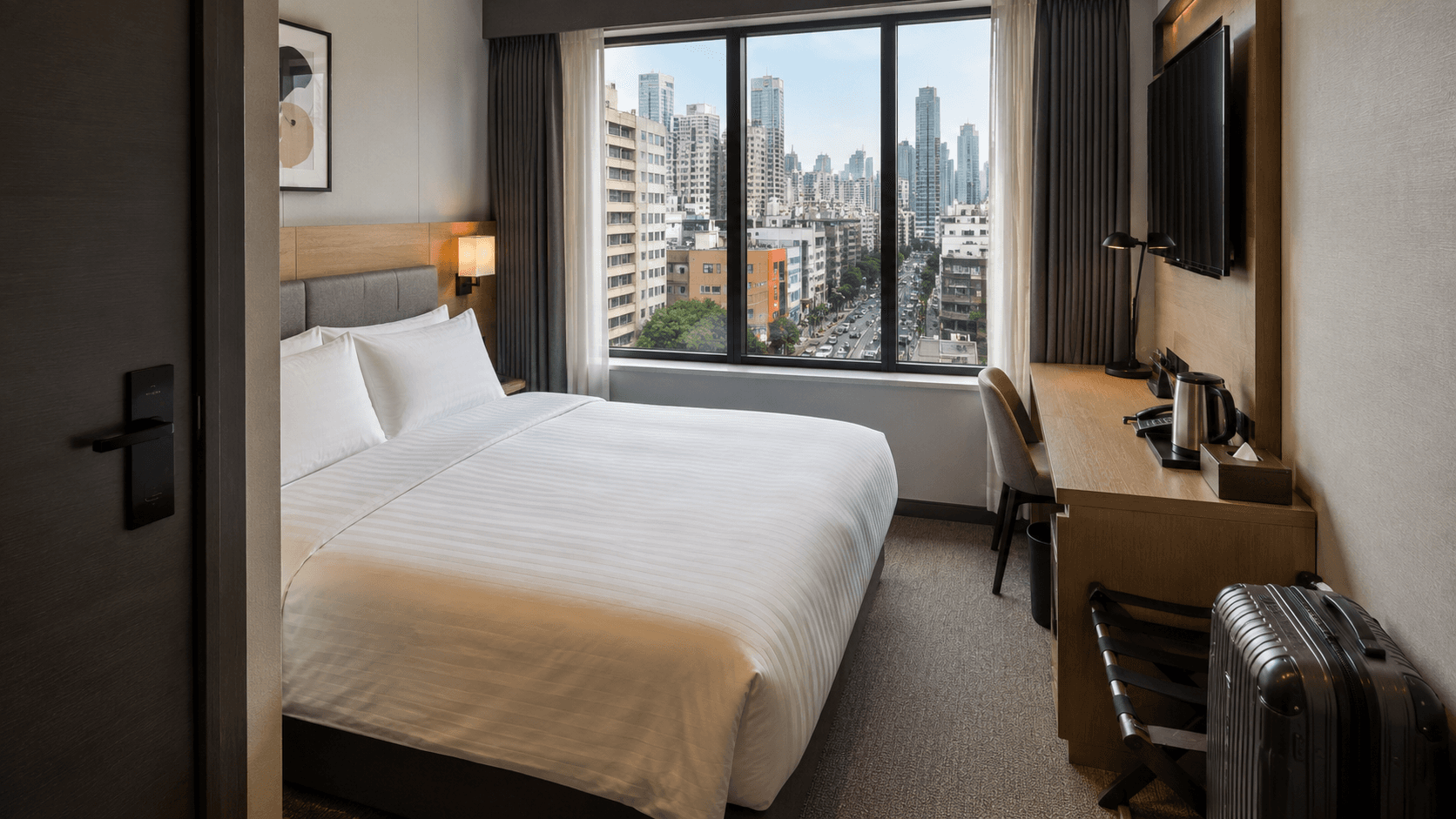
| Budget business hotel | KRW 70,000-130,000 | Compact room, private bathroom, Wi-Fi and basic amenities |
| Mid-range hotel | KRW 120,000-220,000 | Better location, larger room or more consistent service |
| Upscale hotel | KRW 220,000-450,000 | Full-service property, often with restaurants and fitness facilities |
| Luxury hotel or resort | KRW 350,000-900,000+ | Premium location, extensive facilities or resort services |
These ranges normally refer to one room rather than a price per person. A double or twin room may therefore offer better value for two travelers than two dormitory beds or single rooms.
Typical hotel prices by destination
Seoul
Seoul has Korea's widest range of accommodation, but its most convenient districts are also among the most expensive. A realistic budget for a private room is:
- KRW 70,000-130,000: simple hotel outside the most popular blocks or a compact business hotel
- KRW 130,000-250,000: comfortable mid-range hotel in a convenient district
- KRW 250,000-500,000+: upscale or luxury hotel
Myeong-dong, Hongdae, Gangnam, Jongno, Insadong, and the area around Seoul Station are popular because they simplify sightseeing or airport transfers. Prices can rise quickly on Friday and Saturday nights, during major concerts and conventions, and around Korean public holidays.
Travelers focused on value can also check Mapo, Yeongdeungpo, Dongdaemun, Guro, or neighborhoods a few subway stops from major attractions. A cheaper room is not necessarily good value, however, if reaching it requires a long walk uphill or several transfers.
Busan
In Busan, location and sea views have a major effect on price. Typical rates are:
- KRW 60,000-120,000: budget hotel or simple private room
- KRW 110,000-220,000: mid-range hotel
- KRW 250,000-600,000+: upscale beachfront hotel or resort-style property
Haeundae and Gwangalli become expensive on summer weekends and during major events. Rooms near Busan Station, Seomyeon, or Nampo may be more economical and can be more practical for rail travel, nightlife, markets, or day trips.
Do not assume that every room in a beachfront hotel faces the water. Ocean-view rooms are often sold as a separate, more expensive category.
Jeju Island
Jeju has inexpensive city hotels, pensions, family resorts, and high-end coastal properties. Expect approximately:
- KRW 50,000-110,000: simple hotel, guesthouse, or pension room
- KRW 100,000-220,000: mid-range hotel or family accommodation
- KRW 250,000-700,000+: major resort or luxury property
Jeju City is usually convenient for the airport and public buses. Seogwipo provides better access to many southern attractions, while Jungmun contains several large resorts. A low room rate in a remote coastal area may require a rental car or substantial taxi spending.
Prices commonly rise during school vacations, summer weekends, spring flower periods, and Korean holiday travel peaks. Some pensions also set separate weekend and peak-season rates.
Smaller cities
In cities such as Daegu, Daejeon, Gwangju, Jeonju, Suwon, and Ulsan, travelers can often find private rooms for KRW 50,000-120,000. Rates may still increase near convention centers, sports venues, festivals, universities, or industrial districts on busy dates.
Tourist centers such as Gyeongju may behave more like resort destinations. Weekends can cost substantially more than ordinary weekdays, particularly near Bomun Tourist Complex.

What changes the price?
Your travel dates
Hotel prices are dynamic. The same room can have a different price on consecutive nights, and Saturday is often more expensive than Sunday or a midweek night.
Demand is commonly higher during:
- Cherry blossom and spring travel periods
- July and August summer holidays
- Autumn foliage season
- Major festivals, exhibitions, concerts, and sporting events
- Lunar New Year, known as Seollal (설날)
- Chuseok (추석), Korea's major autumn holiday
- Christmas and year-end weekends
The exact dates of Seollal and Chuseok change each year because they follow the lunar calendar. Check Korea's current public-holiday calendar before booking.
Location
Being beside a subway station, beach, palace district, airport transport stop, or major shopping area usually costs more. Compare the price difference with the cost and time of daily transportation.
In Seoul, a property described as being in a famous district may still be far from the station or on the district's outer edge. Check the pin on a map instead of relying only on the neighborhood name.
Room occupancy
Search with the correct number of adults and children. Korean hotels may restrict occupancy more strictly than travelers expect, especially in compact business hotels.
A room containing one double bed does not automatically permit three guests. Extra beds may be unavailable, and children may incur additional breakfast or bedding charges even when they can stay in the existing bed.
Room type and view
Windowless rooms, semi-basement rooms, and rooms with small internal windows may be cheaper. At coastal hotels, mountain, city, partial-ocean, and full-ocean views can all carry different prices.
Korean listings may use the word ondol (온돌) for a room where guests sleep on floor bedding over a heated floor. This can work well for families but is different from a conventional Western-style bed.
Refund conditions
The lowest advertised rate is often non-refundable. A flexible rate may cost more but can be worth paying for if flights, visas, or travel dates are uncertain.
Read the cancellation deadline in Korea Standard Time. Also check whether cancellation requires contacting the booking platform rather than the hotel directly.
Are taxes included?
Korea's standard value-added tax rate is 10%, as documented through the National Tax Service. However, the amount shown at the beginning of a hotel search may or may not include tax and hotel-specific service charges.
Before payment, look for a clearly labeled total, not only the nightly base rate. Verify whether the total includes:
- Value-added tax
- Service charges
- Breakfast
- Extra-person or extra-bed fees
- Resort or facility charges
- Parking
- Cancellation costs
The display method depends on the hotel and booking platform. A room initially shown as KRW 150,000 can cost more at checkout if mandatory charges were excluded from the first screen.
Breakfast and other common extras
Breakfast is not automatically included in Korean hotel rates. At a business hotel it may add roughly KRW 10,000-25,000 per person, while breakfast at an upscale hotel can cost KRW 40,000-70,000 or more. These are planning estimates; check the property's current dining price.
Other possible expenses include:
- Early check-in or late checkout: Subject to availability and sometimes charged by the hour
- Swimming pool access: Occasionally limited to one session or sold separately
- Sauna access: Not always included, even at an upscale hotel
- Parking: Often free outside central districts but limited or paid in dense city areas
- Laundry: Coin laundries are common in business hotels; full laundry service is much more expensive
- Disposable amenities: Policies vary, so bring a toothbrush, toothpaste, and razor unless the listing confirms they are supplied
If a pool, spa, children's facility, or rooftop area matters to you, check its opening dates and admission rules directly. Outdoor pools may operate only seasonally and may require advance reservations.
Understanding Korean accommodation labels
Hotel stars
Korea has an official hotel-rating system covering eligible tourist hotels. Ratings run from one to five stars and assess facilities and service standards. You can search rated properties through the Korea Hotel Rating System.
Do not confuse an official classification with a booking site's guest score. A platform rating of 4.5 out of 5 usually represents customer reviews, not the hotel's official grade.
Motels
A Korean motel can be a practical, inexpensive private room with a large bed and bathroom. Quality varies widely. Some primarily serve short-stay local customers, while others function much like budget hotels.
Check recent room photographs, smoking policy, luggage storage, reception hours, and whether the property accepts international booking platforms. Travelers wanting a conventional hotel environment may prefer a business hotel even when it costs slightly more.
Guesthouses and hostels
Guesthouses may offer dormitories, private rooms, or both. Bathrooms can be private, shared among several rooms, or located outside the bedroom. Reception is less likely to operate 24 hours, so late-arrival instructions matter.
Pensions
In Korea, a pension (펜션) usually means holiday accommodation rather than a retirement payment. It may resemble a cottage, studio, villa, or small family-run resort. Pensions are common in Jeju and rural or coastal destinations.
Many are designed for groups and may include kitchen facilities or barbecue areas. Check towel quantities, cooking rules, barbecue charges, and public-transport access before reserving.

How to find a better-value room
1. Search by total stay price
A cheap first night can conceal more expensive weekend nights. Compare the total for the complete stay, including mandatory charges.
2. Check both direct and platform rates
A hotel's direct website may offer breakfast, flexible cancellation, loyalty benefits, or a package that is not available elsewhere. A booking platform may offer a lower room-only price. Compare identical room types and cancellation terms.
3. Move one or two stations away
In Seoul and Busan, changing neighborhoods slightly can reduce the price without making sightseeing difficult. Prioritize a short, level walk to a station over a famous address with poor access.
4. Compare weekdays and weekends
For a flexible itinerary, place resort stays on weekdays. Business-oriented districts may sometimes become cheaper on weekends, while beach and entertainment districts usually become more expensive.
5. Book refundable accommodation first
For high-demand dates, securing a reasonable refundable room can protect your trip while you continue comparing. Recheck the market before the free-cancellation deadline, but do not maintain duplicate reservations longer than necessary.
6. Calculate transport costs
An airport-area hotel may save money before an early flight but add time during a sightseeing stay. Conversely, an expensive central room can reduce taxi use and make short visits much easier.
A realistic accommodation budget
For two people sharing one room, these are useful starting budgets:
| Travel style | Daily room budget | Seven-night budget |
|---|---|---|
| Basic private accommodation | KRW 60,000-100,000 | KRW 420,000-700,000 |
| Comfortable mid-range trip | KRW 130,000-220,000 | KRW 910,000-1,540,000 |
| Upscale trip | KRW 250,000-450,000 | KRW 1,750,000-3,150,000 |
Add a buffer of at least 20% if your trip includes peak-season weekends, a major event, or a resort destination. Luxury pricing has no dependable upper limit, particularly for suites, villas, and premium holiday packages.
Common booking mistakes
- Comparing a tax-exclusive price with a tax-inclusive price
- Searching for one guest and later arriving with two or more
- Assuming breakfast, parking, or pool admission is included
- Booking a non-refundable room before flights are confirmed
- Choosing a remote Jeju property without checking transportation
- Assuming every twin room has two large beds
- Ignoring the last check-in time at a guesthouse
- Confusing customer-review stars with an official hotel grade
- Selecting an ocean-view hotel without confirming that the booked room has that view
What to check before you go
Confirm these details shortly before arrival:
- Final amount and payment status
- Cancellation deadline and time zone
- Exact room occupancy and bed configuration
- Check-in and checkout times
- Reception hours and late-arrival procedure
- Distance and walking route from the nearest station or bus stop
- Breakfast inclusion and serving hours
- Luggage storage before check-in or after checkout
- Laundry and parking availability
- Pool, sauna, gym, or children's-facility rules
- Accessibility features, including elevators and step-free entrances
- Whether the hotel name and address are available in Hangul for a taxi driver
For destination research and registered accommodation listings, consult the Korea Tourism Organization's VisitKorea website. For a specific reservation, the hotel's own confirmation and cancellation policy should take priority over general guidance.
Frequently asked questions
Is KRW 100,000 enough for a hotel in Korea?
It is often enough for a basic private room or budget business hotel, particularly outside central Seoul and peak travel periods. It may not be enough for a convenient central hotel on a busy weekend.
Is Seoul more expensive than the rest of Korea?
Central Seoul is generally among the country's more expensive hotel markets. Beach resorts, Jeju properties, and festival destinations can equal or exceed Seoul prices during high-demand periods.
Are Korean hotels charged per person or per room?
Most standard hotel rates are quoted per room, subject to a stated occupancy limit. Guesthouses, dormitories, and some group accommodations may price per person. Always enter the correct guest count.
When should I book?
For ordinary dates, start comparing several weeks ahead. Book earlier for cherry blossom season, summer beach weekends, major concerts, festivals, Seollal, Chuseok, and year-end travel. There is no universal cheapest booking day, and waiting can be expensive when availability is limited.
Sources
Rates and changeable booking information in this guide were last reviewed on June 11, 2026. Use the planning ranges to set a budget, then search your exact dates with the correct guest count and compare the final tax-inclusive totals.