Eating out in South Korea can be relatively affordable if you choose simple Korean meals, noodles, or gimbap. As a practical starting point, budget KRW 8,000–13,000 for an ordinary single-person meal and KRW 20,000–40,000 per person for Korean barbecue, shared dishes, or a meal with alcohol. Tourist districts, premium ingredients, cafés, delivery fees, and late-night drinks can raise the total quickly.
All official price figures below were verified on June 11, 2026. Restaurant prices can change, so treat the broader budget ranges as planning estimates rather than fixed nationwide rates.
At a glance
| Eating style | Practical budget per person |
|---|---|
| Gimbap or a very simple meal | KRW 4,000–8,000 |
| Standard Korean lunch | KRW 8,000–13,000 |
| Noodles, bibimbap, or soup meal | KRW 9,000–15,000 |
| Casual dinner with a drink | KRW 15,000–30,000 |
| Korean barbecue | KRW 20,000–40,000+ |
| Café drink and dessert | KRW 6,000–15,000 |
| Comfortable daily food budget | KRW 40,000–70,000 |
These are practical travel-planning ranges. The actual bill depends on the city, neighborhood, restaurant type, portion rules, and whether you order drinks or shared dishes.
Official restaurant price benchmarks
The most useful official reference is the Korea Consumer Agency’s True Price restaurant database, known in Korean as Chamgagyeok (참가격). It publishes regional averages using data supplied through the Korean government’s local price-monitoring system.
The table below shows the Seoul figures displayed when checked on June 11, 2026.
| Menu item | Official Seoul average |
|---|---|
| Gimbap, one roll | KRW 3,800 |
| Jajangmyeon, one serving | KRW 7,731 |
| Kimchi-jjigae meal | KRW 8,654 |
| Kalguksu, one serving | KRW 10,038 |
| Bibimbap, one serving | KRW 11,692 |
| Naengmyeon, one serving | KRW 12,615 |
| Samgyetang, one serving | KRW 18,154 |
| Samgyeopsal, converted to 200 grams | KRW 21,321 |
The database warns that these are provisional averages. The restaurants sampled in different cities may not serve products of identical quality, so the figures should not be used as a precise ranking of which region is cheapest.
They are nevertheless useful benchmarks. A KRW 9,000 kimchi stew in Seoul is close to the monitored average. A KRW 15,000 version may still be reasonable in a major tourist district, department store, or restaurant using premium ingredients, but it is clearly above the basic city benchmark.
How much prices vary by region
The same official data shows meaningful regional variation. Across the listed cities and provinces, the monitored prices included:
- Gimbap: approximately KRW 2,889–3,800 per roll
- Jajangmyeon: approximately KRW 6,750–7,750
- Kimchi-jjigae meal: approximately KRW 8,222–10,800
- Bibimbap: approximately KRW 9,154–11,900
- Naengmyeon: approximately KRW 9,556–12,615
- Samgyetang: approximately KRW 15,600–18,154
- Samgyeopsal: approximately KRW 15,305–21,321 per standardized 200 grams
Do not assume every restaurant outside Seoul will be cheaper. Jeju restaurants serving local seafood or black pork, resort areas, famous market stalls, and restaurants near major attractions may charge more than ordinary neighborhood businesses.
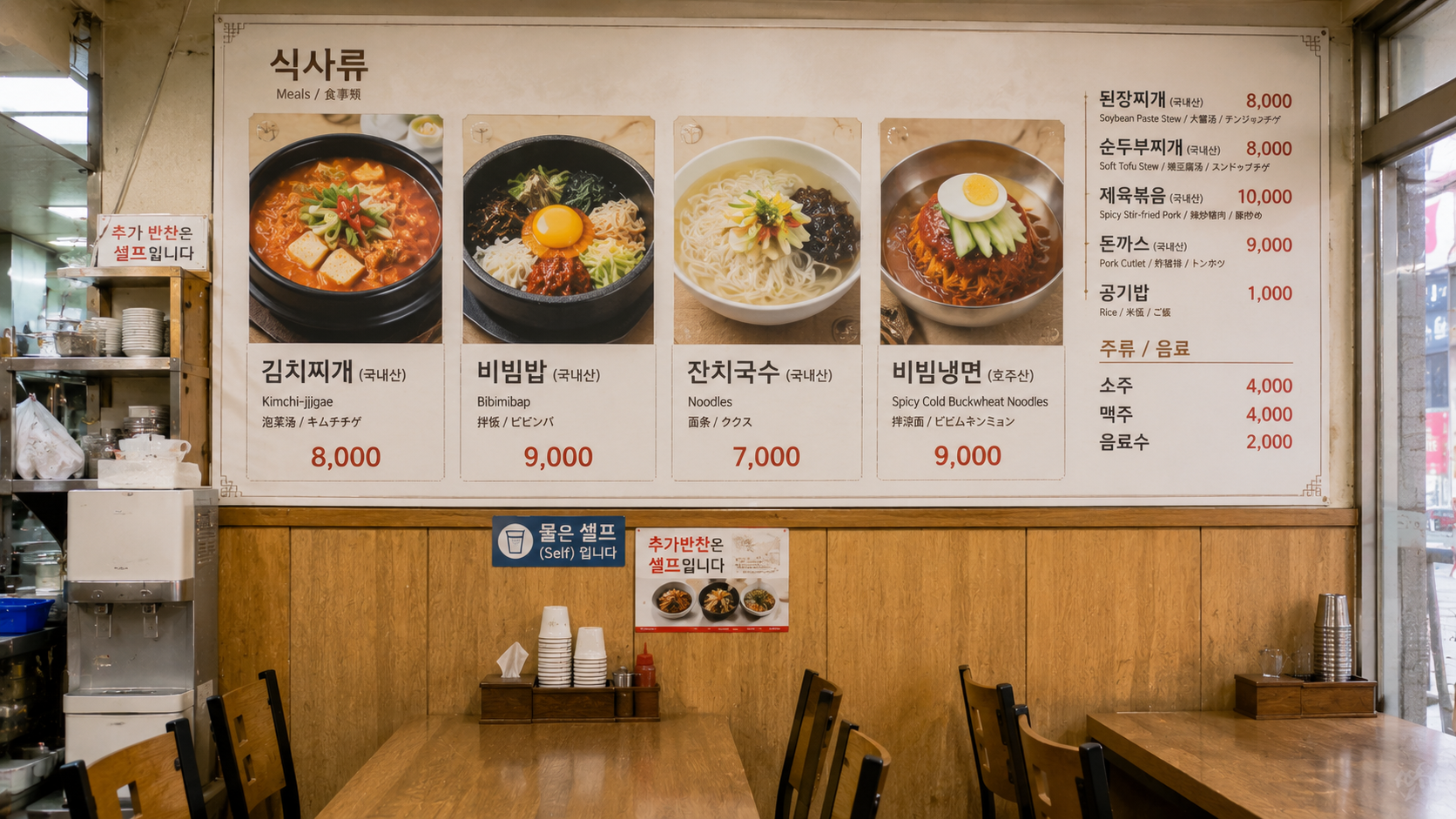
What different types of meals cost
Gimbap and quick meals
Gimbap (김밥) is a roll of rice, vegetables, and other fillings wrapped in dried seaweed. The official figures refer to one roll, not necessarily a complete set meal. One basic roll may be enough for a light breakfast, but many travelers will want two rolls or a roll with ramyeon, dumplings, or tteokbokki.
A sensible budget is KRW 4,000–8,000 for a quick meal. Specialty fillings such as tuna, cheese, pork cutlet, or beef usually cost more than the basic vegetable version.
Look for signs saying gimbap (김밥) or bunsik (분식). Bunsik refers to inexpensive casual foods such as gimbap, ramyeon, dumplings, and spicy rice cakes.
Soup, stew, and rice meals
A standard Korean lunch often consists of rice with soup or stew and several small side dishes. Common choices include:
- Kimchi-jjigae: kimchi stew
- Doenjang-jjigae: fermented soybean paste stew
- Sundubu-jjigae: soft tofu stew
- Gukbap: rice served with or added to soup
- Seolleongtang: ox-bone soup
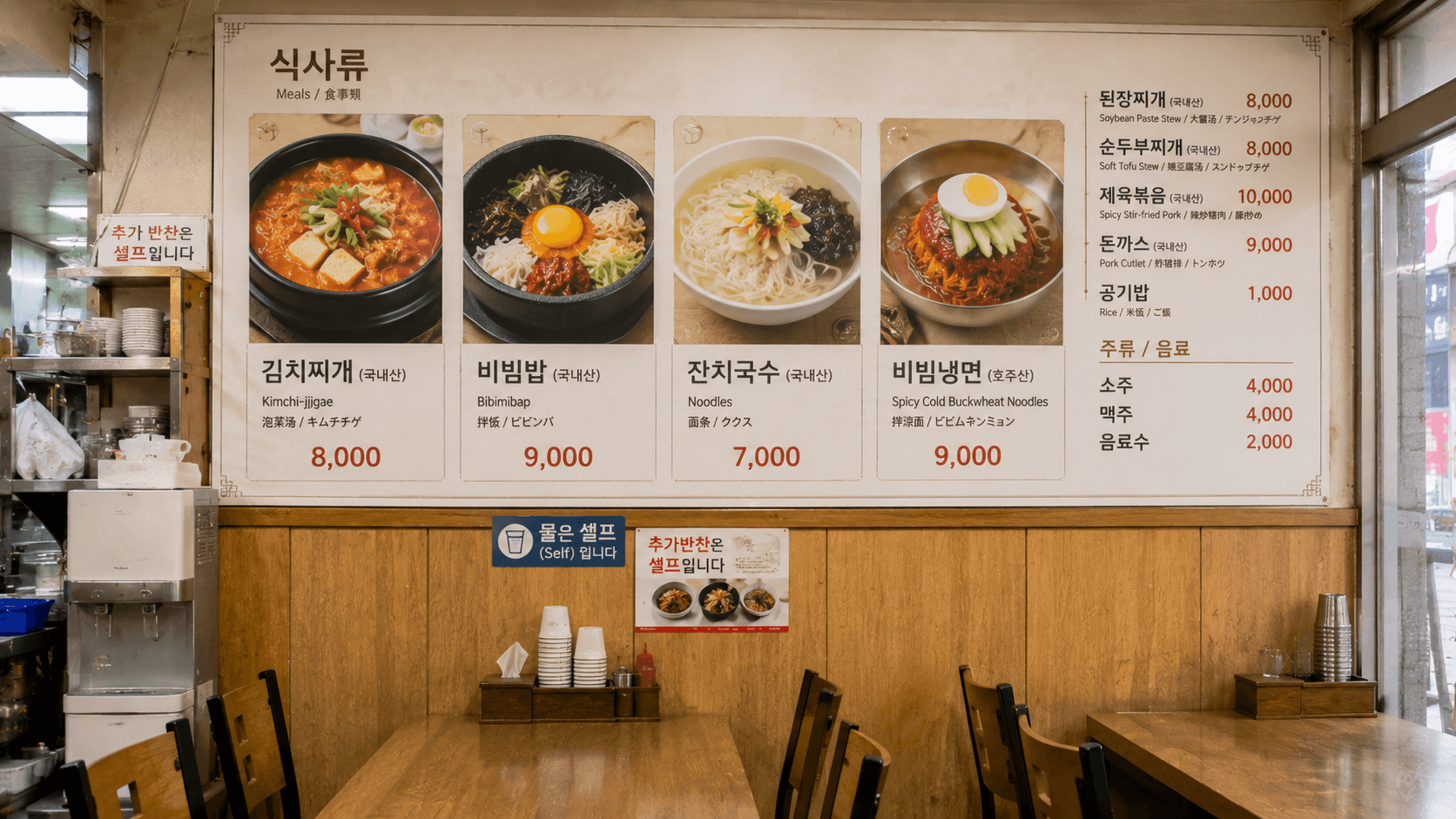
Plan on KRW 8,000–13,000 at an ordinary neighborhood restaurant. Premium meat, seafood, tourist locations, or larger portions can push the price higher.
Rice is commonly included in a set meal, but this is not universal. Check whether the menu says gonggibap byeoldo (공기밥 별도), meaning that a bowl of rice is charged separately.
Noodles and rice dishes
The official averages show that common noodle and rice dishes now frequently sit around or above KRW 10,000. Budget KRW 9,000–15,000 for bibimbap, kalguksu, naengmyeon, or a similar one-person dish.
Some restaurants specialize in a single dish and may offer good value despite a very short menu. Conversely, a traditional-looking interior does not guarantee low prices. Read the posted menu before sitting down when possible.
Korean barbecue
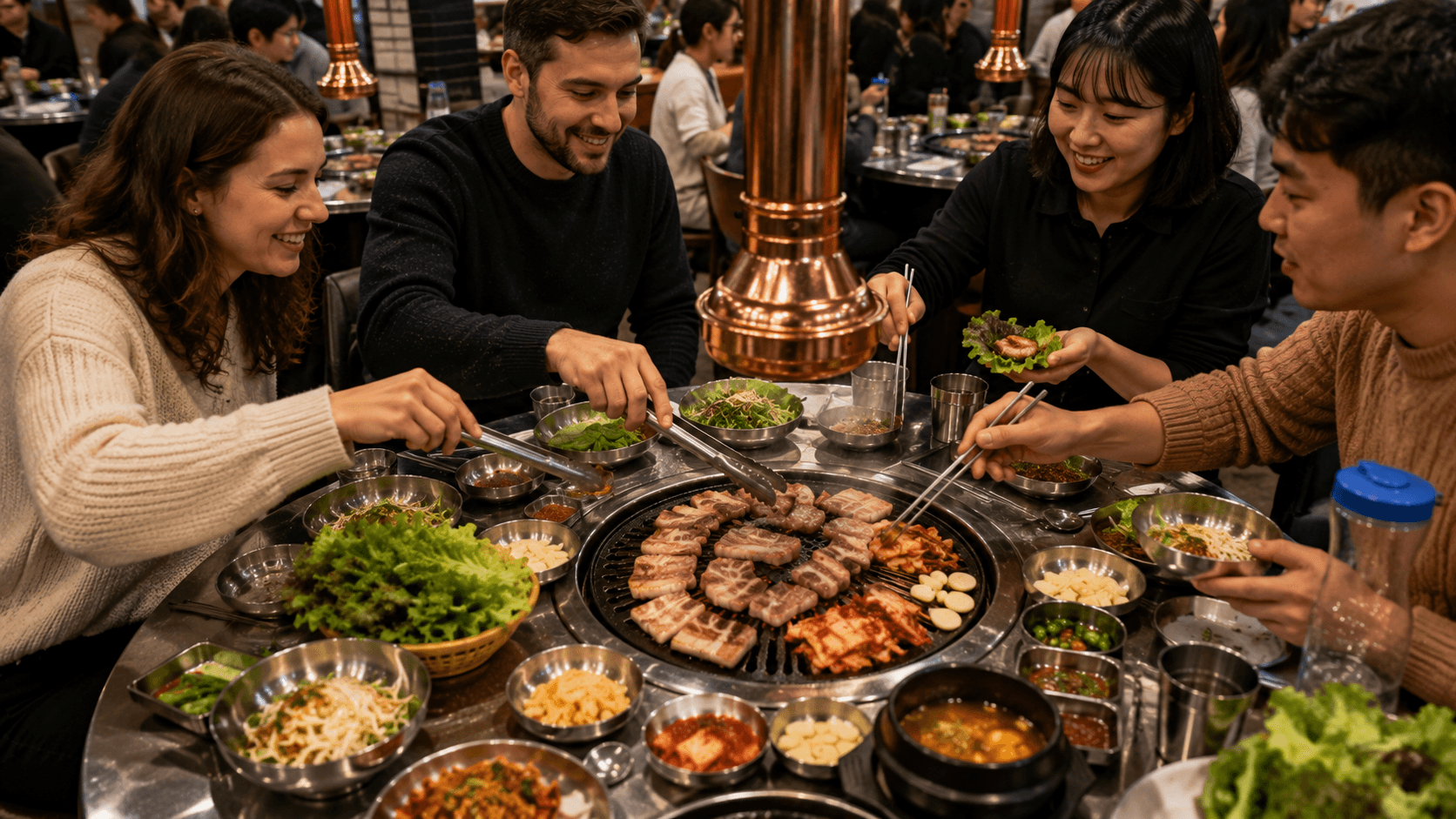
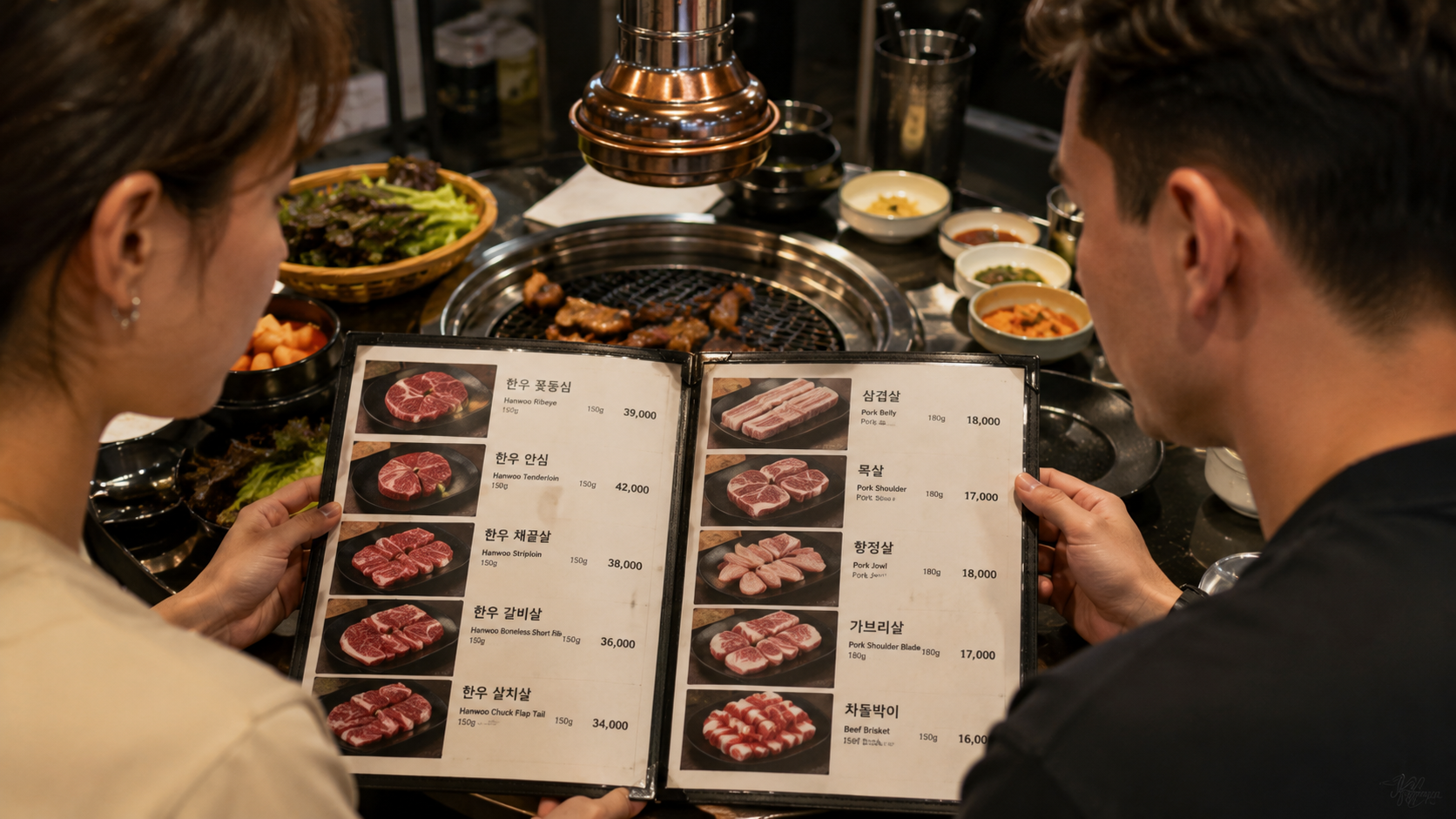
Barbecue requires more attention because menu prices are normally shown per portion, not per table. The weight should appear beside the item, commonly as a figure in grams.
The official comparison standard converts samgyeopsal, or pork belly, to 200 grams. Seoul’s monitored average was KRW 21,321 for that standardized amount when verified. Your total may also include additional meat, rice, stew, noodles, or alcohol.
For a realistic barbecue dinner, allow KRW 20,000–40,000 per person. Premium Korean beef, known as hanwoo (한우), can cost substantially more.
Many barbecue restaurants require an initial order of two or more portions. This can make solo dining difficult even when the menu lists a price for one portion. Look for wording such as 2-inbun isang jumun (2인분 이상 주문), meaning a minimum order of two servings.
Shared dishes and group meals
Dishes such as dakgalbi, hot pot, braised chicken, seafood stew, and large plates of fried chicken are often intended for two or more people. The price on the menu may be for the whole dish rather than for each diner.
Check these labels:
- So (소): small
- Jung (중): medium
- Dae (대): large
- 1-inbun (1인분): one serving
- 2-in (2인): intended for two people
Dividing a shared dish can be economical, but extras add up. Fried rice prepared in the remaining sauce, noodles, cheese, rice, and drinks are usually separate orders.
How much to budget per day
Low-cost plan: KRW 20,000–35,000
This requires deliberate choices rather than three full restaurant meals. A workable day might include a convenience-store or bakery breakfast, a gimbap or bunsik lunch, and an inexpensive soup or stew for dinner.
This budget leaves little room for café visits, alcohol, premium desserts, or tourist-area restaurants.
Comfortable plan: KRW 40,000–70,000
This is a more realistic target for most independent travelers. It allows two ordinary restaurant meals, a simple breakfast, and one coffee or snack. You can occasionally spend more on barbecue by balancing it with a cheaper meal earlier in the day.
Social or food-focused plan: KRW 70,000–120,000+
Use this range if your itinerary includes barbecue, seafood, multiple cafés, cocktails, premium desserts, or late-night dining. Alcohol can substantially change the bill, particularly when a group continues ordering bottles or additional food.
These daily totals are budgeting suggestions calculated from meal-level estimates, not government averages.
Costs that visitors often overlook
Drinks and alcohol
Water is commonly provided without charge at casual Korean restaurants, but bottled water, soft drinks, coffee, beer, soju, and traditional alcohol are separate menu items unless a set explicitly includes them.
When eating with a group, confirm whether the bill will be divided equally or whether each person is paying for individual orders. Korean restaurants normally issue one bill per table, although a restaurant may process separate card payments when asked.
Side dishes
Small side dishes are called banchan (반찬). They are generally part of a Korean meal rather than individually ordered appetizers. Policies differ, however, and premium, unusually large, or additional items may be charged.
Do not assume every dish placed on the table is unlimited. Ask before requesting repeated portions if the restaurant has posted a refill charge or uses a self-service side-dish station.
Delivery and takeaway
Delivery can involve a delivery charge, minimum order, packaging fee, or higher app price. Some Korean delivery platforms also require local account information or payment methods, making direct app ordering inconvenient for short-term visitors.
Takeaway is pojang (포장). It can avoid delivery charges, but discounts are not guaranteed and some restaurants charge for containers.
Tourist and location premiums
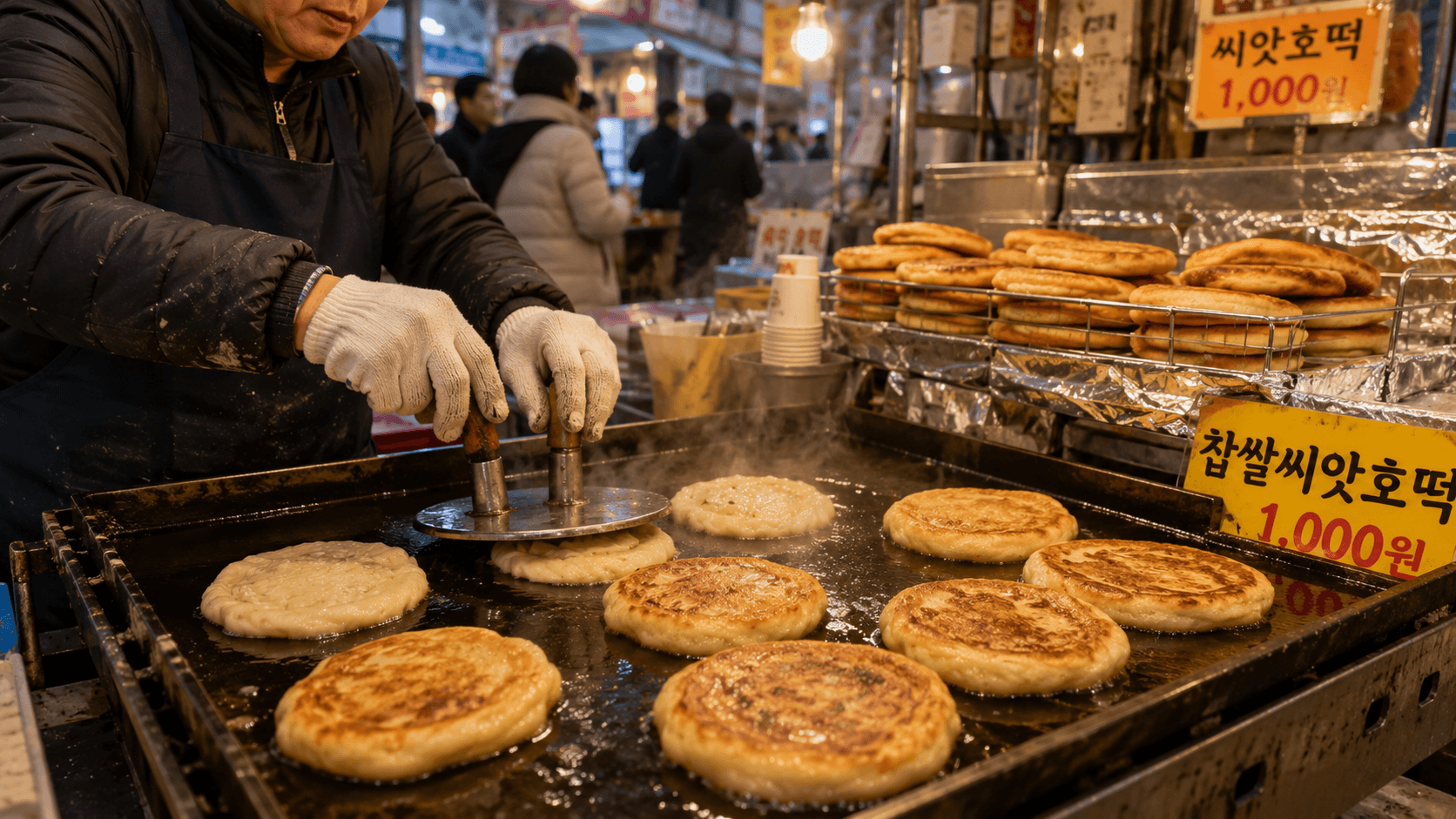
Restaurants inside department stores, hotels, airports, theme parks, and major attractions usually need a larger budget than neighborhood restaurants. Famous market foods are not automatically cheap either. A stall may sell small portions individually, encouraging customers to buy several items.
Check the full price and portion before ordering, especially for seafood sold by weight or market meals involving separate preparation charges.
Paying at Korean restaurants
At many casual restaurants, you pay at the counter when leaving rather than asking for the bill at the table. Bring the table number or tell the cashier where you sat if necessary.
International credit or debit cards are widely usable in established restaurants, but acceptance is not guaranteed. A foreign card can also fail because of the issuer, terminal, or network connection. Carry some KRW cash and a second payment card as backup, especially when visiting markets, temporary stalls, or rural areas.
Tipping is not normally added as a separate voluntary step at ordinary Korean restaurants. Pay the displayed bill unless the business clearly discloses a service charge or another fee.
How to keep food costs under control
- Read the price and unit together. At barbecue restaurants, KRW 18,000 may mean one 150-gram portion, not the total meal.
- Check minimum-order rules. A restaurant may require two servings even if you are dining alone.
- Use lunch menus. Restaurants sometimes offer smaller or simpler weekday lunch sets, but availability and hours vary.
- Eat one expensive meal per day. Pair barbecue or seafood with a low-cost breakfast and a simple noodle meal.
- Move one or two streets away from major attractions. Compare posted menus instead of assuming the closest restaurant is representative.
- Confirm seafood pricing. Ask whether the quoted amount is per fish, per kilogram, per person, or for the entire platter.
- Review kiosk selections carefully. Self-service machines may automatically suggest larger sets, side dishes, or drink upgrades.
- Check recent menu photos. Map listings can help with translation and budgeting, but user-uploaded photos may be outdated. Treat the restaurant’s current menu as final.
What to check before you go
- Current menu prices on the restaurant’s official page or recent menu board
- Whether reservations are accepted or required
- Opening hours and last order time
- Break time between lunch and dinner service
- Minimum portions for barbecue or shared dishes
- Whether solo diners are accepted
- Whether rice, drinks, or side dishes cost extra
- Card acceptance and a backup payment method
- Accessibility, including stairs, floor seating, and restroom location
- Allergy or dietary restrictions written clearly in Korean
Restaurant hours, break times, and last orders can change independently. Verify them directly with the restaurant on the day of your visit when timing is important.
FAQ
Is food cheap in South Korea?
Basic local meals can still be affordable, particularly gimbap, noodles, soups, and neighborhood lunch dishes. However, an assumption that every Korean meal costs only a few thousand won is outdated. Official Seoul averages for several common dishes were between roughly KRW 7,700 and KRW 12,600 when checked in June 2026.
Can I eat in Korea for KRW 30,000 a day?
Yes, but you will need to prioritize simple meals and limit cafés, alcohol, delivery, and premium restaurants. KRW 40,000–70,000 is a more flexible daily food budget for travelers who want ordinary restaurant meals and occasional snacks.
Is Korean barbecue expensive?
It costs more than a one-dish lunch because meat is ordered by portion and restaurants may require at least two servings. With side dishes, rice, stew, and drinks, a practical allowance is KRW 20,000–40,000 per person, with premium beef costing more.
Are menu prices per person?
Not always. A price may refer to one serving, one roll, a specific weight of meat, or an entire shared dish. Check for 1인분, gram weights, and small-medium-large labels before ordering.
Do I need to tip?
Tipping is not normally expected at ordinary Korean restaurants. Pay the amount shown on the bill unless a service charge has been clearly disclosed.
Next step
Set a daily food budget before choosing restaurants: KRW 30,000 for a strict budget, KRW 50,000–70,000 for comfortable everyday dining, or KRW 100,000 and above for a food-focused day. Then check each restaurant’s current menu, portion rules, break time, and last order before traveling across the city.