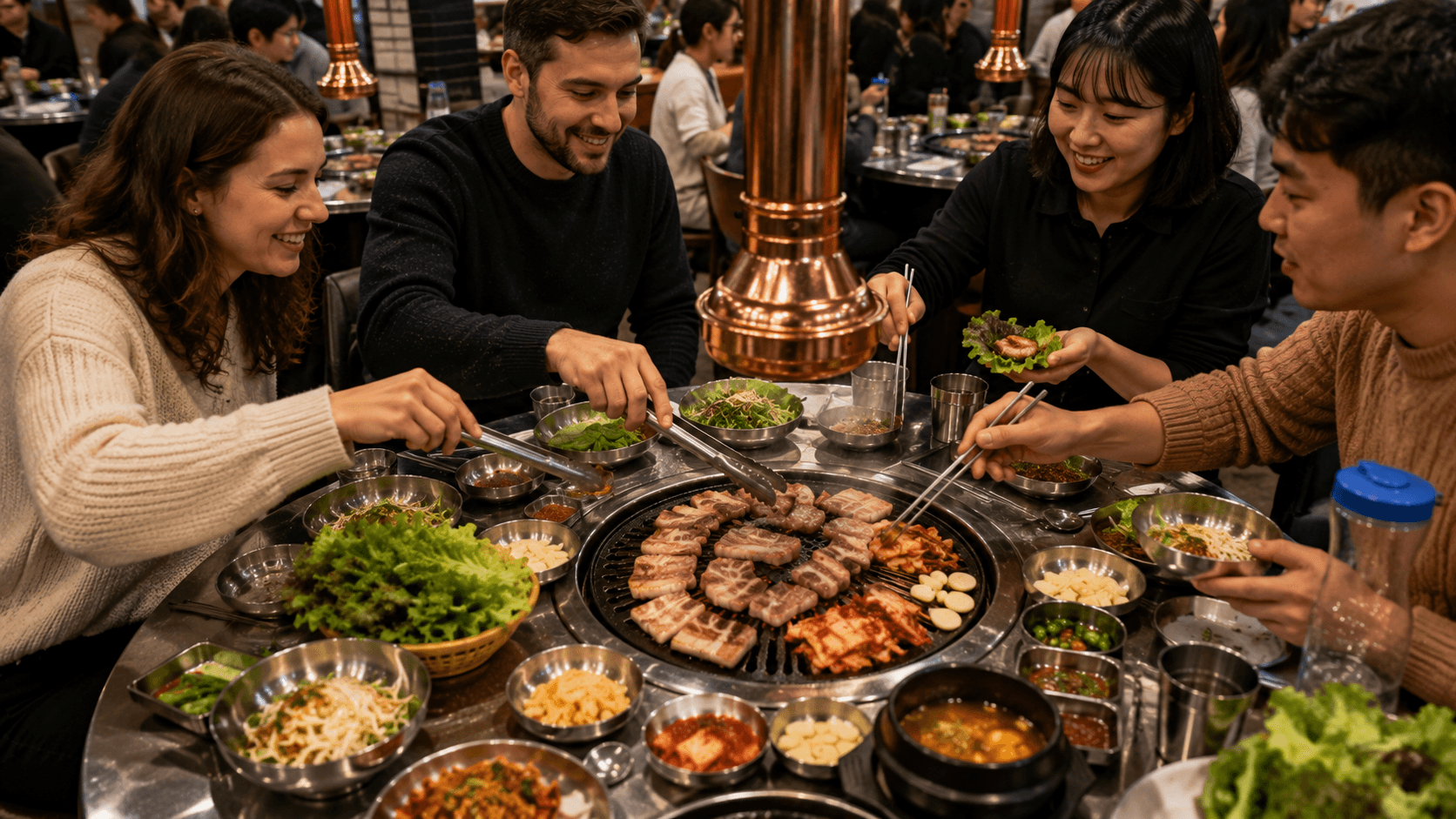
Food in South Korea can be reasonably affordable if you choose local set meals, noodle shops, markets, and convenience stores. As a practical starting point, budget KRW 25,000-40,000 per person per day for basic meals, or KRW 45,000-70,000 for a more flexible mix that includes cafés, snacks, or barbecue.
These are planning ranges, not official fixed prices. Costs differ by city, neighborhood, restaurant type, portion size, and ingredients. All figures in this guide were checked on June 9, 2026.
Quick answer
| Food or drink | Practical price range |
|---|---|
| Gimbap roll | KRW 3,000-5,000 |
| Convenience-store meal | KRW 5,000-9,000 |
| Jajangmyeon | KRW 6,000-9,000 |
| Simple Korean meal or stew | KRW 8,000-12,000 |
| Bibimbap | KRW 9,000-13,000 |
| Naengmyeon or kalguksu | KRW 9,000-13,000 |
| Korean barbecue | KRW 15,000-30,000+ per person |
| Fried chicken | KRW 20,000-30,000+ per order |
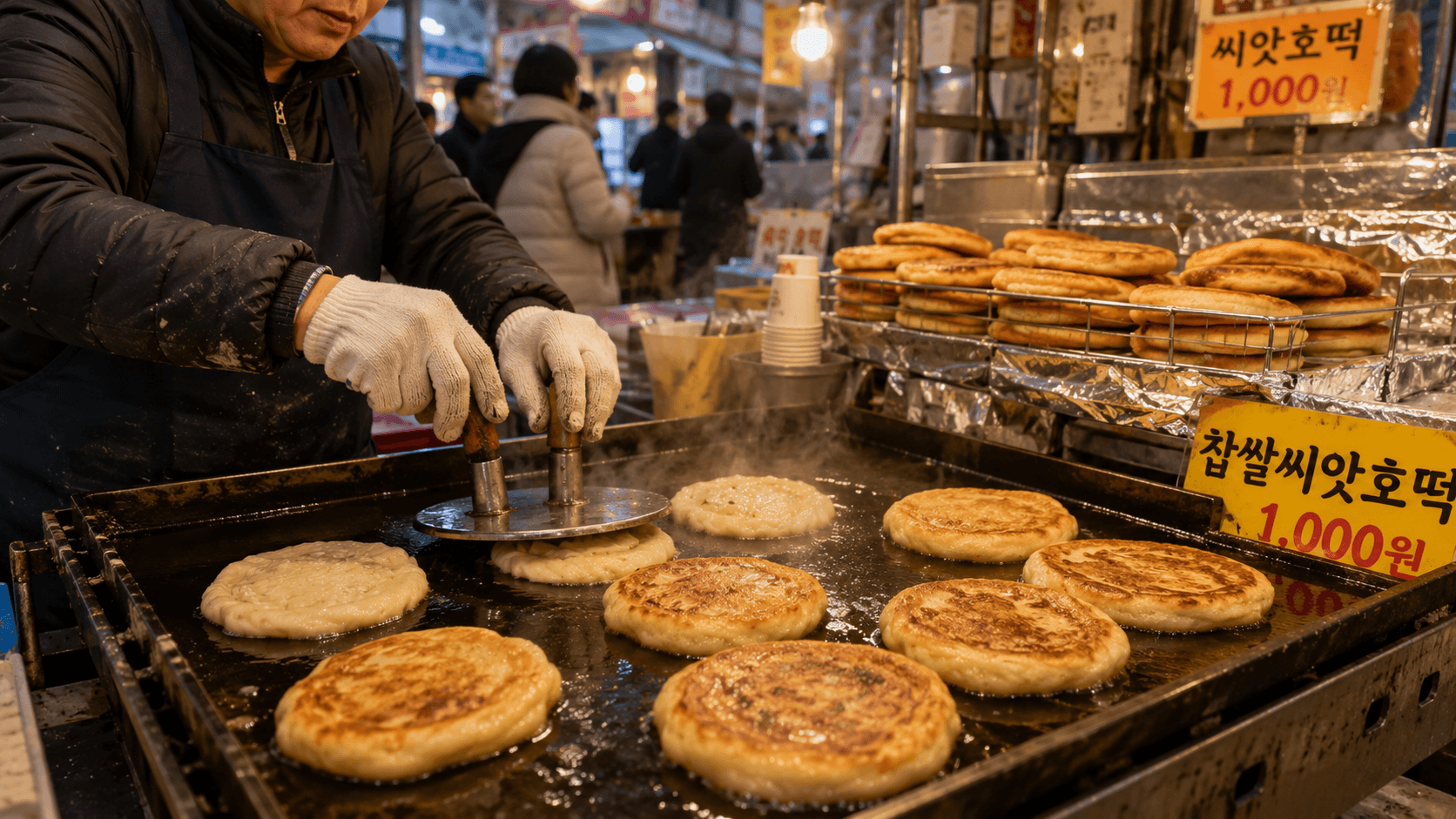
| Street-food snack | KRW 2,000-6,000 |
| Regular café drink | KRW 4,000-7,000 |
| Dessert or specialty café drink | KRW 6,000-10,000+ |
The ranges above are practical budgeting estimates. For a national reference, the Korea Agro-Fisheries & Food Trade Corporation's restaurant-industry portal reported the following average menu prices for the first quarter of 2026: gimbap KRW 3,431, jajangmyeon KRW 7,107, kimchi-jjigae set meal KRW 8,978, kalguksu KRW 8,965, bibimbap KRW 10,179, naengmyeon KRW 10,674, samgyetang KRW 16,625, and samgyeopsal KRW 14,468. These are survey averages rather than guaranteed menu prices; individual restaurants may charge considerably more. See the official The Foodservice Industry portal.
How much should you budget per day?
Budget traveler: KRW 25,000-40,000
This level is realistic if you eat simple local meals and limit café visits and alcohol. A sample day could include:
- Convenience-store or bakery breakfast: KRW 4,000-7,000
- Gimbap, noodles, or a cafeteria meal for lunch: KRW 6,000-10,000
- Stew, rice bowl, or simple set meal for dinner: KRW 9,000-13,000
- One snack or basic drink: KRW 3,000-6,000
Staying near a university, residential district, or traditional market generally gives you more low-cost options than eating beside a major attraction. However, do not assume every market is cheap: famous markets can have tourist-oriented dishes and tasting portions that add up quickly.
Comfortable traveler: KRW 45,000-70,000
This budget allows three restaurant meals, a café visit, and occasional desserts or drinks. It also gives you room to choose restaurants based on convenience rather than searching for the lowest price.
A typical day might be:
- Café or hotel-area breakfast: KRW 8,000-15,000
- Korean lunch set: KRW 10,000-15,000
- Café drink and dessert: KRW 7,000-13,000
- Barbecue, chicken, or a better dinner: KRW 20,000-35,000
Food-focused traveler: KRW 90,000 or more
Premium Korean beef, tasting menus, hotel restaurants, seafood, cocktails, and multiple café stops can take a daily budget beyond KRW 100,000. There is no useful upper limit: high-end dining in Seoul can cost several hundred thousand won per person.
Typical prices by type of meal
Korean set meals, soups, and stews
For everyday dining, expect to pay around KRW 8,000-12,000 for dishes such as kimchi-jjigae, doenjang-jjigae, gukbap, seolleongtang, or a basic baekban set meal. Rice is commonly included, but this depends on the menu.
Korean meals often arrive with small shared side dishes called banchan (반찬). Korea Tourism Organization's introduction to Korean food notes that rice, kimchi, and side dishes form the basis of a traditional Korean table. Basic banchan are normally included in the listed meal price, although premium or separately ordered dishes cost extra.
Some restaurants refill basic banchan without charge, but this is not a universal entitlement. Ask politely rather than assuming every dish can be refilled.
Gimbap and bunsik
Bunsik (분식) refers to inexpensive casual foods such as gimbap, tteokbokki, ramyeon, fish cake, and fried snacks. Korea Tourism Organization describes bunsik as simple, affordable food available at specialist shops, markets, rest areas, supermarkets, and convenience stores in its guide to bunsik and street food.
A gimbap roll usually costs around KRW 3,000-5,000, while tuna, cheese, or premium fillings may raise the price to KRW 5,000-7,000. Ramyeon or udon at a small shop commonly costs KRW 4,000-7,000. A combination of gimbap and tteokbokki can make a filling meal for roughly KRW 8,000-12,000.
Noodles and rice dishes
Everyday noodle and rice dishes generally fall between KRW 7,000 and KRW 13,000. Examples include jajangmyeon, kalguksu, bibimbap, fried rice, and deopbap, a topping served over rice.
Cold noodles such as naengmyeon are often slightly more expensive. Regional specialties, handmade noodles, seafood toppings, or restaurants in department stores can push a single dish above KRW 15,000.
Korean barbecue
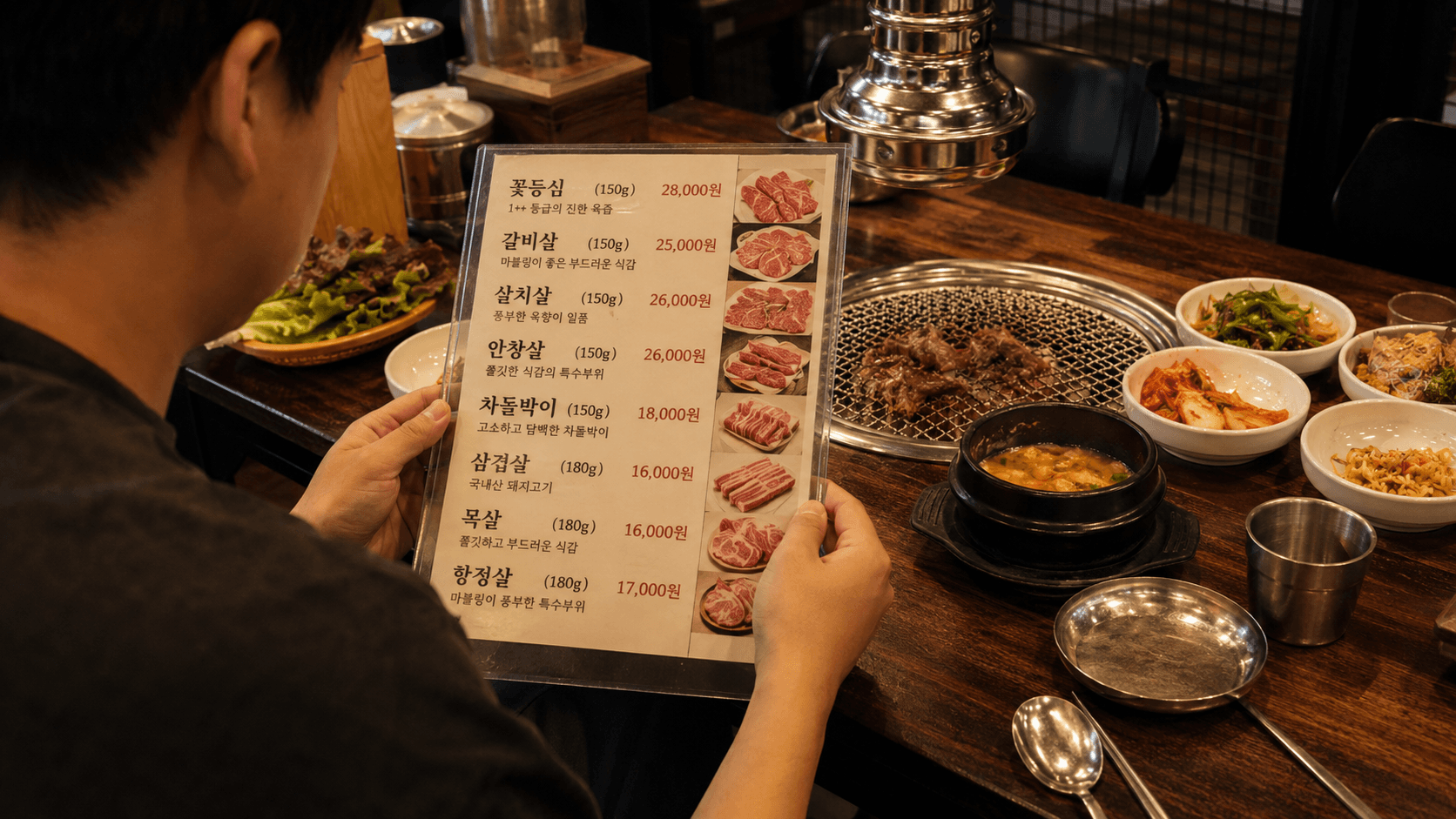
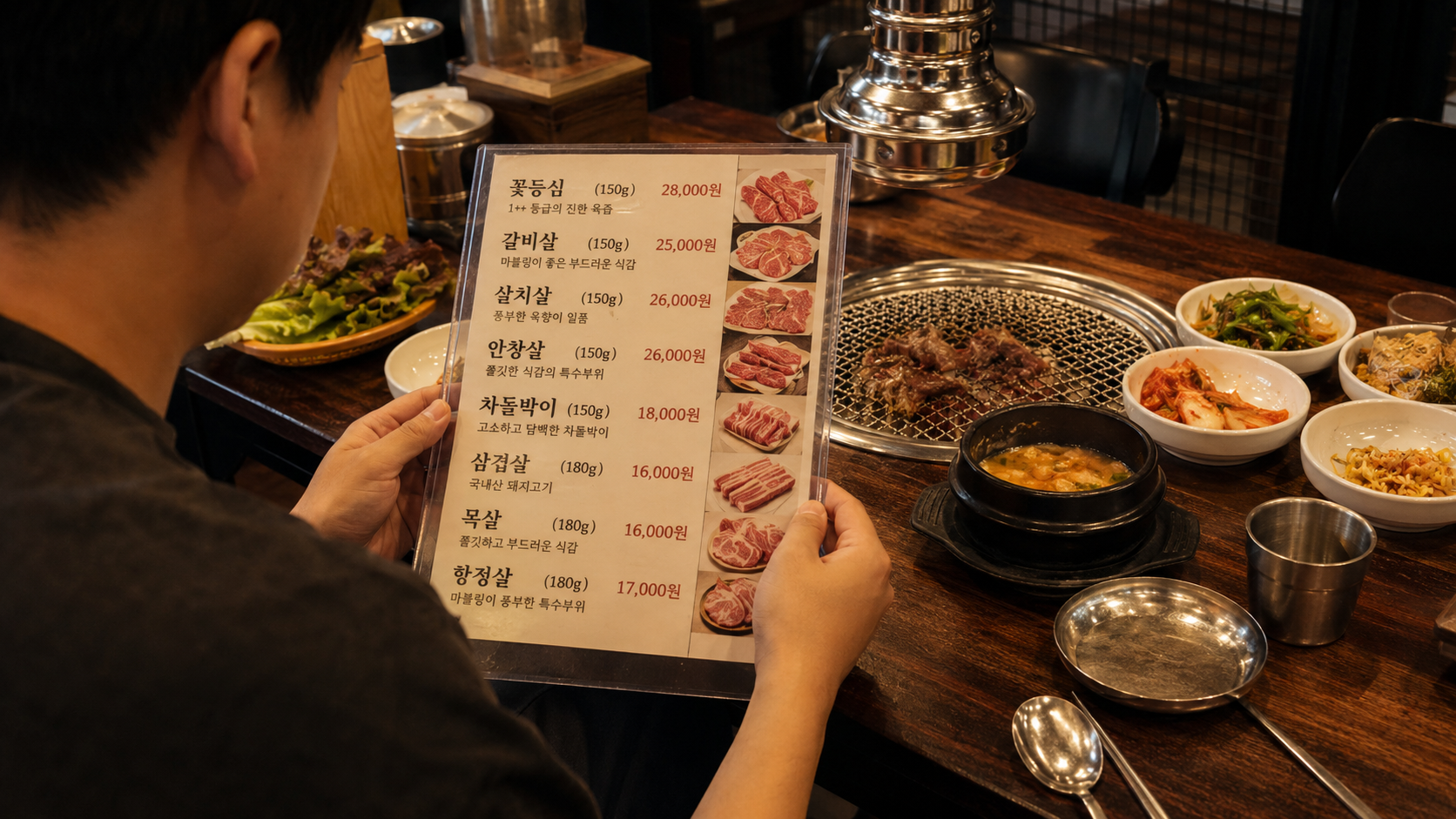
Korean barbecue pricing requires more attention because menus usually list meat by portion rather than as a complete meal. A serving may be 100-200 grams, and some restaurants require at least two servings for the table.
For ordinary pork barbecue, a useful allowance is KRW 15,000-30,000 per person, including meat and perhaps rice, stew, or a drink. Premium pork and beef cost more. Hanu (한우), domestically raised Korean beef, can be substantially more expensive than imported beef.
At a jeongyuk sikdang (정육식당), or butcher restaurant, customers buy meat from an attached counter and then pay a table-setting charge. Korea Tourism Organization's guide to hanu restaurants gives a typical setting charge of KRW 3,000-4,000 per person, but the restaurant's current menu should always be checked.
Before sitting down, confirm:
- The weight of each meat portion
- The minimum number of portions
- Whether the price applies per person or per serving
- Whether rice, stew, vegetables, or table setting costs extra
Fried chicken and shared dishes
Korean fried chicken is usually sold by the whole or half chicken rather than as an individual serving. Expect approximately KRW 20,000-30,000 or more per order, depending on the brand, flavor, and whether delivery charges apply. One order may be enough for two light eaters, but portion sizes vary.
Other dishes designed for sharing, including dakgalbi, jjimdak, hot pot, and large seafood dishes, may show a price for small, medium, or large portions. Check how many diners each size is intended to serve before calculating the per-person cost.
Street food and traditional markets
Individual market snacks usually cost KRW 2,000-6,000. Tteokbokki, hotteok, fish cake, mandu, skewers, and seasonal snacks are inexpensive separately, but trying five or six items can cost as much as a restaurant meal.
Prices may be displayed per piece, cup, plate, or skewer. At seafood markets, the displayed price for fish may not include preparation, cooking, or table fees at an upstairs restaurant. Ask for the total cost before agreeing to an order.
Convenience stores
A convenience-store meal can cost roughly KRW 5,000-9,000 when combining a lunch box, gimbap triangle, sandwich, or cup noodles with a drink. Promotional offers such as 1+1 and 2+1 mean buy one, get one free or buy two, get one free. These offers change frequently and apply only to marked products.
Most convenience stores have hot-water dispensers and microwaves. Seating is location-dependent, so do not assume food can be eaten inside every branch.
Coffee, desserts, and alcohol
Coffee can become a major part of a travel budget. A drink from a lower-cost chain may be around KRW 2,000-4,000, while a regular café commonly charges KRW 4,000-7,000. Large desserts, specialty drinks, rooftop cafés, and cafés in popular districts can cost KRW 8,000-15,000 per item.
At restaurants, a bottle of soju or beer commonly adds several thousand won to the bill. Bars, hotel lounges, craft-beer venues, and cocktail bars charge considerably more. Check whether a venue has a cover charge, mandatory snack order, or minimum order before entering.
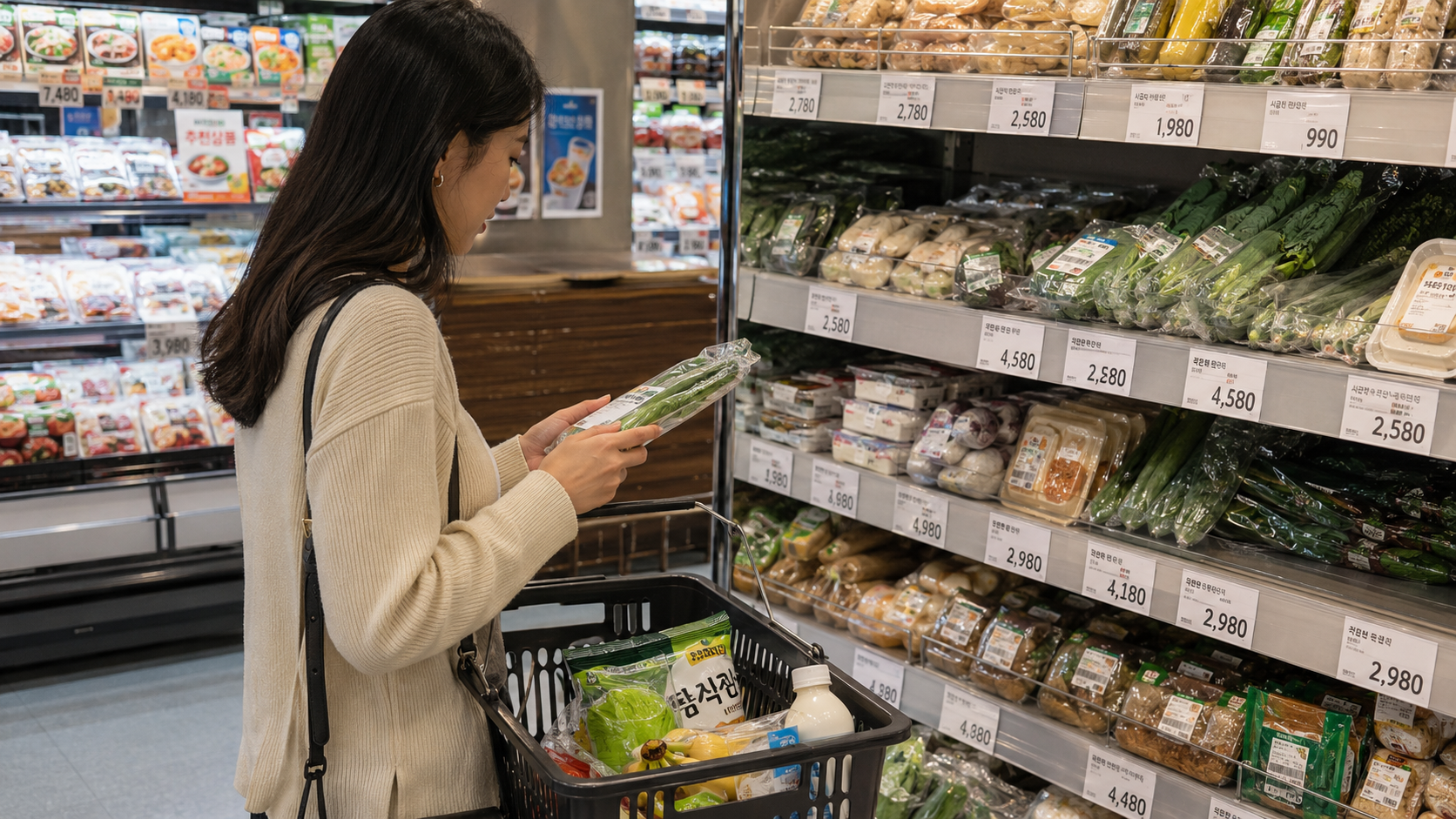
Is grocery shopping cheaper?
Cooking can reduce costs for long stays, but the savings depend on kitchen access, package sizes, and how much imported food you buy. As a rough planning estimate, one person preparing simple meals might spend KRW 70,000-120,000 per week on groceries. This is not an official average and excludes frequent purchases of imported cheese, cereal, meat, alcohol, or specialty dietary products.
For a confirmed reference point, Korea Agro-Fisheries & Food Trade Corporation's KAMIS database recorded an April 2026 national average retail price of KRW 35,590 for 10 kilograms of standard-grade rice. KAMIS explains that retail figures are collected from outlets such as large supermarkets and traditional markets; actual prices differ by region, store, grade, and promotion. Current figures can be checked through the official KAMIS monthly retail-price database.
Small neighborhood supermarkets are convenient, while large supermarkets offer broader selection. Traditional markets can be useful for produce, tofu, side dishes, and small prepared-food purchases, but prices are not automatically lower for every item. Imported and out-of-season products are often expensive.
Payment, tipping, and the final bill
Card payment is widely available at established restaurants, cafés, supermarkets, and convenience stores. Nevertheless, carrying some cash is sensible for small market stalls or in case a foreign card is declined. Mobile payment systems may require a Korean account or locally issued card.
Tipping is not customary in ordinary Korean restaurants. Korea Tourism Organization's official Muslim-Friendly Restaurants guide states that tipping is not customary and service charges are included. Do not add a percentage automatically as you would in some other countries.
For group meals, the restaurant generally presents one bill for the table. Friends may divide it afterward by bank transfer or settle among themselves. A restaurant may be able to split card payments, but this should be requested before payment and is not guaranteed.
Why prices vary so much
Location matters, but restaurant format and ingredients can matter more. Expect higher prices in hotels, department stores, airports, theme parks, observation decks, and nightlife districts. A restaurant specializing in hanu, seafood, organic ingredients, or elaborate presentation will not be comparable with a neighborhood lunch shop.
Prices also continue to change. Statistics Korea reported that in May 2026, Korea's overall Consumer Price Index was 3.1% higher than a year earlier, while the food-and-accommodation category was up 2.7%. The figures were released on June 2, 2026 and are available from the official Consumer Price Index portal. Leave some flexibility in any budget prepared months before a trip.
How to spend less without skipping Korean food
- Look for lunch menus. Barbecue restaurants, Western restaurants, and casual dining chains may have cheaper weekday lunch sets.
- Eat one substantial local meal. A stew, rice bowl, or noodle dish can be more filling than several market snacks.
- Check the unit on meat menus. A low-looking price may cover only 100 grams or one required serving.
- Use university and residential areas. These neighborhoods often have more everyday dining than major sightseeing streets.
- Buy drinks separately when appropriate. Restaurant beverages and tourist-site cafés can cost considerably more than convenience-store drinks.
- Use supermarket discount times. Prepared foods may be marked down near closing, although timing and discounts are not guaranteed.
- Search the Korean dish name. Map apps may show more nearby results when you use terms such as
김밥for gimbap or김치찌개for kimchi stew. - Check ordering requirements. Shared dishes, barbecue, and busy restaurants may impose a minimum order.
Common pricing mistakes
- Reading a barbecue serving price as the total cost for the table
- Assuming a shared dish is intended for one person
- Ordering seafood without confirming preparation and table charges
- Treating market snacks as negligible expenses
- Forgetting delivery, packaging, or app service charges
- Assuming every basic side dish is refillable
- Choosing a famous café without checking its one-drink-per-person policy
- Relying on old menus in blogs or social-media videos
Restaurant reservation and waiting systems can also create practical difficulties for visitors because some require a Korean telephone number or locally compatible payment. Korea Tourism Organization discusses these limitations in its guide to Catchtable Global. For popular restaurants, check the current reservation method and deposit rules directly with the venue.
What to check before you go
- View a recent menu on the restaurant's official page or Korean map listing.
- Confirm whether prices are per person, per serving, per 100 grams, or per table.
- Check minimum-order rules for barbecue and shared dishes.
- Look for separate table-setting, cooking, corkage, or reservation charges.
- Confirm whether the restaurant accepts walk-ins and foreign cards.
- Check the last order time, not only the closing time.
- Ask about allergens and dietary restrictions directly; a dish's English name may not list every ingredient.
- Carry a small amount of cash for markets and small vendors.
For a short trip, KRW 50,000 per person per day is a sensible starting allowance for food if you want local meals, snacks, and one café visit without monitoring every purchase. Raise that figure for barbecue, alcohol, premium beef, seafood, hotel breakfasts, or destination cafés. Your next practical step is to mark two or three desired food experiences on your itinerary and budget those separately from routine meals.
Sources
- Korea Agro-Fisheries & Food Trade Corporation: The Foodservice Industry portal
- KAMIS agricultural retail-price database
- Statistics Korea Consumer Price Index portal
- Korea Tourism Organization: About Korean Food
- Korea Tourism Organization: Bunsik and Street Food
- Korea Tourism Organization: Hanu, Korea's Premium Beef