South Korea offers much more for K-pop fans than entertainment-company buildings. A well-planned trip can include concerts, television music shows, official pop-ups, album shopping, dance classes, fan-organized events, and locations seen in music videos. The difficult part is timing: schedules are often announced at short notice, ticket rules vary, and temporary events may disappear before you arrive.
This guide was checked on June 11, 2026. Concert dates, admission procedures, shop locations, and event schedules can change, so use the linked official sources for final confirmation.
At a glance
| Experience | Advance planning | Typical cost | Main difficulty |
|---|---|---|---|
| Major concert or fan meeting | Essential | Varies by event | Fast sales and identity checks |
| Television music show | Essential | Often free if selected | Complicated eligibility rules |
| Official pop-up store | Recommended | Entry may be free; merchandise extra | Timed reservations and queues |
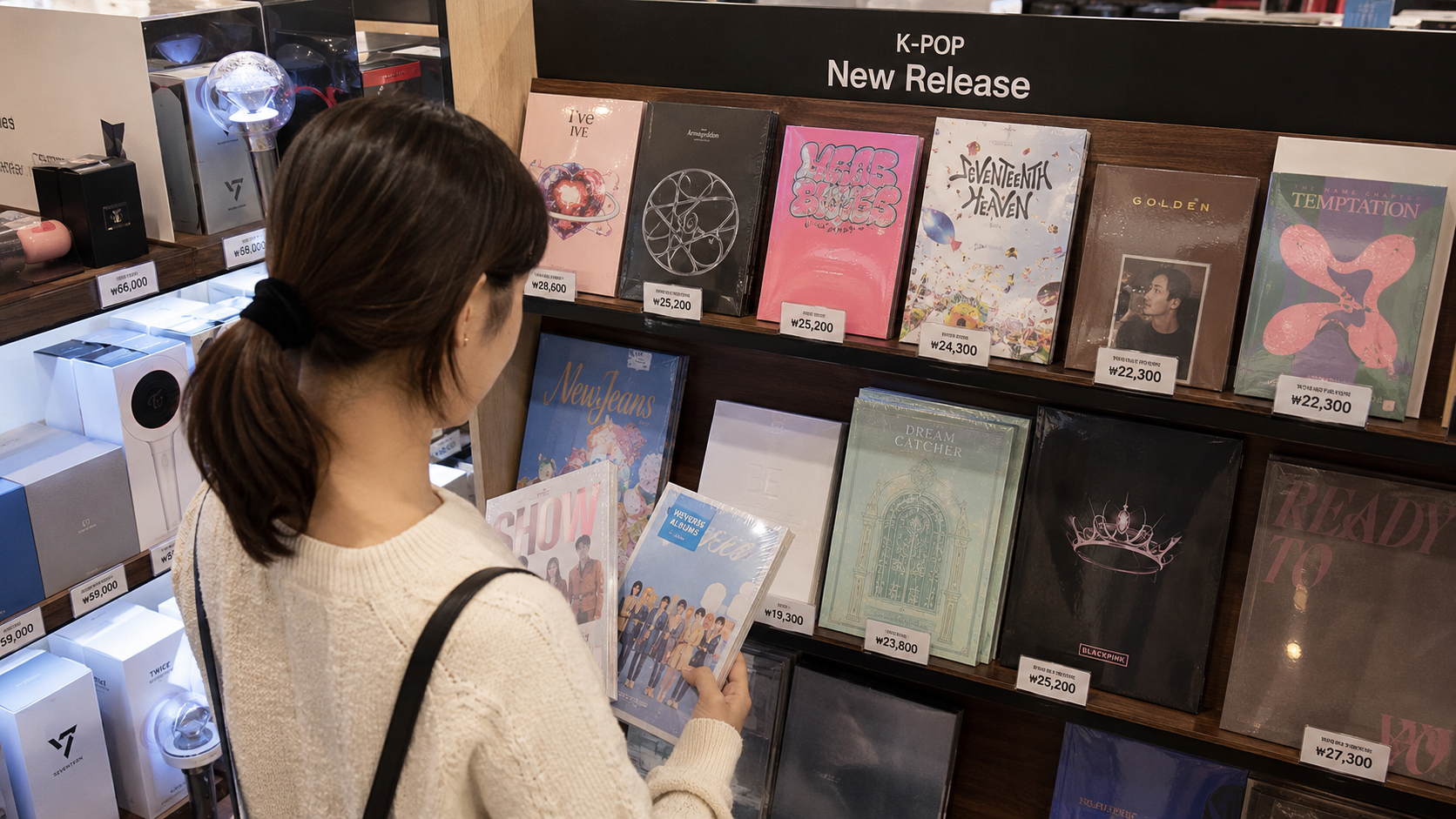
| Album and merchandise shopping | Usually unnecessary | From about KRW 15,000 upward | Comparing editions and benefits |
| K-pop dance class | Recommended | Varies by studio | Language and class level |
| Agency-building visit | Usually unnecessary | Free from public streets | Little or no visitor access |
| Music-video location | Depends on location | Often free | Confirming the exact place |
For a first trip, allow at least two full days in Seoul for planned K-pop activities. Keep another half-day flexible for a pop-up, birthday café, or performance announced after your itinerary is set.
Choose your priorities before booking flights
K-pop tourism is easier when you decide what matters most before choosing dates.
If seeing a particular artist is essential
Build the trip around an officially announced concert, fan meeting, festival, or promotional schedule. Do not book a non-refundable flight because a fan account reports an unconfirmed date. Wait for an announcement from the artist, agency, promoter, venue, or official fan platform.
Ticket sales for Korean events can begin only weeks before the performance. Fan-club presales may require both a paid membership and a separate presale registration completed before a strict deadline. Buying the membership alone does not necessarily enter you into the presale.
If you want a general K-pop experience
Choose dates first and combine permanent activities with whatever temporary events are available. Seoul is the main base because most broadcasters, agencies, pop-ups, dance studios, and specialist record shops are in the capital.
Temporary events are especially common around album releases, group anniversaries, birthdays, and concerts. Their information usually appears first on official social-media accounts or fandom platforms rather than tourism websites.
The most useful K-pop areas in Seoul
Hongdae: dance, busking, shops, and nightlife
Hongdae, near Hongik University, is a practical starting point for younger travelers and first-time visitors. Its commercial streets contain photo booths, accessory stores, dance studios, album sellers, and cafés that sometimes host fan events. Street performances also take place, although individual performers and times are not guaranteed.
Hongdae is most active from late afternoon into the evening. Busking may be reduced or canceled because of weather, local restrictions, or competing events. Treat it as a possible extra rather than a scheduled performance.
Myeongdong: convenient album shopping
Myeongdong works well for travelers who want to compare several album editions without crossing the city. Large retailers and specialist shops may stock albums, light sticks, magazines, character goods, and unofficial souvenirs.
Check whether an item is official before paying. Official albums should have clear distributor information and standard retail packaging. Random inclusions, such as photocards, may already have been removed from opened or secondhand copies.
Ask these questions before buying:
- Is the album sealed?
- Are all original inclusions inside?
- Does the purchase qualify for a store-exclusive photocard or other benefit?
- Can the shop process an immediate tax refund for eligible international visitors?
- Is the light stick compatible with the current official app or concert control system?
Seongsu: pop-ups and brand collaborations
Seongsu-dong has become a frequent location for temporary retail events, including artist collaborations, album concept exhibitions, and fashion or beauty pop-ups. There is no permanent K-pop schedule for the district; the reason to visit is a specific event confirmed before or during your trip.
Some pop-ups accept walk-ins, while others use Korean reservation services, timed tickets, or numbered waiting systems. Foreign phone numbers and payment cards do not always work. Read the event notice before traveling across the city.
Gangnam and Cheongdam: agency neighborhoods
Several entertainment businesses have offices in southern Seoul, but an agency headquarters is generally a workplace, not a tourist attraction. Reception areas, practice rooms, parking entrances, and private cafés are not automatically open to fans.
You may photograph a building from a public area unless signs say otherwise. Do not block entrances, follow vehicles, wait outside artists' homes, photograph employees at close range, or enter private property. A building visit is usually brief, so combine it with a public shop, exhibition, restaurant, or neighborhood walk.
Cheonggyecheon and HiKR Ground
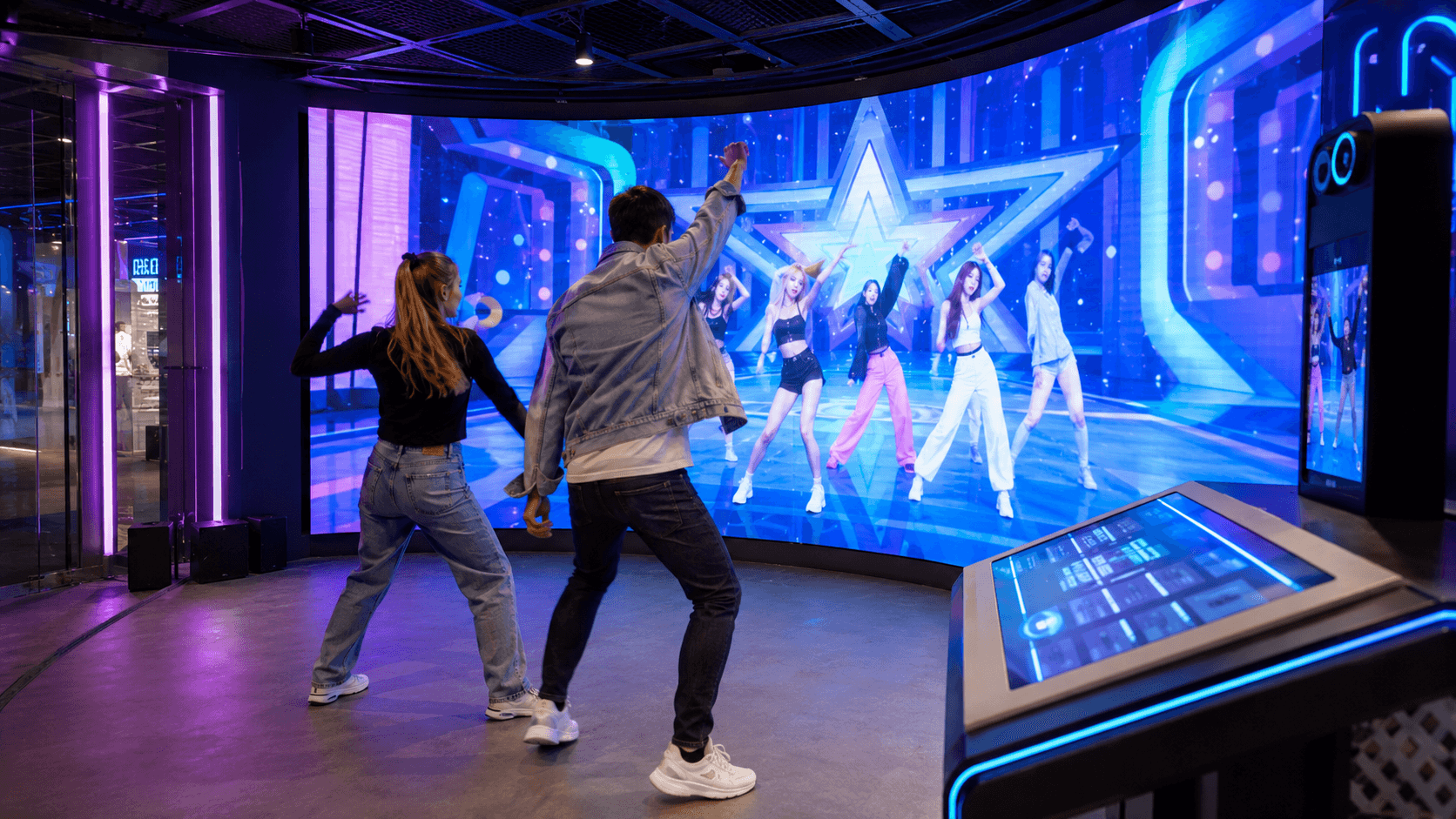
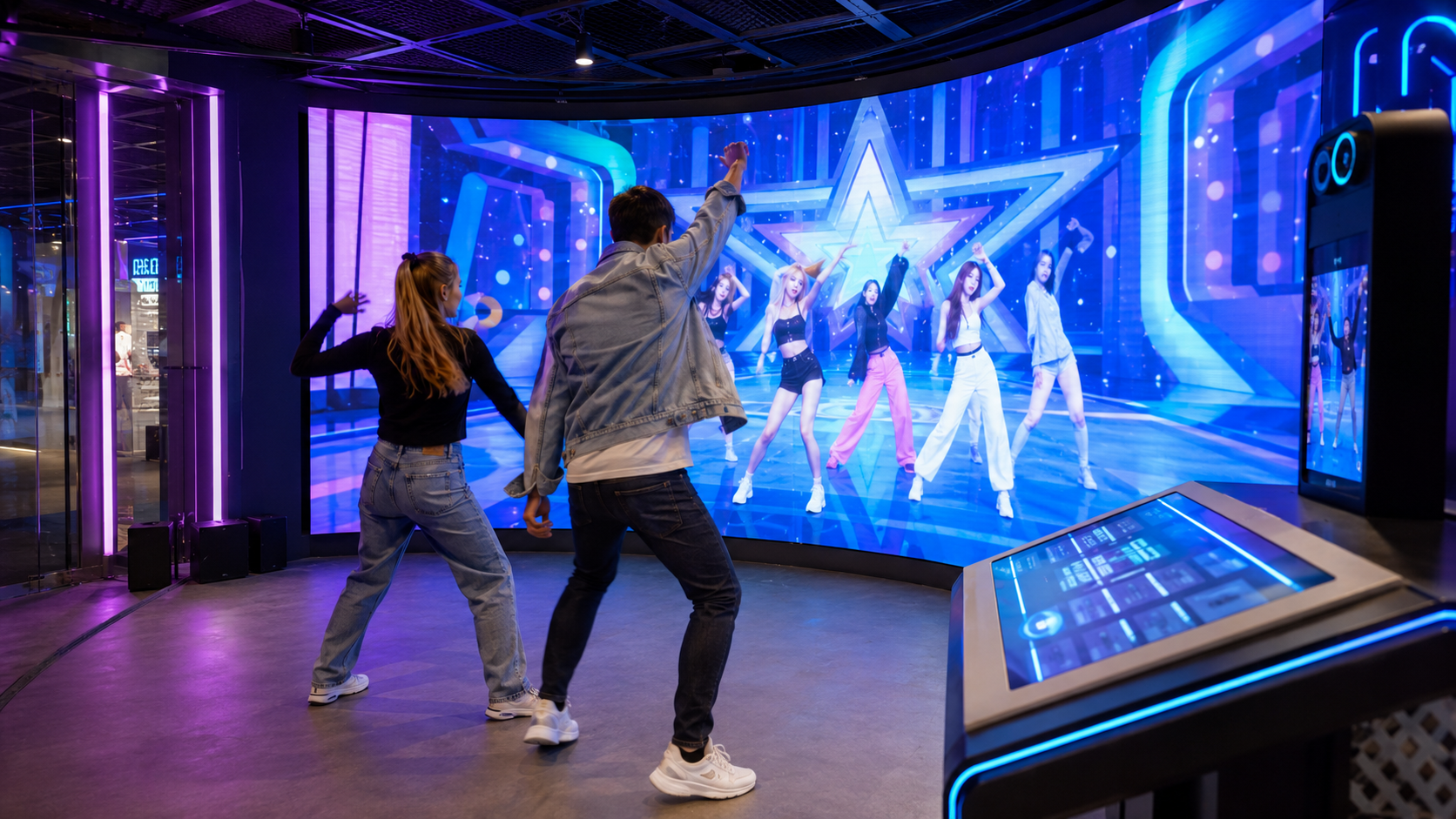
HiKR Ground is a Korea Tourism Organization visitor facility beside Cheonggyecheon stream. Its K-pop-themed interactive spaces can be useful for first-time visitors who want a low-pressure activity involving digital stages and Korean cultural content. Admission arrangements, floor access, operating hours, and temporary closures can change; check the VISITKOREA website immediately before visiting.
How to buy K-pop concert tickets
1. Start with the official announcement
Follow the artist's agency, official fan community, promoter, and venue. Platforms such as Weverse host notices for participating artists, but not every artist uses the same service.
An official notice should identify the performance date, venue, ticket seller, sale time, prices, age restrictions, membership rules, and identity requirements. Follow the ticket link in that notice instead of relying on a search advertisement or direct message.
2. Create accounts early
Create the required ticketing and fan-platform accounts before sales open. Make sure your name matches the passport or identification document you will carry in Korea. Name changes may be impossible after booking.
Test the following in advance:
- Account login and password recovery
- Identity or phone verification requirements
- Pop-up blockers and browser translation
- International card approval
- Your card issuer's one-time-password system
- The time difference between Korea Standard Time and your location
3. Read the cancellation and collection rules
Some Korean tickets are mobile tickets, while others must be collected at the venue. Collection can require the purchaser's passport, booking confirmation, fan-club membership, or payment card. Screenshots may not be accepted.
Do not assume that a ticket can be transferred. For high-demand events, the name on the reservation may be checked against identification. Unauthorized resale tickets can be canceled or rejected even if the barcode appears genuine.
4. Plan the journey home
Large venues may take an hour or more to clear after a concert. Subway platforms, buses, taxis, and nearby restaurants become crowded. Check the final public-transport options on the day of the show and leave extra time if you must collect luggage or catch an intercity service.
Bring as little as possible. Venue rules may restrict large bags, professional cameras, food, banners, or recording equipment. Storage is not guaranteed, and station lockers near a concert can fill early.
Can tourists attend Korean television music shows?
Sometimes, but attendance is not comparable to buying a normal concert ticket. Programs may distribute places through broadcaster lotteries, official fan clubs, tourism promotions, or an artist's agency. Procedures can change for every recording.
The Korea Tourism Organization has published guidance on applying for K-pop music shows through VISITKOREA. Broadcasters and programs may also post current information through their own channels, including M Countdown on Mnet Plus and Music Bank through KBS World.
A fan-club application may require proof that you own a particular album, have downloaded or streamed a track through an eligible Korean service, possess the current official light stick, and hold the correct membership. Check-in may happen very early, and admission can still depend on capacity.
For most short-term visitors, an officially offered foreign-tourist package or broadcaster lottery is simpler than joining an artist's domestic fan-club allocation. Never pay an unverified person who promises guaranteed studio entry.
Pop-ups, birthday cafés, and fan events
Official pop-ups are organized or licensed by an artist's company or commercial partner. They may include exclusive merchandise, photo zones, costumes, album artwork, or reservation-only experiences.
Fan-organized birthday cafés are different. A fan or fan group decorates a cooperating café and distributes items such as cup sleeves or photocards with qualifying orders. These events can be enjoyable, but they are not official artist appearances unless the agency explicitly says so.
Before visiting, confirm:
- Exact dates and daily hours
- Whether reservations are required
- The minimum order or purchase condition
- Whether benefits are distributed first come, first served
- Whether the café allows luggage or large groups
- Whether the address is a café, gallery, or separate event space
Do not expect the artist to attend. Avoid posting photographs that clearly show other customers without permission.
Buying albums, light sticks, and merchandise
Prices differ by artist, edition, seller, and release period. As verified on June 11, 2026, there is no single standard national price for K-pop albums or concert merchandise.
Compare the total value rather than only the shelf price. Two copies of the same album may contain different retailer benefits, while a cheaper listing may exclude photocards or other inclusions.
For light sticks, buy from the artist's official shop, a seller linked by the agency, or an established Korean retailer. Counterfeit light sticks may fail to connect to the concert's wireless control system. Check the required batteries before entering the venue; batteries are commonly sold separately, and rules differ by product.
International visitors should also consider luggage weight and customs rules in their destination country. Rolled posters, boxed light sticks, and multiple album versions occupy more space than expected.
Taking a K-pop dance class
Seoul has studios offering one-off classes for international visitors. A typical tourist class teaches part of one chorus rather than an entire performance. Some include a filmed group performance at the end.
Check the song, difficulty, language, class size, filming policy, changing facilities, and cancellation rules before booking. Beginner-friendly should mean that the instructor breaks down the choreography; it does not necessarily mean the routine is physically easy.
Wear indoor trainers and clothes that allow movement. Bring water and arrive early enough to find the studio, as dance rooms are often inside multipurpose commercial buildings rather than at street level.
Visiting music-video and album locations
Begin with evidence from official videos, behind-the-scenes footage, album photographs, or a reliable local tourism authority. Fan-made maps can become outdated when businesses close or sets are demolished.
A filming location may be a working café, hotel, shop, beach, residential street, or private property. Purchase something when using a commercial venue, observe photography rules, and do not recreate scenes in a way that obstructs traffic or residents.
Outside Seoul, K-pop-related filming destinations may require intercity rail, buses, taxis, or a rental car. Confirm the return journey before setting out, especially in rural and coastal areas where evening services can be limited.
Getting around Seoul
Most K-pop districts and major venues are reachable by subway, but the network is large. Save the station name, line number, exit number, and Hangul address for each destination.
A rechargeable Tmoney card can be used for public-transport payments. The operator describes Tmoney as supporting bus, metro, taxi, and selected retail payments on its official English website. Card products, purchase locations, recharge methods, and fares can change, so verify them when you arrive.
Korean mapping apps usually provide better local address and public-transport data than overseas map services. Search for the venue's Korean name when an English search produces uncertain results.
Travelers with mobility requirements should contact the venue before purchasing a ticket. Accessible seating, companion tickets, step-free routes, and early-entry procedures vary. A subway station may have lifts but still require a long transfer between lines.
Common mistakes to avoid
- Booking flights around rumored schedules
- Using a nickname instead of the passport name on a ticket account
- Assuming fan-club membership automatically includes presale access
- Buying from a reseller before checking official cancellation inventory
- Arriving at an agency office expecting a tour or artist encounter
- Treating a fan-organized café as an official event
- Carrying large luggage to a studio recording or concert
- Buying a light stick without checking the model and authenticity
- Planning several distant districts on the same concert day
- Forgetting that pop-up benefits can run out before closing time
What to check before you go
One week before departure:
- Review official artist and agency notices.
- Check every reservation name against your passport.
- Confirm whether tickets are mobile, printable, delivered, or collected.
- Download the required ticket, fandom, map, and translation apps.
- Save event addresses in both English and Hangul.
One day before each event:
- Recheck the starting time, venue entrance, and cancellation notices.
- Read bag, camera, food, age, and identification rules.
- Confirm the final subway or bus connection.
- Charge your phone and portable battery.
- Take your physical passport when the organizer requires it.
On the day:
- Allow extra time for queues and navigation inside large venues.
- Keep ticket barcodes private.
- Follow staff instructions about photography and recording.
- Respect workplaces, residents, performers, and other fans.
FAQ
Will I see idols outside an entertainment-company building?
Probably not. Agency offices are workplaces with private schedules and controlled entrances. Visit only from public areas and do not wait around entrances or parking facilities.
Can I buy concert tickets after arriving in Korea?
Possibly, if official inventory remains or canceled seats are released. Popular events may sell out during presales, so waiting until arrival is risky when the performance is your main reason for traveling.
Are K-pop music shows free?
Some audience allocations do not charge admission, but eligibility can require memberships, purchases, applications, or lottery selection. Rules are program- and artist-specific.
Do Korean merchandise shops accept foreign cards?
Many established shops do, but acceptance is not universal and overseas-card authorization can fail. Carry another payment method and some KRW for small purchases.
When is the best time for a K-pop trip?
There is no dependable year-round comeback or concert season. Choose dates around a confirmed event if one artist is your priority. Otherwise, stay flexible and monitor official announcements close to departure.
Sources
- VISITKOREA, Korea Tourism Organization
- Official Seoul tourism information
- Tmoney official English website
- Weverse official platform
- M Countdown official page on Mnet Plus
- Music Bank information from KBS World
Start by choosing one non-negotiable experience, then check its official announcement for the exact ticket seller, identification rules, and date. Build the rest of your itinerary from flexible districts and activities that do not depend on seeing a particular artist.