A practical first-time Korea itinerary can cover Seoul, historic Gyeongju and coastal Busan in seven days without requiring domestic flights or expensive tours. Plan on approximately KRW 550,000-950,000 per person, excluding international airfare, shopping and nightlife. The lower end assumes dormitory accommodation, simple meals and advance bus or train bookings; the upper end allows for basic private rooms and more flexibility.
Prices, transport rules and booking information in this guide were checked on June 10, 2026. Accommodation and food figures are planning estimates rather than fixed official prices.
At a glance
| Day | Base | Main plan |
|---|---|---|
| 1 | Seoul | Arrival, Cheonggyecheon and central Seoul |
| 2 | Seoul | Gyeongbokgung, Bukchon and Insadong |
| 3 | Seoul | Market meal, city walk and Han River |
| 4 | Gyeongju | Travel from Seoul, royal tomb district |
| 5 | Gyeongju | Bulguksa and central historic sites |
| 6 | Busan | Travel to Busan, Gamcheon and Nampo-dong |
| 7 | Busan | Beach or coastal walk, then departure |
This route works particularly well with an open-jaw flight, arriving at Incheon International Airport and leaving from Gimhae International Airport. If your return flight also leaves from Incheon, add enough time and money to travel back to Seoul.
How much should you budget?
| Expense | Seven-day planning range |
|---|---|
| Six nights in dorms or simple rooms | KRW 180,000-360,000 |
| Food and drinks | KRW 175,000-280,000 |
| Local public transportation | KRW 40,000-70,000 |
| Seoul-Gyeongju-Busan transportation | KRW 60,000-120,000 |
| Admissions and small activities | KRW 20,000-50,000 |
| Emergency and price-change buffer | KRW 50,000-70,000 |
| Estimated total | KRW 525,000-950,000 |
A working target of KRW 550,000-950,000 is safer than budgeting to the exact minimum. Friday and Saturday accommodation, public holidays, festivals and cherry blossom season can raise room prices substantially.
Long-distance fares vary by service and departure. Live June 2026 fares could not be reliably extracted from the operators' booking systems, so this guide does not quote a fixed ticket price. Compare your actual date on the official KORAIL reservation website, KOBUS express bus website and Bustago intercity bus website.
Before Day 1: Set up transport and navigation
Buy a rechargeable transportation card, such as T-money, after arrival. It can be used on most urban buses and metro systems along this route. Tap when entering and leaving buses and metro gates; failing to tap out may prevent the correct transfer discount from being applied. Seoul's official transport guide explains the card and bus transfer system.
Keep some Korean won in cash. International cards are widely accepted, but cash remains useful for transportation-card reloading, traditional markets and small businesses. Do not assume every foreign card will work in every ticket machine.
Install Naver Map or KakaoMap before traveling. Google Maps can display places in Korea, but local applications generally provide more complete public-transport routing. Save destinations in both English and Korean so that you can show the Hangul name when necessary.
Day 1: Arrive and explore central Seoul
Airport to the city
For a tight budget, use the AREX all-stop train rather than a taxi. Check your accommodation's nearest station before boarding; transferring at Hongik University Station, Gongdeok or Seoul Station may be more convenient than automatically traveling to the end of the line.
After checking in, keep the first day light. Walk along Cheonggyecheon Stream (청계천), continue toward Gwanghwamun Square and eat in Jongno or Euljiro. These public spaces do not require admission.
Suggested spending
- Airport and local transport: allow KRW 6,000-15,000, depending on route
- Simple meal: KRW 8,000-15,000
- Accommodation: KRW 30,000-60,000
The transport amount is a planning allowance, not a quoted airport fare. Confirm the fare and last departure for your arrival date with the airport railway operator, especially if your flight lands late.
Day 2: Palaces, Bukchon and Insadong
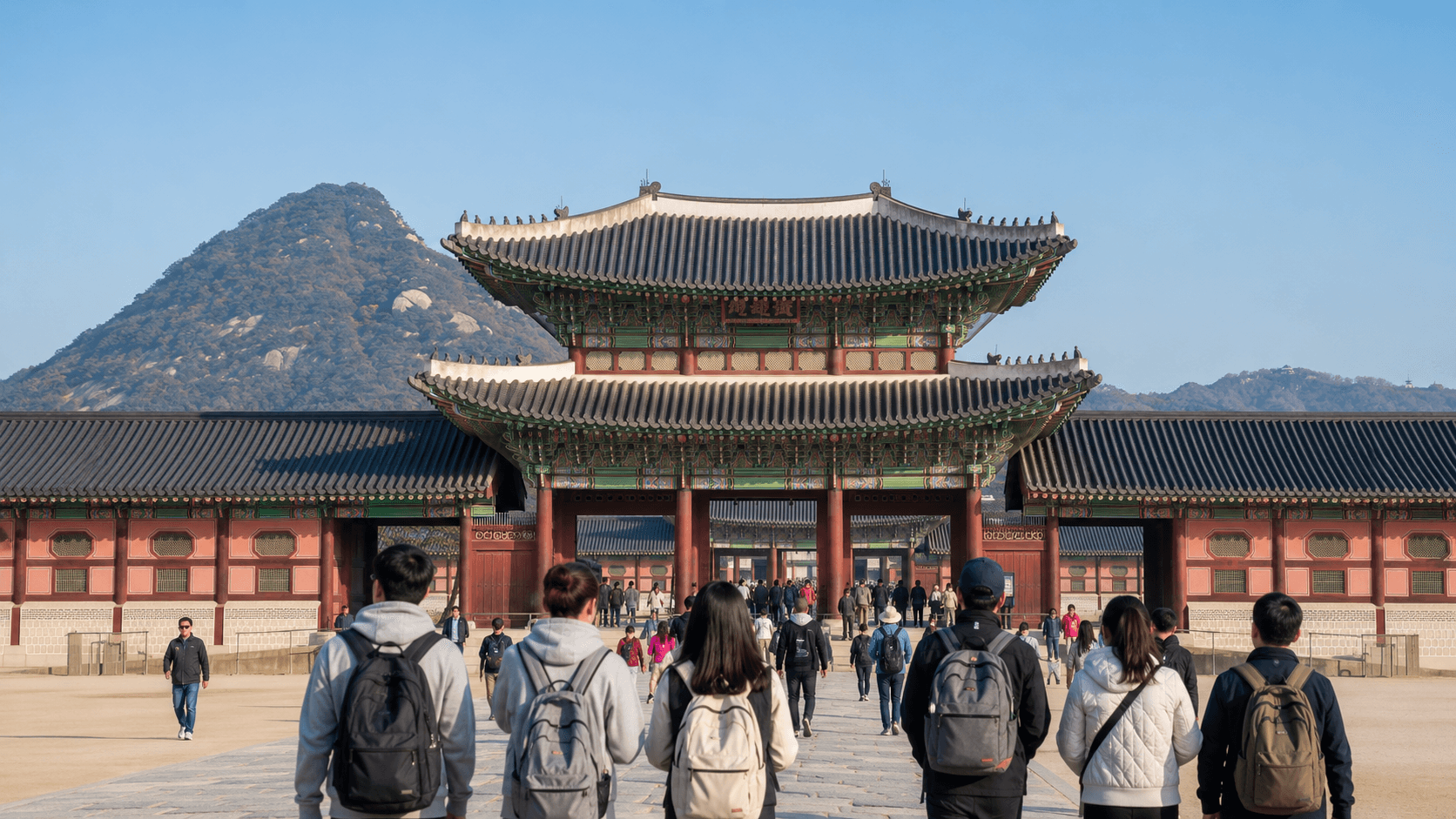
Start at Gyeongbokgung Palace (경복궁). One palace visit gives enough context for a short first trip; paying to enter every royal site is unnecessary on a strict budget. Palace hours, closing days and seasonal evening openings can change, so check the official Royal Palaces and Tombs Center website immediately before visiting.
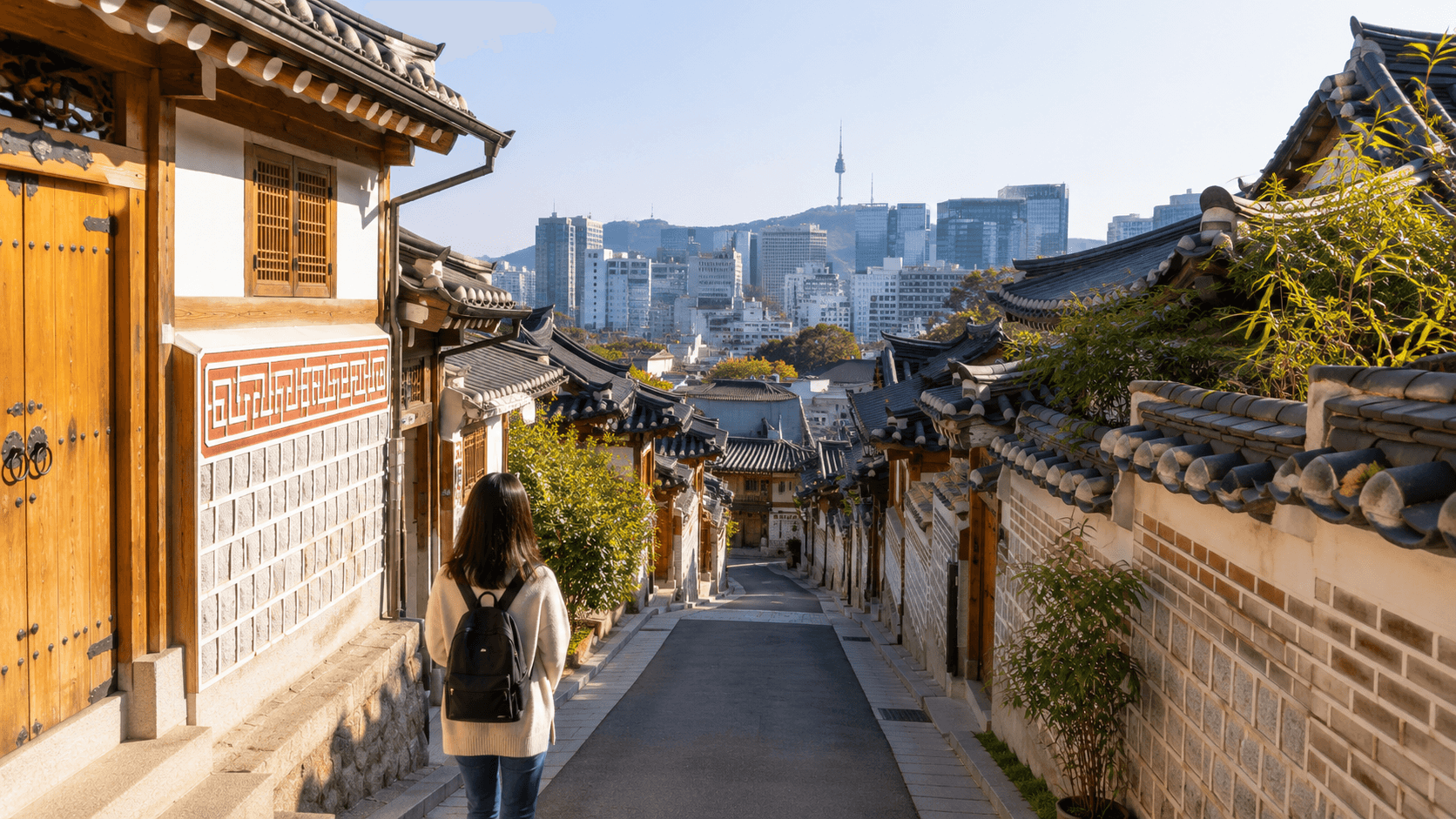
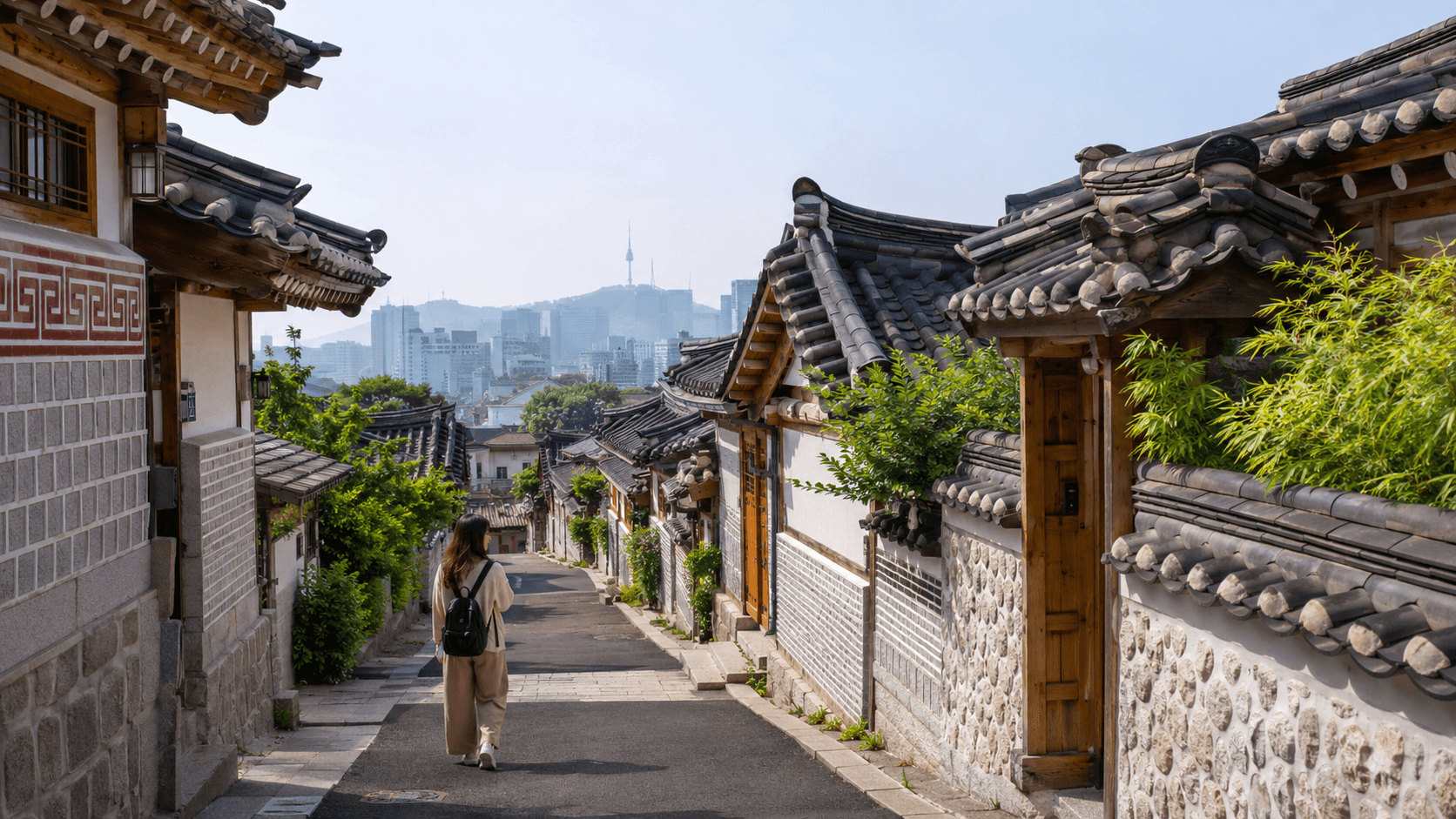
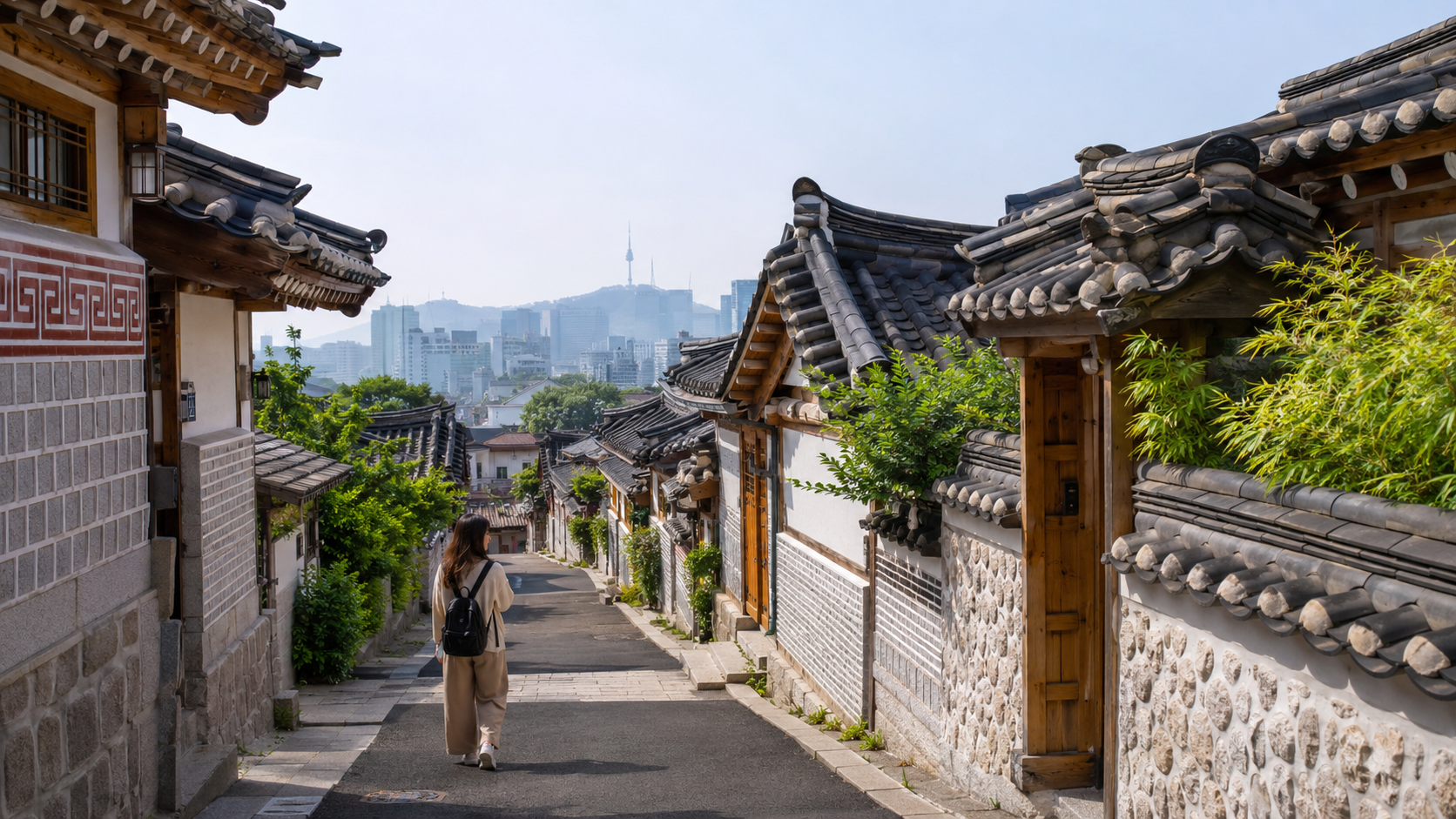
Walk east toward Bukchon Hanok Village, a residential area known for traditional Korean houses called hanok. Visitors should keep noise low, obey restricted-access signs and avoid photographing residents through doors or windows.
Continue to Insadong for tea shops, crafts and inexpensive restaurant choices. Walking through the neighborhood is free. End the day around Ikseon-dong or Jongno 3-ga, but compare menu prices before sitting down; visually elaborate cafés can cost more than a full market meal.
Money-saving choice
Renting hanbok is optional, not a required part of visiting the palace district. Compare the full rental period, hairstyle charges, locker fees and late-return policy before deciding whether the experience fits your budget.
Day 3: Markets, neighborhoods and the Han River
Choose one market for breakfast or lunch. Gwangjang Market is centrally located, but famous stalls are not always the cheapest. Check displayed prices and order a specific item rather than accepting an unspecified assortment.
Spend the afternoon on a free neighborhood walk. Good combinations include:
- Dongdaemun Design Plaza exterior and the old city wall area
- Mangwon Market and Mangwon Hangang Park
- Hongdae and the Gyeongui Line Forest Park
- Seongsu streets and Seoul Forest
Finish at a Han River park with convenience-store food or a supermarket picnic. Dispose of rubbish correctly and do not leave food containers beside an overflowing bin.
Should you buy a Seoul Climate Card?
As verified on June 10, 2026, Seoul offers short-term Climate Card passes costing KRW 5,000 for one day, KRW 8,000 for two days, KRW 10,000 for three days, KRW 15,000 for five days and KRW 20,000 for seven days. A physical card costs an additional KRW 3,000. The pass covers participating Seoul subway sections and Seoul-licensed buses, but excludes services including the Sinbundang Line, intercity buses and airport buses.
International cards can be used to purchase short-term passes at supported machines. Read the official Climate Card coverage and purchase rules before buying. For this itinerary, calculate whether three days of ordinary pay-as-you-go travel would cost less than the pass plus the card itself.
Day 4: Seoul to Gyeongju
Choosing the economical route
You have two practical options:
- Take an express or intercity bus from Seoul to Gyeongju. This is usually the first option to compare when price matters more than travel time.
- Take a KTX train toward Singyeongju Station. It is faster, but you must also travel from the station into central Gyeongju.
Reserve ahead for Friday evenings, Sundays and Korean public holidays. Confirm the departure terminal carefully: Seoul has several major bus terminals, and a ticket from one cannot simply be used at another.
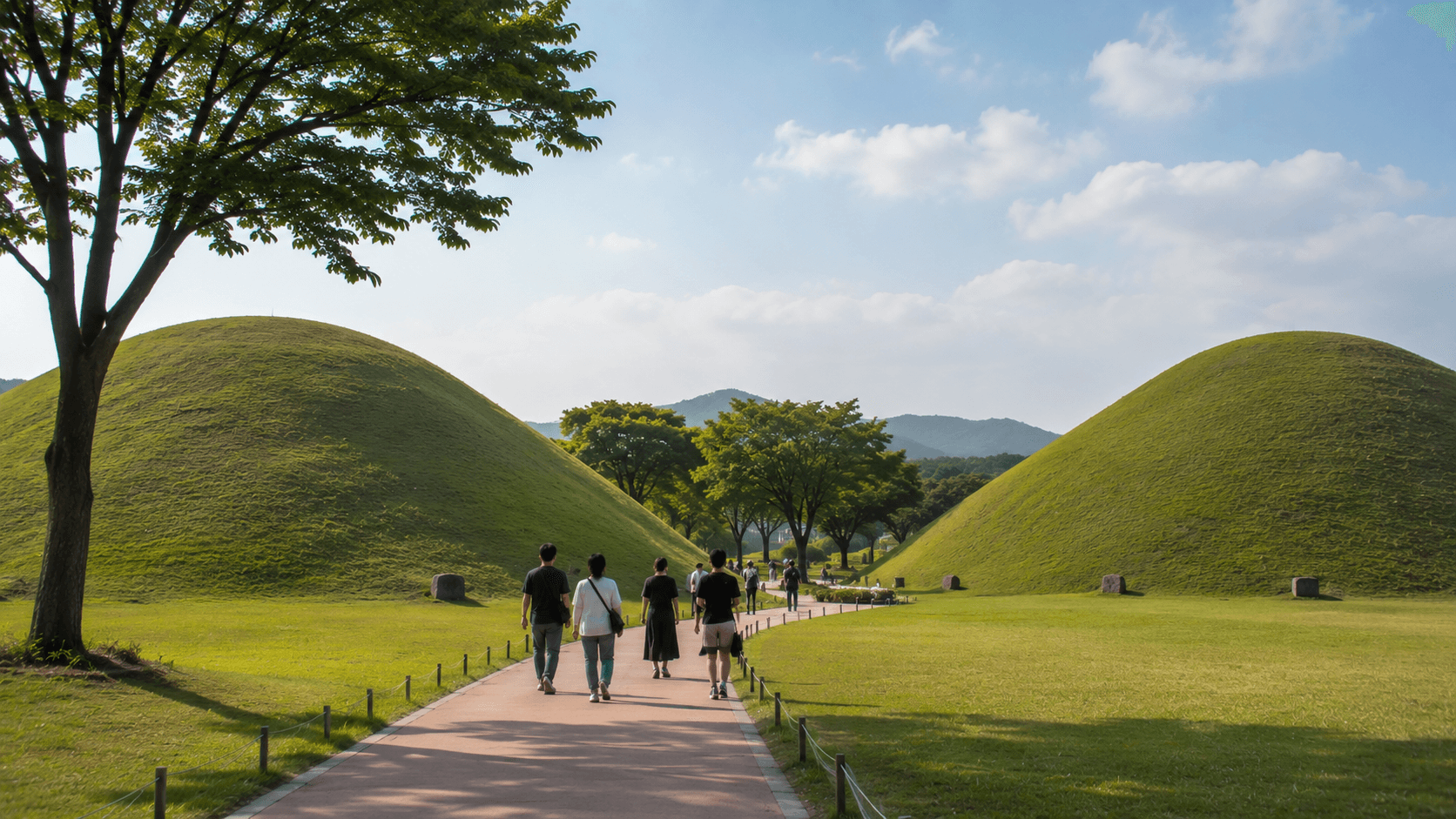
After arrival, leave your luggage and walk through the central historic district. A convenient low-cost circuit includes the exterior of Daereungwon Tomb Complex, Hwangnidan-gil, Cheomseongdae and the Woljeonggyo Bridge area. Some individual sites or exhibitions may charge admission, so use the official Gyeongju tourism website to check current access information.
Stay near the central bus terminal or downtown historic area if possible. A slightly cheaper room far outside the center may become poor value once bus frequency and taxi costs are considered.
Day 5: Bulguksa and historic Gyeongju
Take a local bus to Bulguksa Temple (불국사) in the morning. Allow extra time: city buses in Gyeongju are less frequent than Seoul's metro, and journey estimates can change with traffic.
Do not automatically combine Bulguksa with every outlying attraction. Seokguram Grotto is historically significant, but reaching it adds another transport stage and may make the day rushed. On a limited budget, returning to central Gyeongju for the national museum and historic district can be more practical.
The Gyeongju National Museum is a useful place to understand the Silla kingdom before revisiting the outdoor sites. Check its official listing for closure days and special-exhibition charges. Government museums commonly close on selected holidays or maintenance days even when general admission is free.
At night, walk around the illuminated Woljeonggyo Bridge and pond district. Follow marked paths and avoid entering landscaped or archaeological areas.
Day 6: Gyeongju to Busan
A direct intercity bus is often the simplest budget connection. Rail can also work, but compare the total journey, including transfers from your accommodation to the station and from the arrival station into Busan.
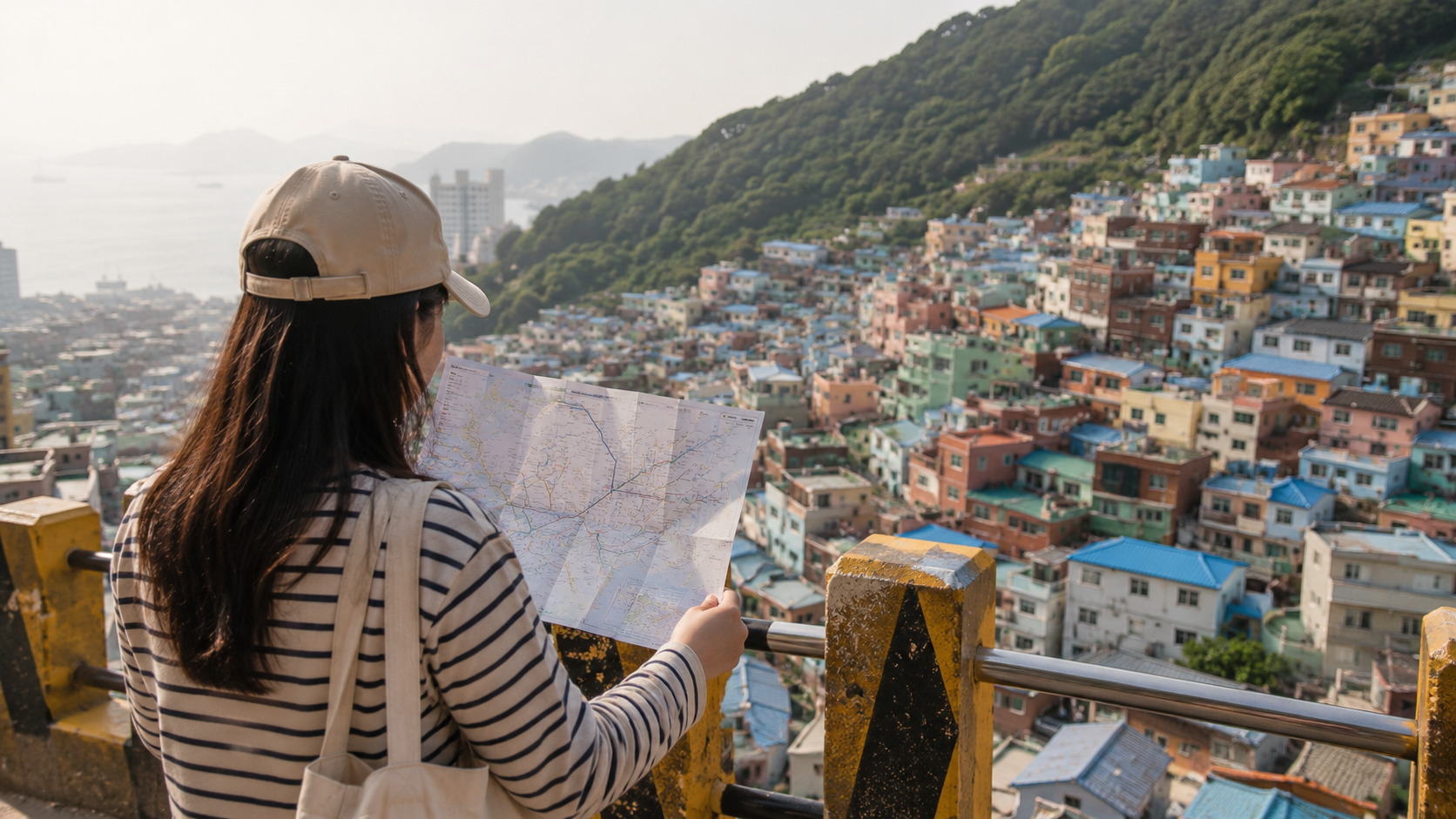
After checking in, visit Gamcheon Culture Village (감천문화마을). The neighborhood is built on steep slopes and contains occupied homes. Keep voices down, use public toilets and respect signs limiting access to residential alleys. Travelers with reduced mobility should research the route carefully because stairs and gradients are unavoidable in several sections.
Continue to Nampo-dong, BIFF Square and Jagalchi. Walking around is free, but seafood prices vary. Ask for the total price before ordering, particularly when seafood is priced by weight or prepared by a separate restaurant upstairs.
Day 7: Busan coast and departure
Choose a coastal area based on your departure time rather than attempting to cross the entire city.
Option A: Haeundae and Dongbaekseom
Walk Haeundae Beach and the Dongbaekseom coastal path. This is suitable when you want an easy final morning near metro stations and cafés. The beach itself is free, but swimming zones, equipment rentals and seasonal facilities operate under separate rules.
Option B: Gwangalli
Walk along Gwangalli Beach for views of Gwangan Bridge. This is an efficient choice if you have already visited Haeundae or prefer a shorter urban waterfront visit.
Option C: Yeongdo
Explore a smaller section of Yeongdo if you are staying around Nampo-dong. Bus journeys can be slow, so do not choose a distant coastal trail shortly before a flight.
For Gimhae International Airport, check the current route in a local map application on the day. Airport transfers may involve the Busan-Gimhae Light Rail Transit and a metro connection. Allow extra time for transfers, walking inside stations and airline check-in.
How to keep food costs under control
A realistic food target is KRW 25,000-40,000 per day if breakfast is simple and alcohol is limited. This is a planning estimate as of June 10, 2026; restaurant prices are not regulated tourist fares.
Look for dishes normally served as one-person meals, including:
- Gimbap (김밥), rice rolls with fillings
- Bibimbap (비빔밥), mixed rice
- Gukbap (국밥), rice with soup
- Kalguksu (칼국수), knife-cut noodle soup
- Kimchi-jjigae (김치찌개), kimchi stew
- Convenience-store rice balls, sandwiches and packed meals
Some barbecue restaurants, chicken shops and shared stews require a minimum order for two people. Check the menu before taking a seat if traveling alone.
Refillable drinking-water stations are not guaranteed in every public place. Carry a reusable bottle, but ask before filling it from a restaurant dispenser.
Accommodation strategy
Book near transportation rather than choosing the absolute cheapest listing. Useful areas include:
- Seoul: Jongno, Euljiro, Hongdae or near Seoul Station
- Gyeongju: central bus terminal and Hwangnidan-gil area
- Busan: Seomyeon for connections, Nampo for the old downtown, or a station on Metro Line 1 or 2
Before booking, check whether the quoted rate includes taxes, towels, luggage storage and late check-in. Korean room layouts may use floor bedding, and budget bathrooms may have a shower without a separate enclosure.
A hostel's reception may not operate 24 hours. Send your arrival time in advance, especially after a late bus or train.
Common budget mistakes
- Taking taxis because the map looks confusing: Check the station exit number and bus stop direction first. A short wrong-direction taxi ride can erase a full day's transport savings.
- Booking the fastest train automatically: Compare buses and slower trains when your schedule is flexible.
- Changing hotels too often: One base per city avoids luggage storage fees and wasted travel time.
- Buying a transport pass without calculating rides: Unlimited travel is not automatically cheaper.
- Underestimating weekend demand: Transport and affordable rooms can sell out before holidays and festivals.
- Ignoring the return to Seoul: A Busan finish saves money only if your flight leaves from Busan or your return journey is included in the budget.
What to check before you go
- Confirm passport, visa and Korea Electronic Travel Authorization requirements through the Korea Visa Portal and official K-ETA website. Requirements depend on nationality and can change.
- Check Korean public holidays and major local festivals.
- Reserve long-distance transport for busy dates.
- Verify each accommodation's check-in time and luggage policy.
- Check palace, museum and temple closing days.
- Confirm the last airport connection for your departure date.
- Download offline copies of bookings and accommodation addresses.
- Keep emergency funds separate from your daily cash.
- Review weather alerts and air-quality conditions before outdoor walks.
Sources
- Seoul Metropolitan Government public transportation guide
- Seoul Metropolitan Government Climate Card information
- KORAIL official English reservation website
- KOBUS official express bus website
- Bustago official intercity bus website
- Royal Palaces and Tombs Center
- Gyeongju official tourism website
- Visit Busan official tourism website
Start by checking open-jaw flight prices and your exact long-distance travel dates. Those two decisions determine whether this Seoul-Gyeongju-Busan route remains economical or whether a Seoul-based itinerary would cost less.