South Korea works particularly well for couples who enjoy mixing city life, food, history, and outdoor scenery. A first trip can combine Seoul with Busan or Gyeongju in one week; with 10 to 14 days, add Jeju Island or a slower coastal stay. The key is to limit hotel changes, reserve popular experiences early, and leave room for unplanned café stops, markets, and evening walks.
All fares, transport rules, and reservation guidance in this article were checked on June 10, 2026. Reconfirm time-sensitive details before traveling.
At a glance
| Trip length | Suggested route | Good for |
|---|---|---|
| 4–5 days | Seoul only | First visits, food, shopping, nightlife |
| 7 days | Seoul + Busan | City attractions and the coast |
| 7 days | Seoul + Gyeongju | Palaces, heritage, and a quieter pace |
| 10 days | Seoul + Gyeongju + Busan | A balanced first trip |
| 12–14 days | Seoul + Gyeongju + Busan + Jeju | A fuller honeymoon or anniversary trip |
For most couples, Seoul plus one other region is more enjoyable than changing cities every night. Korean rail travel is efficient, but checking out, moving luggage, finding the next hotel, and waiting for check-in still consumes a substantial part of a day.
When to visit Korea as a couple
Spring: late March to May
Spring brings mild periods, flowering parks, and busy weekends. Cherry-blossom timing changes each year and can shift with the weather, so do not build an expensive trip around a forecast issued months ahead. Seoul’s palaces, the Han River, Gyeongju’s historic areas, and Jeju’s walking routes are especially pleasant when conditions are dry.
Accommodation near major blossom areas can sell out or become expensive. Reserve refundable rooms and check current forecasts closer to departure.
Summer: June to August
Summer is hot and humid, with a rainy season and the possibility of typhoons later in the season. It can still be a good time for Busan, indoor attractions, evening markets, and cafés, but couples should schedule outdoor sights early and keep a rain alternative.
Carry water and a compact umbrella. Lightweight clothing helps outside, while an extra layer can be useful in strongly air-conditioned trains and shops.
Autumn: September to November
Autumn generally suits walking-focused trips. The weather becomes cooler, and mountain or heritage destinations become popular during foliage periods. Weekends in places such as Gyeongju, Seoul’s palace district, and national parks can be crowded.
Winter: December to February
Winter is cold and often dry. Seoul offers illuminated streets, museums, covered markets, skating, and easy rail access to snow activities. Busan is usually milder than Seoul, although its coastal wind can feel sharp. Jeju’s weather can disrupt flights, ferries, and mountain access, so avoid tight same-day international connections.
Check official forecasts and weather warnings through the Korea Meteorological Administration.
A practical seven-day itinerary
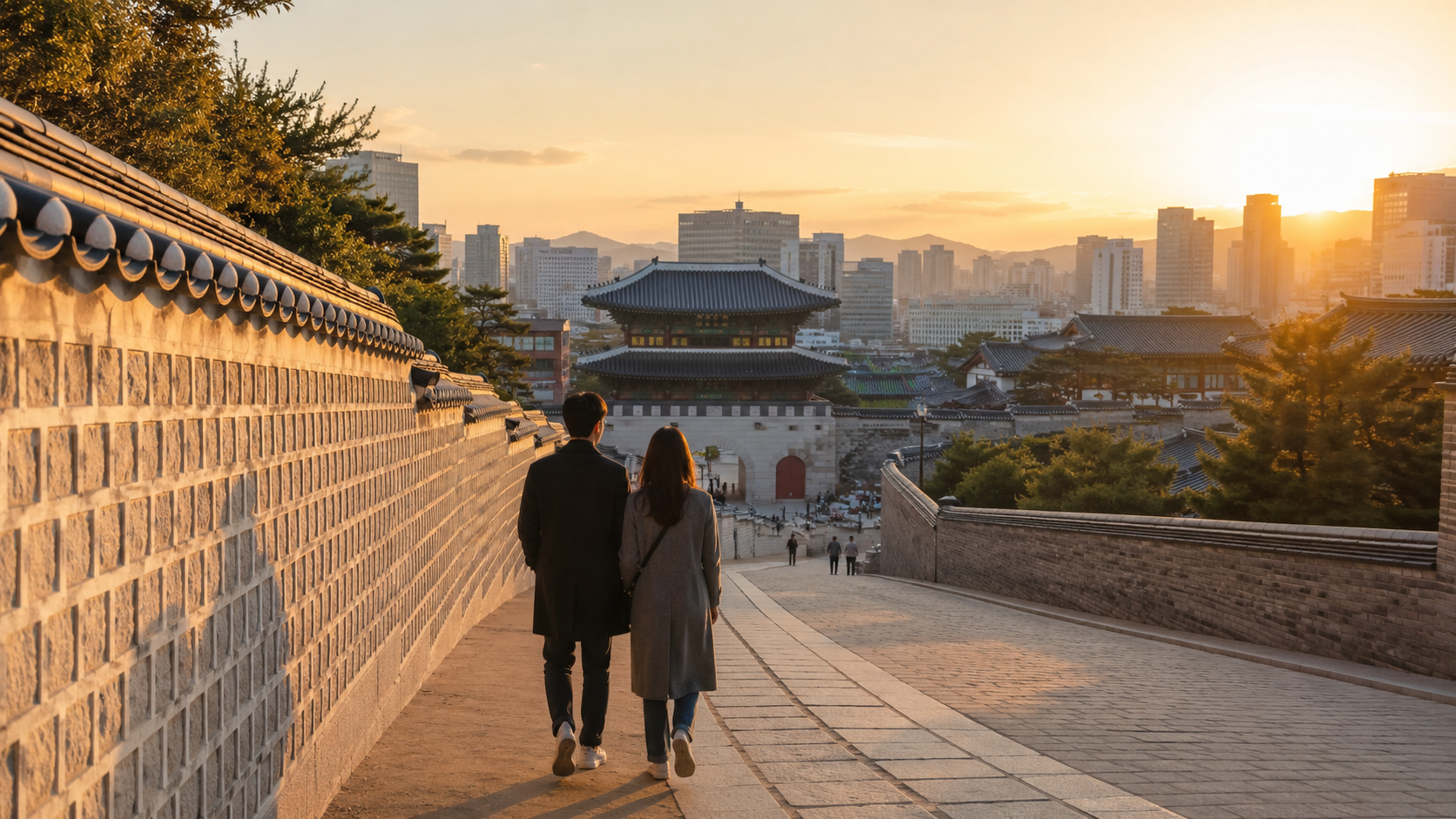
Days 1–4: Seoul
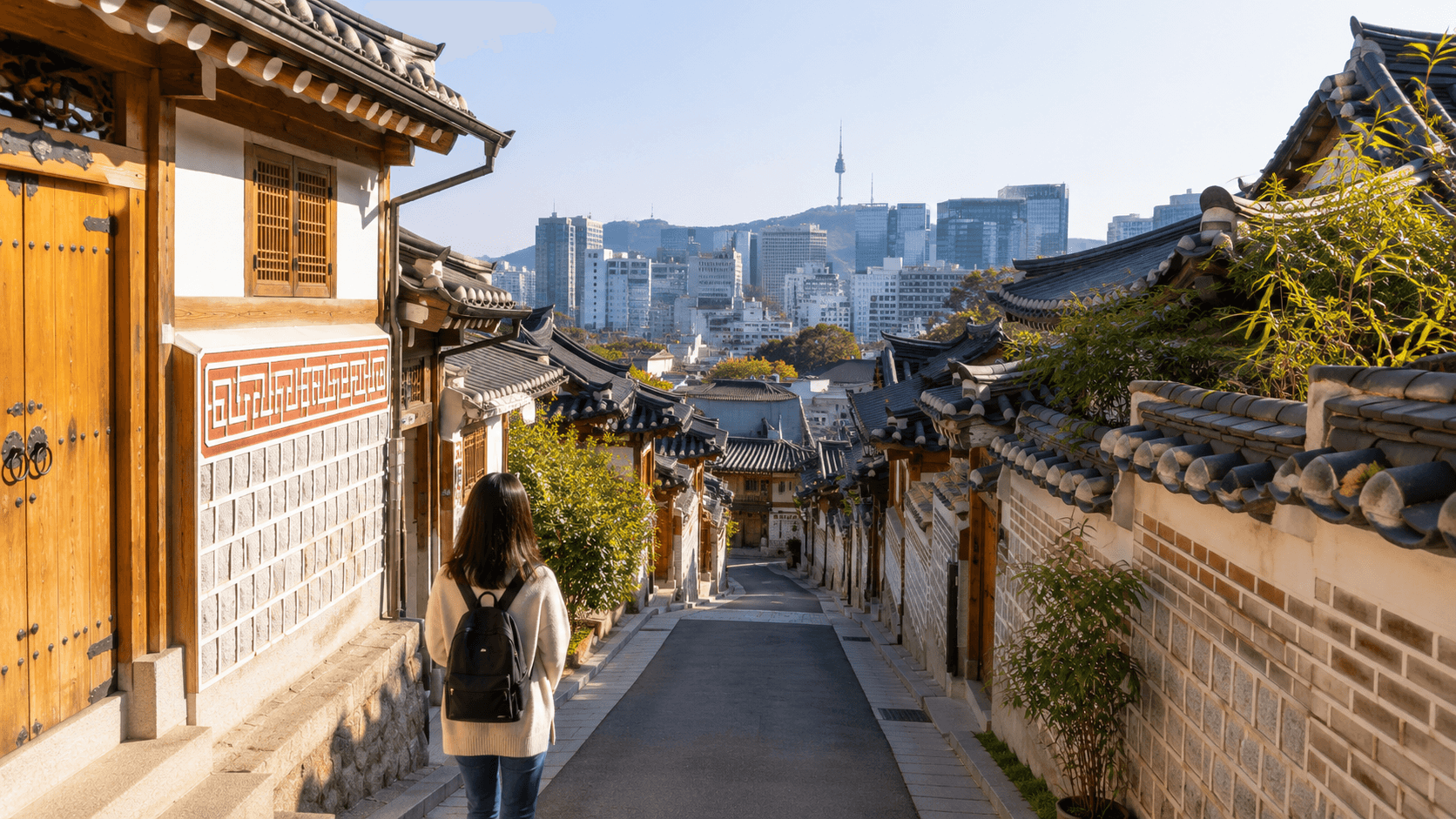
Base yourselves near a subway station rather than choosing a hotel only for its view or interior design. Jongno is convenient for palaces and traditional neighborhoods; Myeong-dong is central and practical for first-time visitors; Hongdae has later nightlife and direct all-stop airport rail service; Gangnam suits travelers prioritizing shopping, restaurants, and modern districts.
A balanced four-day plan could look like this:
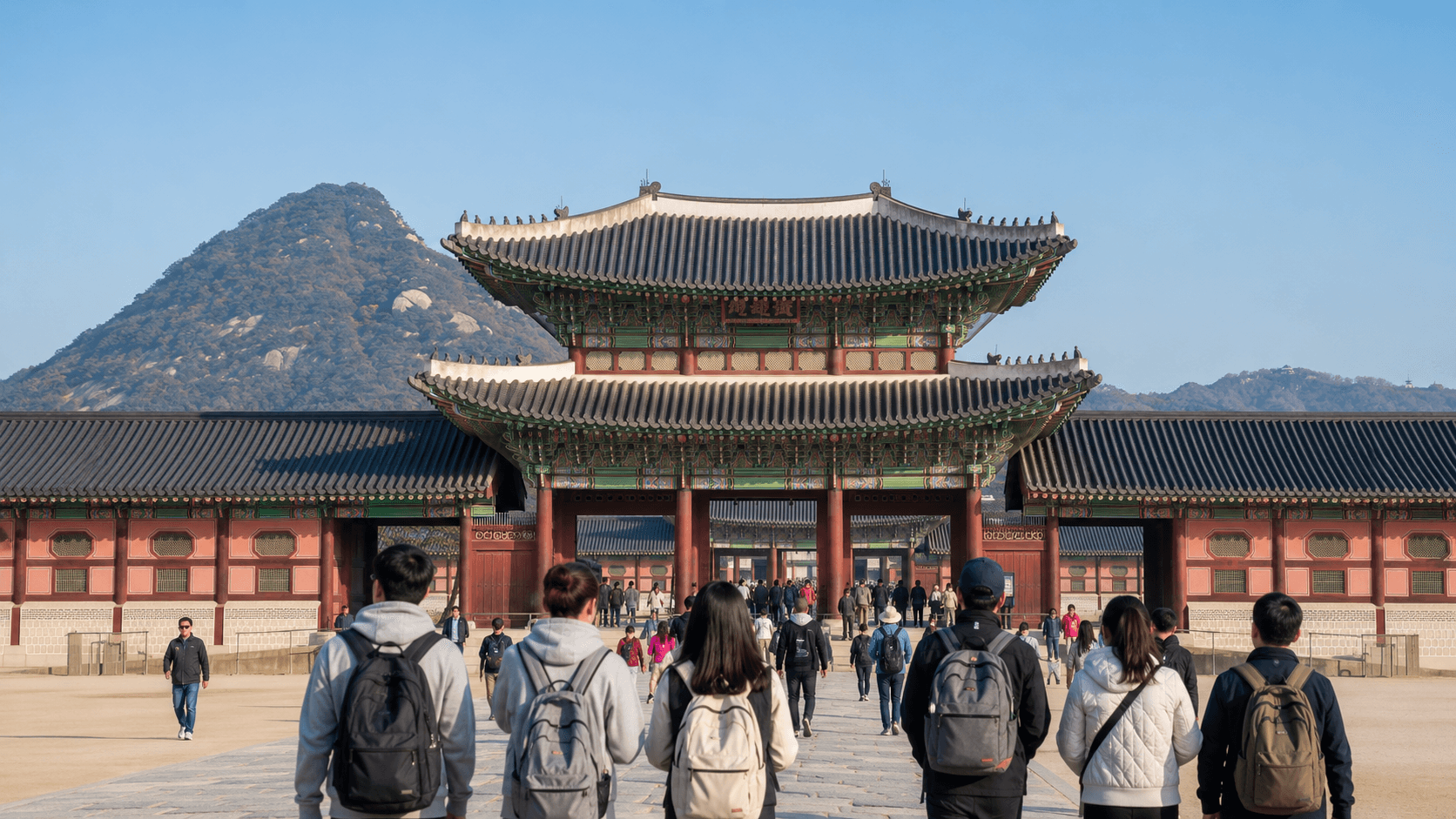
- Historic Seoul: Visit Gyeongbokgung Palace, walk through nearby streets, and continue to Insadong or Ikseon-dong. Palace closing days, admission, ceremonies, and seasonal night openings can change, so check the Royal Palaces and Tombs Center before visiting.
- Neighborhood day: Explore Seongsu, Hannam-dong, Yeonnam-dong, or another area that matches your interests. Choose one neighborhood rather than crossing the city repeatedly for individual cafés.
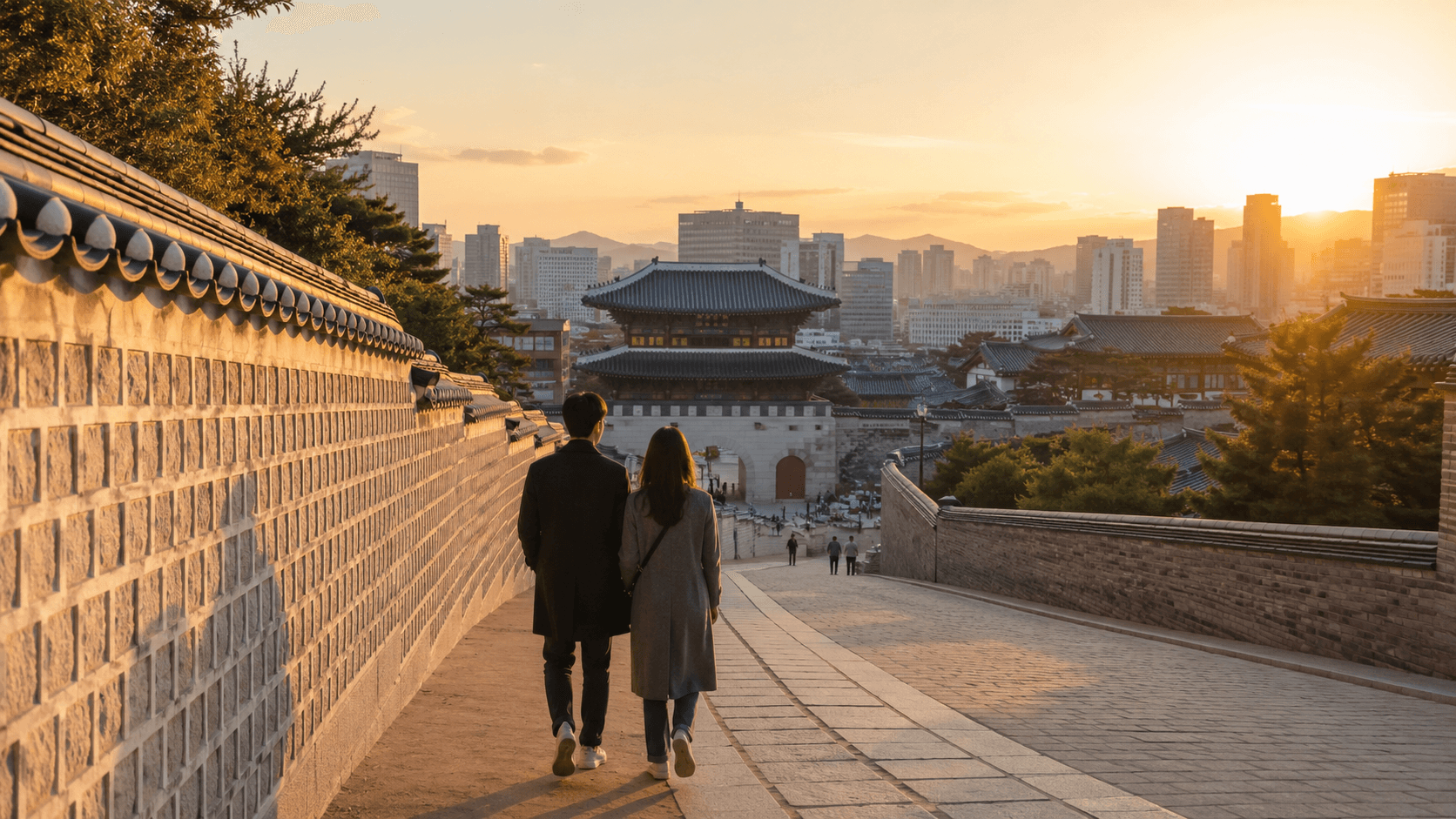
- Han River and central Seoul: Walk or picnic beside the river, then visit Namsan or another viewpoint near sunset. Outdoor plans depend on rain, heat, and fine-dust conditions.
- Flexible day: Keep this for shopping, a museum, a cooking activity, a performance, or somewhere one partner discovered during the trip.
A hanbok rental can make a palace visit more memorable, but compare the full rental period, hairstyle charges, locker availability, and late-return fees. Do not assume that every package shown online includes the same accessories.
Days 5–7: Busan
Travel from Seoul to Busan by KTX high-speed train. Search and book through the official KORAIL website or KorailTalk app. Use the official channel where possible: unofficial booking sites may charge additional fees or offer different cancellation conditions.
Stay near Seomyeon for convenient citywide transport, Haeundae for the beach and eastern attractions, or Gwangalli for evening bridge views and a neighborhood atmosphere. Busan is geographically spread out, so grouping sights by area is important.
A practical two-and-a-half-day plan is:
- Arrival day: Check in, walk at Gwangalli or Haeundae, and have dinner nearby.
- Full day: Explore the eastern coast, including Haeundae, Dongbaekseom, or a reserved coastal attraction. Alternatively, concentrate on central Busan, Jagalchi, Nampo-dong, and nearby viewpoints.
- Departure day: Visit one market, café area, or museum before taking the train.
The Haeundae Blue Line Park beach train and Sky Capsule are separate products with different boarding arrangements. Popular time slots can sell out, particularly around sunset and on weekends. Confirm the route, boarding station, cancellation terms, and current timetable directly with Haeundae Blue Line Park.
For current city events and attraction information, consult the official Visit Busan guide.
Alternatives for a longer trip
Add Gyeongju for history and slower evenings
Gyeongju is a strong choice for couples who prefer heritage sites, cycling, gardens, and quieter evenings. It lies between the Seoul and Busan portions of a typical rail itinerary.
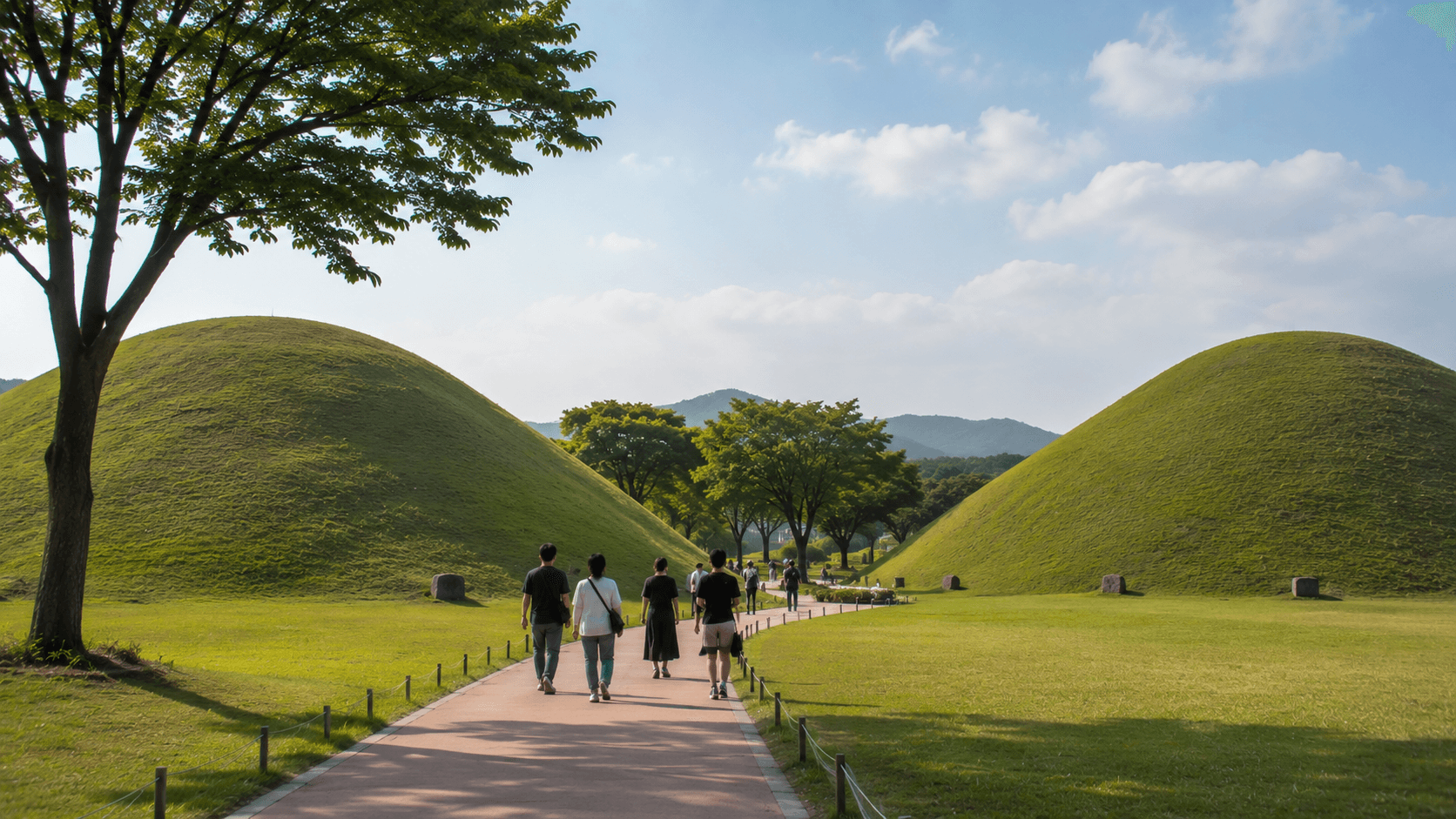
High-speed trains use Singyeongju Station, which is outside the historic center. Account for the bus or taxi transfer when comparing travel times. Within the central area, major sights include the Daereungwon tomb complex, Cheomseongdae, Woljeonggyo Bridge, and Donggung Palace and Wolji Pond. The pond is particularly popular after dark, but crowd levels and seasonal closing times vary.
Spend at least one night. A same-day stop between Seoul and Busan is possible, but handling luggage and transfers can turn it into a rushed checklist.
Add Jeju for scenery and a road trip
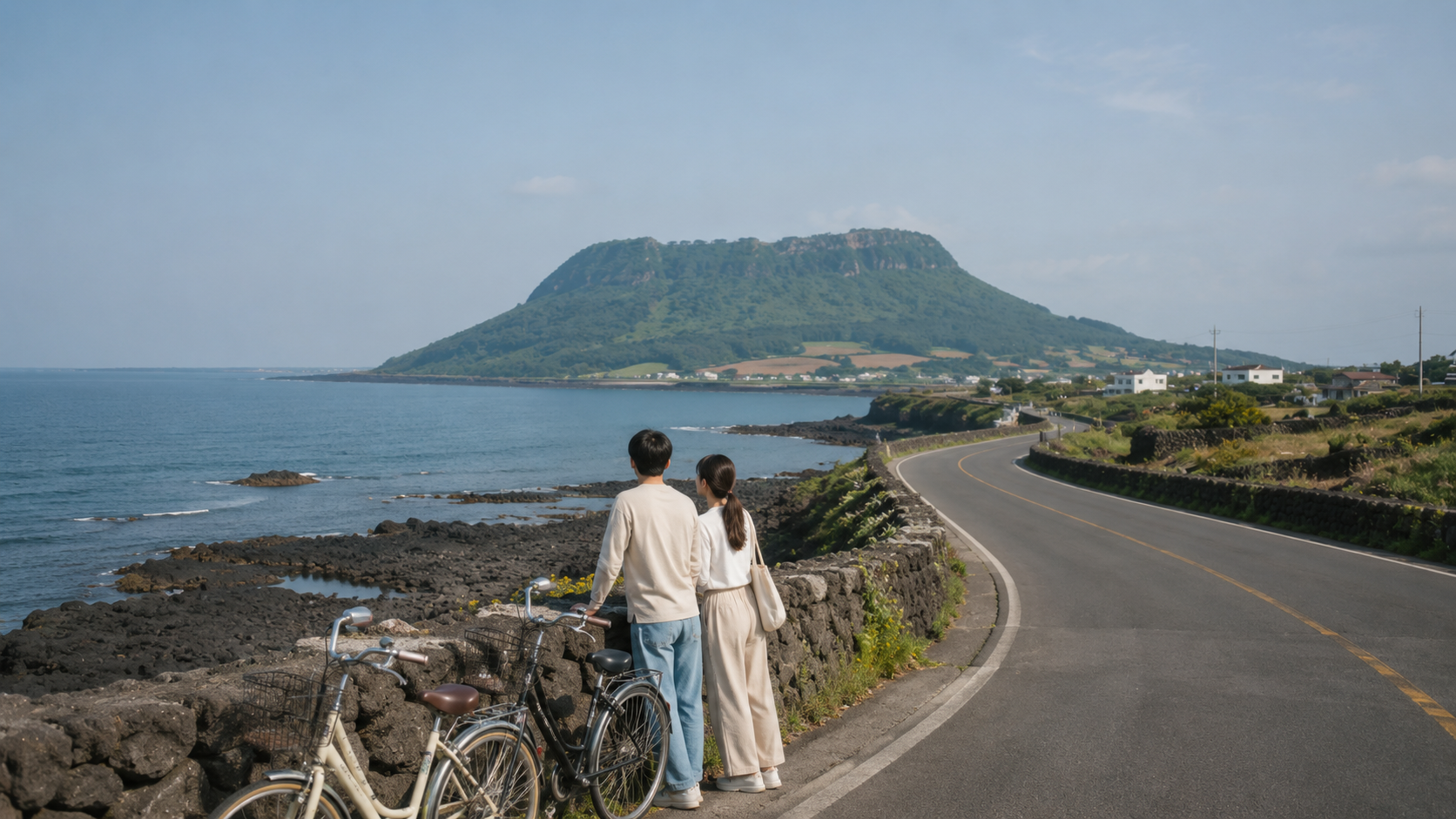
Jeju is better treated as a separate three- or four-night section than as a quick day trip. Couples can choose between Jeju City for transport convenience, Seogwipo for southern sights, or two bases if the stay is long enough.
Driving provides the greatest flexibility, but eligibility depends on your licence, nationality, rental company, and documentation. Confirm requirements directly with the rental company before paying. An International Driving Permit does not replace your original licence, and the exact documents accepted can vary. Jeju buses serve major towns and attractions, but travel is slower and requires more planning.
Good area combinations include:
- Eastern Jeju: Seongsan Ilchulbong, coastal roads, and nearby villages
- Southern Jeju: Seogwipo, waterfalls, markets, and coastal walks
- Western Jeju: beaches, oreum volcanic cones, gardens, and sunset areas
An oreum is a small volcanic cone, a landscape feature associated with Jeju. Trail access can be restricted because of weather, conservation work, or fire risk. Check notices through the official Visit Jeju website.
Do not schedule a Jeju flight to arrive only a few hours before an international departure from Incheon. Separate tickets usually leave you responsible for missed connections.
Transport and payment
Airport to Seoul
Incheon International Airport is connected to Seoul by AREX trains, airport buses, and taxis. The all-stop AREX train serves intermediate stations such as Hongik University and Gongdeok, while the separate Express Train runs to Seoul Station with reserved seating. Check terminal, timetable, fare, and late-night options through Incheon International Airport and the AREX operator.
Late arrivals require extra care because rail and bus services do not operate all night. Compare your scheduled landing time with immigration, baggage collection, and the final departure rather than the aircraft’s arrival time alone.
Getting around Seoul
A reloadable transport card is the simplest choice for travelers moving between regions or making occasional trips. Each person needs a separate card and should tap when entering and leaving buses and subway systems where required.
For intensive Seoul sightseeing, the Climate Card offers short-term passes. As verified on June 10, 2026, the official prices were KRW 5,000 for one day, KRW 8,000 for two days, KRW 10,000 for three days, KRW 15,000 for five days, and KRW 20,000 for seven days. A physical card costs an additional KRW 3,000. Coverage is not universal: some regional lines, airport buses, and transport outside the designated area are excluded. International cards can be used at supported machines for short-term passes. Read the current boundaries and payment details on the Seoul Metropolitan Government Climate Card page.
Navigation
Install a Korea-focused map app before arrival. Korean addresses and transit information are often more complete there than on international mapping platforms. Save your accommodation in both English and Korean, and take a screenshot of the address for taxi drivers or offline use.
Accommodation for couples
Korean room descriptions require careful reading. A double room may contain one double bed, while a twin has two separate beds. Room size can be compact, and photographs do not always make the floor space around the bed obvious.
Before booking, check:
- Bed type and room dimensions
- Private versus shared bathroom
- Window availability
- Luggage storage before check-in or after checkout
- Elevator access
- Reception hours and self-check-in instructions
- Distance from the nearest station exit, not only the station itself
- Cancellation and no-show rules
Traditional hanok accommodation can be atmospheric, but some rooms use floor bedding, have thin walls, or require shoes to be removed throughout the property. Confirm bathroom arrangements and whether large suitcases are practical.
Eating together without ordering mistakes
Korean meals are often designed for sharing, but minimum orders are common at barbecue restaurants and some specialty establishments. A menu price may be for one portion even when the restaurant requires two portions. Ask before ordering if the notation is unclear.
Useful phrases include:
- Iinbun juseyo (2인분 주세요): Two portions, please.
- An maewoyo? (안 매워요?): Is it not spicy?
- Gyesanhalgeyo (계산할게요): We would like to pay.
Payment is usually made at the counter rather than at the table. Splitting a bill across multiple cards may be possible, but it is not guaranteed. A simple approach is to alternate paying or use a shared expense app.
Reservations are worthwhile for tasting menus, popular barbecue restaurants, river-view dining, and small venues seen on social media. Some Korean reservation platforms require a local phone number or domestic payment method. When online booking fails, ask your hotel whether it can call, or choose a restaurant with direct international booking.
How to make the trip work as a couple
A well-paced couple’s trip is not simply a list of romantic attractions. It also accounts for different energy levels, food preferences, budgets, and shopping habits.
Before departure, agree on:
- One or two non-negotiable activities per person
- A daily spending range
- Whether mornings will start early
- How much shopping time to allow
- Whether either person needs regular time alone
- Who handles navigation, reservations, and expense tracking
Build one unscheduled half-day into every four or five days. This creates room for bad weather, laundry, fatigue, or an area that deserves more time. It also reduces the friction caused when every delay affects a prepaid activity.
Common planning mistakes
Trying to visit Seoul, Busan, and Jeju in five days
The route is physically possible but usually inefficient. Airports, stations, check-in, and luggage transfers will dominate the trip. Choose Seoul plus one destination.
Reserving every meal
A few important reservations are useful, but tightly scheduled dining prevents spontaneous market visits and creates stress when transit takes longer than expected.
Booking a sunset attraction too close to arrival
Allow a buffer for train delays, finding lockers, and local transport. Sunset reservations are particularly risky on the day you change cities.
Carrying large suitcases through subway transfers
Some stations are extensive, and the nearest elevator may be far from the most direct route. For intercity travel, consider luggage storage, a taxi to the station, or a hotel near a simpler line.
Assuming every attraction opens daily
Palaces, museums, restaurants, markets, and private attractions may close on different weekdays. Seasonal night events often require separate reservations.
What to check before you go
- Confirm passport, visa, and entry requirements through the Korea Visa Portal and, where applicable, the official K-ETA website. Requirements depend on nationality and can change.
- Recheck every domestic flight and intercity train reservation.
- Verify attraction closing days and the final admission time.
- Check whether restaurant and activity bookings require a Korean phone number.
- Save accommodation names, addresses, and phone numbers in Korean.
- Carry at least one physical payment card and some KRW for situations where an international card is not accepted.
- Check weather warnings and air-quality conditions before outdoor dates.
- Arrange appropriate travel insurance; read the policy exclusions rather than relying only on the product name.
- Keep 112 for police and 119 for fire or ambulance emergencies. The Korea Tourism Organization also provides the 1330 Korea Travel Helpline; current online call and chat options appear on VISITKOREA.
FAQ
Is Korea a good honeymoon destination?
Yes, particularly for couples who prefer an active trip involving food, neighborhoods, culture, shopping, and nature. It is less suited to travelers seeking a secluded resort experience for the entire stay, although Jeju and selected coastal properties can provide slower sections.
How much time should couples spend in Seoul?
Four full days is a practical minimum for a first visit. Five to six days allows for more neighborhood exploration and less pressure to combine distant areas on the same day.
Should we visit Busan or Jeju?
Choose Busan for easier rail access, urban beaches, seafood, nightlife, and a shorter trip. Choose Jeju for a longer scenic section, driving, hiking, and coastal landscapes. Jeju usually requires more logistical preparation.
Can unmarried couples share a hotel room in Korea?
Mainstream hotels generally accept adult couples regardless of marital status, subject to the property’s identification, age, and booking policies. Each guest should carry valid identification, and travelers under the property’s minimum check-in age should confirm the rules directly.
Where should we go for an anniversary evening in Seoul?
Rather than choosing one supposedly universal romantic location, match the plan to your interests: a palace-area walk for history, the Han River for an informal picnic, Namsan for a viewpoint, or a reserved performance and dinner for a weather-independent evening. Check closing times and the return route before going.
Sources
- Korea Tourism Organization: VISITKOREA
- Seoul Metropolitan Government: Climate Card
- KORAIL official website
- Incheon International Airport
- Visit Busan official travel guide
- Visit Jeju official travel guide
- Royal Palaces and Tombs Center
Start by choosing your trip length and no more than three bases. Reserve the international flights and key intercity journeys first, then build each day around one part of the city instead of a long list of disconnected attractions.