You do not need to rent a car for a first trip to South Korea. A straightforward route through Seoul, Gyeongju, and Busan can be completed using high-speed trains, city subways, local buses, and occasional taxis. The key is to stay near useful transport hubs, reserve long-distance tickets separately, and avoid packing too many rural destinations into one journey.
This 10-day itinerary works particularly well for first-time visitors because it combines a large modern city, a historic regional destination, and the coast without requiring complicated transfers.
At a glance
| Days | Base | Main transport | Suggested area to stay |
|---|---|---|---|
| 1-4 | Seoul | Subway, bus, walking | Jongno, Euljiro, Myeong-dong, or Seoul Station |
| 5-7 | Gyeongju | KTX, local bus, taxi, walking | Downtown near Hwangnidan-gil or the express bus terminal |
| 8-10 | Busan | KTX or intercity bus, metro, city bus | Seomyeon, Nampo, Gwangalli, or Haeundae |
Transport websites, reservation systems, and operator information in this guide were checked on June 10, 2026. Actual fares and departure times depend on the travel date, train type, route, and seat availability, so confirm them in the official booking system before paying.
Before building your route
Use trains between major cities
KTX high-speed trains are usually the easiest option between Seoul and southeastern Korea. Reserve KORAIL-operated services through the official KORAIL ticket website. SRT is a separate high-speed operator whose Seoul-area services normally use Suseo Station rather than Seoul Station; its current stations, routes, and tickets are available through the official SRT English booking site.
Check the departure station carefully. Seoul Station, Yongsan Station, Cheongnyangni Station, and Suseo Station serve different routes and are not interchangeable.
Use buses when the railway is inconvenient
Express and intercity buses reach destinations that are not directly connected by rail. Korea has several reservation systems rather than one universal bus website:
Not every terminal or route appears on every platform. Search both the city and exact terminal name. If online payment does not work with your card, allow enough time to buy a ticket from the terminal counter or kiosk.
Buy a rechargeable transport card
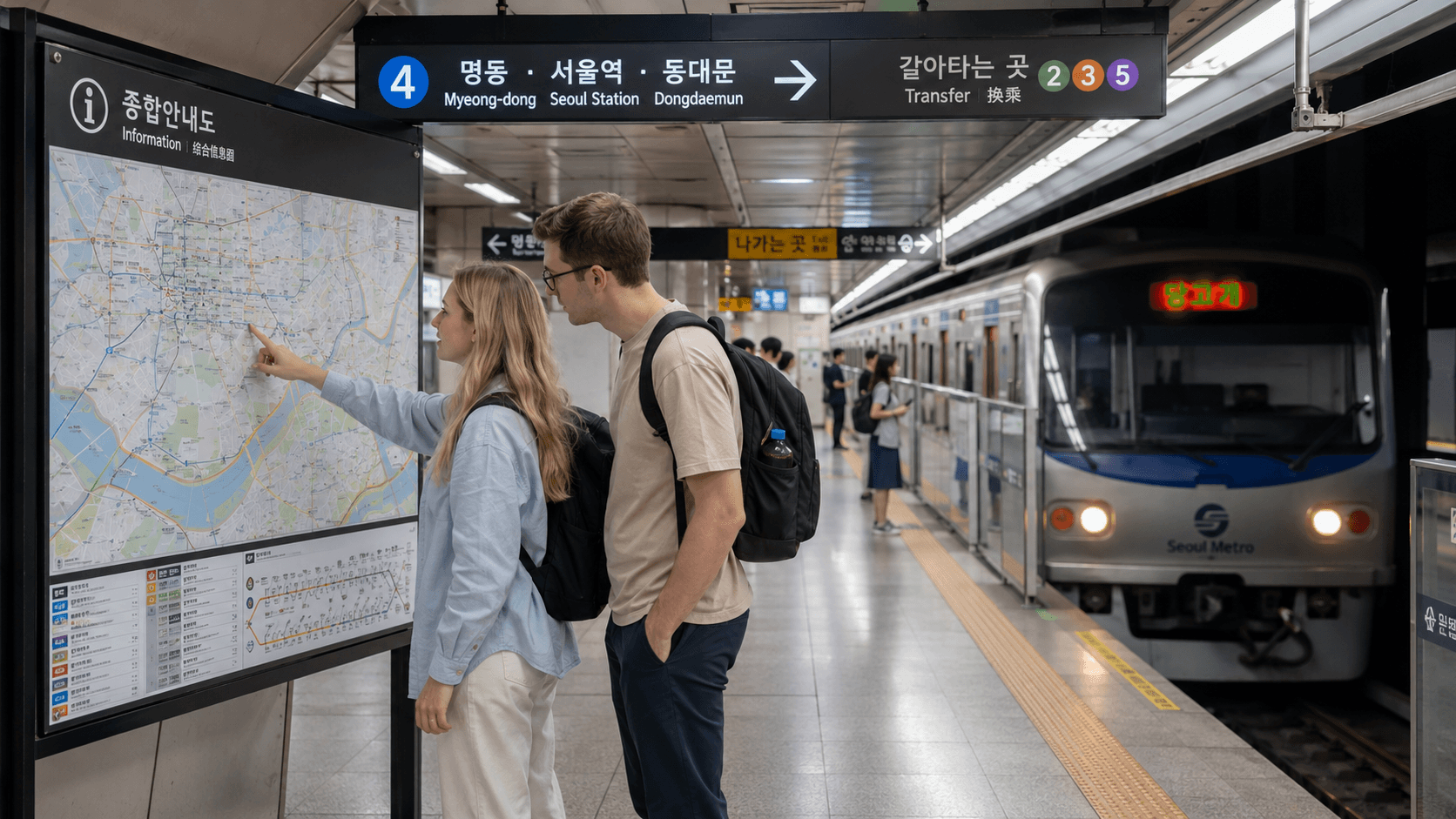
A physical Tmoney or other compatible prepaid transport card is useful for city buses and subways. Buy one after arrival at a convenience store or transport facility displaying the card logo, add a cash balance, and tap when entering and leaving where required. The official Tmoney website explains its mobility payment system.
A transport card balance does not replace a reserved KTX, SRT, express bus, or intercity bus ticket. Treat local transport and long-distance reservations as separate systems.
Days 1-4: Seoul without a car
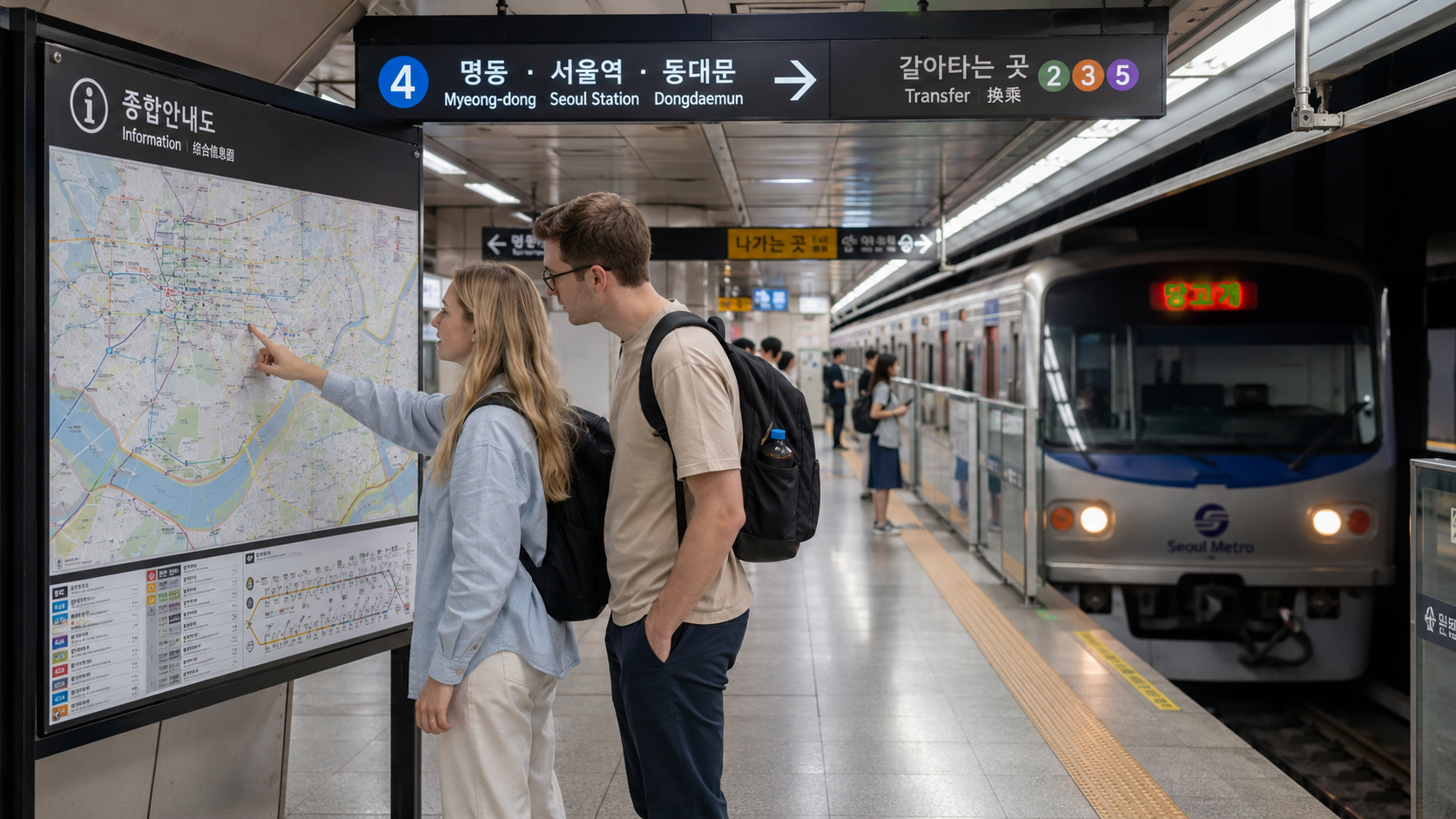
Seoul has an extensive subway and bus network, but the city is physically large. Organize each day by district instead of crossing the metropolitan area repeatedly.
Day 1: Arrival and an easy neighborhood walk
Travel from the airport to your accommodation, check in, and keep the first evening flexible. If arriving at Incheon International Airport, follow the official airport signs for the Airport Railroad, airport buses, taxis, and other ground transport. Check current options through Incheon International Airport.
Choose a simple walk near your hotel rather than scheduling a timed attraction. Good low-effort areas include Cheonggyecheon Stream and Euljiro, Myeong-dong, or the streets around Jongno.
Practical tip: Do not assume the airport-to-hotel journey will be step-free from beginning to end. Elevators can require a detour inside large stations. Travelers with heavy luggage may find an airport bus or taxi more manageable than multiple subway transfers.
Day 2: Gyeongbokgung, Bukchon, and Insadong
Keep this day within central Seoul:
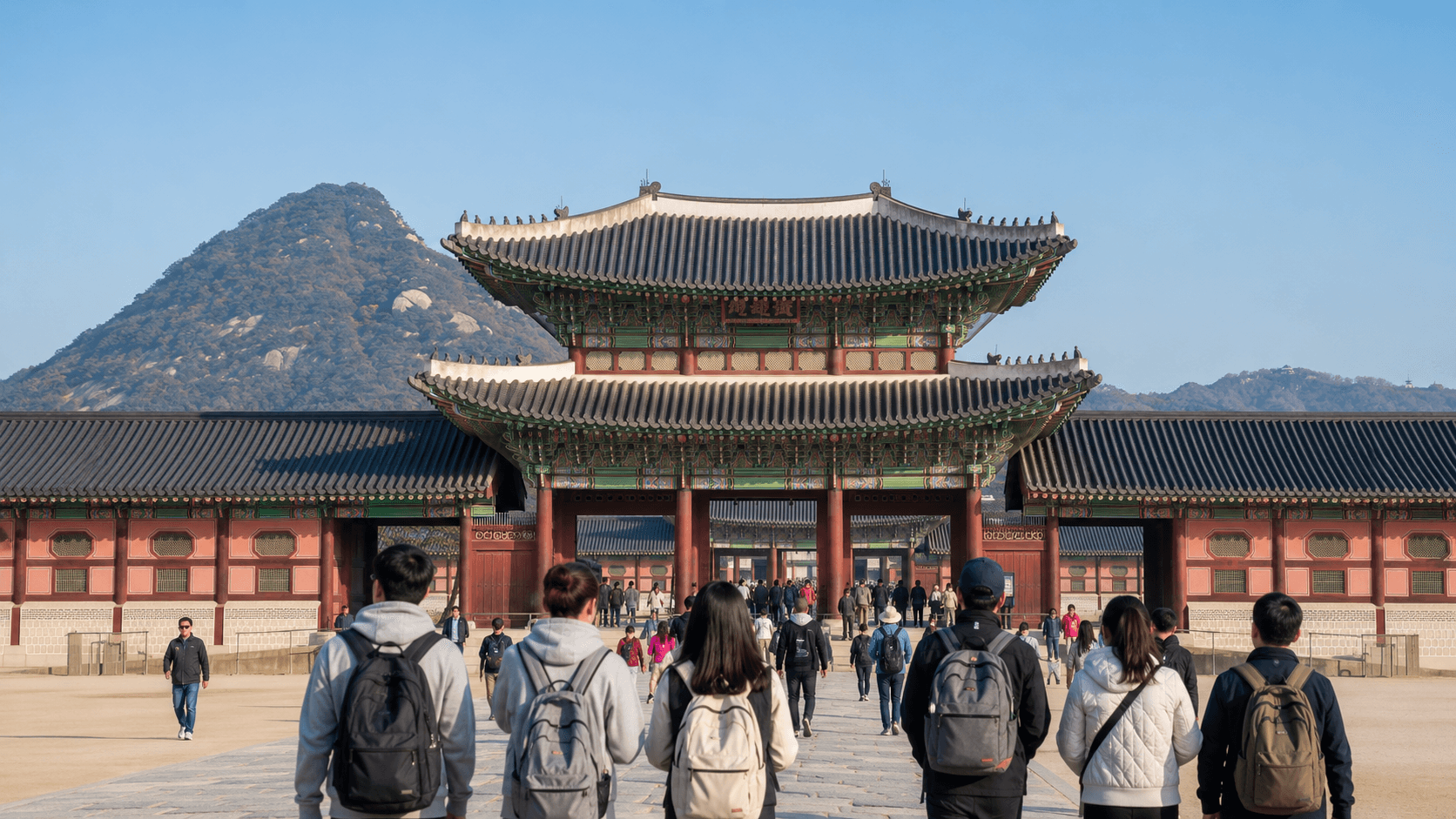
- Start at Gyeongbokgung Palace.
- Continue to the National Folk Museum area or nearby Samcheong-dong.
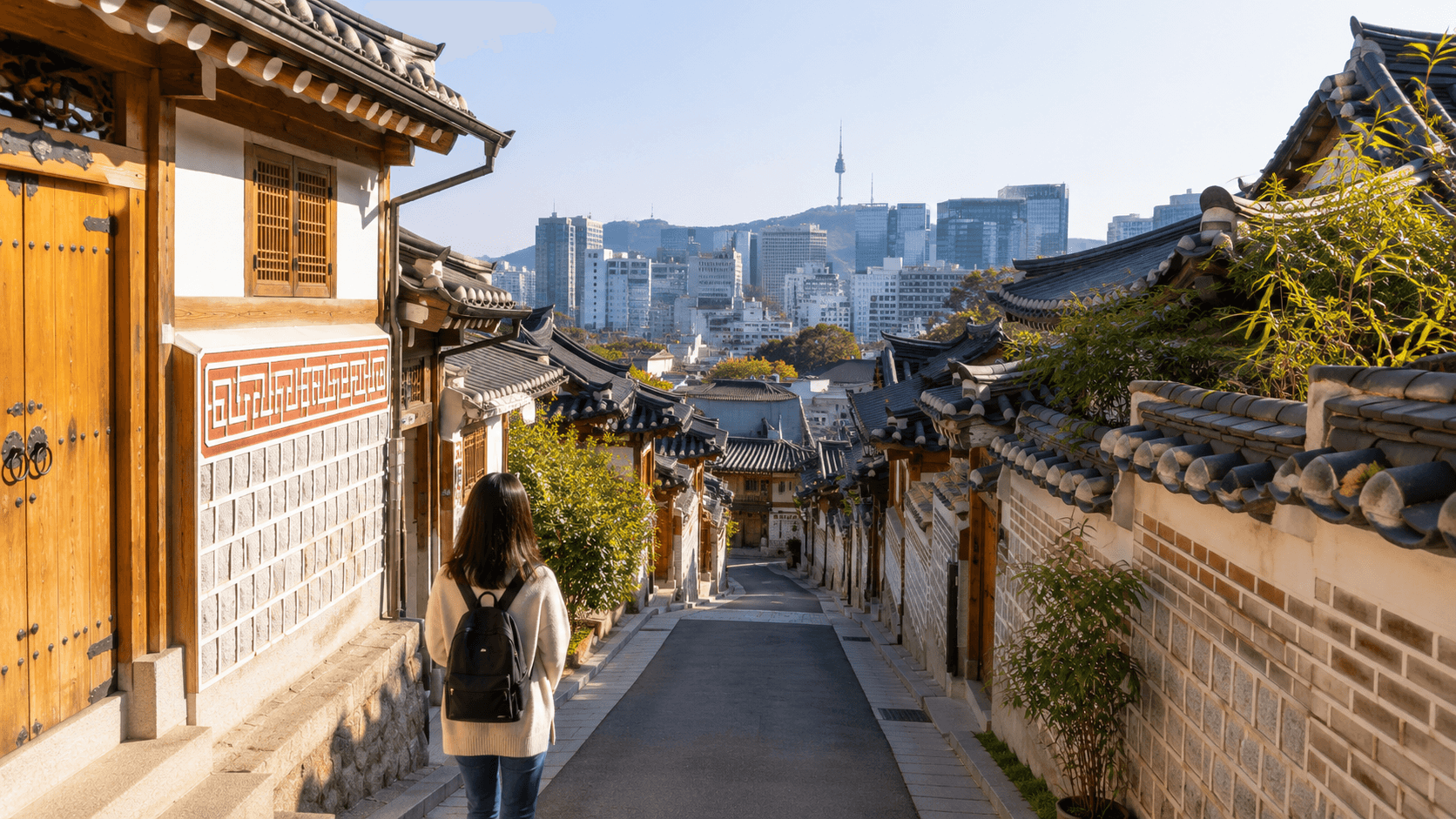
- Walk through selected public streets around Bukchon without entering residential alleys marked with visitor restrictions.
- Finish in Insadong or Ikseon-dong.
Palace opening days, admission arrangements, and special evening programs can change seasonally. Check the Korea Heritage Service palace information shortly before visiting.
Wear comfortable shoes. Even when attractions appear close together on a map, palace grounds and historic districts involve substantial walking and uneven surfaces.
Day 3: Market, river, and modern Seoul
Start with one traditional market or shopping district, then spend the afternoon beside the Han River. Select the riverside park that creates the simplest journey from your accommodation rather than choosing one solely for a photograph.
For the evening, choose one area such as Hongdae, Yeonnam-dong, Seongsu-dong, or Gangnam. Visiting several of these on the same day creates unnecessary subway time.
Day 4: Choose one car-free day trip
Use this as either a slower Seoul day or a rail-accessible excursion.
Suwon: Suitable for history and walking around Hwaseong Fortress. Travel by metropolitan rail or train, then use local buses or taxis as needed.
Incheon: Suitable for Chinatown, the old port area, or Songdo. These districts are far apart, so select one part of the city.
Chuncheon: Reachable by rail, but attractions outside the center may require buses or taxis. Check the return schedule before leaving Seoul.
A guided tour can be practical for sites with restricted access or awkward public transport, including some DMZ itineraries. Verify the operator, cancellation policy, passport requirements, and meeting point before booking.
Days 5-7: Gyeongju by train and bus
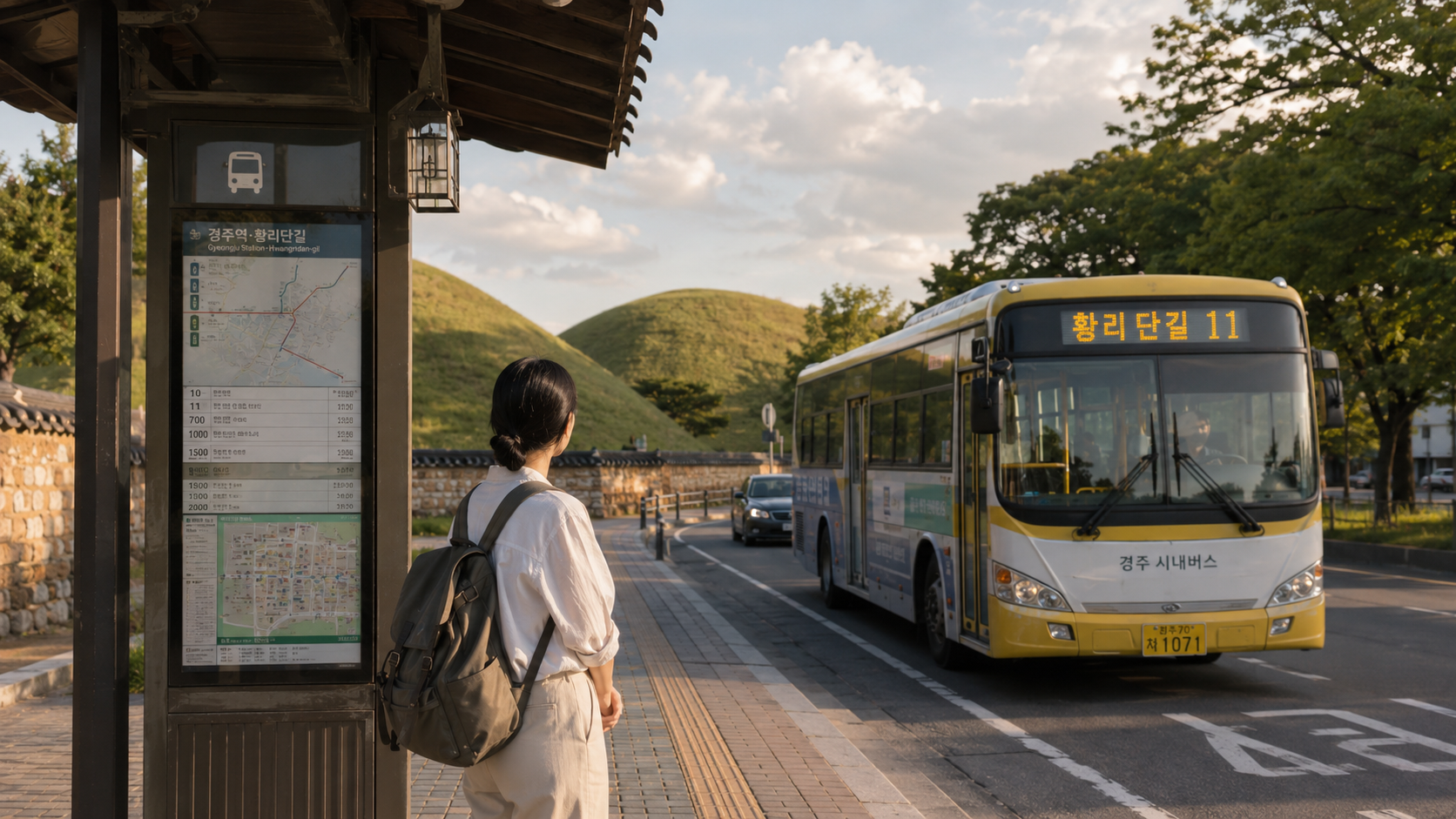
Gyeongju is possible without a car, but it requires more planning than Seoul. Its historic center is walkable, while Bulguksa, Seokguram, Bomun, and other outer sights are spread across the municipality.
Day 5: Seoul to Gyeongju
Reserve a morning KTX or SRT service to Gyeongju Station. The high-speed station is outside the historic center, so arriving at the station does not mean you have reached your hotel area. Continue by local bus or taxi.
Stay downtown if historic sights are your priority. The area around Hwangnidan-gil, Daereungwon, and the express bus terminal provides easier access to restaurants and central attractions than the more isolated high-speed rail station area.
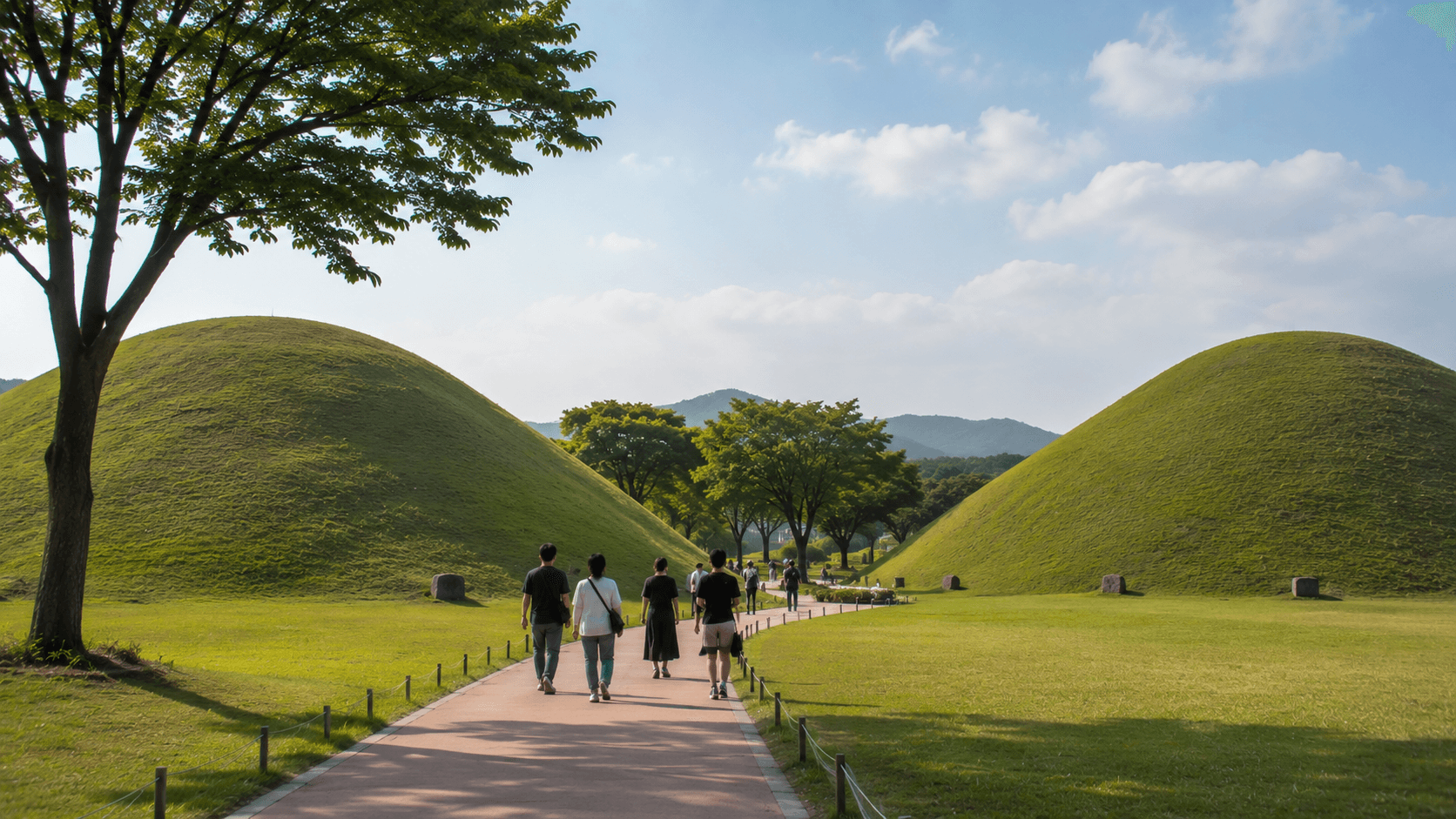
After checking in, take a relaxed walk around Hwangnidan-gil and the Daereungwon tomb area. Continue toward Cheomseongdae and Woljeonggyo Bridge if time and energy permit. Use the official Gyeongju tourism website to check current attraction information.
Day 6: Central Gyeongju on foot
Group the central heritage area into one route:
- Daereungwon Ancient Tomb Complex
- Cheomseongdae
- Gyerim Forest
- Gyochon Traditional Village
- Woljeonggyo Bridge
- Gyeongju National Museum
- Donggung Palace and Wolji Pond
The complete circuit is long. Use a local bus or short taxi ride if the weather is hot, wet, or cold. Donggung Palace and Wolji Pond is often scheduled later in the day, but confirm its current admission hours before relying on an evening visit.
Day 7: Bulguksa and an optional second sight
Take a local bus or taxi to Bulguksa Temple. Public buses are inexpensive but can be infrequent compared with Seoul services, and journey planners may suggest transfers that are technically possible but inconvenient.
Add only one secondary destination, such as Seokguram Grotto or the Bomun Lake area. Combining several outer Gyeongju sites by bus can consume most of the day.
Accessibility note: Historic temples, grottoes, tomb areas, and mountain sites may include slopes, steps, gravel, and uneven paths. Check the individual attraction and transport operator before traveling if step-free access is essential.
Days 8-10: Busan by metro and bus
Busan is well suited to car-free travel, but its major attractions lie along a long coastline. Divide the city geographically.
Day 8: Gyeongju to Busan and the central districts
Travel from Gyeongju to Busan by high-speed train or intercity bus. Compare the complete door-to-door journey, not just the scheduled travel time. A bus arriving near central Busan may sometimes be more convenient than a train requiring additional transfers.
After checking in, explore Nampo-dong, Gukje Market, Bupyeong Kkangtong Market, or the waterfront around Jagalchi. These locations can be combined without crossing the city.
Official attraction listings, itineraries, maps, and current city notices are available from Visit Busan.
Day 9: Western or southern Busan
Visit Gamcheon Culture Village early, then continue to one nearby district rather than immediately crossing to Haeundae. Gamcheon is on a hillside, and reaching it normally involves a bus, taxi, or a steep walk from lower ground.
Possible additions include Songdo, Yeongdo, Huinnyeoul Culture Village, or Taejongdae. Each has different bus connections and walking demands. Check the return route before sunset, particularly when visiting coastal trails.
Day 10: Eastern Busan and departure
Spend the final day around Gwangalli, Haeundae, or another eastern coastal district. Gwangalli is convenient for an urban beach and bridge views. Haeundae provides access to a larger beach district, while attractions farther east require more travel time.
For a same-day flight, leave a generous buffer for the journey to Gimhae International Airport. Busan's metro network is extensive, but getting from the eastern beaches to the airport can involve a long cross-city trip and a transfer.
The Busan Transportation Corporation provides official metro information and maps.
Where to stay for easier transport
Seoul
Choose accommodation within a short, level walk of a subway station. Jongno and Euljiro are useful for central sightseeing. Seoul Station is convenient for KTX and airport connections but may feel less convenient for evening neighborhood walks.
Gyeongju
Stay near the historic center or express bus terminal. Do not select accommodation beside Gyeongju Station solely because you arrive there by KTX; the station is outside the main tourist center.
Busan
Seomyeon is a practical transport base with useful metro connections. Nampo works well for markets and older central Busan. Gwangalli and Haeundae suit coastal stays but increase travel time to western attractions and the airport.
Luggage strategy
Pack so that you can move your luggage through stations without assistance. A medium suitcase or travel backpack is generally easier than multiple large cases.
Korean intercity trains do not operate like airlines with routine checked-baggage service. Storage space can be limited, particularly for oversized suitcases. Keep valuables with you and avoid blocking aisles, doors, or wheelchair spaces.
Useful approaches include:
- Leave large luggage at your hotel before check-in or after checkout, subject to hotel policy.
- Use station lockers only after confirming the opening size and operating instructions.
- Send bulky luggage separately through a reputable delivery service when necessary, allowing for delivery time.
- Pack one small overnight bag if you plan a short regional side trip.
Expected transport budget
For planning purposes, allow roughly KRW 150,000-300,000 per adult for this 10-day route, excluding airport taxis, private tours, and transport to remote attractions. This is a practical budget estimate, not an operator fare quote. The total depends heavily on train class, booking choices, local taxi use, and the airport route.
Live long-distance fares were not reproduced because the official systems calculate them by date, service, and seat selection. Check KORAIL, SRT, TxBus, Bustago, or KOBUS for your exact journey. These reservation portals were verified as accessible on June 10, 2026.
Common mistakes
- Searching only for a city name and overlooking multiple terminals or stations.
- Booking a train from Suseo when the hotel is near Seoul Station, or vice versa.
- Assuming Gyeongju Station is in central Gyeongju.
- Trying to cover eastern and western Busan on the same day.
- Trusting the final bus of the evening without checking the live timetable.
- Boarding a bus without enough transport-card balance.
- Following an international map service that has incomplete Korean transit data. Compare results with Naver Map or KakaoMap, which generally provide more useful local routing.
- Carrying more luggage than you can lift onto a train or through a station.
Shorter and longer versions
For seven days, spend three nights in Seoul, one or two nights in Gyeongju, and two nights in Busan. Skip the Seoul day trip and limit Gyeongju to the central heritage area plus Bulguksa.
For two weeks, add Jeonju, Andong, Gangneung, or another city with direct rail or bus connections. Add only one regional base at a time. Rural villages, national parks, and coastal areas may need infrequent buses or taxis even when the city itself is easy to reach.
Jeju can be visited without driving, but it should be planned as a separate car-free itinerary. Its buses cover the island, yet travel between scattered attractions can take much longer than the distance suggests.
What to check before you go
- Confirm the exact station or bus terminal printed on every ticket.
- Recheck train and bus times shortly before departure.
- Verify attraction closing days, reservation rules, and final admission times.
- Check whether your hotel can store luggage.
- Download Naver Map or KakaoMap and save key destinations in Korean.
- Keep sufficient cash available for transport-card recharging and situations where an overseas card is not accepted.
- Allow extra time during national holidays and major festivals.
- Check weather alerts before coastal walks, mountain sites, or outdoor heritage areas.
- Contact the 1330 Korea Travel Helpline when you need tourism assistance or help confirming local information.
Start by checking Seoul-to-Gyeongju and Gyeongju-to-Busan availability for your actual dates. Once those two long-distance journeys are fixed, book accommodation near the recommended transport areas and keep the city sightseeing days flexible.
Sources
- KORAIL official English ticket website
- SRT official English booking website
- TxBus official intercity bus reservations
- Bustago official English reservations
- KOBUS official express bus website
- Korea Tourism Organization's VISITKOREA
- Official Gyeongju tourism website
- Visit Busan official travel guide
- Busan Transportation Corporation
- Incheon International Airport