South Korea has hot, humid summers, cold winters, and considerable weather changes during spring and autumn. Your packing list should therefore match the month, destination, and activities rather than rely on a single year-round formula. Comfortable walking shoes, adaptable layers, a Type C or F plug adapter, essential medication, and space for purchases are the main priorities.
At a glance: essential Korea packing list
- Passport and any required visa or travel authorization
- Travel insurance details and copies of important documents
- Payment cards plus a modest amount of Korean won (KRW)
- Phone, charging cable, power bank, and plug adapter
- eSIM, SIM card, roaming plan, or portable Wi-Fi arrangement
- Comfortable walking shoes
- Seasonal clothing and a light outer layer
- Compact umbrella
- Prescription medication in original packaging
- Basic toiletries and personal care items
- Small day bag
- Reusable water bottle
- Luggage space for shopping
Check the weather before choosing clothes
Korea has four distinct seasons. According to the Korea Meteorological Administration's climate overview, August is generally the warmest month and January the coldest. Summer includes the monsoon-influenced rainy period known as jangma (장마), while winter can bring freezing temperatures and snow.
Conditions vary by location. Seoul and inland areas usually experience sharper winter cold than Busan or Jeju, while mountain destinations can be substantially cooler than nearby cities. Check the short-range forecast for every destination several days before departure instead of packing from monthly averages alone.
Spring: March to May
Spring can shift between cold mornings, mild afternoons, rain, and occasional warm spells. Early March may still feel wintry, particularly after sunset.
Pack:
- Long trousers or jeans
- T-shirts and long-sleeved tops
- Sweater, fleece, or cardigan
- Medium-weight jacket for March and early April
- Lighter jacket for late April and May
- Closed walking shoes
- Compact umbrella
- Sunglasses and sunscreen
Layering is more useful than one heavy coat. Travelers sensitive to seasonal pollen or airborne dust may also want their usual medication and well-fitting masks.
Summer: June to August
Korean summers are hot and humid. Rain can be intense, and a short walk from a station may leave clothes wet from either rain or humidity. The official VISITKOREA climate guide advises travelers to monitor forecasts during the rainy period and notes that typhoons can affect Korea between June and October.
Pack:
- Lightweight, breathable shirts
- Loose trousers, skirts, or shorts
- Quick-drying underwear and socks
- Comfortable sandals with secure straps
- Walking shoes that tolerate rain
- Compact umbrella or light rain jacket
- Sunscreen, sunglasses, and a hat
- Small towel or handkerchief
- Insect repellent for parks, rural areas, and evening walks
- Refillable water bottle
A heavy waterproof shell can become uncomfortable in high humidity. A light rain layer or umbrella is usually more practical for city travel, although hikers should carry proper weather protection.
Indoor air conditioning can feel cold after being outside. Keep a thin overshirt or cardigan in your day bag, especially for long train journeys, cinemas, and shopping centers.
Autumn: September to November
September can remain warm and humid, while November may be cold enough for a winter-style coat. October often suits light layers, but temperatures can drop quickly after sunset or at higher elevations.
Pack:
- T-shirts and long-sleeved tops
- Sweater or fleece
- Light jacket for September and October
- Warmer coat for November
- Long trousers
- Comfortable closed shoes
- Compact umbrella
- Scarf for late autumn or mountain trips
If your itinerary includes fall foliage hikes, bring shoes with reliable grip. Fashion trainers designed mainly for flat pavement may not be suitable for rocky or wet trails.
Winter: December to February
Winter is generally cold and dry, with sub-zero conditions common in Seoul and other inland regions. Heated indoor spaces can be much warmer than streets and station platforms, so removable layers are important.
Pack:
- Insulated coat covering the upper legs if possible
- Thermal base layers
- Sweaters or fleece tops
- Warm trousers
- Thick socks
- Gloves, scarf, and a warm hat
- Water-resistant shoes with good traction
- Lip balm and moisturizer
- Sunglasses and sunscreen for snow or mountain trips
For skiing, long hikes, or extended rural stays, add proper waterproof outerwear and activity-specific equipment. For an ordinary city itinerary, thermal layers and a good coat matter more than bulky snow boots.
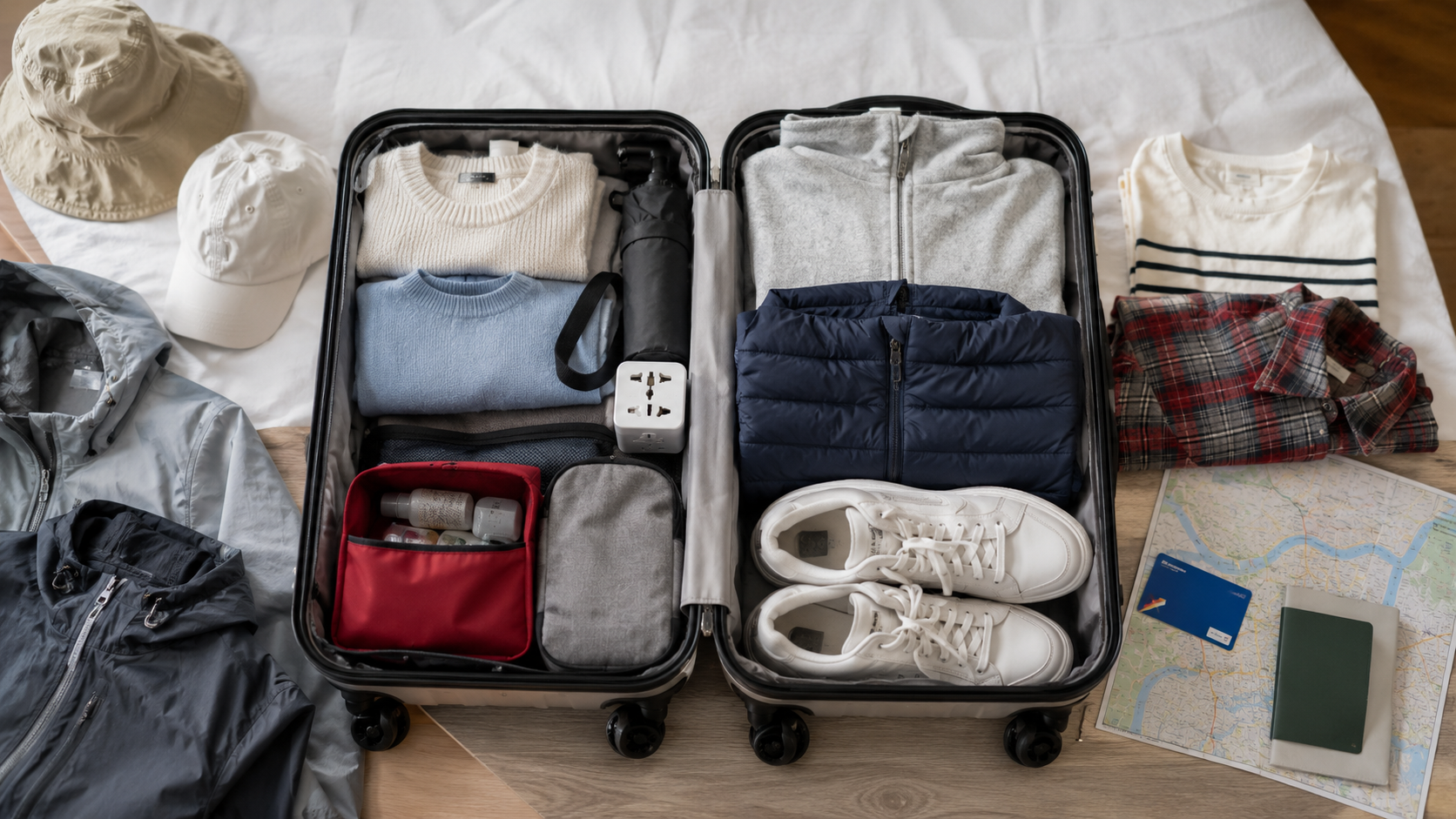
Shoes: pack for stairs and long walking days
A typical Korea itinerary involves station corridors, underground shopping areas, hills, palace grounds, and frequent stairways. Pack at least one pair of shoes that you have already worn for full days of walking.
Useful combinations include:
- Short city trip: One pair of comfortable trainers
- Summer trip: Trainers plus secure walking sandals
- Hiking itinerary: Walking shoes plus trail shoes with suitable grip
- Winter trip: Water-resistant walking shoes with textured soles
- Long stay: Everyday shoes plus one cleaner pair for work or formal occasions
Avoid bringing several unworn pairs. New shoes that cause blisters can disrupt a tightly scheduled trip. Shoes that are easy to remove are also convenient when entering private homes and some traditional accommodations or restaurants.
Electronics and plug adapters
Korea uses 220 volts at 60 hertz, with outlets featuring two round holes, according to the official VISITKOREA electricity guide. Type C and Type F plugs are commonly compatible.
Bring:
- Type C or F plug adapter
- Phone charger
- Charging cables for watches, cameras, or headphones
- Power bank
- Spare memory card if needed
- Multi-port USB charger for several devices
Check the voltage label on hair tools and other appliances. An adapter changes the plug shape; it does not convert voltage. Devices marked with an input such as 100-240V, 50/60Hz can generally operate on Korean power with the correct adapter. A device rated only for 110 or 120 volts requires an appropriate voltage converter and may be better left at home.
Keep power banks and spare lithium batteries in your carry-on baggage. As verified on June 9, 2026, Incheon International Airport's restricted-items guidance states that spare lithium batteries under 100 Wh may be carried in the cabin, while batteries from 100 Wh to 160 Wh require airline approval and are limited to two per person. Batteries over 160 Wh are not permitted. Airlines may apply additional limits, so confirm directly with your carrier.
Phone connection and useful digital backups
Arrange mobile data before arrival or plan to buy an eSIM, physical SIM, or portable Wi-Fi service. Save offline copies of:
- Accommodation names and addresses in English and Korean
- Flight and train confirmations
- Passport identification page
- Insurance policy and emergency contact details
- Medication prescriptions
- Basic route information for your arrival day
A screenshot of your accommodation's Korean address can be more useful than an English address when showing a taxi driver or asking for directions. Store important files somewhere accessible even if your phone has no signal.
Money, cards, and document storage
Bring at least one internationally enabled payment card and keep a backup card separately. Carrying some KRW is useful for situations where a foreign card is not accepted or a small purchase requires cash. There is no need to carry your entire budget in banknotes.
Pack documents in your carry-on rather than checked luggage:
- Passport
- Visa or travel authorization documents, if applicable
- Boarding pass or flight confirmation
- Accommodation details
- Travel insurance information
- Emergency contacts
- International driving permit and home licence if you intend to drive and meet the applicable requirements
Do not rely on one phone as the only location for every reservation and identification record. Keep a secure digital backup and at least one printed or handwritten record of your first accommodation.
Medication and health items
Bring enough essential medication for the trip, allowing a small buffer for delays. Keep it in original, clearly labelled packaging and carry a copy of the prescription or a doctor's letter stating the generic name and medical purpose.
Korea regulates narcotic and psychotropic ingredients, including some substances prescribed legally in other countries. As verified on June 9, 2026, the Ministry of Food and Drug Safety states that travelers carrying medicine containing controlled substances for personal treatment must obtain its approval, regardless of nationality. This can apply to certain pain, sleep, anxiety, and attention-related medicines.
Do not assume that a foreign prescription automatically permits entry. Check the active ingredient with the Ministry of Food and Drug Safety well before departure and follow its current application process. For case-specific guidance, contact the ministry or Korea Customs Service rather than relying on a general packing article.
A basic personal health kit might contain:
- Regular prescription medication
- Pain relief you know you can take safely
- Antihistamine
- Motion-sickness treatment if needed
- Adhesive bandages and blister treatment
- Oral rehydration salts
- Menstrual products you prefer
- Spare glasses or contact lenses
- Copies of prescriptions
Pharmacies are widespread in Korean cities, but brand names, ingredients, package sizes, and dispensing rules may differ from those in your home country. Bring critical products rather than expecting an exact replacement.
Toiletries and personal care
Most ordinary toiletries can be purchased after arrival, so short-term visitors do not need full-size bottles of shampoo, body wash, or toothpaste. Prioritize products that are difficult to substitute, such as prescription skincare, allergy-safe cosmetics, particular hair products, or foundation shades you know suit you.
For liquids in cabin baggage, check the rules of every airport on your route. As verified on June 9, 2026, Incheon Airport's security guidance allows liquids, aerosols, and gels on departing international flights when each container is no larger than 100 ml and all containers fit into one transparent, resealable bag of no more than 1 liter per passenger. A partly empty 200 ml container does not qualify as a 100 ml container.
Day-bag essentials
A lightweight backpack or crossbody bag is generally enough for sightseeing. Pack it with:
- Phone and power bank
- Wallet and transit card
- Passport only when necessary
- Water bottle
- Compact umbrella
- Thin extra layer
- Tissues and hand sanitizer
- Medication needed during the day
- Small reusable shopping bag
- Sunglasses and sunscreen
Choose a bag that closes securely and remains comfortable on crowded transport. A large hiking backpack is inconvenient in busy subway cars unless you genuinely need the capacity.
Luggage strategy for Korea
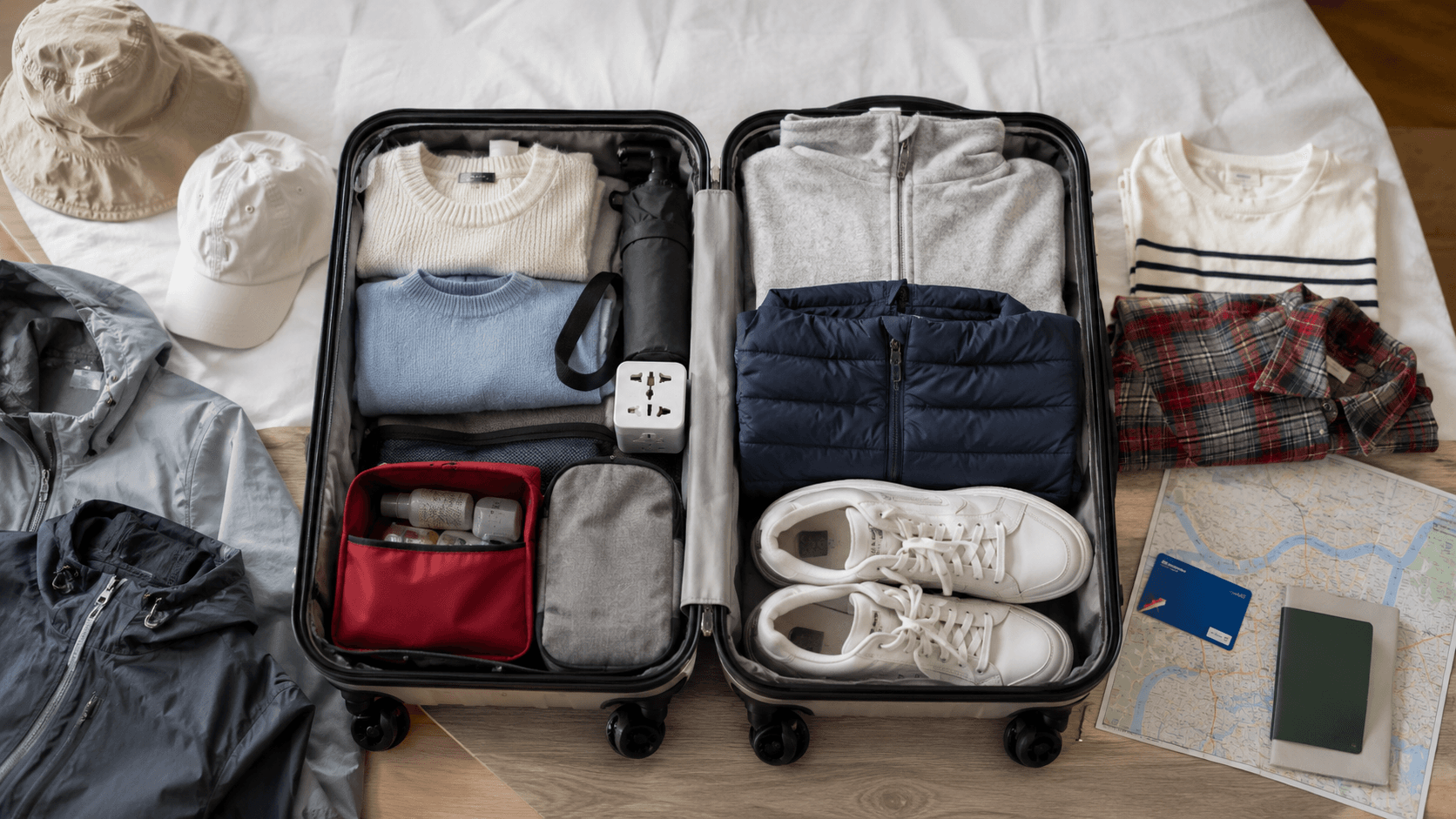
Pack lighter than your airline allowance permits. Korea offers extensive shopping for cosmetics, clothing, stationery, packaged food, and souvenirs, and travelers often need more return-trip space than expected.
A practical approach is:
- Wear the bulkiest shoes and outerwear in transit.
- Pack interchangeable colors rather than separate outfits for every day.
- Use packing cubes or small bags to separate layers.
- Leave roughly 20% of the suitcase empty.
- Place one change of clothes and essential medication in your carry-on.
- Check accommodation laundry facilities before packing for a long stay.
Coin-operated laundries are not guaranteed at every hotel or neighborhood, so confirm rather than assuming. Exchange students and long-stay visitors should ask whether bedding, towels, hangers, cookware, and laundry facilities are included before bringing household items.
Items to declare or check before arrival
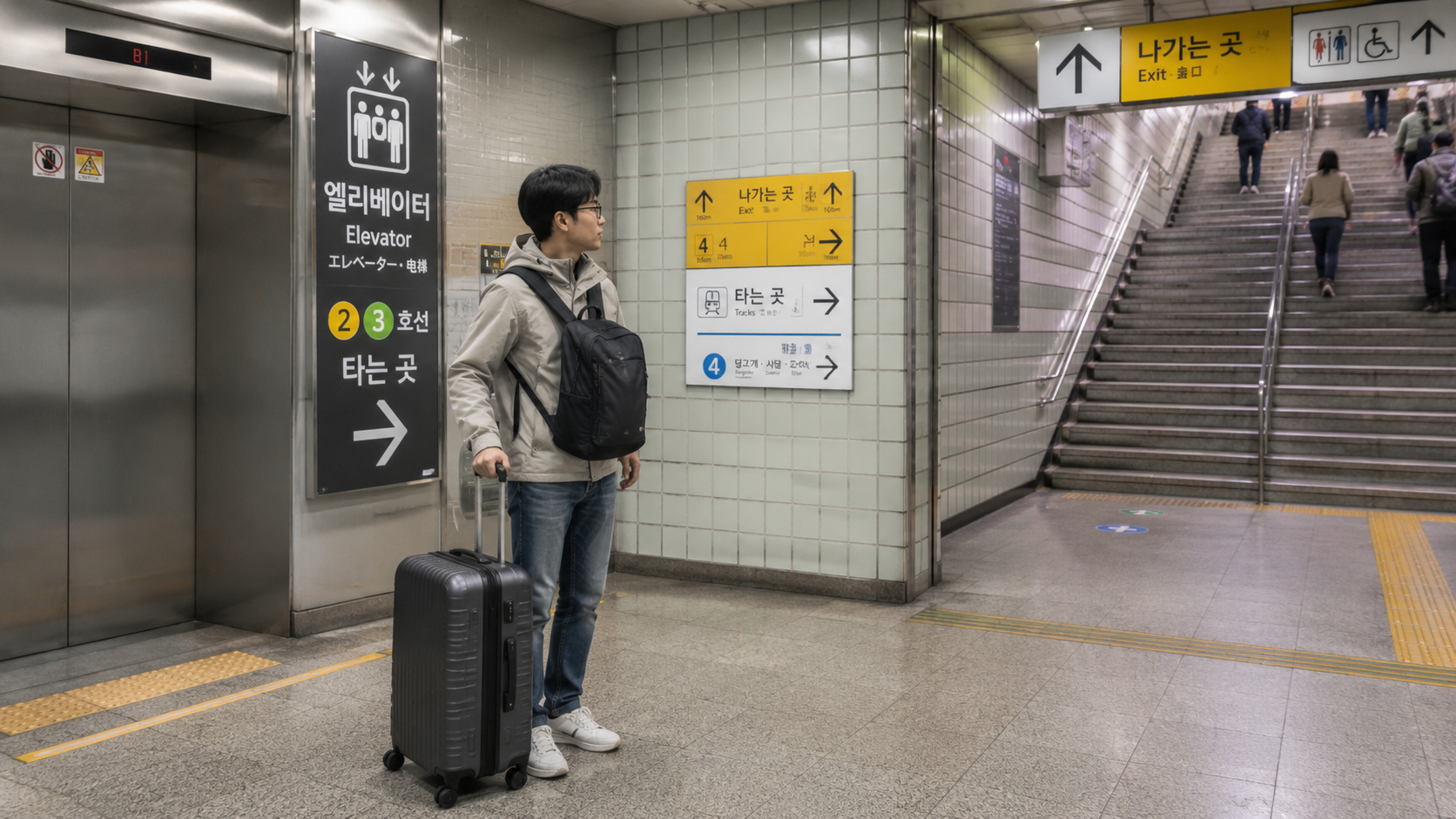
Customs and quarantine rules matter more than whether an item fits in your suitcase. As verified on June 9, 2026, the Korea Customs Service traveler guide lists animals, meat, plants, fruit, vegetables, agricultural products, certain foods, controlled drugs, weapons, and other restricted goods among items requiring declaration or authorization.
Avoid casually packing fresh fruit, meat products, seeds, plants, or homemade food. Packaged food is not automatically exempt from inspection or declaration requirements. Declare uncertain agricultural, animal, medicinal, or high-value items and ask the customs or quarantine officer.
The same official guide states that travelers must declare means of payment exceeding USD 10,000 or its equivalent. Customs thresholds and restricted-item rules can change, so check the official guidance shortly before departure.
What not to overpack
Most visitors can leave these at home:
- Full-size bottles of common toiletries
- Multiple heavy coats
- A different outfit for every day
- Several pairs of fashion-only shoes
- Large quantities of snacks
- Bulky towels unless your accommodation says they are not provided
- A voltage converter when every device already supports 220V
- Large amounts of cash
- A hair dryer unless you have confirmed both voltage compatibility and accommodation need
Do not remove genuinely essential items just to travel with minimal luggage. Medication, weather protection, accessible clothing, and specialist personal-care products deserve space.
What to check before you go
Complete this checklist during the final week before departure:
- Check the Korea Meteorological Administration forecast for every destination.
- Confirm your airline's cabin and checked-baggage limits.
- Review rules for lithium batteries, liquids, and specialist equipment.
- Verify visa or travel-authorization requirements for your nationality.
- Confirm whether any medication needs prior approval.
- Check customs and quarantine rules for food, plants, and animal products.
- Confirm that electronic devices support 220V, 60Hz.
- Download offline reservations and Korean accommodation addresses.
- Check whether your accommodation provides towels, toiletries, laundry, and an iron.
- Leave room in your luggage for purchases.
Start by checking the forecast for your exact travel dates, then build a small group of interchangeable layers around one reliable pair of walking shoes. That decision will shape the rest of your Korea packing list more effectively than packing for every possible situation.
Sources
- Korea Meteorological Administration: Climate of Korea
- VISITKOREA: Climate and seasonal travel guidance
- VISITKOREA: Electricity and voltage
- Korea Customs Service: Customs clearance guide for passengers
- Ministry of Food and Drug Safety: Personal controlled-medicine permit guidance
- Incheon International Airport: Prohibited and restricted baggage items