South Korea is manageable for solo travelers once you prepare for three common friction points: navigation, transport payments, and services that expect a Korean phone number. Base yourself near a subway or major station, carry a rechargeable transport card and some cash, and save every destination in a Korean map app before leaving your accommodation.
Information on entry procedures, official services, and airport transport was verified on June 10, 2026. Recheck time-sensitive details before departure.
At a glance
| Question | Practical answer |
|---|---|
| Is Korea suitable for a first solo trip? | Yes, particularly if you stay in well-connected cities and plan intercity transport in advance. |
| Where should you start? | Seoul is the easiest arrival base. Add Busan, Gyeongju, Jeonju, or Jeju according to your interests. |
| Do you need cash? | Cards are widely used, but carry KRW for transport-card reloading, markets, lockers, and occasional small businesses. |
| Which map should you use? | Install Naver Map or KakaoMap. International map services may offer less complete local routing. |
| Is English enough? | It is usually sufficient at airports, major stations, hotels, and major attractions, but not everywhere. A translation app helps. |
| What are the emergency numbers? | Call 112 for police and 119 for fire or ambulance. The Korea Tourism Organization also provides the 1330 Korea Travel Helpline. |
Before booking your trip
Check entry requirements for your passport
Visa and entry rules depend on nationality, purpose of travel, and length of stay. Use the Ministry of Justice's Korea Visa Portal and the Korea Immigration Service rather than relying on social-media posts or airline summaries.
As verified on June 10, 2026, the temporary K-ETA exemption for the countries and regions already covered by the program has been extended through December 31, 2026. This does not mean that every traveler is exempt. Confirm your status on the official K-ETA website.
Travelers who still require or voluntarily apply for a K-ETA pay KRW 10,000, and the official site says assessment generally takes up to 72 hours. Use only the government website or official K-ETA app; the government warns about imitation and high-fee agency sites.
Depending on your status, you may also need to complete Korea's official electronic arrival declaration. Follow the instructions provided by the Korea Immigration Service or your airline, and be cautious of unofficial websites requesting payment.
Choose a convenient first base
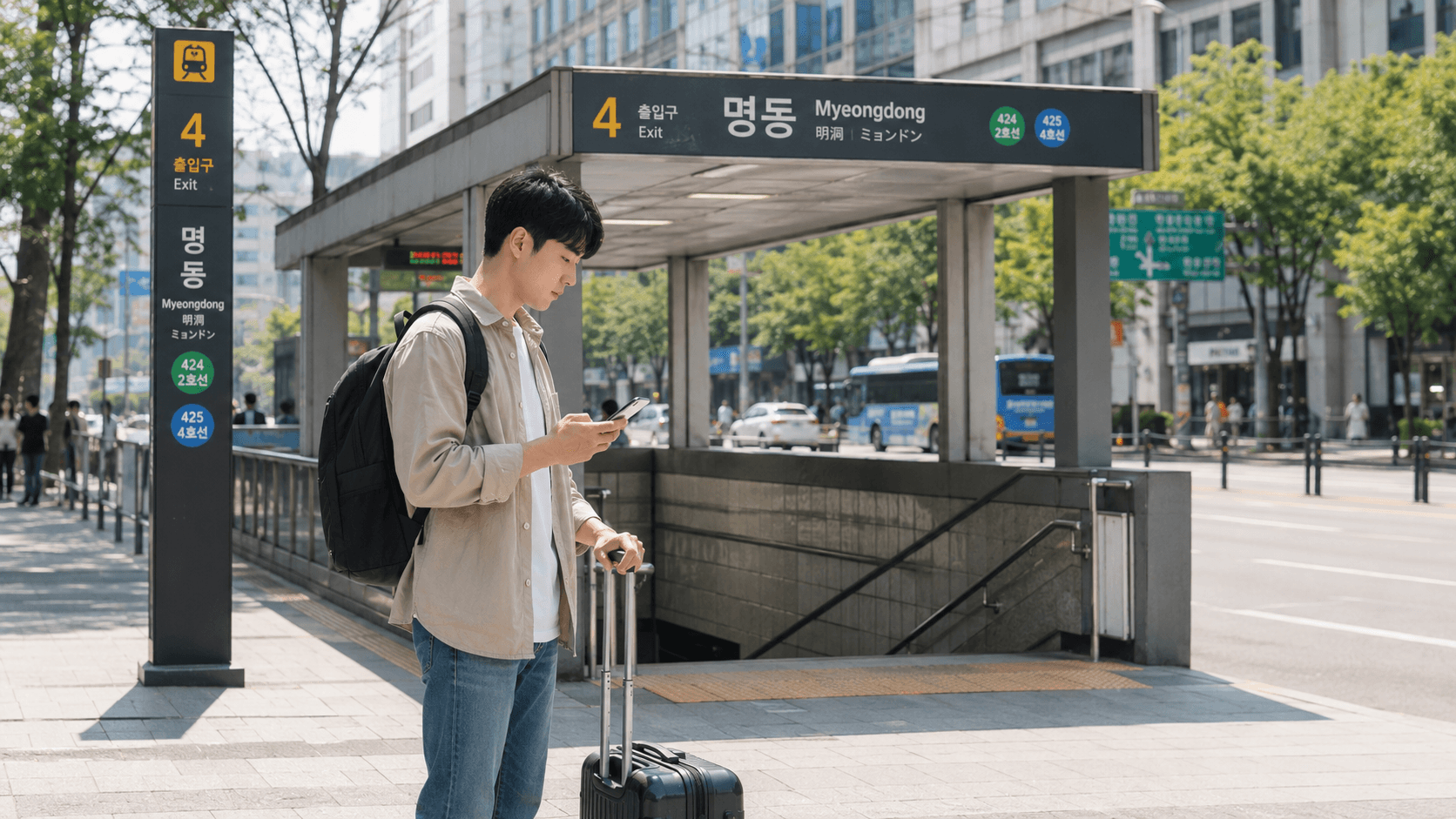
For a first visit to Seoul, areas around Seoul Station, Myeong-dong, Jongno, Hongdae, or another well-connected subway station reduce unnecessary transfers. Do not choose accommodation solely because it appears geographically central: a property on a steep hill or far from a station can be inconvenient with luggage.
Before booking, check:
- Walking distance from the nearest station exit, not just the station itself
- Whether the route includes stairs or a steep slope
- Reception or self-check-in hours
- Luggage storage before check-in and after checkout
- Private versus shared bathrooms
- Elevator access
- Late-night access to the building
- Whether a Korean phone number is required for check-in messages
Guesthouses and hostels can make social contact easier, while business hotels generally offer more privacy and predictable facilities. A hanok, or traditional Korean house, can be memorable, but rooms may use floor bedding and older buildings may have limited soundproofing or accessibility.
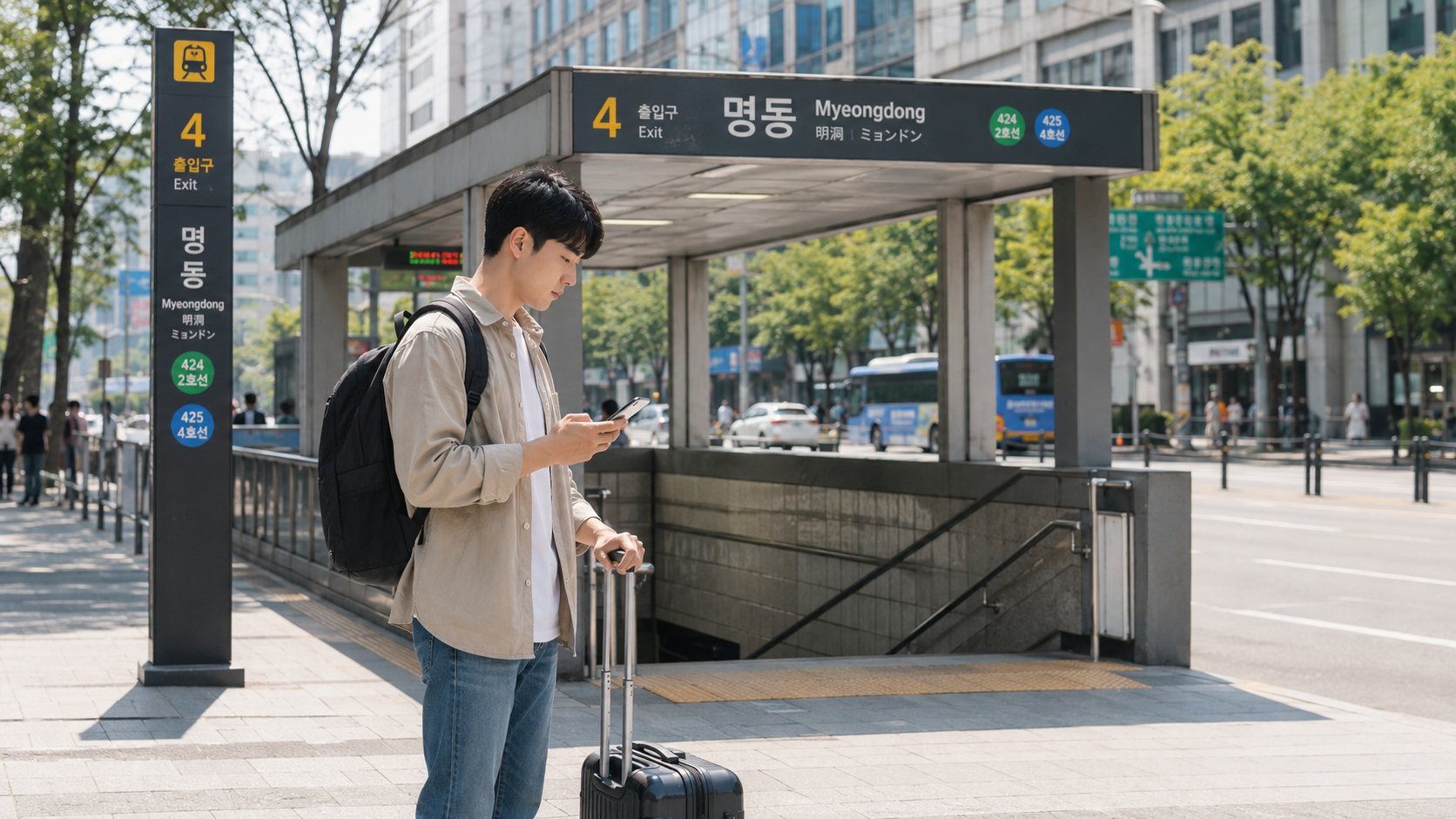
Set up your phone before arrival
Install essential apps while you still have reliable internet and can complete account verification.
Navigation
Use Naver Map or KakaoMap for walking, public transport, and local place searches. Search results improve when you paste a Korean business name or road address. Save both the English and Korean versions of your accommodation address.
For each important destination, note:
- Korean name
- Korean road address
- Nearest station and exit number
- Final admission or check-in time
- Screenshot of the route
A station exit number matters because large stations can cover several blocks. Emerging from the wrong exit may add a long walk or place you across a major road.
Translation
Papago is particularly useful for Korean text, menus, and short conversations. Download any available offline language data, but remember that image and voice translation may still require a connection.
Keep requests short. Showing a Korean address is usually clearer than asking a taxi driver to interpret a long English description.
Connectivity
A local SIM, eSIM, or portable Wi-Fi device can make solo travel much easier. Compare data allowance, voice-call support, hotspot restrictions, activation requirements, and whether the service provides a Korean phone number.
A data-only plan is enough for maps and messaging, but some restaurant queues, reservations, deliveries, and local services request a Korean number. Having a number does not guarantee that every system will accept a short-term visitor's account.
Arriving at Incheon International Airport
Confirm whether your flight uses Terminal 1 or Terminal 2. The terminals are separate, so this also affects meeting points and transport instructions.
Incheon Airport lists trains, airport buses, taxis, and late-night buses on its official transportation pages. Timetables and fares can change; check them on your arrival date. The airport information center number is 1577-2600 and, as verified on June 10, 2026, its published operating hours are 07:00-22:00 year-round.
Choosing airport transport
Airport Railroad: Usually practical when your accommodation is near Seoul Station or an easy subway connection. Check whether you are boarding an all-stop or express service.
Airport bus: Useful for areas served directly by a limousine-bus route, particularly with a large suitcase. Confirm the correct stop name and walking route to your accommodation.
Taxi: Convenient after a late arrival or with heavy luggage, but more expensive. Use the official taxi queue and show the driver the Korean address. Avoid people approaching you inside the terminal to offer an unofficial ride.
Do not plan a tight evening schedule after an international arrival. Immigration, baggage collection, terminal navigation, and the journey into Seoul can take longer than expected.
Getting around alone
Buy a transport card
A rechargeable Tmoney card is useful for buses and urban rail. The operator describes Tmoney as a mobility payment system used for buses, metro services, taxis, and participating stores; coverage varies by service and location. See the official Tmoney website for current information.
Cards are commonly sold at convenience stores and transport facilities. Ask for a Tmoney card by saying or showing "티머니 카드." Keep some KRW cash because foreign bank cards may not work for every recharge method.
On buses, tap when boarding and again when leaving. On subways, tap at both entry and exit gates. If a gate rejects the card, use the staffed assistance gate rather than repeatedly forcing the barrier.
Understand the last-service problem
Urban rail does not operate all night. Final departure times differ by line, station, direction, and day. Route apps may display a journey that is technically possible only if every connection works perfectly.
For a late evening:
- Check the last train to your destination, not merely the station closing time.
- Leave a buffer for transfers and walking inside large stations.
- Save your accommodation address in Korean.
- Keep enough money and phone battery for a taxi.
Reserve intercity travel early when timing matters
High-speed and conventional trains connect major cities, while express and intercity buses serve a wider range of destinations. Trains and popular buses can sell out around weekends and public holidays.
For a solo itinerary, reserve any journey tied to a hotel booking or flight. Check the exact departure station: Seoul has several major terminals, and Busan's rail, intercity-bus, and express-bus facilities are not all in one place.
Carry lighter luggage when changing cities. Station lockers are useful, but sizes and availability are not guaranteed. Keep valuables, medication, and travel documents with you rather than inside stored luggage.
Eating alone in Korea
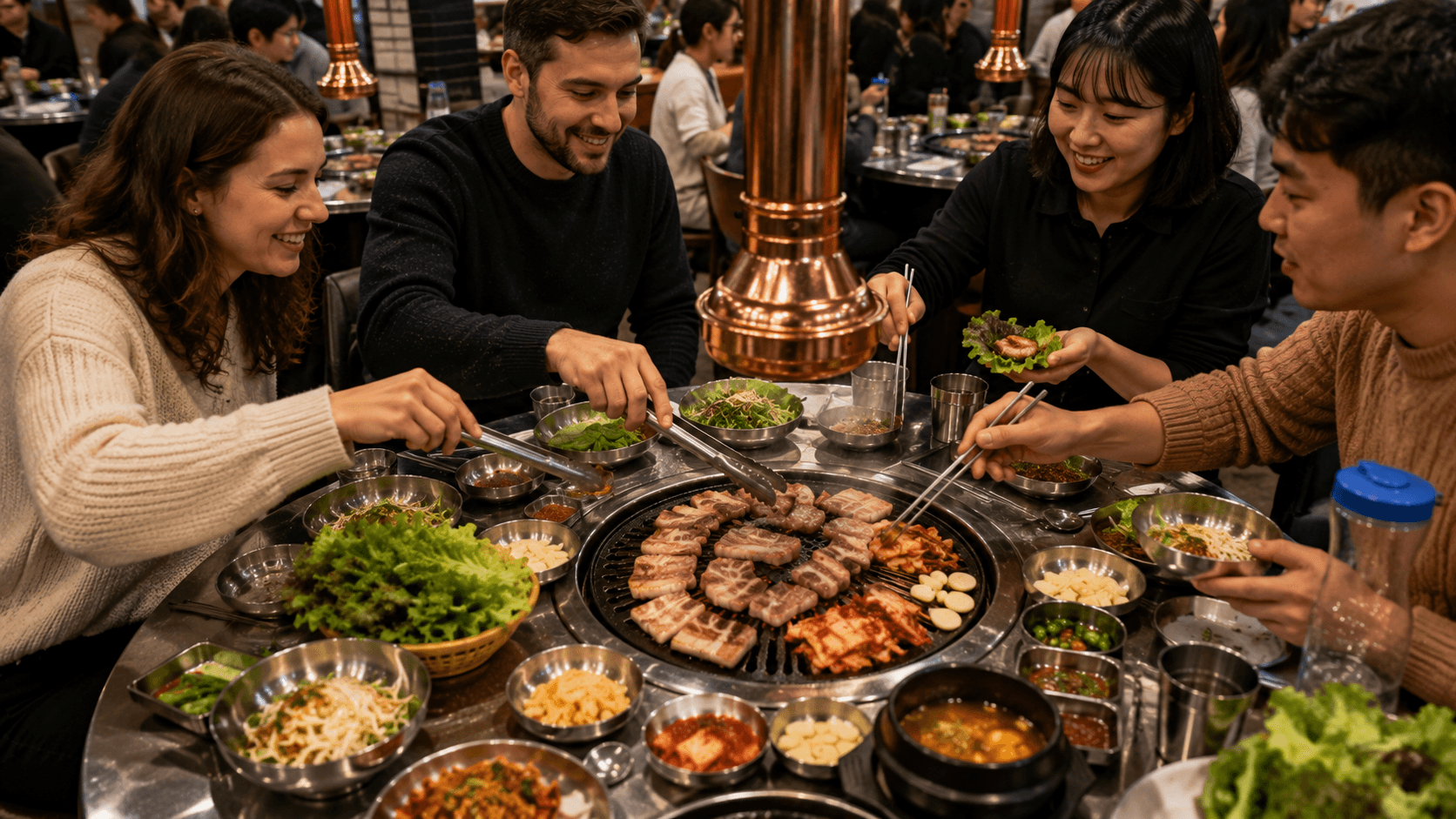
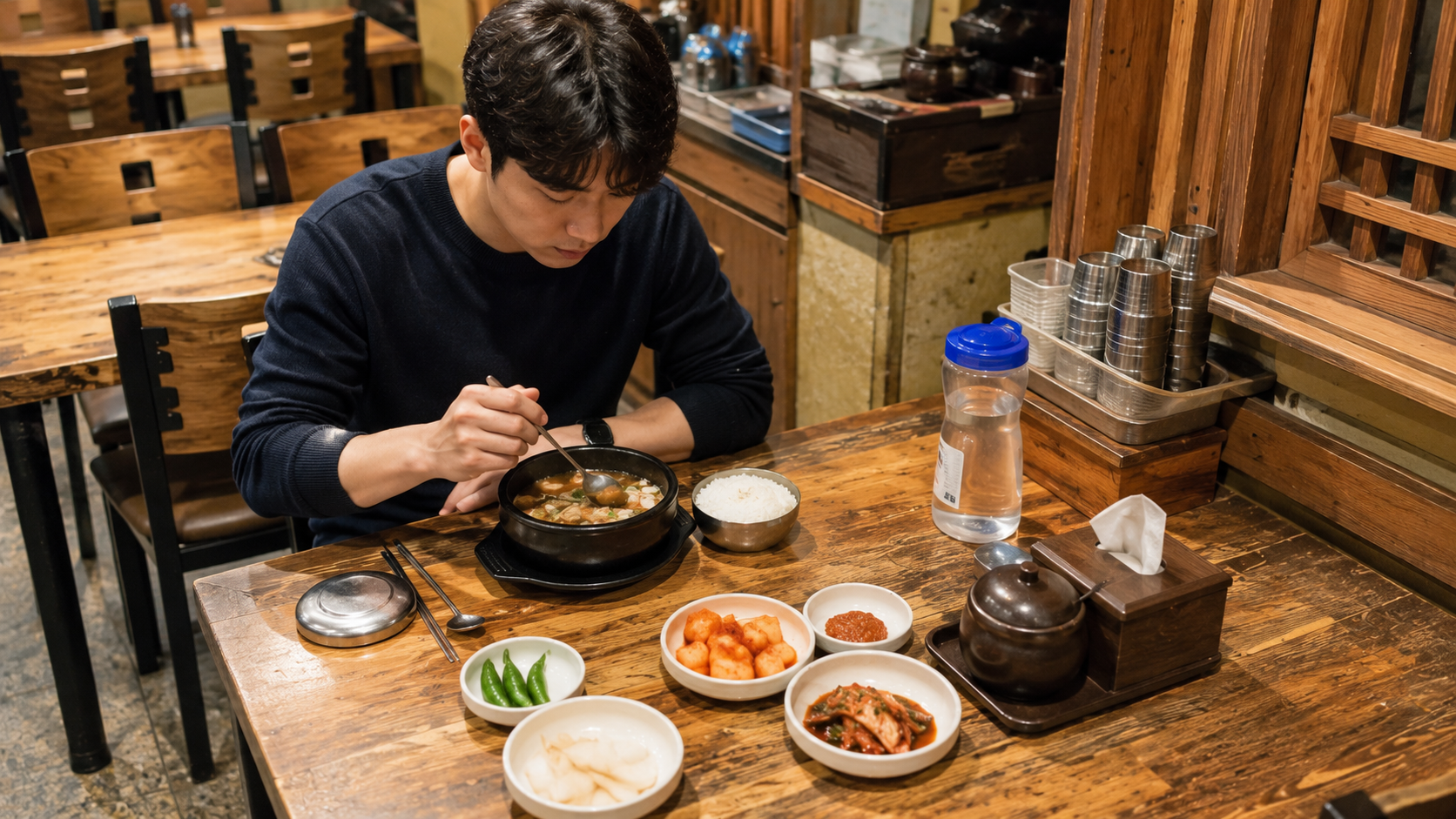
Solo dining is increasingly practical, especially in large cities, but not every restaurant is designed for one person. Some barbecue, hotpot, and shared-dish restaurants may require a minimum order for two people even when they accept a solo customer.
Good options for individual meals include:
- Gimbap and casual snack restaurants
- Noodle shops
- Soup and stew restaurants serving individual portions
- Department-store food courts
- Convenience-store meals
- Cafes and bakeries
- Counter-seat restaurants
At busy restaurants, you may need to enter your phone number into a waiting tablet. If the system rejects your number, ask staff whether they can register you manually. At self-service kiosks, look for an English-language button, but expect some menus to remain partly untranslated.
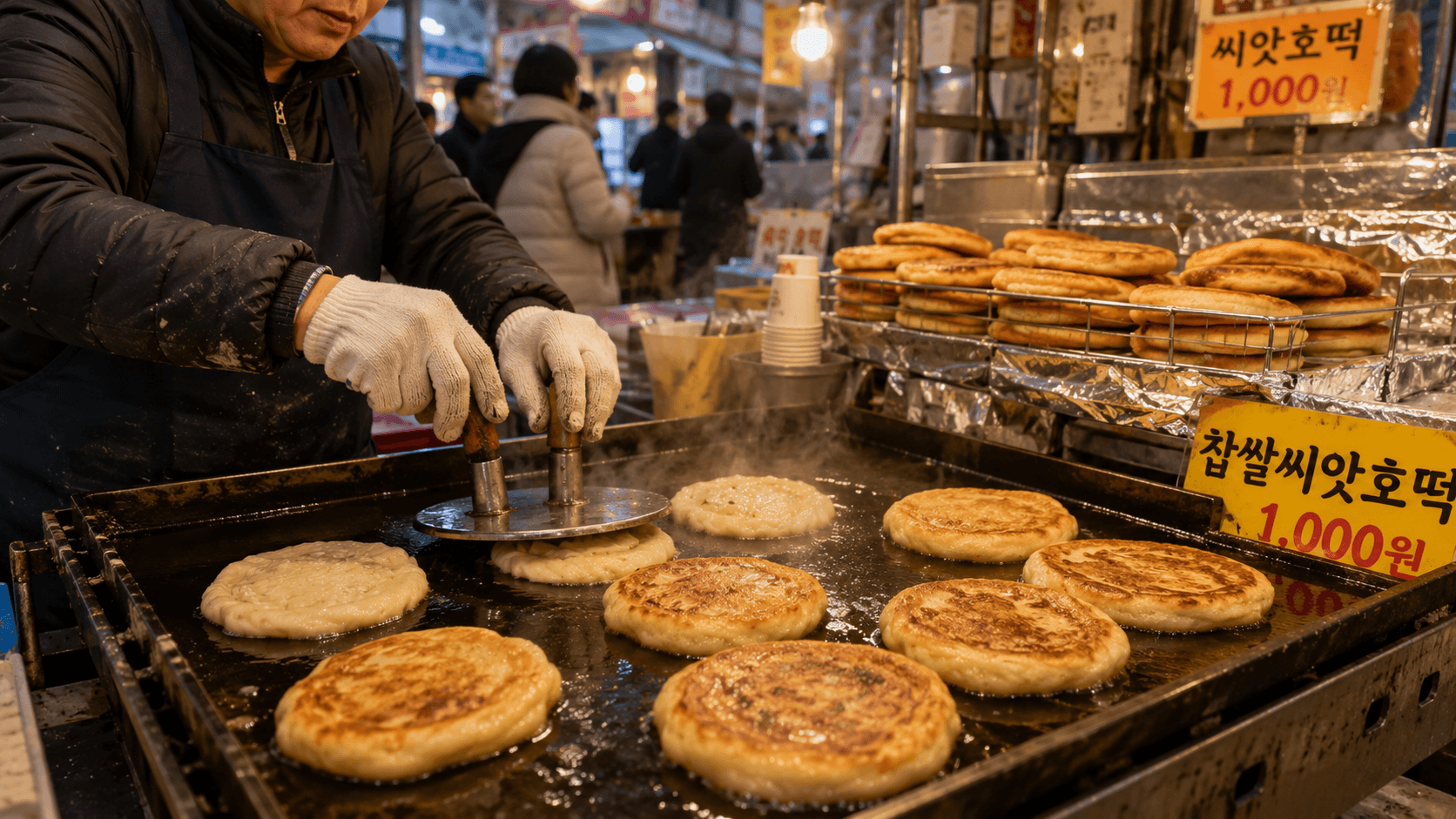
Water and side dishes may be self-service. After ordering at a counter, watch for your number on a screen or listen for staff calling the dish.
If you have a serious allergy, prepare a clearly translated statement naming the ingredient and explaining that cross-contact may be dangerous. Translation can reduce misunderstanding but cannot guarantee an allergen-free meal. Seek advice from a qualified medical professional before travel if your allergy requires an emergency plan.
A simple first solo itinerary
Seven-day city route
Days 1-3: Seoul
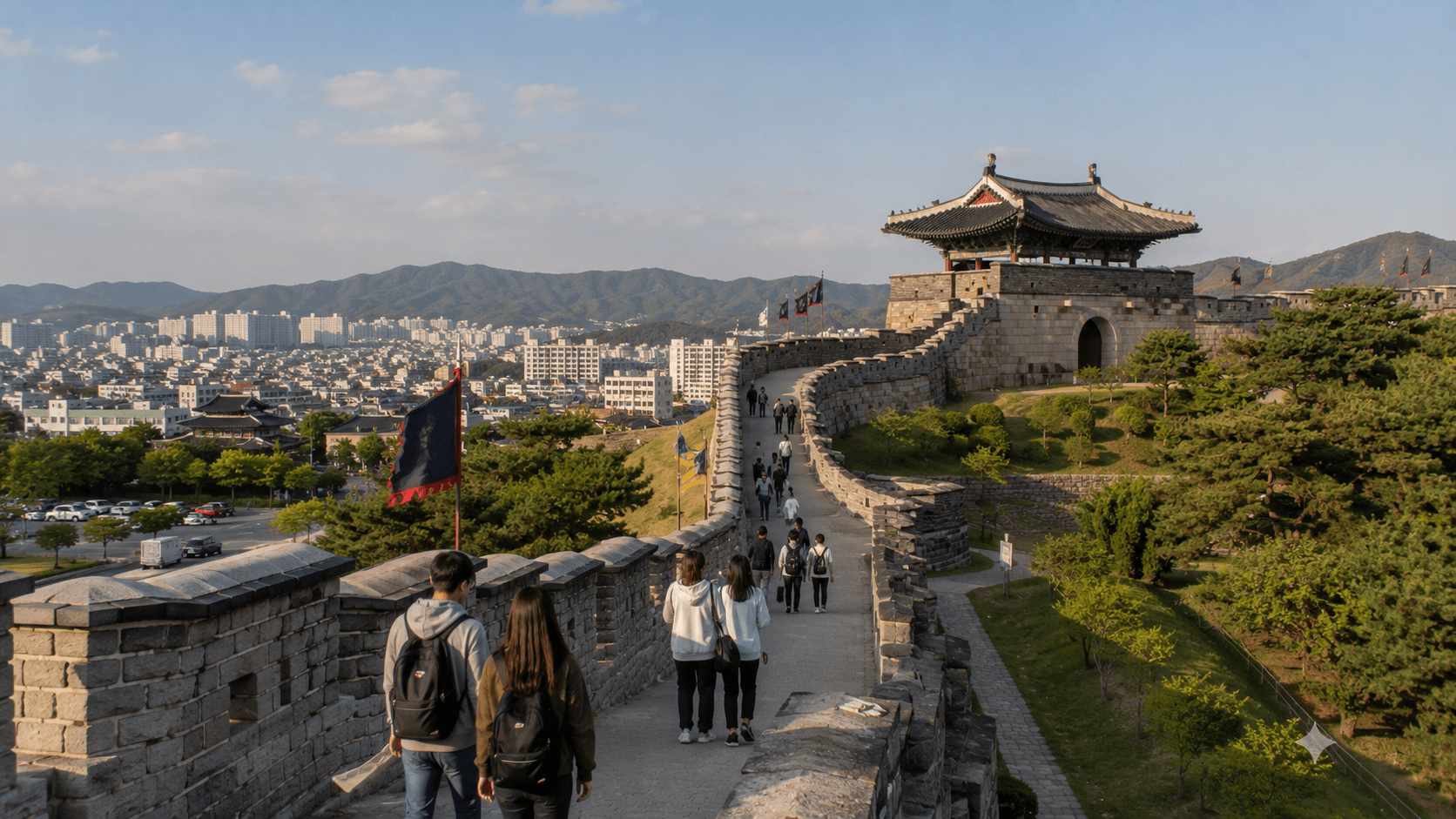
Use the first day for a compact neighborhood rather than crossing the city repeatedly. Combine nearby areas such as Gyeongbokgung, Bukchon, and Insadong, or choose Hongdae and the Hangang riverside. Keep one flexible indoor option for bad weather.
Day 4: Gyeongju or Jeonju
Gyeongju suits travelers interested in archaeological and historic sites. Jeonju offers a compact traditional district and regional food. Either can be visited independently, although staying overnight allows a less rushed schedule.
Days 5-7: Busan
Choose accommodation near a useful metro station. Group attractions geographically: central Busan and Nampo on one day, then a coastal district such as Haeundae or Gwangalli on another. Busan is spread out, so apparently short lists can involve long journeys.
For a shorter trip, remain in Seoul and take one day trip. For a longer trip, add Sokcho for mountain and coast access or Jeju for landscapes, but allow extra planning for local buses, flights, weather, and luggage.
Safety and dealing with problems
Korea's transport systems and busy public areas are generally straightforward to use alone, but normal travel precautions still apply. Stay aware of drink tampering, unofficial taxis, payment disputes, traffic, isolated hiking routes, and scams involving urgent money transfers.
Save these numbers:
- 112: Police
- 119: Fire and ambulance
- 1330: Korea Travel Helpline
- 1345: Immigration Contact Center
- 182: Police civil-service and lost-property inquiries
The VISITKOREA website provides free online calling and chat access to the 1330 helpline; data charges may apply. The Korea Immigration Service publishes 1345 for immigration inquiries.
In an emergency, provide a landmark, station exit, road address, or business name. A screenshot of your map location can help someone nearby communicate the address.
If you lose something, first contact the station, vehicle operator, hotel, or business where it disappeared. Korea's police lost-property service moved to the Police Civil Service 24 portal on January 26, 2026. Note the time, route, vehicle or carriage number, and a precise description of the item.
For hiking, check weather and park notices, start early, and do not assume that a popular trail is easy. Carry water, appropriate footwear, and a charged phone. Tell someone where you are going when using a remote route.
Common solo-travel mistakes
- Planning by straight-line distance instead of actual transit time
- Staying far from a station to save a small amount on accommodation
- Depending on one foreign credit card
- Arriving with no KRW cash for small transport-related payments
- Using only an international map app
- Boarding the correct subway line in the wrong direction
- Missing the last train after a late dinner
- Scheduling several distant Seoul districts on the same day
- Assuming every restaurant serves single diners
- Booking a flight and train connection without delay time
- Carrying a large suitcase through every stop of a multi-city itinerary
What to check before you go
One week before departure
- Confirm visa, K-ETA, and arrival-declaration requirements through official immigration sources.
- Check your passport validity and airline documentation rules.
- Download navigation and translation apps.
- Save accommodation names and addresses in Korean.
- Confirm airport terminal and transport options.
- Reserve essential intercity trains or buses.
- Check weather, attraction closures, and public holidays.
- Share your itinerary and insurance details with a trusted contact.
Each travel day
- Check the weather and transport disruptions.
- Confirm final admission and return-transport times.
- Carry a charged power bank and charging cable.
- Keep some KRW separate from your wallet.
- Photograph or screenshot locker locations and receipts.
- Avoid placing your passport, phone, and all payment cards in one bag.
Your most useful next step is to choose a well-connected first base, mark it in a Korean navigation app, and build each day around one compact area rather than a long list of scattered attractions.