South Korea can suit anything from a careful backpacker budget to a comfortable hotel-based trip. As a practical starting point, allow KRW 70,000-140,000 per person per day for budget travel or KRW 170,000-350,000 for a more comfortable trip, excluding international flights. Accommodation is the largest variable, while public transport and basic sightseeing can remain relatively inexpensive.
All fixed fares and transport rules below were checked on June 9, 2026. Hotel rates, restaurant prices, and airfares fluctuate, so the daily figures are planning allowances rather than official averages.
At a glance
| Travel style | Accommodation | Food | Local transport | Attractions and extras | Suggested daily total |
|---|---|---|---|---|---|
| Backpacker | KRW 30,000-65,000 | KRW 25,000-40,000 | KRW 5,000-10,000 | KRW 10,000-25,000 | KRW 70,000-140,000 |
| Value-focused couple or solo traveler | KRW 80,000-160,000 | KRW 35,000-65,000 | KRW 6,000-15,000 | KRW 15,000-40,000 | KRW 135,000-280,000 |
| Comfortable mid-range | KRW 140,000-260,000 | KRW 50,000-90,000 | KRW 10,000-30,000 | KRW 25,000-60,000 | KRW 225,000-440,000 |
These totals are per person, except that couples can divide the cost of a private room. They do not include international flights, major shopping, nightlife, ski trips, theme parks, guided tours, or cosmetic and medical services.
For a seven-day visit, a useful starting fund is approximately KRW 700,000-1,200,000 per person for a careful trip, plus flights. A comfortable week with private hotels, regular restaurant meals, paid attractions, and some taxis may require KRW 1,400,000-2,500,000 per person.
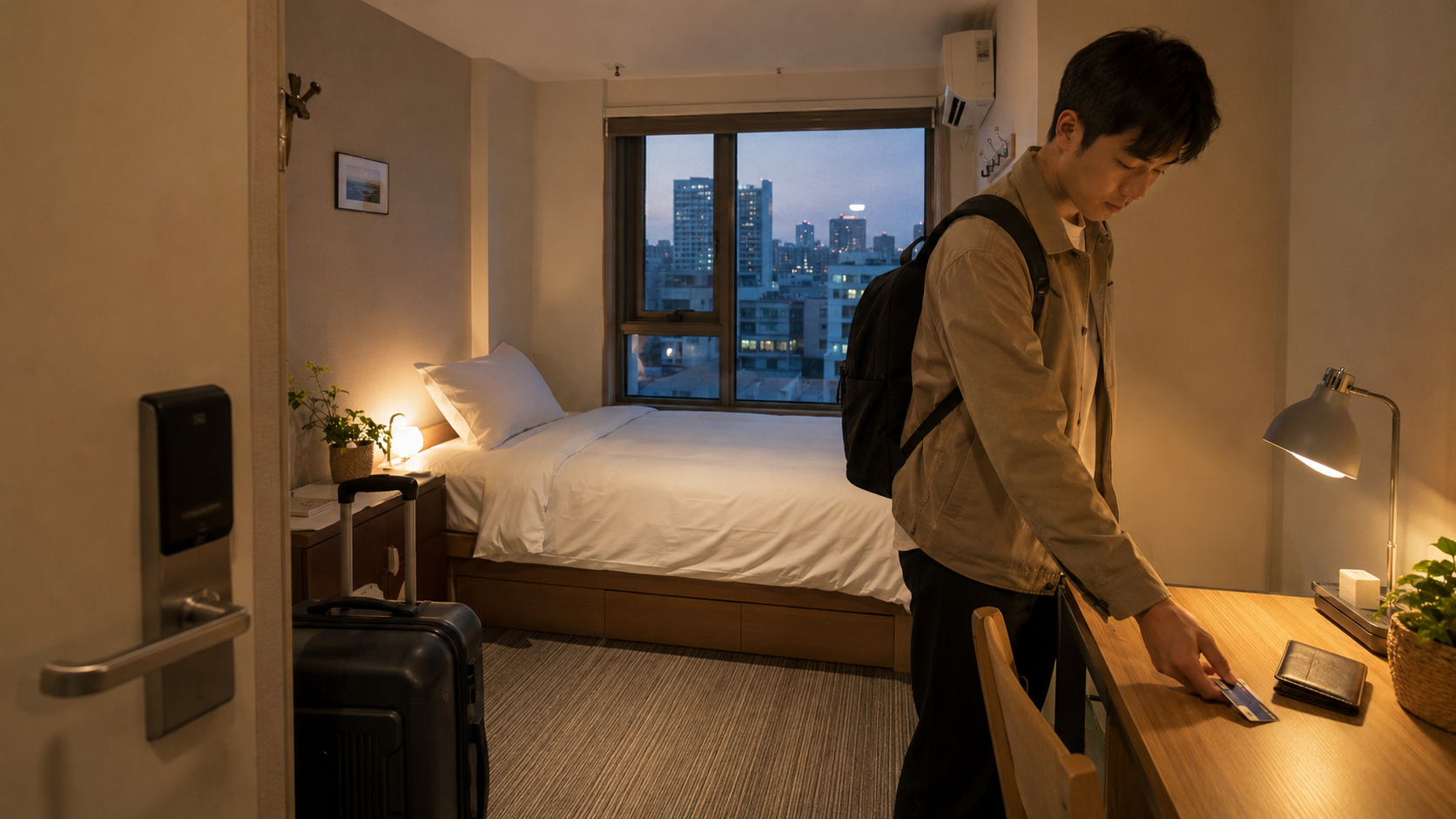
Accommodation: the main budget variable
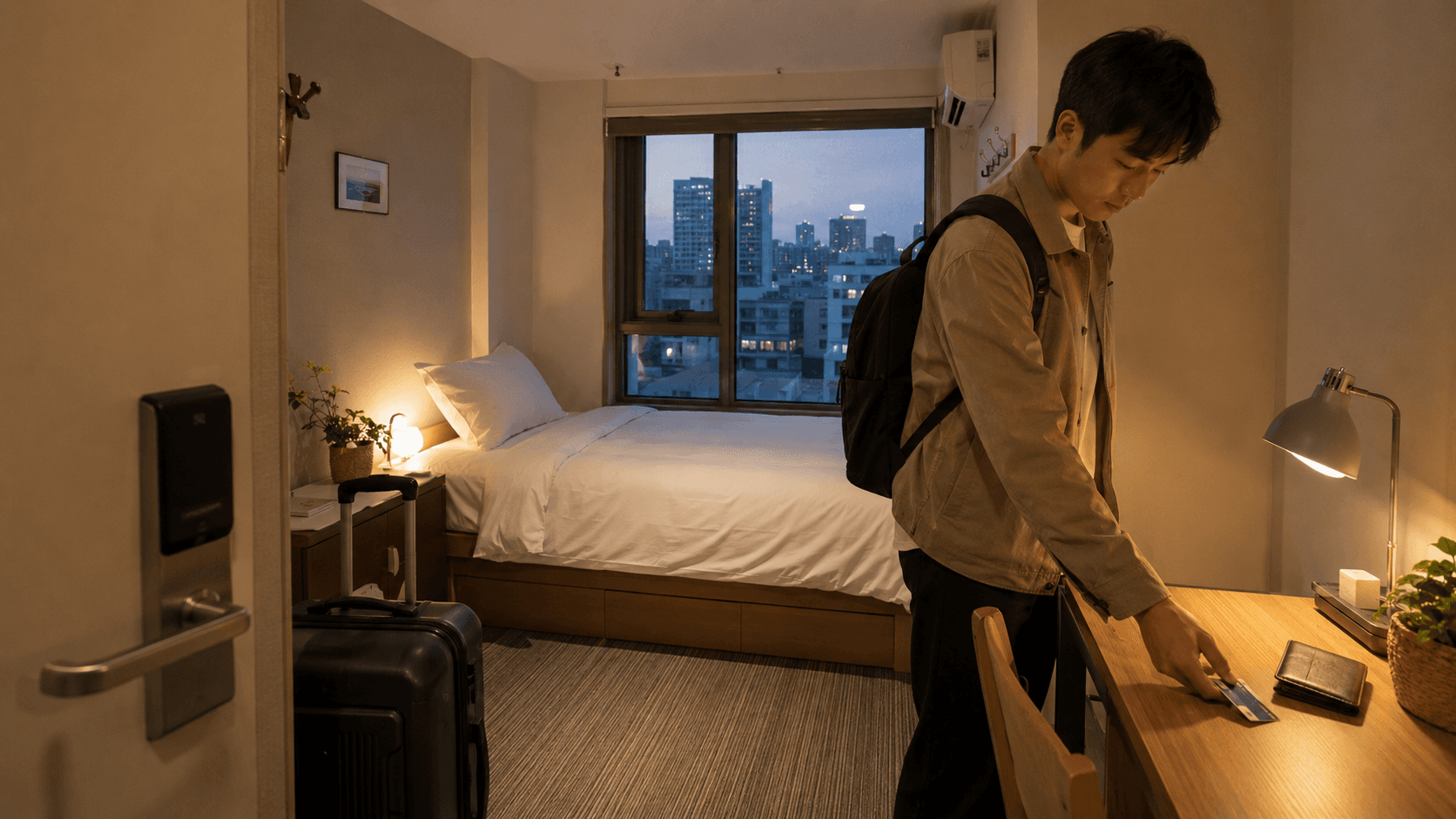
Korea offers dormitory guesthouses, private guesthouse rooms, motels, business hotels, hanok stays, resorts, and international hotel chains. The Korea Tourism Organization's accommodation guide explains the main categories.
Use these amounts as booking targets rather than guaranteed prices:
- Dormitory bed: Plan for KRW 30,000-65,000 per night.
- Basic private room or motel: Plan for KRW 60,000-120,000.
- Business or mid-range hotel: Plan for KRW 100,000-220,000.
- Higher-end hotel or popular hanok stay: Expect to budget from KRW 220,000 upward.
Prices can rise sharply on Friday and Saturday nights, during festivals, around major concerts, and in peak destinations such as central Seoul, Haeundae in Busan, and Jeju during holidays. Always compare the final price after taxes and fees.
How to reduce accommodation costs
- Search by subway station rather than only by famous neighborhood name. Staying two or three stations away can reduce the room price without adding much travel time.
- Compare a refundable rate with a non-refundable rate. The cheapest option is not useful if your itinerary may change.
- Check whether breakfast, laundry, luggage storage, and private bathrooms are included.
- For couples, compare the total cost of a double room against two dormitory beds.
- Confirm check-in hours. Small guesthouses may not have a staffed reception late at night.
Food: budget by meal, not by day
Food spending is easier to control when you assign a limit to each meal. A workable daily food plan is:
- Breakfast: KRW 4,000-10,000
- Simple lunch: KRW 8,000-15,000
- Restaurant dinner: KRW 12,000-30,000
- Coffee, drinks, and snacks: KRW 5,000-15,000
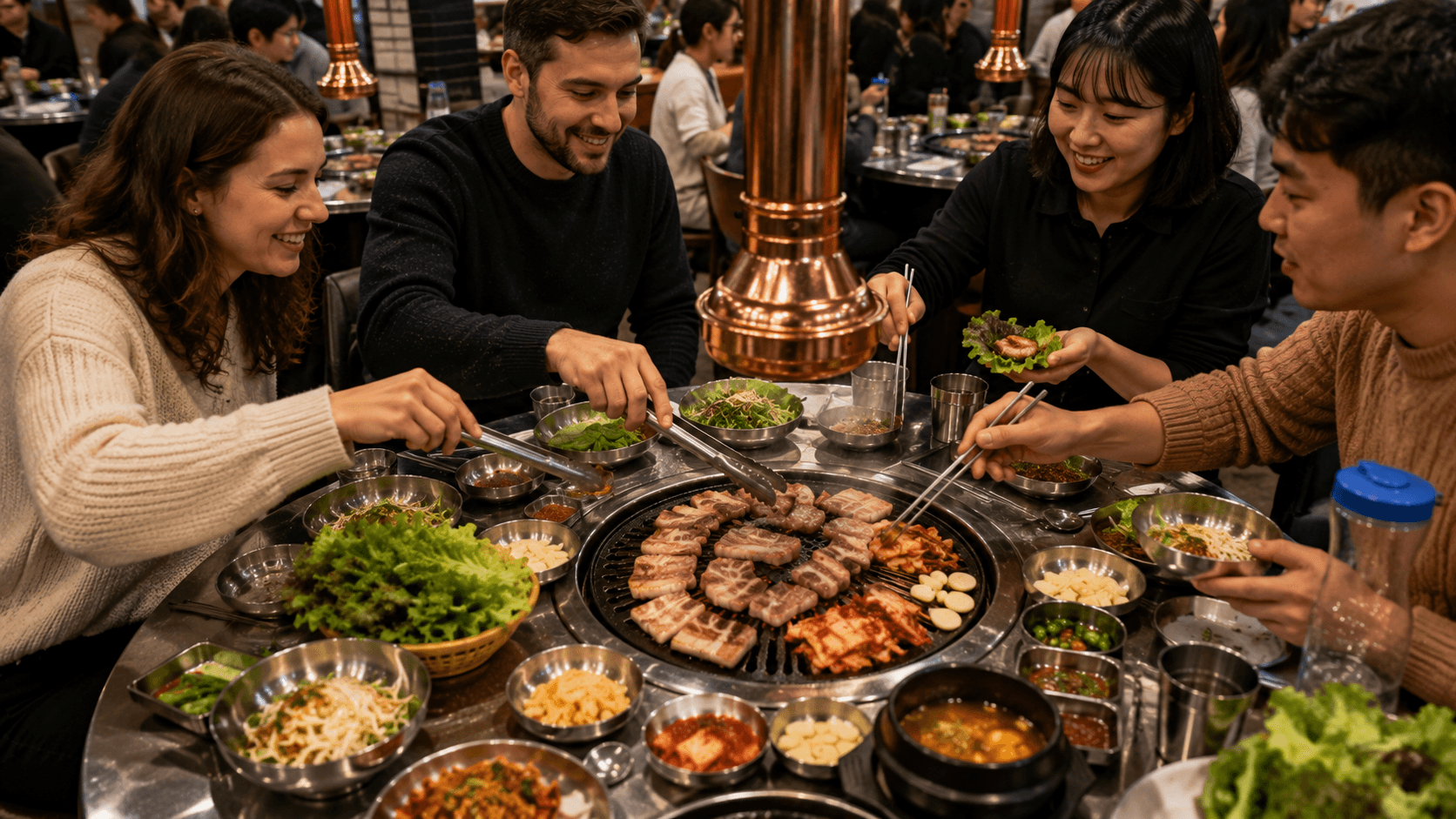
This produces a daily food allowance of roughly KRW 30,000-70,000. Barbecue, seafood, hotel breakfast, imported food, cocktails, and café visits can raise the total quickly.
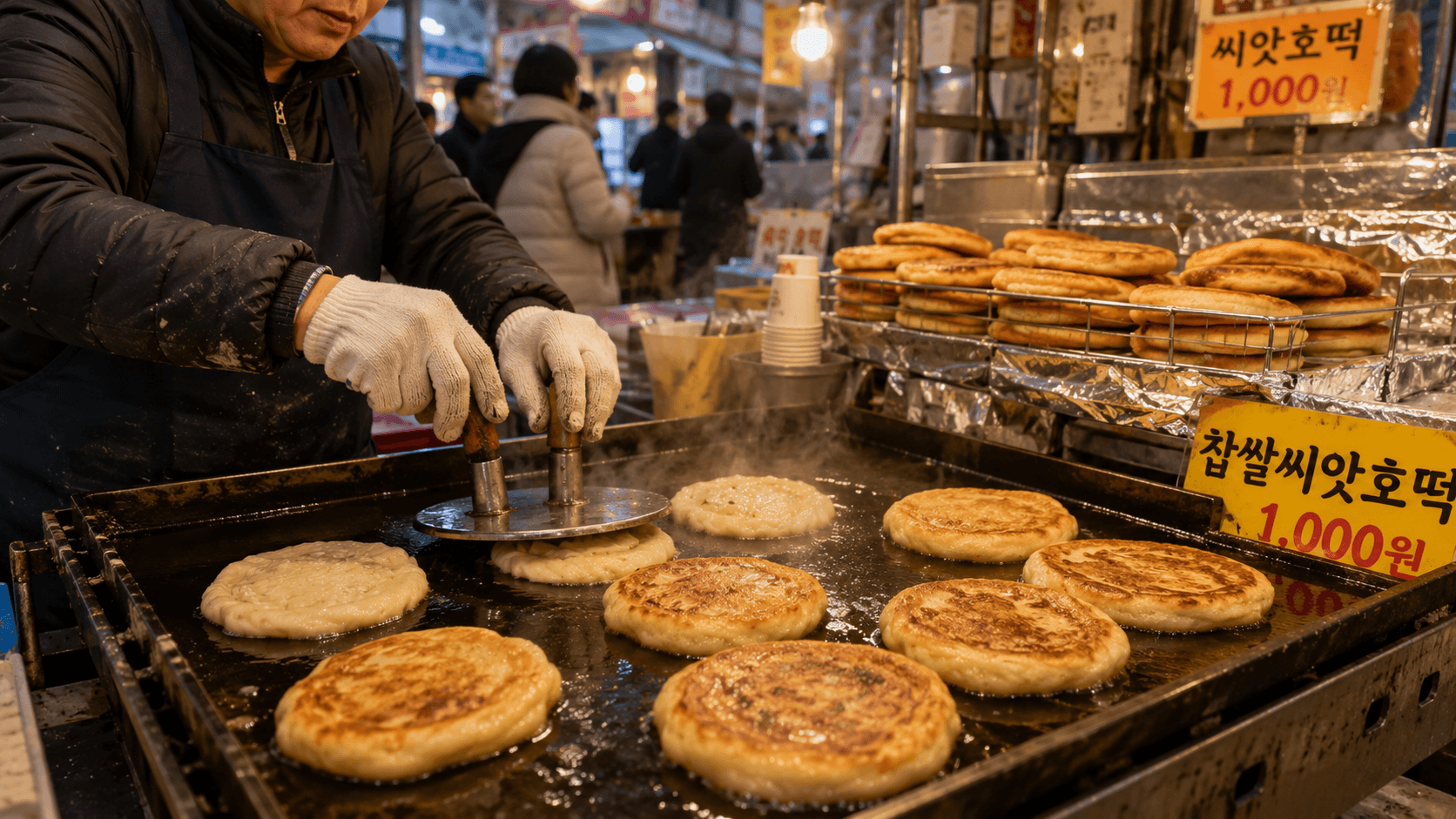
For lower-cost meals, look for bunsik (분식) restaurants serving quick dishes, neighborhood noodle shops, university districts, traditional markets, and restaurants advertising a lunch set. Convenience stores are useful for an occasional breakfast or late-night meal, but buying several drinks and snacks throughout the day can cost more than one proper restaurant meal.
Some Korean restaurants require a minimum order for two people, particularly barbecue and shared dishes. Solo travelers should check the menu or ask before sitting down. Search for honbap (혼밥), meaning eating alone, when looking for solo-friendly restaurants.
Tap water is treated, but restaurant practice varies; complimentary filtered water is commonly available inside casual restaurants. Carrying a refillable bottle can reduce drink purchases.
Local transport costs
Seoul subway and buses
The adult base subway fare in the Seoul metropolitan area is KRW 1,550 with a transportation card or KRW 1,650 for a single-use ticket, effective since June 28, 2025. Longer journeys cost more. The current fare table is published by the Seoul Metropolitan Government.
A traveler taking three or four ordinary rides per day should normally allow KRW 5,000-8,000 daily. Use a prepaid transport card and tap when entering and leaving. On buses, tap again when getting off so that eligible transfer discounts are calculated correctly.
Regular Tmoney and similar prepaid cards are sold at convenience stores and stations. According to the Korea Tourism Organization's 2026 transportation payment guide, ordinary Tmoney purchases and top-ups generally require cash; a foreign card cannot be tapped directly at a normal subway or bus reader.
Is the Climate Card worth it?
Seoul's short-term Climate Card provides unlimited travel within its service area. Verified prices on June 9, 2026 were:
| Pass | Price |
|---|---|
| 1 day | KRW 5,000 |
| 2 days | KRW 8,000 |
| 3 days | KRW 10,000 |
| 5 days | KRW 15,000 |
| 7 days | KRW 20,000 |
A physical card costs an additional KRW 3,000. International credit and debit cards can be used at supported machines to purchase or recharge short-term passes. However, coverage excludes services including the Sinbundang Line, airport buses, intercity buses, and some rail sections outside Seoul. Check the current boundary map on the official Climate Card page before buying.
The pass is usually worth considering when you will take at least three or four covered rides a day. It may be poor value for a walking-focused itinerary or day trips outside Seoul.
Taxis
Seoul's regular daytime taxi base fare is KRW 4,800 for the first 1.6 kilometres. Night surcharges apply, with the largest surcharge between 11 p.m. and 2 a.m. These fares were confirmed through the Seoul taxi fare guide on June 9, 2026.
Use the meter or a recognized taxi-hailing app. Before entering a street taxi, have the destination written in Korean. Budget travelers should treat taxis as a backup for late arrivals, luggage, poor weather, or places with inconvenient transit rather than as their default transport.
Airport transfers
For travel between Incheon International Airport and central Seoul, the all-stop AREX airport train is generally the lowest-cost direct option. The Seoul government lists a one-way fare of KRW 4,150-4,750, depending on the terminal and journey. The express train is listed at KRW 9,500 one way. These figures were checked on June 9, 2026 through the official airport-to-Seoul transport guide; check AREX again immediately before travel because fares and schedules can change.
Airport limousine buses serve hotels and districts that require transfers from the train. The same official guide lists fares of approximately KRW 5,000-15,000, depending on the route. Confirm your specific route and last departure with the operator.
A taxi is substantially more expensive, but it may be reasonable for a group sharing the fare or for travelers with several large bags. Include expressway tolls and possible nighttime surcharges in your calculation.
Intercity travel
High-speed KTX tickets can become one of the largest costs in a multi-city itinerary. A standard Seoul-Busan KTX ticket has historically been around KRW 60,000, but train-specific fares, discounts, and services can change. Do not build your final budget around an old quoted fare: check the exact train in the official KorailTalk app or KORAIL booking system before payment.
For budgeting before schedules open, allow approximately:
- KRW 25,000-65,000 per long-distance rail journey
- KRW 15,000-45,000 per express or intercity bus journey
- Extra local transport between a terminal or station and your accommodation
International visitors taking several eligible trains should compare individual tickets with the KORAIL Pass. A pass is not automatically cheaper, particularly if you take only one return trip. The Korea Tourism Organization's budget travel guidance recommends comparing the pass for multi-city travel.
Attractions and activities
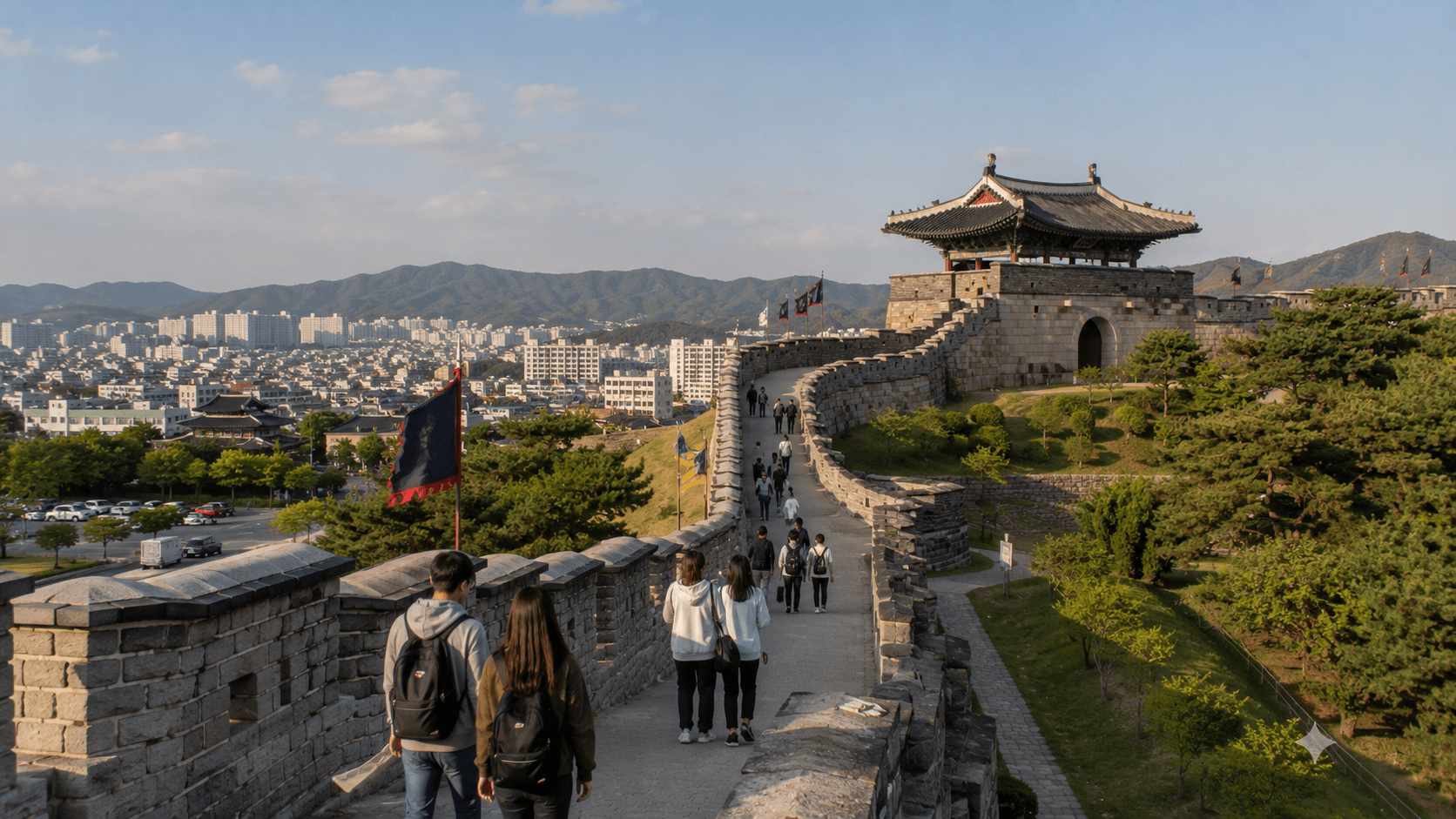
Korea is relatively easy to explore on a low sightseeing budget. Public parks, traditional markets, walking neighborhoods, beaches, riverside areas, and numerous museums cost little or nothing.
The permanent galleries at the National Museum of Korea are free, although special exhibitions may charge admission. HiKR Ground, operated by the Korea Tourism Organization in central Seoul, also offers free general admission, with separate charges possible for special programs.
Set aside:
- KRW 0-10,000 per day for mostly free museums, parks, and historical areas
- KRW 10,000-40,000 per day when combining museums, observation decks, performances, or workshops
- KRW 50,000 or more for theme parks, guided excursions, ski activities, or premium performances
Check each attraction's official page for closure days, reservation rules, and last admission. Free entry does not always mean walk-in entry; temporary exhibitions and popular time slots may require advance booking.
Paying in Korea
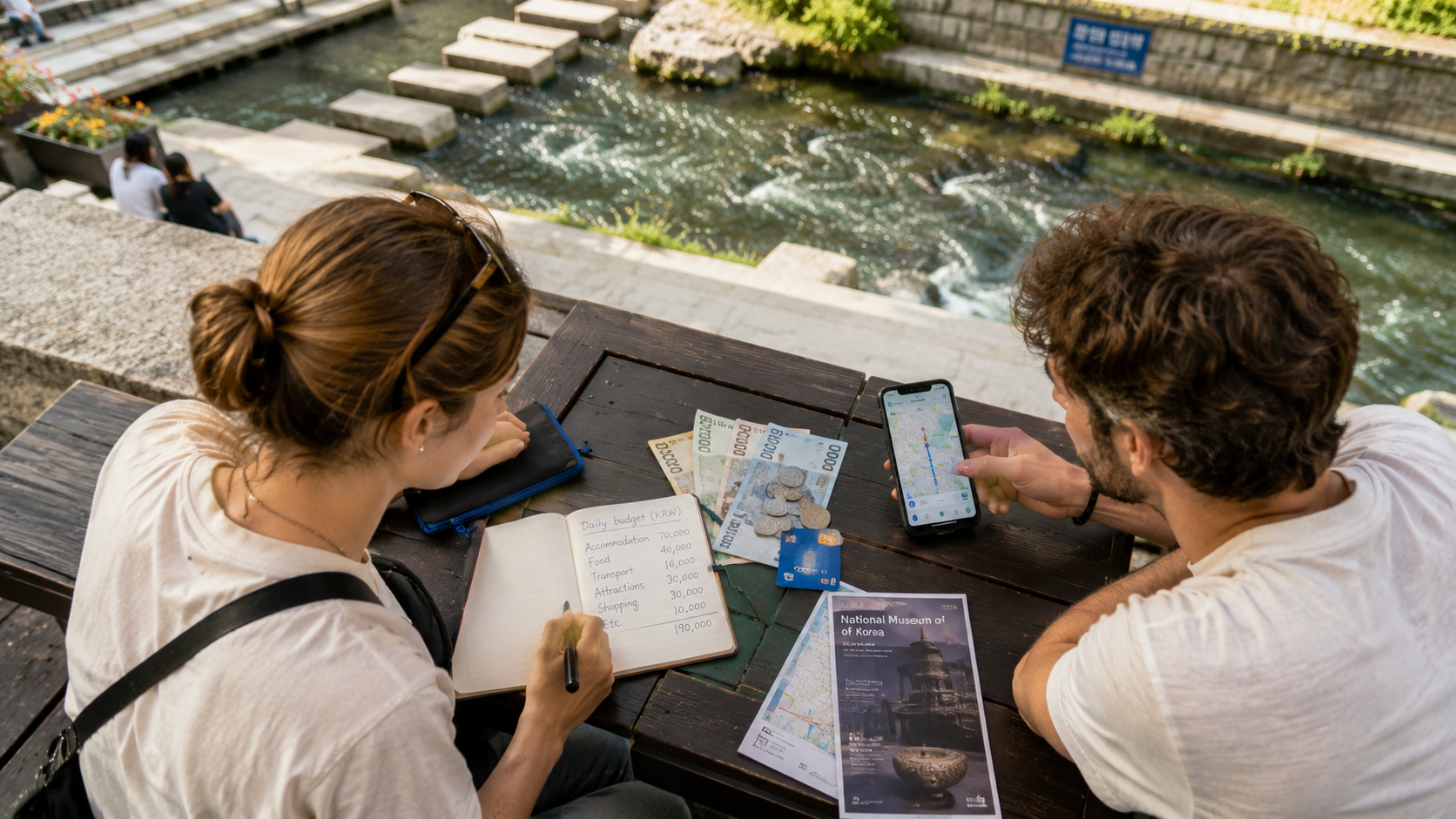
Credit cards are widely accepted at hotels, department stores, restaurants, and general shops, according to the Korea Tourism Organization's currency guide. Nevertheless, carry some KRW cash for transport-card top-ups, traditional markets, small businesses, coin lockers, and machines that reject foreign cards.
A practical setup is:
- One primary international Visa or Mastercard
- One backup card stored separately
- KRW 50,000-100,000 in cash after arrival
- A prepaid transport card with only a modest balance
Choose to pay in KRW when a terminal offers home-currency conversion. Your bank may provide a better exchange rate than the merchant's dynamic currency conversion, although you should check your card's foreign transaction fees.
Eligible short-term visitors may claim tax refunds on qualifying goods purchased at participating stores. The minimum qualifying purchase is KRW 15,000, and conditions apply. Review the official tourist tax-refund guide rather than assuming every purchase is refundable.
Common budget mistakes
- Ignoring weekends: Accommodation can cost considerably more on Friday and Saturday nights.
- Overloading the itinerary: A Seoul-Busan-Gyeongju-Jeju trip creates repeated rail, flight, and station-transfer costs.
- Taking airport taxis by default: Compare the total group fare against AREX or an airport bus first.
- Buying a pass without checking coverage: The Climate Card does not cover every railway or bus in the metropolitan area.
- Forgetting cafés and drinks: Two specialty coffees and an evening drink can exceed the cost of lunch.
- Booking the cheapest distant hotel: A room far from transit may create extra taxi costs and lost time.
- Keeping too much money on a transport card: Refund procedures and fees vary; top up in smaller amounts.
- Assuming foreign contactless cards work at transit gates: Use a Korean transport card unless an operator explicitly confirms otherwise.
What to check before you go
- Compare live hotel prices for your exact dates, including taxes and cancellation terms.
- Check whether your trip overlaps with a Korean public holiday, festival, concert, or university event.
- Price every intercity journey before deciding whether a rail pass is worthwhile.
- Confirm your airport transfer against your arrival terminal and landing time.
- Check the last train or bus if arriving late at night.
- Verify Climate Card coverage for every planned day trip.
- Tell your bank that you will use your cards in Korea and review foreign transaction and ATM fees.
- Keep an emergency reserve of at least one night's accommodation plus a taxi fare.
- Recheck attraction closures and reservation requirements on official websites.
A practical next step
List accommodation, airport transfers, and intercity tickets first because they create the largest fixed costs. Then multiply your chosen daily allowance for food, local transport, and attractions by the number of full days. Add a 10-15% contingency fund for price changes, weather-related taxis, additional luggage, or an unplanned activity.