South Korea is relatively easy to navigate once you have mobile data, a local map app, and a rechargeable transportation card. The parts that require advance attention are entry documents, airport transport, intercity tickets, and payment backup. Complete those preparations before departure, then keep your schedule flexible enough for large stations, transfers, and unfamiliar ordering systems.
Quick answer
For a smoother first trip to Korea:
- Check visa, K-ETA, and arrival-card requirements for your passport.
- Save your accommodation's address in both English and Korean.
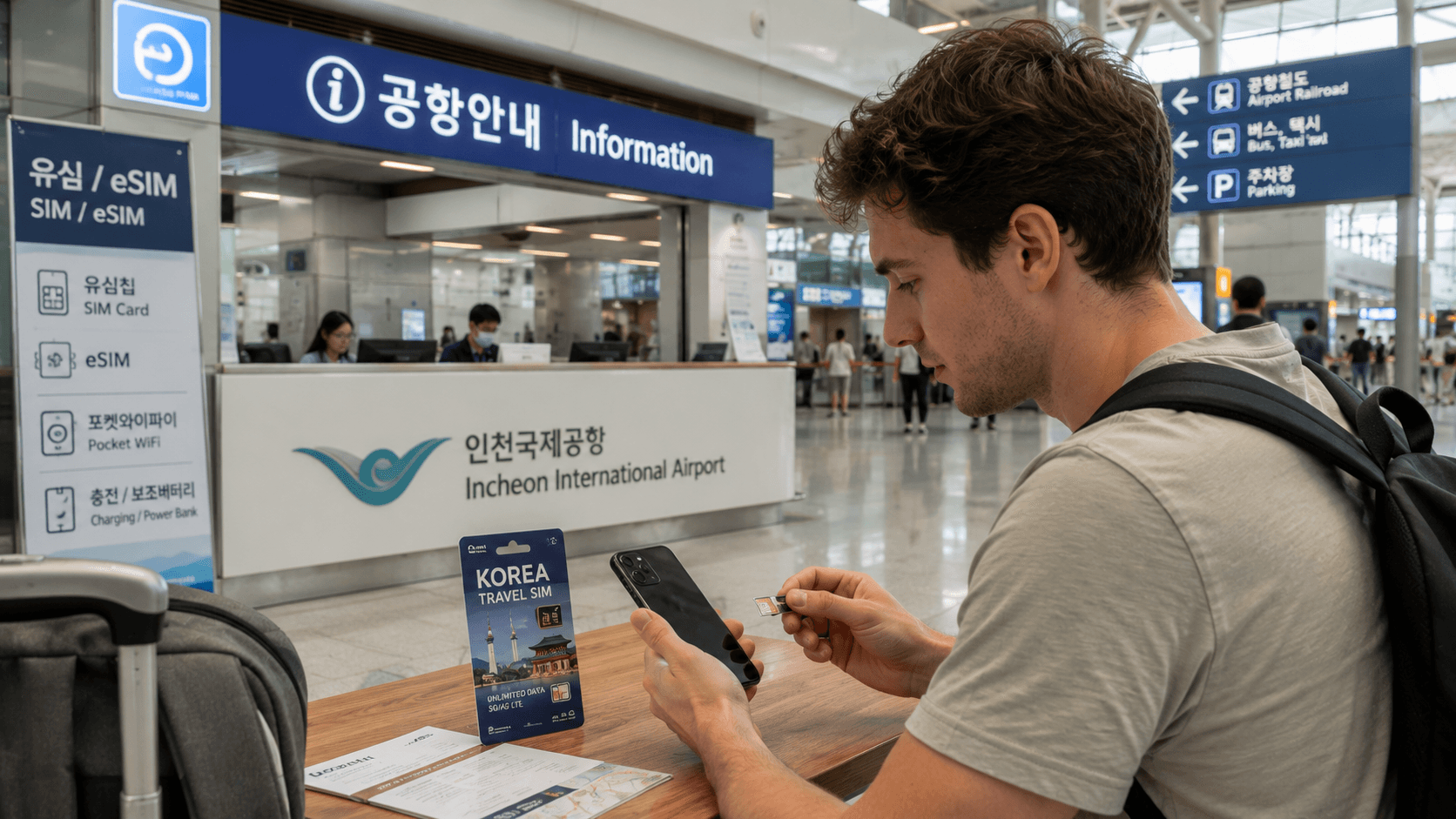
- Arrange mobile data before arrival or buy a SIM at the airport.
- Install Naver Map or KakaoMap instead of relying entirely on Google Maps.
- Buy and load a Tmoney or EZL transportation card.
- Carry a physical bank card and some Korean won as backup.
- Reserve long-distance trains early for weekends and public holidays.
- Save 112 for police, 119 for fire or ambulance, and 1330 for tourist assistance.
Information about entry procedures, transportation products, operating schedules, and prices below was checked on June 9, 2026. Always confirm changeable details on the linked official websites before travel.
1. Check entry requirements before booking
Entry rules depend on your nationality, passport type, travel purpose, and length of stay. Do not assume that advice written for another traveler applies to you.
Start with the official Korea Visa Portal and the website of the Korean embassy or consulate responsible for your place of residence. A visa exemption permits entry only under its stated conditions; it does not guarantee admission, which remains an immigration decision.
K-ETA and the temporary exemption
K-ETA is Korea's electronic travel authorization for eligible visa-free visitors. As verified on June 9, 2026, Korea has extended the temporary K-ETA exemption for designated passports through December 31, 2026. The exemption is not universal. Check your passport on the official K-ETA website, where the application system indicates whether you are exempt.
Travelers who still need a K-ETA should apply only through that official website or its official app. The stated application fee was KRW 10,000 and assessment generally took up to 72 hours as of June 9, 2026. Allow extra time because approval can take longer in individual cases.
An exempt traveler may voluntarily obtain a K-ETA, but the fee is not refundable merely because the traveler could have used the exemption.
Electronic arrival card
K-ETA and Korea's electronic arrival card are different systems. As verified on June 9, 2026, travelers who are required to make an entry declaration can submit the free Korea e-Arrival Card within three days before arrival, based on Korea Standard Time.
People with a valid K-ETA and registered foreign residents are among those generally excluded from filing an arrival card. K-ETA-exempt visitors, however, may still need one. Use the navigator on the official arrival-card website rather than guessing.
Prepare these details:
- Passport information
- Email address
- Arrival date and flight or vessel information
- First accommodation's address and telephone number
- Planned departure information, if available
The electronic form is free. Avoid unofficial websites that ask for an arrival-card service fee.
2. Save your address in Korean
Before departure, save a screenshot or note containing:
- Accommodation name
- Street address in English
- Street address in Hangul
- Korean telephone number
- Nearest subway station and exit number
- Check-in instructions
Korean addresses may produce different search results depending on whether you enter the road-name address, older lot-number address, or business name. The Hangul version is especially useful for taxi drivers, station staff, and local map searches.
Do not rely on an online booking page as your only record. You may need the address before your phone connects to a Korean network.
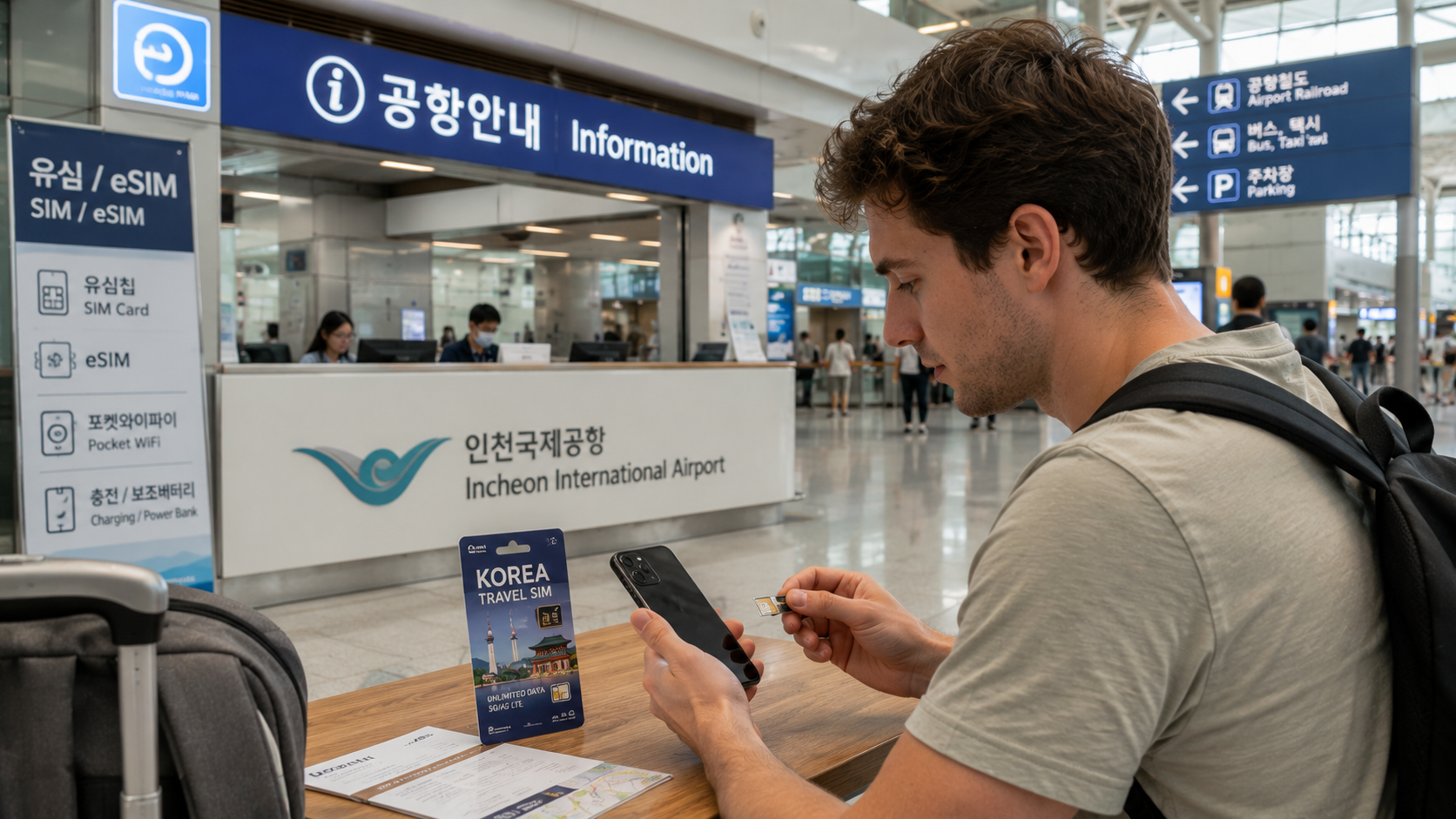
3. Get mobile data early
A reliable internet connection is more useful in Korea than carrying a printed guidebook. Navigation, translation, reservations, queue systems, railway information, and restaurant searches commonly depend on a phone.
Your main options are:
| Option | Practical advantage | Check before buying |
|---|---|---|
| Travel eSIM | Can be installed before departure | Phone compatibility, activation time, data-only versus voice service |
| Korean prepaid SIM | May include a Korean telephone number | Passport registration, pickup hours, voice and SMS allowance |
| International roaming | Keeps your usual number | Daily limits, speed restrictions, and total cost |
| Portable Wi-Fi router | Can serve several devices | Battery life, deposit, pickup, and return location |
Major Korean mobile operators have counters at international airports, although products, prices, and operating hours change. Compare current offers directly with the operator and verify that your phone is unlocked.
A data-only eSIM is sufficient for most tourists, but a Korean number can help with restaurant waiting lists, delivery services, and businesses that confirm reservations by text. Some Korean online services still require domestic identity verification, so a Korean number does not guarantee access to every app.
Public Wi-Fi is widely available, but it should be a backup rather than your only connection. Korea uses 220V, 60Hz electricity and sockets with two round pins. Bring a suitable plug adapter and confirm that your chargers support 220V.
4. Use a Korean map app
Install Naver Map or KakaoMap before the trip. Both are designed around Korean address and transport data. Naver Map supports multiple languages, while KakaoMap offers Korean and English interfaces.
Google Maps remains useful for saved places and general orientation, but route guidance and local business information can be less complete in Korea. Check a Korean map app before choosing accommodation or estimating travel time.
Useful search methods include:
- Search the attraction's English name.
- If no result appears, paste its Hangul name or Korean address.
- Confirm the branch, because chains may have several locations nearby.
- Check the numbered station exit, not only the station name.
- Take a screenshot of the final walking route before entering an underground station.
Large subway stations can have more than ten exits, and emerging at the wrong one may add a long walk or require crossing a major road.
5. Buy a rechargeable transportation card
For most beginners, a standard Tmoney or EZL prepaid card is simpler than buying individual subway and bus tickets. The cards work on public transportation across much of Korea and can be bought or recharged at participating convenience stores. Subway stations also have recharge machines.
According to the Korea Tourism Organization's transportation-card guide, a general Tmoney card cost approximately KRW 3,000 to KRW 5,000 as verified on June 9, 2026. This is the card price, not travel credit.
Cash is still commonly required when adding value to a standard transportation card at convenience stores or station machines. Keep several KRW 10,000 notes available for this purpose.
How to use the card
- Tap when entering and leaving the subway.
- Tap when boarding a bus.
- Tap again before leaving the bus, even if it is your final ride.
- Keep enough balance for the whole journey.
- Use one card per passenger.
Tapping off records the journey and is necessary for correct fares and eligible transfer discounts. Do not place the card beside another contactless card while tapping, because the reader may detect the wrong one.
Seoul also has time-based products such as the Climate Card, but its coverage and conditions differ from a nationwide stored-value card. Check the current Seoul Climate Card guide and compare the covered routes with your itinerary before buying. A standard Tmoney or EZL card is usually the least complicated starting point for a trip involving several regions.
6. Plan your airport transfer before landing
Incheon International Airport has two passenger terminals. Confirm your terminal for both arrival and departure; do not infer it from the airline name alone because assignments can change.
Common ways to reach Seoul include:
| Transport | Usually suitable for | Main limitation |
|---|---|---|
| AREX airport railway | Travelers staying near a convenient rail or subway connection | Transfers and stairs can be tiring with large luggage |
| Airport limousine bus | Hotels or districts near a direct bus stop | Road traffic can make journey times variable |
| Taxi | Groups, late arrivals, heavy luggage, or inconvenient addresses | Higher cost and possible traffic delays |
The AREX has different service patterns, so verify whether your chosen train stops at your required station. Airport buses are route-specific; the closest stop may still be some distance from your accommodation.
Check live routes, boarding locations, fares, and last departures through Incheon Airport's official public-transportation page. These details were deliberately not fixed in this guide because they can change. If you arrive late at night, confirm the final train or bus before flying and keep enough funds for a taxi.
Use an official taxi rank. Show the driver the Korean address, and make sure the meter is operating unless you are using an authorized fixed-fare service clearly explained at the airport.
7. Understand how payment works
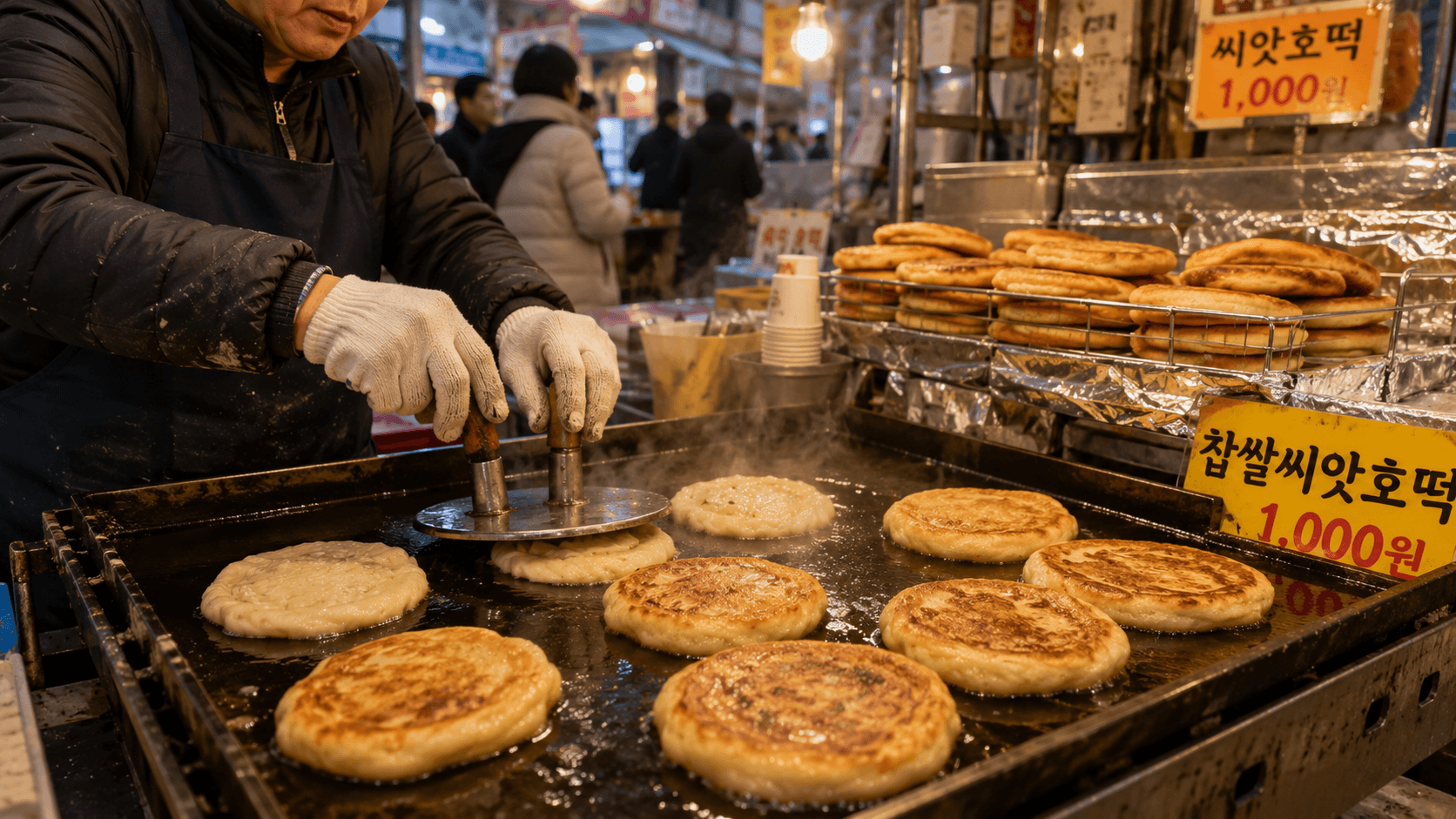
Korea's currency is the won, written as KRW or with the ₩ symbol. International credit and debit cards are accepted at many hotels, department stores, convenience stores, and established restaurants. Acceptance is not guaranteed everywhere, particularly at traditional markets, small businesses, transportation-card recharge points, and some ticket machines.
Bring at least two payment methods:
- A physical Visa or Mastercard with overseas use enabled
- A second card stored separately
- A modest amount of Korean won
A mobile wallet should not be your only method. Some foreign cards fail because of terminal settings, issuer security controls, offline transactions, or incompatible online verification.
Notify your bank of the trip if required and know your card PIN. When an ATM offers currency conversion, compare the displayed exchange arrangement with your bank's terms before accepting it. Use ATMs marked for global or international cards; availability and fees vary by operator.
Tipping is not normally expected in everyday Korean restaurants, cafés, or taxis. Pay the stated amount unless a business clearly identifies a service charge or gratuity policy.
8. Reserve intercity transport strategically
KTX high-speed trains connect Seoul with cities including Busan, Daegu, Gyeongju's Singyeongju Station, Jeonju via the Honam and Jeolla corridors, and other regional centers. Not every attraction is beside the station carrying its city's familiar name, so confirm the station and onward transport before purchasing.
Book through KORAIL's official website or the official KorailTalk app. Avoid similarly named third-party sites unless you understand their fees and cancellation conditions.
Weekend trains, Friday-evening departures, and travel around Korean public holidays can sell out. Reserve as soon as your plans are firm, especially during the Lunar New Year and Chuseok periods, when special booking arrangements may apply.
Korea also has express and intercity bus networks. Check which terminal serves your destination: large cities often have multiple bus terminals located far apart.
9. Expect practical differences in restaurants and public spaces
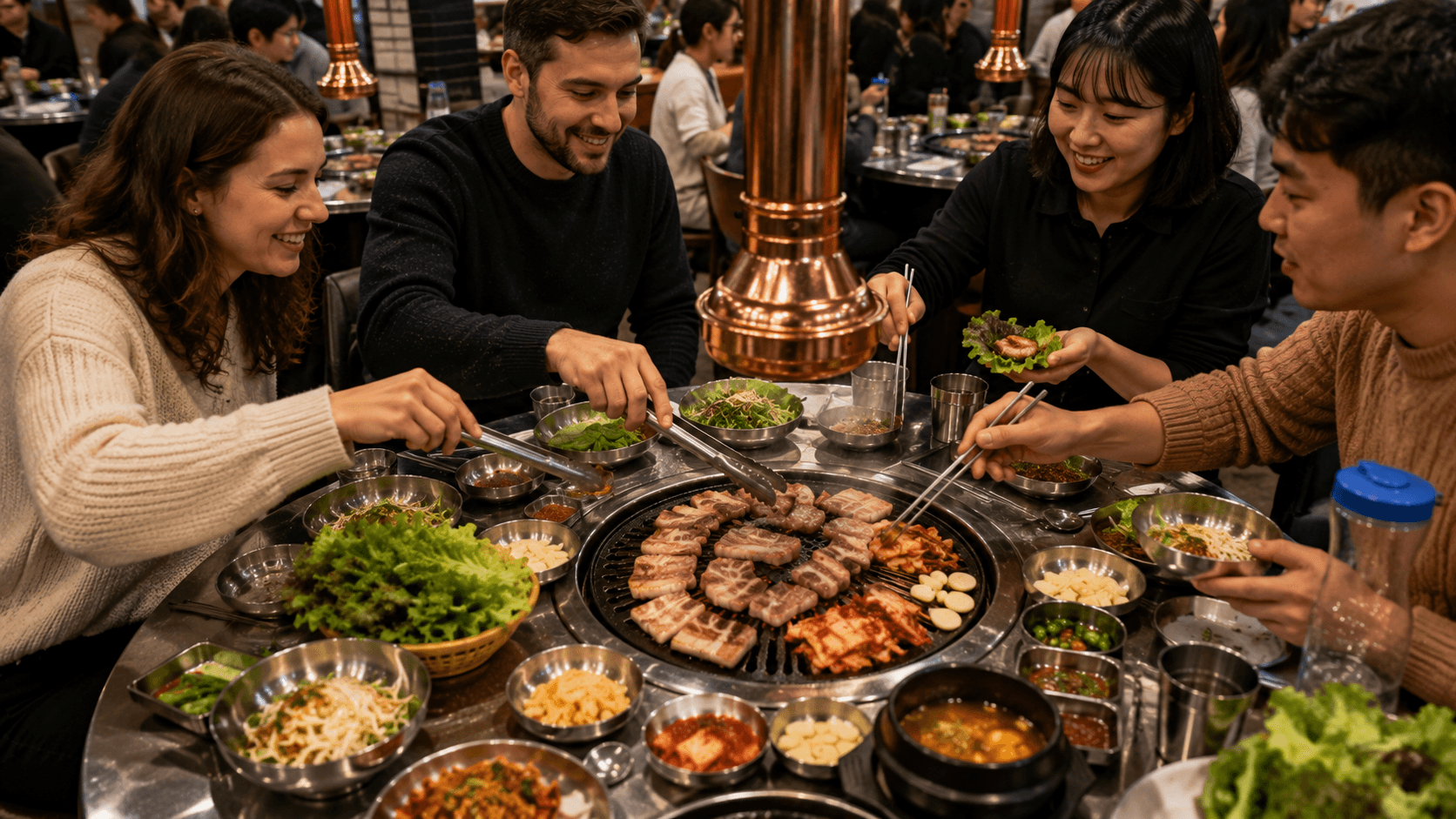
Restaurant ordering systems vary. You may order at the table, at a counter, through a tablet, or at a kiosk. Some kiosks have an English option, while others accept only particular cards.
Water and side dishes are often self-service. At some restaurants, commonly refilled side dishes can be requested again without charge, but premium or specially ordered dishes are not automatically free. Check the menu rather than assuming.
A few habits prevent common misunderstandings:
- Queue where floor markings or numbered tickets indicate.
- Keep phone calls quiet on public transportation.
- Give priority seats to passengers who need them.
- Remove shoes when entering a home or any accommodation area that clearly requires it.
- Use both hands, or support one arm with the other, when giving or receiving something in a formal interaction.
- Do not leave rubbish beside a full bin. Public bins can be difficult to find, so carry a small bag for waste.
On escalators and station platforms, follow posted instructions rather than copying whatever nearby passengers happen to do.
10. Build a realistic itinerary
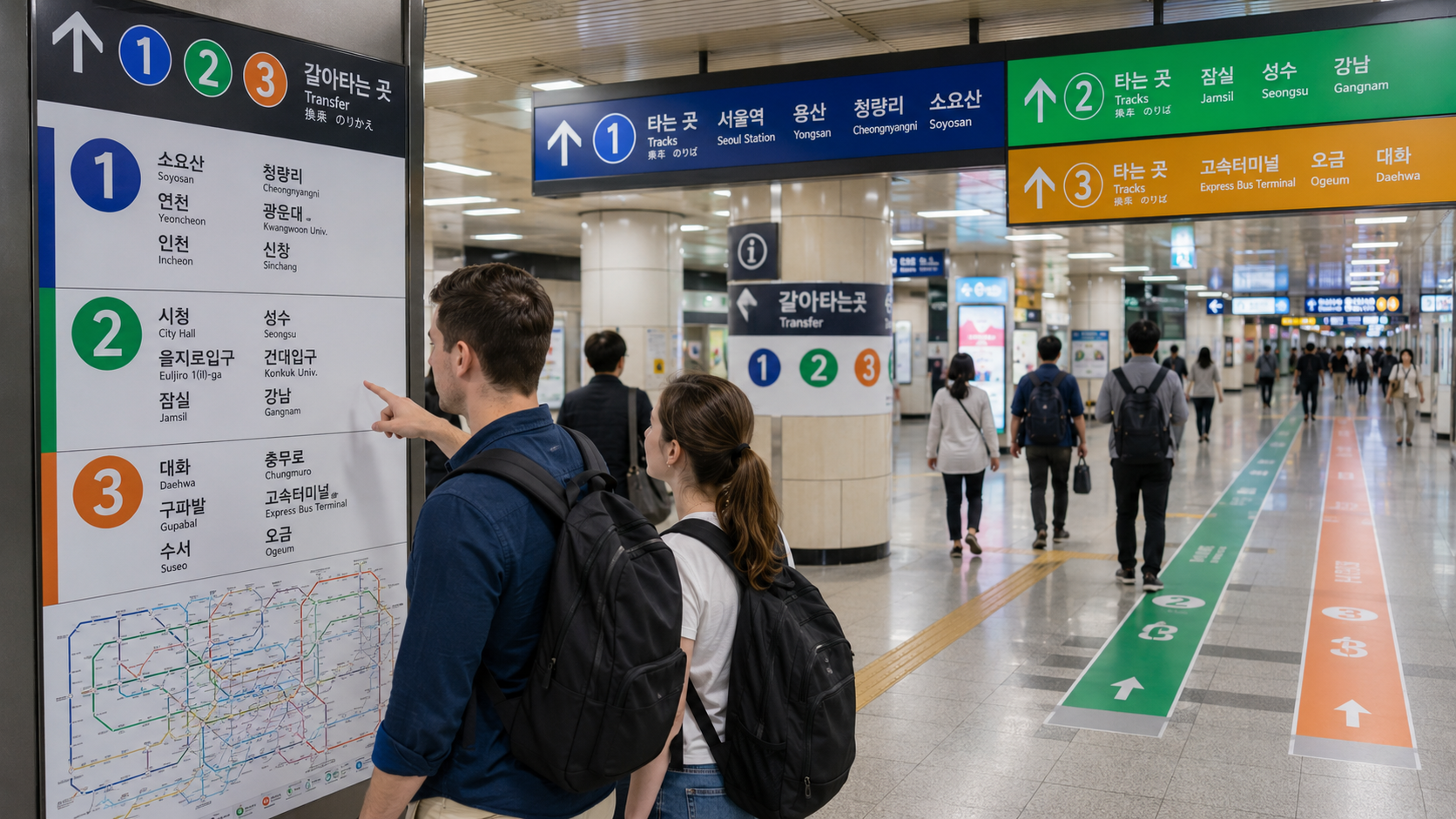
Seoul is geographically large, and attractions that look close on a simplified tourist map may require several transfers. Group each day's stops by district instead of crossing the city repeatedly.
For a first visit, allow extra time for:
- Finding the correct station exit
- Walking through large interchange stations
- Waiting for cafés or restaurants
- Storing and retrieving luggage
- Traveling from a KTX station to the actual attraction
- Weather-related delays and rest breaks
Check closure days directly with each attraction. Museums, palaces, markets, and private businesses do not share one universal weekly closing day. Last admission can also be significantly earlier than the building's closing time.
Korea has hot, humid summers and cold winters, while rain, snow, heat advisories, and poor air quality can disrupt outdoor plans. Check the Korea Meteorological Administration's English weather service shortly before each travel day and keep one indoor alternative.
11. Know where to get help
Save these numbers:
- 112: Police
- 119: Fire and ambulance
- 1330: Korea Travel Helpline for tourism information and interpretation assistance
Emergency-number information was verified through the Korea Tourism Organization on June 9, 2026. In a life-threatening situation, call 112 or 119 rather than 1330.
For a lost passport, contact your embassy or consulate and report the loss to the police when instructed. Korea's police lost-property system is available through LOST112.
Travel insurance is strongly recommended. Read the policy for medical treatment, existing conditions, activities, theft documentation, and trip disruption. Keep digital copies of your passport, insurance certificate, prescriptions, and emergency contacts, but do not store them only on the device you carry every day.
What to check before you go
One month before departure
- Confirm passport validity and entry eligibility.
- Check visa and K-ETA rules for your nationality.
- Reserve accommodation and major intercity journeys.
- Review travel-insurance coverage.
- Ask the relevant Korean authority about restricted medication if necessary.
Three days before arrival
- Complete the e-Arrival Card if required.
- Save your accommodation address in English and Korean.
- Confirm your arrival terminal and airport transfer.
- Download offline copies of reservations.
- Install Naver Map or KakaoMap and a translation app.
On arrival
- Connect to mobile data.
- Withdraw or exchange a modest amount of KRW if needed.
- Buy and load a transportation card.
- Check the final service time for your airport route.
- Keep your passport and bank cards secure and separate.
Frequently asked questions
Can I travel in Korea without speaking Korean?
Yes. Major airports, railway stations, and central subway systems provide substantial English signage. Translation and Korean map apps help with smaller businesses and regional travel. Learning simple expressions such as annyeonghaseyo for hello and gamsahamnida for thank you is useful but not a requirement.
Is Korea cashless?
No. Card payment is widespread, but cash remains useful for transportation-card recharging, markets, small businesses, and payment failures. Do not rely on cash alone or on a single foreign card.
Should I rent a car?
Most first-time visitors traveling between Seoul, Busan, and other major cities do not need one. Rail, buses, and urban public transport are usually easier. A car can be useful for rural itineraries or parts of Jeju, but licensing, insurance, tolls, parking, and navigation require separate planning.
How early should I reach the airport when leaving?
Follow your airline's guidance and allow additional time for terminal transfers, check-in, security, immigration, and tax-refund procedures. Verify your departure terminal on the day of travel.
Your next step
Check your passport in the official K-ETA and e-Arrival Card navigators, then save your first accommodation's Korean address and map pin. Those three details determine much of what you need to do before boarding your flight.
Sources
- Korea Electronic Travel Authorization
- Korea Electronic Arrival Card
- Korea Visa Portal
- Korea Tourism Organization transportation-card guide
- Incheon International Airport public transportation
- KORAIL official website
- Korea Tourism Organization emergency guidance
- Seoul Metropolitan Government Climate Card guide