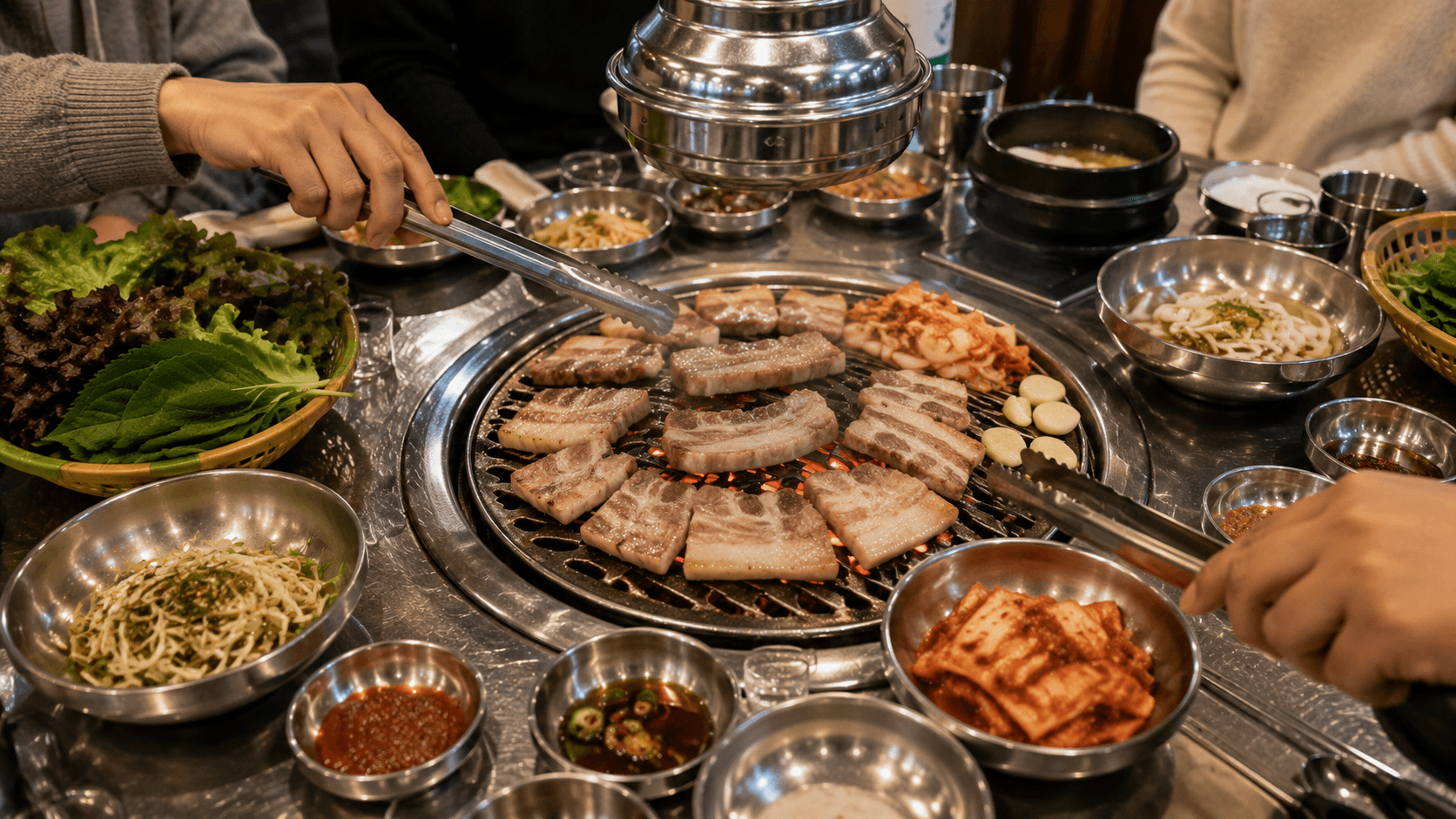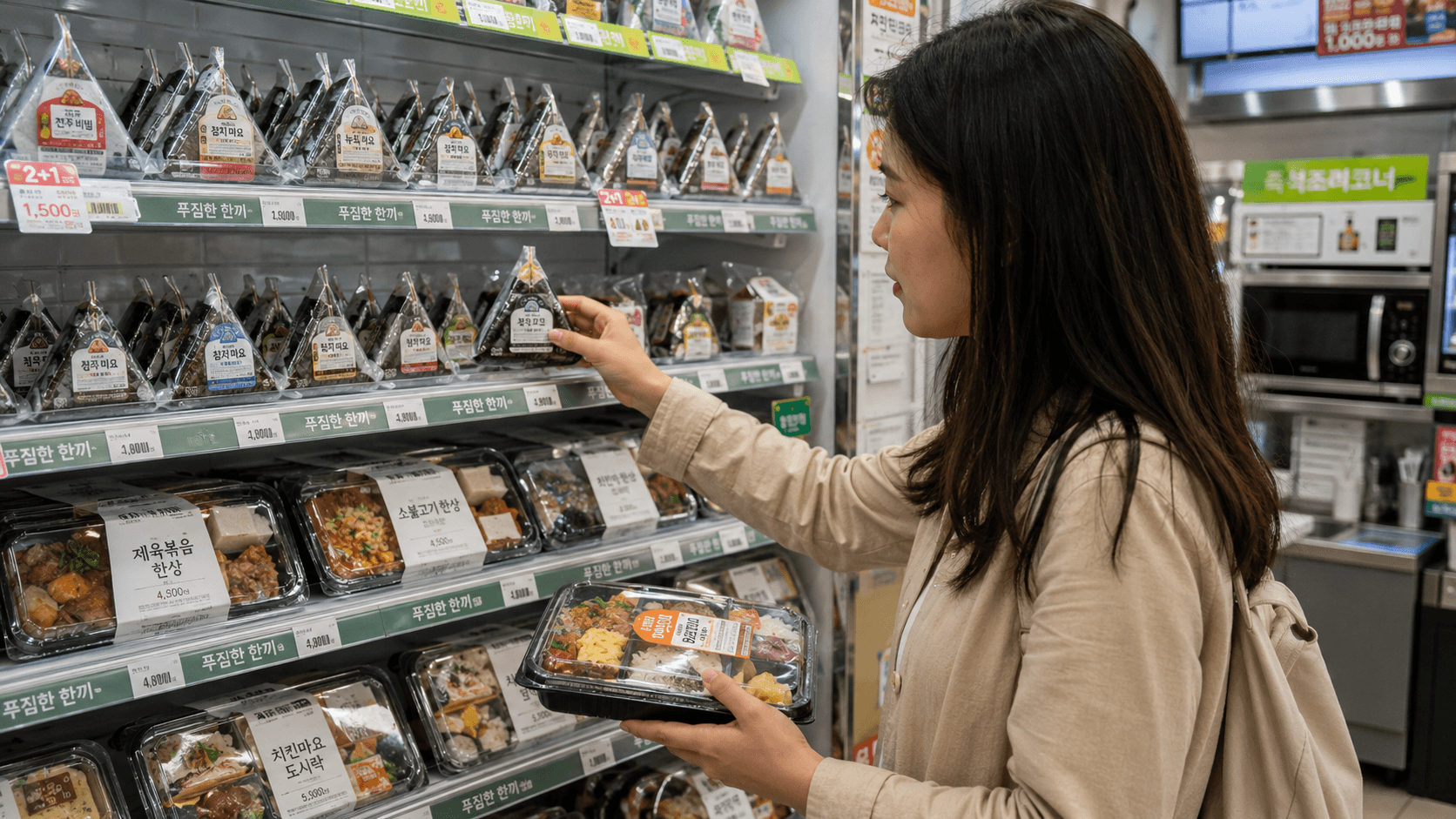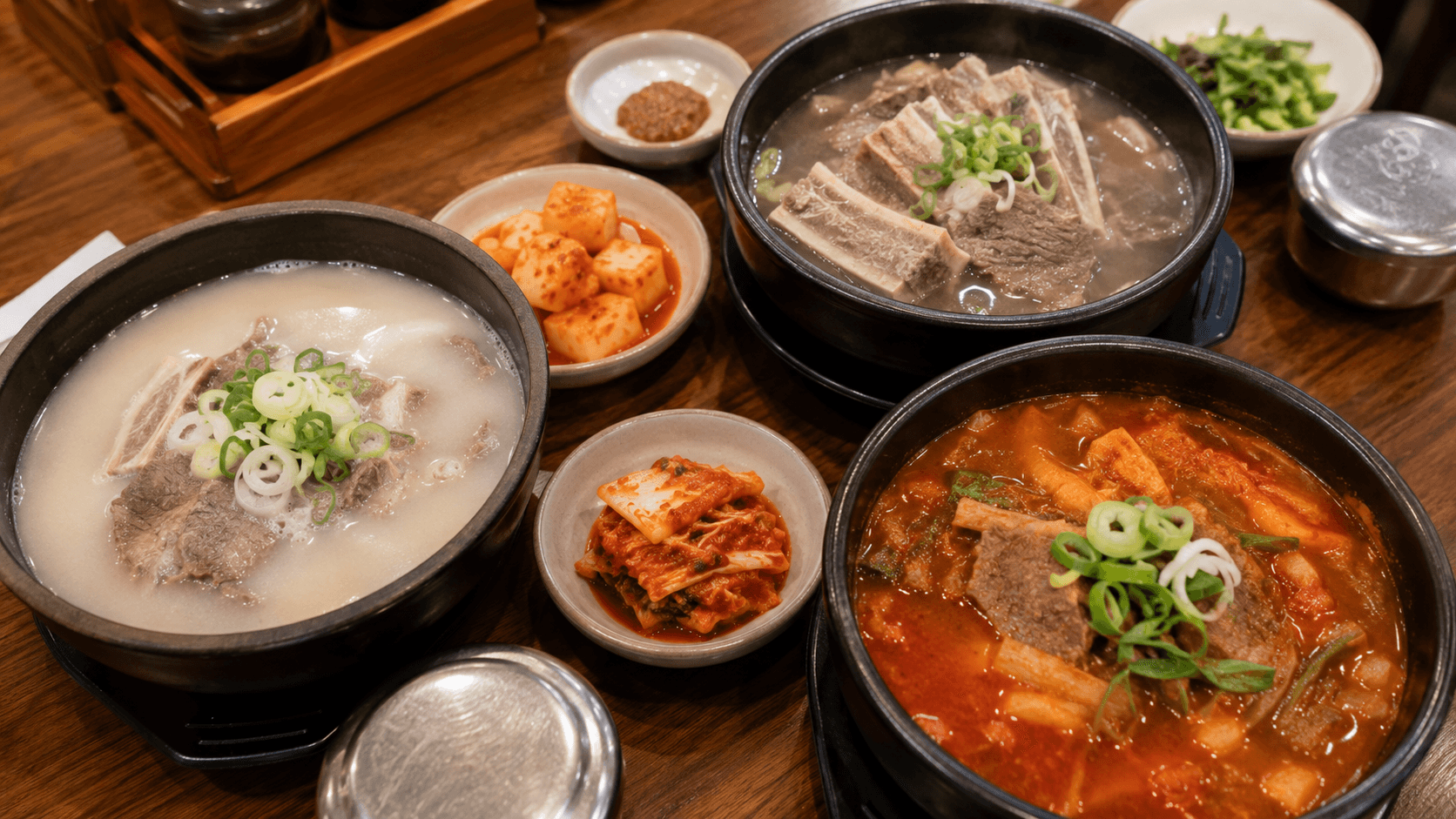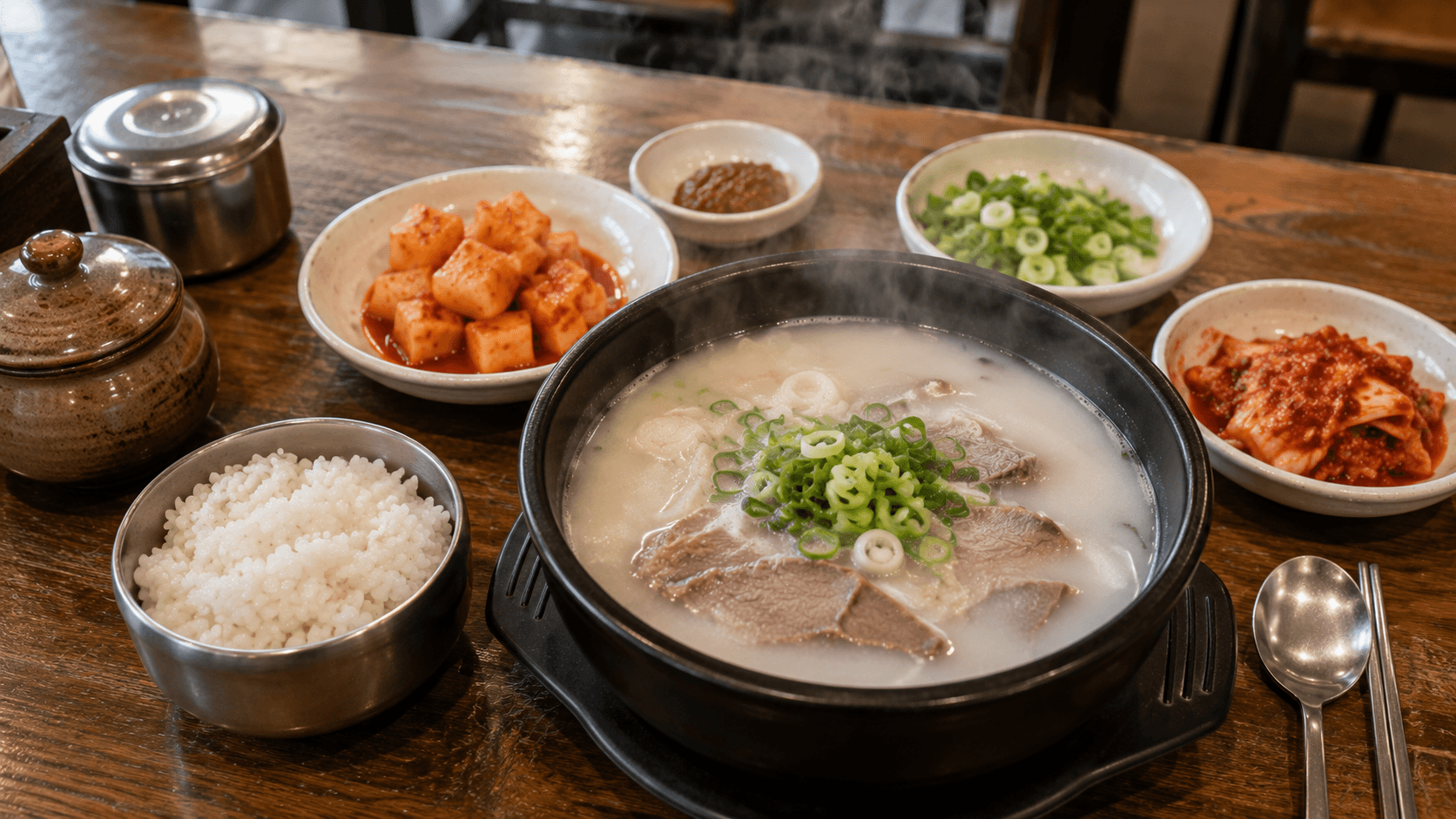
Korea does not have one fixed breakfast menu. A traditional home breakfast can resemble lunch or dinner, with rice, soup, and side dishes, while commuters may buy toast, gimbap, porridge, or convenience-store food. For travelers, the main challenge is usually not deciding what counts as breakfast, but finding a suitable restaurant open early enough.
Information about prices, menus, and opening patterns in this guide was checked on June 11, 2026. Individual businesses set their own prices and hours, so confirm the specific branch before making an early start.
Quick answer
| Breakfast style | What to look for | Planning budget per person |
|---|---|---|
| Soup and rice | Gukbap, seolleongtang, haejangguk | KRW 9,000–15,000 |
| Rice porridge | Juk | KRW 8,000–18,000 |
| Gimbap shop | Gimbap, ramyeon, mandu | KRW 3,500–10,000 |
| Korean street toast | Egg-and-cabbage toast | KRW 3,000–7,000 |
| Convenience store | Triangle gimbap, eggs, yogurt, drinks | KRW 3,000–8,000 |
| Bakery or cafe | Bread, sandwich, and coffee | KRW 6,000–15,000 |
| Hotel breakfast | Buffet or set menu | Often KRW 20,000–50,000 or more |
These are practical budgeting ranges rather than regulated prices. Tourist districts, airports, hotels, premium ingredients, and delivery orders can cost more.
What Koreans eat for breakfast
At home, breakfast may include bap (밥, cooked rice), a soup or stew, kimchi, eggs, grilled fish, and several banchan (반찬, side dishes). The meal is normally savory rather than sweet. There is no special rule that limits soup, meat, kimchi stew, or other substantial dishes to later in the day.
Daily habits vary considerably, however. A student might eat cereal or a convenience-store rice ball, while an office worker might buy coffee and toast. Some people skip breakfast entirely. Visitors should therefore think of Korean breakfast as a choice between several practical formats, not a single national set meal.
Traditional hot breakfasts
Gukbap: soup with rice
Gukbap (국밥) combines guk, meaning soup, with bap, meaning cooked rice. Depending on the restaurant, the rice arrives inside the soup or in a separate bowl for you to add yourself. It is filling, usually quick to serve, and particularly useful before a long day of walking or hiking.
Common versions include:
- Dwaeji-gukbap (돼지국밥): Pork soup with rice, strongly associated with Busan and southeastern Korea.
- Kongnamul-gukbap (콩나물국밥): Soybean-sprout soup with rice, especially associated with Jeonju.
- Sundae-gukbap (순대국밥): Soup containing sundae, a Korean blood sausage, and often other pork cuts.
- Sogogi-gukbap (소고기국밥): Beef soup with rice, sometimes spicy.
Seasonings such as chopped spring onion, salted shrimp, chili paste, or perilla powder may be placed on the table. Taste the broth before adding everything: some soups arrive lightly seasoned because diners are expected to adjust them individually.
Seolleongtang: mild ox-bone soup
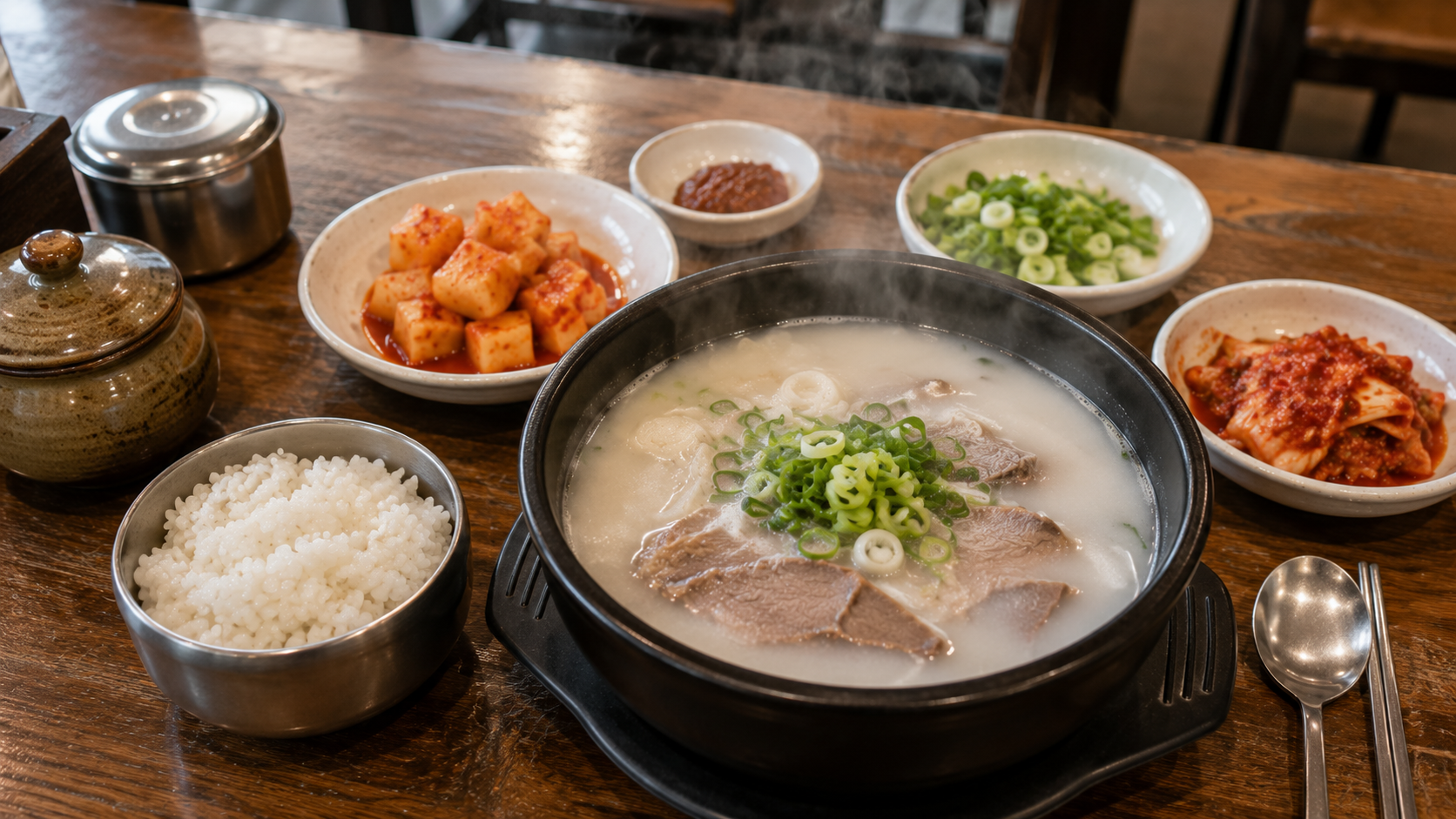
Seolleongtang (설렁탕) is a cloudy soup generally made by simmering beef bones and other beef ingredients. It usually arrives with rice, sliced meat, chopped spring onion, salt, and kimchi or kkakdugi, the cubed radish kimchi commonly served with soup.
The broth may taste surprisingly plain at first. Add salt gradually rather than assuming the kitchen forgot to season it. Seolleongtang can be approachable for travelers who want a warm Korean breakfast without a strongly spicy broth, but it is not vegetarian and may contain several beef-derived ingredients.
Haejangguk: hearty “hangover soup”
Haejangguk (해장국) literally refers to soup eaten to relieve a hangover, but no drinking is required. Recipes differ by region and restaurant. The soup may contain beef, pork backbone, soybean sprouts, dried cabbage leaves, congealed ox blood, or seafood.
Do not order based only on the English phrase “hangover soup.” Ask about the ingredients if organ meat, blood products, seafood, or pork are concerns. A useful question is “Mwo-ga deureogayo?” (뭐가 들어가요?), meaning “What is in it?”
Juk: Korean rice porridge
Juk (죽) is rice porridge, served in both simple and premium versions. Common choices include vegetable porridge, chicken porridge, pumpkin porridge, beef-and-mushroom porridge, and jeonbok-juk (전복죽), or abalone porridge.
It is a practical option after a flight, during cold weather, or when you want a softer meal. Portions can be larger than the bowl appears because the rice has absorbed substantial liquid. Porridge restaurants may also offer takeaway packaging.
A major Korean porridge operator, Bonif, lists current brands, menus, ordering options, and branch searches on its official Bonjuk and Bibimbap menu page. The displayed selection and operating hours can differ by branch.
Fast breakfasts for commuters and travelers
Gimbap shops
Gimbap (김밥) consists of rice and fillings rolled in gim, or dried seaweed. Typical fillings include egg, carrot, spinach, pickled radish, ham, fish cake, tuna, cheese, or beef. It is portable, but a freshly sliced roll is also commonly eaten at the shop.
A basic vegetable gimbap is not automatically vegetarian. The roll may contain egg, ham, imitation crab, fish cake, or seasoning made with animal ingredients. Tuna gimbap often includes mayonnaise. Ask directly rather than relying on the word “vegetable.”
Gimbap restaurants frequently sell ramyeon, dumplings, rice dishes, and soups as well. Ordering one roll and sharing a bowl of noodles can make an economical breakfast, though portions and sharing policies vary.
Useful menu words include:
- Yachae gimbap (야채김밥): Vegetable gimbap, but check for egg, ham, and fish cake
- Chamchi gimbap (참치김밥): Tuna gimbap
- Sogogi gimbap (소고기김밥): Beef gimbap
- Cheese gimbap (치즈김밥): Cheese gimbap
- Pojang (포장): Takeaway
Korean street toast
Korean toast usually means a griddled sandwich containing an egg-and-cabbage mixture, sauce, and often cheese, ham, bacon, or a meat patty. It tends to be sweet and savory because sugar or a sweet sauce may be added.
Toast stands can be convenient near stations and university districts, but they do not all operate every morning. Chain branches also have independent schedules. The official Isaac Toast website provides current menu and branch information in Korean; check the individual location before visiting.
For a simpler order, ask whether meat and cheese can be omitted. This does not make the sandwich suitable for a severe allergy or strict vegan diet because the grill, utensils, sauces, and bread may involve shared ingredients.
Convenience-store breakfast
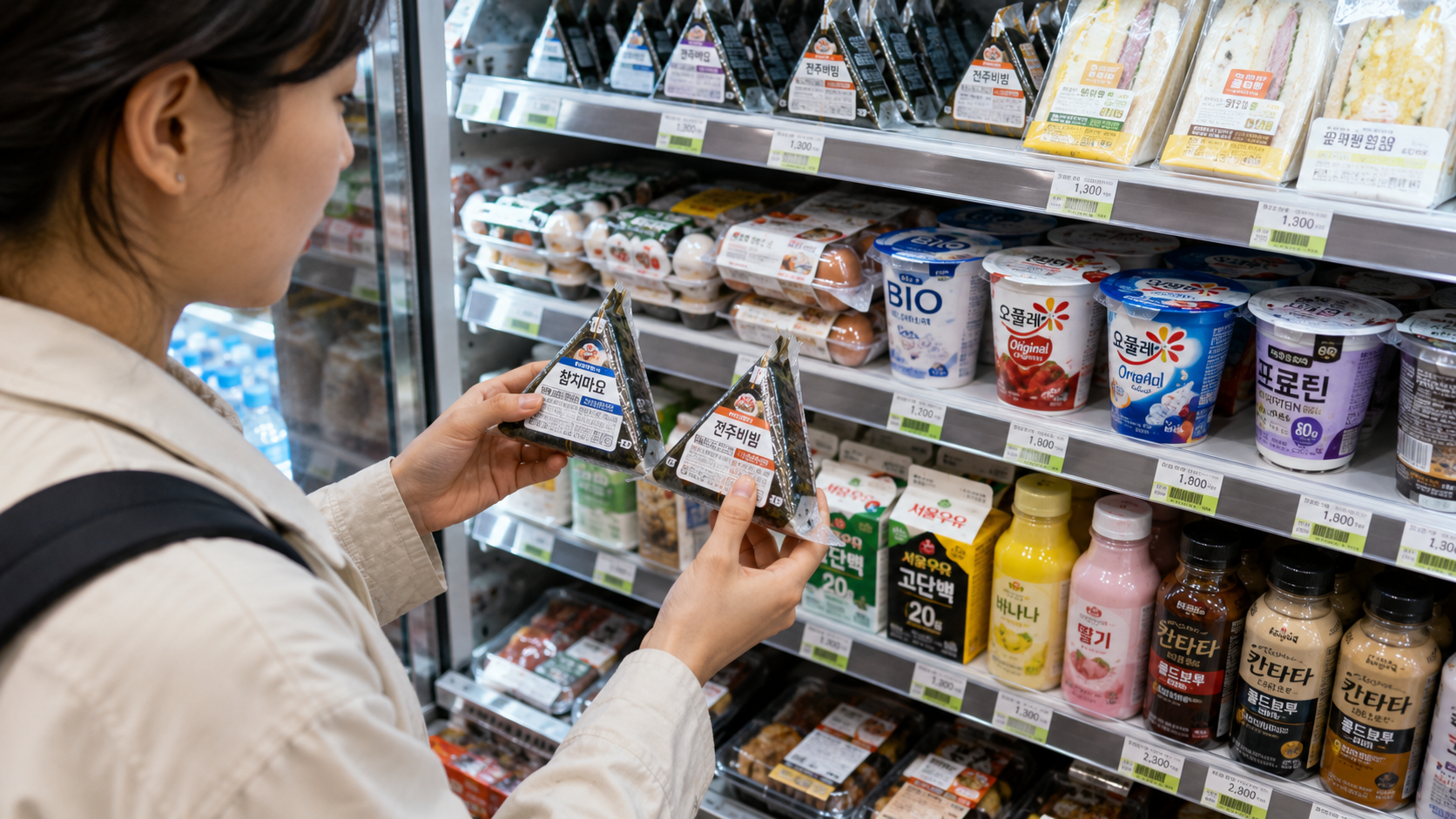
Convenience stores are often the easiest solution for an early departure. A typical combination might include triangle gimbap, boiled eggs, yogurt, fruit, soy milk, or coffee. Stores with seating may also provide hot-water machines and microwave ovens, although facilities vary.
To open samgak gimbap (삼각김밥), the triangular rice snack wrapped in seaweed, follow the numbered tabs on the package. The wrapper is designed to keep the seaweed separate from the rice until opening. Pulling it apart in a different order can leave the seaweed trapped in the plastic.
Check the printed date and storage instructions, especially if buying food the previous evening. Labels are usually in Korean, but numbers, allergen highlighting, and ingredient lists can still help. Translation apps are useful for a first check, but they should not be treated as a guarantee for serious allergies.
Bakeries and cafes
Korean bakeries offer buns, sandwiches, pastries, cakes, and drinks. Savory choices may include sausage bread, croquettes, egg sandwiches, garlic bread, or rolls filled with potato salad. Sweet red-bean buns and cream-filled bread are also common.
The main limitation is timing: many cafes and bakeries open later than commuters expect, particularly in shopping streets or malls. Search the exact branch rather than assuming that a familiar chain keeps identical hours nationwide.
Where to find breakfast early
Around transport hubs
Major railway stations, bus terminals, airports, hospital areas, and wholesale markets usually provide the broadest early-morning selection. Even there, individual restaurants may open after the first trains or close between overnight and daytime service.
Airport dining should be checked by terminal and by security zone. A restaurant listed for an airport may be landside when you need an airside option, or located in a different terminal. Use the Incheon International Airport official website to check current facilities before an early flight.
Near traditional markets
Markets can be good places for soup, porridge, dumplings, or simple rice meals, but “market hours” do not mean every food stall is operating. Produce wholesalers, clothing vendors, and cooked-food stalls often follow different schedules. Sundays, public holidays, and post-holiday mornings can also affect opening.
The Korea Tourism Organization includes traditional markets, food information, destination listings, and travel basics on the official VISITKOREA website. Use it for orientation, then verify the current business listing or contact the venue directly.
Near your accommodation
Search Korean map apps for the dish rather than the English word “breakfast.” Useful searches include:
국밥for gukbap설렁탕for seolleongtang죽for porridge김밥for gimbap토스트for toast24시 식당for a restaurant advertising 24-hour service아침식사for breakfast
A “24-hour” label should still be confirmed. Businesses may change schedules, take a weekly break, close temporarily, or stop overnight service without immediately updating every platform.
How to order
At many small restaurants, you can enter and sit down unless a staff member directs you to a seat. Menus may be on the wall, on the table, or on a touchscreen kiosk.
A simple ordering sequence is:
- Check whether ordering is at the table, counter, or kiosk.
- Point to the menu item and say “Igeo hana juseyo” (이거 하나 주세요), meaning “One of this, please.”
- Say “Pojanghae juseyo” (포장해 주세요) if you want takeaway.
- Pay when ordering if directed to a kiosk or counter; otherwise, many small restaurants collect payment at the counter after the meal.
- Return reusable water cups, trays, or dishes if the restaurant has a self-service return area marked 퇴식구.
Cards are commonly used, but a foreign-issued card can occasionally fail at an unattended kiosk or small business. Carrying some KRW cash provides a useful backup. Mobile payment systems tied to Korean accounts may not accept an overseas phone number or card.
Side dishes and table etiquette
Soup meals often include kimchi, radish kimchi, raw onion, chili peppers, or other side dishes. Some restaurants provide self-service refills, marked 셀프. Take only what you expect to eat.
Do not assume every side dish is included with every menu. A convenience-store meal or bakery purchase will not include banchan, while a soup restaurant generally supplies at least kimchi. At a self-service restaurant, water and utensils may be in a cabinet or station rather than brought to the table.
Hot soups can arrive vigorously boiling in a stone or earthenware bowl. Avoid touching the bowl directly, and allow children extra space around the table.
Vegetarian, halal, allergy, and dietary concerns
Korean breakfast can be difficult to assess from appearance alone. Vegetable soups may use anchovy stock, kimchi may contain fish sauce or salted seafood, and rice rolls may include egg, ham, or fish cake. Beef soup restaurants may prepare most items in a shared kitchen.
For vegetarian food, ask both whether the dish contains meat and whether the broth contains seafood. Helpful phrases include:
- Gogi an meogeoyo (고기 안 먹어요): “I do not eat meat.”
- Saengseon-do an meogeoyo (생선도 안 먹어요): “I do not eat fish either.”
- Yuksu-e gogi deureogayo? (육수에 고기 들어가요?): “Does the broth contain meat?”
- Myeolchi deureogayo? (멸치 들어가요?): “Does it contain anchovy?”
For halal requirements, do not treat “no pork” as equivalent to halal preparation. Ask about meat sourcing, alcohol-containing marinades, broth, and shared cooking equipment. VISITKOREA maintains a Muslim-friendly travel section, accessible through its themed travel menu, but restaurant status and operating details should still be reconfirmed.
For a severe allergy, use a professionally translated allergy card and ask staff directly. Translation software can assist communication but may miss derivatives, sauces, garnishes, or cross-contact. When the risk cannot be clarified, choose sealed packaged food with an ingredient label or another establishment.
Common mistakes
- Searching only for Western-style breakfast: This can hide nearby soup, porridge, and gimbap restaurants.
- Assuming all Korean food is spicy: Seolleongtang, some porridges, toast, eggs, and plain gimbap can be mild, although side dishes and hidden seasonings still require attention.
- Assuming vegetable means vegan: Egg, fish cake, anchovy stock, and seafood-based kimchi are common complications.
- Trusting old opening-hour posts: Early-morning schedules are particularly vulnerable to change.
- Adding every table seasoning immediately: Taste soup first and adjust it gradually.
- Ordering too much: A bowl of soup with rice and side dishes is often a complete meal.
- Expecting hotel breakfast everywhere: Guesthouses and budget hotels may provide no breakfast, a limited self-service meal, or only coffee and packaged bread.
What to check before you go
- Confirm the exact branch, opening time, and weekly closing day on the morning of your visit.
- Check whether the restaurant is inside a station, terminal, department store, or airport security area.
- Review the menu for pork, beef, seafood, egg, dairy, nuts, sesame, and anchovy broth where relevant.
- Carry a payment card plus a small amount of KRW cash.
- Allow extra time if you may need kiosk translation or dietary explanations.
- For takeaway food, check whether your train, bus, attraction, or accommodation allows eating.
- Save the Korean spelling of your chosen dish so you can search signs and map listings.
If you need help confirming a restaurant or communicating with a business, VISITKOREA provides the 1330 Korea Travel Helpline through online call and chat services on its official website. The service link and availability were confirmed on June 11, 2026; use the current VISITKOREA helpline interface for the latest contact options.