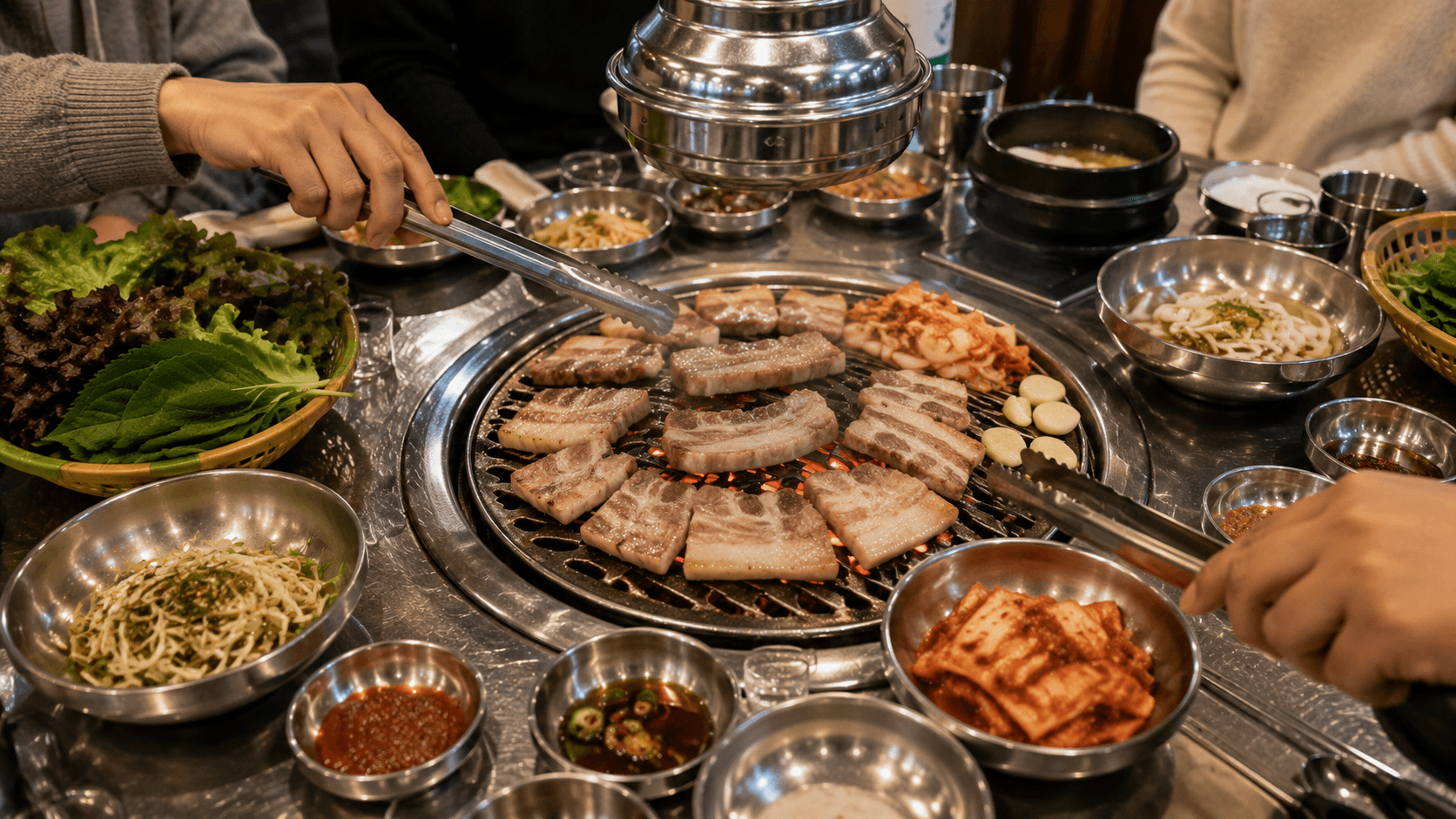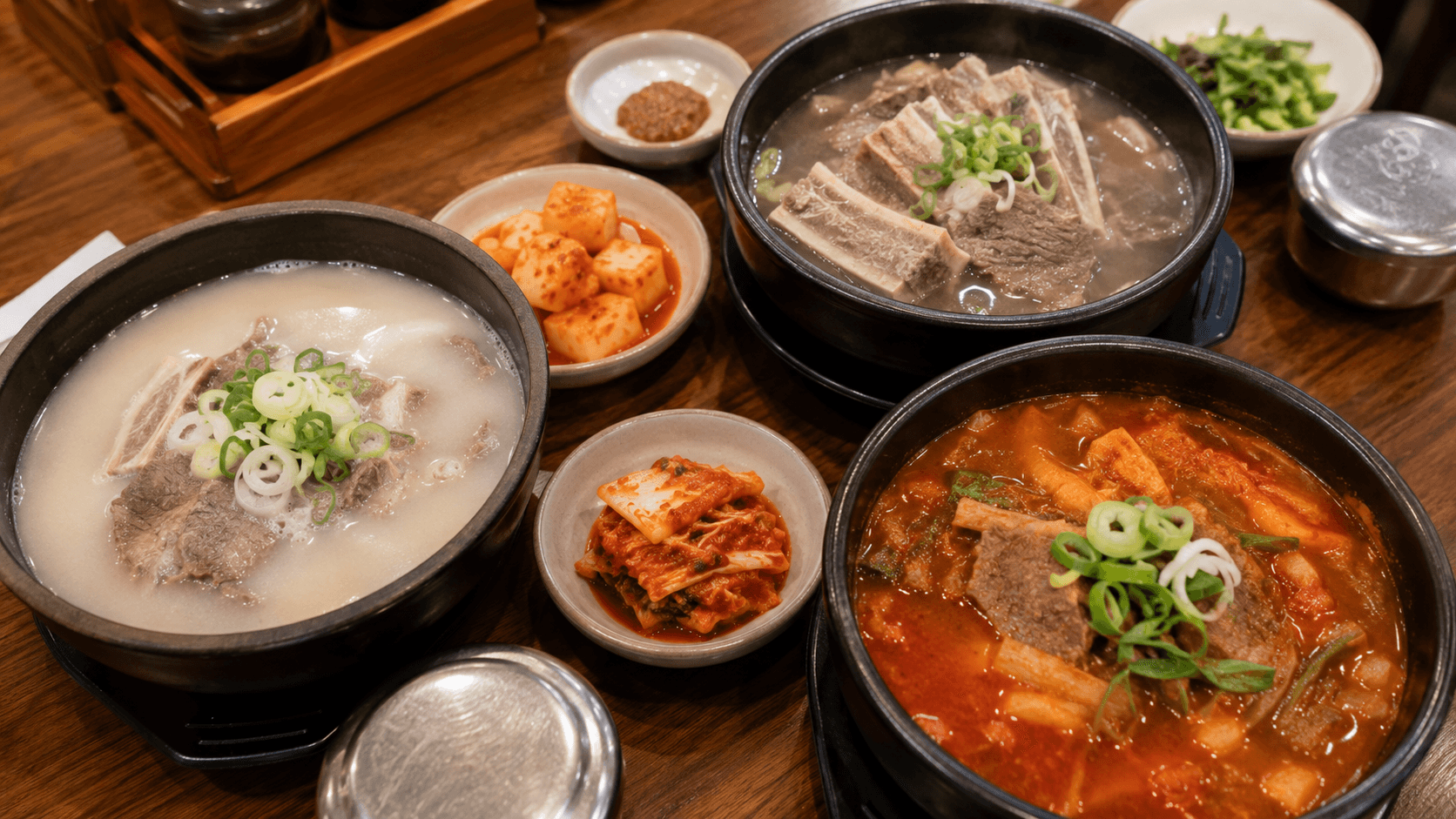
Korean menus use several words that English speakers may translate as “soup” or “stew,” but the categories overlap. As a practical rule, guk and tang are usually broth-forward, jjigae is generally more concentrated, and jeongol is commonly a larger dish cooked or kept simmering at the table. These are useful menu clues, not rigid definitions.
This guide focuses on what you need to know when ordering in South Korea. Korean and English menu terminology was checked against the Korean Food Promotion Institute’s official foreign-language menu guide on June 11, 2026.
Quick answer
| Korean term | Hangul | What to expect | Usually served |
|---|---|---|---|
| Guk | 국 | A relatively light, broth-forward soup | In an individual bowl with rice |
| Tang | 탕 | Often a substantial soup containing meat, bones, seafood, or poultry | As an individual meal or shared dish |
| Jjigae | 찌개 | A concentrated stew with less liquid and stronger seasoning | Individually or for sharing |
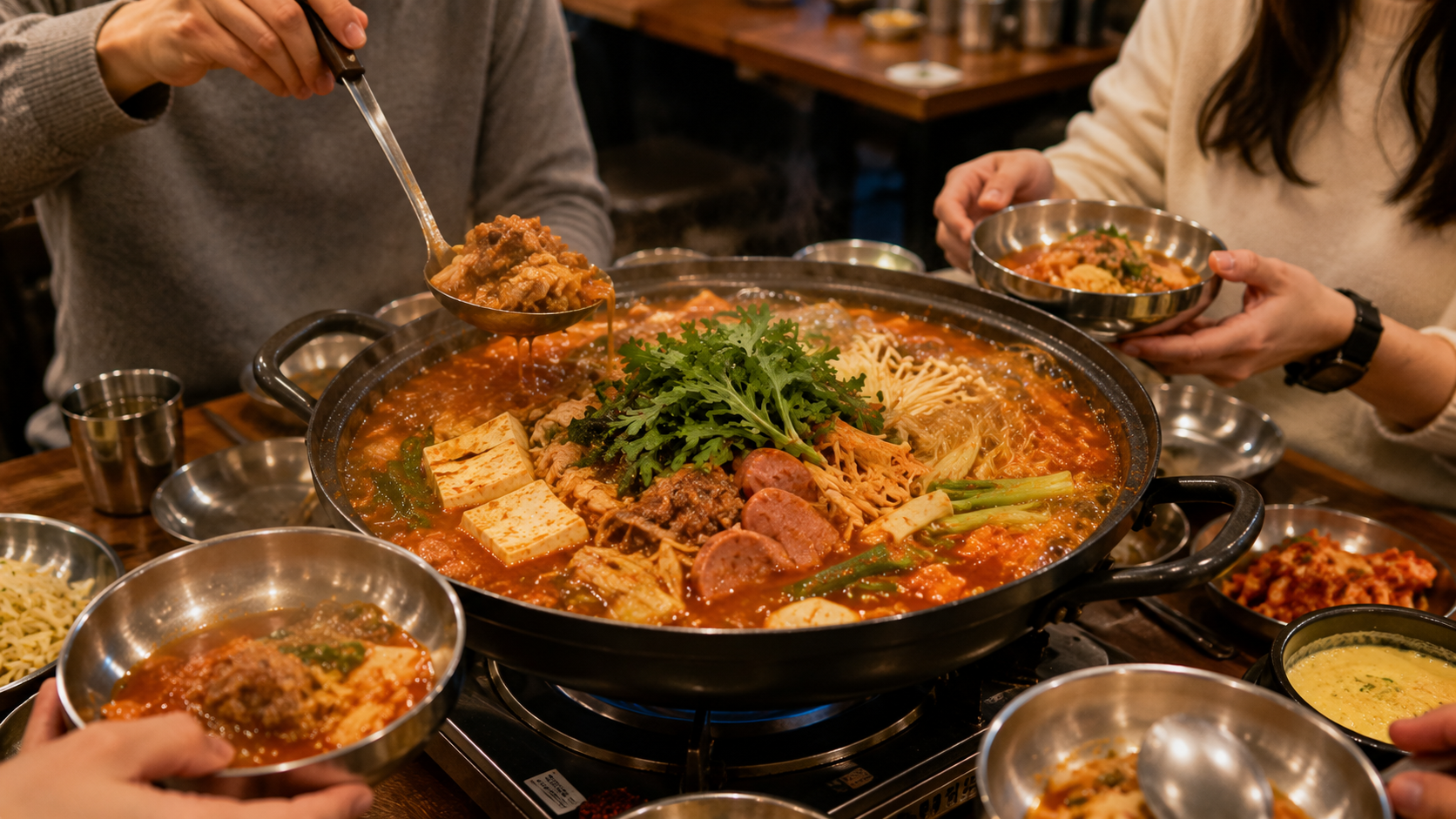
| Jeongol | 전골 | A large, ingredient-heavy hot pot | Shared, often simmering at the table |
| Gukbap | 국밥 | Soup and rice, either combined or served together | As a one-person meal |
Do not rely on the suffix alone. Gamjatang, for example, is closer to a substantial pork-bone stew than a light soup, while doenjang-guk and doenjang-jjigae use similar fermented soybean seasoning but differ in concentration and presentation.
Guk: everyday, broth-forward soup
Guk (국) is the broadest everyday term for soup. It is commonly served alongside rice and side dishes rather than treated as a separate starter. The broth may be clear, cloudy, spicy, or seasoned with fermented soybean paste.
Common examples include:
- Miyeok-guk (미역국): Seaweed soup, usually made with beef or seafood stock. It is traditionally associated with birthdays and postpartum meals, but restaurants and homes serve it throughout the year.
- Kongnamul-guk (콩나물국): Soybean sprout soup. It can be mild and clear or seasoned with chili.
- Bugeo-guk (북엇국): Dried pollock soup, usually mild and savory.
- Sogogi-mu-guk (소고기무국): Beef and Korean radish soup.
- Tteok-guk (떡국): Sliced rice cake soup associated with Lunar New Year, although it may be available at other times.
A soup called guk is not automatically vegetarian. Even a vegetable-based version may contain anchovy stock, fish sauce, beef stock, or shellfish seasoning.
Tang: a substantial soup, but not a strict category
Tang (탕) also means soup. On restaurant menus, it often indicates a dish built around meat, bones, poultry, or seafood. Some tang dishes are individual meals; others are large enough to share.
Seolleongtang
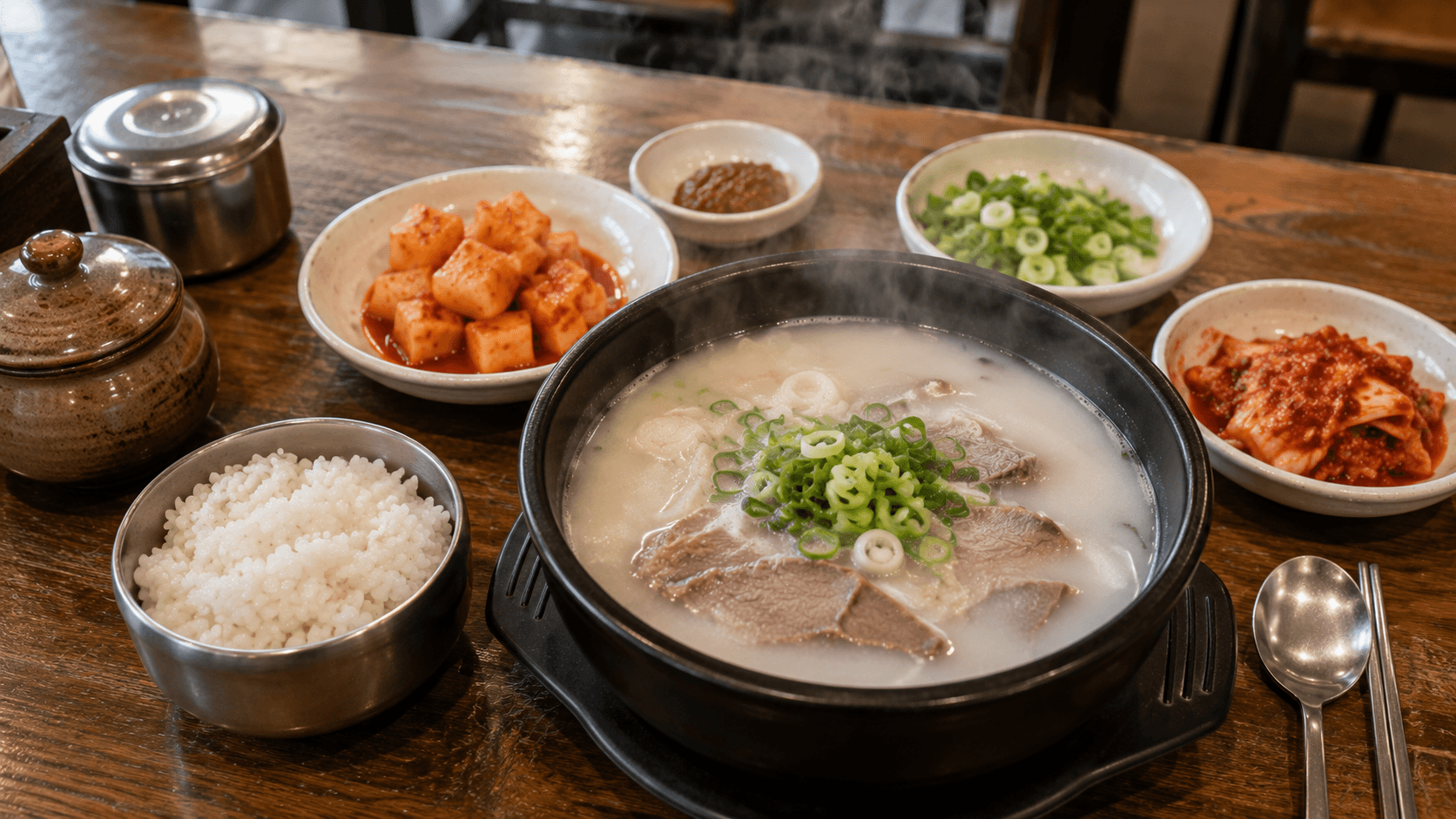
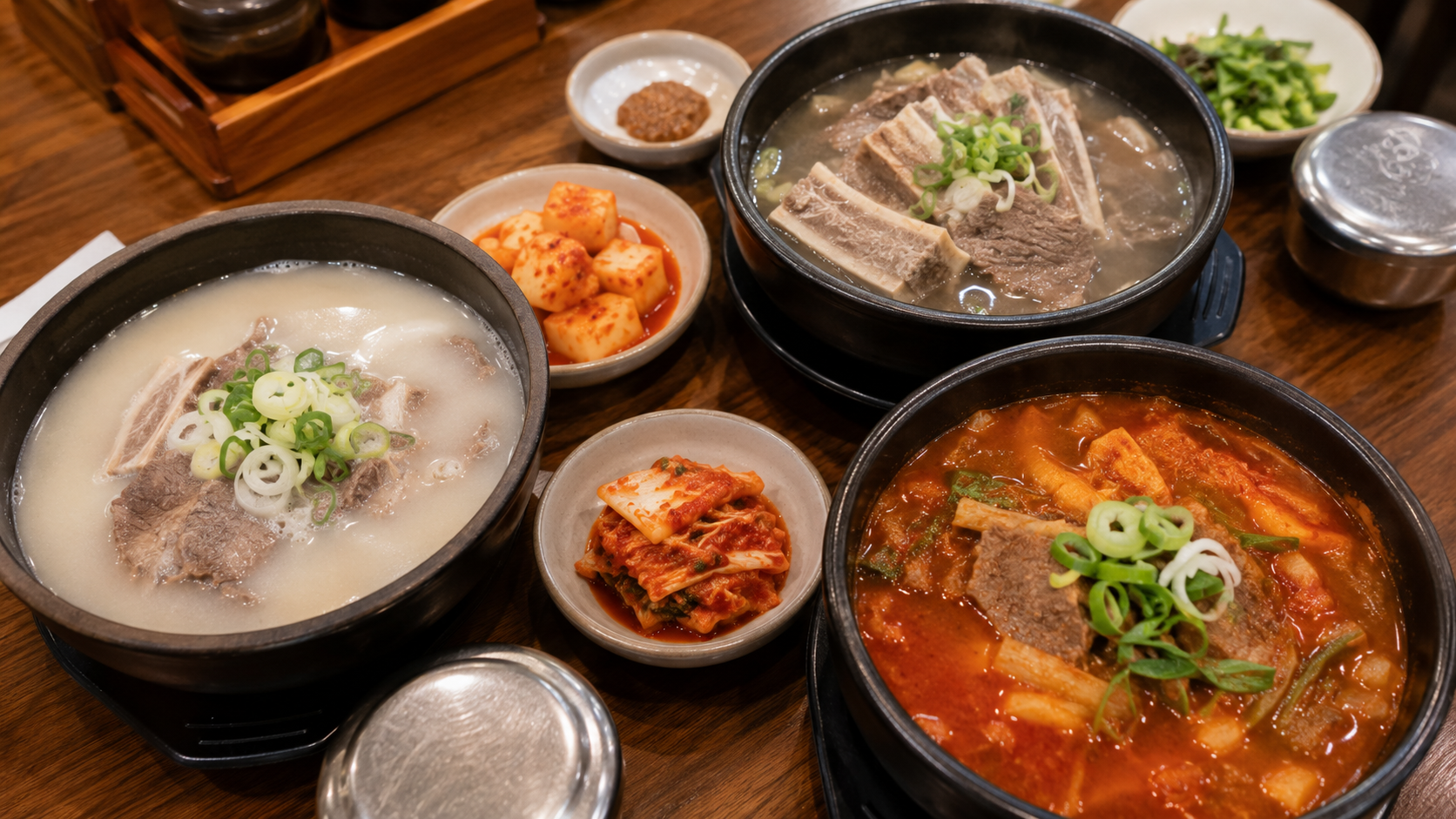
Seolleongtang (설렁탕) is a cloudy ox-bone soup generally served with sliced beef, rice, kimchi, and seasonings. The broth may taste surprisingly mild when it arrives. Salt, black pepper, and chopped green onion are often provided so diners can adjust it themselves.
Add salt gradually. The kimchi and kkakdugi (깍두기), cubed radish kimchi, can already be quite salty.
Gomtang
Gomtang (곰탕) refers to a family of long-simmered meat soups. The exact broth, color, and cuts of meat vary by restaurant. Some versions are clear or golden; others are cloudier. Related menu names include kkori-gomtang (꼬리곰탕), oxtail soup, and dogani-tang (도가니탕), commonly made with ox knee cartilage and surrounding connective tissue.
Galbitang
Galbitang (갈비탕) is beef short-rib soup, usually in a clear or lightly colored broth. It may contain glass noodles, radish, egg garnish, jujube, or other additions. The ribs are bone-in, so use chopsticks or kitchen scissors if provided.
Samgyetang
Samgyetang (삼계탕) is a small whole chicken stuffed with ingredients such as glutinous rice, garlic, jujube, and ginseng. It is strongly associated with hot summer days, especially the three traditional sambok (삼복) days, although specialist restaurants may serve it year-round.
The chicken usually contains bones, and the stuffing can remain extremely hot. Open it carefully and allow steam to escape before eating.
Maeuntang
Maeuntang (매운탕) literally signals a spicy soup or stew. It is commonly made with fish and vegetables and may be ordered after sashimi at a seafood restaurant. Fish bones, heads, roe, or internal organs may be included depending on the restaurant and set menu.
Jjigae: concentrated stew
Jjigae (찌개) is generally thicker, saltier, or more intensely seasoned than guk. It may arrive in a small earthenware pot called a ttukbaegi (뚝배기), which retains heat for a long time.
Kimchi-jjigae
Kimchi-jjigae (김치찌개) combines mature kimchi with ingredients such as pork, tuna, tofu, or luncheon meat. It is normally spicy and tangy, although the heat level varies.
Check the menu for the main protein:
- Dwaejigogi kimchi-jjigae (돼지고기 김치찌개): Pork kimchi stew
- Chamchi kimchi-jjigae (참치 김치찌개): Tuna kimchi stew
- Kkongchi kimchi-jjigae (꽁치 김치찌개): Pacific saury kimchi stew
Kimchi itself commonly contains fish sauce or salted seafood, so removing the visible meat does not make the dish vegetarian.
Doenjang-jjigae
Doenjang-jjigae (된장찌개) is made with fermented soybean paste and commonly contains tofu, zucchini, onion, mushrooms, or potato. The flavor is earthy, savory, and often salty rather than strongly spicy.
Despite its vegetable-heavy appearance, the stock may contain dried anchovies, shellfish, or meat. Some versions include clams or beef as a prominent ingredient.
Sundubu-jjigae
Sundubu-jjigae (순두부찌개) is soft-tofu stew. Common options include seafood, pork, beef, kimchi, or mixed ingredients. An egg may be cracked into the bubbling stew before serving or supplied separately.
A red color usually means chili seasoning, but restaurants sometimes offer a mild or white version. Ask:
- An maepge haejuseyo (안 맵게 해주세요): “Please make it not spicy.”
- Deol maepge haejuseyo (덜 맵게 해주세요): “Please make it less spicy.”
A request for less heat may not be possible when the seasoning base has already been prepared.
Budae-jjigae
Budae-jjigae (부대찌개) is a shared stew commonly containing luncheon meat, sausages, kimchi, beans, tofu, noodles, and other additions. Cheese or instant ramyeon noodles may be optional extras. It is usually salty and spicy and often has a minimum order of two portions.
Cheonggukjang-jjigae
Cheonggukjang-jjigae (청국장찌개) uses quickly fermented soybeans and has a powerful aroma. Its flavor is deeply savory, but first-time diners should expect a much stronger fermented smell than doenjang-jjigae.
Jeongol: shared hot pot
Jeongol (전골) is usually served in a broad pot with ingredients arranged visibly in the broth. The pot may be brought to the table raw or partially cooked and then simmered on a burner.
Examples include:
- Mandu-jeongol (만두전골): Dumpling hot pot
- Gopchang-jeongol (곱창전골): Beef or pork intestine hot pot
- Bulgogi-jeongol (불고기전골): Marinated beef hot pot
- Beoseot-jeongol (버섯전골): Mushroom hot pot, which may still use meat or anchovy stock
- Dubu-jeongol (두부전골): Tofu hot pot
Wait until the server indicates that the food is ready. For dishes containing raw meat, seafood, or dumplings, do not assume that bubbling broth means every ingredient is fully cooked. Staff may return to adjust the burner or tell you when to begin.
Additional noodles, dumplings, rice cakes, or bokkeumbap (볶음밥), fried rice made in the remaining sauce, may be available. These extras are normally charged separately unless included in a set.
Gukbap: soup and rice as a complete meal
Gukbap (국밥) combines guk, soup, and bap, cooked rice. The rice may arrive in the broth or in a separate bowl for you to add gradually.
Popular regional and restaurant versions include:
- Dwaeji-gukbap (돼지국밥): Pork soup with rice, closely associated with Busan and southeastern Korea
- Kongnamul-gukbap (콩나물국밥): Soybean sprout soup with rice, especially associated with Jeonju
- Sundae-gukbap (순대국밥): Soup containing Korean blood sausage and often pork offal
- Gul-gukbap (굴국밥): Oyster soup with rice
Gukbap restaurants are often convenient for solo diners because the standard order is a complete one-person meal. Exact prices and opening hours vary by business and should be checked directly before visiting.
How to read a soup menu
Look at the ingredient word before the suffix:
| Menu word | Meaning |
|---|---|
| Sogogi / so | Beef / ox |
| Dwaeji | Pork |
| Dak | Chicken |
| Haemul | Mixed seafood |
| Saengseon | Fish |
| Jogae | Shellfish or clams |
| Dubu | Tofu |
| Beoseot | Mushroom |
| Kimchi | Kimchi |
| Doenjang | Fermented soybean paste |
| Gochujang | Fermented red chili paste |
| Maeun | Spicy |
| Malgeun | Clear or lightly seasoned |
Romanization is inconsistent in everyday use. You may see jjigae, jigae, or chigae, and samgyetang may appear as samgye-tang. The Hangul name is often more reliable when comparing a sign, map listing, and menu.
Ordering and eating soup in Korea
1. Check whether the price is per person or per pot
Individual soups are commonly listed as one bowl. Shared stews may show a price for small, medium, and large pots or use a per-person price with a minimum order.
Useful size labels include:
- So (소): Small
- Jung (중): Medium
- Dae (대): Large
- Il-inbun (1인분): One portion
- I-in isang (2인 이상): Two or more people
2. Confirm whether rice is included
Rice is often included with an individual soup, but it is not universal. Shared hot pots and some stews may require a separate rice order.
Ask “Bap poham-ieyo?” (밥 포함이에요?), meaning “Is rice included?”
3. Use the spoon for broth
Korean meals are typically served with a metal spoon and chopsticks. Use the spoon for broth and rice, and chopsticks for larger ingredients and side dishes. Mixing rice into your personal bowl is normal, but add a little at a time if you want to control the texture.
4. Be careful with hot serving vessels
A ttukbaegi can remain dangerously hot after the broth stops boiling. Touch the tray or table rather than the pot, and keep loose sleeves, phone straps, and bags away from tabletop burners.
5. Share hygienically
For a shared jeongol or large jjigae, use the serving ladle or communal utensils when provided. Transfer food to your own small bowl before eating it.
Dietary and allergy cautions
Soup ingredients are not always visible. Broths and seasoning bases may contain anchovies, shellfish, fish sauce, beef bones, pork, soy, wheat, sesame, or egg.
Practical checks include:
- Ask about the stock, not only the solid ingredients.
- Do not assume mushroom, tofu, or vegetable soup is vegetarian.
- Kimchi may contain fish sauce or salted shrimp.
- Dumpling fillings may combine tofu, vegetables, pork, and glass noodles.
- Sundae-guk may contain blood sausage, intestines, liver, or other offal.
- Ramyeon noodles and processed meats may contain wheat, soy, milk, or other allergens.
For a serious allergy, show a written Korean allergy card naming the ingredient and stating that even broth, sauce, and cross-contact are unsafe. Restaurant staff may not be able to guarantee complete separation in a shared kitchen. When the risk is severe, choose a restaurant with clearly documented allergen procedures rather than relying only on a verbal request.
Common mistakes to avoid
- Assuming every red soup is extremely spicy: Color is a clue, but heat varies considerably.
- Assuming white broth is dairy-based: Cloudy bone broths such as seolleongtang generally get their appearance from prolonged boiling, not milk.
- Seasoning before tasting: Some soups are intentionally mild, while kimchi and side dishes add salt.
- Expecting a Western starter: A Korean soup is often part of the main meal or the main dish itself.
- Ordering a shared pot for one: Check the minimum portion before sitting down.
- Removing meat and calling the dish vegetarian: The broth and fermented seasonings may still contain animal products.
- Confusing gamja-guk with gamjatang: Gamja usually means potato, but gamjatang is a pork-spine dish that also commonly contains potatoes.
What to check before you go
- Search using the Hangul dish name when possible.
- Confirm the restaurant’s current opening hours and last order time directly.
- Check whether the restaurant accepts solo diners for shared dishes.
- Look for minimum-order or per-person requirements.
- Confirm whether rice and noodles are included.
- Ask about anchovy, shellfish, meat, soy, wheat, or egg when relevant.
- Carry a Korean allergy card for medically significant allergies.
- Expect menus, recipes, portion sizes, and spice levels to vary by restaurant and region.
A practical first tasting is to choose one broth-forward dish and one concentrated stew: for example, galbitang or seolleongtang followed on another meal by doenjang-jjigae or sundubu-jjigae. Use the Korean Food Promotion Institute’s menu guide to match the Hangul name with its official English description before ordering.
Sources
- Korean Food Promotion Institute foreign-language menu guide
- Korean Food Promotion Institute recipe collection
- National Institute of Korean Language Basic Korean Dictionary
- Korea Tourism Organization VISITKOREA food information
Official terminology and website availability verified June 11, 2026.